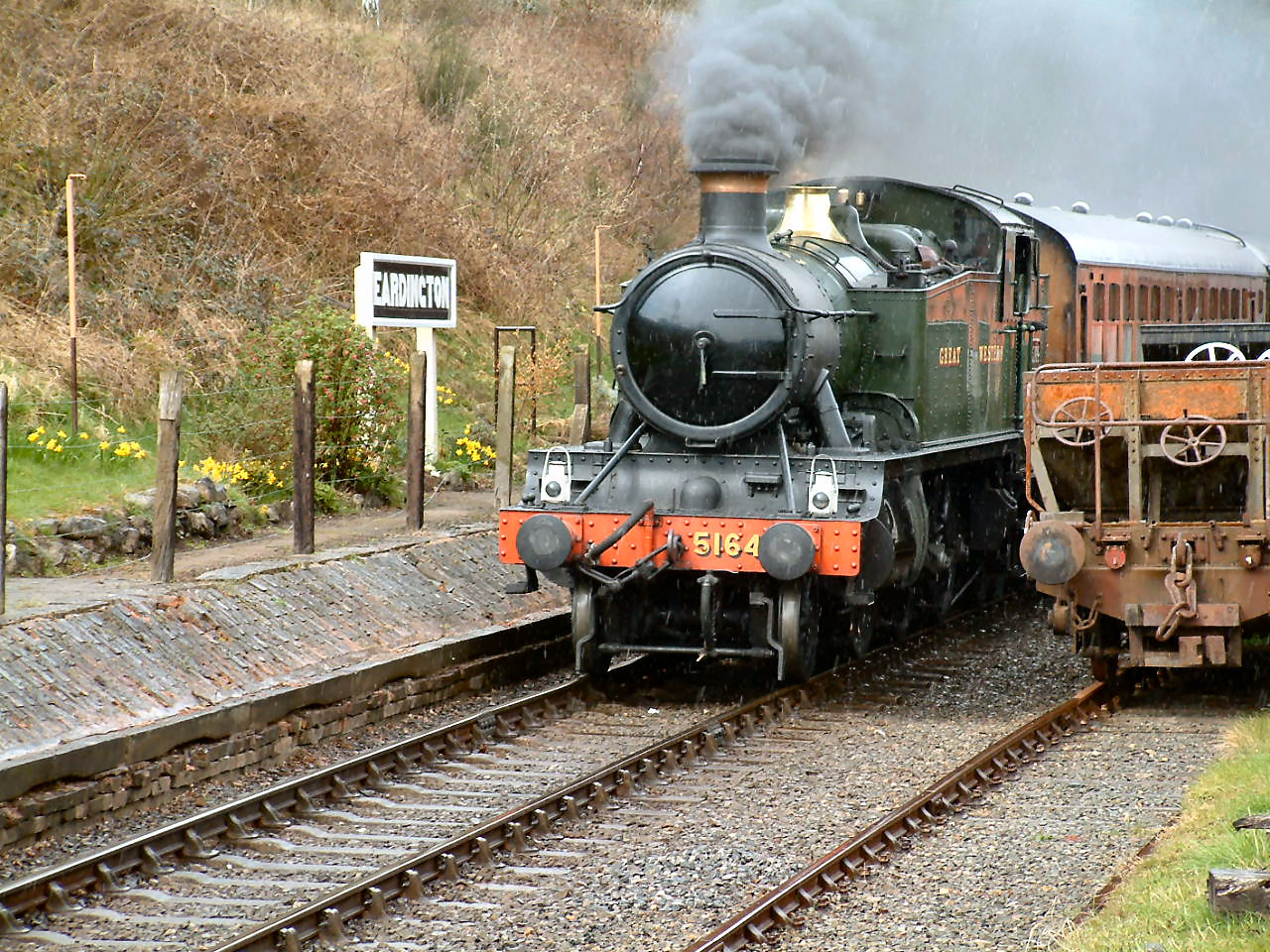
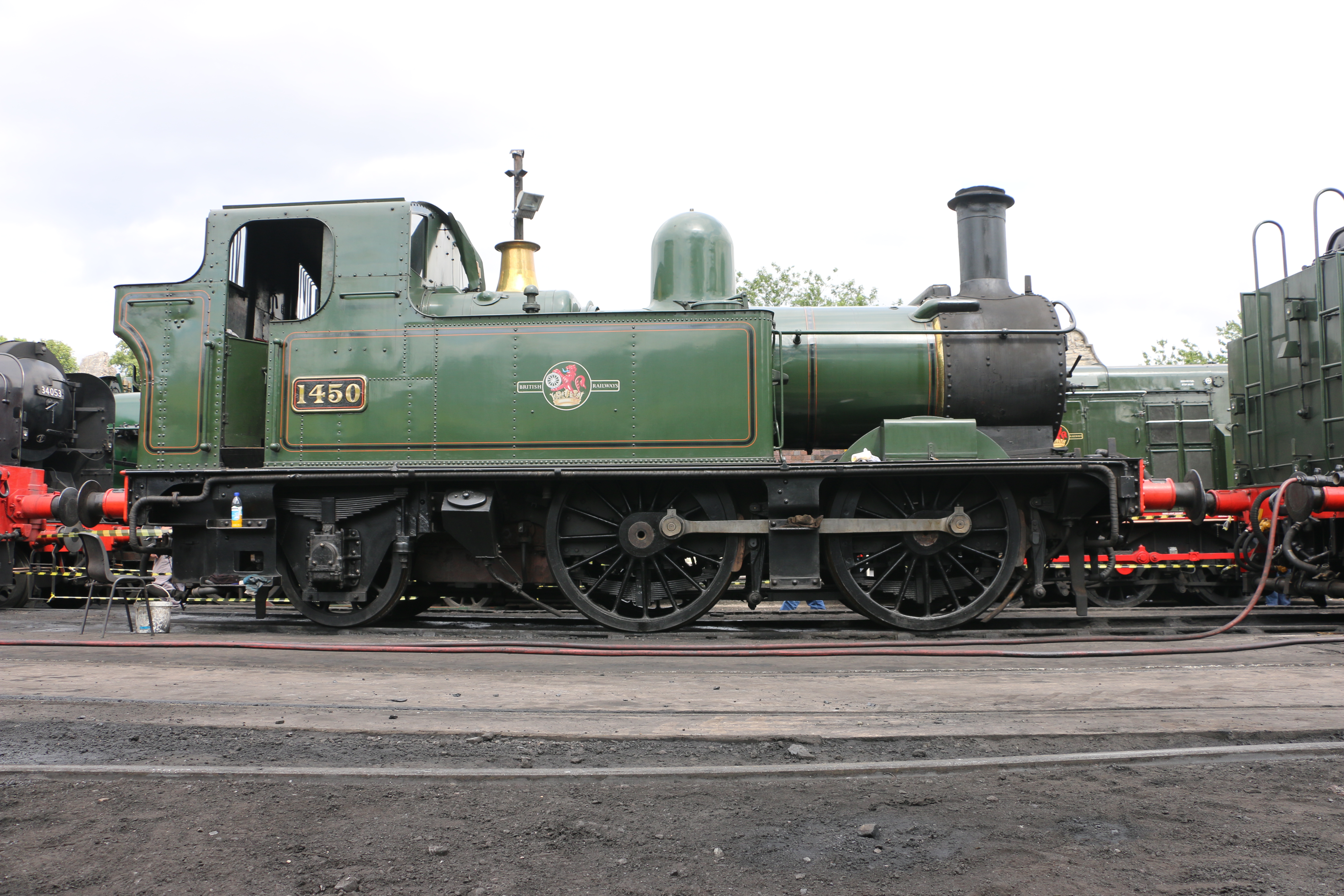
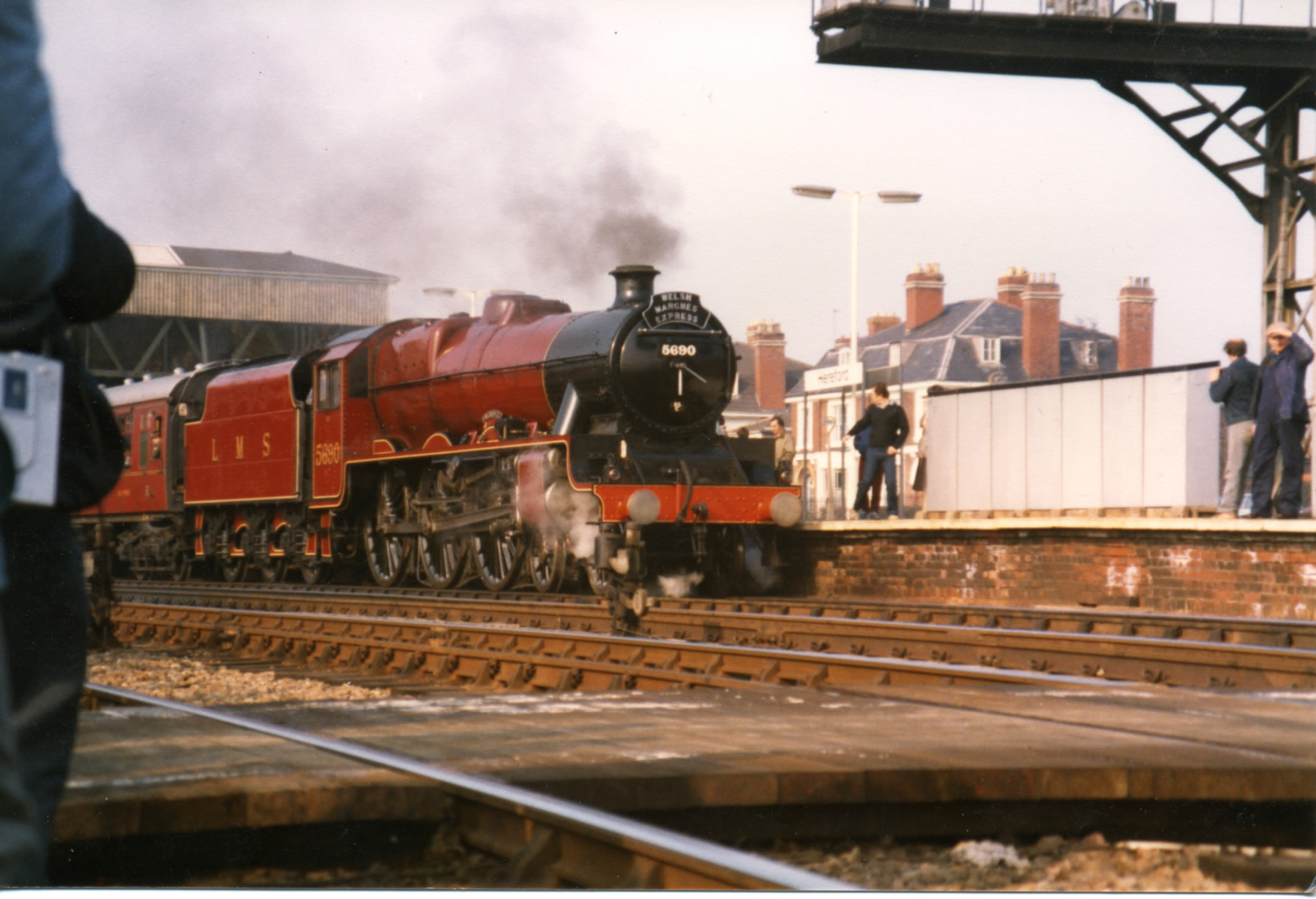
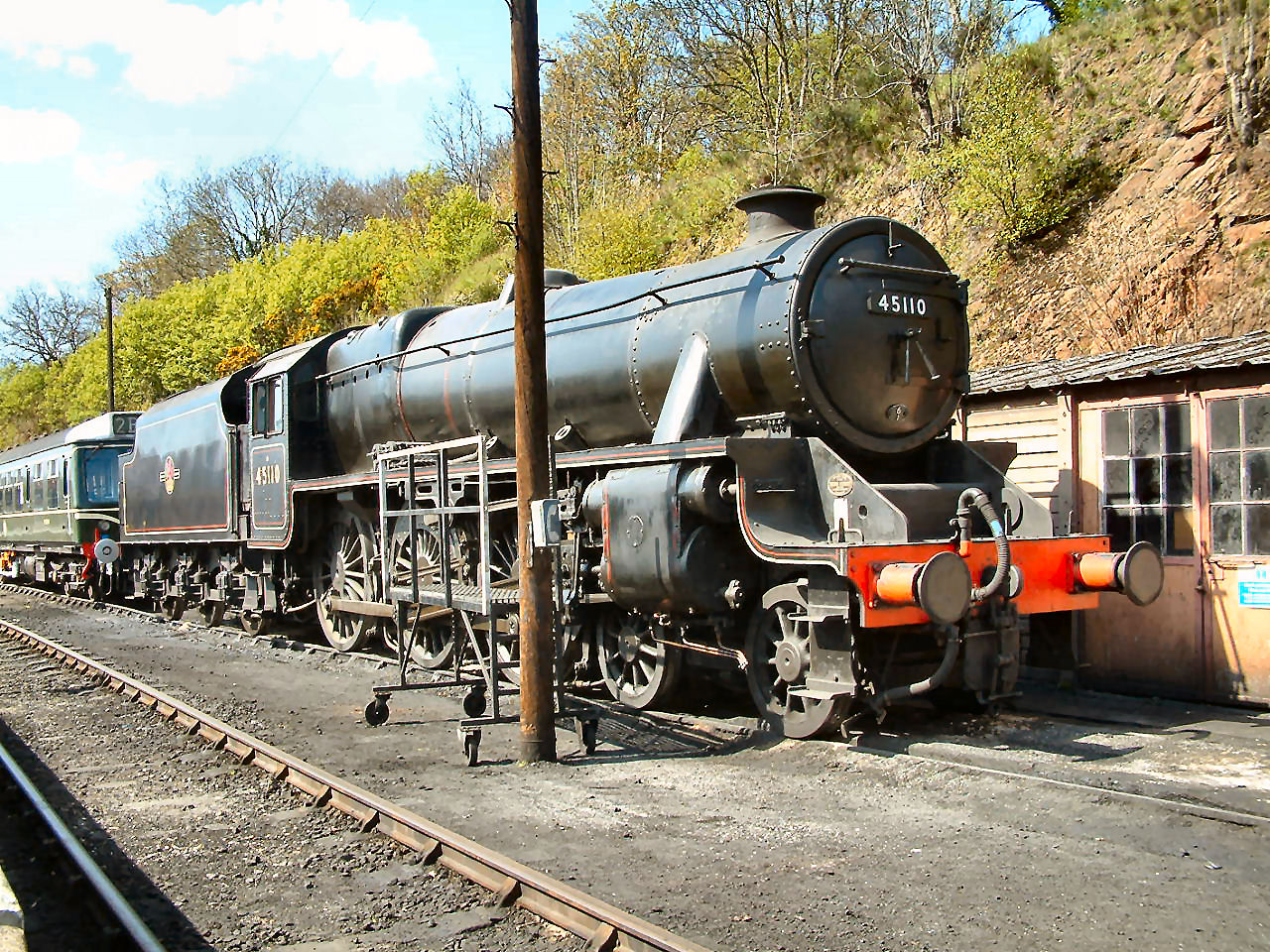
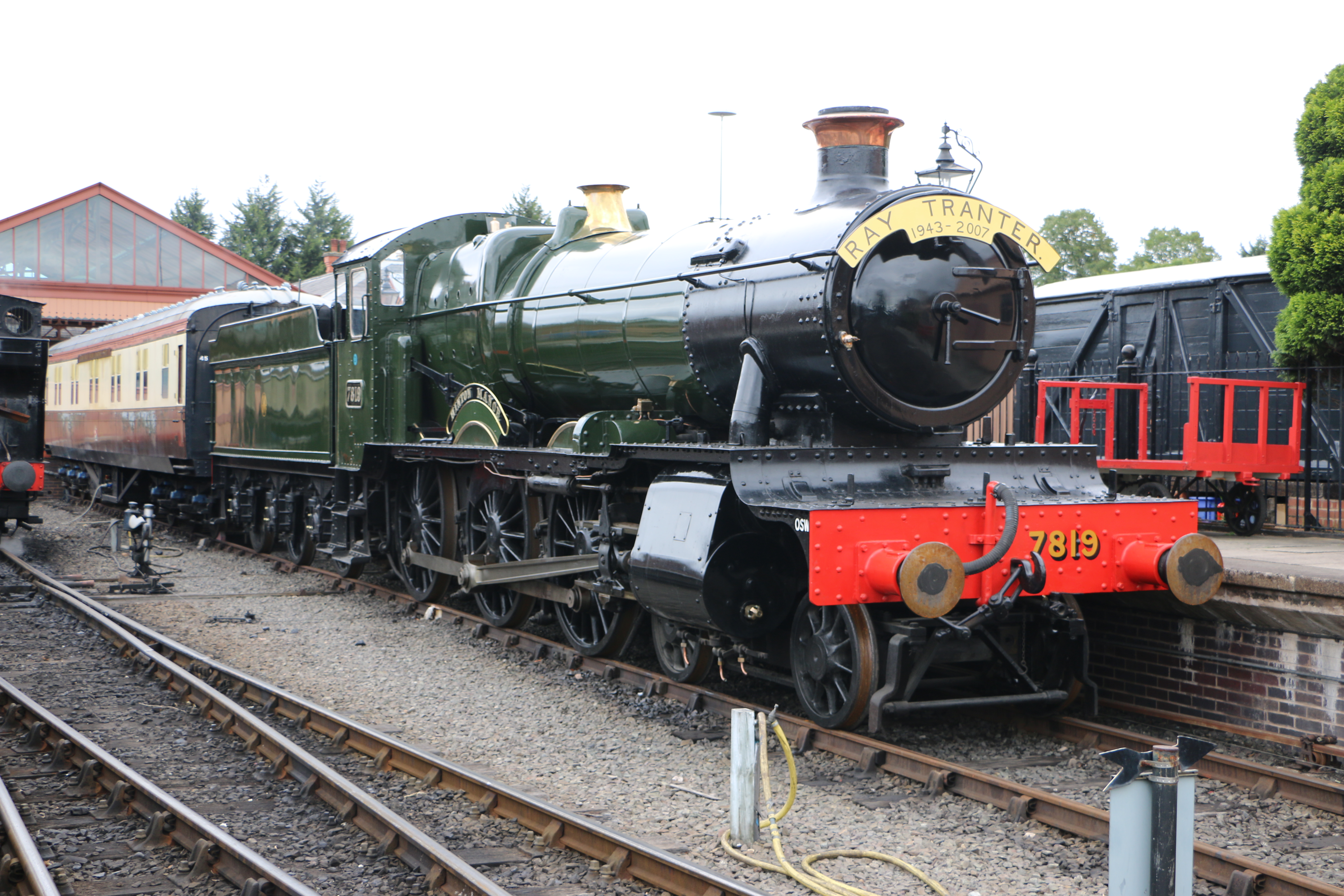
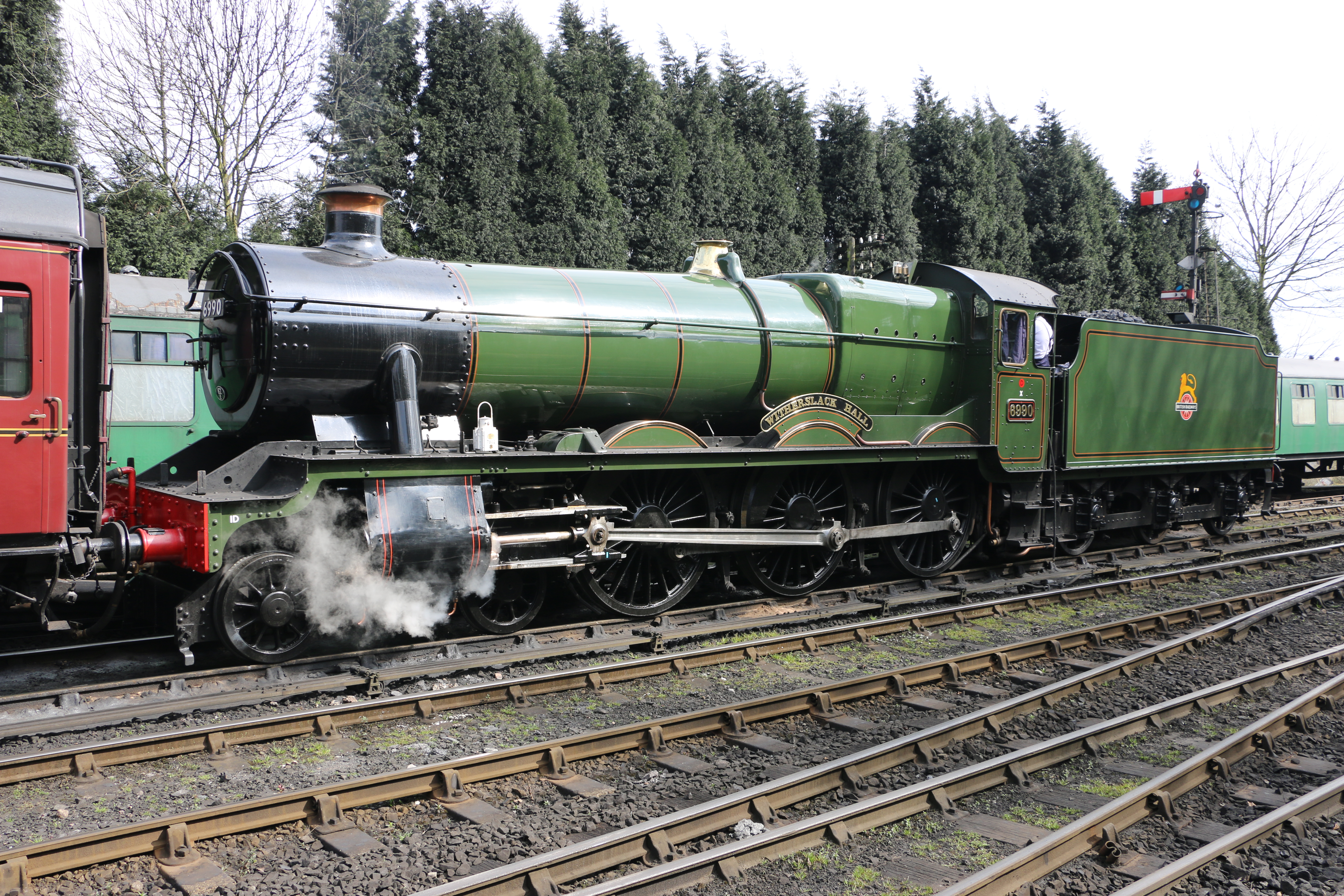
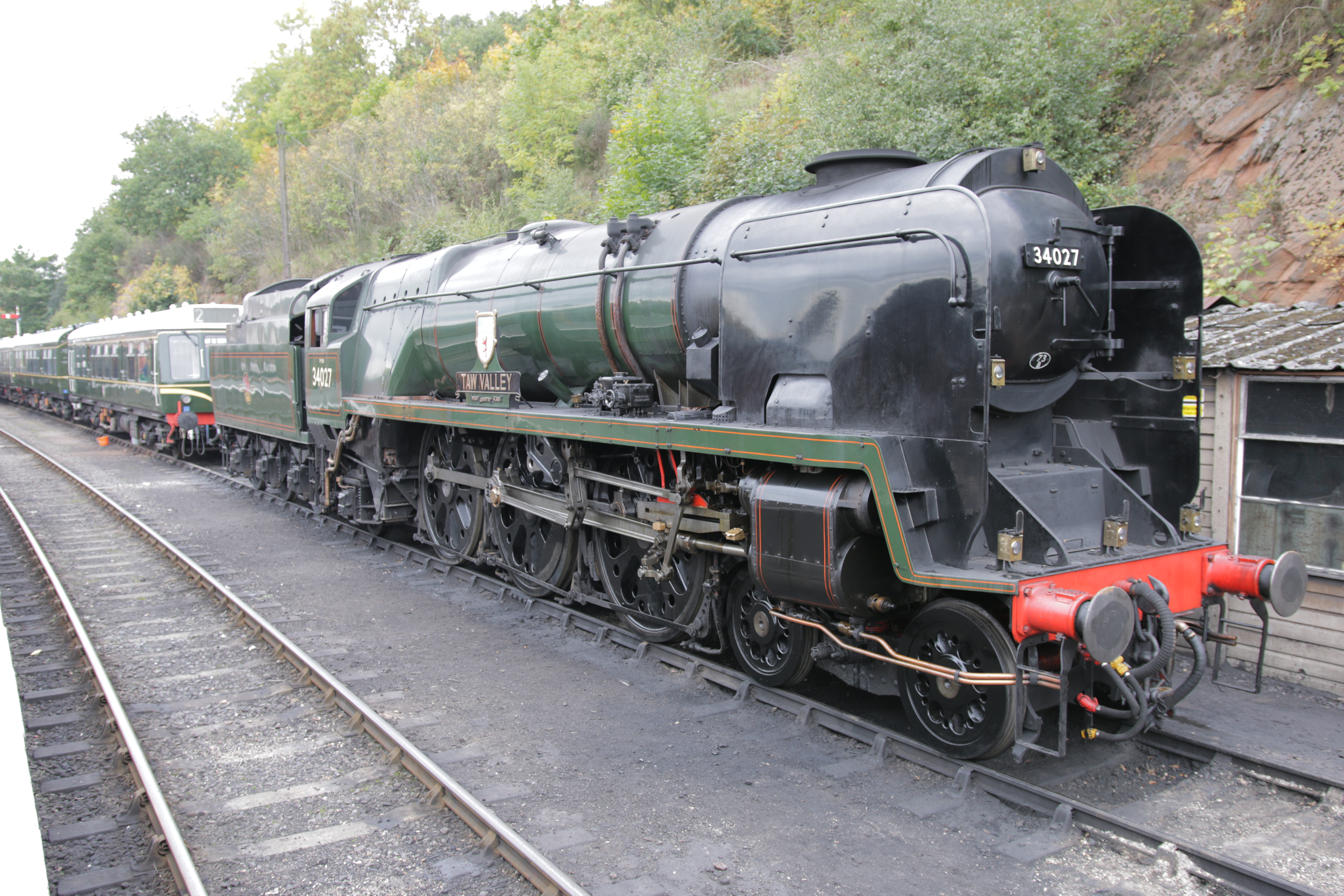
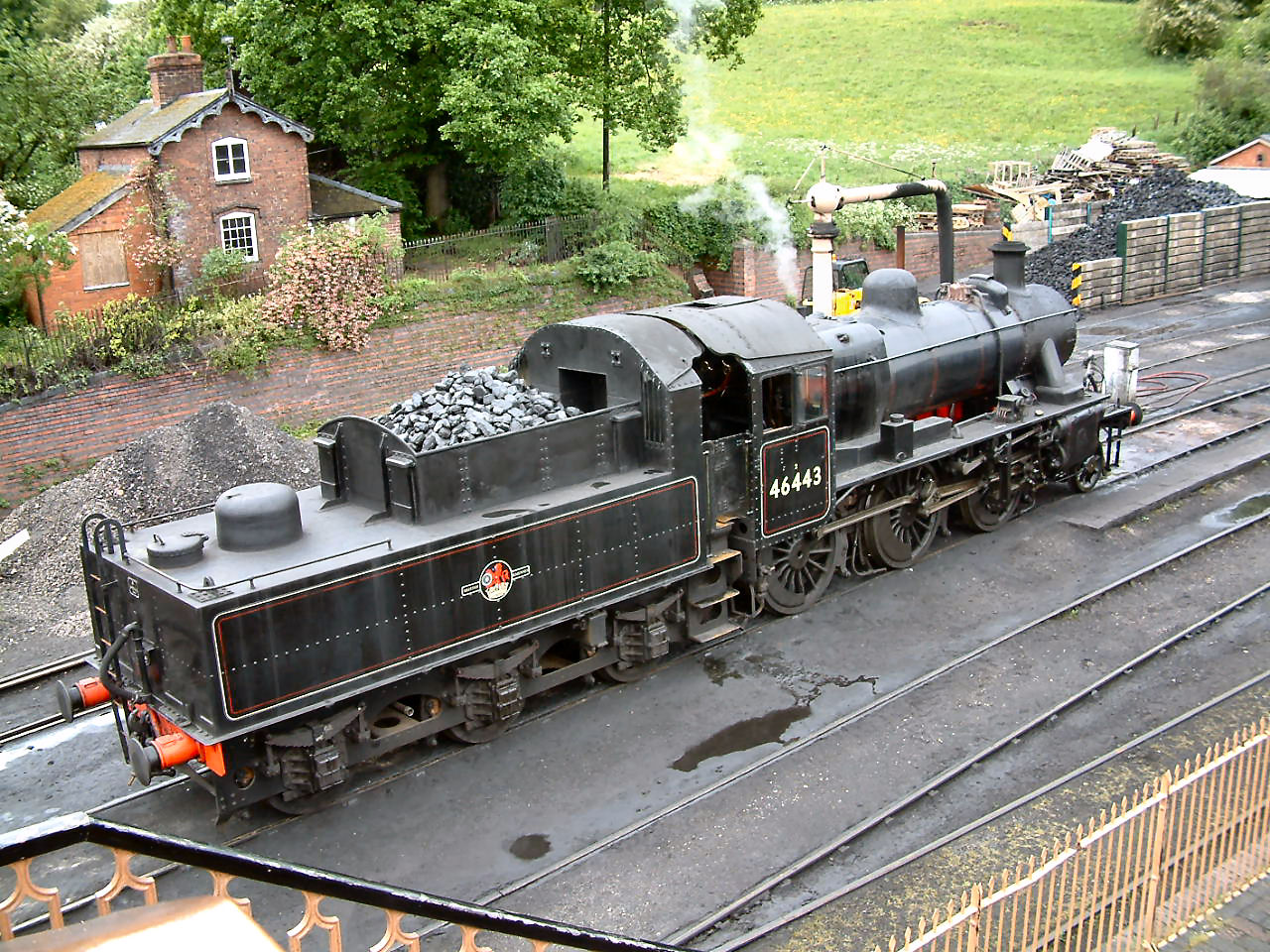
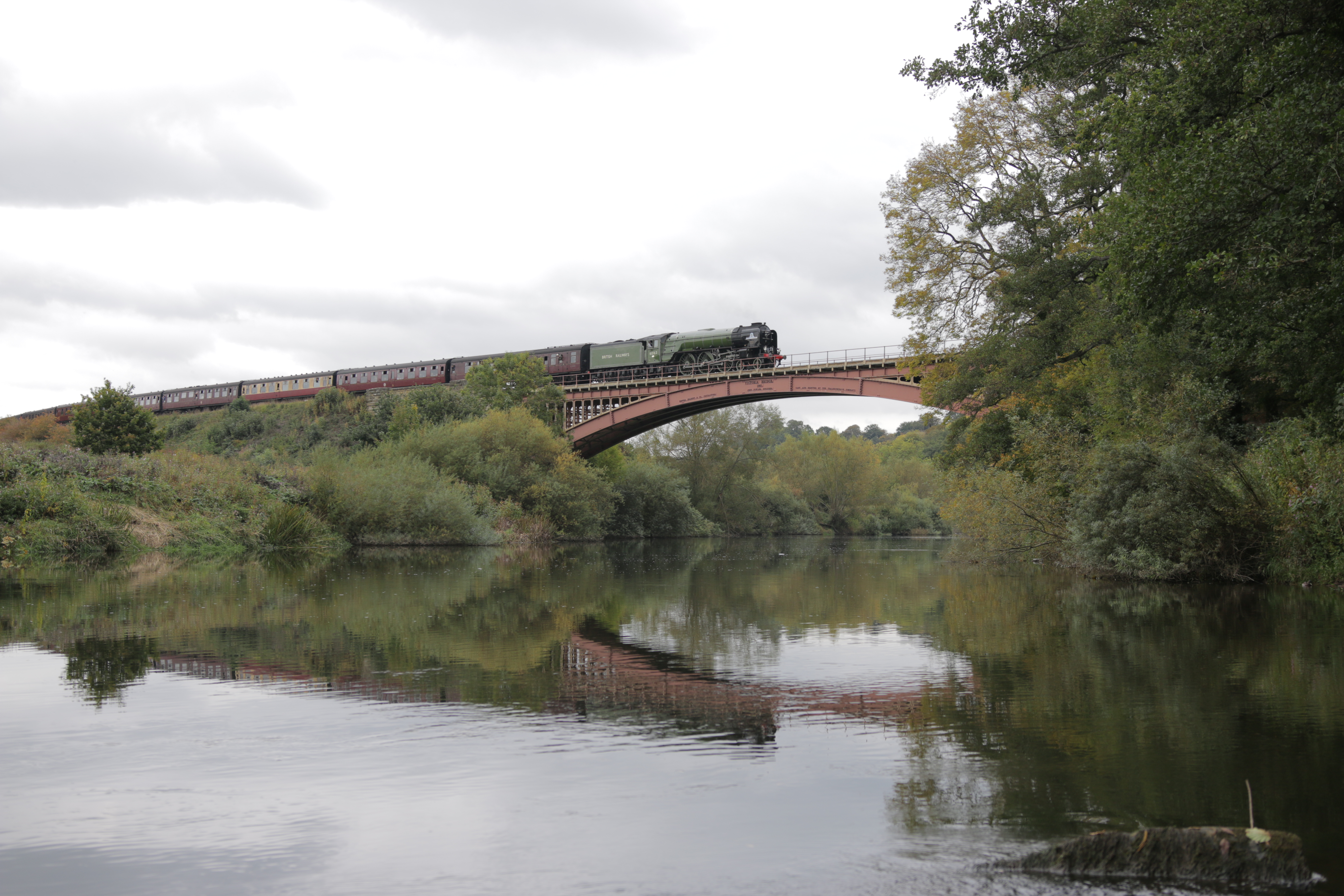
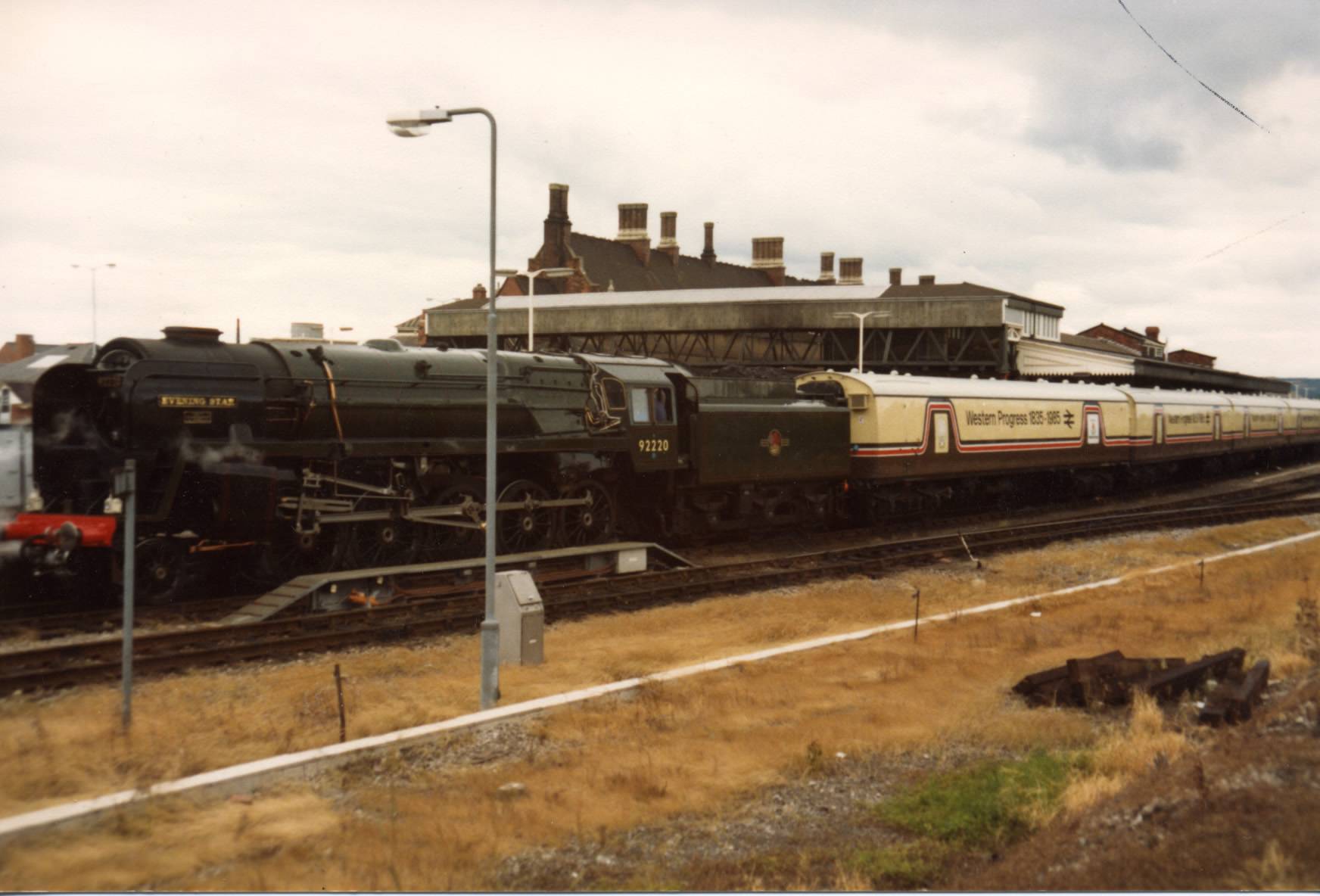
This is the encyclopedia of British locomotive classes, design groups built to a common pattern, often numbering dozens or hundreds of identical engines. Although the site's centre of gravity is the steam era, the catalogue extends across the full sweep of British locomotive history: from the broad-gauge singles of the early Great Western, through the great pre-Grouping and Big Four steam classes, to the diesel and electric locomotive types of British Railways and the privatisation era, including those preserved on the heritage and main-line scene today.
Each entry covers the class's design origins, the chief mechanical engineer responsible, the workshops that built the engines, key dimensions and performance details, the railways that operated them, and any examples preserved today. Where preserved engines exist, they are linked back to the preserved locomotives database, so you can see exactly which individual machines from a given class have survived and where to find them.
How to use this index
Use the filters below to narrow the catalogue by railway, designer, wheel arrangement, build period, traction type, or surviving examples. Each card shows the class's headline number, a representative image, and a short summary; click through for the full history. Cross-references throughout link to the chief mechanical engineers who designed each class, the workshops that built them, and the original railway companies that operated the engines.
If you are researching a specific engine, designer, or railway company, you may also want to explore the designers, railway companies, and workshops sections, each catalogues a different facet of the same story.
PenydarrenRichard Trevithick's 1804 high-pressure steam locomotive, the world's first working steam railway locomotive. Built at the Penydarren Ironworks at Merthyr Tydfil for Samuel Homfray, the engine famously hauled 10 tons of iron, five wagons, and 70 men nearly 10 miles from Penydarren down the Merthyr Tramroad to Abercynon on 21 February 1804, winning Homfray a 500-guinea wager and demonstrating that steam-hauled rail transport was practical. The engine repeatedly broke the cast-iron tramroad plates under its weight and was withdrawn from rail service after only three runs; no original survives.
Newcastle (Trevithick 1805)Richard Trevithick's 1805 Wylam locomotive, a lighter development of Penydarren built by John Whinfield's foundry at Pipewellgate, Gateshead, for Christopher Blackett of Wylam Colliery. The engine was intended to demonstrate that the principles proven at Merthyr could be transferred to Tyneside colliery working, but the Wylam Waggonway's wooden plate-rails were too weak even for the lightened design, and the engine never ran successfully on rails. It was reportedly used as a stationary engine at Whinfield's foundry instead.
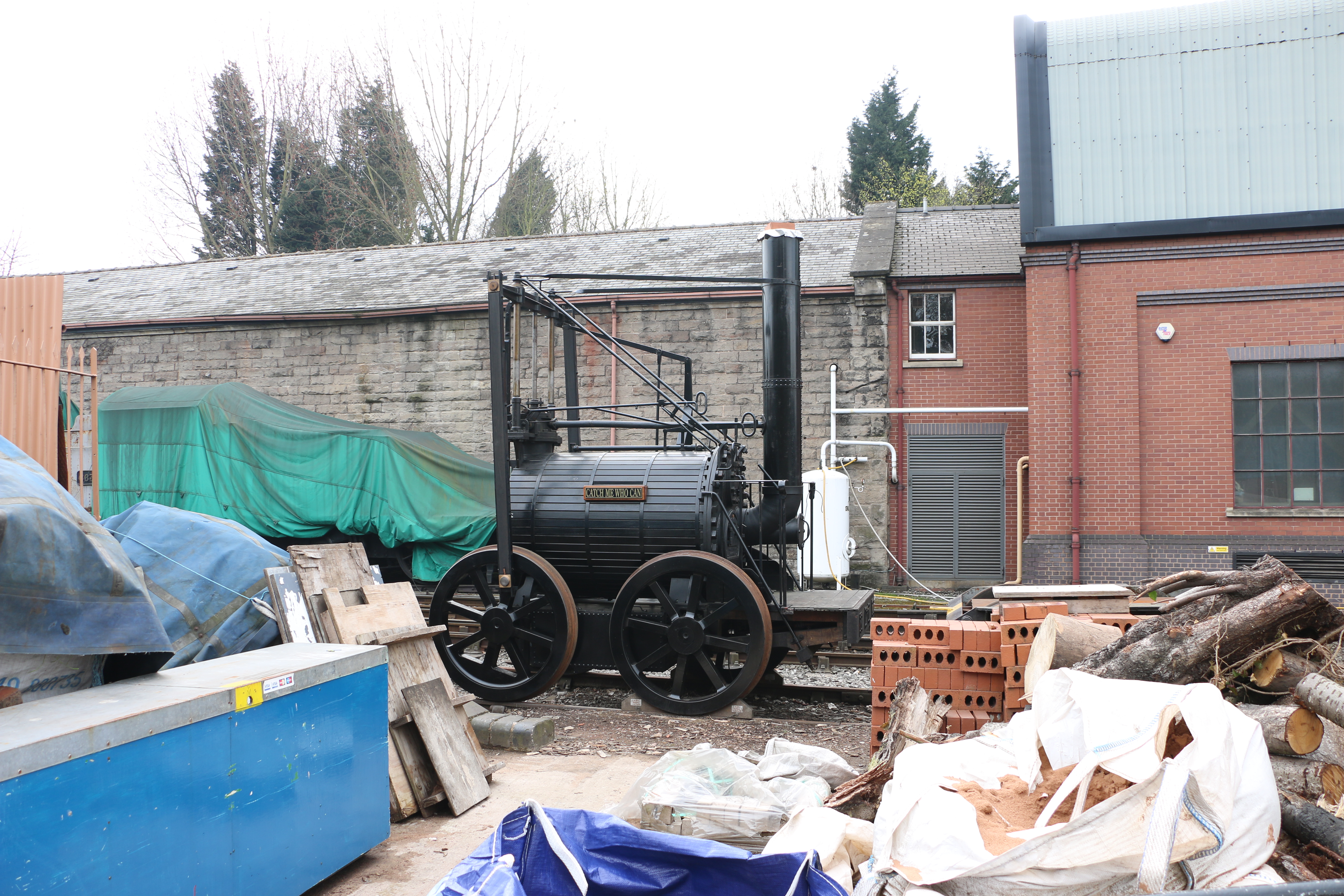
Catch Me Who CanRichard Trevithick's 1808 demonstration locomotive, the engine that introduced the steam locomotive to the London public and the first locomotive ever to carry fare-paying passengers. Built by Hazledine and Rastrick at Bridgnorth to Trevithick's design, the engine was operated on a circular demonstration track Trevithick called the "Steam Circus" near the present Euston Square, London, in summer 1808. Members of the public could ride for 1 shilling. The demonstration ran for several weeks until the engine derailed when a rail broke; Trevithick lost commercial interest and never built another locomotive.
Prince RegentThe second of four Murray-Blenkinsop rack-and-pinion locomotives built for the Middleton Railway near Leeds. Completed shortly after Salamanca in late 1812, Prince Regent shared the same design, twin vertical cylinders, central rack-pinion drive, cylindrical boiler, and worked alongside Salamanca on the Leeds-Middleton coal traffic. The engine was named after the Prince Regent (later George IV). The Murray-Blenkinsop class as a whole worked the Middleton Railway successfully for approximately twenty years, until the rack-and-pinion principle was superseded by simple adhesion working in the mid-1830s.
SalamancaMatthew Murray's 1812 rack-and-pinion steam locomotive, widely regarded as the world's first commercially successful steam locomotive. Built by Fenton, Murray and Wood of Leeds to John Blenkinsop's patent rack-and-pinion adhesion system, the engine entered service on the Middleton Railway between Leeds and Middleton Colliery on 12 August 1812, making the Middleton Railway the world's first commercially-operated steam railway. Salamanca was the first of four engines built to the same design over 1812–1813. The class operated successfully for approximately 20 years; Salamanca itself exploded in 1818, killing the driver. No original survives.
Year (first built)
1812
Wheel arrangement (Whyte)
0-4-0 (with rack-and-pinion central drive, the running wheels carrying weight only, not driving)
Lord WellingtonThe third Murray-Blenkinsop rack-and-pinion locomotive built for the Middleton Railway near Leeds. Completed in 1813, Lord Wellington was named after the Duke of Wellington (the Iron Duke), who had been raised to the peerage in 1809 and was at the height of his Peninsular War fame. The engine was identical in design to Salamanca and Prince Regent, twin vertical cylinders driving a central rack pinion, and worked the Leeds-Middleton coal traffic until the rack rails were abandoned in the mid-1830s.
Marquis WellingtonThe fourth and last Murray-Blenkinsop rack-and-pinion locomotive built for the Middleton Railway near Leeds. Completed in 1813, Marquis Wellington was named to mark the Duke of Wellington's 1812 elevation to Marquess. The engine was identical in design to its three sisters and worked the Leeds-Middleton coal traffic for approximately 20 years until the rack-and-pinion principle was superseded in the mid-1830s.
Puffing BillyWilliam Hedley's 1813 Wylam Colliery locomotive, the oldest surviving steam locomotive in the world. Built at Wylam Colliery's own workshops to a design by colliery viewer Hedley with engineman Jonathan Forster and blacksmith Timothy Hackworth, Puffing Billy demonstrated for the first time that simple wheel-on-rail adhesion (without rack-and-pinion drive) was sufficient for steam locomotion, a fundamental discovery that shaped all subsequent locomotive practice. The engine worked at Wylam from 1814 to 1862, nearly 50 years' service. Currently on permanent display at the Science Museum, London.
Year (first built)
1813
Wheel arrangement (Whyte)
0-4-0 originally; modified to 0-6-0 around 1815 (to spread the engine's weight over more axles); reverted to 0-4-0 around 1830 (after the Wylam waggonway was relaid with stronger edge rails).
BlücherGeorge Stephenson's 1814 locomotive, the first engine he designed and built, working at Killingworth Colliery on Tyneside. Blücher was the engine that established Stephenson's reputation as a locomotive engineer and launched the career that would lead to the Stockton & Darlington Railway in 1825 and the Liverpool & Manchester Railway in 1830. Named after the Prussian Field Marshal Gebhard von Blücher (allied with Wellington against Napoleon), the engine demonstrated successfully that flange-wheel adhesion could be used on properly-laid edge rails. Blücher worked at Killingworth from 1814; no original survives.
ChittapratAn 1815 William Hedley-built Wylam Colliery locomotive that proved unsuccessful and was quickly superseded; named for the distinctive irregular exhaust beat ("chitta-prat") of its unevenly set valves. Worked briefly at Wylam alongside Puffing Billy before being broken up.
Steam ElephantA 1815 Wallsend Waggonway locomotive built by Hawks of Gateshead to a design by John Buddle and William Chapman. One of the earliest engines to use a vertical boiler with twin cylinders driving the rear axle through gears, it ran successfully on Tyneside for several years. A working replica built in 2002 operates at Beamish Open Air Museum.
Wylam DillySister engine to Puffing Billy and one of the two oldest surviving steam locomotives in the world. Built at Wylam Colliery in approximately 1815 to William Hedley's design (with Jonathan Forster and Timothy Hackworth), Wylam Dilly is the sister of Puffing Billy of 1813, both engines using the same general arrangement and working the Wylam Waggonway from Wylam Colliery to the staiths at Lemington-on-Tyne. The engine worked at Wylam from approximately 1815 to 1862, nearly 50 years' service. Currently on permanent display at the National Museum of Scotland, Edinburgh.
Year (first built)
1815
Wheel arrangement (Whyte)
0-4-0 originally; modified to 0-6-0 around 1815 (to spread weight on the wooden tramway); reverted to 0-4-0 around 1830 after the line was relaid with iron rails.
Killingworth BillyGeorge Stephenson's 1816 locomotive, the second engine he built at Killingworth Colliery on Tyneside, following Blücher of 1814. The engine worked at Killingworth Colliery for approximately 65 years before being retired in the late 1880s, and is one of the oldest surviving Stephenson-built locomotives. Currently preserved at the Stephenson Railway Museum, North Shields, the engine is a key historical artefact representing Stephenson's transitional engineering between his first Killingworth engines and the Stockton & Darlington Railway designs.
The DukeA 1817 0-4-0 locomotive built by George Dodds and William Stirling at Kilmarnock for the Kilmarnock & Troon Railway, the first locomotive to operate in Scotland. It worked only briefly: its weight cracked the line's cast-iron edge rails, after which the railway reverted to horse haulage until heavier rails were installed.
Hetton Colliery locomotivesA family of 0-4-0 locomotives designed by George Stephenson for the Hetton Colliery Railway in County Durham, which opened in 1822 as the first railway worked entirely without animal power. The Hetton engines pioneered the layout — long boilers, simple coupled wheels, edge-rail track — that Stephenson would refine for the Stockton & Darlington Railway and ultimately for Locomotion No. 1.
Hetton DartOne of the original 1820 George Stephenson 0-4-0 locomotives built for the Hetton Colliery Railway, part of the family of engines that worked the line from its 1822 opening. See Hetton Colliery locomotives for the design and operation history of the class as a whole.
Hetton HettonOne of the original 1820 George Stephenson 0-4-0 locomotives built for the Hetton Colliery Railway, part of the family of engines that worked the line from its 1822 opening. See Hetton Colliery locomotives for the design and operation history of the class as a whole.
Hetton StarOne of the original 1820 George Stephenson 0-4-0 locomotives built for the Hetton Colliery Railway, part of the family of engines that worked the line from its 1822 opening. See Hetton Colliery locomotives for the design and operation history of the class as a whole.
Hetton TallyhoOne of the original 1820 George Stephenson 0-4-0 locomotives built for the Hetton Colliery Railway, part of the family of engines that worked the line from its 1822 opening. See Hetton Colliery locomotives for the design and operation history of the class as a whole.
Hetton Colliery WilberforceAn 1822 George Stephenson 0-4-0 built for the Hetton Colliery Railway and named after the abolitionist William Wilberforce. The most celebrated of the Hetton engines: rebuilt at intervals through the 19th century, it remained in working order for over 50 years and was exhibited at the Stephenson Centenary in Newcastle in 1881.
LocomotionGeorge Stephenson's 1825 locomotive, the engine that hauled the opening train of the Stockton & Darlington Railway on 27 September 1825, the world's first public passenger steam railway. Built by Robert Stephenson and Company at Newcastle to a design by George Stephenson, Locomotion (originally numbered 1, often known retrospectively as "Locomotion No. 1") combined direct connecting-rod drive with two vertical cylinders set into the boiler. The engine worked the S&DR until 1841 and was preserved as a static exhibit thereafter. Currently a centrepiece exhibit at Locomotion: The National Railway Museum, Shildon, County Durham.
ExperimentAn 1826 0-4-0 built by Robert Stephenson & Co. for the Stockton & Darlington Railway, distinguished as the first locomotive specifically intended to haul passengers as well as coal. It hauled the railway's pioneering passenger coach "Experiment" — from which the locomotive took its name — on the world's first regular steam-hauled passenger service.
HopeAn 1826 George Stephenson 0-4-0 built for the Hetton Colliery Railway, an enlargement of the earlier Hetton pattern. Worked the colliery sections alongside the original 1820–22 engines.
DiligenceAn 1827 George Stephenson 0-4-0 built for the Hetton Colliery Railway, broadly similar to Hope of the previous year. One of the longer-serving Hetton engines.
Royal GeorgeTimothy Hackworth's 1827 locomotive for the Stockton & Darlington Railway, the first British steam locomotive with six coupled wheels, and the engine that established Hackworth's reputation independent of George Stephenson. Royal George demonstrated that the S&DR's coal traffic could be reliably steam-hauled in heavy loads, a key proof against critics who argued the early Stephenson engines were inadequate for sustained heavy haulage. Hackworth's reworked blast pipe arrangement on Royal George significantly improved steaming. No original survives.
Year (first built)
1827
Wheel arrangement (Whyte)
0-6-0, the first British six-coupled steam locomotive.
Lancashire WitchRobert Stephenson's 1828 locomotive for the Bolton & Leigh Railway, a transitional design between the early colliery engines and the Rocket of 1829. Lancashire Witch introduced the inclined-cylinder arrangement that would feature on Rocket, and used a primitive multi-tube boiler arrangement that was a precursor of the multi-tube boilers Rocket would make famous. The engine worked the Bolton & Leigh Railway from 1828, including a brief loan to the Liverpool & Manchester Railway during construction, and was scrapped in approximately 1842. No original survives.
CyclopedThomas Shaw Brandreth's eccentric entry to the Rainhill Trials of October 1829 — not a steam locomotive at all, but a horse-powered carriage in which a horse walked on a treadmill driving the wheels. Unsurprisingly disqualified on the first day; remembered as the most picturesque dead-end of the Rainhill competition.
NoveltyJohn Braithwaite and John Ericsson's 1829 locomotive, the lightest and fastest engine to compete in the Rainhill Trials of October 1829, but eliminated by repeated mechanical failures despite popular acclaim. Novelty represented a radically different approach to locomotive design from the Stephenson-Hackworth tradition: a vertical fire-tube boiler, a forced-draught fan, and a light-built running gear chosen for high speed rather than heavy haulage. The engine briefly reached 28 mph during the trials before bellows and joint failures stopped it. After Rainhill, Novelty worked on the St Helens & Runcorn Gap Railway until 1834. No original survives.
Year (first built)
1829
Wheel arrangement (Whyte)
0-2-2 (two unflanged carrying wheels at the front, with single driving wheel pair at the rear)
PerseveranceTimothy Burstall's 0-2-0 entry to the Rainhill Trials of October 1829. Damaged in transit to the trial site and only able to take part on the final day, when it could not reach the required speeds. Withdrew without completing the trials.
RocketRobert Stephenson's 1829 locomotive, the engine that won the Rainhill Trials of October 1829 and inaugurated the modern railway age. Built by Robert Stephenson and Company at Newcastle to a design by Robert Stephenson with his father George Stephenson, Rocket combined three innovations that made it decisively faster and more reliable than its competitors: a multi-tube boiler with 25 copper firetubes, a separate firebox surrounded by water, and a blast pipe directing exhaust steam up the chimney to draw the fire. The engine won the Rainhill prize of £500 and the contract to supply locomotives to the Liverpool & Manchester Railway, which opened the following year as the world's first inter-city passenger railway. The original engine survives at the Science Museum, London.
Year (first built)
1829
Wheel arrangement (Whyte)
0-2-2 (a single pair of large driving wheels with a smaller carrying wheel pair behind)
Sans PareilTimothy Hackworth's 1829 locomotive, the most powerful engine to compete in the Rainhill Trials of October 1829, but defeated by Rocket through inferior steaming and high coal consumption. Sans Pareil was Hackworth's bid to win the Liverpool & Manchester Railway's motive-power contract on the basis of raw power. The engine completed parts of the trials successfully but was less efficient than Rocket. Following Rainhill, Sans Pareil was sold to the Bolton & Leigh Railway, where it worked until approximately 1844. The engine survives in modified form and is currently displayed at the National Railway Museum, Shildon.
InvictaRobert Stephenson's 1830 locomotive for the Canterbury & Whitstable Railway, the world's first commercial passenger steam locomotive (the C&W opened 3 May 1830, four months before the Liverpool & Manchester Railway). Built by Robert Stephenson and Company at Newcastle to a development of the Rocket design with horizontal cylinders, Invicta proved underpowered for the railway's gradients and was withdrawn after only six years. The engine was preserved on withdrawal and is currently displayed at the Whitstable Museum, having previously been at the Canterbury Heritage Museum.
North StarAn 1830 Robert Stephenson & Co. 0-2-2 built for the Liverpool & Manchester Railway, one of the post-Rocket generation of Stephenson engines that worked the world's first inter-city passenger railway from its 15 September 1830 opening. Not to be confused with the GWR broad-gauge North Star of 1837.
NorthumbrianRobert Stephenson's 1830 development of Rocket for the Liverpool & Manchester Railway, the engine that hauled the directors' inaugural train at the line's opening on 15 September 1830, and that carried the fatally-injured William Huskisson MP at speed to Manchester after his accident at Parkside. Northumbrian incorporated improvements over Rocket including a horizontal cylinder arrangement, a separate firebox more substantially water-jacketed, and a smokebox at the front of the boiler, all features that became standard on subsequent designs. No original survives.
PhoenixAn 1830 Robert Stephenson & Co. 0-2-2 built for the Liverpool & Manchester Railway's opening fleet, broadly to Rocket pattern. Hauled some of the L&MR's first revenue trains in autumn 1830 and was rapidly superseded by the Planet class.
Planet ClassRobert Stephenson & Co.'s 1830 2-2-0 design that established the basic layout of the steam locomotive: inside cylinders mounted between the frames at the smokebox end, driving a cranked axle, with the boiler carried on a strong sub-frame. Planet itself was delivered to the Liverpool & Manchester Railway in October 1830; over thirty Planet-pattern locomotives were built for British and overseas railways, making it the first true mass-production locomotive class.
Stephenson SamsonRobert Stephenson & Co.'s 1830 0-6-0, the first six-coupled locomotive ever built. Developed for heavy mineral haulage on the Stockton & Darlington Railway and effectively the founding ancestor of the British 0-6-0 freight engine — a layout that would dominate British goods traffic for the following 130 years.
GWR Star Class (broad gauge)Robert Stephenson & Co.'s 1833–41 2-2-2 broad-gauge passenger class supplied to the Great Western Railway, the GWR's first reliable express engines and the foundation of Daniel Gooch's broad-gauge locomotive policy. Twelve were built; the prototype, also named North Star, hauled the GWR's first scheduled trains in May 1838 and survived in working order until 1871.
PatenteeRobert Stephenson & Co.'s 1833 2-2-2 design — the Planet enlarged with a trailing carrying axle for greater stability and water capacity. Patentee was the universal British express locomotive of the 1830s; over 70 were built for railways across Britain, Europe and beyond, and the layout shaped passenger-engine design for the rest of the 19th century.
Stephenson PlanetGeneric name for Robert Stephenson & Co.'s post-1833 production batches of Planet-type 2-2-0s supplied to railways other than the L&MR — early customers included the Stockton & Darlington, the Leicester & Swannington, the Dublin & Kingstown, and several Continental railways.
AdlerAn 1835 Robert Stephenson & Co. 2-2-2 supplied to the Bayerische Ludwigsbahn (Nuremberg–Fürth Railway) — Germany's first steam-hauled railway. Adler ("Eagle") hauled the first train on 7 December 1835. The original engine was scrapped in 1857; a working replica built in 1935 is preserved at the DB Museum, Nuremberg, where it remains operational for special events.
AgenoriaAn 1829 four-coupled vertical-boiler colliery locomotive, originally one of a pair (with the better-known Stourbridge Lion, exported to America) built by Foster, Rastrick & Co. of Stourbridge for the Shutt End Colliery Railway in Staffordshire. Agenoria worked at Shutt End from 1829 to 1864 and is now preserved at the National Railway Museum, York — one of the oldest surviving steam locomotives in Britain.
Earl of AirlieAn 1833 J. & C. Carmichael 0-2-4 built for the Dundee & Newtyle Railway in Scotland — an unusual layout reflecting the line's exceptional gradients (inclines as steep as 1 in 10, worked by stationary engines, with locomotives only working the level section between them).
Sanspareil IIAn 1837 Timothy Hackworth 0-6-0 successor to his unsuccessful Rainhill entrant of 1829, built for the Stockton & Darlington Railway and reflecting Hackworth's continuing commitment to vertical-cylinder, return-flue boiler locomotive design even as the rest of British practice followed the Stephensons towards horizontal cylinders and multitubular boilers.
StanhopeAn 1837 Timothy Hackworth 0-4-0 built for the South Hetton Colliery Railway in County Durham. A typical Hackworth colliery engine of the period, working coal traffic on the colliery's private railway.
AeolusAn 1838 Robert Stephenson & Co. 0-4-0 supplied to the Liverpool & Manchester Railway, part of the L&MR's second-generation freight fleet that supplemented the original Planet engines on heavy goods work.
GWR Firefly ClassDaniel Gooch's first design as GWR Locomotive Superintendent — a 62-strong fleet of 2-2-2 broad-gauge express engines built between 1840 and 1842 by seven different contractors to a single set of Gooch drawings, the first true "standard" locomotive class. The Fireflies established the GWR's reputation for fast running on Brunel's broad gauge: prototype Firefly hauled the GWR's record-setting Paddington–Exeter run on 1 May 1844 (194 miles in 4½ hours).
GWR Mercury ClassDaniel Gooch's 1839–41 2-2-2 broad-gauge passenger class, an enlarged version of the Firefly design with 7 ft driving wheels and a longer wheelbase. 22 were built by various contractors and worked GWR express services through the 1840s and 1850s.
GWR Sun ClassDaniel Gooch's 1840 broad-gauge 2-2-2 passenger class for the GWR, a slightly smaller-wheeled (6 ft) version of the Firefly class for use on secondary main-line passenger duties. 21 were built between 1840 and 1842 by various contractors.
Sharps PlanetSharp Roberts & Co.'s 1839 contractor-built version of the Patentee 2-2-2, supplied to numerous British and European railways during the late 1830s and 1840s. Closely modelled on Stephenson practice but built to Sharp's own slightly modified design.
GWR Hercules ClassGooch's 1842 broad-gauge 0-6-0 goods class for the GWR — the railway's first purpose-built freight engines, built to handle the growing coal and merchandise traffic on the rapidly expanding broad-gauge system.
GWR Premier ClassGooch's 1840 broad-gauge 2-2-2 of which only one example was completed at Swindon — the first locomotive to be built at the GWR's new works at Swindon when it opened in 1846. (Six engines had been ordered but only Premier itself was constructed at Swindon, the others being completed at Vulcan Foundry.)
LNWR DX Goods ClassJohn Ramsbottom's 1858 inside-cylinder 0-6-0, eventually 943 strong — the most numerous British locomotive class ever built. The DX worked LNWR goods traffic from 1858 well into the 20th century; some lasted in industrial service until the 1950s. The original quoted year reflects the long evolution from earlier Trevithick and Allan goods engines that culminated in the DX.
SharpGeneric name for Sharp Roberts & Co.'s 1840s contractor-built 2-2-2 passenger engines, supplied to numerous British railways. See Sharp's Planet for the design family.
LNWR BloomersJames McConnell's 1851 series of 2-2-2 express engines for the LNWR's Southern Division, named "Bloomers" by railway staff because the exposed driving wheels and short skirt suggested the Bloomer costume of women's reform dress then in fashion. 40 were built at Wolverton Works between 1851 and 1862 and worked LNWR Southern Division expresses until the 1880s.
Sharp SingleGeneric name for Sharp Roberts & Co.'s (later Sharp Stewart's) 1840s–1850s 2-2-2 single-driver express engines, contractor-built for railways across Britain. Closely related to the Sharp Patentee but with progressive enlargement of boiler and wheels.
CramptonThomas Russell Crampton's 1842 patented design for an express locomotive with a single pair of very large driving wheels mounted behind the firebox, allowing very large drivers (up to 8 ft) without raising the boiler centreline. Crampton engines were built in modest numbers for British railways but became enormously popular in France, Belgium and Germany — over 300 were built for Continental railways and the layout dominated French express locomotive practice into the 1860s.
GWR Bogie ClassBrunel and Gooch's 1846–47 broad-gauge 4-2-2 design with leading 4-wheel bogie, intended for fast passenger work but in practice unsuccessful — the long rigid wheelbase and over-loaded driving axle led to mechanical problems and the small class was rebuilt to other layouts within a few years.
Jenny LindDavid Joy's 1847 design for E. B. Wilson & Co. of Leeds — a 2-2-2 single-driver express engine named after the Swedish soprano Jenny Lind, then on her famous 1847 tour of England. Built by Wilson for many British railways, the Jenny Linds set new standards for free running and fuel efficiency, and the basic design influenced single-driver practice for the next decade.
GWR Leo ClassGooch's 1841 broad-gauge 2-4-0 goods class, an enlargement of the earlier Premier-pattern 2-2-2 with two coupled axles for greater adhesion on growing freight loads. 18 were built between 1841 and 1842 by various contractors and worked GWR broad-gauge goods until rebuilding in the 1860s.
GWR Pyracmon ClassGooch's 1847 broad-gauge 0-6-0 goods class for the GWR, an improved version of the earlier Hercules design with larger boiler and improved frames. 8 were built and worked broad-gauge freight until 1892.
GWR Iron Duke ClassDaniel Gooch's broad-gauge express 4-2-2 single-driver class for the Great Western Railway, introduced 1846 with prototype Great Western. Twenty-nine engines were built at Swindon and by Rothwell of Bolton between 1846 and 1855 with eight-foot driving wheels, working the principal Paddington–Bristol expresses at average speeds of 53 mph, exceptional for the period. The original class was succeeded by the closely-related Rover Class of the 1870s, and all broad-gauge engines were withdrawn in May 1892 with the abolition of the broad gauge. None survives.
LNWR Lady of the LakeJohn Ramsbottom's 1859 LNWR Problem class 2-2-2 express engines (also known as Lady of the Lake class after one of the named members), 60 built at Crewe between 1859 and 1865 — Ramsbottom's flagship singles for the Euston main line and the engines that hauled the famous "Special Mail" trains carrying the Royal Mail north to Carlisle. The class total reflects the long evolution of Ramsbottom's single-driver practice; the 1846 date in the encyclopedia metadata reflects an earlier engine of similar name. See LNWR Problem class.
LNWR 3020 Cornwall ClassFrancis Trevithick's celebrated 1847 LNWR 4-2-2 single, originally built at Crewe with the boiler positioned below the driving axle — a radical attempt to lower the centre of gravity. Cornwall was rebuilt to conventional layout in 1858 and worked LNWR expresses into the 1900s. Preserved at the National Railway Museum, York — one of the oldest surviving British express engines.
Stephenson Long BoilerRobert Stephenson & Co.'s 1841 patented locomotive layout with an unusually long boiler positioned over a short rigid wheelbase, giving high steam-raising capacity but poor stability at speed. Built in numbers for Continental railways and as British 0-6-0 goods engines through the 1840s; the layout was the dominant European express engine type of the 1840s before its instability problems became apparent.
GNR No.1Archibald Sturrock's 1848 4-2-2 "Single" express engine for the Great Northern Railway, one of a small early group built by E. B. Wilson of Leeds. Distinct from the much later Stirling Single of 1870.
LNWR Whitworth SingleFrancis Trevithick's 1848 LNWR 2-2-2 express engine, built at Crewe to Whitworth's screw-thread standards (then a novelty — the Whitworth thread became Britain's first national engineering standard). 25 were built between 1848 and 1855 and worked LNWR expresses on the Northern Division.
GWR Waverley ClassGooch's 1854 broad-gauge 4-4-0 design for the GWR, built for the South Wales main line — only 6 were built and the class was relatively short-lived as the layout was found unsuited to the GWR's running requirements. Distinct from the later 4-4-0 Waverley (the same name was reused).
SECR Folkestone ClassJames Cudworth's 1849 South Eastern Railway 2-2-2 express class, built at Ashford for the London–Folkestone–Dover Continental boat trains. Notable for Cudworth's distinctive divided-firebox arrangement, designed to burn small coal cleanly.
South Devon Railway Comet ClassAtmospheric and steam locomotives built for the South Devon Railway in the 1840s — Brunel's atmospheric system used air pressure rather than locomotive haulage, but conventional steam engines including the Comet 4-4-0 were also built when the atmospheric system failed.
Caledonian Railway Express singlesVarious 2-2-2 express engines built for the Caledonian Railway in the 1850s, mainly contractor-built (Sharp Stewart, Hawthorn) to standard 2-2-2 patterns of the period. Worked Caledonian expresses on the Carlisle–Glasgow and Glasgow–Aberdeen routes.
GNR Small Boiler SingleSturrock's early 1850s GNR 2-2-2 express engines with relatively small parallel boilers, the GNR's standard express type before the introduction of the larger-boilered singles in the late 1850s.
GWR Sir Daniel ClassJoseph Armstrong's 1866 GWR standard-gauge 2-2-2 class, named after the senior contractor Sir Daniel Gooch (then GWR Chairman). 30 were built at Swindon between 1866 and 1869 and worked GWR standard-gauge expresses; rebuilt as 0-6-0s by Dean in the 1890s and lasted until the early 1900s.
L&MR LionAn 1838 Liverpool & Manchester Railway 0-4-2 built by Todd, Kitson & Laird of Leeds — one of the L&MR's earliest goods engines. Sold out of mainline service in 1859 to the Mersey Docks & Harbour Board for use as a stationary pumping engine, then preserved by the Liverpool Engineering Society in 1928. Famously starred as the title-engine in the 1953 Ealing comedy film *The Titfield Thunderbolt*. Preserved at the Museum of Liverpool — one of the oldest working steam locomotives in the world.
Lancashire & Yorkshire Railway Barton WrightWilliam Barton Wright's 1875–1887 Lancashire & Yorkshire Railway standard 0-6-0 goods design, succeeding the L&Y's earlier mixed fleet of contractor-built engines. The class formed the foundation of L&Y locomotive practice and several were rebuilt as the L&Y 27 class 0-6-0 saddle tanks under Aspinall.
209 ClassRobert Sinclair's 1859 Eastern Counties Railway (later GER) 2-4-0 passenger class, built at Stratford works for ECR/GER expresses through the 1860s.
GWR Rover ClassGooch's 1871–1888 broad-gauge 4-2-2 express class, built at Swindon — the rebuilt successors of the Iron Duke class singles, the GWR's flagship broad-gauge express engines that worked Paddington–Bristol expresses to the very end of the broad gauge in May 1892. 24 were built; the prototype Iron Duke (later Rover) had been the first. <p><em>New build: no original member of this class survived into preservation. The preserved total for this class refers to a modern new build constructed to the original design.</em></p>
North British Railway Passenger ClassVarious 2-4-0 passenger classes built for the North British Railway in the 1860s and 1870s, both contractor-built (mainly Beyer Peacock) and built at Cowlairs Works, working NBR expresses on the Edinburgh–Berwick and Edinburgh–Glasgow routes.
LBSCR Craven SinglesJohn Chester Craven's 1860s LBSCR mixed fleet of 2-2-2 and 2-4-0 express engines, built at Brighton Works. Craven was famous for never building two locomotives exactly alike — every engine was an individual design — and the "Craven singles" therefore comprised numerous slightly different sub-classes.
SECR Canterbury ClassCudworth's 1862 South Eastern Railway 2-4-0 express class, built at Ashford for SER expresses on the London–Dover Continental boat trains. Notable for Cudworth's distinctive divided-firebox arrangement.
GWR 388 ClassJoseph Armstrong's 1866 GWR standard-gauge 2-4-0 mixed-traffic class, built at Swindon. 110 were built between 1866 and 1872, the GWR's standard-gauge mid-Victorian workhorse on cross-country and secondary main-line passenger duties.
GWR 69 ClassJoseph Armstrong's 1871 GWR standard-gauge 0-6-0 goods class, built at Swindon — a contemporary of the LNWR DX as the GWR's standard heavy-freight engine.
224 ClassThomas Wheatley's 1871 North British Railway 4-4-0 — Britain's first inside-cylinder 4-4-0, built at Cowlairs in 1871. No. 224 became infamous as the engine pulled into the Tay Bridge disaster of 28 December 1879: it was hauling the mail train from Burntisland when the Tay Bridge collapsed in a storm, killing all aboard. The engine was recovered from the Tay, repaired, and returned to traffic — known thereafter as "the Diver". Withdrawn 1919, not preserved.
LNWR Problem ClassJohn Ramsbottom's 1859 LNWR 2-2-2 express class — also known as the "Lady of the Lake" class — 60 built at Crewe between 1859 and 1865. The LNWR's standard express engine of the 1860s and 1870s, working the Special Mail trains carrying the Royal Mail north to Carlisle. The prototype Problem set new standards for fuel economy and gave its name to the class.
GWR 7 ft Priam ClassGooch's enlargement of the Firefly class singles — a separate batch of broad-gauge 2-2-2 express engines with 7 ft drivers, built in the early 1840s as the Firefly fleet was extended. Worked GWR broad-gauge expresses through the 1850s and into the 1860s.
LBSCR CravenGeneric name for the various 0-6-0 goods engines built under John Chester Craven at Brighton Works in the 1860s for the LBSCR. As with Craven's passenger engines, every locomotive was an individual design — the goods engines comprised numerous slightly different sub-classes rather than a unified family.
LNWR CauliflowerFrancis Webb's 1880 LNWR 18-inch "Cauliflower" 0-6-0 goods class, the LNWR's standard goods engine for the 1880s and 1890s. Named for the prominent LNWR coat-of-arms displayed on the splasher — the heraldic emblem looking, to railwaymen, like a cauliflower. 310 were built between 1880 and 1902 at Crewe and worked LNWR goods traffic through to the 1950s. Withdrawal complete by 1955; No Cauliflower survives. All 310 were scrapped between 1922 and 1955. No. 58926, sometimes associated with this class, is the LNWR Coal Tank (LNWR 1054) at the Keighley & Worth Valley Railway and is counted on the Coal Tank page.
GWR 69 StandardVariant of GWR 69 class 0-6-0 goods engines built at Wolverhampton in 1861 to a standardised pattern — see GWR 69 class for the design family.
LBSCR Richmond ClassCraven's 1862 LBSCR 2-2-2 inside-cylinder express engine, named after the Richmond branch and built in small numbers for LBSCR South London services.
GWR 3600William Dean's 1903 GWR 2-4-2T "Birdcage" suburban tank class — the metadata year (1864) appears to be incorrect for this slug; the 3600 number series belongs to Dean's later 2-4-2T design. See GWR 3600 class if a separate entry exists.
LBSCR Stroudley Belgravia ClassWilliam Stroudley's 1872–73 LBSCR 0-4-2 passenger class — the prototypes for what would become Stroudley's celebrated B1 class "Gladstone" 0-4-2 expresses. The Belgravia class was a transitional design between Craven's 2-4-0s and Stroudley's mature express practice.
GER JohnsonSamuel W. Johnson's 1868 GER 2-4-0 passenger class, built at Stratford. Johnson moved on to the Midland Railway in 1873 and his GER design influenced his subsequent celebrated MR singles.
GNR Stirling SinglePatrick Stirling's celebrated outside-cylinder 4-2-2 express engine for the Great Northern Railway. Fifty-three were built at Doncaster between 1870 and 1895 with 8 ft 1 in single driving wheels, among the largest ever fitted to a British locomotive. The class worked the principal East Coast expresses for nearly thirty years and is famous for its role in the Race to the North in August 1895. The prototype No. 1 of 1870 is preserved at the National Railway Museum, York.
LBSCR A1 / A1X "Terrier" ClassWilliam Stroudley's small 0-6-0T tank engine for the London, Brighton & South Coast Railway, fifty engines built at Brighton Works between 1872 and 1880 and named after locations on the Brighton system. From 1911 onwards Douglas Earle Marsh rebuilt most surviving examples with larger boilers, designating the rebuilt engines class A1X. The Terriers passed through extraordinary commercial lives, many sold to railways and industries across Britain, and ten survive in preservation, the highest survival rate of any British steam class.
GWR 517 ClassGeorge Armstrong's 1868–1885 GWR 0-4-2T branch-line tank class, built at Wolverhampton. 156 were built over the long production run — the GWR's standard light branch-line tank engine, working country branches across the system from the 1870s into BR days. Last withdrawn 1956. None preserved.
SECR Europa ClassCudworth's 1873 South Eastern Railway 2-4-0 express class, built at Ashford for SER Continental boat-train services. The last Cudworth design before he was succeeded by Watkin's appointee in 1876.
420 ClassThomas Wheatley's 1873 NBR 4-4-0 — successors of the 224 class with progressive development of the inside-cylinder 4-4-0 layout that would dominate British express practice for 50 years.
LB&SCR D1 ClassStroudley's 1873 LBSCR D1 class 0-4-2T suburban tank class, 125 built between 1873 and 1887, ninety of them at Brighton and the remainder by Neilson and Company of Glasgow. Stroudley's standard suburban passenger tank, working LBSCR London suburban services for decades. The D1 evolved into the more famous D3 class.
LNWR Precedent full ClassFrancis Webb's 1874 LNWR 2-4-0 express class — the celebrated "Precedents" or "Jumbos". 96 were built at Crewe between 1874 and 1882, the LNWR's standard 2-4-0 express engine for two decades. No. 790 "Hardwicke" famously hauled the southbound leg of the 1895 Race to the North from Crewe to Carlisle at an average of 67 mph, including the climb to Shap. Hardwicke is preserved at the National Railway Museum, York.
Queen ClassJoseph Armstrong's 1873 GWR standard-gauge 2-2-2 express class, built at Swindon for GWR standard-gauge expresses. 21 were built between 1873 and 1875.
850 ClassGeorge Armstrong's 1874 GWR 0-6-0 saddle-tank class, built at Wolverhampton for shunting and short-distance goods work. The basic design evolved into the celebrated GWR pannier tank family.
LBSCR E1 Class 0-6-0TWilliam Stroudley's 0-6-0 shunting tank for the London, Brighton and South Coast Railway, designed in 1874 for goods shunting and trip working. The first members of the class were given names of mainland European cities (Cannes, Genoa, Vienna, etc.) following Stroudley's naming preference, and the class served the LBSCR, Southern Railway, and BR for nearly a century. 79 were built and one, 32678 Knowle (originally LBSCR 110), has survived in preservation.
LSWR 0298 Beattie Well TankJoseph Hamilton Beattie's 2-4-0 well tank, designed in 1874 for London suburban services on the LSWR. Most of the class was withdrawn by the 1880s when Drummond replaced it with newer engines, but three examples were retained for the Wenford Bridge china clay branch in north Cornwall, where they worked into the late BR era. Two have survived into preservation.
6 ClassSamuel W. Johnson's 1875 Midland Railway 0-4-4T suburban class, built at Derby for MR London suburban services and outer-suburban passenger work.
LNWR Coal TankFrancis Webb's small 0-6-2T tank engine for the London & North Western Railway, originally a tank-engine version of his Coal Engine 0-6-0 goods. Three hundred engines were built at Crewe Works between 1881 and 1897 for short-haul mineral and shunting work. Just one survives, No. 1054, preserved by the Bahamas Locomotive Society at Ingrow West, Keighley & Worth Valley Railway.
265 Ironclad ClassSamuel W. Johnson's 1876 GER 4-4-0 passenger class, nicknamed "Ironclads" for their substantial appearance. Worked GER expresses on the Great Eastern main line.
GWR 1661 ClassGeorge Armstrong's 1876 GWR 0-6-0 saddle-tank class, built at Wolverhampton for shunting and short-distance goods work. Part of the saddle-tank family that evolved into the GWR pannier tanks.
NER Fletcher 901 ClassEdward Fletcher's 1872 NER 2-4-0 express class — Fletcher's flagship NER express engine, 55 built between 1872 and 1882 at Gateshead and Darlington works. The 901 class hauled NER expresses on the East Coast Main Line and represented the first true family of NER express engines. No. 910 was preserved by the LNER as a heritage engine and is at the National Railway Museum, York.
SECR F ClassJames Stirling's 1883 SER F class 4-4-0 — the SER's first 4-4-0s, built at Ashford for SER expresses to Dover and the Continent. 88 were built and the type evolved into Wainwright's later F1 rebuilds. None preserved in original form.
SECR O1 ClassWainwright's 1903 SECR O1 class 0-6-0 — Wainwright rebuilds of Stirling SER O class with larger boilers. SECR 65 (BR 31065) is preserved at the Bluebell Railway — under overhaul in 2026.
LB&SCR D3Robert Billinton's 1892–1896 LBSCR D3 class 0-4-4T — successors of the D1 class and the LBSCR's standard suburban tank for the late 1890s and 1900s. 36 built. None preserved.
NER Bogie Passenger ClassFletcher's 1880 NER 4-4-0 — successors of the 901 class in the development of NER express practice, marking the railway's transition to the 4-4-0 layout that would dominate its express working for the next 50 years.
LNWR Webb Problem compoundsFrancis Webb's 1881 LNWR 2-2-2-2 three-cylinder compound express engines (the "Experiment" prototype and 30 production engines) — Webb's first attempt at compound expansion, with two outside high-pressure cylinders driving one pair of drivers and one inside low-pressure cylinder driving the other, both pairs uncoupled. Performed badly in service: the two pairs of drivers frequently rotated independently, leading to slipping and unreliable operation. Withdrawn or rebuilt as simples by 1907.
LSWR 0395 ClassWilliam Adams's 1881 LSWR 0395 class 0-6-0 goods, built by Neilson & Co. of Glasgow for the LSWR. 70 were built between 1881 and 1886; many lasted into BR days on goods and shunting work.
GWR 1813 ClassGeorge Armstrong's 1882 GWR 0-6-0 saddle-tank class, built at Wolverhampton — part of the saddle-tank family that evolved into the GWR pannier tanks.
Highland Railway Skye Bogie ClassDavid Jones's 1882 Highland Railway 4-4-0 — small but capable 4-4-0s designed for the Dingwall & Skye Railway between Inverness and Kyle of Lochalsh, with its severe gradients and tight curves. The class earned its nickname from the line it was built for. Worked the Skye line for over 50 years.
LB&SCR B1 GladstoneWilliam Stroudley's 1882 LBSCR B1 class 0-4-2 express — the celebrated "Gladstones", named after the leading engine which was named for William Ewart Gladstone, then Prime Minister. 36 built at Brighton between 1882 and 1891. The Gladstones were Stroudley's flagship express engines and worked LBSCR Brighton main-line services until the early 1900s. The prototype, No. 214 Gladstone, was preserved by the Stephenson Locomotive Society in 1927 — the first British locomotive ever to be saved by a preservation society — and is now at the National Railway Museum, York.
LSWR 415 Class (Adams Radial)William Adams' 4-4-2 radial tank, designed in 1882 for London suburban services on the London and South Western Railway. Notable for the Adams radial axle, which allowed the leading and trailing pony trucks to swing in arcs and so reduced flange wear on tight curves. 71 were built between 1882 and 1885. Three engines famously survived into the BR era to work the Lyme Regis branch in Devon.
Caledonian 294 ClassDugald Drummond's 1883 Caledonian Railway 294 class 0-6-0 — the "Jumbos", 244 built between 1883 and 1897. The Caledonian's standard goods engine for nearly 80 years; many lasted into BR days. No 294 Class locomotive survived; CR No. 828, often associated with the Caledonian 0-6-0 goods tradition, belongs to the later 812 Class.
GER Y14Thomas Worsdell's 1883 GER Y14 class 0-6-0 goods — the GER's standard goods engine for nearly 50 years, 289 built between 1883 and 1913. The Y14 was the first locomotive class to feature in a documented "locomotive built in record time" challenge: in 1891, Stratford Works built and steamed an entire Y14 from frames to first fire in 9 hours 47 minutes. One Y14 (LNER J15 class No. 564) is preserved on the North Norfolk Railway in working order.
GWR 2301 Class (Dean Goods)William Dean's 0-6-0 light goods locomotive for the Great Western Railway, designed in 1883 and built through to 1899. The Dean Goods was the GWR's standard light goods engine for over half a century, served in both World Wars overseas, and continued in BR service until 1957. 280 were built and one, 2516, has survived as part of the National Collection.
MS&LR Class 8 CompoundCharles Sacré's 1883 Manchester, Sheffield & Lincolnshire Railway 4-4-0 compound class — early British compounds built for the MS&LR's express services. None preserved.
GER M15Thomas Worsdell's 1884 GER M15 class 2-4-2T (LNER F4 class) — built at Stratford for GER London suburban services. 160 built between 1884 and 1909, the GER's standard suburban tank for 25 years.
CR 264 ClassDrummond's 1885 Caledonian Railway 264 class 0-6-0T standard shunting tank — Drummond's standard CR shunting tank, often known as "Pugs". None survives; all 34 were scrapped.
GWR 3501 ClassDean's 1885 GWR 3501 class — convertible 2-4-0 tender / 2-4-0T tank engines, built for service on both standard and broad gauge during the 1885–92 transition period. After the 1892 broad-gauge conversion, all were rebuilt as conventional standard-gauge engines.
LNWR Dreadnought ClassWebb's 1884 LNWR 2-2-2-2 three-cylinder compound express engines — successors of the "Experiment" compounds with similar layout but larger boilers and improved detail. 40 built. Like the Experiments, suffered from uncoupled-driver problems and were progressively rebuilt as simples.
NER 1463 Tennant ClassAlexander McDonnell's 1885 NER 1463 class 2-4-0 — known as "Tennants" after Henry Tennant, the NER General Manager who effectively designed them after McDonnell resigned. Built at Darlington for NER expresses. No. 1463 was preserved by the NER as an exhibition piece and is at the Head of Steam Museum, Darlington.
NER Class C singlesThomas Worsdell's 1885 NER Class C 2-2-2 single-driver express engines, built at Gateshead. The NER's last single-driver express type, soon superseded by Worsdell's 4-4-0s.
CR 123 Exhibition Single ClassNeilson & Co.'s 1886 Caledonian Railway CR 123 — a 4-2-2 single-driver express engine built specifically as an exhibition piece for the 1886 International Exhibition in Edinburgh. Acquired by the Caledonian after the exhibition and worked CR expresses until 1935. Preserved at the Riverside Museum, Glasgow, in Caledonian blue — one of the most beautiful late-Victorian singles to survive.
LNWR Greater BritainWebb's 1891 LNWR 2-2-2-2 three-cylinder compound express class — successors of the Dreadnought class with even larger boilers (the longest LNWR boilers built up to that date), but the same uncoupled-driver layout that compromised reliability. 10 built. All rebuilt as simples by 1907.
NER Class C / C1Thomas Worsdell's 1886 NER Class C 0-6-0 goods — the NER's standard goods engine of the late 1880s and 1890s, built at Darlington. C1 was the rebuilt-with-larger-boiler variant.
NER J21 0-6-0Wilson Worsdell's 0-6-0 mixed-traffic engine for the North Eastern Railway, designed in 1886 for the company's general goods and pick-up freight work. The class was the NER's standard goods 0-6-0 for nearly seventy years and continued in BR service until 1962. Around 200 were built and one, 65033, has survived in preservation at the Tanfield Railway.
LSWR A12William Adams's 1887 LSWR A12 "Jubilee" class 0-4-2 — named for Queen Victoria's Golden Jubilee. 90 built between 1887 and 1895, the LSWR's standard mixed-traffic engine of the late Victorian era.
MS&LR D7 ClassThomas Parker's 1887 Manchester, Sheffield & Lincolnshire Railway D7 class 4-4-0 — the MS&LR's standard express engine of the late 1880s and 1890s.
GNR J13Patrick Stirling's 1888 GNR J13 (LNER J52) 0-6-0ST shunting class — the standard GNR shunting engine, built at Doncaster from 1888 onwards. Became a London suburban line workhorse and many lasted into BR days.
SER R ClassStirling's 1888 SER R class 0-6-0T shunting tank, built at Ashford. Some rebuilt as R1 by Wainwright; one R1 (No. 31010) is preserved at the Bluebell Railway.
L&YR Radial Tank Class 5Aspinall's 1889 L&YR Class 5 "Radial Tank" 2-4-2T — the L&YR's standard suburban tank, 330 built between 1889 and 1911. The leading and trailing axles were carried in radial axleboxes (hence the class nickname) for good riding round the L&YR's tightly-curved Pennine routes.
LSWR / SR O2 ClassWilliam Adams's small 0-4-4T tank engine for the LSWR, sixty engines built at Nine Elms Works between 1889 and 1895. Originally built for branch and suburban work on the LSWR mainland; from 1923 onwards 23 engines were transferred to the Isle of Wight to replace the island's worn-out pre-Grouping fleet. The IoW O2s worked the island's railway network through to its progressive closure in the 1960s. One survives, W24 Calbourne, preserved at the Isle of Wight Steam Railway.
MS&LR 9AParker's 1889 MS&LR 9A class 0-6-2T — early example of the 0-6-2 tank wheel arrangement that became popular on British railways for mineral and suburban work.
Midland Railway 115 ClassJohnson's 1889 Midland Railway 115 class 4-2-2 "Spinner" single-driver express — the celebrated MR singles, the last great British single-drivers and arguably the most beautiful express engines of the 19th century. 95 built between 1887 and 1900; the leading example, MR No. 118 (later 673), is preserved at the NRM York.
GWR 1854Dean's 1890 GWR 1854 class 0-6-0 saddle-tank — part of the long Wolverhampton/Swindon family of small saddle tanks that evolved into the GWR pannier tanks.
Midland Railway J ClassJohnson's 1890 Midland Railway J class 0-6-0 goods, built at Derby — Johnson's standard MR goods engine, hundreds built between 1875 and 1908 in successive batches with progressive enlargement.
GER T26James Holden's 1891 GER T26 class 2-4-0 "Intermediates" — Holden's standard mid-traffic 2-4-0, built at Stratford. 100 built. Worked GER outer-suburban and secondary express services.
LCDR M3William Kirtley's 1891 London, Chatham & Dover Railway M3 class 4-4-0 — LCDR's standard express type before the 1899 amalgamation with the SER to form the SECR.
NER Class M1Thomas Worsdell's 1892 NER M1 class 4-4-0 compound express — early NER 4-4-0s, including some built as two-cylinder Worsdell-von-Borries compounds.
GNR Class C1 (small boiler Atlantic)Henry Ivatt's 1898 GNR C1 (small boiler) Atlantic — Britain's first 4-4-2 "Atlantic" type, built at Doncaster. Pioneered the use of large-grate Atlantics for British express work; led directly to Ivatt's later large-boiler C1 of 1902. The prototype, 990 "Henry Oakley", is preserved at the National Railway Museum.
Highland Railway JonesDavid Jones's 1894 Highland Railway "Jones Goods" class 4-6-0 — Britain's first 4-6-0 and the world's first 4-6-0 to enter regular service. 15 built at Sharp Stewart for HR mineral traffic over the steep Highland gradients. Worked the Highland's heaviest goods until 1934. The first engine of the class, HR No. 103, is preserved at the Riverside Museum, Glasgow in Highland yellow livery.
GWR 3252 Duke ClassDean's 1895 GWR 3252 "Duke" class 4-4-0 — small-wheeled (5 ft 8 in) 4-4-0s for the GWR's hilly West Country and Welsh routes. 60 built between 1895 and 1899; many later rebuilt with larger boilers as Bulldogs and 3300 "Earl" class.
LB&SCR B4 ClassRobert Billinton's 1899 LBSCR B4 class 4-4-0 — the LBSCR's first 4-4-0 express engines. 33 built between 1899 and 1902, the LBSCR's flagship Brighton express engine through the 1900s.
Caledonian Railway 179 Dunalastair I ClassJohn F. McIntosh's 1896 Caledonian Railway Dunalastair I class 4-4-0 — McIntosh's celebrated express design that established the "Dunalastair" series and made the Caledonian one of Britain's most progressive express railways. 15 built; named after the prototype's name (Dunalastair, a Scottish Highland estate). The big-boilered Dunalastairs were widely admired and their design influenced 4-4-0 practice across Britain and Europe.
LNER B2 ClassEdward Thompson's 1945 LNER B2 class — rebuilds of Gresley's B17 "Sandringham" 4-6-0s with two cylinders instead of three and Thompson-pattern modifications. 10 rebuilt between 1945 and 1949. The B17/B2 controversy was a flashpoint in the Thompson era; none preserved. (The 1896 metadata year is incorrect for this slug — B2 was a 1945 rebuild class.)
Midland Railway 483 ClassJohnson's 1896 Midland Railway 483 class 4-4-0 — Johnson's larger-boilered 4-4-0s for MR Carlisle and Manchester expresses. Some lasted into BR days as Class 2P after rebuilding by Fowler.
SECR B ClassStirling's 1898 SER / SECR B class 4-4-0 — built at Ashford for SER expresses. Many later rebuilt by Wainwright as B1 with larger boilers. None of the B or B1 locomotives survived; the O1 0-6-0 No. 65 (BR 31065) preserved at the Bluebell Railway is a different, goods, class.
GCR 11B ClassJohn G. Robinson's 1903 GCR 11B class 4-4-2 "Atlantic" — Robinson's 4-4-2 "Jersey Lily" Atlantics for GCR Marylebone–Manchester expresses. 27 built between 1903 and 1906. The class was visually striking and earned the nickname "Jersey Lilies" after the actress Lillie Langtry. None preserved.
GNR J52 0-6-0STHenry Ivatt's 0-6-0 saddle tank for the Great Northern Railway, designed in 1897 as a development of Patrick Stirling's earlier J13 saddle tanks. The class was the GNR's standard yard shunting and trip-working tank engine and continued in LNER and BR service until the late 1950s. 80 were built and one, 1247 (later 68846), has survived in preservation as part of the National Collection.
LB&SCR E4Billinton's 1897 LBSCR E4 class 0-6-2T — the LBSCR's standard mineral and suburban tank, 75 built between 1897 and 1903. One (B473 Birch Grove, BR 32473) is preserved at the Bluebell Railway.
LBSCR E4 ClassRobert Billinton's 0-6-2 radial tank for the London, Brighton and South Coast Railway, designed in 1897. Intended for outer-suburban passenger work and lighter goods traffic on the LBSCR's extensive south London and Sussex network. 75 were built between 1897 and 1903 at Brighton Works, and one survives in preservation as 32473 Birch Grove at the Bluebell Railway.
LSWR 700 Black Motor ClassDugald Drummond's 1897 LSWR 700 class 0-6-0 "Black Motors" — built by Dübs of Glasgow for the LSWR. 30 built; many lasted into BR days as Class 3F. None survives; all 30 were scrapped between 1957 and 1962.
LSWR M7Dugald Drummond's 0-4-4T suburban tank engine for the London & South Western Railway, introduced in 1897 to handle the heavy commuter traffic into Waterloo. 105 were built at Nine Elms and Eastleigh in three sub-classes, with the design continuing in production for fourteen years. From 1925 several were fitted with auto-train gear for push-pull working on rural branches. The class lasted to the very end of Southern steam in 1964 and two are preserved.
GWR 3300 Bulldog ClassA 4-4-0 express passenger engine for the Great Western Railway, designed by William Dean and George Jackson Churchward in 1898 as a development of the older Duke class. The Bulldog was the GWR's standard 4-4-0 in the years before the Star and Castle 4-6-0s took over, and 156 were built between 1899 and 1910. None survived into preservation.
NER J25Wilson Worsdell's 1898 NER P1 class (LNER J25) 0-6-0 goods — built at Darlington. 120 built. Several lasted into BR days; one (No. 65033) is preserved at the North Eastern Locomotive Preservation Group, currently based at Wensleydale Railway.
NER J72 0-6-0TA small 0-6-0 shunting tank engine designed by Wilson Worsdell for the North Eastern Railway in 1898 and continued in production by the LNER and (briefly) British Railways until 1951. The class spanned over fifty years of construction with very little change in design, the longest production run of any British steam locomotive class. 113 were built and five have survived in preservation.
SECR H ClassHarry Wainwright's 1904 SECR H class 0-4-4T — Wainwright's beautiful and successful suburban tank for SECR services. 64 built between 1904 and 1915 at Ashford. SECR No. 263 is preserved at the Bluebell Railway in working order, finished in elaborate SECR full lined dark green livery.
GCR 8A ClassRobinson's 1899 GCR 8A class 4-6-0 — Robinson's standard heavy goods engine for the GCR's London Extension. The class evolved into a series of Robinson 4-6-0s, of which the LNER B5 "Fish" engines were a notable variant.
LSWR T9 GreyhoundDugald Drummond's inside-cylinder express 4-4-0 for the London & South Western Railway, nicknamed "Greyhound" for its remarkable ability to cover ground at speed. Sixty-six were built between 1899 and 1901 at Nine Elms and by Dübs of Glasgow. The class worked the principal LSWR West of England expresses for over half a century, lasting in BR Southern Region service to 1961. One survives, No. 30120 in the National Collection, and is main-line registered.
Midland 990 ClassJohnson's 1899 Midland Railway 990 class 4-2-2 — the last and largest of Johnson's celebrated single-driver expresses, with the new Belpaire firebox replacing the round-top of the earlier 115/118 series. 10 built between 1900 and 1903. Worked Midland Railway expresses on the Settle & Carlisle and Manchester routes; the last MR singles in service. None survives. No. 673, sometimes associated with this class, is a Midland Railway 115 Class 4-2-2 and is preserved at the National Railway Museum.
GER J17 0-6-0 (Holden)James Holden's 0-6-0 mixed-traffic engine for the Great Eastern Railway, designed in 1900 as a development of the older T26. The class was the GER's standard medium-power goods 0-6-0 and continued in LNER and BR service until 1962. 90 were built and one, 8217, has survived as part of the National Collection.
GER S46 Claud HamiltonJames Holden's 1900 GER S46 class 4-4-0 "Claud Hamilton" — named after the GER Chairman, Lord Claud Hamilton. 121 built between 1900 and 1923 in successive batches with progressive enlargement (S46, D14, D15, D16). The GER's flagship express engine for the Great Eastern main line. Several survived into BR days; none preserved in original form, although a replica/restoration is being constructed by the Claud Hamilton Trust.
GWR 2600 Aberdare ClassDean's 1900 GWR 2600 "Aberdare" class 2-6-0 mineral engine — the GWR's first 2-6-0s, built for South Wales coal traffic. 80 built between 1900 and 1907. None preserved.
GWR 4100 Atbara/Badminton ClassDean's 1898 GWR Badminton/Atbara classes 4-4-0 — Dean's mature 4-4-0 design, named after country houses and military victories. The Atbara of 1900 was an Atbara — named for the Battle of the Atbara in Sudan — and led to the Flower class. None preserved.
SECR C ClassHarry Wainwright's 1900 SECR C class 0-6-0 — Wainwright's standard SECR goods, 109 built between 1900 and 1908. Several preserved including 31592 at the Bluebell Railway and 31065 elsewhere.
SECR D ClassInside-cylinder express 4-4-0 designed for the South Eastern and Chatham Railway and introduced 1901; widely cited as one of the most beautiful British locomotives ever built. The class is officially attributed to Harry Wainwright but was largely the work of his Chief Draughtsman Robert Surtees. Fifty-one D Class engines were built at Ashford Works between 1901 and 1907 for the SECR's Continental boat trains. Twenty-one were rebuilt by Maunsell from 1921 with Belpaire boilers and superheaters as the D1 sub-class. One survives in original 1901 condition.
GCR Class 9JRobinson's 1901 GCR 9J class 0-6-0 (LNER J11 "Pom-Pom") — Robinson's standard goods 0-6-0 for the GCR, 174 built. The nickname "Pom-Pom" came from the staccato exhaust note.
LNWR Class G1Bowen Cooke's 1912 LNWR G1 class 0-8-0 "Super D" goods — the LNWR's standard heavy mineral engine, 60 built and 449 ultimately rebuilt from earlier Webb compounds and simples. Worked LNWR/LMS heavy mineral traffic until the 1960s. No. 49395 is preserved at the National Railway Museum, York. It is the sole surviving LNWR Super D 0-8-0. (a notable absence).
Port Talbot RailwayGeneric reference to locomotives of the Port Talbot Railway & Docks Company — South Wales mineral railway with substantial coal traffic. Various 0-6-0T, 0-8-0T and 0-8-2T classes acquired from contractors. None preserved.
GCR Class 8Robinson's 1902 GCR Class 8 4-6-0 "Sir Sam Fay" — Robinson's first 4-6-0, named after the GCR General Manager. Built for GCR Marylebone–Manchester expresses. None preserved.
GER Class A55 DecapodJames Holden's 1902 GER A55 "Decapod" 0-10-0T — a unique experimental locomotive built as a demonstration that steam could compete with the new electric trams for London suburban acceleration. Holden built a single 0-10-0 tank engine specifically to demonstrate that a steam engine could accelerate a heavy commuter train as fast as the electrics. The trial succeeded, but the engine was too heavy and was scrapped after a brief working life.
GWR 2900 Saint ClassGeorge Jackson Churchward's foundational two-cylinder express 4-6-0 for the Great Western Railway, the prototype of the British two-cylinder 4-6-0 and the engineering ancestor of an entire family of GWR designs (the Star, Castle, King, Hall, Grange, and Manor classes). Seventy-seven engines were built at Swindon Works between 1902 and 1913. None survives in original form, but a new-build replica No. 2999 "Lady of Legend" was completed at Didcot in 2019 by the Great Western Society, restoring the class to working condition after 66 years. <p><em>New build: no original member of this class survived into preservation. The preserved total for this class refers to a modern new build constructed to the original design.</em></p>
Midland Compound 4-4-0 (1000 Class)The Midland Railway's celebrated 4-cylinder compound 4-4-0, designed in 1902 by Samuel Johnson and developed by Richard Deeley and Henry Fowler. The class was the most successful application of compound expansion to a British express engine, and the design was carried over to the LMS after Grouping. 195 were built between 1902 and 1932 (40 by the Midland, 155 by the LMS), and the original prototype 1000 has been preserved.
GWR 3700 City ClassGeorge Jackson Churchward's 4-4-0 express passenger engine, designed in 1903 to handle the GWR's lightweight high-speed expresses on the West of England main line. The class is famous as the engine on which 3717 City of Truro is reputed to have reached 102.3 mph in May 1904, possibly the first locomotive in the world to exceed 100 mph. 20 were built and one (3717 itself) survives in preservation as part of the National Collection.
LNWR 1400 Bill Bailey ClassWebb's 1903 LNWR 1400 class 4-6-0 "Bill Bailey" — Webb's first 4-6-0, an unsuccessful four-cylinder compound. The design's failure contributed to Webb's retirement. Only 4 built. None preserved.
NER Class V [LNER C6]Wilson Worsdell's 1903 NER V class (LNER C6) 4-4-2 "Atlantic" — the NER's first 4-4-2s, built at Gateshead for East Coast expresses. 10 built. None preserved.
GER S56 [LNER J69]Holden's 1904 GER S56 class (LNER J69) 0-6-0T "Buckjumper" — GER London suburban shunting tanks. 26 built. The nickname "Buckjumper" referred to the rough riding of the related R24 class.
LNWR ClassGeneric reference; specific class not identifiable from slug. The 1904 LNWR 4-4-0s of note are the Precursor class and Experiment class (Whale era).
GER G58 [LNER J17]James Holden's 1900 GER G58 class (LNER J17) 0-6-0 — the larger-boilered successor to the Y14 (J15). 90 built. LNER J17 No. 8217 is preserved at the National Railway Museum.
GNR C2 Small Atlantic ("Klondike")Henry Ivatt's small-boilered Atlantic of 1898, the first 4-4-2 wheel arrangement in Britain. Twenty-two were built at Doncaster between 1898 and 1903 with the colloquial name "Klondike" reflecting the contemporary gold rush. The class was the immediate precursor of Ivatt's Large Atlantic (the C1 of 1902) and worked the principal GNR East Coast expresses for two decades. One survives in preservation: No. 990 Henry Oakley, the first British Atlantic, in the National Collection at York.
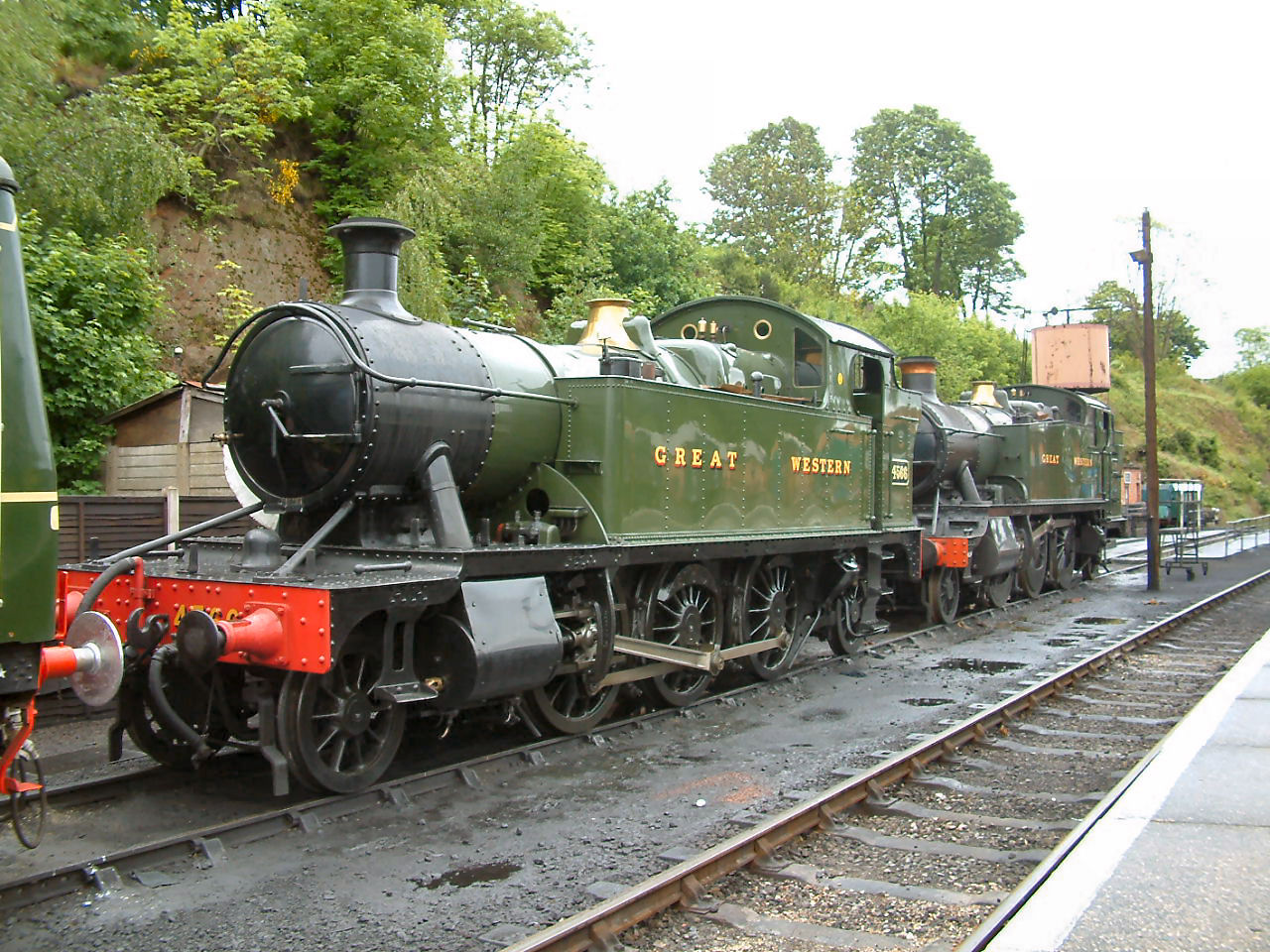
GWR 4400 Small Prairie ClassGeorge Jackson Churchward's 1904 small Prairie tank, the prototype 2-6-2T branch-line engine for the Great Western Railway and the design that established the 2-6-2T as the GWR's preferred branch-line tank arrangement. Eleven engines were built at Swindon Works between 1904 and 1906 with 4 ft 1½ in driving wheels, the smallest of the GWR Prairie tanks. The class served the GWR's lightest branch lines until withdrawal through the 1950s. None survives, but the design influenced the larger and more numerous 4500 and 4575 Small Prairies that followed.
LB&SCR H1 AtlanticDouglas Earle Marsh's 1905 LBSCR H1 class 4-4-2 "Atlantic" — built by Kitson of Leeds to a near-copy of the GNR Ivatt large-boiler Atlantic, the Brighton's first Atlantics. 5 built. The class evolved into the H2 Atlantics; H2 No. 32424 "Beachy Head" is being newly built by the Beachy Head project at the Bluebell Railway.
LNWR George the Fifth ClassBowen Cooke's 1910 LNWR George the Fifth class 4-4-0 — Bowen Cooke's celebrated superheated 4-4-0s. 90 built between 1910 and 1915, the LNWR's premier express engines until superseded by the Claughton 4-6-0s. Named after George V on his accession. None survives; No. 5000 Coronation was withdrawn in June 1940 and scrapped.
NER ES1Wilson Worsdell's 1905 NER ES1 class — Britain's first electric mainline locomotives, built for the NER's Newport-Shildon mineral electrification. Two locomotives. Pioneering — but the line was de-electrified in 1935. The NER ES1 is preserved at the National Railway Museum, York, as one of the earliest surviving British electric locomotive examples and a pioneer of electric goods working on British railways.
NER Tyneside Suburban EMUsNER 1904 Tyneside electric suburban units — Britain's first urban electric multiple units, electrified for the Tyneside loop in response to street tramway competition. The Tyneside electrics ran from 1904 to 1967. None preserved.
Caledonian 179 Dunalastair III ClassThe third of John F. McIntosh's celebrated Dunalastair series for the Caledonian Railway, an inside-cylinder 4-4-0 of 1899–1900 with a larger-diameter boiler than the earlier Dunalastair II. Seventeen were built at St Rollox to handle the heaviest Anglo-Scottish boat trains via the West Coast Main Line. The class lasted into the LMS era under the new Caledonian section and the last withdrawal followed nationalisation in 1948.
Caledonian Railway 903 ClassMcIntosh's 1906 CR 903 class 4-6-0 "Cardean" — McIntosh's celebrated express 4-6-0, named after the prototype's name. The Cardean was a flagship Anglo-Scottish express engine — at one time the heaviest, most powerful express engine in Britain. None preserved.
GWR 3150 ClassChurchward's 1906 GWR 3150 class 2-6-2T — Churchward's standard heavy suburban tank, built at Swindon. None preserved in original form (the related 31xx class was rebuilt from these).
GWR 3900 County ClassChurchward's 1904 GWR 3900 "County" class 4-4-0 — the GWR's last 4-4-0 main-line passenger class, named after English and Welsh counties. 40 built. None preserved. (Distinct from Hawksworth's later 1000 "County" 4-6-0.)
NER Class P3 / LNER J27Wilson Worsdell's heavy mineral 0-6-0 for the North Eastern Railway, designed for the heavy coal traffic from the Durham coalfields to the Tyne and Tees ports. One hundred and fifteen engines were built between 1906 and 1923 at Darlington and other NER works. The class was the LNER's standard NE-area heavy mineral engine through the 1930s and 1940s. Two are preserved.
NER Class V/09 [LNER C7]Vincent Raven's 1911 NER V/09 (LNER C7) 4-4-2 "Z-class" Atlantics — Raven's flagship NER Atlantic, 50 built between 1911 and 1918 for East Coast expresses. None preserved (a serious gap).
GCR Class 9N [LNER A5]Robinson's 1911 GCR 9N (LNER A5) 4-6-2T "Pacific tank" — Robinson's substantial suburban tank engine. 44 built (29 by GCR, 15 by Gresley for the LNER). No A5 survives. All 44 were scrapped.
GWR 4000 Star ClassGeorge Jackson Churchward's pioneering four-cylinder 4-6-0 express passenger engine, introduced in 1907 and developed through to 1923. The Star established the design template for British four-cylinder 4-6-0s, directly influencing the GWR Castles and the LMS Royal Scots, Princesses, and Coronations. 73 were built at Swindon Works.
GWR 4300 Mogul ClassG. J. Churchward's two-cylinder mixed-traffic 2-6-0 for the Great Western Railway, the smaller-wheeled cousin of his Saint Class express engine. 342 were built at Swindon between 1911 and 1932 in successive batches across five sub-class number ranges. The Moguls became the GWR's most prolific and versatile single design, working everything from West Country expresses to Welsh coal trains, and later supplied the basis for several wartime conversions to 7800 sub-class 2-8-0 form. One survives in preservation.
GWR 111 The Great BearThe Great Western Railway's unique experimental Pacific, designed by G. J. Churchward and built at Swindon in February 1908. Britain's first 4-6-2, the engine combined the boiler of the Saint Class with a wide firebox supported on a trailing axle. Restricted by its weight to the Paddington–Bristol main line and not repeated in production, the Great Bear ran for sixteen years before Charles Collett rebuilt it in 1924 as a Castle Class 4-6-0 renamed Viscount Churchill.
GCR Class 8K (LNER O4)John G. Robinson's heavy-freight 2-8-0 designed for the Great Central Railway in 1911. The class was so successful that the War Department adopted it as the standard ROD locomotive in 1917, with 521 engines built between 1917 and 1919 by Vulcan Foundry, NBL, Kitson, NBR and other contractors for service in France. After 1918 surviving engines dispersed across the LNER (where they became class O4), GWR, LMS and SR, and overseas to Australia and China. One example, No. 63601, is preserved at the heritage Great Central Railway.
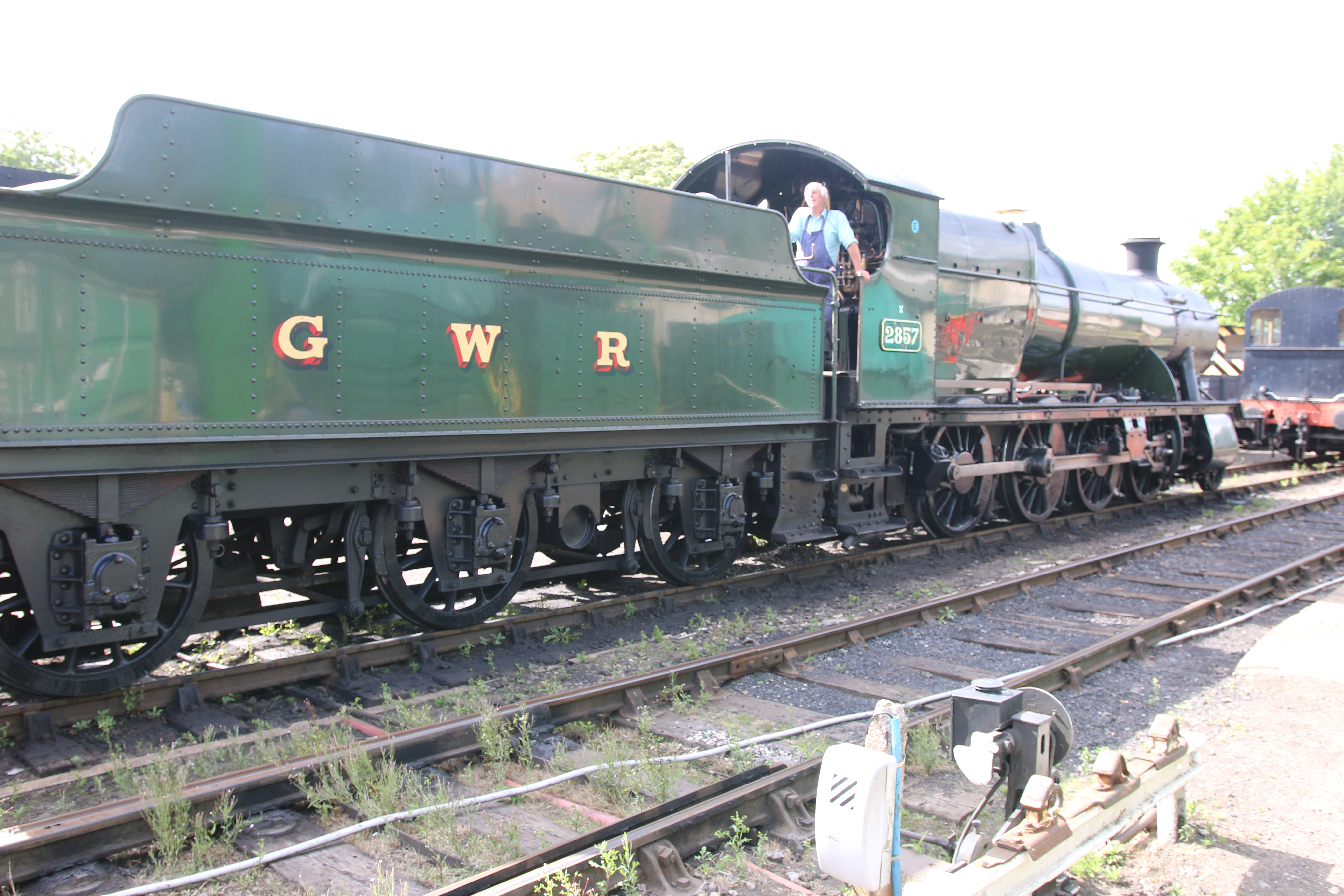
GWR 2800 ClassGeorge Jackson Churchward's pioneering heavy freight 2-8-0, the first British 2-8-0 design and the engine that established the wheel arrangement as the British standard for heavy freight working. The original 84 engines (Nos 2800–2883) were built at Swindon Works between 1903 and 1919; an additional 81 engines (the Collett 2884 sub-class with side-window cabs and Automatic Train Control) were built 1938–1942, a combined production of 165 engines spanning four decades. The class served the GWR and BR Western Region heavy mineral, coal, and goods traffic from Edwardian times through to the end of British steam in 1965. The surviving members include several preserved on heritage railways.
L&YR Hughes A ClassHughes's 1908 L&YR "Hughes A class" 4-6-0 — the L&YR's flagship express engine, eventually evolved into the celebrated LMS Hughes Crab 2-6-0. None preserved in original form.
LSWR H15 ClassRobert Urie's two-cylinder mixed-traffic 4-6-0 introduced 1913 as the first of his standard 4-6-0 family for the London & South Western Railway. The class was the foundation from which the related N15 King Arthur and S15 heavy-freight 4-6-0s were developed. Twenty-six engines were built at Eastleigh between 1913 and 1924, including six post-war Maunsell rebuilds. None preserved.
SECR P ClassHarry Wainwright's small 0-6-0T tank engine for the South Eastern & Chatham Railway, eight engines built at Ashford Works in 1909–1910 for branch-line passenger and dock-shunting work. Originally intended as a steam railmotor replacement, the class was found to be slightly underpowered for its design role and spent most of its working life on dock and station shunting at Folkestone Harbour, Hastings, and similar locations. Four are preserved, exceptional 50% survival.
GWR 4200 Coal Tank ClassChurchward's 1910 GWR 4200 class 2-8-0T — heavy mineral tank for South Wales coal traffic. 205 built between 1910 and 1932. Several preserved including 4253, 4270, 5239 "Goliath", 5224, 5239, 5538, 5541, 5542, 5552, 5572, 5619, 5775. (See also the related 7200 2-8-2T conversions.)
L&YR Class 27Aspinall's 1889 L&YR Class 27 0-6-0 "Aspinall A class" — the L&YR's standard goods 0-6-0, 446 built between 1889 and 1918 (most numerous L&YR class). The L&YR equivalent of the Webb DX. One survives: L&YR No. 1300, later LMS 12322 and BR 52322, built in 1895 and preserved at the East Lancashire Railway, where its most recent overhaul was completed in 2021.
LNWR Prince of Wales ClassBowen Cooke's 1911 LNWR "Prince of Wales" class 4-6-0 — Bowen Cooke's superheated 4-6-0, 246 built between 1911 and 1922. The LNWR's standard mixed-traffic 4-6-0 of the late LNWR/early LMS period. None preserved (a long-running new-build project is in progress).
LSWR S15 ClassRobert Urie's heavy goods 4-6-0 for the London & South Western Railway, a freight equivalent of his N15 King Arthur Class. The original 20 Urie engines were built at Eastleigh Works from 1920; Richard Maunsell continued the design from 1927 with detail improvements, building 25 further engines. Total class: 45 engines. The S15 was the SR's principal heavy freight engine on the West of England line for forty years. Seven are preserved, an exceptional 15% survival rate.
GWR 4300 Class (Churchward Mogul)George Jackson Churchward's 2-6-0 mixed-traffic mogul for the Great Western Railway, designed in 1911 as a smaller-wheeled, two-cylinder workhorse for the company's lighter main lines and heavier branches. The class was the GWR's standard mixed-traffic engine for over thirty years and the largest fleet of its type built in Britain to a single design before the Black Five. 342 were built between 1911 and 1932, and four have survived into preservation.
LBSCR H2 Class AtlanticDouglas Earle Marsh's 4-cylinder 4-4-2 Atlantic, the largest and most powerful express engine ever to run on the London, Brighton and South Coast Railway. The H2 was a development of the earlier H1 Atlantic and represented the culmination of LBSCR express design before Grouping. Five were built between 1911 and 1912; none survived in original form, but a new-build H2 named Beachy Head was completed at the Bluebell Railway in 2023. <p><em>New build: no original member of this class survived into preservation. The preserved total for this class refers to a modern new build constructed to the original design.</em></p>
LMS Fowler Class 4FThe LMS's standard heavy goods 0-6-0, derived from Sir Henry Fowler's 1911 Midland Railway Class 4 design and built in massive numbers under both Midland Railway and LMS ownership. By 1941 some 772 engines had been built across the MR and LMS works and contracted private builders. The 4F was the workhorse of LMS goods traffic throughout the 1930s and 1940s. Four are preserved.
LNER B12 ClassStephen Holden's express 4-6-0 for the Great Eastern Railway, the GER S69 Class of 1911. Eighty-one engines were built between 1911 and 1928 at the GER's Stratford Works and at Beardmore. The B12 was the principal GER and (post-Grouping) LNER East Anglia express engine for thirty years. One survives, 8572 (later 61572), preserved at the North Norfolk Railway.
LNWR Claughton ClassBowen Cooke's 1913 LNWR Claughton class 4-6-0 — Bowen Cooke's flagship express engine. Four-cylinder simple 4-6-0; 130 built. Always troublesome and often outclassed by the smaller Prince of Wales 4-6-0s. Most rebuilt by Stanier as Patriots / Royal Scots in the 1930s. None preserved.
GCR Director ClassJohn George Robinson's 4-4-0 express passenger engine for the Great Central Railway, designed in 1913. The Director was the GCR's premier express engine in the years before Grouping and continued in LNER service through the 1920s and 1930s. 11 were built and one, 506 Butler-Henderson, has been preserved as part of the National Collection.
GNR K2 ClassGresley's 1912 GNR K2 class 2-6-0 — Gresley's first 2-6-0 design, built at Doncaster for GNR mixed traffic. 75 built (10 GNR, 65 LNER). Many lasted into BR days. None preserved.
Highland Railway River ClassFrederick Smith's 1915 Highland Railway "River" class 4-6-0 — six locomotives ordered from Hawthorn Leslie. The HR Civil Engineer, Alexander Newlands, declared them too heavy for HR bridges before delivery; they were sold instead to the Caledonian Railway, where they ran successfully (proving the rejection an embarrassment). The episode caused Smith's resignation. None preserved.
NER Class T2 (LNER Q6) 0-8-0Wilson Worsdell's heavy mineral 0-8-0, designed in 1913 for the North Eastern Railway's coal traffic. The Q6 was the standard NER and LNER North Eastern Region heavy freight engine, hauling the long mineral trains from the Durham coalfields to the Tees and Tyne. 120 were built between 1913 and 1921 at Darlington and Armstrong Whitworth, and one survives in working preservation at the North Yorkshire Moors Railway.
GWR 5100 Large Prairie ClassGeorge Jackson Churchward's 1903 large Prairie tank, the GWR's standard heavy short-haul tank engine for suburban passenger and short-haul mineral traffic. Originally introduced as the 3100 Class in 1903, the design was developed through several batches and renumbered into the 5100 series in 1928. Approximately 60 engines of the original 5100 batch were built between 1903 and 1929 at Swindon Works, with further development in the 5101 and 6100 sub-classes. The class worked principally on suburban and short-haul services in the Birmingham, Cardiff, and London areas. Eleven are preserved across the various Large Prairie sub-classes.
SECR K ClassMaunsell's 1914 SECR K class 2-6-4T "River" class — Maunsell's first 2-6-4 tank engines, named after Kentish rivers. 20 built. Three involved in the August 1927 Sevenoaks derailment due to poor riding on track designed for lighter engines; SR rebuilt the survivors as 2-6-0 tender engines ("U" class). One U class survives.
SECR N ClassRichard Maunsell's two-cylinder mixed-traffic 2-6-0 introduced 1917 for the South Eastern and Chatham Railway, drawing heavily on GWR practice that Maunsell had studied at Swindon. Eighty engines were built across SECR and Southern Railway production, becoming the foundation of all subsequent Maunsell designs, the King Arthur and Lord Nelson 4-6-0s are essentially the N Class enlarged for express work. The class lasted in BR Southern Region service into 1966 and one is preserved.
RODRobinson's GCR 8K class 2-8-0, adopted by the Railway Operating Division (ROD) of the British Army during the First World War as the standard British military 2-8-0. 521 were built for the ROD between 1917 and 1919 by a range of contractors, almost identical to the Great Central engines but mostly with steel fireboxes, which proved short-lived. After the war the surplus locomotives were sold to British and overseas railways, the LNER buying 273 of them and classifying them O4. No ROD-built engine survives; the sole preserved example of the design is 63601, which the Great Central Railway built for itself in 1912, and is covered on the GCR Class 8K page.
SR N Class 2-6-0Richard Maunsell's mixed-traffic 2-6-0 for the South Eastern and Chatham Railway and (later) Southern Railway, designed in 1917 to provide a modern medium-power engine for the SECR's diverse routes. The class influenced many later British 2-6-0 designs and 80 were built between 1917 and 1934. One has survived in preservation as 31874 at the Mid-Hants Railway.
GWR 5400 ClassCollett's 1930 GWR 5400 class 0-6-0PT — light pannier tank for branch and auto-train work. 25 built. None preserved (the 1366 class diesel-mechanical replacements served similar duties). Distinct from the larger 6400 class auto-tanks.
Midland Railway 3835 ClassFowler's 1911 Midland Railway 3835 class 0-6-0 (LMS 4F class) — the MR's standard heavy goods 0-6-0, 192 built between 1911 and 1922; the LMS continued construction (as Standard 4F) and 580 had been built by 1941. The standard British Class 4F goods engine. Two preserved: 4027 (working at the Midland Railway, Butterley) and 43924 (Keighley & Worth Valley Railway).
NER Class S3 (LNER B16)Sir Vincent Raven's mixed-traffic 4-6-0 for the North Eastern Railway, designed in 1919 as a more powerful version of the earlier S2 class. The B16 was the standard NER and LNER North Eastern Region mixed-traffic engine for over forty years, working secondary expresses and heavy fitted freight across the eastern half of the LNER system. 70 were built and none has survived; all seventy were scrapped, the last in November 1964.
NER Class T3 (LNER Q7) 0-8-0Sir Vincent Raven's 3-cylinder 0-8-0 heavy mineral engine for the North Eastern Railway, designed in 1919 as a more powerful development of the earlier Q6. Eight were built between 1919 and 1924, and the class worked the heaviest North-Eastern coal trains until the late 1950s. One survives in preservation as part of the National Collection.
GWR 47xx ClassChurchward's 1919 GWR 4700 class 2-8-0 "Night Owl" — heavy mixed-traffic 2-8-0s for night fitted-freight expresses. 9 built. None preserved (a new-build is under construction by the 47xx Steam Locomotive Co at Llangollen). <p><em>New build: no original member of this class survived into preservation. The preserved total for this class refers to a modern new build constructed to the original design.</em></p>
LNER K3 2-6-0Sir Nigel Gresley's three-cylinder 2-6-0 mixed-traffic engine for the Great Northern Railway and (later) LNER, designed in 1920 as a more powerful development of the earlier K2. The K3 was distinguished by its very large 6 ft diameter boiler, the biggest fitted to any British 2-6-0, and was used principally for fast fitted freight and heavy summer Saturday passenger relief work. 193 were built between 1920 and 1937 and none survived into preservation.
LNER N2 ClassA Gresley-developed 0-6-2 condenser-fitted suburban tank for the LNER, designed in 1920 for the heavy passenger services into and out of King's Cross including Hertford North and Hatfield. 107 were built between 1920 and 1929 by the North British Locomotive Company, Yorkshire Engine Company, and Doncaster Works. One has survived in preservation: 1744 (later 69523) at the Great Central Railway.
L&YR Bury ElectricsHughes's 1916 L&YR Bury–Manchester EMU — Britain's first major suburban electrification. 1200 V DC overhead. The Bury electrics worked from 1916 until replaced in 1991 (after a 75-year service life, all-electric throughout). Some early stock preserved.
LNWR Class G2 (Super D)A Beames superheated 0-8-0 heavy goods engine for the London and North Western Railway, developed from earlier Webb and Whale 0-8-0 designs and outshopped from 1921. The class was the LNWR's standard heavy mineral engine and continued in service through the LMS and BR eras until 1964. 60 were built and one, 49395, has been preserved as part of the National Collection at the National Railway Museum in York.
LNER A3 ClassThe improved Gresley Pacific with higher 220 psi boiler pressure, long-travel valves and detailed steam-circuit improvements over the original A1. The class developed in two ways: 27 new-build engines from 1928 onwards, and progressive rebuilding of all 52 A1 Pacifics to A3 standard between 1928 and 1948. The A3 was the East Coast main line's mainstay express engine through the LNER and BR eras until displaced by the Deltic diesels from 1961. One example survives: No. 60103 Flying Scotsman, the most famous British steam locomotive in preservation.
LNER Class A1 (Gresley original)Sir Nigel Gresley's first three-cylinder Pacific design for the Great Northern Railway in 1922, just before the 1923 Grouping. Fifty-two engines were built between 1922 and 1925 at Doncaster and the North British Locomotive Company. From 1928 the class was progressively rebuilt to A3 standard with higher boiler pressure and improved valve gear; the original A1 form was extinct by 1948. The most famous member, No. 4472 Flying Scotsman, was rebuilt to A3 in 1947 and is now preserved at the National Railway Museum.
LNER Raven Class A2Raven's 1922 NER/LNER A2 class 4-6-2 "Pacific" — Raven's three-cylinder Pacific design for NER East Coast expresses. 5 built. Compared unfavourably with Gresley's new GNR Pacifics in 1923 trials and were progressively withdrawn. None preserved.
LNER/NER Class EE1Raven's 1922 NER EE1 — projected NER electric express prototype, built but never put into regular service due to the 1923 grouping cancellation of the proposed York–Newcastle electrification. Single locomotive. Not preserved.
Metropolitan Railway Bo Bo electricsMetropolitan Railway 1922–23 Vickers/Metropolitan-Vickers Bo-Bo electric locomotives — built for Met main-line electrified services from Baker Street out to Aylesbury and Watford. 20 built. After the 1933 absorption of the Met by London Transport, used until 1962. Met Bo-Bo No. 5 "John Hampden" is at the London Transport Museum, Covent Garden, and No. 12 "Sarah Siddons" is preserved in working order by the LT Museum and runs occasionally.
GWR 4073 Castle ClassCharles Collett's four-cylinder express 4-6-0 of 1923, the GWR's principal heavy express engine for thirty years and one of the most successful British steam classes. The Castle was Collett's development of Churchward's earlier Star Class, a slightly larger boiler at 225 psi, increased cylinder size, and an enlarged cab. One hundred and seventy-one engines were built or rebuilt at Swindon Works between 1923 and 1950 (the totals comprising 155 new builds plus 16 conversions from Star Class engines, including the famous No. 4000 "North Star" and No. 4082 "Windsor Castle"). The Castles were the GWR's express engine of choice on the West of England, Bristol, and Birmingham main lines through to the late 1950s. Eight are preserved.
GWR 5205 ClassCollett's 1923 GWR 5205 class 2-8-0T — Collett's modernised version of the 4200 class with detail improvements. 60 built. Several preserved.
GWR 5600 ClassCharles Collett's 0-6-2T tank engine designed specifically for the South Wales coal traffic, the GWR's standard heavy short-haul tank engine for the Welsh valleys. Two hundred engines were built between 1924 and 1928 at Swindon Works and by Armstrong Whitworth of Newcastle. The class was a Collett response to the absorbed Welsh railway companies' tank-engine fleets at the 1923 Grouping, particularly the Rhymney Railway and Taff Vale Railway 0-6-2 designs that the GWR found inadequate. Nine are preserved.
GWR 6100 Large Prairie ClassCollett's 1931 GWR 6100 class 2-6-2T "Large Prairie" — Collett's standard suburban tank for Paddington–Reading services. 70 built. 6106 is preserved at Didcot.
LNER B17 Sandringham ClassSir Nigel Gresley's three-cylinder 4-6-0 designed for the LNER's Great Eastern Section, introduced 1928 to handle the heavier Liverpool Street–Norwich and Norfolk coast expresses. Seventy-three were built at Darlington and the North British Locomotive Company between 1928 and 1937, with detail variations across three sub-classes (B17/1 to B17/6). Names include 25 famous English country houses (the "Sandringham" sub-class) and 25 English football clubs (the "Footballer" sub-class). All withdrawn 1958–1960; none preserved.
SR CC1/CC2Bulleid's 1941 SR Co-Co electric locomotives CC1 and CC2 (later 20001/20002) — third-rail electric locomotives for SR mainline freight and parcel work. Two built. Subsequently joined by 20003 of similar but uprated design. None preserved.
SR King ArthurRobert Urie's LSWR N15 Class 4-6-0 of 1918, extended and improved by Richard Maunsell after the Grouping to become the Southern Railway's standard heavy express engine through the 1920s and 1930s. Seventy-four engines in total: 20 LSWR-built (1918–1923), 10 Maunsell rebuilds known as the "Scotch Arthurs" built at Eastleigh in 1925, 30 built by the North British Locomotive Company in 1925, and 14 final engines built at Eastleigh in 1926–1927. Maunsell named the class after King Arthur and his Knights of the Round Table, a Southern publicity coup. One is preserved.
LMS Fowler Class 3F "Jinty"Sir Henry Fowler's standard LMS shunting and short-haul tank engine, universally known as the "Jinty". Four hundred and twenty-two engines were built between 1924 and 1931 across the LMS workshops and contracted private builders. The Jinty was the LMS's universal small tank engine for stations, goods yards, dock work, and short-haul mineral traffic. Ten are preserved.
LNER Class P2Sir Nigel Gresley's three-cylinder 2-8-2 (Mikado) express locomotive of 1934, designed specifically for the heavy and gradient-bound Edinburgh–Aberdeen route. Six were built at Doncaster between 1934 and 1936; all six were rebuilt by Edward Thompson in 1943–1944 to A2/2 4-6-2 Pacific form, and the original P2 wheel arrangement was extinct on the LNER from 1944. The original prototype No. 2001 carried the celebrated name Cock o' the North; a new-build P2, No. 2007 Prince of Wales, is currently under construction by the A1 Steam Locomotive Trust. <p><em>New build: no original member of this class survived into preservation. The preserved total for this class refers to a modern new build constructed to the original design.</em></p>
SR E1/RStroudley's LBSCR E1 class 0-6-0T rebuilt by Maunsell / Bulleid in 1927 onwards as 0-6-2T "E1/R" with radial trailing axle for branch passenger work, particularly in North Devon. None preserved in E1/R form.
LMS Royal Scot ClassThree-cylinder express 4-6-0 designed for the LMS in 1927 by Sir Henry Fowler with North British Locomotive Company collaboration, a rapid response to the urgent post-Grouping need for heavier West Coast main-line motive power. Seventy-one engines were built in 1927–1930. Most were progressively rebuilt by H. G. Ivatt from 1943 onwards with new tapered Stanier-pattern boilers, double chimneys, and smoke deflectors, a reconstruction so thorough that the rebuilt engines became effectively a different class. Two are preserved.
LNER Class P1Sir Nigel Gresley's heavy-freight three-cylinder 2-8-2 (Mikado) of 1925, designed to handle 100-wagon coal trains in a single working between Peterborough and London. Two were built at Doncaster, Nos 2393 and 2394, combining the boiler of the contemporary A1 Pacific with eight-coupled drive and a wide firebox. The class proved underused as the LNER's loose-coupled wagon stock could not in practice be marshalled into the long trains the design was intended to haul. Both engines were withdrawn in 1945 without preservation; the design directly influenced Gresley's P2 of 1934.
LNER Class U1The unique LNER 2-8-0+0-8-2 Beyer-Garratt articulated locomotive No. 2395, designed by Sir Nigel Gresley and built by Beyer, Peacock & Co. of Manchester in 1925. The largest steam locomotive built for any British railway, the engine was constructed specifically to bank coal trains up the 1-in-40 Worsbrough Bank between Wath and Penistone on the Manchester, Sheffield & Lincolnshire main line. Replaced by the 1500 V dc Manchester–Sheffield electrification in 1949 and withdrawn 1955; not preserved.
LNER Class Y1 SentinelSentinel Waggon Works geared steam shunting tanks supplied to the LNER from 1925, designated Y1 (single-speed) and Y3 (two-speed). Vertical-boiler chain-driven 0-4-0 industrial-type shunters used for light shunting and dock work. Several preserved by industrial railway museums.
LNER N7 ClassAlfred Hill's 1915 GER L77 class (LNER N7) 0-6-2T — GER standard heavy suburban tank for Liverpool Street services. 134 built (12 GER, 122 LNER) between 1915 and 1928. LNER N7 No. 69621 is preserved at the East Anglian Railway Museum at Chappel & Wakes Colne, which owns it, on static display pending overhaul.
SR Schools ClassRichard Maunsell's three-cylinder 4-4-0 of 1930, the most powerful 4-4-0 ever built in Britain and one of the last new express 4-4-0 designs in any country. Forty engines were built at Eastleigh Works between 1930 and 1935 specifically for the Hastings line restricted loading gauge, a route on which the King Arthurs and other 4-6-0s could not run. Each engine was named after a famous British public school. Three are preserved.
LMS Hughes Crab 2-6-0George Hughes's mixed-traffic 2-6-0 for the LMS, designed in 1926 as a long-overdue successor to the older Lancashire and Yorkshire 2-6-0s. Notable for the steeply-inclined outside cylinders that gave the class its "Crab" nickname, the design proved extremely successful and 245 were built between 1926 and 1932. Three examples have survived into preservation.
SR Lord Nelson ClassRichard Maunsell's four-cylinder express 4-6-0 for the Southern Railway. Sixteen were built at Eastleigh between 1926 and 1929 to handle the heavy Continental boat trains. On introduction the Lord Nelson was the most powerful express locomotive in Britain, a record held until the GWR King appeared in 1927. The class became distinguished by its 135° crank setting, giving eight exhaust beats per revolution, and from 1938 by Oliver Bulleid's Lemaître multiple-jet blastpipe modifications. One survives, No. 850 Lord Nelson itself.
GWR 4575 ClassCharles Collett's 1927 development of the GWR 4400 Small Prairie, a 2-6-2T branch-line tank engine with 4 ft 7½ in driving wheels (larger than the 4400's 4 ft 1½ in) for higher-speed branch working. One hundred engines were built at Swindon Works between 1927 and 1929 (Nos 4575–4599 and 5500–5574), with the distinctive curved-top side tanks that gave the class its visually distinct appearance. The class was the GWR standard branch-line tank engine on light routes for thirty years. Eleven are preserved.
GWR 5700 ClassCharles Collett's standard GWR pannier tank, the second-most-numerous British steam class ever built. Eight hundred and sixty-three engines were built between 1929 and 1950, principally at Swindon Works but with substantial contracted production by Armstrong Whitworth, Beyer Peacock, the North British Locomotive Company, W. G. Bagnall, Kerr Stuart, and the Yorkshire Engine Company. The 5700 Class worked virtually every kind of GWR shunting, branch-line, and short-haul duty for over forty years, becoming the iconic GWR small tank engine. Sixteen are preserved, the largest preserved population of any British tank engine class.
GWR 6000 King ClassCharles Collett's heaviest express 4-6-0, the GWR's top-link express engine for thirty years and the most powerful 4-6-0 ever built in Britain. Thirty engines were built at Swindon Works between 1927 and 1936. The King was developed from the Castle Class with a larger 5 ft 11 in maximum diameter boiler at 250 psi, larger cylinders, and a heavier chassis, pushing the GWR's two-cylinder-loading-gauge envelope to its absolute limit. The Kings were restricted to the GWR's heaviest main lines (Paddington to Plymouth, Birmingham, and the South Wales main line) by their 22.5-ton axle load. Three are preserved.
LNER K4 ClassSir Nigel Gresley's three-cylinder 2-6-0 designed specifically for the West Highland Line between Glasgow and Fort William, where heavy gradients and tight curves demanded a powerful but route-cleared mixed-traffic engine. Six were built at Darlington between 1937 and 1939; one, No. 61994 The Great Marquess, survives in preservation. The remaining five were progressively withdrawn between 1959 and 1961.
GWR 4900 Hall ClassCharles Collett's go-anywhere mixed-traffic 4-6-0 for the Great Western Railway. Two hundred and fifty-nine were built at Swindon between 1928 and 1943, derived from the earlier Saint Class but with smaller six-foot driving wheels suited to both passenger and freight work. The Halls ranged across the entire GWR system, set the pattern for the LMS Black Five and the BR Standard 5MT, and eleven were saved from Barry. Ten remain as Halls; the eleventh, 4942 Maindy Hall, was rebuilt into the Saint Class 2999 Lady of Legend and is counted under the Saints.
LMS FowlerFowler's 1927 LMS 2-6-4T "Fowler tank" — first of the LMS 2-6-4T family. 125 built. The class evolved into Stanier's larger 2-6-4Ts. None survived into preservation; the 2-6-4T type is represented by Stanier's and Fairburn's later developments of the design.
LNER D49 Hunt/Shire ClassSir Nigel Gresley's three-cylinder 4-4-0 designed for the LNER's Scottish and North Eastern Areas, introduced 1927. 76 were built at Darlington between 1927 and 1935 in two named sub-classes: 28 "Shires" named after British counties and 31 "Hunts" named after fox hunts. The remaining 17 were unnamed. The class worked Edinburgh–Aberdeen, Edinburgh–Glasgow and East Coast secondary expresses for over thirty years. One example, No. 246 Morayshire, is preserved at the Bo'ness & Kinneil Railway.
SR N15X ClassMaunsell's 1934 SR N15X class 4-6-0 — rebuilds of the LBSCR L class 4-6-4Ts ("Brighton Tanks") into 4-6-0 tender engines, broadly to N15 "King Arthur" pattern. 7 built. None preserved.
SR U ClassMaunsell's SR U class 2-6-0 of 1928 — 50 locomotives for the Southern Railway, twenty of them rebuilt from the earlier River class 2-6-4 tanks after the Sevenoaks derailment of 1927, the remainder built new. Mixed-traffic engines used widely across the Southern system. One, No. 31806, is preserved on the Watercress Line (Mid-Hants Railway).
GWR 5101 Class (Large Prairie)Charles Collett's 2-6-2 large prairie tank for the Great Western Railway, built between 1929 and 1949 as a development of Churchward's earlier 3100 and 5100 designs. Used principally on outer-suburban and branch passenger work in the Birmingham, Cardiff, and London suburbs, the class became one of the most numerous GWR tank engines and survived in service until the very end of Western Region steam in 1965. Around 140 were built and ten have survived in preservation.
LMS Patriot ClassA three-cylinder express 4-6-0 introduced 1930 for the LMS, nominally Henry Fowler's design but built mainly under Stanier and Ivatt. Often called the "Baby Scots" because they were nominally rebuilds of withdrawn LNWR Claughtons but were effectively new engines. 52 were built at Crewe and Derby between 1930 and 1934. From 1946 Stanier rebuilt 18 with taper boilers (the "Rebuilt Patriot" sub-class). All withdrawn 1960–1965; no original preserved. A new-build engine, No. 5551 The Unknown Warrior, is under construction. <p><em>New build: no original member of this class survived into preservation. The preserved total for this class refers to a modern new build constructed to the original design.</em></p>
GWR 2251 Class (Collett Goods)Charles Collett's 0-6-0 inside-cylinder goods locomotive for the Great Western Railway, designed in 1930 to replace the older Dean Goods on light branch and pick-up freight work. 120 were built at Swindon Works between 1930 and 1948, the last being one of the very last new-build steam locomotives delivered to the GWR before nationalisation. Five have survived in preservation.
LNER Class V2Sir Nigel Gresley's three-cylinder mixed-traffic 2-6-2 (Prairie) introduced 1936. 184 engines were built at Doncaster and Darlington between 1936 and 1944, sharing boiler, cylinders and valve gear with the contemporary A4 Pacifics but with smaller 6 ft 2 in driving wheels suited to mixed-traffic versatility. The class became the LNER's standard heavy mixed-traffic engine and was widely admired for its ability to deputise for failed Pacifics on principal East Coast expresses, including the Flying Scotsman. The prototype No. 4771 Green Arrow is preserved at the National Railway Museum.
LNER EB1 ClassRaven's 1914 NER EB1 class — Raven's mineral electric for the NER's Shildon–Newport mineral line electrification. Bo-Bo. 10 built. The line was de-electrified in 1935; locomotives stored, then scrapped.
GWR 1400 ClassCharles Collett's small auto-fitted 0-4-2T tank engine for short-haul branch and auto-train work, designed specifically to work GWR auto-coaches with through-control of the locomotive's regulator from the driving end of the auto-coach. Seventy-five engines were built at Swindon Works between 1932 and 1936. The 1400 was the GWR's standard auto-train tank engine for thirty years. Four are preserved.
LMS 1831Earliest LMS diesel-electric shunter prototype, 1832 (1932 build). Single locomotive. Predecessor to the LMS 0-6-0DE class that became BR Class 08. Not preserved.
LNER 26000 TommyGresley's 1941 LNER prototype Bo+Bo electric locomotive No. 6701 (BR 26000) "Tommy" — built for the projected Manchester–Sheffield (Woodhead) electrification, but spent the war loaned to Dutch Railways before returning in 1952. Designed for 1500 V DC overhead. Class EM1 / EM2. 26000 "Tommy" preserved at the National Railway Museum.
LNER W1 Hush-HushThe LNER's unique high-pressure compound 4-6-4 No. 10000, designed by Sir Nigel Gresley and built at Darlington in 1929. Originally fitted with a Yarrow marine-type water-tube boiler at 450 psi and four-cylinder compound expansion, the engine was so secretive a project that it was nicknamed "Hush-Hush" by the railway press. Performance disappointing in service; rebuilt in 1937 to a streamlined three-cylinder simple-expansion form, the only British 4-6-4 main-line steam engine. Withdrawn 1959; not preserved.
GWR 6800 Grange ClassCharles Collett's lighter mixed-traffic 4-6-0 for the Great Western Railway, designed in 1936 to work cross-country and secondary main-line routes barred to the heavier Hall Class. Eighty engines were built at Swindon between 1936 and 1939, using parts recovered from withdrawn 4300 Moguls. None of the original Grange Class survived to preservation, but a new-build engine, No. 6880 Betton Grange, was completed at Llangollen in 2024 to recreate the class. <p><em>New build: no original member of this class survived into preservation. The preserved total for this class refers to a modern new build constructed to the original design.</em></p>
LMS TurbomotiveStanier's 1935 LMS 6202 "Turbomotive" — a unique LMS Princess Royal class 4-6-2 fitted with a Ljungström steam turbine instead of cylinders. Worked LMS expresses 1935–1949 with mixed success; rebuilt as conventional Princess Royal No. 46202 "Princess Anne" in 1952, but destroyed in the Harrow & Wealdstone disaster of 8 October 1952 only weeks after entering service. Not preserved.
LNER A8 ClassRaven's 1913 NER H1 class 4-4-4T rebuilt by Gresley from 1933 as A8 class 4-6-2T — outer-suburban Pacific tanks for NER/LNER North-Eastern routes. 45 rebuilt. None preserved.
GWR 1366 ClassFrederick Hawksworth's small pannier tank for the Great Western Railway, designed in 1934 as a replacement for the older 1361 saddle tank for dock and short branch shunting where the older 5700 panniers were too long. Six were built at Swindon Works in 1934, and the class is most associated with the Wadebridge depot in Cornwall, where they replaced the Beattie well tanks on the Wenford Bridge china clay branch in 1962. One survives in preservation as 1369 at the South Devon Railway.
GWR 7200 ClassA heavy 2-8-2 tank engine for the GWR, designed in 1934 by Charles Collett by rebuilding the older 4200 Class 2-8-0 tank as a longer-coupled 2-8-2 with a larger bunker and more water capacity for South Wales coal traffic. 54 were built between 1934 and 1939, and three have survived in preservation.
LMS Diesel ShuntersGeneric reference to LMS 0-6-0 diesel-electric shunters (1934–1944), the LMS development that culminated in the BR Class 08 — by far the most numerous British diesel locomotive class. Several preserved across heritage railways.
LMS Jubilee ClassSir William Stanier's three-cylinder express 4-6-0, the LMS's principal express engine on routes that could not accept the heavier Pacifics. One hundred and ninety-one engines were built between 1934 and 1936 across Crewe, Derby, and the North British Locomotive Company. The class was named to mark King George V's Silver Jubilee of 1935; engines were named after British colonies and dominions, naval ships, places, and dignitaries. Four are preserved, Bahamas, Kolhapur, Leander, and Galatea, three of which are main-line registered.
LMS Princess RoyalSir William Stanier's first Pacific design for the LMS, a four-cylinder express 4-6-2 produced in 1933 to take over the heaviest West Coast main-line expresses from the Royal Scot 4-6-0s. Thirteen engines were built at Crewe Works in 1933–1935, including the unique turbine-driven prototype No. 6202. The class introduced large taper-boiler Pacific practice to the LMS and provided the engineering foundation for Stanier's later Princess Coronation. Two are preserved.
LMS Stanier Black FiveSir William Stanier's two-cylinder mixed-traffic 4-6-0, the most numerous and arguably the most successful steam class ever to run in Britain. Eight hundred and forty-two engines were built between 1934 and 1951 across Crewe, Horwich, Derby, Vulcan Foundry, and Armstrong Whitworth, with the final batches outshopped under British Railways. The class had universal LMS and BR route availability, hauled almost every kind of train from Glasgow to Bournemouth, and worked through to the very end of British steam in August 1968. Eighteen are preserved.
LMS Stanier 8FSir William Stanier's heavy freight 2-8-0, the LMS's standard heavy goods engine and a major British wartime military export. Eight hundred and fifty-two engines were built between 1935 and 1946 by Crewe, Horwich, the Vulcan Foundry, the North British Locomotive Company, Beyer Peacock, and (under wartime government direction) the LNER's Doncaster, the GWR's Swindon, and the Southern's Brighton and Eastleigh Works. Many were sent overseas during World War II for military service, particularly in Persia, Egypt, and Italy. Seven are preserved.
LNER Class A4Sir Nigel Gresley's streamlined three-cylinder Pacific designed for the LNER's Silver Jubilee high-speed service of 1935. Thirty-five engines were built at Doncaster between 1935 and 1938, refined from his earlier A1 and A3 Pacifics with internal-streamlined steam circuits, a 250 psi boiler, and a wedge-shaped air-smoothed casing developed in wind-tunnel tests. The class is most famous for No. 4468 Mallard, which on 3 July 1938 attained 126 mph (203 km/h) descending Stoke Bank, the world steam speed record, never since matched. Six A4s are preserved.
GWR 3200 Class (Dukedog)A hybrid GWR 4-4-0 created in 1936 by Charles Collett by combining the boilers of the Bulldog Class with the frames of the Earl Class (a partial rebuild of the older Duke Class). 29 were built between 1936 and 1939 at Swindon Works, mainly for use on the Cambrian section of the Great Western Railway where their light axle load and short wheelbase suited the constraints of the line. One has survived in preservation as 9017 Earl of Berkeley at the Bluebell Railway.
LMS Princess CoronationSir William Stanier's four-cylinder Pacific designed for the LMS's Coronation Scot service of 1937, the most powerful express passenger steam locomotive ever built in Britain. Thirty-eight engines were constructed at Crewe Works between 1937 and 1948, the first batch in streamlined "torpedo" casing for the Anglo-Scottish high-speed service, later batches and the post-war engines unstreamlined. The class set a British steam speed record of 114 mph (1937) and worked the West Coast main-line top-link expresses through to early-1960s replacement by Type 4 diesels. Three are preserved.
SR Q1Oliver Bulleid's wartime austerity 0-6-0 for the Southern Railway, the most distinctive (and to many eyes the ugliest) British steam locomotive design. Forty engines were built at Eastleigh and Brighton in 1942 to a brief that demanded maximum power, minimum weight, and the use of unconventional materials to economise on wartime steel and copper. The class was nicknamed "Charlies" or simply "the Q1s", the name reflecting their unconventional appearance. One is preserved.
SR Merchant NavyOliver Bulleid's three-cylinder air-smoothed Pacific for the Southern Railway, the most experimental British express steam locomotive ever to enter regular service. Thirty engines were built at Eastleigh Works between 1941 and 1949, originally with chain-driven valve gear in an oil bath, welded steel firebox, thermic siphons, and a distinctive air-smoothed casing. The Bulleid design was technically advanced but mechanically temperamental; British Railways rebuilt all thirty engines between 1956 and 1959 to conventional form with three independent Walschaerts gears and a removed casing. Eleven Merchant Navies are preserved.
GWR 7800 Manor ClassCharles Collett's lighter mixed-traffic 4-6-0, designed for the lighter cross-country routes inaccessible to the heavier Hall Class. Twenty engines were built at Swindon Works in 1938–1939, plus a further ten in 1950 under Frederick Hawksworth, total class 30. The Manors used reconditioned GWR 4300 Mogul motion and frames combined with a smaller GWR Standard No. 14 boiler, giving them a distinctive lighter outline. The class worked principally on Cambrian Line and lighter cross-country services. Nine are preserved.
LNER EM2BR Class 77 (originally LNER class EM2) Co-Co electric express locomotives for the Manchester–Sheffield Woodhead route, built 1953–54. 7 built. After the Woodhead closure of 1981 the class was sold to Nederlandse Spoorwegen, where they ran for several more years. Three preserved: 27000 "Electra", 27001 "Ariadne", 27003 "Diana". 27000 is at the Midland Railway Centre.
LNER Thompson B1 ClassEdward Thompson's standardised mixed-traffic 4-6-0 for the LNER, designed in 1942 to a single-class brief that would replace the company's many ageing pre-Grouping 4-6-0s. 410 were built between 1942 and 1952 and they became the LNER's and Eastern Region's general-purpose engine, the LNER equivalent of the LMS Black Five.
SR USA Class 0-6-0TA small fleet of 0-6-0 dock shunting tank engines acquired by the Southern Railway in 1947 from US Army Transportation Corps stock. Built in 1942 and 1943 by H. K. Porter, Vulcan Iron Works, and Davenport in the United States for wartime port work in Europe, the engines were sold off after the war and 14 were bought by the SR for use at Southampton Docks. Several have survived in preservation, including two working on the Kent & East Sussex Railway.
LNER B1 ClassEdward Thompson's two-cylinder mixed-traffic 4-6-0 designed in 1942 as a wartime austerity replacement for the Gresley three-cylinder K3 and B17. 410 were built between 1942 and 1952 at Darlington, Vulcan Foundry and the North British Locomotive Company. The B1 became the LNER's standard general-purpose engine and continued in BR Eastern Region service to 1967. Two are preserved.
WD Austerity 2-8-0R. A. Riddles's wartime austerity heavy freight 2-8-0, a simplified design produced at speed for the War Department in 1943, drawing on his earlier LMS 8F but stripped of every non-essential feature. Some 935 engines were built between 1943 and 1945 at the North British Locomotive Company and Vulcan Foundry. After wartime service across Europe, ~733 were repatriated to British Railways and worked heavy freight through to 1967. About 9 are preserved.
GWR 6959 Modified Hall ClassFrederick Hawksworth's 1944 development of Charles Collett'sGWR 4900 Hall Class, the Modified Hall (sometimes called the "Hawksworth Hall") was a two-cylinder mixed-traffic 4-6-0 with revised plate frames carried forward to the smokebox saddle, individual bogie springing in place of the equalising beam, a three-row superheater, and a higher-pitched main steam pipe casing. 71 were built at Swindon Works between 1944 and 1950, the prototype 6959 emerging in March 1944 and the last, 7929 <em>Wyke Hall</em>, in November 1950. Withdrawn between 1962 and 1965 alongside the Collett Halls. Seven examples are preserved.
LNER Thompson A2/1 ClassThompson's 1944 LNER A2/1 class 4-6-2 — Thompson rebuilds of Gresley P2 "Mikado" class 2-8-2s (originally six built for Edinburgh–Aberdeen) into Pacific Pacifics. 4 built (P2/2 boiler retained). Lost the unique character of Gresley's P2s. None preserved (the new-build P2 "Prince of Wales" project at Darlington restores the original 2-8-2 layout).
LNER Thompson A2/2 ClassThompson's 1944 LNER A2/2 class — additional Thompson Pacifics. Thompson rebuilt the remaining P2s and built new A2/3s of similar pattern. None preserved in original P2 form.
GWR 1000 County ClassFrederick Hawksworth's post-war two-cylinder 4-6-0 mixed-traffic class for the Great Western Railway, introduced 1945 with the highest boiler pressure of any GWR class at 280 psi. Thirty engines were built at Swindon between 1945 and 1947 and named after English and Welsh counties. None of the original 30 was preserved; a new-build engine, No. 1014 County of Glamorgan, is currently under construction at Didcot Railway Centre.
LMS Fairburn 2-6-4TCharles Fairburn's development of the Stanier 2-6-4T with shortened wheelbase, introduced 1945. 277 were built at Derby and Brighton between 1945 and 1951 for LMS and BR suburban services. The class became the standard British suburban tank engine of the post-war era and lasted in BR service to 1967. Two are preserved at the Lakeside & Haverthwaite Railway in Cumbria.
SR West Country / Battle of BritainOliver Bulleid's air-smoothed Light Pacifics, 110 three-cylinder 4-6-2s built at Brighton and Eastleigh between 1945 and 1951. Mechanically a single class with two naming themes: 70 named after West Country towns and resorts, the remainder honouring RAF squadrons, airfields, and Battle of Britain personalities. Innovative to the point of trouble, chain-driven valve gear in an oil bath, welded steel firebox, multiple-jet blastpipe, and the unmistakable 'spam can' casing. Sixty members were rebuilt by R. G. Jarvis at Eastleigh between 1957 and 1961 in a more conventional form; fifty ran in original Bulleid condition until withdrawal. Twenty survive in preservation, ten in each form.
GWR 9400Hawksworth's 1947 GWR 9400 class 0-6-0PT — Hawksworth's last GWR pannier tank design, with Belpaire firebox and superheating. 210 built (10 GWR pre-Nationalisation, 200 BR/Western Region post-1948). 9466 preserved at the Didcot Railway Centre; 9400 itself at STEAM Swindon.
LMS Ivatt 2MT (Class 2 Mogul)Henry George Ivatt's small mixed-traffic 2-6-0, designed in 1946 for branch and secondary work on the LMS. The class introduced a number of modern features, including self-cleaning smokeboxes, rocking grates, and self-emptying ashpans, and became the basis for the BR Standard Class 2 mogul. 128 were built at Crewe and Darlington between 1946 and 1953, and seven survive in preservation.
LNER Thompson A1/1Thompson's 1945 rebuild of Gresley A1 prototype 4470 "Great Northern" into Thompson A1/1 class — an unsuccessful and controversial rebuild that lost much of Gresley's elegance. 4470 rebuilt 1945, scrapped 1962. Not preserved.
LNER Thompson L1 ClassThompson's 1945 LNER L1 class 2-6-4T — Thompson's standard suburban tank for Eastern Region services. 100 built between 1945 and 1950. None preserved.
LMS 10000 / 10001Britain's first main-line diesel locomotives. Designed by H. G. Ivatt for the LMS in collaboration with English Electric, 10000 was outshopped from Derby Works in December 1947, three weeks before nationalisation, with sister 10001 following in July 1948 under British Railways. Working singly or as a pair, they handled expresses including the Royal Scot, were transferred to the Southern Region in 1953 for comparison with Bulleid's 10201/10202/10203, and returned to the London Midland Region in 1955. Their English Electric 16SVT prime mover went on to power Classes 20, 31, 37, 40, and 50. Both were scrapped in 1968; a new-build replica is under construction by the Ivatt Diesel Re-creation Society.
LMS Ivatt 4MT 2-6-0Henry George Ivatt's mixed-traffic 2-6-0 for the LMS, designed in 1947 as a more powerful companion to the Ivatt 2MT mogul. Nicknamed the "Flying Pig" or "Doodlebug" for its slightly ungainly appearance, the class became the basis for the BR Standard 4MT 2-6-0. 162 were built between 1947 and 1952 and four have survived in preservation.
LNER Peppercorn A1 ClassArthur Peppercorn's three-cylinder Pacific designed for the LNER as the East Coast post-war flagship. Forty-nine engines were built at Doncaster and Darlington between August 1948 and December 1949, all under British Railways ownership although designed under the LNER. The class used three independent sets of Walschaerts valve gear (rather than Gresley's conjugated arrangement), giving outstanding reliability and economy. Withdrawn 1962–1966 with no original example preserved; the new-build No. 60163 Tornado was completed in 2008 to original Peppercorn drawings. <p><em>New build: no original member of this class survived into preservation. The preserved total for this class refers to a modern new build constructed to the original design.</em></p>
LNER Peppercorn A2 ClassArthur Peppercorn's three-cylinder mixed-traffic Pacific, fifteen engines built at Doncaster between December 1947 and August 1948, with only the first (60525 A.H. Peppercorn) completed under LNER ownership before nationalisation. With 6 ft 2 in driving wheels, a 250 psi boiler, and a tractive effort of 40,430 lbf, the Peppercorn A2 was the most powerful Pacific class on the LNER and proved a particularly fine fit for the demanding Edinburgh–Aberdeen road. 60526 Sugar Palm achieved 101 mph on Stoke Bank in 1961. Withdrawn between 1962 and June 1966; only 60532 Blue Peter survives.
LNER Peppercorn K1 ClassPeppercorn's 1949 LNER/BR K1 class 2-6-0 — Peppercorn's improvement of Thompson's K1/1, postwar two-cylinder 2-6-0. 70 built 1949–1950. K1 No. 62005 "Lord of the Isles" is preserved on the North Yorkshire Moors Railway in working order, regular performer on the Jacobite mainline tour.
SR Leader ClassBulleid's 1947–49 SR "Leader" class — Bulleid's last and most controversial design, a six-axle articulated double-bogie 0-6-6-0T with a sleeve-valve-engined boiler housed in an enclosed body. Five ordered; only the prototype completed; testing was abandoned in 1950 and the engines were scrapped. The Leader was a remarkable but commercially unsuccessful attempt to create a steam locomotive with the convenience of a diesel. Not preserved.
BR Standard Class 4MTBritish Railways' standard medium mixed-traffic 4-6-0, a smaller-axle-load BR Standard design intended to provide modern motive power for routes inaccessible to the Class 5MT. Eighty engines (Nos 75000–75079) were built at Swindon and Doncaster between 1951 and 1957. The 4MT 4-6-0 supplemented the contemporary BR Standard 4MT 2-6-4T (80000 series) and 4MT 2-6-0 (76000 series) in providing comprehensive medium-power coverage across BR. Six are preserved.
BR Standard Class 5MTBritish Railways' standard mixed-traffic 4-6-0, the BR-era successor to the LMS Black Five and GWR Hall families, designed under the BR Standard programme by R. A. Riddles. One hundred and seventy-two engines were built at Derby and Doncaster between 1951 and 1957. The class incorporated all the BR Standard design principles, two-cylinder layout, accessible high-set running plate, exposed valve gear, and BR-pattern cab, and gave outstanding service across all BR regions. Six are preserved.
BR Standard Class 7 BritanniaBritish Railways' first Standard Pacific design, a two-cylinder mixed-traffic 4-6-2 produced as the lead express engine of the 1951 BR Standard programme under R. A. Riddles. Fifty-five engines were built at Crewe Works between 1951 and 1954 to a deliberate brief of simple, accessible engineering, two cylinders, high-set running plate, exposed boiler bands, and outside Walschaerts valve gear with all moving parts visible from outside. The class worked as a top-link express and mixed-traffic engine on the Eastern, Western, and Southern Regions, including BR's last main-line steam working (the Fifteen Guinea Special of August 1968). Two are preserved.
BR Standard Class 8 Duke of GloucesterThe unique BR Standard Class 8 Pacific No. 71000 Duke of Gloucester, designed by R. A. Riddles and built at Crewe in 1954 as a one-off intended as a class. The engine combined Caprotti rotary-cam valve gear with three cylinders. Performance in service was disappointing because of design compromises in the draughting; the 1955 Modernisation Plan ended any prospect of a class. Withdrawn in 1962 and preserved by Bob Mears, the engine was returned to working order in the 1980s with substantial design improvements that revealed the original's latent capability.
BR Standard Class 9FBritish Railways' heavy freight 2-10-0, the most numerous and arguably the most successful of the twelve BR Standard classes, and the last new British heavy freight steam design. Two hundred and fifty-one engines were built at Crewe and Swindon Works between 1954 and 1960. The 9F transformed BR heavy freight working in the late 1950s, performing duties beyond expectations including high-speed passenger work. The very last BR Standard ever built, No. 92220 "Evening Star" of March 1960, was also the last steam locomotive built by British Railways. Nine are preserved.
BR 10800BR 10800 — single English Electric/Hawthorn Leslie diesel-mechanical mainline locomotive, built 1949 as a Bo-Bo. Used on the LMR for trials; never entered regular service. Sold to Brush in 1962 and used as the test-bed for the development of what would become the Class 47 "Hawk" engine. Not preserved.
GWR 1500 / 1600 ClassHawksworth's 1949 GWR/BR 1500 class 0-6-0PT and 1949 1600 class 0-6-0PT — Hawksworth's pannier tank designs. The 1500 class (10 built) was a heavy outside-cylinder shunting tank; the 1600 class (70 built) was a light branch tank. 1501 (1500), 1638, 1369 (a related light tank) preserved.
GWR 1500 ClassHawksworth's unconventional final pannier tank, a heavy 0-6-0PT shunter with outside cylinders, Walschaerts valve gear, no running plate, and a very short wheelbase, designed at Swindon during the GWR's last years but built entirely under British Railways in 1949. The ten members of the class spent most of their working lives shuffling empty coaches in and out of Paddington, with a Welsh contingent based around Newport. Their service lives were short; only 1501 survives in preservation.
BR Standard Class 2MT (78000 series)R. A. Riddles' light mixed-traffic 2-6-0 in the BR Standard programme, designed for cross-country and branch line work. 65 were built at Darlington Works between 1953 and 1956. Closely related to George Ivatt's LMS Class 2 design of 1946 and effectively a BR Standard development of it. The class lasted in BR service to 1967 and four are preserved.
BR Standard Class 4MT 2-6-4TBritish Railways' standard medium-power suburban tank engine, a 2-6-4T sister to the BR Standard Class 4MT 4-6-0 (sharing the same 4MT classification but the tank-engine wheel arrangement). One hundred and fifty-five engines were built at Brighton, Derby, and Doncaster between 1951 and 1957 for outer-suburban and short-haul passenger services. About ten are preserved, the highest preservation rate of any BR Standard tank-engine class.
BR Class 81BR Class 81 (originally AL1) Bo-Bo electric locomotives — pioneering 25 kV AC overhead electric locomotives built 1959–64 for the West Coast Main Line electrification by AEI/Birmingham. 25 built. Withdrawn 1989–91. One survives: 81002, preserved by the AC Locomotive Group at Barrow Hill Roundhouse in Derbyshire. The other 24 were scrapped, most at Coopers Metals in Sheffield in the early 1990s.
BR Standard 3MTRiddles' lightweight tank engine for branch and cross-country passenger work, a 2-6-2T mixed-traffic Prairie design built at Swindon between 1952 and 1955. Forty-five constructed (82000–82044) out of an originally planned 63, the order curtailed by the 1955 Modernisation Plan. Hybrid pedigree: chassis derived from the LMS Ivatt Class 4, boiler adapted from the GWR No. 2 fitted to the Large Prairies and 56xx Class. Service was scattered across the Western, Southern, and North Eastern Regions, with a notable late concentration at Patricroft. Withdrawn between 1964 and 1968 with service lives as short as nine years. None preserved, though new-build 82045 is under construction at Bridgnorth as the next number in the planned sequence.
BR Standard Class 6 ClanR. A. Riddles' lightweight Pacific in the BR Standard programme, intended as a smaller cousin to the Britannia for routes where axle loading prevented the larger Class 7 from being worked. Ten were built at Crewe in 1951–1952 and named after Scottish clans. The class was concentrated in Scotland and worked the Anglo-Scottish West Coast and Stranraer boat-train services. None of the original ten was preserved; a new-build engine, No. 72010 Hengist, is under construction. <p><em>New build: no original member of this class survived into preservation. The preserved total for this class refers to a modern new build constructed to the original design.</em></p>
British Rail Class 08The British Rail Class 08 is the standard 0-6-0 diesel-electric shunter of British Railways, built between 1953 and 1962 at five BR works (Crewe, Darlington, Derby, Doncaster and Horwich). 996 were built — by far the most numerous British diesel locomotive class. Powered by an English Electric 6KT engine giving 350 hp through two traction motors driving the outer coupled axles via a jackshaft and connecting rods, the 08 became the universal British shunter for over half a century. Many remain in mainline service in 2026 and several hundred are preserved on heritage railways.
BR Class D2/10 (North British 0-4-0)North British Locomotive Company 0-4-0 diesel-hydraulic shunter of 225 bhp, built at Glasgow between 1957 and 1961 for British Railways and numbered in the D2700 series. Short-lived in BR service, several found longer careers in industry.
Year (first built)
1957
Wheel arrangement (Whyte)
0-4-0
Power type
Diesel-hydraulic
British Rail Class 20The British Rail Class 20 is a Bo-Bo Type 1 (1,000 hp) diesel-electric freight locomotive built by English Electric at Vulcan Foundry and by Robert Stephenson and Hawthorns between 1957 and 1968. 228 were built, the most numerous British Type 1 diesel by a wide margin. The distinctive single-cab "chopper" body — with the engine compartment trailing the cab — was unusual for a British main-line diesel and led to the universal practice of operating Class 20s nose-to-nose in pairs to give cab visibility in both directions. Withdrawn from BR service progressively from the late 1980s, around thirty remain in mainline service in 2026 with Direct Rail Services and GB Railfreight.
BR Class 82BR Class 82 (originally AL2) Bo-Bo electric locomotives — built 1960–62 by Beyer Peacock/Metro-Vick. 10 built. Withdrawn 1981–87. 82008 preserved at Barrow Hill.
British Rail Class 40The British Rail Class 40 is a 1Co-Co1 Type 4 (2,000 hp) diesel-electric main-line locomotive built by English Electric at Vulcan Foundry and by Robert Stephenson and Hawthorns at Newcastle between 1958 and 1962. 200 were built, the first British Type 4 diesel and the standard early-dieselisation main-line locomotive of the West Coast and East Coast main lines. Powered by the English Electric 16SVT Mk II engine of 2,000 hp, the class ran the principal expresses (Royal Scot, Mid-Day Scot, Caledonian, Talisman, Heart of Midlothian) until displaced by the Class 47 and Class 55 Deltic from the early 1960s. Withdrawn from BR service between 1976 and 1985, eight are preserved including the National Collection's pioneer D200.
BR Standard Class 3MTBR Standard Class 3MT 2-6-0 (77xxx) and 2-6-2T (82xxx) — built at Swindon and Derby 1954–57. 20 of the 2-6-0s and 45 of the 2-6-2Ts. No original member of either type survived into preservation. <p><em>New build: no original member of this class survived into preservation. The preserved total for this class refers to a modern new build constructed to the original design.</em></p>
BR Class 84BR Class 84 (originally AL4) Bo-Bo electric locomotives — built 1960 by GEC Traction. 10 built. Most withdrawn 1980–82. 84001 preserved at Barrow Hill.
British Rail Class 37The British Rail Class 37 is a Co-Co Type 3 (1,750 hp) diesel-electric mixed-traffic locomotive built by English Electric at Vulcan Foundry and by Robert Stephenson and Hawthorns at Newcastle between 1960 and 1965. 309 were built, making it the most numerous British Type 3 locomotive class. Powered by the English Electric 12CSVT engine of 1,750 hp and with a robust Co-Co bogie giving good adhesion and broad route availability, the Class 37 became one of the most successful and longest-lived British diesel locomotive classes. Sixty-six years after the first was delivered, around forty Class 37s remain in active mainline service in 2026.
British Rail Class 85BR Class 85 (originally AL5) Bo-Bo electric locomotives — built 1961–64 by BR Doncaster. 40 built. Last withdrawn 1992; 85101 preserved at Barrow Hill.
British Rail Class 25BR Class 25 "Rat" — Bo-Bo diesel-electric, built 1961–67 by Beyer Peacock/Sulzer. 327 built — one of BR's most numerous diesel classes. Withdrawn from BR service 1980s but many preserved. The "Rat" nickname came from their distinctive whining sound.
British Rail Class 27BR Class 27 — Bo-Bo diesel-electric, built 1961–62 by Birmingham RC&W/Sulzer. 69 built, mainly used in Scotland. Withdrawn 1980s; several preserved.
British Rail Class 35 HymekBR Class 35 "Hymek" — B-B diesel-hydraulic, built 1961–64 by Beyer Peacock/Maybach. 101 built for Western Region service. Withdrawn 1971–75 with the demise of WR diesel-hydraulic policy. Four preserved including D7017, D7018, D7029, D7076.
British Rail Class 46BR Class 46 "Peak" (44xxx series) — 1Co-Co1 diesel-electric, built 1961–63 by BR Derby/Sulzer. 56 built. Closely related to Classes 44 and 45. Withdrawn 1977–84. Two preserved: D182 (46045) and D172 (46035).
British Rail Class 52 WesternBR Class 52 "Western" — C-C diesel-hydraulic, built 1961–64 by BR Crewe and Swindon/Maybach. 74 built for Western Region. Each named with a "Western" prefix (Western Enterprise, Western Hero etc). The flagship of WR diesel-hydraulic policy. Withdrawn 1973–77 in BR's drive to standardise on diesel-electric. Seven preserved including D1010 "Western Campaigner", D1013 "Western Ranger", D1015 "Western Champion", D1023 "Western Fusilier", D1041 "Western Prince", D1048 "Western Lady", D1062 "Western Courier".
British Rail Class 55 DelticBR Class 55 "Deltic" — Co-Co diesel-electric, built 1961–62 by English Electric/Napier. 22 built for East Coast Main Line expresses, replacing Pacific steam. The most famous British diesel locomotive, with twin Napier Deltic 18-cylinder opposed-piston engines giving 3,300 hp. Withdrawn 1980–82. Six preserved: D9000 "Royal Scots Grey", D9002 "Kings Own Yorkshire Light Infantry", D9009 "Alycidon", D9015 "Tulyar", D9016 "Gordon Highlander", D9019 "Royal Highland Fusilier".
British Rail Class 07BR Class 07 — 0-6-0 diesel-electric shunter, built 1962 by Ruston & Hornsby. 14 built specifically for Southampton Docks shunting. Withdrawn 1973–77; several preserved.
British Rail Class 17BR Class 17 "Clayton" — Bo-Bo diesel-electric centre-cab, built 1962–65 by Clayton Equipment/Beyer Peacock. 117 built. Notoriously unsuccessful due to the Paxman engines; withdrawn 1968–71, the shortest-lived BR mainline diesel class. Only one preserved: D8568, complete and operational at the Severn Valley Railway.
British Rail Class 47BR Class 47 "Brush Type 4" — Co-Co diesel-electric, built 1962–68 by Brush Traction/Sulzer. 512 built — the most numerous British mainline diesel class. The standard medium-power BR diesel for two decades. Numerous preserved; many remain in mainline service in 2026.
British Rail Class 73BR Class 73 "Electro-diesel" — Bo-Bo electro-diesel locomotive, built 1962 (prototypes) and 1965–67 (production). 49 built. Capable of running on 750 V DC third rail or as a diesel-electric (660 hp diesel). Used on Southern Region. Many remain in service in 2026 for Network Rail and freight operators.
British Rail Class 14BR Class 14 "Teddy Bear" — 0-6-0 diesel-hydraulic centre-cab, built 1964–65 by BR Swindon. 56 built for Western Region branch and trip work. Made redundant by the rapid decline of pickup-goods traffic; sold to industrial users 1968 onwards. Several preserved.
British Rail Class 13BR Class 13 — three pairs of master-and-slave Class 08 shunters permanently coupled for Tinsley hump shunting in Sheffield. Three pairs (08-08-08) built 1965 by BR Darlington. None preserved.
British Rail Class 48BR Class 48 — Co-Co diesel-electric, prototype variant of Class 47 with Sulzer 12LVA24 engine. 5 built 1965; converted to standard Class 47 in 1971.
British Rail Class 86BR Class 86 — Bo-Bo electric, built 1965–66 by BR Doncaster/English Electric. 100 built for the West Coast Main Line. Many remain in service in 2026 with freight operators (Freightliner) and as exports (Bulgaria, Hungary).
British Rail Class 50BR Class 50 "Hoover" — Co-Co diesel-electric, built 1967–68 by English Electric. 50 built. Originally hired to BR for the West Coast Main Line London-Glasgow non-electrified north of Crewe; transferred to Western Region 1974 onwards as Class 47s replaced them; named after Royal Navy warships. Withdrawn 1990–94. Many preserved including 50007 "Hercules", 50008 "Thunderer", 50015 "Valiant", 50017 "Royal Oak", 50019 "Ramillies", 50026 "Indomitable", 50031 "Hood", 50033 "Glorious", 50035 "Ark Royal", 50042 "Triumph", 50044 "Exeter", 50049 "Defiance".
British Rail Class 57BR Class 57 — Co-Co diesel-electric rebuilds of Class 47 with reconditioned American General Motors 645E engines, beginning 1998. 33 rebuilt. Three subclasses: 57/0 freight (Freightliner), 57/3 dragger (drag trains over the West Highland Line for Virgin Trains), 57/6 sleeper (GBRf). The 1966 metadata year is incorrect — these are 1998 rebuilds. Many remain in service in 2026.
British Rail Class 122BR Class 122 "Bubblecar" — single-unit DMU built 1958 by Gloucester RC&W. 20 built. Used on lightly-trafficked branches. Some preserved on heritage railways.
British Rail Class 123BR Class 123 — four-car DMU "InterCity" built 1963 for Western Region cross-country expresses. 10 sets. Withdrawn 1984. None preserved.
British Rail Class 310BR Class 310 — four-car AC EMU built 1965–67 by BR York for West Coast suburban services. 50 sets. Withdrawn 1995–2002. None preserved.
British Rail Class 124BR Class 124 — six-car DMU "InterCity" built 1960 by BR Swindon for Trans-Pennine Manchester–Hull/Leeds expresses. 8 sets. Withdrawn 1984. None preserved as a complete unit (some individual cars survive in heritage stock).
British Rail Class 312BR Class 312 — four-car AC EMU built 1975–78 by BR York. 49 sets. Used on Great Eastern outer-suburban and West Coast services. Withdrawn 2003–04. None preserved.
British Rail Class 74BR Class 74 — Bo-Bo electro-diesel rebuilds of Class 71 DC electric locomotives. 10 rebuilt 1967–68 with auxiliary diesel engines for off-the-juice running. Used on Bournemouth boat trains. Withdrawn 1977; none preserved.
British Rail Class 313BR Class 313 — three-car dual-voltage EMU built 1976–77 by BR York. 64 sets. Capable of 25 kV AC overhead and 750 V DC third rail. Used on Great Northern and Euston suburban services. Many still in service in 2026.
British Rail Class 414BR Class 414 "2HAP" — two-car DC EMU for Southern Region suburban services, built 1956–63. In the Southern Region code the leading digit gives the number of cars, so a 2HAP is a two-car set: a Driving Motor Brake Second Open coupled to a Driving Trailer Composite with Lavatory. 209 units were built at Eastleigh between 1956 and 1963. The sources consulted here do not give an expansion for HAP itself, so none is offered. Last withdrawn 1995. Several units preserved.
British Rail Class 415BR Class 415 "4EPB" — four-car DC EMU for Southern Region suburban services, built 1951–63. Eventually replaced by Class 455 etc. Several preserved.
British Rail Class 314BR Class 314 — three-car AC EMU for Glasgow suburban services, built 1979 by BR York. 16 sets. Withdrawn 2018–19. None preserved.
British Rail Class 507BR Class 507 — three-car DC EMU for Merseyrail Northern Line, built 1978–80 by BR York. 33 sets. Most still in Merseyrail service in 2026, alongside Class 508s.
British Rail Class 76BR Class 76 (originally LNER class EM1) Bo-Bo electric — built 1941–53 for Manchester–Sheffield Woodhead route freight. 58 built. Withdrawn 1981 with the Woodhead closure. 26020 (BR 76020) is preserved at the National Railway Museum, York.
British Rail Class 43 (HST)The British Rail Class 43 is the diesel-electric power car of the InterCity 125 High Speed Train (HST), built at BREL Crewe Works between 1976 and 1982. 197 production power cars were built (43002–43198), in addition to the two prototype power cars of 1972 (originally 41001 and 41002, briefly renumbered 43000 and 43001). Working in pairs at each end of seven or eight Mark 3 trailer coaches, the HST gave Britain the world's fastest diesel service of the 1970s and held the diesel world speed record at 148 mph from 1987. Originally powered by the Paxman Valenta 12RP200L of 2,250 hp, most surviving examples were re-engined with MTU 16V4000 R41R from 2005 onwards as Class 43/2. In 2026 the HST remains in service with ScotRail (Inter7City), CrossCountry, GWR (small fleet), and Network Rail (New Measurement Train).
British Rail Class 508BR Class 508 — three-car DC EMU built 1979–80 by BR York. 43 sets. Originally for Merseyrail; some transferred to Southern Region. Most still in Merseyrail service in 2026.
British Rail Class 56BR Class 56 "Grid" — Co-Co diesel-electric, built 1976–84 by Brush Traction (and Electroputere of Romania for the early batch). 135 built. Heavy freight — Mendips stone, Aire Valley coal, MGR coal traffic. Many later transferred to GBRf, Colas, DCRail. Many preserved or still in service.
British Rail Class 210BR Class 210 — three- and four-car DEMU built 1981 by BR Derby. Two prototypes only (210 001 and 210 002). Project cancelled; both withdrawn 1987. Not preserved.
British Rail Class 318BR Class 318 — three-car AC EMU built 1985–86 by BREL York for Strathclyde PTE services. 21 sets. Many still in ScotRail service in 2026.
British Rail Class 150 SprinterBR Class 150 "Sprinter" — two- and three-car DMU built 1984–87 by BREL York. 137 sets. The original 1980s "Sprinter" generation; replaced loco-hauled and DMU stock on regional services. Still widely in service in 2026.
British Rail Class 151BR Class 151 — three-car DMU prototype built 1985 by Metro-Cammell. Only two prototypes; not selected for production. Both withdrawn 1989; not preserved.
British Rail Class 142 PacerBR Class 142 "Pacer" — two-car DMU built 1985–87 by BR Derby/Leyland. 96 sets. Combined a Leyland National bus body on a four-wheel railway underframe — a controversial cost-cut design with rough riding and limited capacity. Withdrawn 2019–21; some preserved on heritage railways.
British Rail Class 143 PacerBR Class 143 "Pacer" — Walter Alexander-bodied variant of the Pacer family, built 1985–86. 25 sets. Withdrawn 2019–21. Some preserved.
British Rail Class 144 PacerBR Class 144 "Pacer" — final Pacer variant, built 1986–87 by BREL Derby/Walter Alexander. 23 sets. Withdrawn 2019. Several preserved.
British Rail Class 319BR Class 319 — four-car dual-voltage EMU built 1987–90 by BREL York. 86 sets. Used on Thameslink and West Coast services. Many still in service in 2026 (Northern Trains).
British Rail Class 321BR Class 321 "Dusty Bin" — four-car AC EMU built 1988–91 by BREL York. 117 sets. Standard outer-suburban EMU for Great Eastern, West Coast, etc. Many remain in service in 2026 with operators including Greater Anglia and West Midlands Trains.
British Rail Class 155BR Class 155 "Super Sprinter" — two-car DMU built 1987–88 by BREL Derby/Leyland. 42 sets. 35 of the original 42 were rebuilt as Class 153 single-car units in 1991–92; the remaining 7 stayed as Class 155 in West Yorkshire PTE service. Many still in service.
British Rail Class 156BR Class 156 "Super Sprinter" — two-car DMU built 1987–89 by Metro-Cammell. 114 sets. The standard regional cross-country DMU of the late 1980s and 1990s. Many still in service in 2026 (Northern Trains, ScotRail, Greater Anglia).
British Rail Class 158 Express SprinterBR Class 158 "Express Sprinter" — two- or three-car DMU built 1989–92 by BREL Derby. 182 cars. Designed for cross-country and longer-distance services where Class 156 Sprinters were insufficient. Many still in mainline service in 2026 with multiple operators.
British Rail Class 465BR Class 465 "Networker" — four-car DC EMU built 1991–94 by BREL York. 147 sets. Standard South-Eastern Region suburban EMU. Many still in service in 2026 (Southeastern).
British Rail Class 60BR Class 60 "Tug" — Co-Co diesel-electric, built 1989–93 by Brush Traction/Mirrlees. 100 built. Specifically for heavy freight (steel, coal, oil). Withdrawn from BR/EWS service 2008–10; many subsequently overhauled and returned to service with DB Cargo and DC Rail. The class was named after British peaks (Class 60/0) and trains/horticultural varieties (60/5).
British Rail Class 466BR Class 466 "Networker" — two-car DC EMU built 1993–94 by Metro-Cammell. 43 sets. Standard South-Eastern Region inner-suburban EMU, often paired with Class 465. Many still in service in 2026.
British Rail Class 165 Networker TurboBR Class 165 "Networker Turbo" — two- or three-car DMU built 1990–92 by BREL York. 76 sets. Used on Chiltern and Thames Valley services. Many still in service.
British Rail Class 166 Networker TurboBR Class 166 "Networker Turbo" — three-car DMU built 1992 by ABB York. 21 sets. Used on Thames Valley services (originally GWR Reading–Oxford/Reading–Newbury). Many still in service.
British Rail Class 325BR Class 325 — four-car postal EMU built 1995–96 by ABB. 16 sets. Royal Mail postal trains. Withdrawn from postal service 2003–04 but retained for parcels traffic; some still operational in 2026.
British Rail Class 365BR Class 365 "Networker Express" — four-car dual-voltage EMU built 1994–96 by ABB York. 41 sets. Originally built for both Great Northern and Kent Coast services with switch-mode AC/DC capability. Withdrawn 2020. Some preserved.
British Rail Class 92BR Class 92 — Co-Co dual-voltage AC/DC electric, built 1993–96 by Brush/Asea Brown Boveri for Channel Tunnel freight. 46 built. Capable of 25 kV AC overhead or 750 V DC third rail. Continue in operation by GBRf, DB Cargo and various operators in 2026.
British Rail Class 373 EurostarBR Class 373 "Eurostar" — 18- or 20-car articulated TGV-based high-speed EMU built 1993–96 by GEC-Alsthom for the Channel Tunnel passenger services. The original Eurostar fleet, replaced by Class 374 "e320" Velaro from 2015 but several Class 373 sets ran for Eurostar until 2018. Three-system: 25 kV AC overhead (UK/HS1/Tunnel), 1500 V DC overhead (LGV), 3000 V DC (Belgium classic).
British Rail Class 168 ClubmanBR/Chiltern Class 168 "Clubman" — three- or four-car DMU built 1998–2006 by Adtranz/Bombardier Derby. 31 sets. Built specifically for Chiltern Railways' London Marylebone–Birmingham Snow Hill services. All still in service in 2026.
British Rail Class 357 ElectrostarBR/c2c Class 357 "Electrostar" — four-car AC EMU built 1999–2002 by Adtranz/Bombardier Derby. 74 sets. Built for c2c London Tilbury & Southend services. Many still in service in 2026 with c2c.
British Rail Class 67BR/EWS Class 67 — Bo-Bo diesel-electric, built 1999–2000 by Alstom Spain (with EMD prime mover). 30 built. High-speed (125 mph capable) diesel for postal and ECS work; later used for charter/passenger work. Many still in DB Cargo and charter service.
British Rail Class 170 TurbostarBR/Bombardier Class 170 "Turbostar" — two- or three-car DMU built 1998–2005 by Bombardier Derby. 152 sets. Standard regional DMU of the late 1990s and 2000s. Many in service in 2026 (CrossCountry, Greater Anglia, Northern, Scotrail, etc.).
British Rail Class 332BR/Heathrow Express Class 332 — four- or five-car AC EMU built 1997–98 by Siemens/Caf. 14 sets. Built for the Heathrow Express service from London Paddington. Withdrawn 2020 with the demise of Heathrow Express's dedicated stock; replaced by GWR Class 387.
British Rail Class 333BR/WYPTE Class 333 — four-car AC EMU built 2000–02 by Siemens/Caf. 16 sets. Built for the West Yorkshire PTE Aire Valley electrification. All still in Northern Trains service in 2026.
British Rail Class 458 JuniperBR/SWT Class 458 "Juniper" — four-car DC EMU built 1998–2002 by Alstom. 30 sets (originally five-car). Used by South West Trains/South Western Railway. Most still in service in 2026.
Andrew Barclay Industrial LocomotivesAndrew Barclay, Sons & Co. of Kilmarnock — Scottish locomotive builder specialising in industrial steam (especially 0-4-0ST and 0-6-0ST tank engines for collieries, ironworks, gasworks, etc.) from 1859 to the 1980s. Many Andrew Barclay industrial locomotives are preserved on heritage railways across Britain.
Power type
Steam
Arnold Jung Industrial LocomotivesArnold Jung Lokomotivfabrik (Arn. Jung) — German industrial locomotive builder of Jungenthal, Westphalia. Built numerous narrow-gauge and standard-gauge industrial steam and small diesel locomotives 1885–1973. Many Jung-built engines are preserved on heritage and industrial railways worldwide.
Power type
Steam
Bagnall Narrow Gauge LocomotivesW. G. Bagnall Ltd. of Stafford — narrow-gauge industrial locomotives, especially for industrial railways and overseas plantation/mining lines. Many Bagnall narrow-gauge engines are preserved on British and Welsh heritage narrow-gauge railways.
Power type
Steam
Baldwin Narrow Gauge 4-6-2 (NG10 type)Narrow-gauge 4-6-2 tender locomotives built by the Baldwin Locomotive Works of Philadelphia for export, to a design derived from the South African Railways NG10 class of 1916. They are not to be confused with the Baldwin 4-6-0T tanks supplied to War Department light railways during the First World War, which are a different product entirely and not Pacifics. One example works in Britain, at the Brecon Mountain Railway.
Wheel arrangement (Whyte)
4-6-2
Power type
Steam
British Rail Class 03 ShunterBR Class 03 — 0-6-0 diesel-mechanical shunter, built 1957–62 by BR Swindon and Doncaster. 230 built. Withdrawn from BR service 1969–87; many sold to industrial users, several preserved.
Power type
Diesel-mechanical
British Rail Class 04 ShunterBR Class 04 — 0-6-0 diesel-mechanical shunter, built 1952–62 by Drewry Car/Vulcan Foundry. 142 built. Withdrawn 1968–72. Many preserved.
Power type
Diesel-mechanical
British Rail Class 05 (Hunslet) ShunterBR Class 05 — 0-6-0 diesel-mechanical shunter, built 1955–61 by Hunslet Engine Co. 69 built. Withdrawn 1968–82. Several preserved.
Power type
Diesel-mechanical
British Rail Class 06 (Barclay) ShunterBR Class 06 — 0-4-0 diesel-mechanical shunter, built 1958–60 by Andrew Barclay. 35 built. Withdrawn 1969–80; some preserved.
Power type
Diesel-mechanical
British Rail Class 09 ShunterBR Class 09 — 0-6-0 diesel-electric shunter, similar to Class 08 but geared for 27 mph (rather than 15 mph) for use on the Southern Region. 26 built 1959–62. Many preserved.
Power type
Diesel-electric
British Rail Class 10 ShunterBR Class 10 — 0-6-0 diesel-electric shunter, built 1955–62 by BR Doncaster, Darlington, Crewe, Horwich. 173 built. Identical to Class 08 in mechanical layout but with the Blackstone 6ER engine. Withdrawn from BR service 1968–72.
Power type
Diesel-electric
British Rail Class 101 DMUBR Class 101 — Metro-Cammell DMU built 1956–60. 527 vehicles. The most numerous "first generation" DMU class. Standard DMU on regional services for 40 years. Many preserved on heritage railways.
Power type
Diesel-mechanical (DMU)
British Rail Class 108 DMUBR Class 108 — DMU built 1958–61 by BR Derby. 333 vehicles. Standard rural DMU. Many preserved on heritage railways in working order.
Power type
Diesel-mechanical (DMU)
British Rail Class 116 DMUBR Class 116 — three-car DMU built 1957–61 by BR Derby. 167 vehicles. Used on suburban services. Most withdrawn 1992–95.
Power type
Diesel-mechanical (DMU)
British Rail Class 117 DMUBR Class 117 — three-car DMU built 1959–61 by Pressed Steel/BR Derby. 84 sets. Used on Western Region suburban services.
Power type
Diesel-mechanical (DMU)
British Rail Class 118 DMUBR Class 118 — three-car DMU built 1960 by Birmingham RC&W. 45 sets. Used on Western Region suburban services.
Power type
Diesel-mechanical (DMU)
British Rail Class 12 (Southern) ShunterBR Class 12 — 0-6-0 diesel-electric shunter, ex-Southern Railway design built 1949–52 by BR Ashford. 26 built. Withdrawn 1968–71; one preserved (D3000 / 12077) at the Spa Valley Railway.
Power type
Diesel-electric
British Rail Class 121 "Bubble Car"BR Class 121 "Bubblecar" — single-unit DMU built 1960 by Pressed Steel. 16 built. Used on lightly-trafficked branches. Several preserved; one (Class 121/2 No. 121034) ran on the Coventry–Nuneaton line until 2017 — the last "first-generation" DMU in BR service.
Power type
Diesel-mechanical (single-unit DMU)
British Rail Class 127 DMUBR Class 127 — four-car DMU built 1959 by BR Derby for the St Pancras–Bedford suburban service. 30 sets. Featured the unique Rolls-Royce C8NFLH 12-cylinder engines. Withdrawn 1979–83.
Power type
Diesel-mechanical (DMU)
British Rail Class 15BR Class 15 — Bo-Bo diesel-electric, built 1957–61 by Clayton/Brush. 44 built. Notoriously unreliable; withdrawn 1968–71. None preserved (a generator car D8233 used as braking-test vehicle is preserved).
Power type
Diesel-electric
British Rail Class 205 "Thumper"BR Class 205 "Thumper" — three-car diesel-electric multiple unit built 1957–62 by BR Eastleigh for Southern Region non-electrified routes. 22 sets. Distinctive "thumping" English Electric 4SRKT engine note. Withdrawn 2004; several preserved on heritage railways.
Power type
Diesel-electric (DEMU)
British Rail Class 23 "Baby Deltic"BR Class 23 "Baby Deltic" — Bo-Bo diesel-electric, built 1959 by English Electric/Napier. 10 built. Single Napier T9 "half-Deltic" engine giving 1,100 hp. Notoriously unreliable; withdrawn 1968–71. None preserved (a new build, "Baby Deltic Project", is constructing a Class 23 from spare parts and a Class 37 chassis).
Power type
Diesel-electric
British Rail Class 24 (Sulzer Type 2)BR Class 24 — Bo-Bo diesel-electric, built 1958–61 by BR Derby/Sulzer. 151 built. Predecessor of Class 25. Withdrawn 1969–80; several preserved.
Power type
Diesel-electric
British Rail Class 26 (BRCW Type 2)BR Class 26 — Bo-Bo diesel-electric, built 1958–59 by Birmingham RC&W/Sulzer. 47 built, mainly used in Scotland. Withdrawn 1980s; several preserved.
Power type
Diesel-electric
British Rail Class 28 "Co-Bo"BR Class 28 "Co-Bo" — Co-Bo diesel-electric, built 1958–59 by Metropolitan-Vickers/Crossley. 20 built. Notoriously unreliable due to the Crossley HSTV-8 two-stroke engine. Withdrawn 1968–69. One preserved: D5705 at the East Lancashire Railway.
Power type
Diesel-electric
British Rail Class 31 (Brush Type 2)BR Class 31 "Brush Type 2" — A1A-A1A diesel-electric, built 1957–62 by Brush Traction. 263 built. Versatile Type 2 (originally Mirrlees-engined, re-engined with English Electric 12SVT in early 1960s after Mirrlees engine failures). Withdrawn from BR service 2000s; many preserved or in mainline charter service.
Power type
Diesel-electric
British Rail Class 33 "Crompton"BR Class 33 "Crompton" — Bo-Bo diesel-electric, built 1960–62 by Birmingham RC&W. 98 built. Standard Southern Region medium-power diesel — equipped with electro-pneumatic train control for working SR EMU stock. Withdrawn from BR service 1990s. Many preserved or in mainline charter service.
Power type
Diesel-electric
British Rail Class 405 (4SUB)BR Class 405 "4SUB" — four-car DC EMU, the SR's standard suburban EMU built 1925–51. Many sub-variants. Withdrawn 1971–83. Several preserved.
Power type
Electric
British Rail Class 41 (HST Prototype)BR Class 41 — prototype HST power car, built 1972 by BR Crewe. 2 built (252001/252002). Predecessor of the Class 43 production HST. Withdrawn 1976; both preserved at the National Railway Museum.
Power type
Diesel-electric (HST fixed formation)
British Rail Class 411 (4CEP)BR Class 411 "4CEP" — four-car DC EMU built 1956–63 by BR Eastleigh. 226 sets. Standard Southern Region Continental boat-train EMU. Withdrawn 1995–2005. Several preserved on Southern heritage railways.
Power type
Electric
British Rail Class 42 "Warship"BR Class 42 "Warship" — B-B diesel-hydraulic, built 1958–61 by BR Swindon. 38 built (33 Class 42 BR-built, 5 Class 43 NBL-built). Built for Western Region express services as the WR's diesel-hydraulic Type 4. Withdrawn 1971–72. Two preserved: D821 "Greyhound" at the Severn Valley Railway and D832 "Onslaught" at the East Lancashire Railway.
Power type
Diesel-hydraulic
British Rail Class 421 (4CIG)BR Class 421 "4CIG" — four-car DC EMU built 1964–72 by BR York. 104 sets. Standard SR mainline EMU for Brighton/Coastway/Portsmouth services. Withdrawn 2005–10. Several preserved.
Power type
Electric
British Rail Class 423 (4VEP)BR Class 423 "4VEP" — four-car DC EMU built 1967–74 by BR York. 194 sets. The standard Southern Region outer-suburban EMU. Withdrawn 2005. Several preserved.
Power type
Electric
British Rail Class 44 "Peak"BR Class 44 "Peak" — 1Co-Co1 diesel-electric, built 1959–60 by BR Derby/Sulzer. 10 built (named after British peaks, hence the class nickname). Withdrawn 1976–80. Two preserved: D4 "Great Gable" (44004) at the Midland Railway, Butterley, and D8 "Penyghent" (44008) at the Peak Rail.
Power type
Diesel-electric
British Rail Class 45 "Peak"BR Class 45 "Peak" — 1Co-Co1 diesel-electric, built 1960–62 by BR Derby. 127 built. Successor to the Class 44, with longer Sulzer 12LDA28 engine. Many preserved.
Power type
Diesel-electric
British Rail Class 58BR Class 58 "Bone" — Co-Co diesel-electric, built 1983–87 by BREL Doncaster. 50 built. Heavy freight engine for MGR coal traffic. Modular cab design (cabs designed for ease of replacement). Withdrawn from BR/EWS service 2002. Many sold to French SNCF, Spanish freight operators; a few preserved in Britain.
Power type
Diesel-electric
British Rail Class 71BR Class 71 — Bo-Bo electric, built 1958–60 by BR Doncaster. 24 built for Southern Region 750 V DC third-rail. Used on Bournemouth/Continental boat trains. 10 rebuilt 1967–68 as Class 74 electro-diesels. Withdrawn 1977. One preserved: E5001 (71001) at the National Railway Museum.
Power type
Electric
British Rail Class 87BR Class 87 — Bo-Bo electric, built 1973–75 by BREL Crewe/GEC. 36 built for the West Coast Main Line electrification extension to Glasgow. Withdrawn from BR/Virgin service 2005; many sold to Bulgarian railways where they remain in service. Two preserved in Britain (87001 "Royal Scot" at NRM Shildon, 87002 in private preservation).
Power type
Electric (25 kV 50 Hz AC overhead)
Bure Valley Railway 15 in Gauge LocomotivesBure Valley Railway — 15 in gauge miniature railway in Norfolk, opened 1990. Operated by various 15 in gauge steam and diesel locomotives, several of which are former Romney, Hythe & Dymchurch and Ravenglass & Eskdale Railway engines.
Ffestiniog Railway (ex-Penrhyn Quarry) LocomotivesLocomotives of the Penrhyn Quarry Railway (1 ft 10¾ in gauge slate quarry railway in Bethesda, North Wales) acquired by or compatible with the Ffestiniog Railway / Welsh Highland Railway. Several Penrhyn Hunslets (e.g. "Linda", "Blanche") are preserved on the FR and operate regularly.
Power type
Steam
Ffestiniog Railway Double FairlieFfestiniog Railway Double Fairlie 0-4-4-0T narrow-gauge articulated locomotives — Robert Fairlie's patent design with two boilers/fireboxes back-to-back over twin powered bogies. The Double Fairlie was specifically developed for the FR's tight curves and steep gradients. Five FR Double Fairlies are preserved: "Merddin Emrys" (1879, currently operational), "Earl of Merioneth" (1979 new build), "David Lloyd George" (1992 new build), "James Spooner" (NEW build 2004), "Taliesin" (1999 single Fairlie).
Power type
Steam
Ffestiniog Railway England 0-4-0STTFfestiniog Railway George England 0-4-0ST/T narrow-gauge locomotives — built 1863–67 by George England & Co. of London for the FR. Six built: "Mountaineer", "Princess", "Prince", "Palmerston", "Welsh Pony", "Little Giant". "Prince" (1863) is the world's oldest operating narrow-gauge steam locomotive, in service for over 160 years. "Princess" (1863) is preserved cosmetically restored at Boston Lodge.
Power type
Steam
Ffestiniog Railway Manning WardleManning Wardle narrow-gauge industrial locomotives used on the Ffestiniog Railway and connecting slate railways. Generally small 0-4-0ST and 0-6-0ST industrial tanks.
Power type
Steam
Ffestiniog Railway Single FairlieFfestiniog Railway Single Fairlie 0-4-4T narrow-gauge articulated locomotive — single-boilered version of the Double Fairlie. "Taliesin" (1999 new build) is the FR's operational Single Fairlie.
Power type
Steam
Ffestiniog Railway Tubize 2-4-0TTubize Belgian-built narrow-gauge industrial 0-4-0WT — "Volunteer" (1893) at the Ffestiniog Railway, formerly used at the East Anglian sugar industry. Preserved cosmetically.
Power type
Steam
Furness Railway "Old Coppernob"Furness Railway No. 3 "Old Coppernob" — Bury Curtis & Kennedy 1846 0-4-0 with copper firebox and dome — hence the nickname. The Furness Railway's first locomotive. Withdrawn 1898 after 52 years' service. Preserved at the National Railway Museum, York — one of the oldest surviving British locomotives. The polished copper firebox crown gave the engine its name.
Power type
Steam
G&SWR 9 ClassHugh Smellie's 1875 G&SWR No. 9 class 0-4-2 — early G&SWR locomotive. No. 9 is preserved at the Riverside Museum, Glasgow, representing the G&SWR and the Midland Route Anglo-Scottish tradition. It is the sole surviving G&SWR locomotive.
Power type
Steam
GNSR Class V (LNER D40)Great North of Scotland Railway D class (LNER D40) 4-4-0 — GNoSR's standard express engine, 21 built between 1899 and 1921. LNER D40 No. 49 "Gordon Highlander" is preserved at the Riverside Museum, Glasgow.
Power type
Steam
GWR (Avonside) Shunting TankAvonside Engine Company-built locomotives used on the GWR — typically small industrial 0-4-0ST shunters for branch work and dock duties.
Power type
Steam
GWR (Cardiff Railway) 0-4-0STCardiff Railway locomotives — small 0-6-0T and 0-6-0ST industrial classes used at Cardiff Docks before and after GWR absorption in 1922. One survives: No. 1338, preserved at Didcot Railway Centre.
Power type
Steam
GWR (Port of Bristol Authority) 0-6-0STPort of Bristol Authority small industrial locomotives — used by the dockyard. Generally Avonside, Peckett, or other industrial types.
Power type
Steam
GWR 1361 ClassChurchward's 1910 GWR 1361 class 0-6-0ST dock shunter — small saddle tanks for Plymouth, Weymouth and Bristol dock work. 5 built. None preserved in steam form (1369 — its 0-6-0PT successor — is preserved at Didcot).
Power type
Steam
GWR 4500 Class (Small Prairie)Churchward’s small 2-6-2T for GWR branch and local work, Nos 4500–4574, built from 1906. The later GWR 4575 Class was a development of the same design with larger side tanks and its own number series, and is covered separately. Three 4500s survive.
Wheel arrangement (Whyte)
2-6-2T
Power type
Steam
GWR Vale of Rheidol 2-6-2TVale of Rheidol Railway 2-6-2T narrow-gauge tank — three GWR-built engines ("Owain Glyndwr", "Llywelyn", "Prince of Wales") for the GWR's only narrow-gauge line, preserved still in operation today (Vale of Rheidol Railway, the GWR's last steam-operated branch, retained beyond 1968 closure of BR steam).
Power type
Steam
Hunslet Quarry ClassHunslet Engine Co. of Leeds — narrow-gauge industrial 0-4-0ST quarry locomotives, especially for the Welsh slate industry (Penrhyn, Dinorwic, etc). Many preserved on Welsh narrow-gauge heritage railways.
Power type
Steam
Kerr Stuart "Tattoo" ClassKerr, Stuart & Co. "Tattoo" class — small narrow-gauge industrial 0-4-0ST locomotives. Several preserved on narrow-gauge heritage railways.
L&YR Class 21 "Pug"Aspinall'sL&YR Class 21 "Pug" 0-4-0ST — small 0-4-0 dock and works shunters. 23 built between 1891 and 1910. Two survive, both owned by the Lancashire & Yorkshire Railway Trust: L&Y No. 68 (BR 51218), built at Horwich in 1901, at the Keighley & Worth Valley Railway; and No. 19 (LMS 11243) of 1910, at the East Lancashire Railway.
Power type
Steam
LMS Ivatt Class 2MT 2-6-2TH. G. Ivatt's 1946 LMS Class 2MT 2-6-2T — Ivatt's standard small mixed-traffic tank for branch and stopping passenger work. 130 built between 1946 and 1952 (LMS/BR construction). Several preserved including 41241, 41312, 41313 and others.
Power type
Steam
LSWR B4 Class 0-4-0TWilliam Adams's 1891 LSWR B4 class 0-4-0T — small dock shunter for Southampton Docks. 25 built. Two preserved: 30096 "Normandy" at the Bluebell Railway, under overhaul since its boiler certificate expired in July 2006, and 30102 "Granville" on static display at Bressingham Steam Museum.
Power type
Steam
Lynton & Barnstaple Railway Baldwin 2-4-2TLynton & Barnstaple Railway Baldwin 2-4-2T No. 2 "Yeo", "Exe", "Taw" — built by Baldwin Locomotive Works, Philadelphia, for the L&BR (1 ft 11½ in gauge) in 1898. Three locomotives. The L&BR closed in 1935; "Lyd" (a 2009 new build to similar pattern) operates on the Ffestiniog Railway. Originals not preserved. <p><em>New build: no original member of this class survived into preservation. The preserved total for this class refers to a modern new build constructed to the original design.</em></p>
Power type
Steam
Lynton & Barnstaple Railway Manning Wardle 2-6-2TNo original survives; Lew was shipped to Brazil in 1935 and its fate is unknown. Sold to Brazilian railway after L&BR closure 1935; later returned for restoration at the L&BR Trust at Woody Bay. <p><em>No original member of this class survived into preservation. Lyd, the modern replica, is counted on its own class page rather than here.</em></p>
NBR C Class (LNER J36)Matthew Holmes's 1888 NBR C class (LNER J36) 0-6-0 goods — the NBR's standard goods 0-6-0. 168 built. Two preserved: 673 "Maude" (LNER 65243) at the Bo'ness & Kinneil Railway and one of the WW1 "named" engines.
Power type
Steam
NBR K Class "Glen"William Paton Reid's 1913 NBR K class "Glen" 4-4-0 (LNER D34) — named after Scottish glens, Reid's express 4-4-0 for NBR West Highland Line work. 32 built between 1913 and 1920. NBR 256 "Glen Douglas" is preserved in NBR olive green, held by the Scottish Railway Preservation Society and displayed at the Riverside Museum in Glasgow.
Power type
Steam
NER "Aerolite"NER "Aerolite" — a unique 2-2-4T inspection saloon engine, originally built 1869 by Robert Stephenson and rebuilt by the NER in 1902 to its final 2-2-4T form. Used as the NER General Manager's inspection engine. Preserved at the National Railway Museum, York in NER green livery.
Power type
Steam
NER 1001 ClassFletcher's 1875 NER 1001 class 0-6-0 — Fletcher's standard NER goods 0-6-0. No. 1275 is preserved.
Ravenglass & Eskdale Railway HeywoodSir Arthur Heywood's 15 in gauge "Duffield Bank" miniature railway locomotives — pioneering 15 in gauge steam designs from the 1870s. Three Heywood engines: "Effie", "Ella", "Muriel". Heywood's system inspired the Eaton Hall private railway and ultimately the Ravenglass & Eskdale 15 in gauge concept.
Snowdon Mountain Railway SLM 0-4-2TSnowdon Mountain Railway 0-4-2T rack locomotives — Winterthur (Swiss Locomotive Works) built five 800mm gauge rack locomotives in 1895 for the SMR's opening; further engines added later. Most still in service in 2026 (alongside the railway's diesel railcars). The SMR is Britain's only public rack railway.
Power type
Steam
South African Railways NGG16 GarrattSouth African Railways NGG16 Garratt — Beyer Peacock-built articulated 2 ft gauge Garratt locomotives, built 1937–67. Originally for South African use; many returned to Wales for use on the Welsh Highland Railway and other Welsh narrow-gauge heritage railways. Several operational in 2026.
Power type
Steam
Talyllyn Railway (ex-Corris) LocomotivesLocomotives originally from the Corris Railway (2 ft 3 in gauge) acquired by the Talyllyn Railway after the Corris closure in 1948. Includes Talyllyn No. 3 "Sir Haydn" (1878) and No. 4 "Edward Thomas" (1921), both originally Corris engines.
Power type
Steam
Talyllyn Railway Andrew BarclayTalyllyn Railway Andrew Barclay locomotives — narrow-gauge industrial saddle-tank engines acquired by the Talyllyn during its preservation era, supplementing the original Fletcher Jennings engines.
Power type
Steam
Talyllyn Railway Fletcher JenningsTalyllyn Railway Fletcher, Jennings & Co. locomotives — the railway's original 1865 engines: "Talyllyn" (No. 1) and "Dolgoch" (No. 2). Both still in service in 2026 — the world's oldest preserved working narrow-gauge steam locomotives. The Talyllyn was the first preserved railway in the world (1951).
WD Austerity 0-6-0STHunslet "Austerity" 0-6-0ST — wartime industrial saddle-tank, designed by Hunslet of Leeds in 1943 as a War Department "Austerity" shunter. 377 built between 1943 and 1964. After WW2 many sold to British and overseas industries; many became the LNER J94 class (a small batch). The Austerity saddle tank is one of the most numerous British industrial steam classes; many preserved on heritage railways across Britain.
Power type
Steam
Welsh Highland Railway "Russell"Welsh Highland Railway No. 2 "Russell" — Hunslet 1906-built 2-6-2 tank, the original WHR's principal locomotive before the line's 1937 closure. After closure was preserved by enthusiasts and subsequently restored. Currently at the Welsh Highland Heritage Railway (Porthmadog).
Welsh Highland Railway NGG16 GarrattWelsh Highland Railway NGG16 Garratt — articulated 2 ft gauge Beyer-Garratts originally built for South African Railways (1937–67) and acquired/imported for the WHR's reconstruction. The WHR's mainline power, hauling the 25-mile line from Caernarfon to Porthmadog. Several operational; substantial fleet acquired and overhauled.