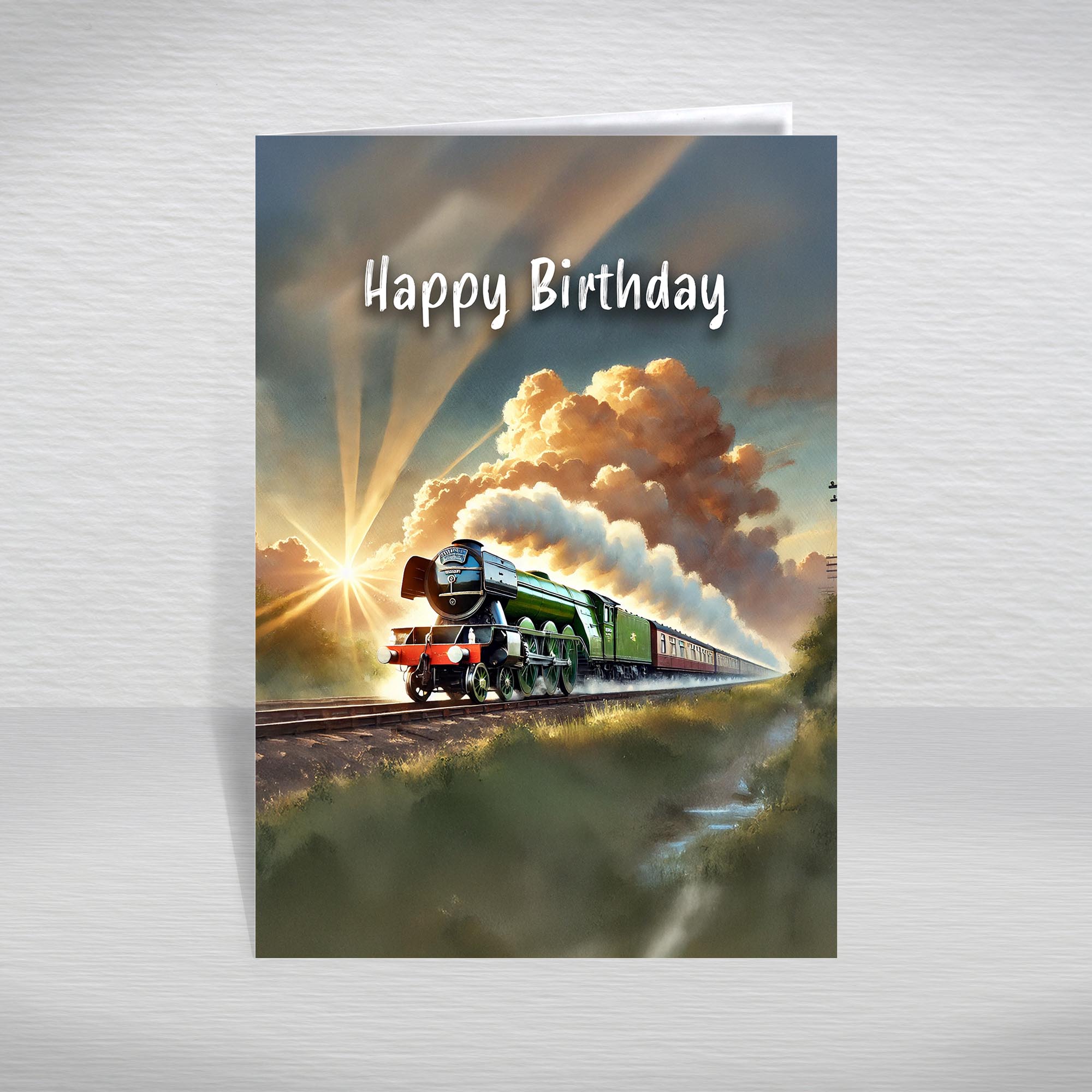
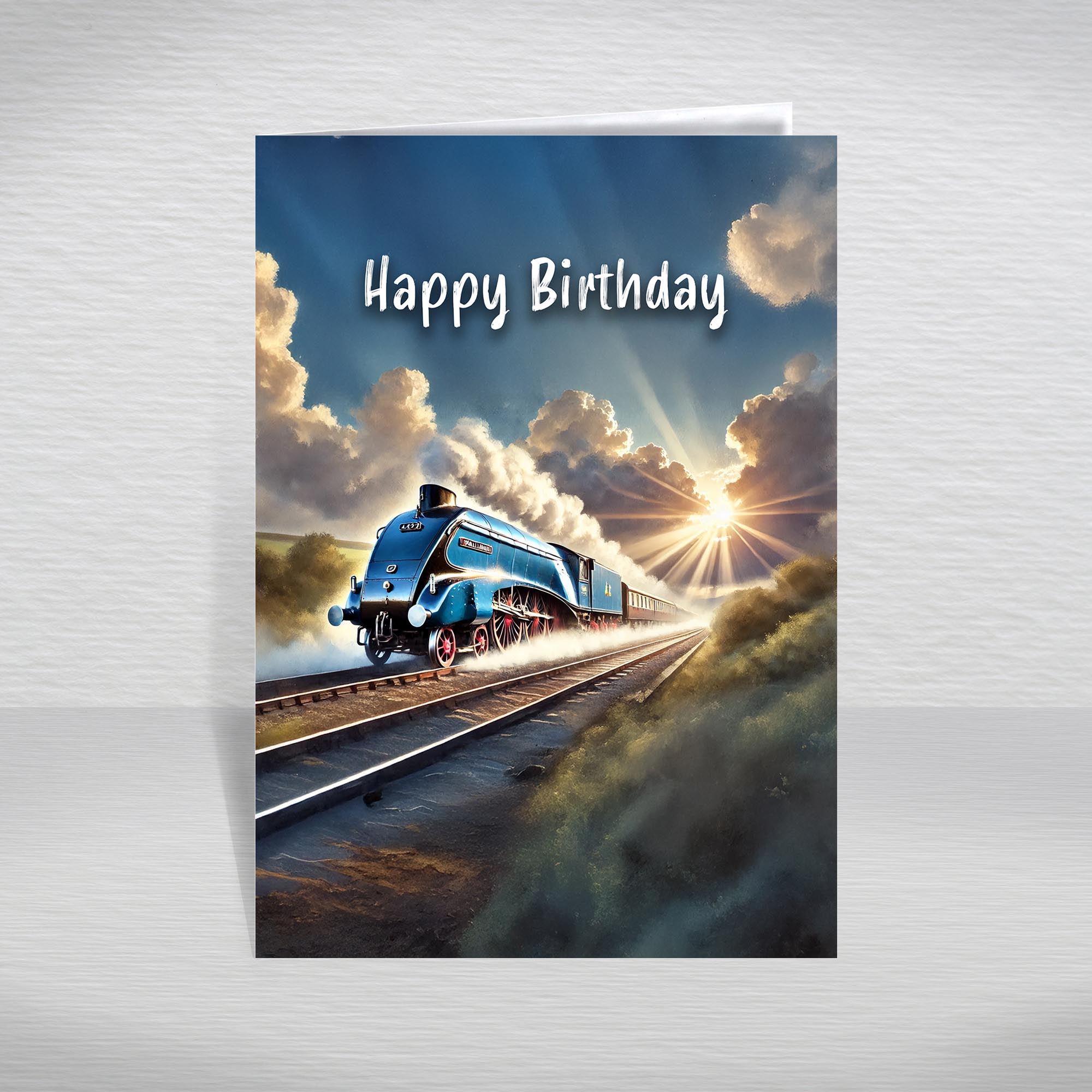
SECR D Class
The SECR D Class was an inside-cylinder express 4-4-0 introduced for the South Eastern and Chatham Railway in 1901. The class is widely cited as one of the most beautiful British locomotives ever built, the combination of inside-cylinder simplicity, exceptionally elegant proportions, the SECR's elaborate "Battle of Trafalgar" green-and-orange livery, and Edwardian Ashford Works painting work to a standard exceeded by no other British railway makes the D Class an aesthetic ideal of the steam era.
The class is officially attributed to Harry Wainwright (the SECR's newly-appointed Locomotive Superintendent) but was largely the design work of his Chief Draughtsman Robert Surtees, who had come up through the SER's Ashford drawing office. The D Class was a Surtees design in all but name. Fifty-one D Class engines were built at Ashford Works between 1901 and 1907.
The D Class worked the SECR's Continental boat trains through to the Southern Railway era, the celebrated Folkestone Pullman, the Granville Continental services, and the through carriages to Margate and Ramsgate. From 1925 Maunsell's King Arthurs took over the principal expresses, and the D Class was progressively transferred to secondary work.
From 1921 onwards Maunsell rebuilt 21 of the 51 D Class engines with Belpaire firebox boilers, Schmidt 18-element superheaters and other improvements, the rebuilds becoming the D1 sub-class. The rebuilt engines lost some of the original's elegance to the more functional Maunsell smokebox, but the rebuild gave them a substantial boost in capability and another 35 years of useful service. The unrebuilt D Class members were withdrawn progressively through the 1930s; the last D Class in original (saturated) condition was withdrawn in 1944.
The 21 D1 rebuilds continued in BR Southern Region service through the early 1950s on cross-country and secondary services. Withdrawal of the rebuilds began in 1951 and was complete by November 1956. Of the 51 engines built, only one was preserved.
One D Class is preserved: No. 31737, in original 1901 condition at the National Railway Museum, York. The engine was withdrawn from BR Southern Region service in 1956 and was selected for the National Collection precisely because it was one of the few D Class members still in original (un-rebuilt) form. Restored to SECR Wainwright lined green livery, it is one of the most photographed and admired exhibits at York. None of the 21 D1 rebuilds was preserved.
Design and development
The 1899 working union of the South Eastern Railway and the London, Chatham and Dover Railway as the South Eastern and Chatham Railway gave Harry Wainwright the new joint Locomotive Superintendent post. The new SECR's Continental boat trains from Charing Cross and Cannon Street to Folkestone and Dover were extremely heavy by the standards of the day, and the existing SER and LCDR 4-4-0s were close to their limits.
Wainwright was officially the designer of the D Class but the design work was largely the responsibility of his Chief Draughtsman Robert Surtees, who had come up through the SER's Ashford drawing office. The D Class was a Surtees design in all but name, and shares more design DNA with later GWR 4-4-0s (with which Surtees was familiar through his pre-1899 SER career) than with conventional Wainwright practice.
The first D Class, No. 477, emerged from Ashford Works in May 1901. The class was an immediate success, the combination of inside-cylinder simplicity, elegant proportions, the SECR's painstaking Battle of Trafalgar livery, and excellent free-running characteristics made the D Class one of the most admired British 4-4-0s. Production continued at intervals from 1901 to 1907 across two lots (Lot 154 and Lot 167), totalling 51 engines.
From 1921 onwards Richard Maunsell (who had succeeded Wainwright in 1913) progressively rebuilt 21 D Class engines with Belpaire firebox boilers, Schmidt 18-element superheaters, and other detail improvements. The rebuilt examples became the D1 sub-class. The rebuilds gave the class a substantial boost in capability, tractive effort rose from 17,450 lbf to about 24,800 lbf, and another 35 years of useful service. The rebuilt D1s lost some of the original's elegance to the more functional Maunsell smokebox and Belpaire firebox, but the basic outline remained recognisable.
Service and withdrawals
The D Class as built worked the SECR's Continental boat trains through to the Southern Railway era, the celebrated all-Pullman Folkestone Pullman, the Granville and Continental services, and the through carriages to Margate and Ramsgate. The Tonbridge–Battle Hastings line was operated by D Class engines until 1922, when their loading-gauge clearance through the narrow Victorian tunnels was withdrawn for safety reasons.
From 1925 Maunsell's King Arthurs took over the principal expresses, and the D Class was progressively transferred to secondary work. Maunsell's rebuilding programme from 1921 onwards (21 of the 51 examples eventually rebuilt) extended the working life of those rebuilt to D1 standard, the rebuilt engines being used on the Reading–Redhill cross-country services, the Tonbridge–Maidstone–Sittingbourne services, and the Folkestone–Tonbridge stopping trains.
The unrebuilt D Class members were withdrawn progressively through the 1930s. The First World War had taken a heavy toll on engine condition and many of the original 1901–1907 boilers were beyond economic repair by the late 1920s. The last D Class in original (saturated) condition was withdrawn in 1944.
British Railways inherited the 21 D1 rebuilds in 1948. They continued in BR Southern Region service through the early 1950s on cross-country and secondary services. Withdrawal began in 1951 and was complete by November 1956, when 31739 (the prototype D1 rebuild) was withdrawn from Stewarts Lane. Of the 51 engines built, only one was preserved: 31737 in original 1901 condition.
Identification features
The D Class is one of the most distinctive and elegantly-proportioned British 4-4-0s ever built. As designed it had inside cylinders, slide valves, a round-topped firebox, an exceptionally tall and slender chimney with the SECR's polished brass safety-valve trumpets, and a high-pitched cab with side windows. The class wore the SECR's elaborate "Battle of Trafalgar" green-and-orange livery, green panelling on a black background, with orange and white lining edged in vermilion, that gave the engines an almost ornate appearance. The combination of inside-cylinder simplicity, beautiful proportions and the painstaking Edwardian livery work made the D Class one of the most photographed British locomotive types of the early 20th century. The D1 rebuild from 1921 lost some of this elegance to the Belpaire firebox and Maunsell smokebox, but the basic outline remained recognisable.
Numbers and names
SECR545–562
- 545
- 546
- 547
- 548
- 549
- 550
- 551
- 552
- 553
- 554
- 555
- 556
- 557
- 558
- 559
- 560
- 561
- 562
SECR591–599
- 591
- 592
- 593
- 594
- 595
- 596
- 597
- 598
- 599
SECR728–745
- 728
- 729
- 730
- 731
- 732
- 733
- 734
- 735
- 736
- 737
- 738
- 739
- 740
- 741
- 742
- 743
- 744
- 745
BR31545–31562
- 31545
- 31546
- 31547
- 31548
- 31549
- 31550
- 31551
- 31552
- 31553
- 31554
- 31555
- 31556
- 31557
- 31558
- 31559
- 31560
- 31561
- 31562
SECR Nos 477, 488, 489, 491, 494, 496, 497, 545–562, 591–599, 728–745, 749 (Lots 154 and 167). Southern Railway from 1923 added 1 to the start (Nos 1488 etc.) and rebuilt examples carried D1 designation. British Railways added 30000 from 1948 to give Nos 31477, 31545–31562 etc. The 21 Maunsell rebuilds (1921 onwards) became D1 Class with same numbers.
Notable locomotives
737 (SECR; later 1737, 31737), preserved in original 1901 condition at the National Railway Museum, York. Built at Ashford in 1901 as one of the first batch under Lot 154. Withdrawn from BR service in 1956 and selected for the National Collection in original SECR Wainwright lined green livery.
545 (SECR; later 1545, 31545), the celebrated "Royal Engine" of 1903, used for working the Royal Train between Charing Cross and Dover for King Edward VII's journeys to the Continent. Withdrawn 1953.
477 (SECR; later 1477, 31477), first of class, completed at Ashford in May 1901. The first D Class in service on the Continental boat trains. Withdrawn 1937; not preserved.
1739 (SR D1 rebuild; later 31739), the first D Class to receive the Maunsell rebuild in 1921, becoming the prototype for the D1 sub-class. Worked the Reading–Redhill services through to withdrawal in 1956.
Allocations and regions
SECR era (1901–1922): the D Class was distributed across the principal SECR sheds for the Continental boat trains and Kent main-line services. Bricklayers Arms (London) had the largest contingent for the Charing Cross departures; Ashford the second largest for through-running maintenance. Smaller allocations at Folkestone Junction and Dover Marine handled the boat trains directly. The Tonbridge depot worked the Hastings line until 1922.
Southern Railway (1923–1947): the class continued at substantially the same allocations for the Continental boat trains under the SR. The introduction of Maunsell's King Arthurs from 1925 onwards displaced the D Class from the principal expresses, and the surviving D1 rebuilds were transferred to secondary main-line and cross-country duties. By the late 1930s most were on the Reading–Redhill cross-country services, the Folkestone–Maidstone branch, and Hastings line excursions.
British Railways Southern Region (1948–1956): by nationalisation the D Class as built had been almost entirely withdrawn or rebuilt. The 21 D1 rebuilds continued in BR service into the 1950s on cross-country and secondary express duties. The last D Class (in original form) was withdrawn in 1944; the last D1 rebuild in 1956.
Livery history
SECR (1901–1922): the famous SECR "Battle of Trafalgar" livery, green panelling on a black background, edged with orange-and-white lining and vermilion. Polished brass safety-valve casing, copper-capped chimney, and the elaborate SECR coat of arms on the leading splasher. The painting standard at Ashford was one of the highest of any British railway works.
Southern Railway (1923–1947): initially retained SECR green; from 1924 progressively repainted into Maunsell olive green with yellow lining. From 1937 the class adopted Bulleid malachite green with yellow lining, although wartime austerity saw most reverting to plain unlined black.
British Railways early (1948–1956): mixed-traffic black with red, cream and grey lining, early lion-and-wheel emblem on the tender.
Preservation: the surviving 31737 (sole D Class) has been maintained throughout in original 1901 SECR Wainwright lined green livery, the most faithful representation in preservation of the SECR's celebrated painting style.
Preservation status
One D Class is preserved: No. 31737 (SECR No. 737, SR No. 1737). Built at Ashford Works in 1901 as part of the first batch under Lot 154. The engine was withdrawn from BR Southern Region service at Stewarts Lane in 1956 and was selected for the National Collection precisely because it was one of the few D Class members still in original (un-rebuilt) condition, the last opportunity to preserve a Wainwright/Surtees D Class as built.
Restored to original 1901 SECR Wainwright lined green livery, complete with polished brass safety-valve casing and the elaborate SECR coat of arms, No. 31737 is one of the most photographed and admired exhibits at the National Railway Museum, York, where it has been on continuous display since 1975. Currently a static exhibit. None of the 21 D1 rebuilds was preserved, the rebuilt sub-class was scrapped between 1951 and 1956.