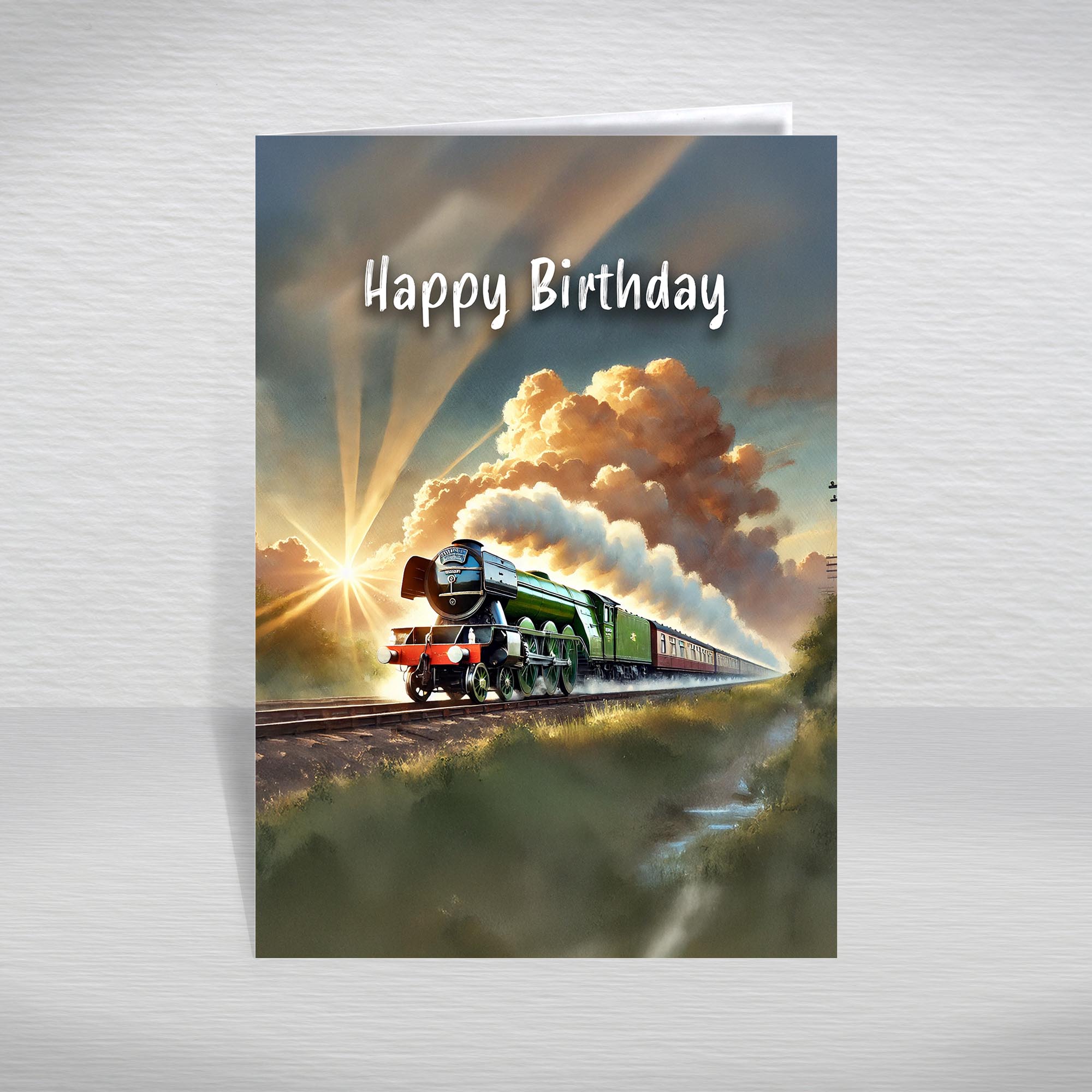
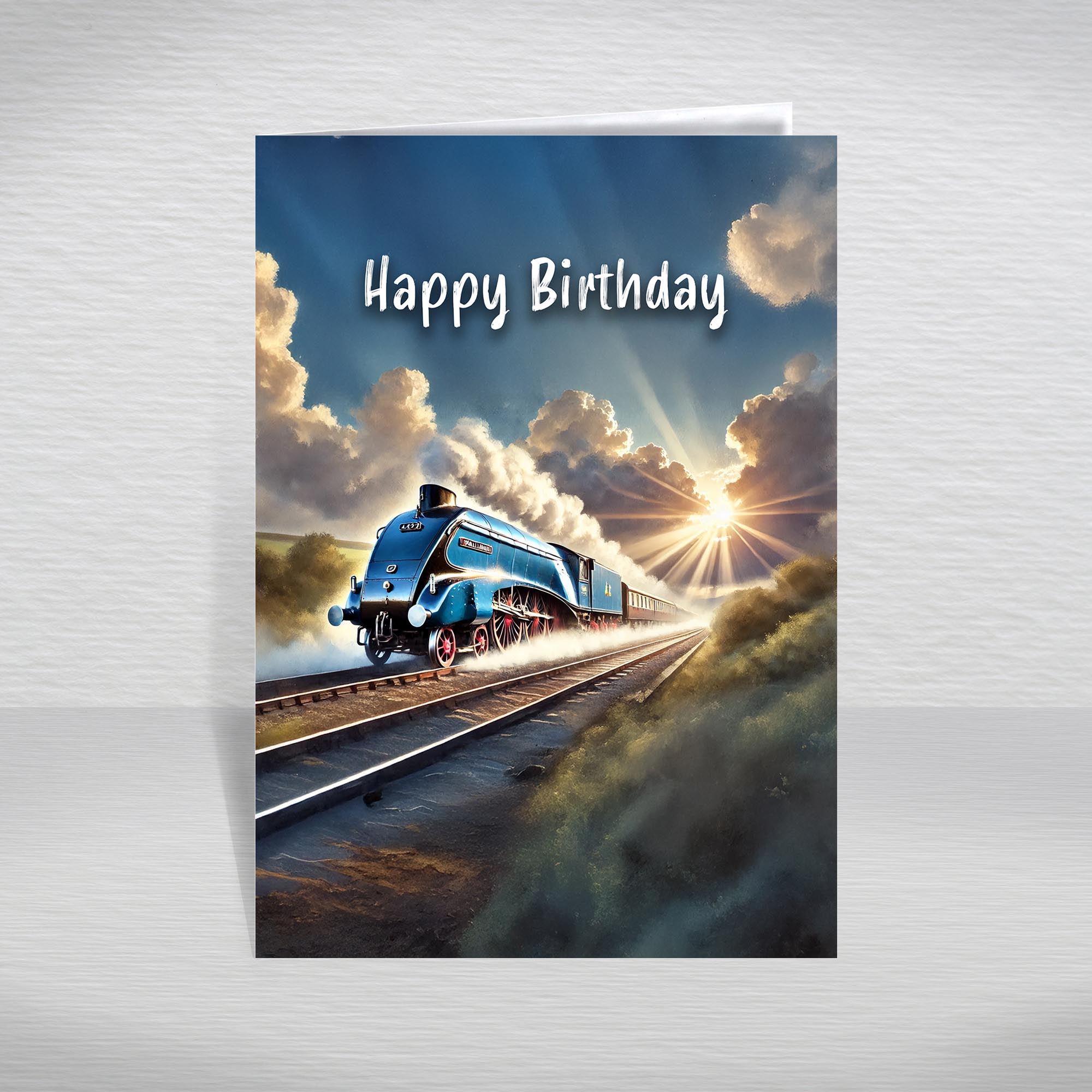
For more than two centuries the steam locomotive shaped Britain. It moved the coal that powered the Industrial Revolution, hauled the post and the parcels, took the working population to the seaside on summer Saturdays, and gave the country an export industry whose engines worked on every inhabited continent. By the time British Railways ran its last steam-hauled service in August 1968, the design had passed through every imaginable variation, from Richard Trevithick's first tentative experiments at Penydarren in 1804 to the immense 2-10-0 freight engines of the BR Standard programme. What follows is a working reference to all of it: the locomotive classes that ran on Britain's railways, the engineers who designed them, the companies that ordered them, the workshops that built them, and the heritage railways and museums that have kept hundreds of them alive into the present day.
Find steam trains and heritage railways near you
Enter a UK postcode or town and we'll show you the nearest preserved steam railways, museums and upcoming mainline charters — sorted by distance.
What's running on the mainline today. Drawn live from the Network Rail open schedule — refreshed every morning, so this page literally changes day to day. Steam excursions and supporting movements both show up; confirmed traction is on each operator's site.
Mainline charter movements today
Loading today's charter movements…
Charter trains can be hauled by steam or diesel — confirmed traction is on each tour operator's site. ECS = empty stock positioning move, light engine = locomotive running alone. For steam trains near you with full timetables, see the charter tracker.
Browse the encyclopedia
The reference catalogue behind the rest of the site — 629 locomotive classes, every major British railway company, the engineers who designed the engines and the workshops that built them, and the 128 heritage railways that keep the survivors running.
Locomotives
629 British locomotive classes covering steam, diesel and electric, from Trevithick's Penydarren of 1804 through to the latest preservation-era engines. Wheel arrangements, designers, build dates, dimensions, operating railways, and the surviving examples for each.
Designers
124 British locomotive engineers, including the chief mechanical engineers and consulting designers behind every major class. Stanier, Gresley, Churchward, Bulleid, Maunsell, Riddles, and the rest of the people whose names you see attached to the engines.
Railway Companies
64 British railway companies, from the Victorian pioneers and the pre-Grouping mainlines through to the Big Four (GWR, LMS, LNER and Southern), and on into the British Railways era and beyond.
Workshops
58 British locomotive works, including Crewe, Swindon, Doncaster, Derby, Eastleigh, Brighton and Horwich, alongside the smaller foundries that built every engine in the catalogue.
Preservation Railways and Museums
128 heritage railways and railway museums across the British Isles, with a postcode-based finder for your nearest preserved line, an interactive map of every line's stations, and a live list of which engines are based where.
Preserved Locomotives
491 surviving British steam locomotives, each tracked individually, from Mallard at the National Railway Museum to working main-line Castles, Black Fives, pannier tanks and Bulleid Pacifics.
Tools for your trainspotting day
Two interactive tools built into the site: a charter tracker that finds upcoming mainline charters near you, and a private trainspotter's logbook that lives on your phone (no account, no cloud).
UK Mainline Charters Near You
Find upcoming mainline steam and diesel charters running near your location. Use your phone's GPS or enter a postcode/city to see services calling within a chosen radius, with full timetables and links to the tour operator. Daily refresh from the Network Rail open data feed.
Trainspotter's Logbook
Keep a personal record of every locomotive you've spotted — numbers, names, dates, locations, photos and notes. Auto-fill class details from our 700+ class encyclopedia, snap a photo of the cabside number and let the built-in scanner read it for you. Stays private on your device; no account needed.
Two centuries of British steam
If you've come for the deep history, this is the long-form section. The story of British steam from Trevithick's first experiments in 1804 to the end of regular steam working in 1968 — and the preservation movement that kept the engines alive afterwards.
From the Penydarren tramway to nationalisation
The story begins in South Wales, on 21 February 1804. Built by Richard Trevithick, a Cornish mining engineer with an instinct for high-pressure steam, the first full-scale locomotive hauled ten tons of iron and around seventy passengers along the Penydarren Ironworks tramway near Merthyr Tydfil. It was a one-off experiment that proved a self-moving engine could pull a useful load. Within twenty-five years, the Stephenson family's Rocket had won the 1829 Rainhill Trials, and the Liverpool and Manchester Railway had opened as the first inter-city passenger line in the world.
The decades that followed saw an extraordinary expansion. Hundreds of independent railway companies laid track across the British Isles, each with its own livery, its own route philosophy, and very often its own locomotive policy. Among the most significant were the London and North Western, the Midland, the Great Northern, the Caledonian, and of course the Great Western, whose 7-foot broad gauge survived until 1892 and gave Britain some of its most distinctive engines. Each of these companies had a chief mechanical engineer or locomotive superintendent whose preferences left a clear stamp on the rolling stock. Patrick Stirling on the Great Northern, Dugald Drummond on the Caledonian and the London and South Western, and Francis Webb on the LNWR each developed engines suited to the topography and traffic of their own railway.
When the Railways Act of 1921 forced the consolidation of more than a hundred companies into the four major successors, the locomotive scene shifted again. The Grouping took effect on 1 January 1923. The Great Western kept its identity and its broad shape, but the other three new companies (the London Midland and Scottish, the London and North Eastern, and the Southern) had to find a single locomotive policy from the conflicting traditions of their constituents. The result was a competitive period that produced some of the finest steam locomotives ever built anywhere in the world. After the Second World War, exhausted and effectively bankrupt, the four companies were nationalised on 1 January 1948 to form British Railways. The new organisation set out to design a single family of standard locomotives suited to the whole network, and the result was the BR Standard programme, the last new steam designs to enter regular service in Britain.
The Big Four era and its chief mechanical engineers
Each of the four companies had a defining engineer, and the rivalries between them shaped what British steam became.
At the Great Western, Charles Collett inherited the legacy of George Jackson Churchward and refined it into the 4073 Castle Class of 1923 and the 6000 King Class of 1927. Both were 4-6-0 express passenger engines, both became renowned for their mechanical efficiency, and both regularly performed feats of haulage that on paper they should not have been capable of. The Castle's preserved survivors include several examples in working order at Tyseley Locomotive Works, where Vintage Trains keep the type in main-line traffic to this day.
At the LMS, William Stanier, poached from the Great Western in 1932, transformed the company's locomotive stock. His Black Five mixed-traffic 4-6-0 of 1934 was reliable, simple, and built in such numbers (842 in total) that examples worked nearly every corner of the LMS network. Stanier's Princess Coronation Pacifics gave the LMS a streamlined express engine to match the LNER's, and a streamlined Coronation set the British steam speed record for a 4-6-2 at 114 mph in June 1937.
The LNER's Sir Nigel Gresley is perhaps the most celebrated of all British locomotive engineers. His three-cylinder Pacific designs, the A3 Class from 1922 and the streamlined A4 Class from 1935, produced two of the most famous engines in railway history. Number 4472 Flying Scotsman, an A3, became the first locomotive to be officially recorded at 100 mph in November 1934. Number 4468 Mallard, an A4, took the world steam speed record on 3 July 1938, reaching 126 mph down Stoke Bank near Grantham. That record has never been beaten.
The Southern Railway, smaller and more concentrated than its rivals, had two distinctive engineers in succession. Richard Maunsell laid the foundation with his Schools, King Arthurs and Lord Nelsons. His successor, Oliver Bulleid, produced the radical air-smoothed Pacifics, the Merchant Navy Class and the lighter West Country and Battle of Britain classes. Bulleid's designs were unconventional almost to the point of eccentricity, with chain-driven valve gear running in an oil bath and a thermic syphon firebox, but when they worked they were among the most powerful express engines ever built for the Southern. The preserved Clan Line, a rebuilt Merchant Navy, still works the main line today.
British steam preservation and the Barry effect
The story of how so many British steam locomotives survived into the present day is a remarkable one, and at its centre is a scrapyard in South Wales. When BR ended steam in 1968, several hundred withdrawn engines were sold for scrap to the firm of Woodham Brothers at Barry Island. Faced with a steady supply of cheaper scrap from elsewhere (mostly redundant goods wagons), Dai Woodham did not bother to cut up most of the locomotives, and they sat in the salt air of the Bristol Channel for a decade or more. As the early heritage railway movement gathered momentum during the 1970s and 1980s, those Barry hulks became the raw material for a wave of restoration projects. Some had been so corroded by sea air that the rebuilds amounted to nearly new construction, but they got the engines back into traffic. Without Woodham's, the British preservation movement would be a fraction of its present size.
Today, our records track 491 surviving British steam locomotives. Some, like Mallard at the National Railway Museum, are static museum exhibits whose preservation value comes from their historical significance rather than their ability to move. Others, including the various preserved Castles, Black Fives, A4s and Merchant Navys, are kept in working order by heritage railways and main-line operators, and you can buy a ticket and ride behind them. A handful, including the new-build Tornado (LNER A1 Pacific number 60163, completed in 2008), prove that British steam construction is still a live craft.
The heritage railway movement now operates 128 preservation venues across the British Isles. Lines like the Severn Valley, North Yorkshire Moors, Bluebell, Keighley and Worth Valley and West Somerset each maintain dozens of engines, train hundreds of volunteers, and run substantial passenger services that compete with mainstream tourist attractions. Wales has its narrow-gauge "Great Little Trains" including the Ffestiniog, Welsh Highland and Talyllyn, the last of which, in 1951, became the first preserved railway in the world. Great national museums hold the static collection, including the National Railway Museum at York, the Locomotion site at Shildon and the Science Museum in London.
A day out on a preserved British steam railway
The British heritage railway scene exists because thousands of volunteers have spent decades restoring engines, rebuilding stations, and relaying track on lines that once carried freight or summer holiday traffic in the steam era. If you're looking for steam railways near you, our postcode finder lists every one of the 98 venues by distance — and if you want to ride behind mainline steam trains near you, the charter tracker shows every upcoming UK steam and diesel charter running near your location. The result is something close to a national leisure industry: 128 working preservation venues across the British Isles, between them running a substantial year-round programme of steam train rides, family events, and railway days out. Most lines run a full summer timetable from late spring through to autumn, a substantial Santa Special programme over the December weekends, school-holiday events at Easter and half-term, dining trains with full evening service, photography charters, and behind-the-scenes engineering open days where you can walk through a working locomotive depot.
A standard heritage railway day out gives you a return trip behind a working steam locomotive, with the option to stop off and explore the line as you go. The longer lines (the Severn Valley, the West Somerset, the North Yorkshire Moors and the Bluebell among them) run for fifteen miles or more and a full return journey takes the best part of a day, especially when you factor in the original Edwardian station buildings, the gift shops and station cafes, and the rolling stock displays that are a feature of nearly every site. Tickets typically allow unlimited travel for the day, so you can hop on and off, picnic at intermediate stations, and ride behind several different engines if more than one is in steam.
For visitors who want more than a passenger ride, many lines run footplate experience days. For a day or a weekend you can sign up to learn the basics of firing and driving a steam locomotive under instruction from a qualified crew, with the larger railways including the Severn Valley, the North Yorkshire Moors and the Great Central running courses for both adults and (with younger-age variants) children. Family-friendly programmes are a staple of school holidays, with characters from popular children's railway stories, fancy-dress days, and special trains laid on for younger visitors.
The narrow-gauge railways in Wales and the West Country offer scenery that few full-size lines can match. The Ffestiniog Railway climbs into the slate quarries of Snowdonia from a harbour terminus at Porthmadog. The Ravenglass and Eskdale runs from a Roman port up into the Lake District fells. The Vale of Rheidol climbs the Cambrian mountains from Aberystwyth to the spectacular waterfall at Devil's Bridge. The Welsh Highland Railway, reopened in stages between 1997 and 2011, offers a 25-mile run through Snowdonia from Caernarfon to Porthmadog and is the longest heritage railway in the British Isles.
Static museums hold the parts of the story that cannot be ridden. The National Railway Museum at York has the largest collection of British locomotives in the country, including Mallard and the rebuilt streamlined Coronation. Its sister site Locomotion at Shildon in County Durham hosts the rest of the national collection in working order alongside live restoration projects. The Science Museum in London has Stephenson's Rocket and a Robert Stephenson and Hawthorn 0-6-0 alongside its broader engineering collection. Smaller museums, including the Riverside Museum in Glasgow and the Head of Steam museum at Darlington, hold regional collections that are often the only place to see particular locomotive types preserved.
Find a steam railway or museum near you
If you are planning a steam train day out and want to find the closest heritage railway or museum to where you live, the preservation railways and museums page includes a postcode-based finder. Enter any UK postcode (or use your browser's location service) and the page ranks every venue by distance, in miles or kilometres, with a link straight to the entry for each. Each entry then carries an interactive map of the line's stations, opening times, ticket information, and a live list of which locomotives are currently based there. The list updates from the preserved-locomotives database, so it stays accurate as engines move between locations on overhaul, hire, or transfer.
Famous British steam locomotives
- Penydarren, 1804: Trevithick's pioneering experiment and the first locomotive to haul a load on rails.
- Stephenson's Rocket, 1829: winner of the Rainhill Trials and the design template that shaped every locomotive that followed.
- LNER A3 Class: Sir Nigel Gresley's three-cylinder Pacifics, including the unmistakable Flying Scotsman.
- LNER A4 Class: the streamlined Pacifics, including Mallard, holder of the world steam speed record at 126 mph.
- GWR 4073 Castle Class: Collett's express engine of 1923, refining Churchward's earlier work.
- LMS Stanier Black Five: 842 mixed-traffic engines that worked everywhere on the LMS network and survive in numbers today.
- SR Merchant Navy Class: Bulleid's air-smoothed Pacifics; the rebuilt examples are among the most powerful express engines ever to run in Britain.
- BR Standard 9F Class: 251 freight 2-10-0s, the most powerful steam locomotives ever built for British Railways and the last new steam class to enter service.