GWR 4073 Castle Class
The GWR 4073 Castle Class was Charles Collett's four-cylinder express 4-6-0 of 1923, the Great Western Railway's principal heavy express engine for over 40 years and one of the most successful British steam classes ever built. The Castle was Collett's development of Churchward's earlier Star Class with a slightly larger 5 ft 9 in maximum diameter Standard No. 8 boiler at 225 psi, increased 16 × 26 in cylinders, and an enlarged cab.
One hundred and seventy-one engines were built or rebuilt at Swindon Works between 1923 and 1950, the totals comprising 155 new builds plus 16 conversions from Star Class engines. The first Castle, No. 4073 "Caerphilly Castle", was completed in August 1923, the first new GWR express engine of the post-Churchward era. The class is named after British castles, with brass nameplates carried on the boiler band ranging from Welsh castles (Caerphilly, Pendennis, Manorbier) to English (Windsor, Tintagel, Kenilworth) and Scottish (Eilean Donan).
The Castle's reputation was made by the 1925 LNER comparative trial. No. 4079 "Pendennis Castle" visited King's Cross for trials against the much larger Gresley A1 Pacifics, and the smaller GWR Castle outperformed the LNER engines in coal economy and route timing. The trial confirmed the GWR's engineering reputation and led to LNER design improvements that eventually produced the A3 Class. The Castles were further celebrated for the Cheltenham Spa Express, branded the "Cheltenham Flyer", which in 1932 achieved an average start-to-stop speed of 81.7 mph, the world's fastest scheduled train of the era. No. 5006 "Tregenna Castle" attained 102 mph in regular service on the Cheltenham Flyer in 1932, the first authentically-recorded 100 mph in British regular service.
Production continued at Swindon through the 1920s and 1930s in successive batches, the principal 5000–5099 series (1926–1939) being the largest. The post-war 7000–7037 batch (1946–1950) was built under Frederick Hawksworth with detail improvements. From 1925 onwards 16 Star Class engines were progressively rebuilt as Castles. The 4082 "Windsor Castle", a Star-Castle conversion of 1925, famously hauled the funeral train of King George V in 1936 from Paddington to Windsor with King George VI travelling in the cab.
British Railways inherited approximately 150 Castles in 1948 and continued the class in front-line Western Region express service through the 1950s. From the late 1950s many Castles were fitted with double chimneys and four-row superheaters, the "modified" Castles, giving 5–10% better steaming and outstanding final-period performance. The introduction of BR Type 4 and Type 5 diesels (Classes 47 and 52 Western) from 1961 progressively displaced the class. The last Castle in BR service was 7029 "Clun Castle", the last Castle ever built, withdrawn from Tyseley in November 1965, among the last GWR-design engines in BR service.
Eight Castles are preserved, an exceptionally good survival rate. The most-historically-significant is 4073 Caerphilly Castle (the class prototype, National Collection, static exhibit at STEAM Swindon). The most-celebrated working example is 7029 Clun Castle (the last Castle ever built and the last Castle in BR service, currently main-line registered at Tyseley). Other preserved Castles include 4079 Pendennis Castle (the 1925 LNER trial engine, returned from Australia in 1994 and main-line registered at Didcot), 5029 Nunney Castle (main-line registered at Carnforth), 5043 Earl of Mount Edgcumbe (main-line registered at Tyseley), 5051 Earl Bathurst (Didcot), 5080 Defiant (Tyseley), and 7027 Thornbury Castle (privately preserved). Several preserved Castles have given decades of main-line operating service.
Design and development
By 1922 the Great Western Railway needed a new heavy express engine to follow George Jackson Churchward's Star Class of 1907. Churchward had retired in 1922 and his successor Charles Collett inherited the Star design as the proven foundation. The Stars were excellent engines but the GWR's express requirements had grown, heavier trains, higher speeds, and longer non-stop runs were the post-war norm.
Collett's response was the Castle Class, a refined and slightly larger Star. The boiler diameter was increased from 5 ft 6 in (Standard No. 7) to 5 ft 9 in (Standard No. 8), the cylinder diameter increased from 15 in to 16 in, and the cab was enlarged for crew comfort. The four-cylinder layout, 6 ft 8½ in driving wheels, 225 psi boiler pressure, and Belpaire firebox were retained from the Star, the engineering DNA was unchanged. The whole engine was about 8% larger and more powerful than the Star.
The first Castle, No. 4073 "Caerphilly Castle", was completed at Swindon Works in August 1923, the first new GWR express engine of the post-Churchward era. Initial running showed the Castle outperformed the Star substantially on heavy expresses while consuming proportionately less coal, the design refinements had translated directly into improved efficiency.
In 1925 the Castle's reputation was made by an LNER comparative trial. No. 4079 "Pendennis Castle" visited the LNER at King's Cross for trials against the much larger Gresley A1 Pacifics. The Castle outperformed the A1s in coal economy and route timing. The trial confirmed the GWR's engineering reputation and led to LNER design improvements (long-travel valves, modified blast pipes) that eventually produced the A3 Class.
Production continued at Swindon through the 1920s and 1930s in successive batches, the principal 5000–5099 series (1926–1939) being the largest. From 1925 onwards 16 Star Class engines were progressively rebuilt with Castle boilers and cylinders, retaining their original numbers. The post-war 7000–7037 batch (1946–1950) was built under Frederick Hawksworth (Collett's successor) with detail improvements including higher-quality steel and improved insulation. By 1950 the class totalled 171 engines.
From the late 1950s many Castles were fitted with double chimneys and four-row superheaters, the "modified" Castles. The modifications gave 5–10% better steaming and the modified Castles were among the most powerful express 4-6-0s ever built, their final-period performance was outstanding.
Service and withdrawals
The Castles were the GWR's principal express engine for over 40 years. They worked the Cornish Riviera Express (London Paddington to Plymouth and Penzance), the Cheltenham Spa Express, the Bristolian, the Torbay Express, the Birmingham Pullman, the South Wales expresses, and the principal cross-country services. The Cheltenham Spa Express in particular gave the Castle Class international recognition, the GWR-branded "Cheltenham Flyer" achieved an average start-to-stop speed of 81.7 mph in 1932, the world's fastest scheduled train. No. 5006 "Tregenna Castle" achieved 102 mph in regular service on the Cheltenham Flyer in 1932, the first authentically-recorded 100 mph in British regular service.
The Castle's reputation was further established by the 1925 LNER comparative trials, in which No. 4079 "Pendennis Castle" outperformed the LNER's much larger A1 Pacifics on the East Coast main line, a result that influenced LNER design through to the A3 Class modifications.
British Railways inherited approximately 150 Castles in 1948 (some early engines having been withdrawn through the late 1940s as the post-war Hawksworth batch arrived). The class continued in front-line BR Western Region service through the 1950s. The introduction of double chimneys and four-row superheaters from the late 1950s, the "modified" Castles, gave the class a final period of outstanding performance. The introduction of BR Type 4 diesels (Class 47 and Class 52 Western) from 1961 progressively displaced the Castles. The last Castle in BR service was 7029 "Clun Castle" (the last Castle ever built), withdrawn from Tyseley in November 1965, among the last GWR-design engines in BR service.
Identification features
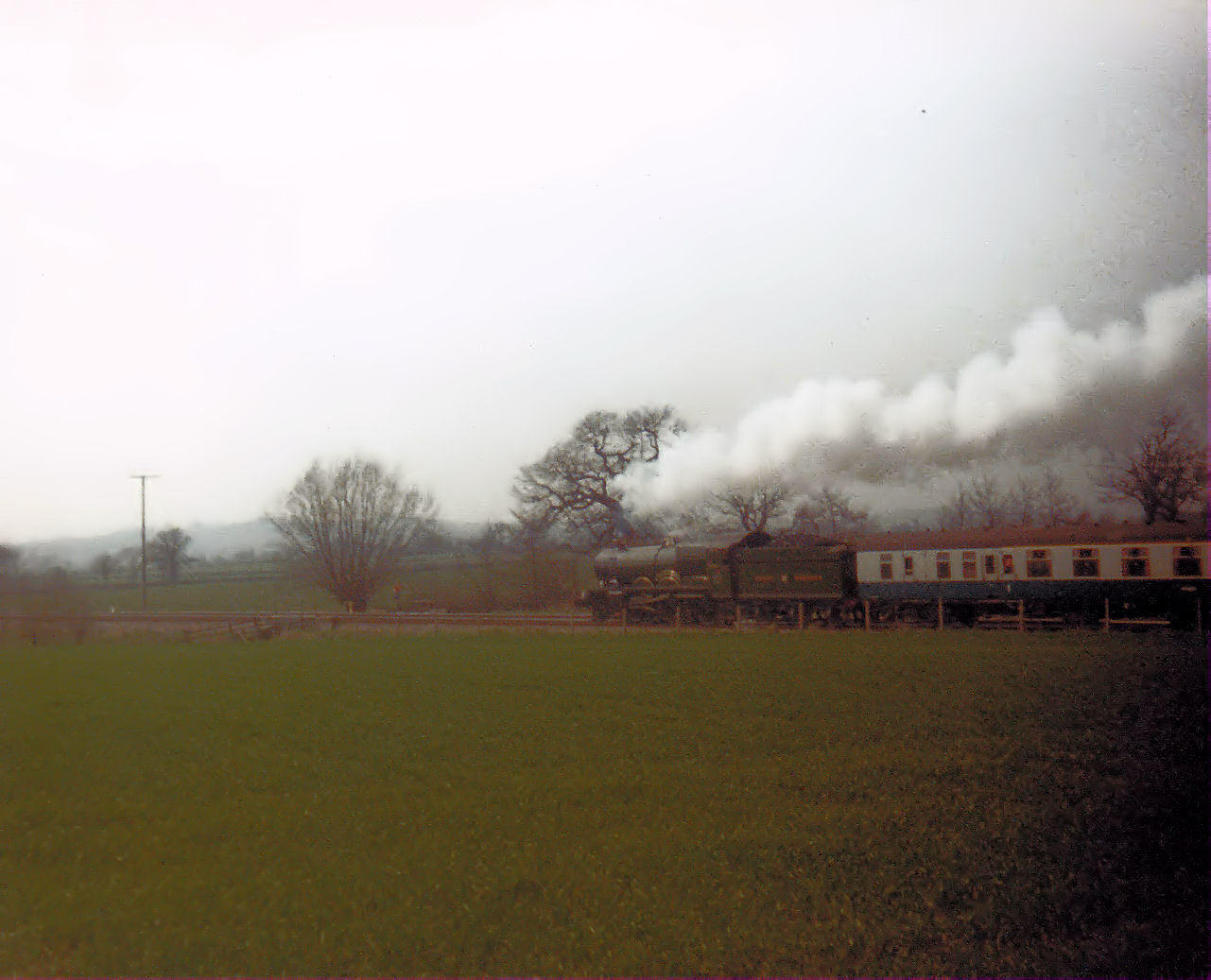
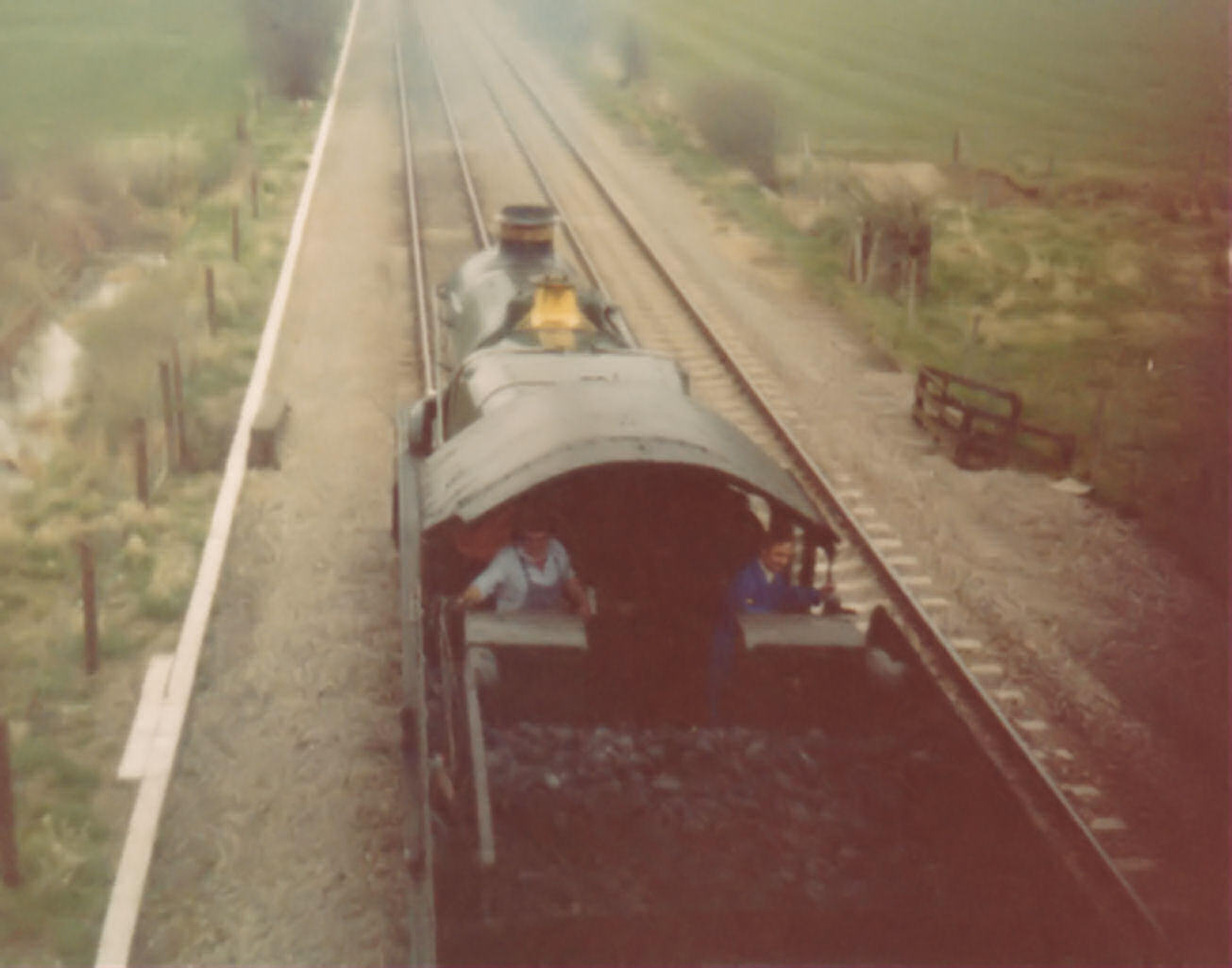
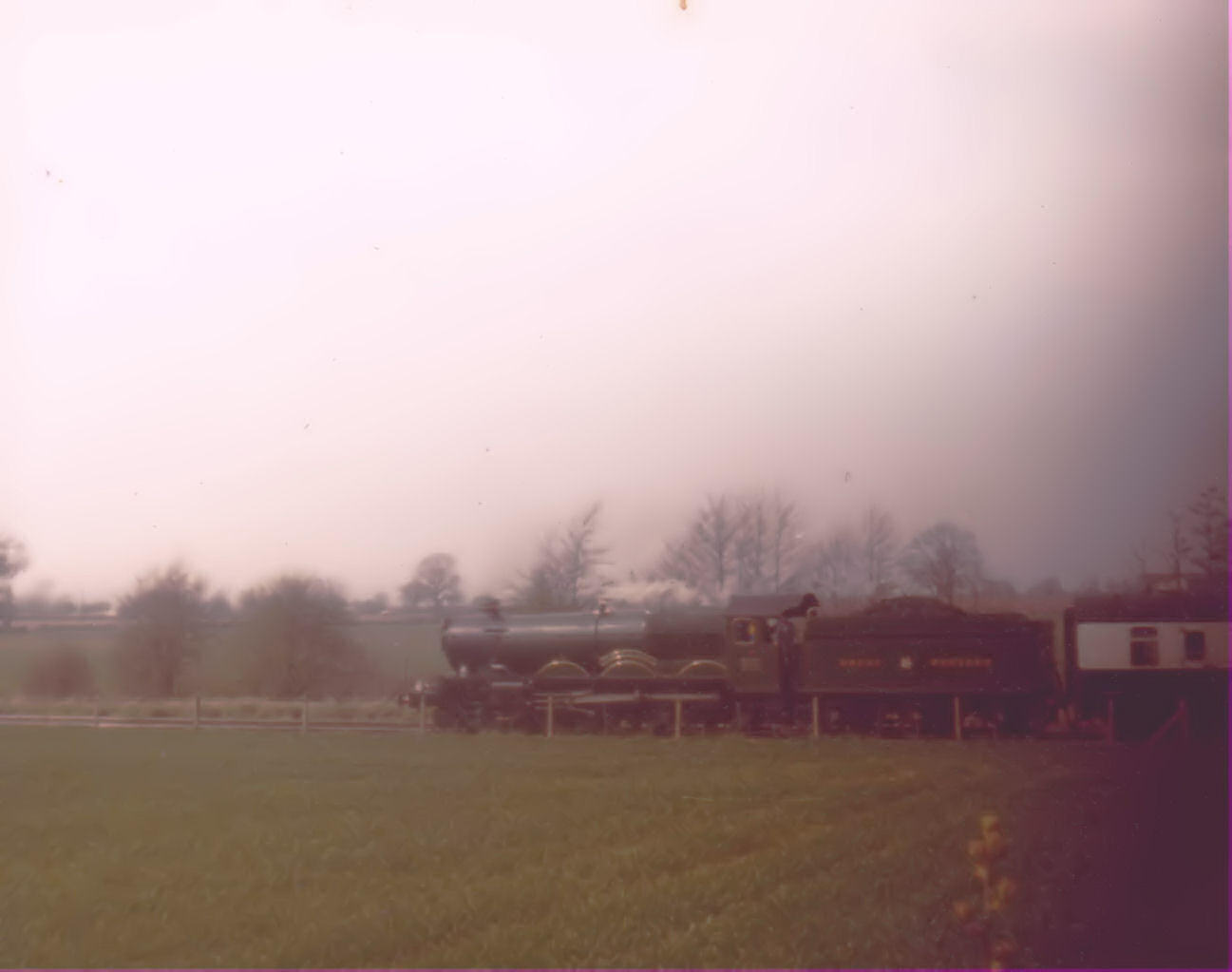
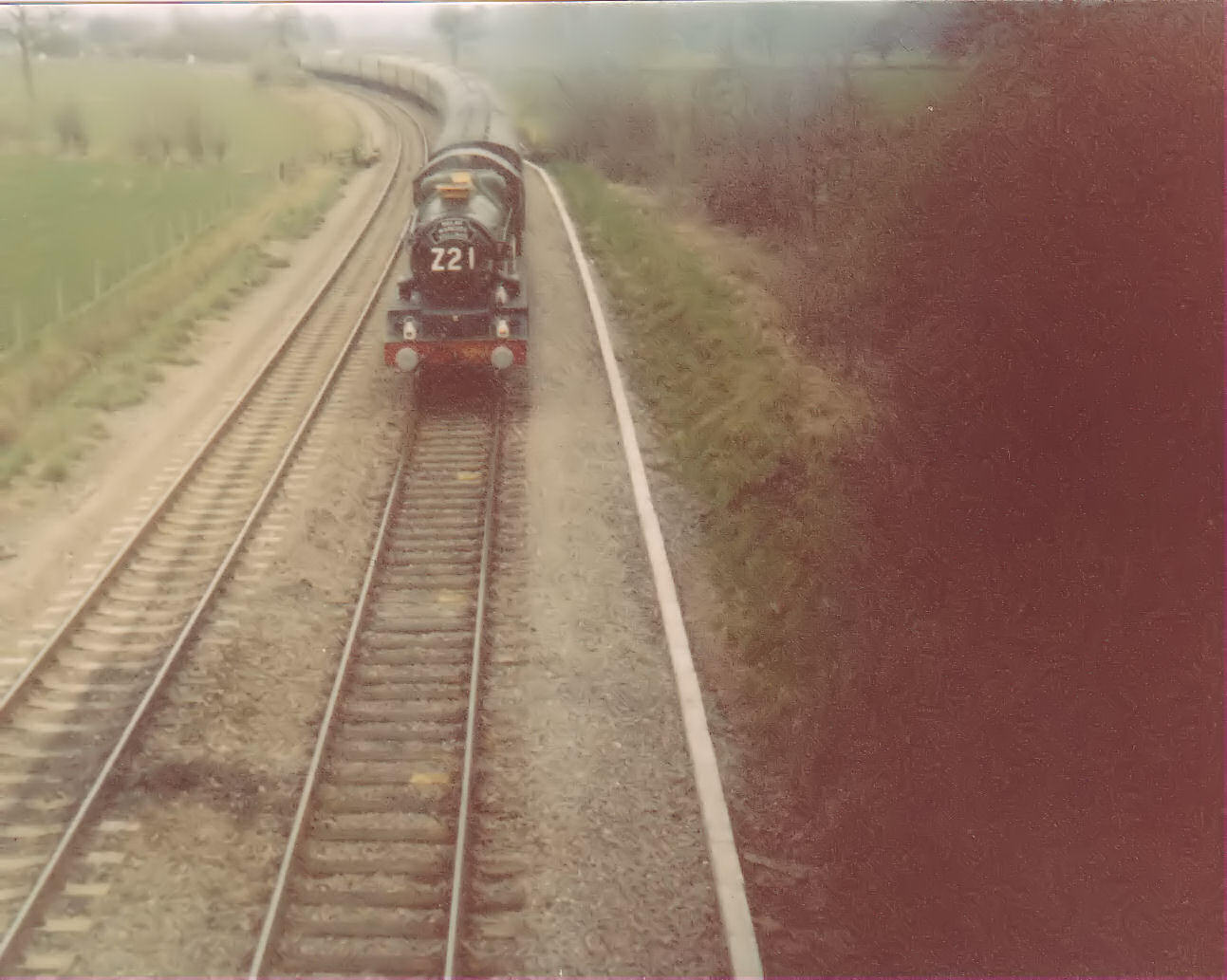
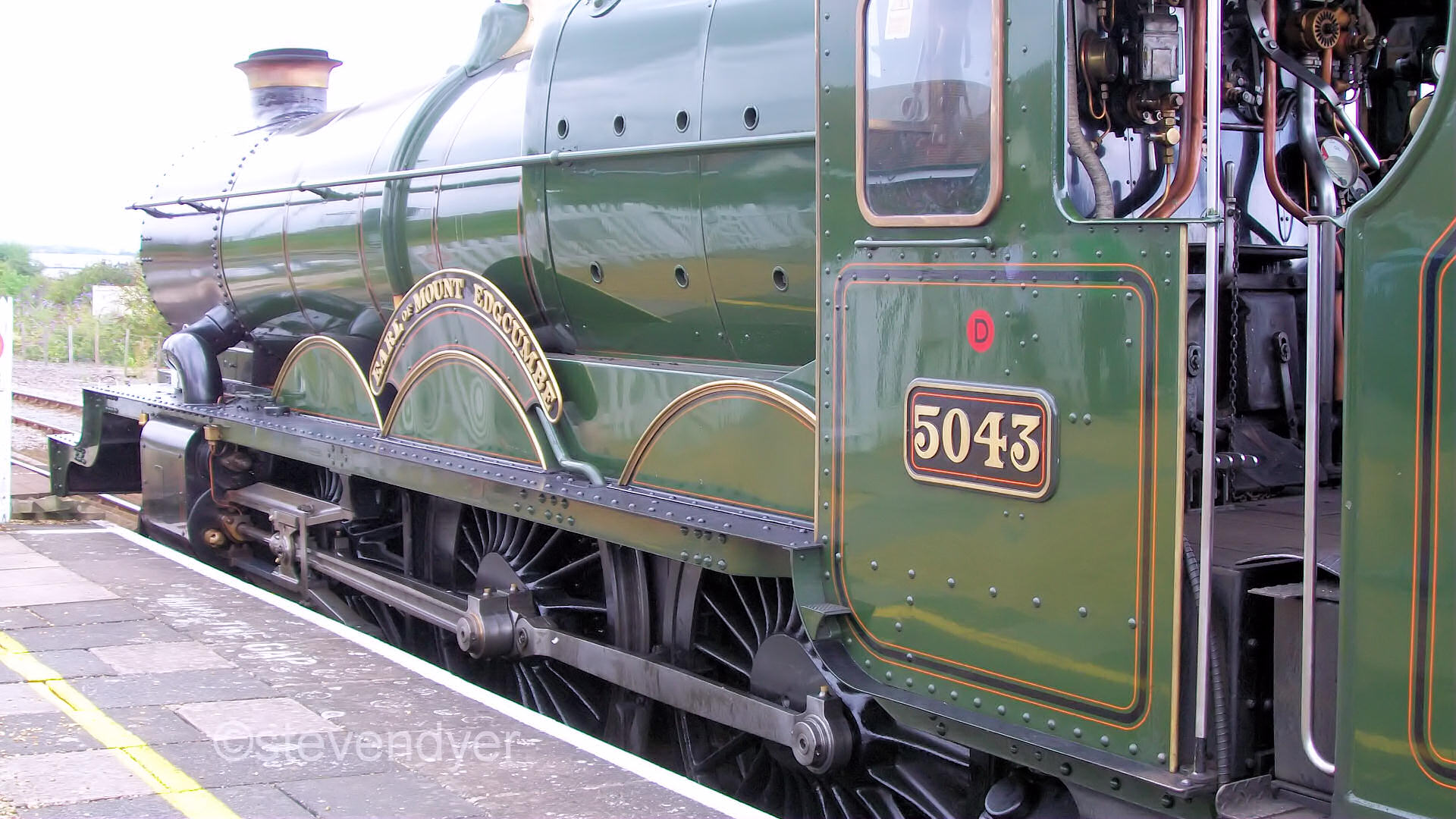
The classical Collett four-cylinder 4-6-0 outline, clean, balanced, and unmistakably GWR. Standard No. 8 taper boiler with copper-capped chimney (a GWR signature), Belpaire firebox, brass safety-valve cover, and the characteristic GWR proportions. Four cylinders are visible as two outside cylinders with their valve covers and two inside cylinders (the latter only visible from underneath or from inside the wheels). The original Castles had the smaller 21-element superheater and the standard single chimney; modified Castles from the late 1950s onwards had double chimneys, four-row superheaters, and revised draughting, visually distinguishable by the larger double-chimney casting and the extra plumbing. The class is named after British castles, with brass nameplates carried on the boiler band, names ranging from Welsh castles (Caerphilly, Pendennis, Manorbier) to English (Windsor, Tintagel, Kenilworth), Scottish (Eilean Donan), and even a few non-castle names commemorating Earls and other dignitaries on later batches.
Numbers and names
4073–4099the original 27 new-builds
- 4073
- 4074
- 4075
- 4076
- 4077
- 4078
- 4079
- 4080
- 4081
- 4082Windsor Castle
- 4083
- 4084
- 4085
- 4086
- 4087
- 4088
- 4089
- 4090
- 4091
- 4092
- 4093
- 4094
- 4095
- 4096
- 4097
- 4098
- 4099
5000–5099the principal 100-engine production run
- 5000
- 5001
- 5002
- 5003
- 5004
- 5005
- 5006
- 5007
- 5008
- 5009
- 5010
- 5011
- 5012
- 5013
- 5014
- 5015
- 5016
- 5017
- 5018
- 5019
- 5020
- 5021
- 5022
- 5023
- 5024
- 5025
- 5026
- 5027
- 5028
- 5029
- 5030
- 5031
- 5032
- 5033
- 5034
- 5035
- 5036
- 5037
- 5038
- 5039
- 5040
- 5041
- 5042
- 5043
- 5044
- 5045
- 5046
- 5047
- 5048
- 5049
- 5050
- 5051
- 5052
- 5053
- 5054
- 5055
- 5056
- 5057
- 5058
- 5059
- 5060
- 5061
- 5062
- 5063
- 5064
- 5065
- 5066
- 5067
- 5068
- 5069
- 5070
- 5071
- 5072
- 5073
- 5074
- 5075
- 5076
- 5077
- 5078
- 5079
- 5080
- 5081
- 5082
- 5083
- 5084
- 5085
- 5086
- 5087
- 5088
- 5089
- 5090
- 5091
- 5092
- 5093
- 5094
- 5095
- 5096
- 5097
- 5098
- 5099
7000–7037the 38-engine post-war Hawksworth-modified batch
- 7000
- 7001
- 7002
- 7003
- 7004
- 7005
- 7006
- 7007
- 7008
- 7009
- 7010
- 7011
- 7012
- 7013
- 7014
- 7015
- 7016
- 7017
- 7018
- 7019
- 7020
- 7021
- 7022
- 7023
- 7024
- 7025
- 7026
- 7027
- 7028
- 7029
- 7030
- 7031
- 7032
- 7033
- 7034
- 7035
- 7036
- 7037
Named locomotives (outside the listed ranges)
- 4000 — North Star
GWR Nos 4073–4099 (the original 27 new-builds, 1923–1925) extended to 5000–5099 (the principal 100-engine production run, 1926–1939) and 7000–7037 (the 38-engine post-war Hawksworth-modified batch, 1946–1950). Plus 16 conversions from Star Class engines retaining their original numbers, including No. 4000 "North Star" (converted 1929, the most famous Star-Castle conversion) and No. 4082 "Windsor Castle" (converted 1925). Total class: 171 engines.
Notable locomotives
4073 Caerphilly Castle, the class prototype, completed at Swindon Works in August 1923. The first new GWR express engine since Churchward's retirement. Withdrawn from BR May 1960 and preserved by the National Collection. Currently a static exhibit at the STEAM Museum of the Great Western Railway at Swindon, the class's original home. The most-photographed Castle.
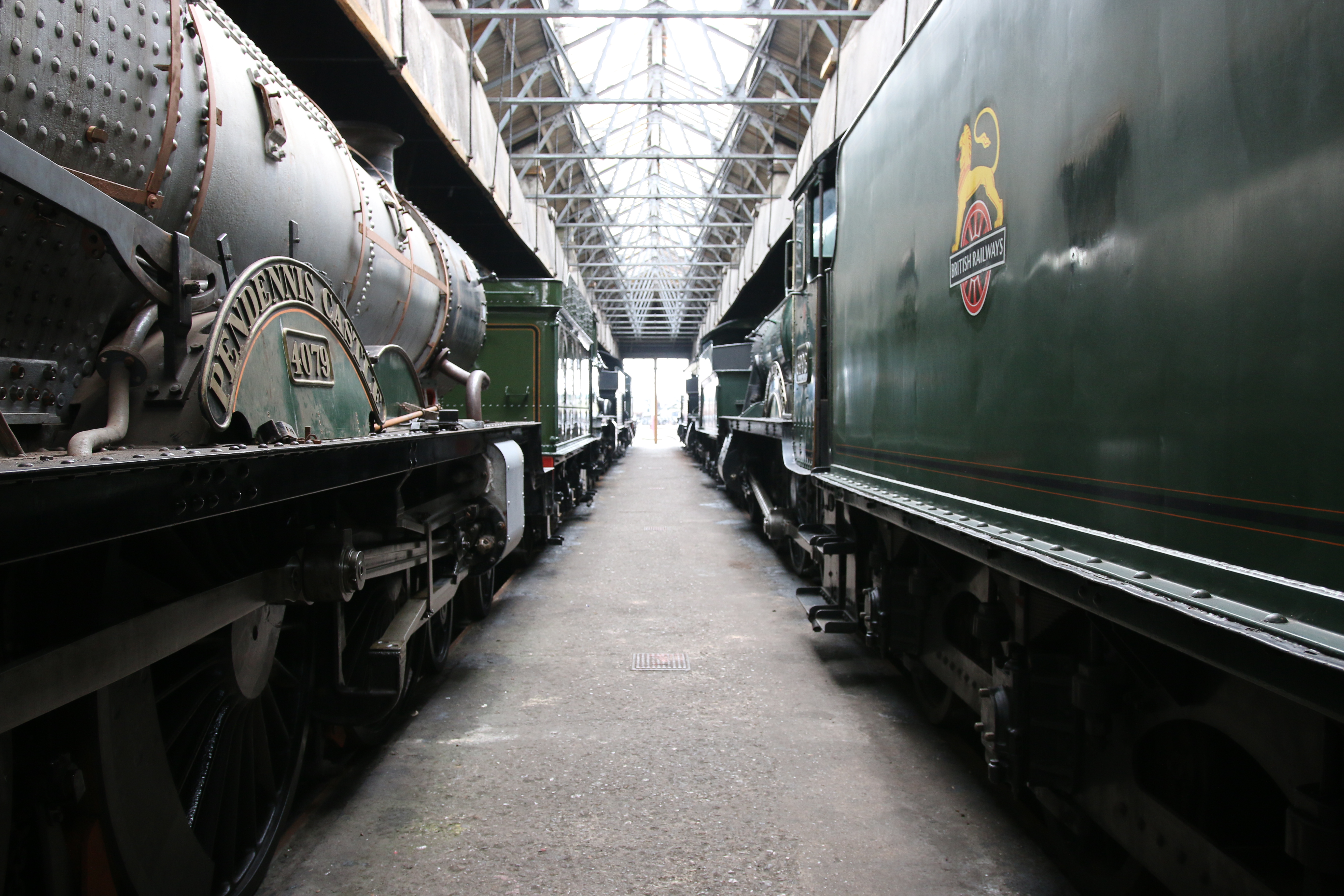
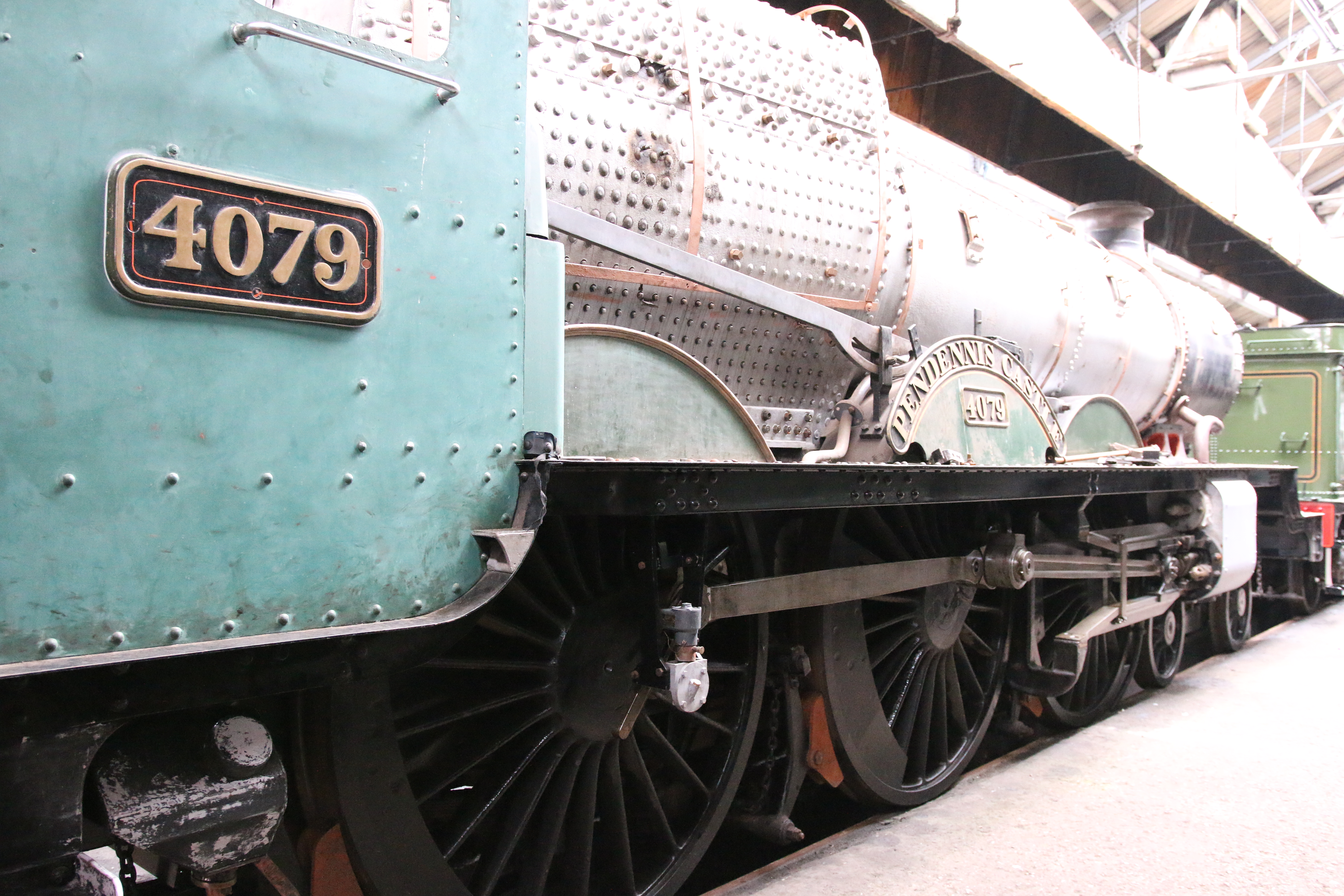
4079 Pendennis Castle, completed at Swindon in February 1924. Famously visited the LNER in 1925 for comparative trials against Gresley's A1 Pacifics, the Castle outperformed the larger LNER engines in coal economy and route timing, leading to LNER design improvements. Withdrawn from BR May 1964 and exported to Australia in 1976; returned to the United Kingdom in 1994. Currently main-line registered with the Great Western Society at Didcot Railway Centre.
4082 Windsor Castle, converted from Star Class No. 4082 (originally "Twineham Court") in 1925. Famously hauled the funeral train of King George V in 1936 from Paddington to Windsor, King George VI travelled in the cab. The Royal connection gave the engine special standing. Withdrawn from BR October 1964 and broken up. The "Windsor Castle" name was applied to 7013 "Bristol Castle" in honour of the original Royal engine; the swap is one of the celebrated GWR oddities.
5006 Tregenna Castle, completed at Swindon in June 1927. Achieved 102 mph in regular service on the Cheltenham Flyer in 1932, the first authenticated 100 mph in British regular service. Withdrawn from BR April 1962 and broken up.
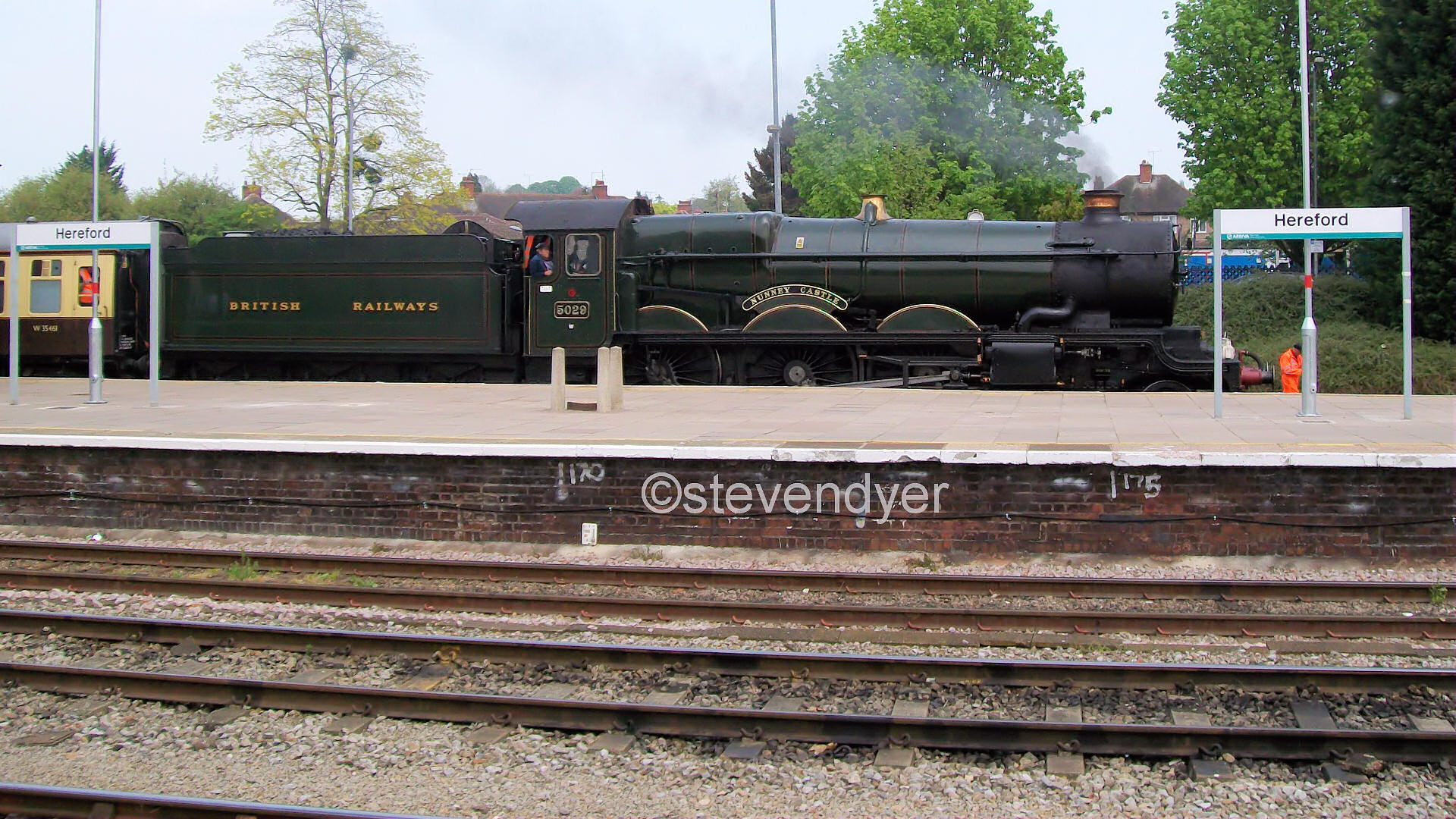
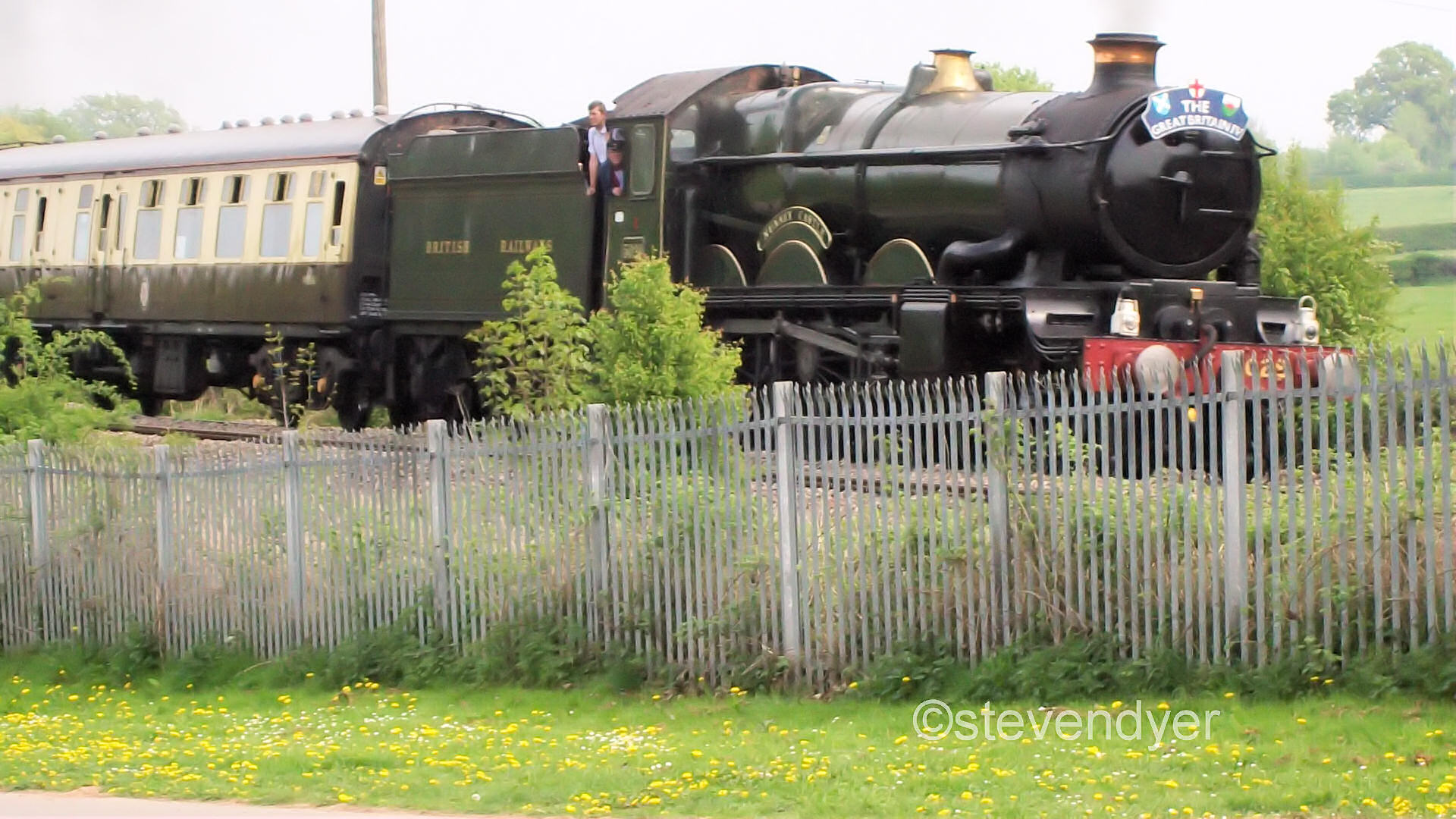
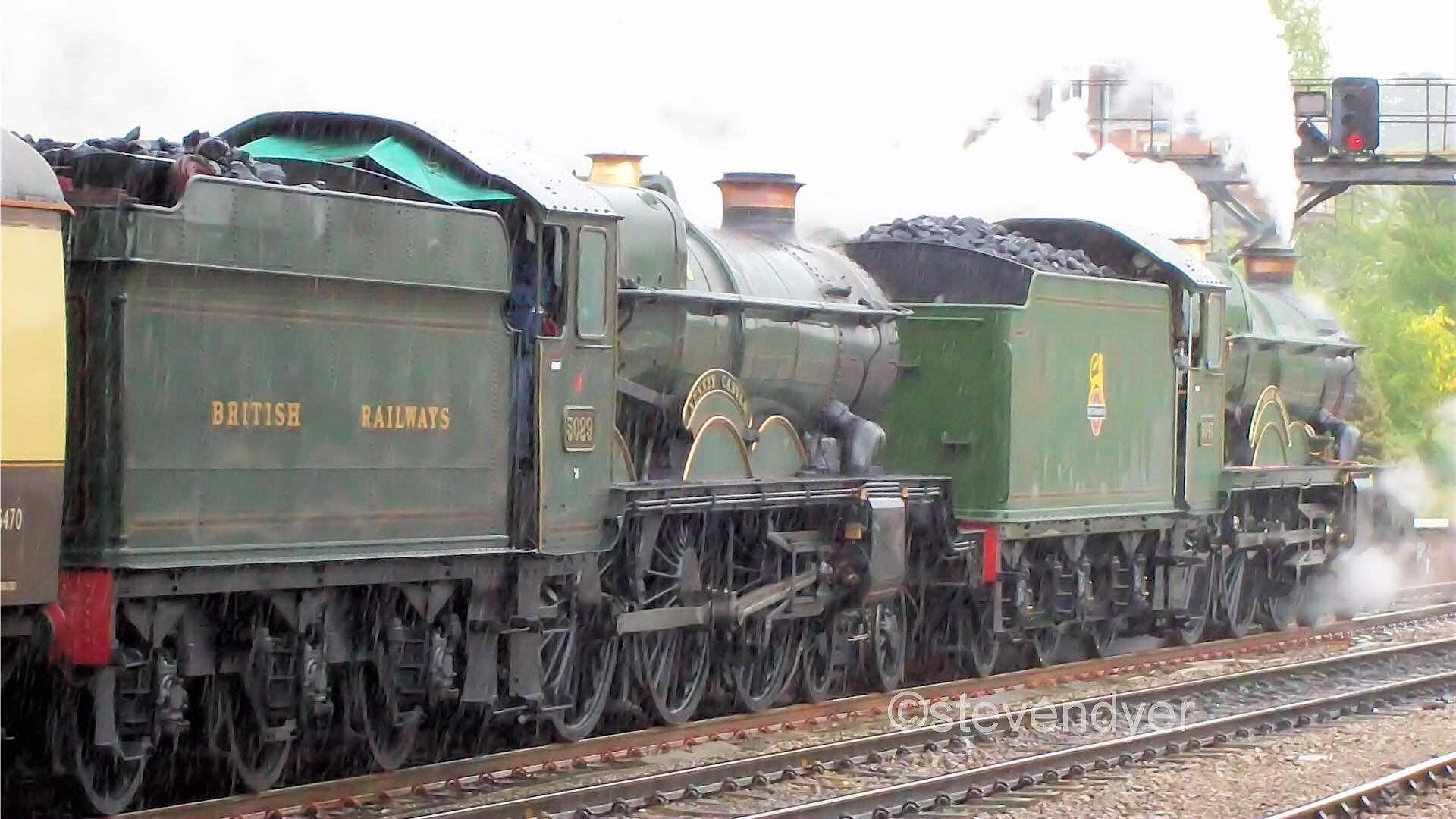
5029 Nunney Castle, completed at Swindon in May 1934. Withdrawn from BR October 1963 and privately preserved. Currently main-line registered with the West Coast Railway Company at Carnforth. Has been a regular main-line performer in preservation.
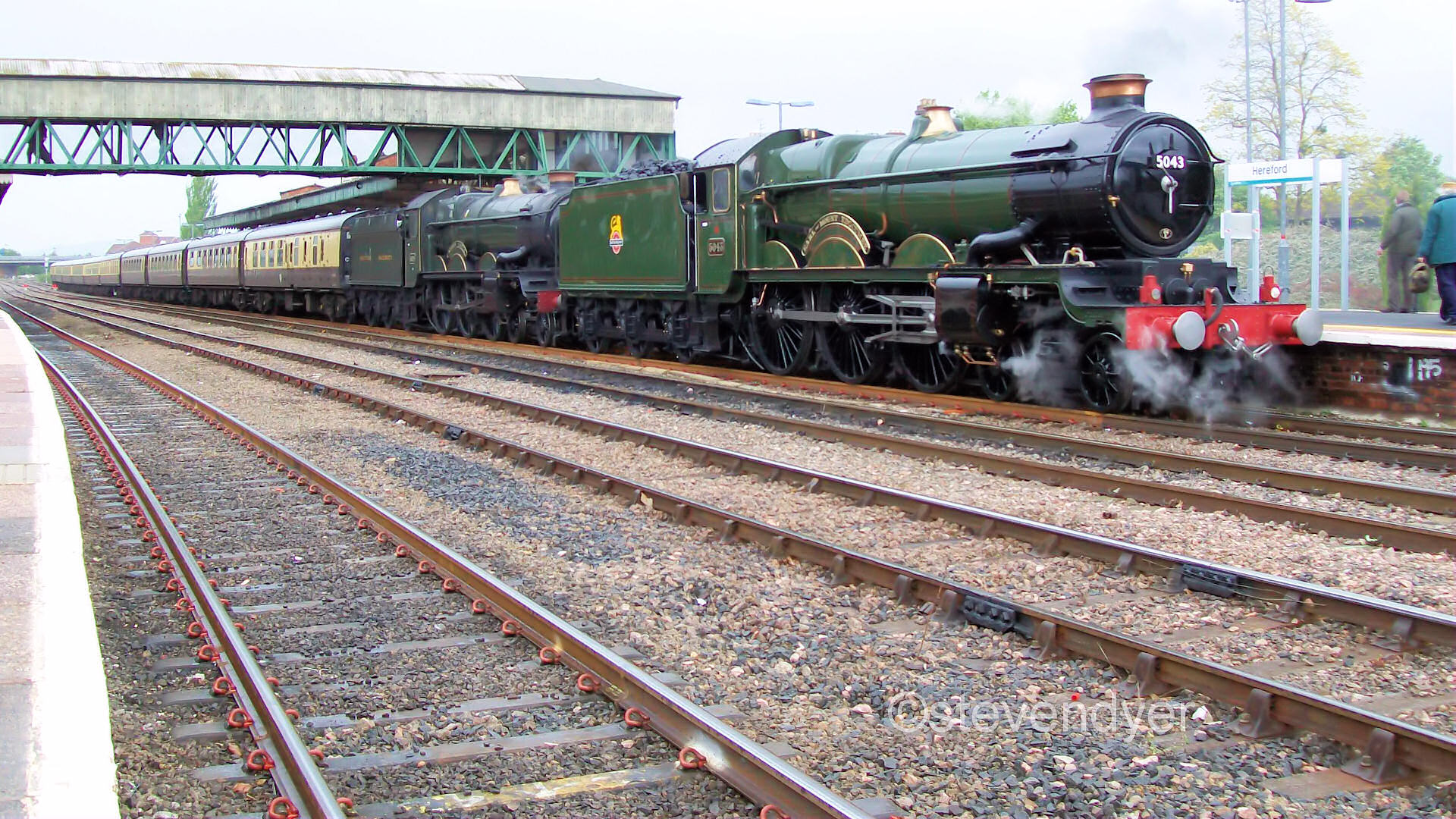
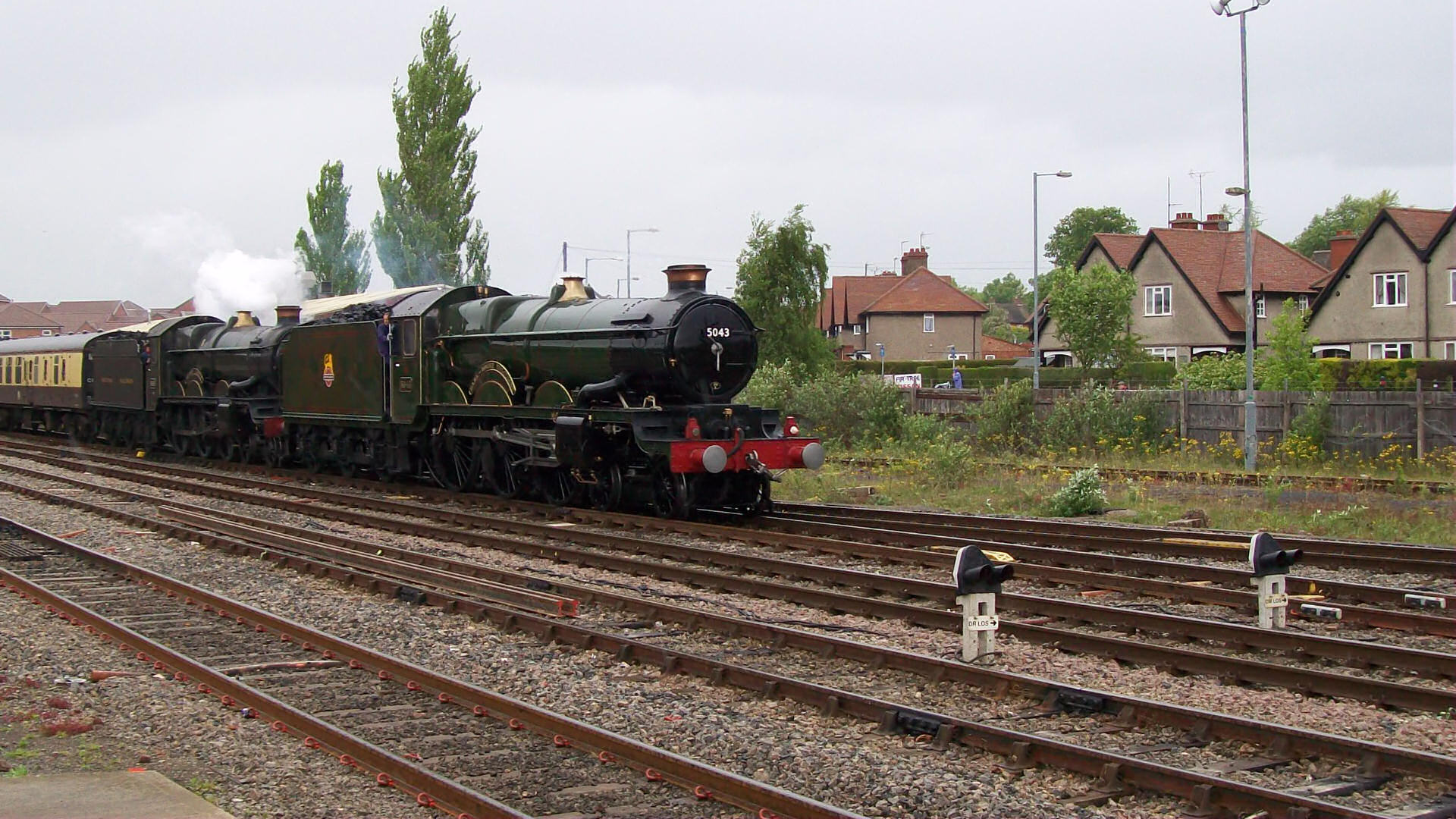
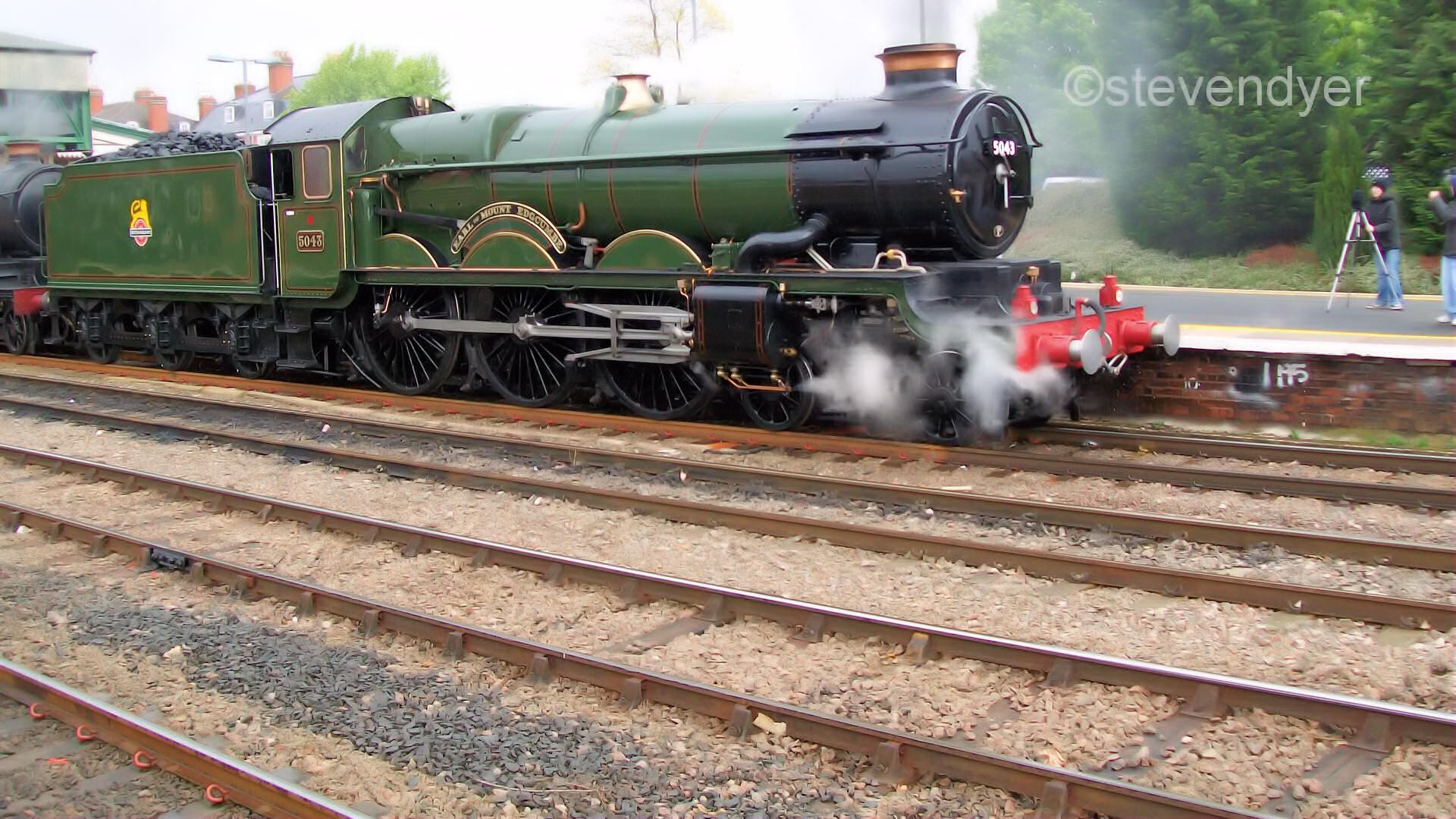
5043 Earl of Mount Edgcumbe (originally Barbury Castle), completed at Swindon in March 1936. Privately preserved on withdrawal in 1963 and currently main-line registered with the Vintage Trains Trust at Tyseley.
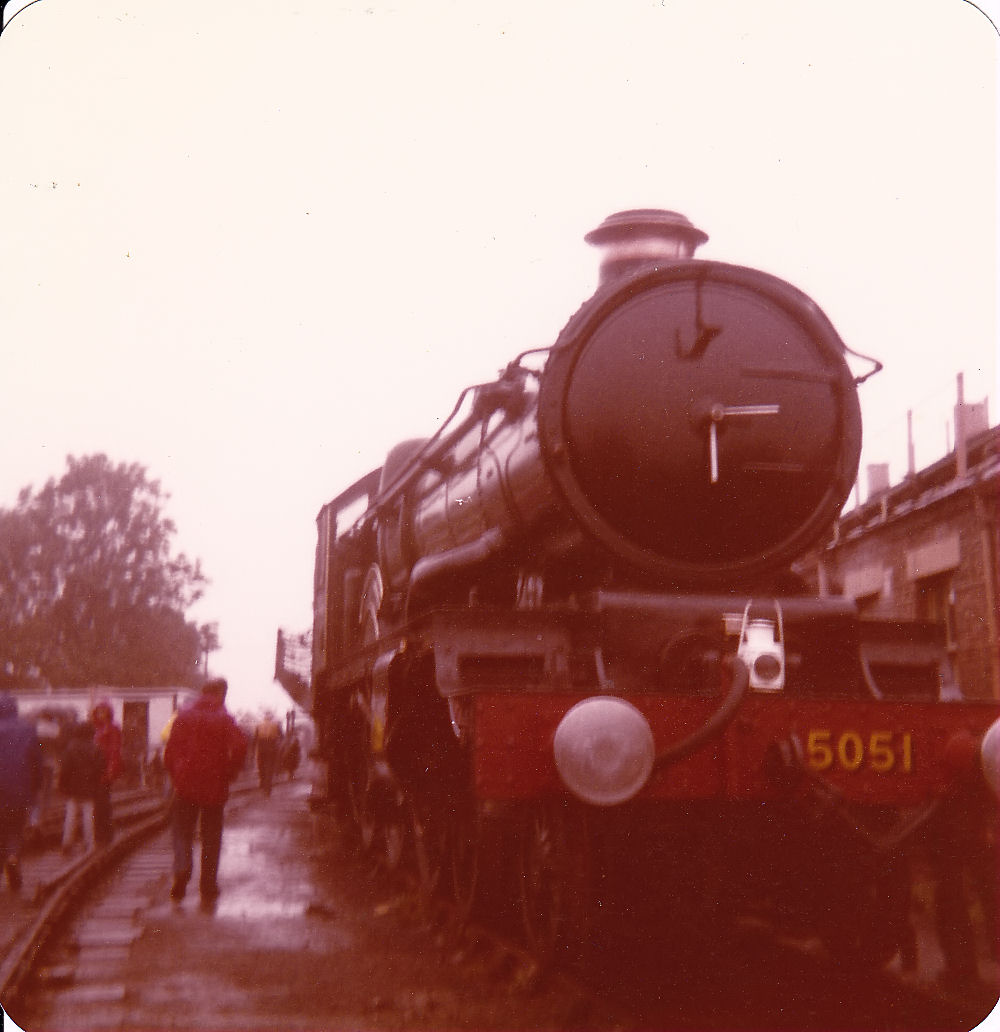
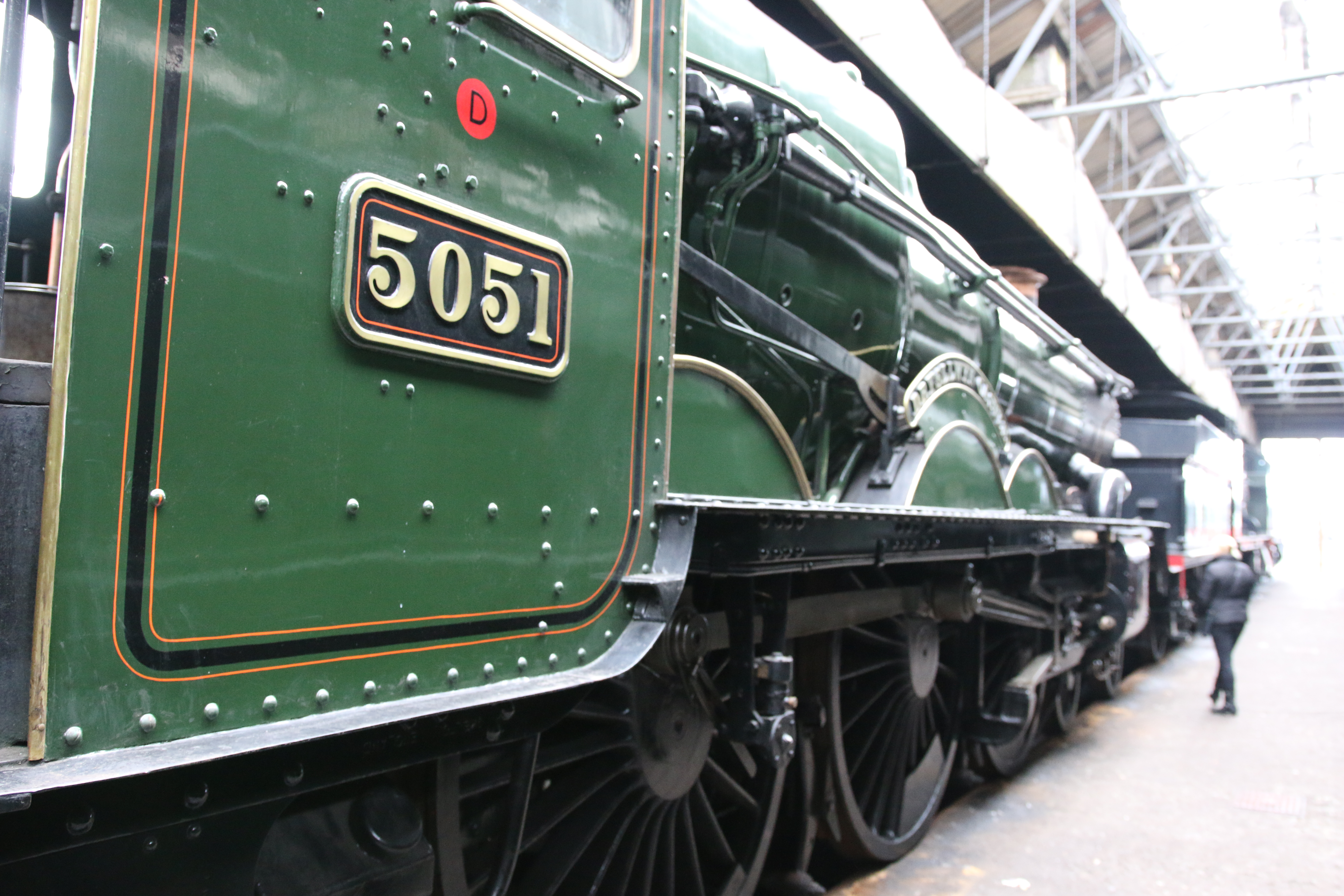
5051 Earl Bathurst (originally Drysllwyn Castle), completed at Swindon in May 1936. Currently a static exhibit at Didcot Railway Centre.
5080 Defiant, completed at Swindon in May 1939. Privately preserved at Tyseley.
7027 Thornbury Castle, completed at Swindon in August 1949. Privately preserved.
7029 Clun Castle, completed at Swindon in May 1950, the last new-build Castle. The very last Castle in BR service, withdrawn from Tyseley in November 1965. Privately preserved by the Vintage Trains Trust and currently main-line registered at Tyseley.
Allocations and regions
GWR era (1923–1947): the class was the GWR's heaviest non-King express engine and was concentrated at the principal GWR top-link sheds. Old Oak Common (London Paddington) held the largest Castle allocation, working the Cornish Riviera, Cheltenham Spa, and Bristolian expresses. Newton Abbot, Bristol Bath Road, Cardiff Canton, Wolverhampton Stafford Road, Worcester, and Plymouth Laira all held substantial Castle allocations through the GWR years.
Cheltenham Flyer era (1932–1939): the Cheltenham Spa Express, branded the "Cheltenham Flyer" by the GWR's publicity department, was the world's fastest scheduled train in 1932. Castles regularly worked the express at average start-to-stop speeds of 81.7 mph (the 1932 record). No. 5006 "Tregenna Castle" achieved 102 mph in regular service on the Cheltenham Flyer in 1932, the first authentically-recorded 100 mph in British regular service.
British Railways Western Region (1948–1965): continued at the same sheds. The class worked the principal Western Region expresses through the 1950s alongside the Kings (which had broader axle-load restrictions). The "modified" Castles from the late 1950s, fitted with double chimneys and four-row superheaters, were the most powerful Castles ever and worked the heaviest WR expresses to the end of GWR-design steam.
Final years (1962–1965): displacement by BR Type 4 diesels (Class 47 and Class 52 Western) progressively withdrew the class. The last Castle in BR service was 7029 "Clun Castle", withdrawn from Tyseley in November 1965, among the last GWR-design engines in BR service.
Livery history
GWR Middle Chrome Green (1923–1947): the class was outshopped in GWR Middle Chrome Green with black lining and serif "Great Western" lettering on the tender, the GWR standard express livery from 1900s onwards. Brass safety-valve cover, copper-capped chimney, and copper trimmings completed the characteristic GWR appearance. This was the dominant Castle livery throughout the GWR years.
British Railways experimental blue (1948–1949): some examples briefly carried BR experimental dark blue with black-and-white lining.
British Railways Brunswick green (1949–1965): from 1949 the class wore BR-standard lined Brunswick green with the early lion-and-wheel emblem (later the late BR crest from 1956). The GWR convention of carrying the running number on the cab side was retained. This was the dominant BR livery to the end.
Preservation: preserved Castles have appeared in GWR Middle Chrome Green and BR Brunswick green at different times, both authentic for the class. Several preserved Castles have appeared at different periods in their original GWR livery and the BR-era version. The Caerphilly Castle exhibit at STEAM Swindon is in GWR Middle Chrome Green.
Preservation status
Eight Castles are preserved, an exceptionally good 4.7% survival rate for a 1960s-withdrawn class:
- 4073 Caerphilly Castle, the class prototype. National Collection. Static exhibit at the STEAM Museum of the Great Western Railway, Swindon.
- 4079 Pendennis Castle, the engine of the 1925 LNER trials. Privately preserved; exported to Australia 1976 and returned to the UK 1994. Currently main-line registered with the Great Western Society at Didcot.
- 5029 Nunney Castle, privately preserved. Currently main-line registered with the West Coast Railway Company at Carnforth.
- 5043 Earl of Mount Edgcumbe (originally Barbury Castle), privately preserved. Currently main-line registered with the Vintage Trains Trust at Tyseley.
- 5051 Earl Bathurst (originally Drysllwyn Castle), privately preserved. Static exhibit at Didcot Railway Centre.
- 5080 Defiant, privately preserved at Tyseley.
- 7027 Thornbury Castle, privately preserved.
- 7029 Clun Castle, the last Castle ever built (1950) and the very last Castle in BR service (Tyseley, November 1965). Privately preserved by the Vintage Trains Trust, currently main-line registered at Tyseley.
Several preserved Castles have given decades of main-line operating service. The class's preservation profile is among the best of any British heavy express class.
Photographs
Videos

Gloucestershire and Warwickshire railway pendennis Castle betton grange leaving Toddington
7 views
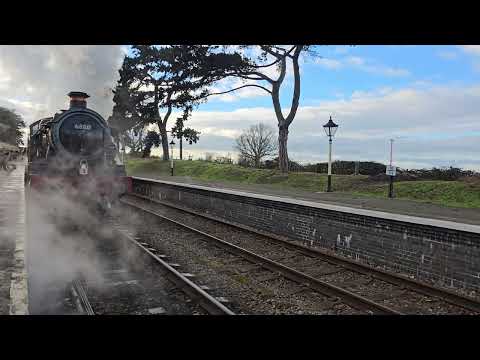
Betton grange and pendennis Castle at Cheltenham race course
1 view
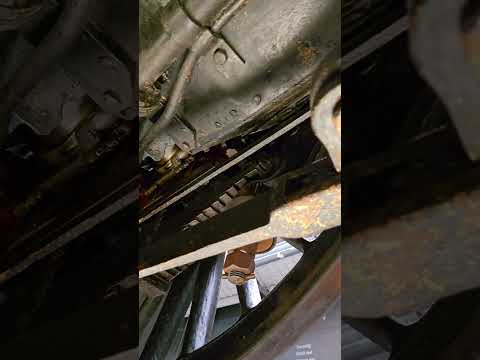
swindon railway museum 4073 Caerphilly castle, walking backwards looking up for all components
341 views

4073 Caerphilly castle at Swindon museum
478 views

Didcot railway centre 4079 pendennis Castle running a two carriage rake on their running line.
565 views