LMS Princess Coronation
The LMS Princess Coronation Class, universally known as the "Duchesses" or simply "Coronations", was the most powerful British express passenger steam class ever built. Sir William Stanier designed the four-cylinder Pacific in 1936–1937 for the LMS's new Coronation Scot service from London to Glasgow, drawing on his earlier Princess Royal Pacifics with significant simplifications. Thirty-eight engines were built at Crewe Works between 1937 and 1948.
The first engine, No. 6220 "Coronation", was completed in June 1937 in distinctive caerulean blue and silver streamlined "torpedo" casing for the Coronation Scot service launch. On the press preview run on 29 June 1937 the engine attained 114 mph descending Madeley Bank, the British steam speed record, taken from the LNER A4 Class. The figure stood as the British record for thirteen months until Mallard's 126 mph of July 1938. The Coronation Scot service ran from 5 July 1937 until the outbreak of war in September 1939.
The class's defining feature was its size. The 6 ft 5½ in maximum diameter Stanier domeless taper boiler was the largest used on any British steam class; the 50 sq ft grate was the largest of any British express passenger class; the 40,679 lbf tractive effort was the highest of any British express passenger class. The four-cylinder arrangement was a simplified development of Princess Royal practice with rocking shafts driving the inside valves, substantially more accessible for maintenance than the Princess Royal's separate inside valve gears.
The streamlined casings were progressively removed from 1946 to 1949, they had restricted maintenance access during wartime conditions and the LMS deemed them no longer worth retaining once the Coronation Scot service had ended. By 1949 all 38 engines were unstreamlined. Post-war and into BR ownership the class hauled the principal West Coast main-line expresses, the Royal Scot, the Mid-Day Scot, the Caledonian, the Royal Highland, the West Coast Postal, and the heaviest sleeping-car services. Their 50 sq ft grate gave them the steaming capacity for the heaviest formations, and they were the mainstay of Camden and Polmadie's 8P links through the 1950s.
British Railways inherited all 38 engines in 1948. Withdrawal began in April 1963 and the last engine, No. 46256 "Sir William A. Stanier F.R.S.", named after the class's designer, was withdrawn from Crewe North in October 1964. The introduction of the BR Type 4 diesels from 1961 had progressively displaced the class from front-line duties.
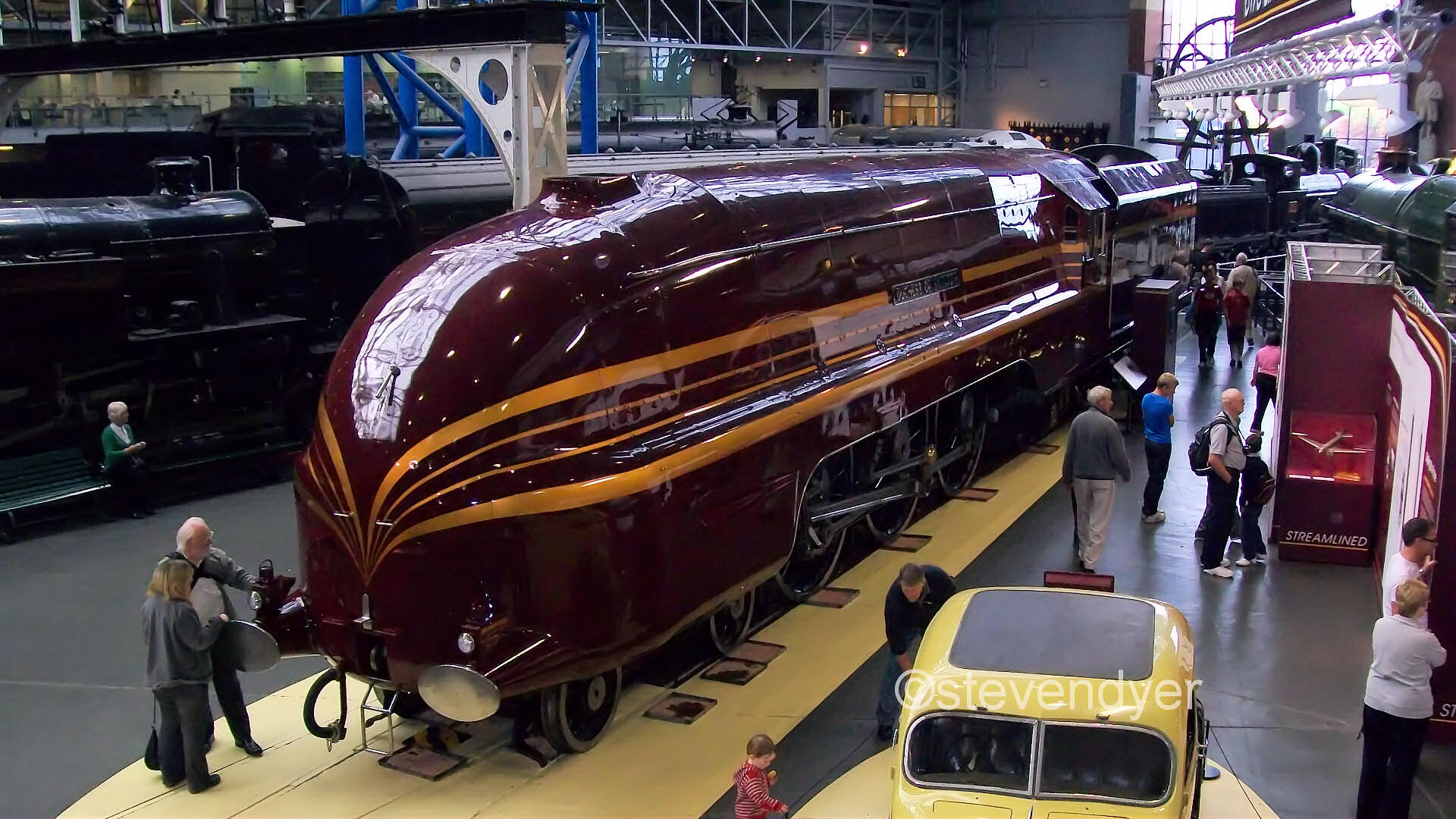
Three Princess Coronations are preserved: 46229 Duchess of Hamilton (a static exhibit at the National Railway Museum, restored to streamlined caerulean blue Coronation Scot condition for the 75th-anniversary exhibition in 2009 and remaining in that form); 46233 Duchess of Sutherland (privately preserved by the Princess Royal Class Locomotive Trust at Butterley and currently main-line registered, with extensive Royal Train and charter haulage); and 46235 City of Birmingham (a static exhibit at the Thinktank Birmingham Science Museum).
Design and development
By 1936 the LMS was planning the Coronation Scot, a new high-speed Anglo-Scottish service to compete with the LNER's A4-hauled Coronation. Sir William Stanier needed a new express Pacific to follow his successful but heavyweight Princess Royal Class of 1933, a class that had given mixed results in service.
The Princess Coronation was Stanier's consolidated express Pacific design, drawing on Princess Royal experience and incorporating significant simplifications. Four cylinders were retained but in a simplified arrangement with rocking shafts driving the inside valves (versus the Princess Royal's separate inside Walschaerts gears). The boiler was enlarged to 6 ft 5½ in maximum diameter, the largest fitted to any British class, with a 50 sq ft grate (the largest of any British express). Pressure was set at 250 psi, the same as the Princess Royal. A streamlined "torpedo" air-smoothed casing was developed in wind-tunnel tests at the LMS's Derby research department.
The first engine, No. 6220 "Coronation", was completed at Crewe Works on 1 June 1937 in caerulean blue and silver Coronation Scot livery. On the press preview run on 29 June 1937, with Driver Tom Clarke at the regulator, No. 6220 attained 114 mph descending Madeley Bank, the British steam speed record, taken from the LNER A4 Class. The figure stood as the British record for thirteen months until Mallard's 126 mph of July 1938. The Coronation Scot service ran from 5 July 1937 with the streamlined batch (6220–6224).
Production continued through the late 1930s in successively modified batches. The 1939 Empire Exhibition examples (6225–6228) and the early-war engines (6229–6234) were streamlined; the post-1944 engines (6249–6257) were unstreamlined from new, with the streamlined casings progressively removed from the earlier engines from 1946 onwards. The final engine, No. 6257 "City of Salford", was completed at Crewe in May 1948, the last LMS-design Pacific to be built.
Service and withdrawals
The Princess Coronations were the LMS's flagship Pacifics from 1937 onwards. The Coronation Scot service ran from June 1937 until the outbreak of war in September 1939, the streamlined engines were among the most distinctive sights on the West Coast main line. During the war the streamlined casings restricted maintenance access; from 1942 onwards the LMS planned their progressive removal, and from 1946 to 1949 all engines were de-streamlined.
Post-war the class hauled the principal West Coast main-line expresses, the Royal Scot (Euston–Glasgow), the Mid-Day Scot, the Caledonian, the Royal Highland, the West Coast Postal, and heavy holiday traffic. Their 50 sq ft grate gave them the steaming capacity for the heaviest LMS sleeping-car formations, and the class was the standard mainstay of Polmadie's 8P link through the 1950s.
British Railways inherited all 38 engines in 1948. The class continued in front-line service through to the early 1960s, the introduction of the BR Type 4 diesels from 1961 (Class 40 and then Class 47) progressively displaced them from the principal duties. The last Princess Coronation in BR service, No. 46256 "Sir William A. Stanier F.R.S.", was withdrawn from Crewe North in October 1964.
Identification features
Two distinct outline phases. Streamlined engines (1937–1949): a "torpedo" air-smoothed casing developed in wind-tunnel tests at the LMS's Derby research department, painted in caerulean blue with silver speed-stripes for the Coronation Scot batch (6220–6224) or, from 1938, in LMS crimson lake with gold lining and silver speed-stripes for subsequent batches. Unstreamlined engines (1944 onwards, plus all engines from 1946–1949 as casings were removed): a clean "British Pacific" outline with single chimney (later double chimney from 1955), Belpaire firebox, smoke deflectors, and characteristic Stanier domeless taper boiler, the largest fitted to any British class. The class is distinguished from the Princess Royal by its larger boiler (50 sq ft grate vs Princess Royal 45 sq ft), simplified four-cylinder arrangement (rocking-shaft inside Walschaerts vs Princess Royal's separate inside Walschaerts), and the much larger Coronation tender.
Numbers and names
LMS6220–6234streamlined "Coronation" batch
- 6220
- 6221
- 6222
- 6223
- 6224
- 6225
- 6226
- 6227
- 6228
- 6229
- 6230
- 6231
- 6232
- 6233
- 6234
LMS6235–6248streamlined and unstreamlined batches
- 6235
- 6236
- 6237
- 6238
- 6239
- 6240
- 6241
- 6242
- 6243
- 6244
- 6245
- 6246
- 6247
- 6248
LMS6249–6257unstreamlined post-war batch
- 6249
- 6250
- 6251
- 6252
- 6253
- 6254
- 6255
- 6256
- 6257
BR46220–46257
- 46220
- 46221
- 46222
- 46223
- 46224
- 46225
- 46226
- 46227
- 46228
- 46229
- 46230
- 46231
- 46232
- 46233
- 46234
- 46235
- 46236
- 46237
- 46238
- 46239
- 46240
- 46241
- 46242
- 46243
- 46244
- 46245
- 46246
- 46247
- 46248
- 46249
- 46250
- 46251
- 46252
- 46253
- 46254
- 46255
- 46256
- 46257
LMS Nos 6220–6234 (streamlined "Coronation" batch) built 1937–1939; 6235–6248 (streamlined and unstreamlined batches) 1939–1943; 6249–6257 (unstreamlined post-war batch) 1944–1948. British Railways added 40000 to give 46220–46257. Streamlined casings were progressively removed 1946–1949; by 1949 all engines were unstreamlined.
Notable locomotives
6220 Coronation (later 46220), the class prototype, completed at Crewe Works on 1 June 1937. On 29 June 1937, the press preview run for the Coronation Scot service, attained 114 mph descending Madeley Bank, taking the British steam speed record from the LNER A4 Class. Withdrawn from BR April 1963 and broken up.
6229 Duchess of Hamilton (later 46229), completed at Crewe in September 1938. Streamlined throughout the LMS era; visited the United States in 1939 disguised as 6220 Coronation for the New York World's Fair. Withdrawn from BR February 1964 and preserved by the National Collection. Currently exhibited at the National Railway Museum, York, in BR-era unstreamlined form.
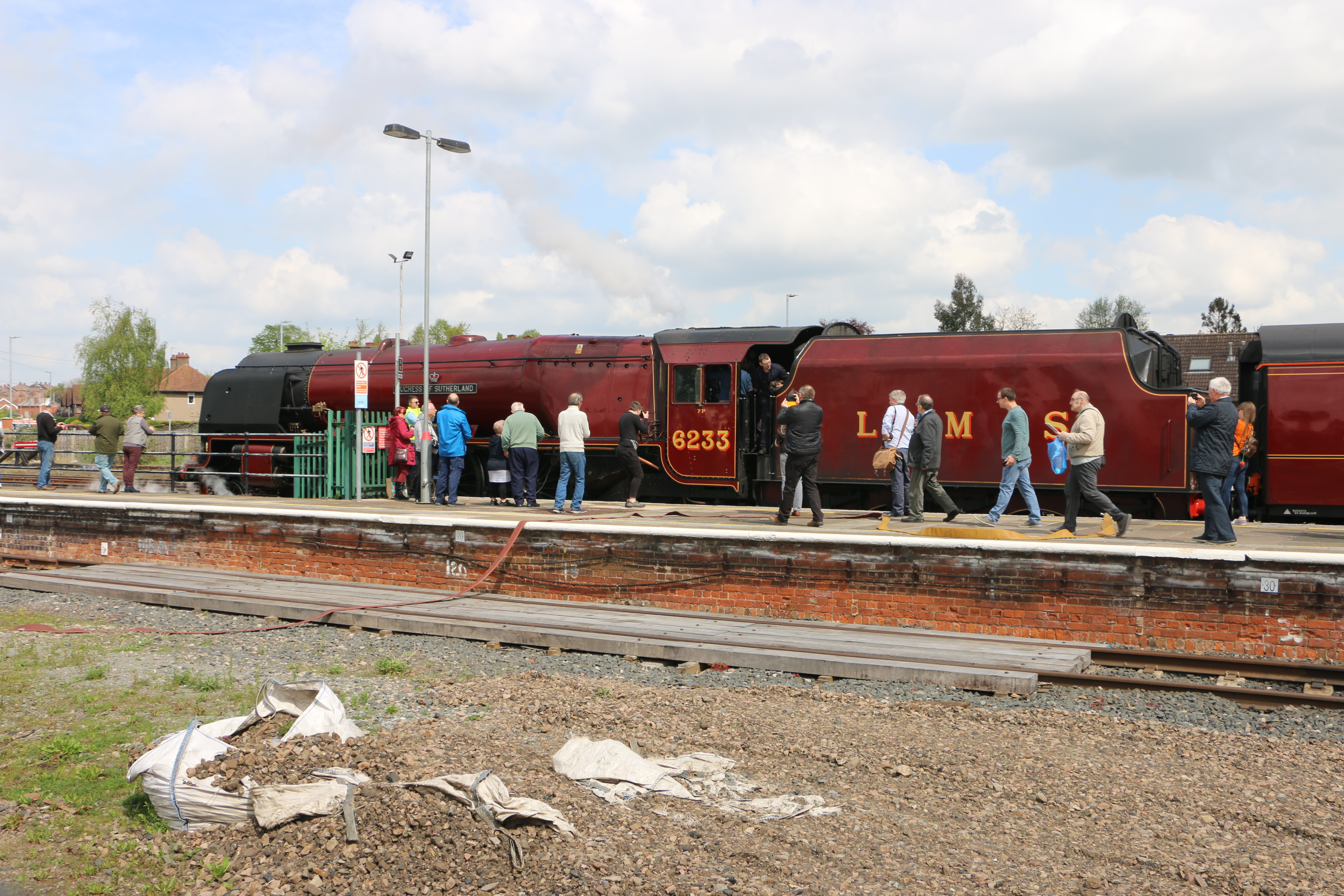
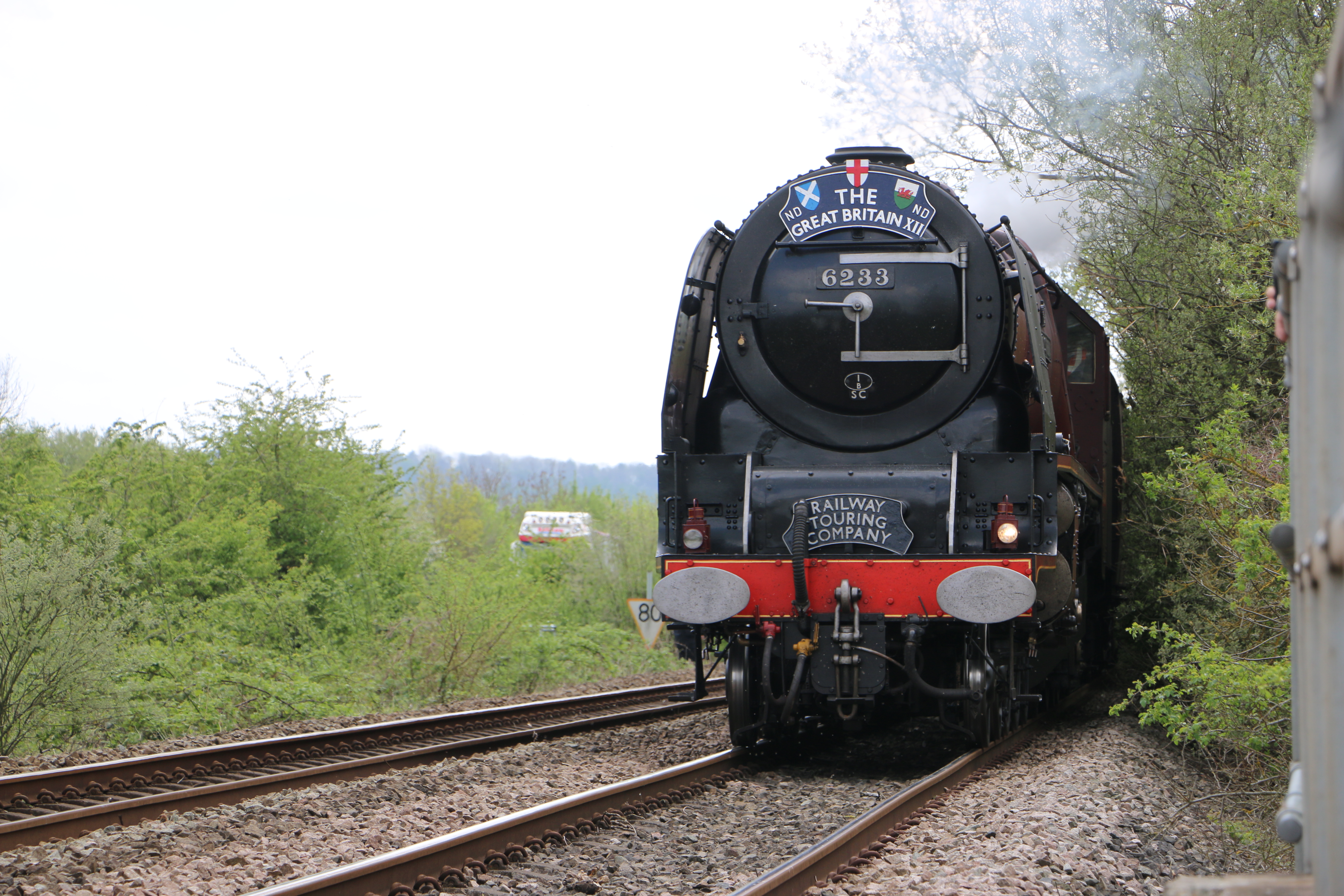
6233 Duchess of Sutherland (later 46233), built at Crewe in July 1938, unstreamlined from new. Withdrawn from BR February 1964 and privately preserved. Currently main-line registered with the Princess Royal Class Locomotive Trust based at Butterley, Derbyshire.
6235 City of Birmingham (later 46235), completed at Crewe in July 1939, unstreamlined from new. Withdrawn from BR September 1964 and preserved by the City of Birmingham. Currently a static exhibit at the Thinktank museum, Birmingham.
6256 Sir William A. Stanier F.R.S. (later 46256), completed at Crewe in December 1947 and named after the class's designer. The penultimate engine of the class. Withdrawn from BR October 1964, the very last Princess Coronation in service.
6257 City of Salford (later 46257), completed at Crewe in May 1948, the last engine of the class. Notable as the only BR-era new-build to incorporate roller bearings on all axles.
Allocations and regions
LMS era (1937–1947): the class was concentrated on the West Coast main line and allocated principally to Camden (London Euston), Crewe North, Polmadie (Glasgow), and Edge Hill (Liverpool). The Coronation Scot service from June 1937 was a Camden-and-Polmadie joint working with the streamlined 6220–6224 engines. The first non-streamlined engines (6230 onwards) were also based at Camden and Polmadie.
British Railways London Midland Region (1948–1964): continued at Camden, Crewe North, Polmadie, and Edge Hill. The class worked the Royal Scot, the Mid-Day Scot, the Caledonian, the Royal Highland, and the heaviest West Coast main-line trains throughout the 1950s. Edge Hill's 8P allocation handled the heaviest trans-Pennine services.
Late BR (1959–1964): the introduction of the BR Standard Class 9F 2-10-0 from 1956 displaced the class from many heavy freight workings; Pacifics took over the heaviest passenger duties. The introduction of BR Type 4 diesels (Class 40, then Class 47) from 1961 progressively displaced the Pacifics from the principal expresses. Last withdrawals were from Crewe North in October 1964.
Livery history
LMS streamlined caerulean blue (1937–1939): the original five Coronation Scot engines (6220 Coronation, 6221 Queen Elizabeth, 6222 Queen Mary, 6223 Princess Alice, 6224 Princess Alexandra) were outshopped in caerulean blue with silver speed-stripes, a unique LMS livery developed for the Coronation Scot service launch.
LMS streamlined crimson lake (1938–1949): from 1938 the streamlined engines were progressively repainted into LMS crimson lake with gold lining and silver speed-stripes, matching the new "Coronation" coaching stock. This was the dominant LMS streamlined livery.
LMS unstreamlined crimson lake (1944–1947): engines built unstreamlined from 6249 onwards (1944) were outshopped in plain LMS crimson lake.
British Railways experimental blue (1948–1949): some examples briefly carried the BR experimental dark blue lined out in black and white.
British Railways Brunswick green (1949–1964): from 1949 most of the class wore BR-standard lined Brunswick green with the early lion-and-wheel emblem (later the late BR crest from 1956). Streamlined casings were progressively removed 1946–1949; by 1949 all engines were unstreamlined and in BR Brunswick green.
Preservation status
Three Princess Coronations are preserved:
- 6229 Duchess of Hamilton (later 46229), preserved by the National Collection on withdrawal in February 1964. Currently a static exhibit at the National Railway Museum, York. The engine was restored to LMS streamlined caerulean blue and silver "Coronation Scot" condition for the 75th-anniversary exhibition in 2009 and remains in that form, the only Princess Coronation preserved in streamlined condition.
- 6233 Duchess of Sutherland (later 46233), privately preserved on withdrawal in February 1964. Currently main-line registered with the Princess Royal Class Locomotive Trust based at Butterley, Derbyshire. Has run extensively on the main line for charter operators including the Royal Train.
- 6235 City of Birmingham (later 46235), preserved by the City of Birmingham on withdrawal in September 1964. Currently a static exhibit at the Thinktank Birmingham Science Museum.
The class's 8% preservation rate (3 from 38) is good for an express Pacific class, and the Princess Royal Class Locomotive Trust has maintained 6233 in working order continuously since the 1980s, one of the longest preservation operating records of any British Pacific.
Photographs