SR Merchant Navy
The SR Merchant Navy Class is the most experimental British express steam locomotive ever to enter regular service. Oliver Bulleid designed the three-cylinder air-smoothed Pacific in 1938–1941 for the Southern Railway's heaviest expresses, deliberately incorporating as many engineering innovations as possible in a single design. Thirty engines were built at Eastleigh Works between 1941 and 1949.
Bulleid's key innovations were extensive. The boiler was welded all-steel construction, among the first British examples at express scale. Thermic siphons inside the firebox increased the heating surface (a feature copied from the Pennsylvania Railroad K4s). Boiler pressure was set at 280 psi, the highest of any British express class. The valve gear used Bulleid's patent chain-drive arrangement: three sets of gear submerged in an enclosed oil bath, driven by a triple roller chain, intended to give continuous low-friction operation. The whole engine was clad in a rectangular "air-smoothed" casing, Bulleid avoided the term "streamlined", emphasising that the casing's purpose was reduced cleaning labour rather than aerodynamics. The cylinders were notably small (18 × 24 in) but the 280 psi pressure compensated.
The first engine, 21C1 "Channel Packet", was completed at Eastleigh in February 1941, the first British Pacific to enter service since the LMS Princess Coronations of 1937. The first ten engines (21C1–21C10) were completed by 1944 under wartime conditions; the second batch (21C11–21C20) followed 1945–1948 and the post-Grouping batch (21C21–21C30) 1948–1949. The class is named after British and Allied shipping lines, a wartime tribute to the merchant fleet that supplied Britain through the Battle of the Atlantic.
The Bulleid features proved problematic in service. The chain valve gear stretched and required regular tensioning; the oil bath leaked; the welded firebox developed cracks. Class availability was substantially below expectations. From 1956 to 1959, BR Southern Region engineering chief Ron Jarvis led a comprehensive rebuild programme. All 30 Merchant Navies were rebuilt at Eastleigh, the chain gear replaced with three independent Walschaerts gears, the air-smoothed casing removed, pressure reduced to 250 psi. The rebuilt engines were dramatically more reliable, with availability rising from approximately 60% to over 80%.
British Railways inherited the class in 1948 and worked it on the principal Southern Region expresses through to the late 1960s. The Atlantic Coast Express, the Bournemouth Belle, and the Continental boat trains were all Merchant Navy worked. The Bournemouth electrification of July 1967 ended Merchant Navy main-line steam, the very last engine in BR service, 35028 Clan Line, was withdrawn from Nine Elms in July 1967, among the very last BR steam Pacifics.
Eleven Merchant Navies are preserved, an exceptionally high 37% survival rate. All preserved engines except 35029 Ellerman Lines (sectioned at the NRM) are in rebuilt form. 35028 Clan Line, the very last Merchant Navy in BR service, has given the longest preservation operating record on the main line through the Merchant Navy Locomotive Preservation Society. 35005 Canadian Pacific, 35018 British India Line, and others are also main-line registered. Several remain under long-term restoration.
Design and development
By 1937 the Southern Railway needed a heavier express engine for the West of England line. Oliver Bulleid had been recruited from the LNER in 1937 (as Sir Nigel Gresley's former Personal Assistant) and was determined to produce a radical, technically-advanced design. Bulleid's brief was a Pacific to handle the heaviest Southern boat trains and West of England expresses; his approach was to incorporate as many engineering innovations as possible in a single design.
The Merchant Navy was the result. Bulleid's key innovations were: a welded all-steel boiler (among the first British examples at express scale); thermic siphons in the firebox (copied from the contemporary Pennsylvania Railroad K4s); 280 psi pressure (the highest of any British express); chain-driven valve gear in an enclosed oil bath (Bulleid's patent design intended to give continuous low-friction operation); and an "air-smoothed" rectangular casing (intended to keep the engines clean and reduce labour in shed). The cylinders were notably small for a Pacific (18 × 24 in, against the Princess Coronation's 16½ × 28 in) but the high pressure compensated.
The first engine, 21C1 "Channel Packet", was completed at Eastleigh Works in February 1941, wartime conditions slowing production. The class's wartime priority was express freight, but the engines were progressively cascaded onto the heaviest expresses as conditions allowed. The first ten engines (21C1–21C10) were completed by 1944, with the second batch (21C11–21C20) following 1945–1948 and the post-Grouping batch (21C21–21C30) 1948–1949.
The Bulleid features proved problematic in service. The chain valve gear stretched and required regular tensioning; the oil bath leaked; the welded firebox developed cracks. The class's availability was substantially below expectations, and from 1953 BR Southern Region engineering chief Ron Jarvis (under CME R. A. Riddles) developed a comprehensive rebuild scheme. Between 1956 and 1959 all 30 Merchant Navies were rebuilt at Eastleigh, chain gear replaced with three independent Walschaerts gears, casing removed (revealing the boiler), pressure reduced to 250 psi, and various other detail changes. The rebuilt engines were dramatically more reliable, with availability rising from approximately 60% to over 80%.
Service and withdrawals
The Merchant Navies were the Southern Region's top-link Pacifics from 1941 onwards. They worked the Atlantic Coast Express (London Waterloo to Plymouth and Padstow), the Bournemouth Belle, the Royal Wessex, and the principal boat trains from Victoria. The 1948 BR formation gave the Southern Region 30 engines (the first 20 plus the post-Grouping batch), sufficient for all top-link duties.
The original Bulleid engines' availability problems progressively concentrated minds. By 1953 the case for rebuilding had become overwhelming, and the Jarvis-led rebuild programme of 1956–1959 transformed the class. Rebuilt engines worked the principal Southern Region expresses through the 1960s, the Bournemouth Belle and Atlantic Coast Express continuing into BR steam's closing years. The Bournemouth electrification of July 1967 ended Merchant Navy main-line steam working; the very last Merchant Navy in BR service, 35028 Clan Line (privately preserved by the Merchant Navy Locomotive Preservation Society), was withdrawn from Nine Elms in July 1967.
The Merchant Navy was thus among the very last BR steam Pacific classes in service, and its late retirement and high-profile preservation profile have given the class continuing main-line presence through the heritage era. Several Merchant Navies have been main-line registered for charter haulage, with 35028 Clan Line giving the longest preservation operating record.
Identification features
Two distinct outline phases. Original Bulleid (1941–1959): the celebrated air-smoothed "spam can" outline with a wedge-shaped front and rectangular slab-sided casing covering boiler, smokebox, and cylinders. The casing was deliberately not described as "streamlined", Bulleid termed it "air-smoothed" because its purpose was operational (cleaner engines requiring less labour for cleaning) rather than aerodynamic. Front-end air vents distinguished the original design. Rebuilt (1956 onwards): conventional British Pacific outline with three independent Walschaerts gears, smoke deflectors, and a removed casing. The rebuilt locomotives retained the welded steel boiler at reduced pressure (250 psi) but lost most of the original Bulleid features. The class is named after British and Allied shipping lines and named ships, a wartime tribute to the merchant fleet that supplied Britain through the Battle of the Atlantic.
Numbers and names
35001–35030
- 35001
- 35002
- 35003
- 35004
- 35005
- 35006
- 35007
- 35008
- 35009
- 35010
- 35011
- 35012
- 35013
- 35014
- 35015
- 35016
- 35017
- 35018
- 35019
- 35020
- 35021
- 35022
- 35023
- 35024
- 35025
- 35026
- 35027
- 35028
- 35029
- 35030
SR Nos 21C1–21C20 (built 1941–1948) and 21C21–21C30 (built 1948–1949, the post-Grouping "ten new Merchants" batch). British Railways added 35001–35030 from 1948, retaining the existing build sequence. The unique "21C" prefix was Bulleid's system: 2 leading axles, 1 trailing axle, "C" indicating three coupled axles.
Notable locomotives
21C1 Channel Packet (later 35001), the class prototype, completed at Eastleigh Works in February 1941. The first British Pacific to enter service since the LMS Princess Coronations of 1937. Rebuilt 1959. Withdrawn from BR November 1964 and broken up.
21C5 Canadian Pacific (later 35005), built April 1941. Rebuilt 1959. Withdrawn 1965 and privately preserved. Currently main-line registered with the Mid-Hants Railway.
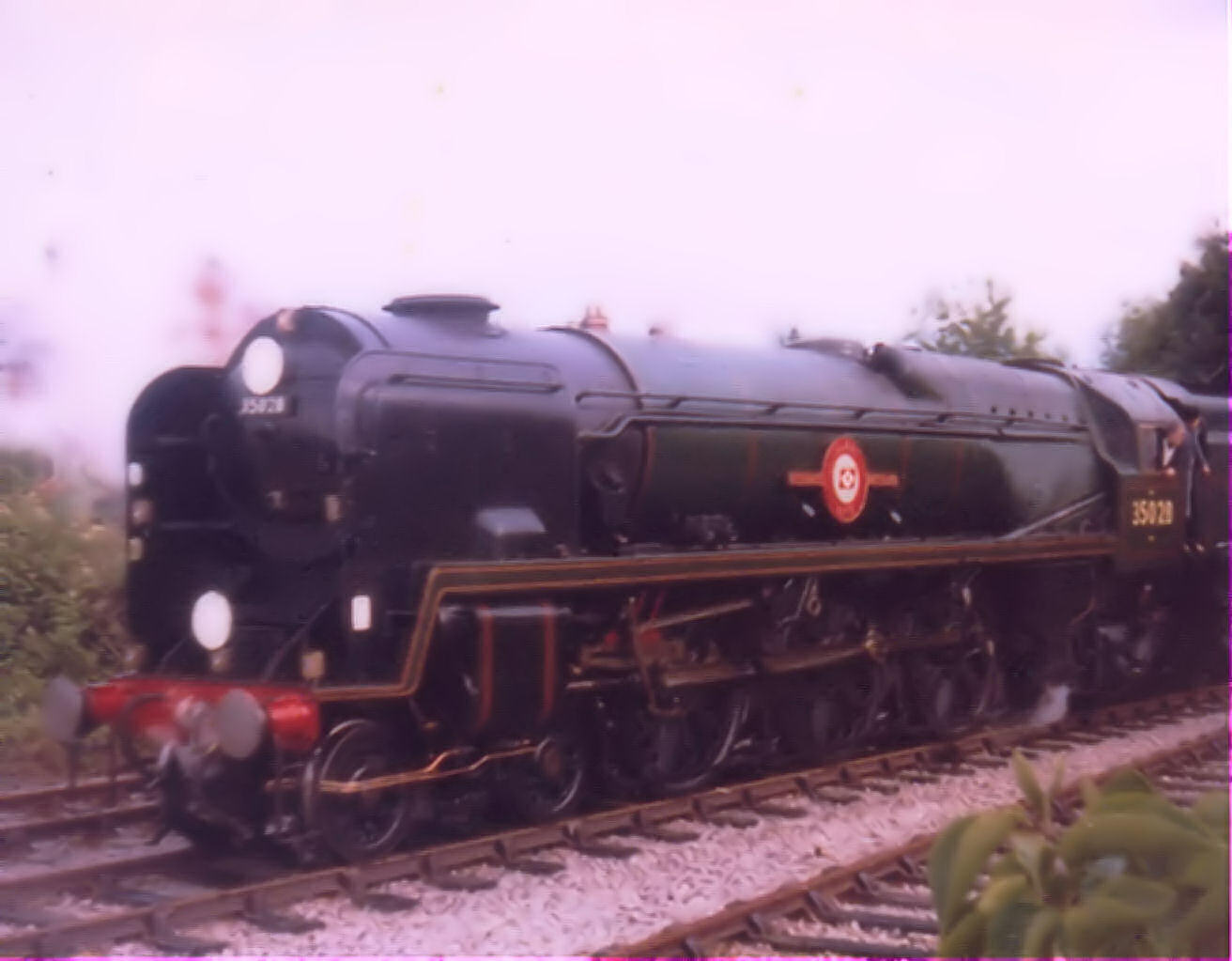
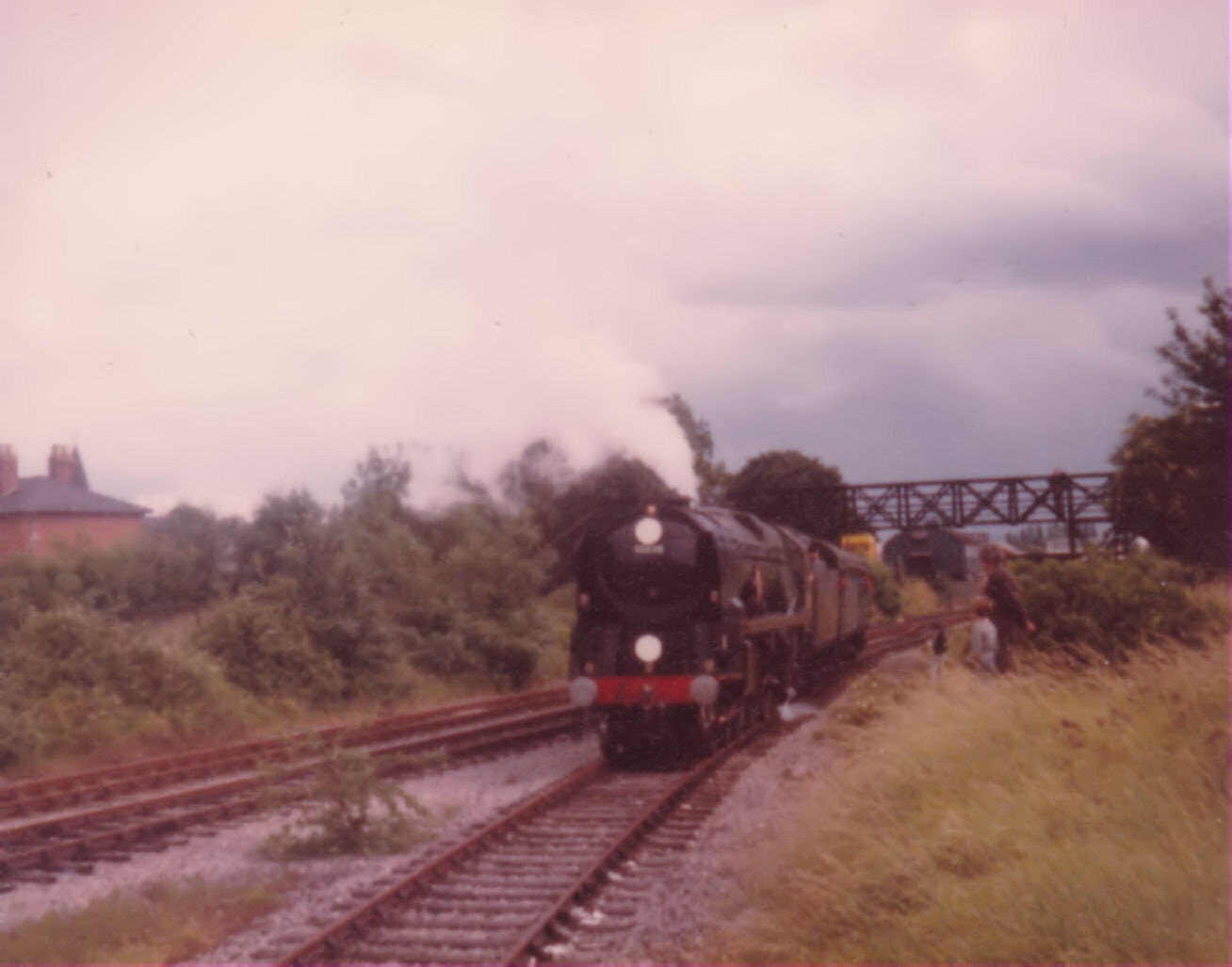
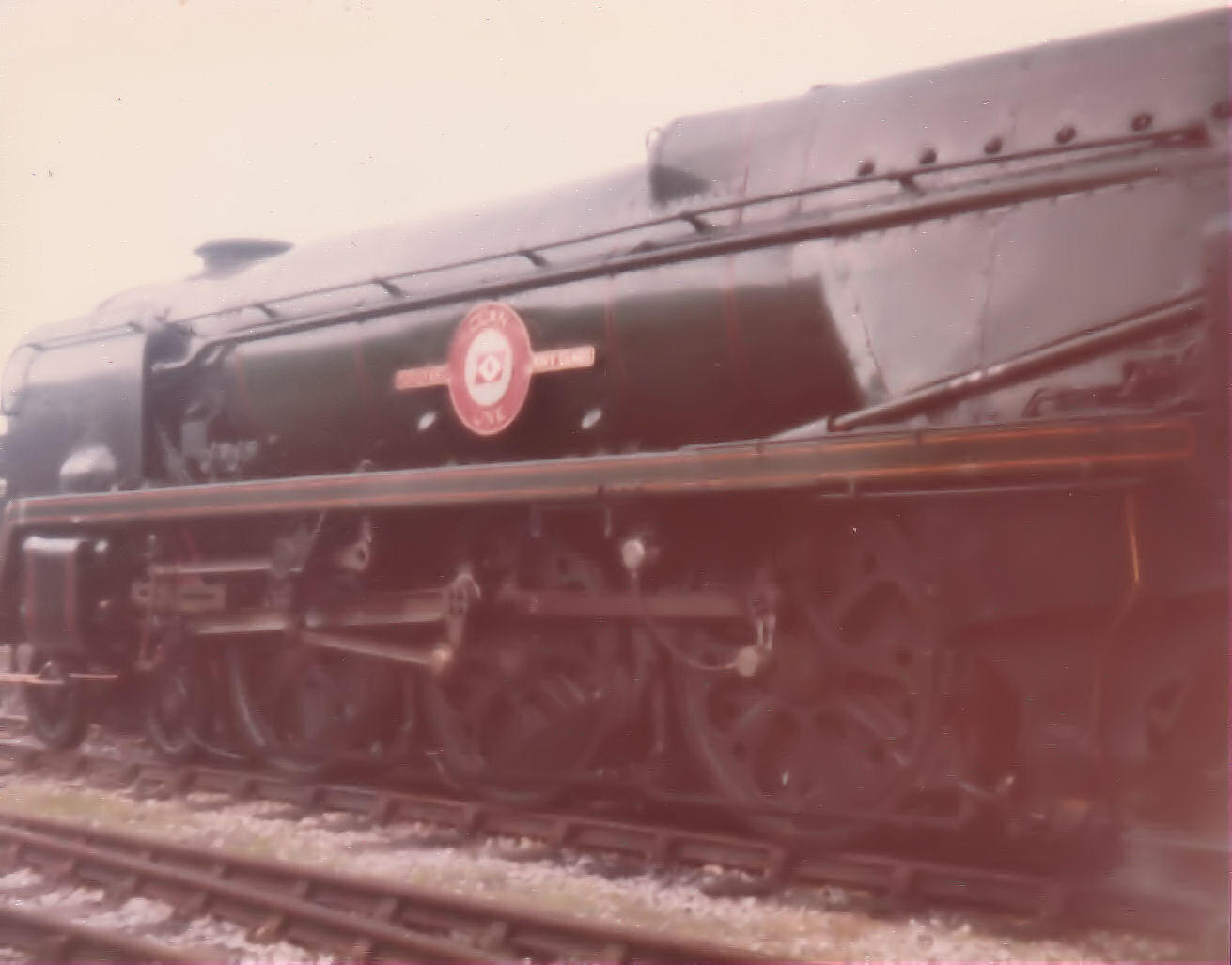
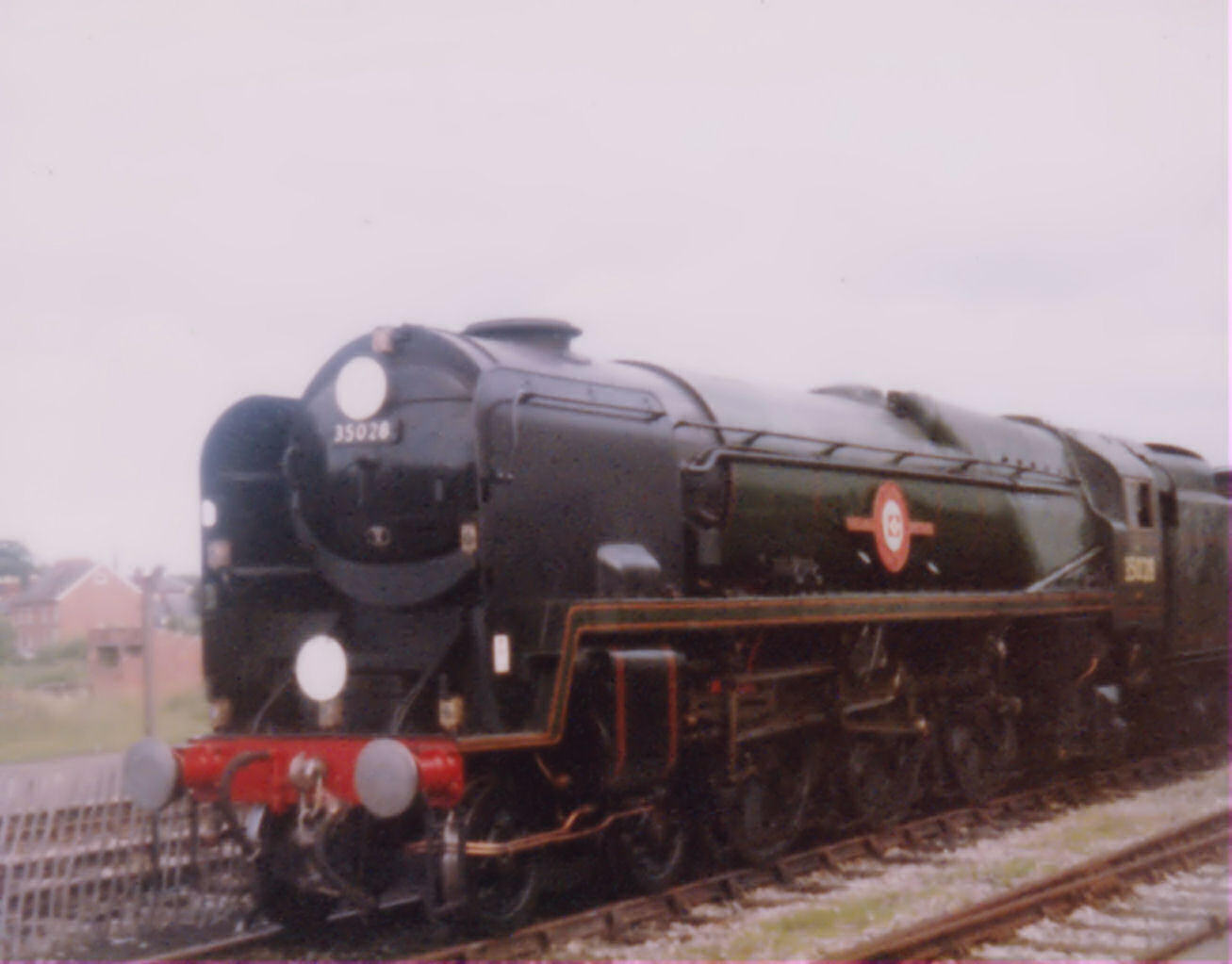
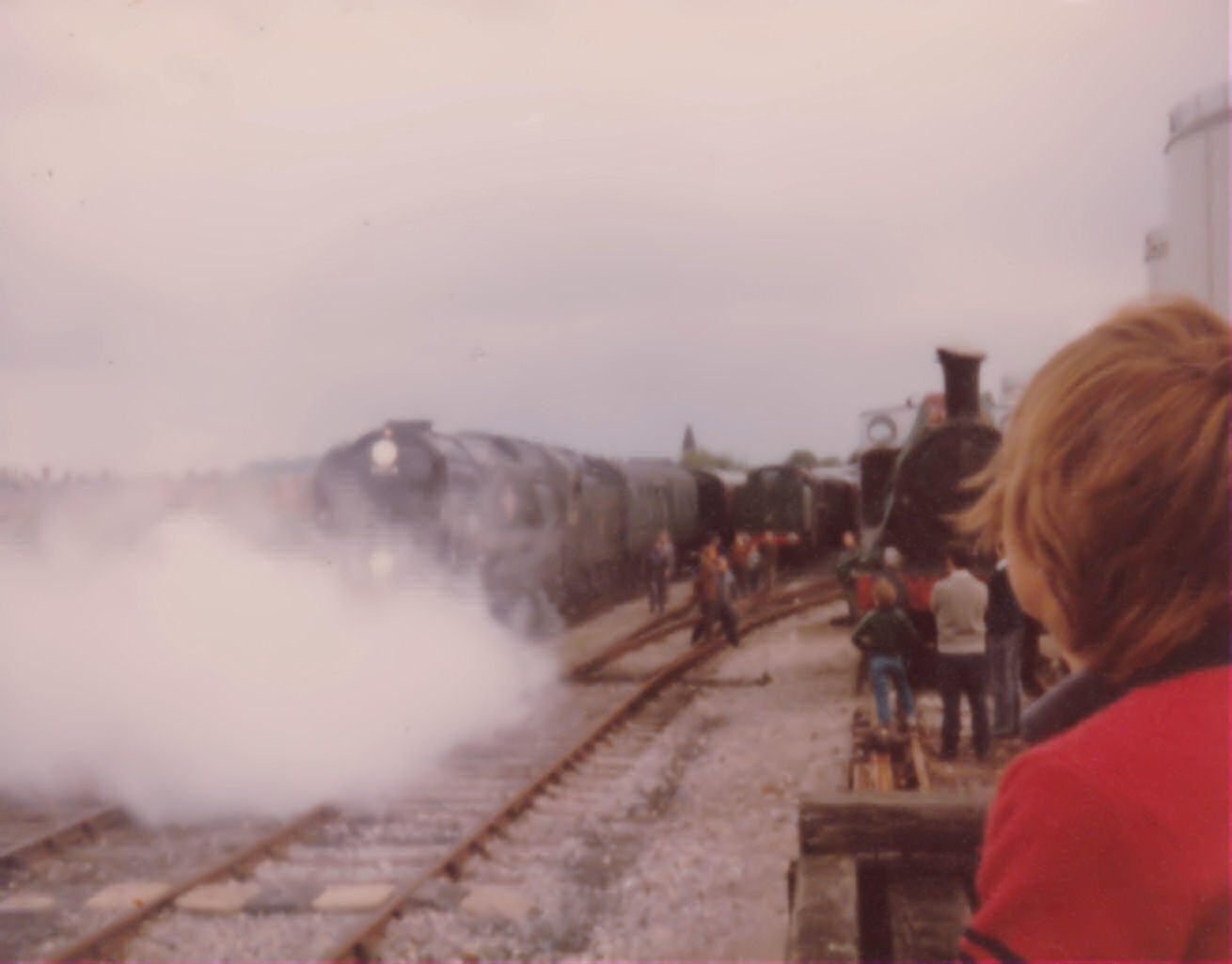
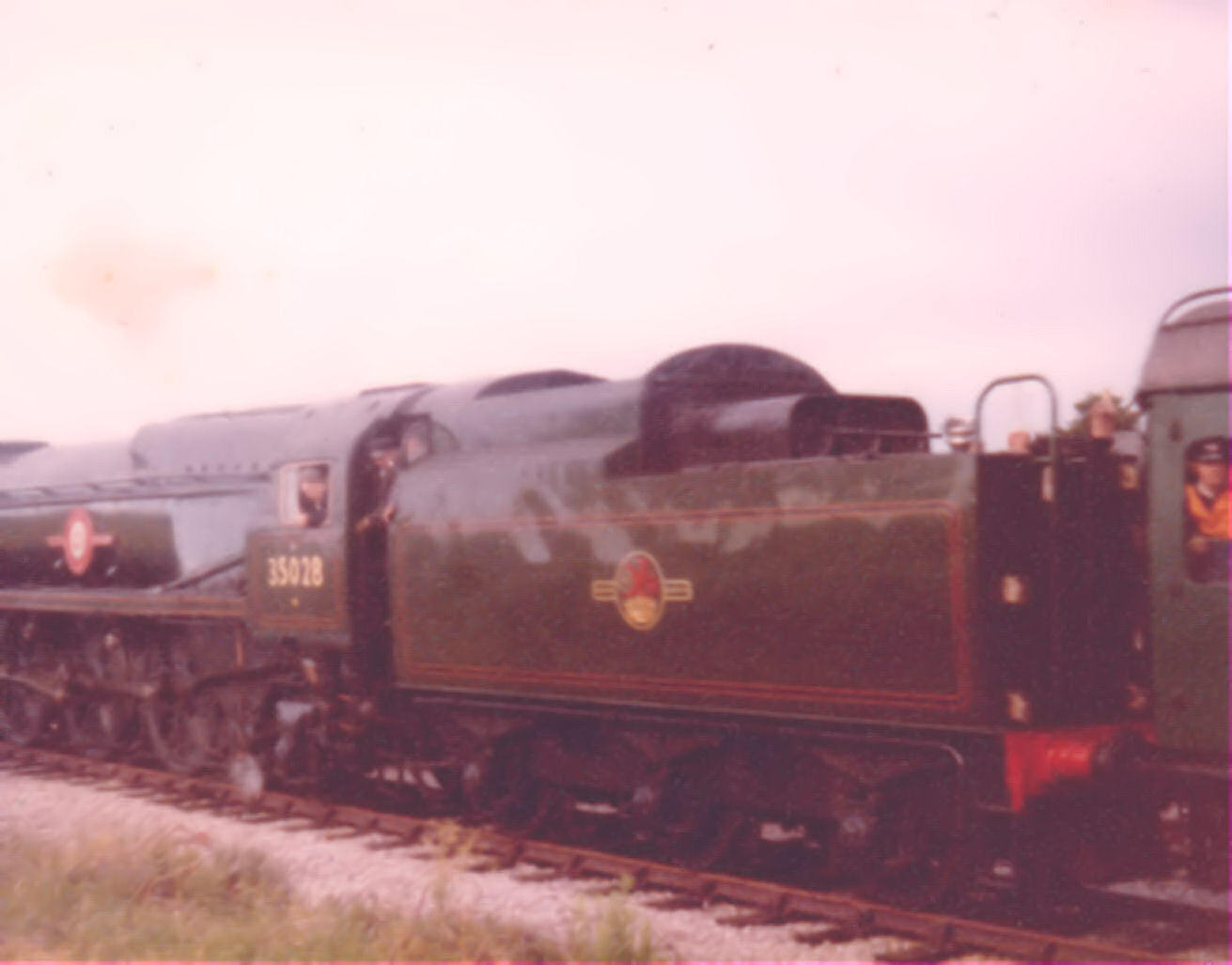
35028 Clan Line, completed at Eastleigh in December 1948, one of the first BR-built Pacifics. Rebuilt 1959. Withdrawn from BR July 1967, among the very last Merchant Navies in BR service. Privately preserved and currently main-line registered with the Merchant Navy Locomotive Preservation Society. The most extensively preserved-operated Merchant Navy.
35029 Ellerman Lines, built at Eastleigh January 1949. Withdrawn from BR September 1966 and preserved by the National Collection. Currently exhibited at the National Railway Museum, York, sectioned (cut longitudinally) to show internal construction, the most-photographed Merchant Navy and a teaching exhibit.
Other preserved Merchant Navies include 35005 Canadian Pacific, 35006 Peninsular & Oriental S.N. Co., 35009 Shaw Savill, 35010 Blue Star, 35011 General Steam Navigation, 35018 British India Line, 35022 Holland America Line, 35025 Brocklebank Line, 35027 Port Line, and 35029 Ellerman Lines, eleven engines spread across the heritage railway network in various states from working order to long-term restoration.
Allocations and regions
Southern Railway era (1941–1947): the class was allocated to the principal Southern Region top-link sheds, Nine Elms (London Waterloo), Salisbury, Exmouth Junction, Stewarts Lane (London Victoria), Bournemouth, and Brighton. Each shed worked the principal expresses on its lines: Nine Elms and Salisbury sharing the Atlantic Coast Express, Stewarts Lane the Continental boat trains, Bournemouth the Bournemouth Belle.
British Railways Southern Region (1948–1967): the same allocations continued through the BR era. The first ten of the post-1948 batch (35021–35030) joined the existing twenty.
Rebuilds (1956–1959): rebuilds were progressively distributed across the Southern Region top-link sheds. By 1962 all 30 engines had been rebuilt and the class was working the principal expresses in conventional form.
Final years (1965–1967): the Southern Region was the last BR region to electrify its principal main lines. The Merchant Navies survived through the mid-1960s on the Bournemouth and West of England services, with last withdrawals from Nine Elms and Weymouth in July 1967, among the very last steam Pacifics in BR service.
Livery history
Southern Railway malachite green (1941–1947): the original engines were outshopped in SR malachite green with horizontal yellow stripes, a distinctive and visually striking livery for the air-smoothed casing.
British Railways experimental blue (1948–1949): some early-BR examples briefly carried BR experimental dark blue lined out in black and white.
British Railways Brunswick green (1949–1967): from 1949 the class wore BR-standard lined Brunswick green with the early lion-and-wheel emblem (later the late BR crest from 1956). This was the dominant livery on both original Bulleid and rebuilt engines through to the end. A small number briefly carried experimental BR malachite green in the late 1940s.
Preservation: preserved Merchant Navies have appeared in SR malachite green (notably 35005 Canadian Pacific in operating condition), BR Brunswick green with both BR emblems, and (rarely) experimental BR malachite green. 35029 Ellerman Lines is preserved in BR Brunswick green, sectioned.
Preservation status
Eleven Merchant Navies are preserved, an exceptionally high 37% survival rate, reflecting the class's late retirement and the enthusiast support for its complex history. All preserved engines are in rebuilt form except the one National Collection example (35029) which was sectioned for display:
- 35005 Canadian Pacific, main-line registered. Mid-Hants Railway base.
- 35006 Peninsular & Oriental S.N. Co., Gloucestershire Warwickshire Railway.
- 35009 Shaw Savill, Kent & East Sussex Railway.
- 35010 Blue Star, under restoration.
- 35011 General Steam Navigation, under restoration.
- 35018 British India Line, main-line registered.
- 35022 Holland America Line, under restoration.
- 35025 Brocklebank Line, under restoration.
- 35027 Port Line, North Yorkshire Moors Railway.
- 35028 Clan Line, main-line registered with the Merchant Navy Locomotive Preservation Society. The most extensively preservation-operated Merchant Navy and a regular charter performer.
- 35029 Ellerman Lines, National Collection, sectioned for educational display at the National Railway Museum, York.
The 11-engine preserved population is a remarkable testament to the class's late survival into the 1967 closures and the efforts of the various preservation groups that bought them. Several remain under long-term restoration as of 2026.
Photographs