GWR 6000 King Class
The GWR 6000 King Class was Charles Collett's heaviest express 4-6-0, the Great Western Railway's top-link express engine for 35 years and the most powerful 4-6-0 ever built in Britain. Thirty engines were built at Swindon Works between 1927 and 1936.
The King was developed from the Castle Class as the absolute maximum 4-6-0 that could be built within the GWR loading gauge. The 5 ft 11 in maximum diameter Standard No. 12 boiler, the largest fitted to any British 4-6-0, was within 1 inch of the loading-gauge limit. The 250 psi boiler pressure (against the Castle's 225 psi) was the highest then used on a British 4-6-0. The 16¼ × 28 in cylinders gave 40,300 lbf tractive effort, the highest of any British 4-6-0. The class's 22.5-ton axle load was the highest ever fitted to a British 4-6-0 and the principal limitation on the class's route availability, the Kings were restricted by GWR "Double Red" classification to the Paddington–Plymouth, Paddington–Birmingham/Wolverhampton, and principal South Wales main lines.
The first King, No. 6000 "King George V", was completed at Swindon in June 1927. The engine immediately exceeded design expectations on the Cornish Riviera Express. In 1927–1928 No. 6000 visited the United States to attend the Baltimore & Ohio Railroad Centenary celebrations at Halethorpe, Maryland, hauling specials on the B&O and returning with a B&O ceremonial bell that remained a permanent feature of the engine for the rest of its career.
Production continued at Swindon in three batches: the original 20 (6000–6019) of 1927–1928; 5 more (6020–6024) of 1930; and the final 5 (6025–6029) of 1936. The class names commemorate British monarchs in chronological order from the most recent, 6000 "King George V" through 6029 "King Stephen" of 1135. The Kings worked the Cornish Riviera Express (Paddington to Plymouth and Penzance), the heaviest Birmingham and Wolverhampton expresses, the heaviest South Wales expresses, and the principal GWR top-link duties. Sustained running at 75–80 mph with 14-coach trains was the class's working envelope.
British Railways inherited all 30 engines in 1948. The class continued in front-line BR Western Region service through the 1950s. From the late 1950s many Kings were fitted with double chimneys and four-row superheaters, the "modified" Kings, giving 5–10% better steaming and outstanding final-period performance. The introduction of BR Type 4 and Type 5 diesels (particularly the Class 52 Western from 1962) progressively displaced the Kings. The last King in BR service, 6018 "King Henry VI", was withdrawn from Old Oak Common in December 1962, the end of front-line GWR-design steam at Paddington. The class's 35-year service life was substantially shorter than that of the Castles, reflecting the route restrictions and the early arrival of replacement diesel power on the principal WR routes.
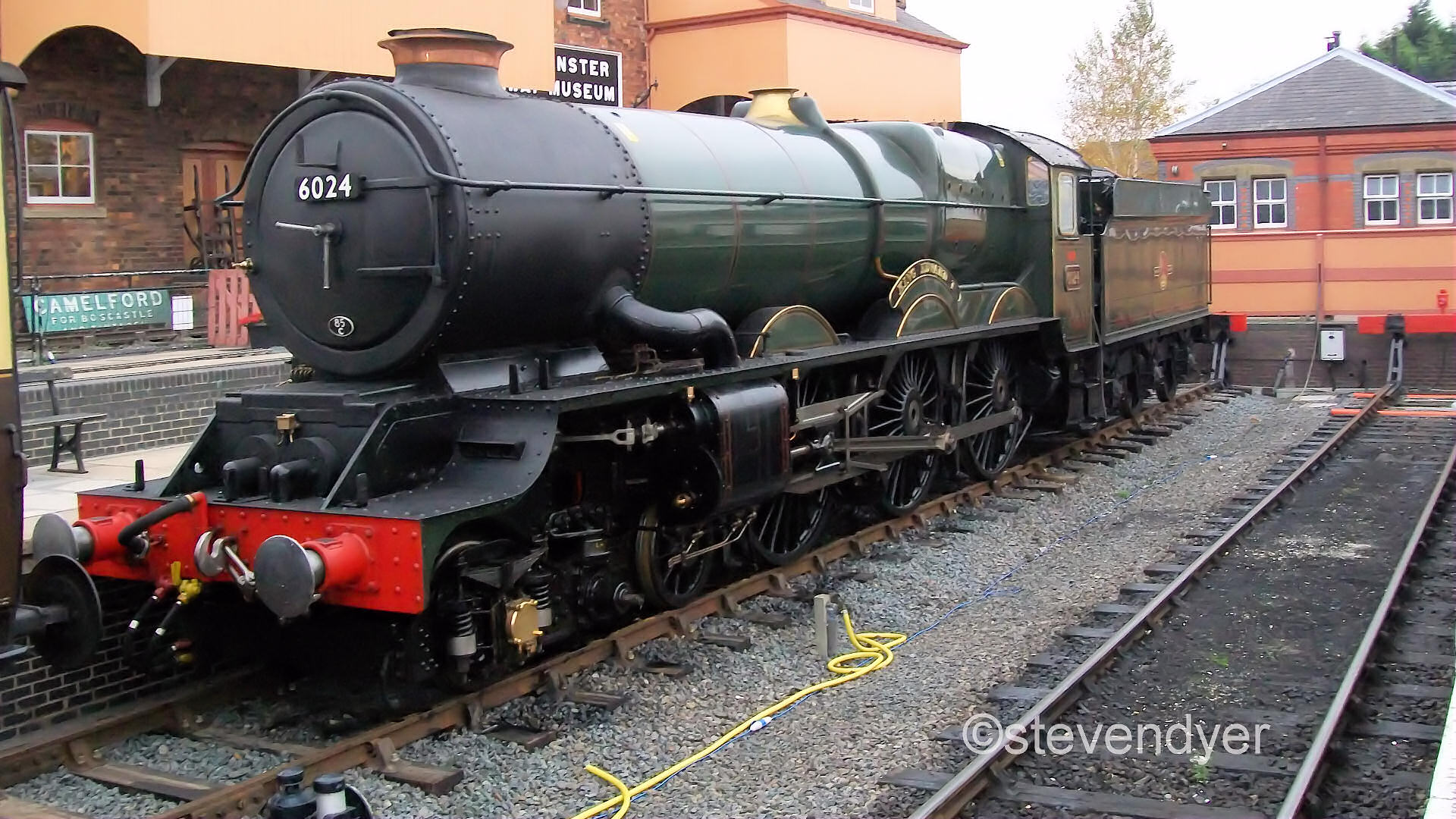
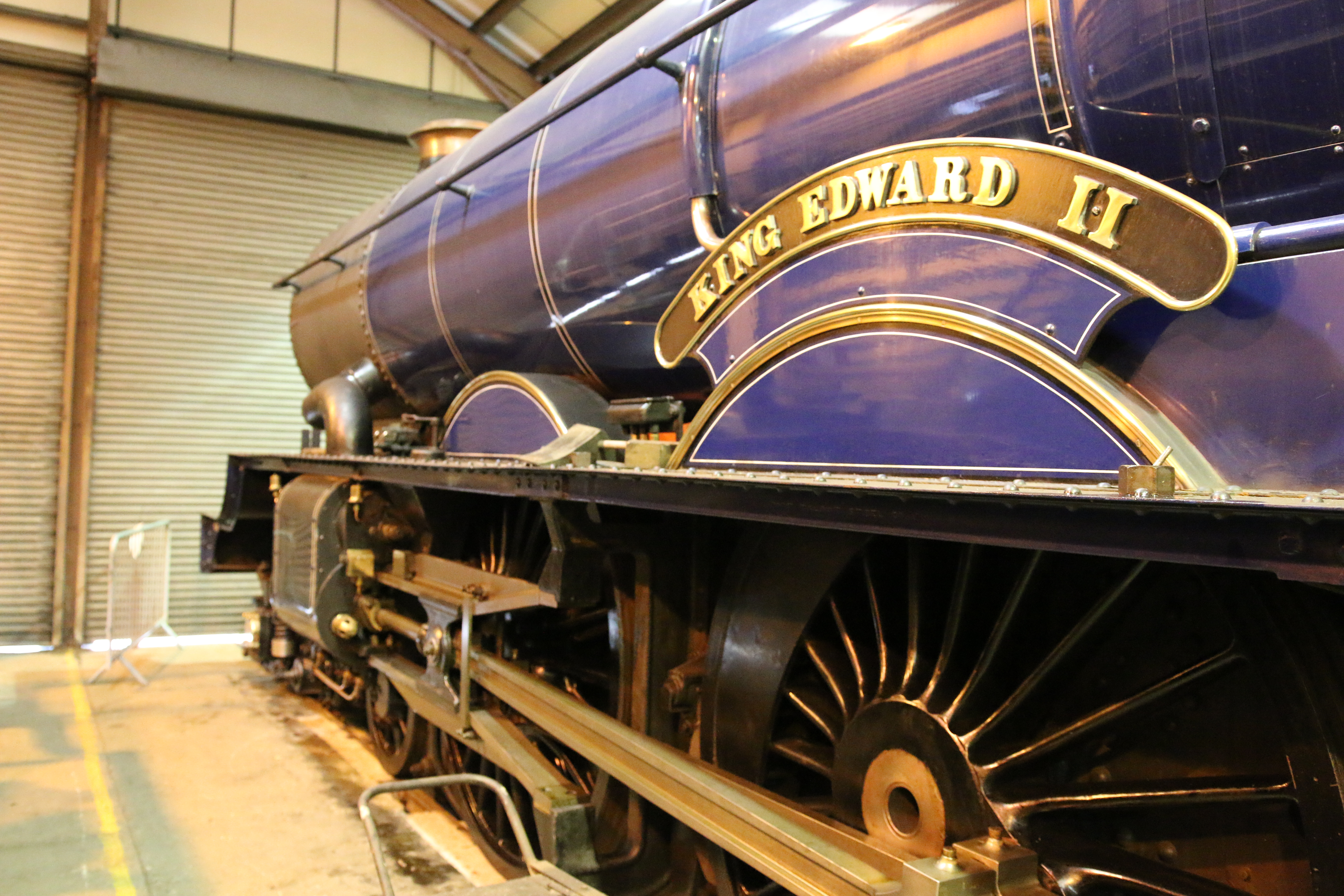
Three Kings are preserved: 6000 King George V (the class prototype, the visitor to the United States, and the recipient of the B&O bell, National Collection, static exhibit at STEAM Swindon with the B&O bell on display); 6023 King Edward II (the only main-line-registered King in preservation, restored to working order at the Great Western Society at Didcot Railway Centre, a regular main-line performer including famous Cornish Riviera return runs); and 6024 King Edward I (privately preserved, static exhibit at the Birmingham Railway Museum, Tyseley). Between them the three preserved Kings give the class good preservation coverage.
Design and development
By 1925 the Great Western Railway needed an express engine heavier than the Castle Class for the principal Cornish Riviera and Birmingham expresses. The Cornish Riviera in particular required an engine capable of sustained work at 75–80 mph with 14-coach trains over the long Devon and Cornwall gradients. The Castle was capable but at the limit of comfortable working; a heavier and more powerful engine would give margin for further train weight increases.
Charles Collett designed the King Class as the absolute maximum 4-6-0 that could be built within the GWR loading gauge. The 5 ft 11 in maximum diameter boiler, the largest fitted to any British 4-6-0, was within 1 inch of the loading-gauge limit. The 250 psi boiler pressure (against the Castle's 225 psi) was the highest then used on a British 4-6-0. The 16¼ × 28 in cylinders gave 40,300 lbf tractive effort, the highest of any British 4-6-0. The total locomotive weight of 92.5 tonnes was substantially more than any previous British 4-6-0.
The 22.5-ton axle load was the design's principal compromise, the GWR accepted that the King would be restricted to the routes that could accept the load, in exchange for the highest possible express performance. The class's "Double Red" GWR route classification distinguished it from all other GWR engines.
The first King, No. 6000 "King George V", was completed at Swindon Works in June 1927. The engine immediately exceeded design expectations on the Cornish Riviera, sustained running at 75–80 mph with 14-coach trains was achievable on a regular basis. In 1927–1928 No. 6000 visited the United States to attend the Baltimore & Ohio Railroad Centenary celebrations at Halethorpe, Maryland, hauling specials on the B&O. The engine returned with a B&O ceremonial bell that remained a permanent feature for the rest of its career, and remains on the engine in preservation.
Production continued at Swindon in three batches: the original 20 (6000–6019) of 1927–1928; 5 more (6020–6024) of 1930; and the final 5 (6025–6029) of 1936. The class names commemorate British monarchs in chronological order from the most recent, 6000 "King George V" through 6029 "King Stephen" of 1135. By 1936 the class totalled 30 engines and was complete; the GWR did not build any further Kings.
From the late 1950s many Kings were fitted with double chimneys and four-row superheaters, the "modified" Kings. The modifications gave 5–10% better steaming and the modified Kings were the most powerful 4-6-0s ever built, final-period performance was outstanding.
Service and withdrawals
The Kings were the GWR's top-link express engine for 35 years, from the introduction of the prototype 6000 King George V on the Cornish Riviera in 1927 through to the withdrawal of the last King in 1962. The Cornish Riviera Express, the Birmingham expresses, and the principal South Wales expresses were the class's defining duties. Sustained running at 75–80 mph with 14-coach trains was the class's working envelope; on the Cornish Riviera the Kings demonstrated their capability over the long gradients and tight curves of the Devon and Cornwall lines.
The 22.5-ton axle load was the class's principal limitation. The Kings were restricted by GWR Working Timetable to the "Double Red" route restriction, Paddington–Plymouth, Paddington–Birmingham/Wolverhampton, and the principal South Wales main line, and could not work the lighter routes that the Castles served. The route restriction limited the practical Kings allocation to a few principal sheds.
British Railways inherited all 30 engines in 1948. The class continued in front-line BR Western Region service through the 1950s alongside the Castles and (from 1951) the BR Standard Class 7 Britannias. The introduction of double chimneys and four-row superheaters from the late 1950s, the "modified" Kings, gave the class a final period of outstanding performance. The introduction of BR Type 4 diesels (particularly the Class 52 Western from 1962) progressively displaced the Kings; the rationalisation of WR steam allocations from 1958–1962 saw the class withdrawn relatively rapidly. The last King in BR service, 6018 "King Henry VI", was withdrawn from Old Oak Common in December 1962, the end of front-line GWR-design steam at Paddington.
Identification features
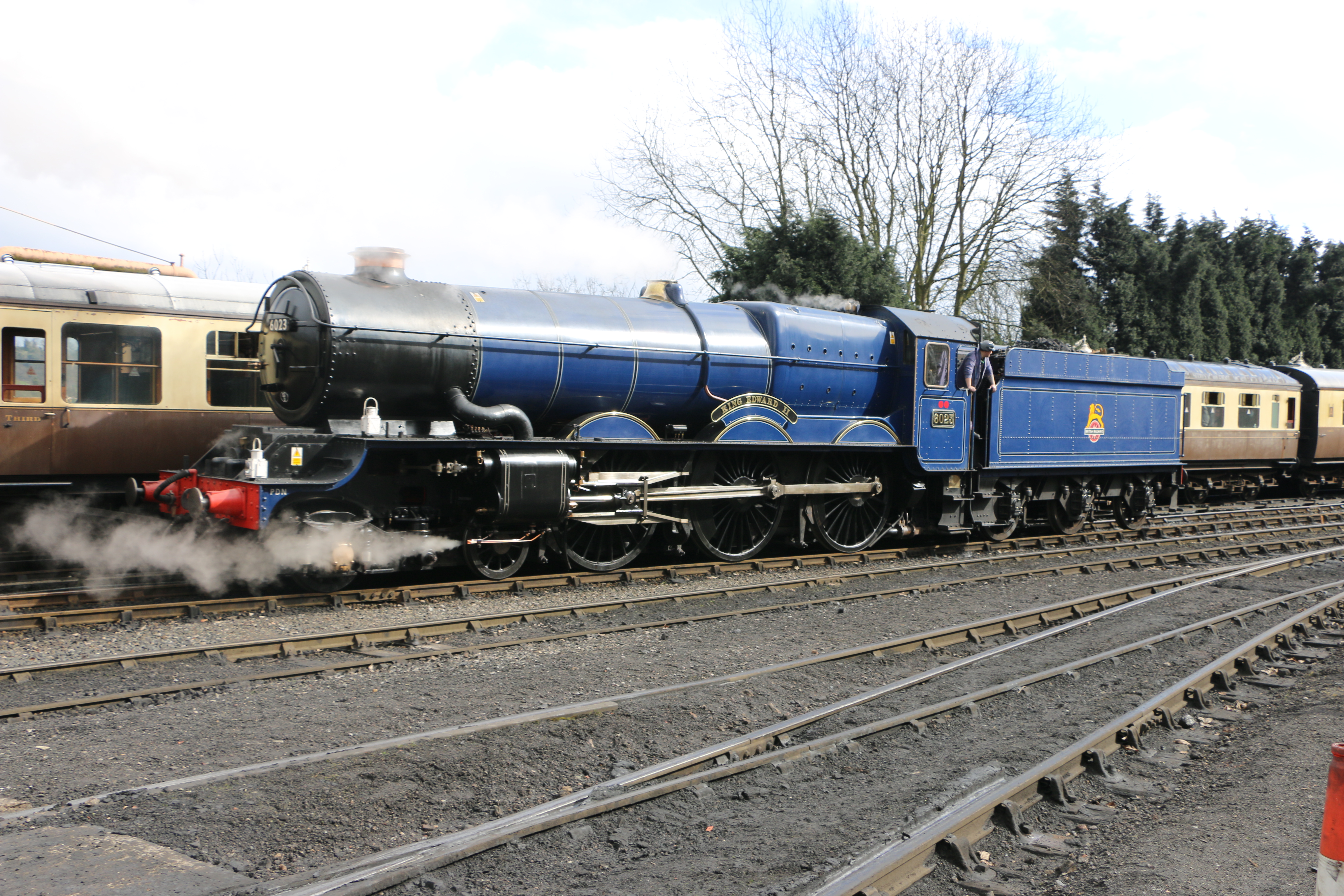
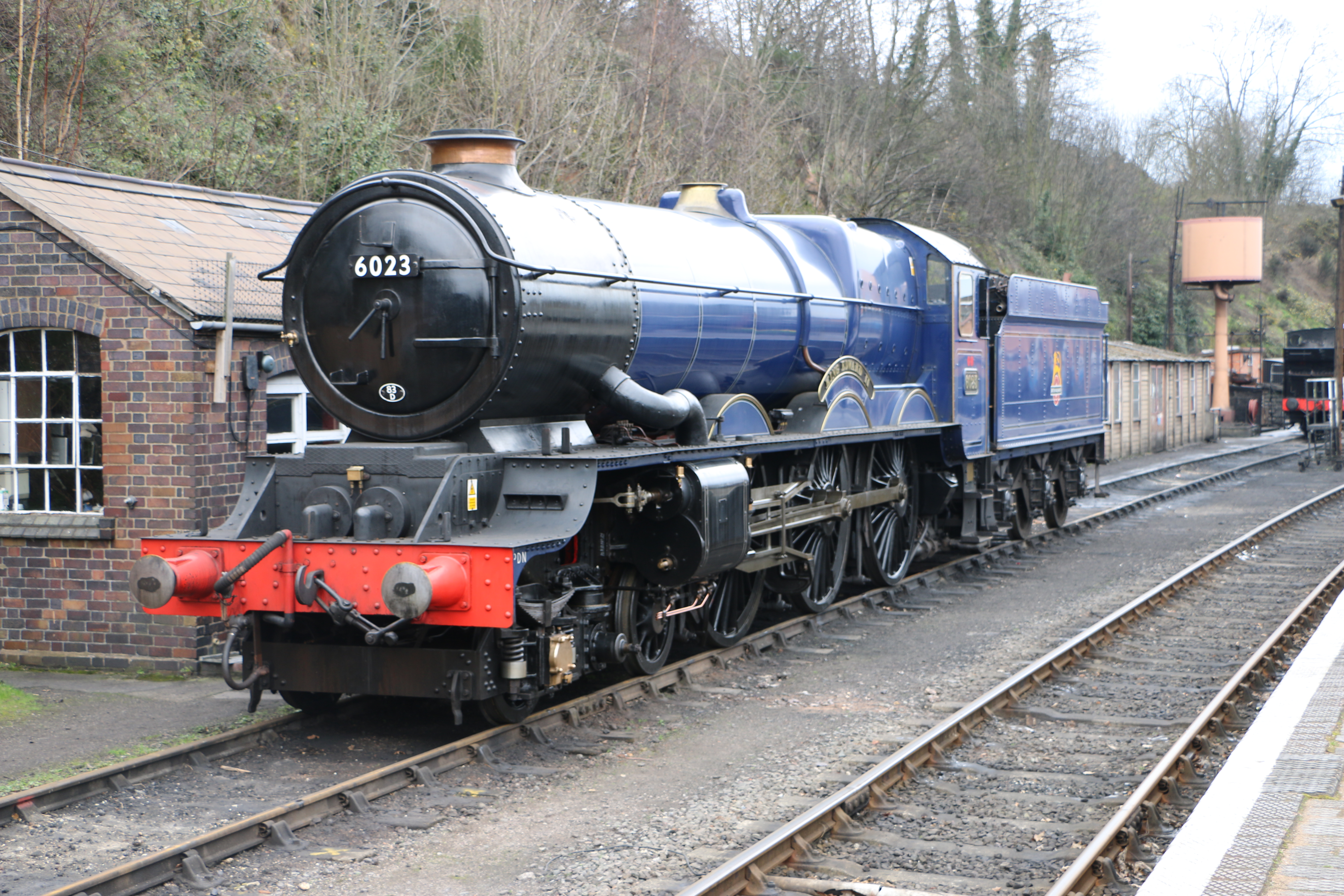
The largest and most imposing GWR express engine outline. The class is unmistakable from the Castle Class, taller, longer, more substantial in every dimension. The Standard No. 12 taper boiler at 5 ft 11 in maximum diameter is the largest fitted to any British 4-6-0; the firebox is the largest of any British 4-6-0; the cylinders are the largest of any British 4-6-0. The bogie has 3 ft 0 in wheels (the same as the Castle) but the King's bogie is differently arranged, with the leading wheel on its own axle and the trailing axle of the bogie having a swing link to the main frame. Single chimney (early); double chimney from the late 1950s on the modified Kings. Single Belpaire firebox with brass safety-valve cover. Brass nameplate on the boiler band carrying the king's name in serif lettering. The class is the absolute pinnacle of GWR steam engineering and visually overwhelming compared with the lesser GWR engines.
Numbers and names
6000–6029
- 6000King George V
- 6001King Edward VII
- 6002King William IV
- 6003
- 6004
- 6005
- 6006
- 6007
- 6008
- 6009
- 6010
- 6011
- 6012
- 6013
- 6014
- 6015
- 6016
- 6017
- 6018
- 6019
- 6020
- 6021
- 6022
- 6023
- 6024
- 6025
- 6026
- 6027
- 6028
- 6029King Stephen
6000–6019
- 6000King George V
- 6001King Edward VII
- 6002King William IV
- 6003
- 6004
- 6005
- 6006
- 6007
- 6008
- 6009
- 6010
- 6011
- 6012
- 6013
- 6014
- 6015
- 6016
- 6017
- 6018
- 6019
6020–6024
- 6020
- 6021
- 6022
- 6023
- 6024
6025–6029
- 6025
- 6026
- 6027
- 6028
- 6029King Stephen
GWR Nos 6000–6029. The first 20 engines (6000–6019) built 1927–1928; a further batch of 5 (6020–6024) built 1930; the final 5 (6025–6029) built 1936. British Railways retained the original GWR numbers, adding the prefix only in publicity, not as a number change. The class is named after British monarchs in chronological order from the most recent: 6000 "King George V", 6001 "King Edward VII", 6002 "King William IV", and so on through 6029 "King Stephen", the King Stephen of 1135 was deemed the earliest English monarch worth commemorating in this scheme.
Notable locomotives
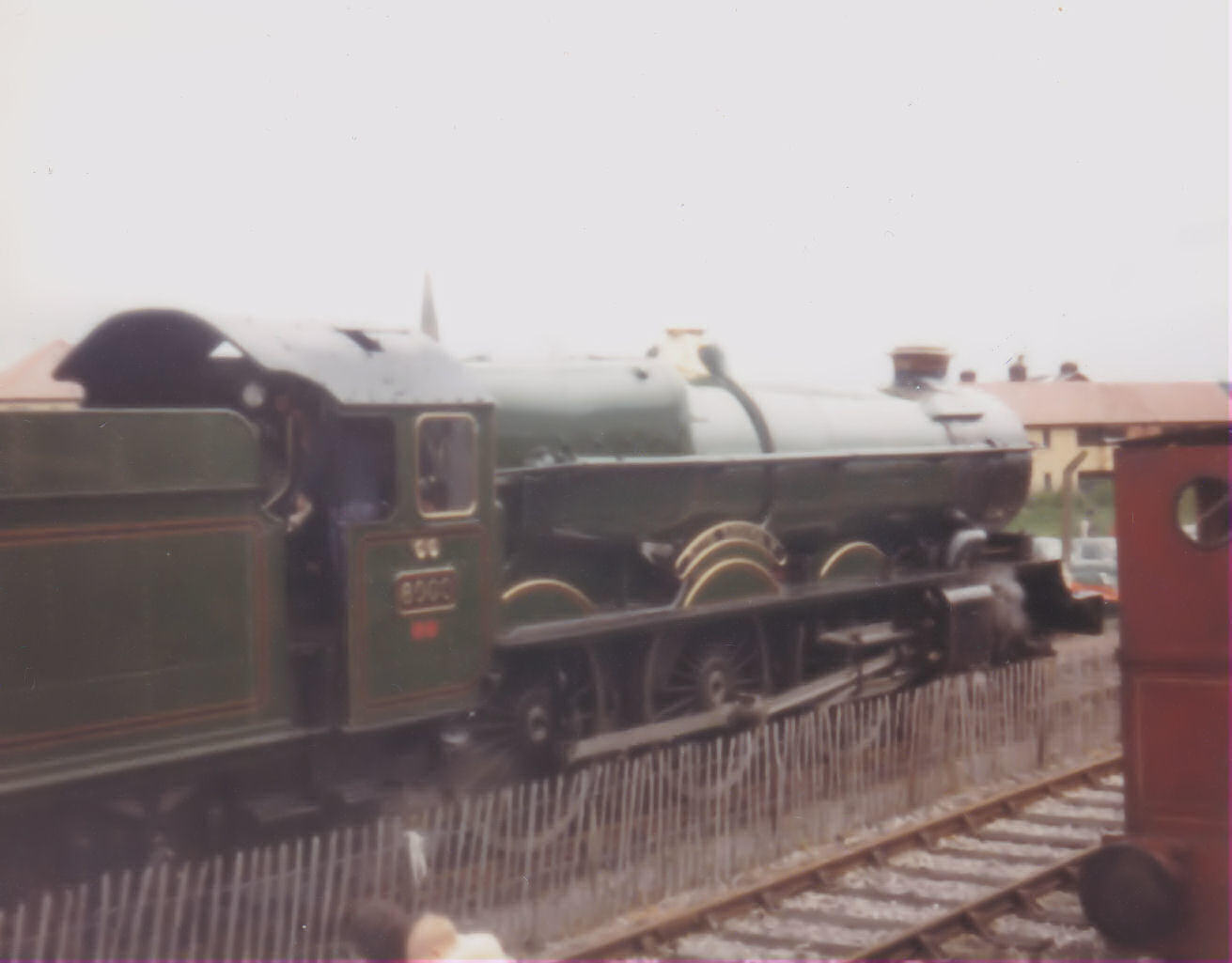
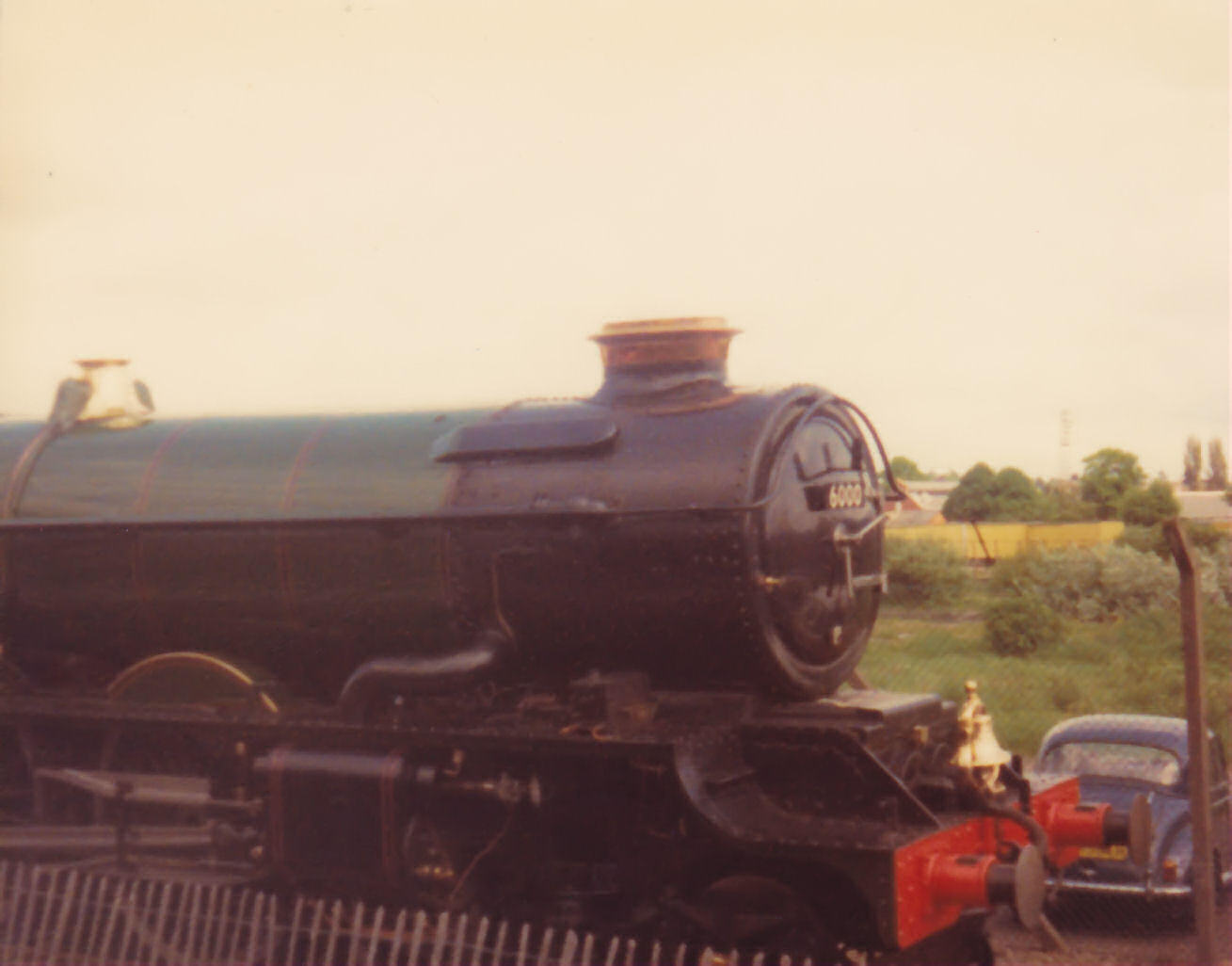
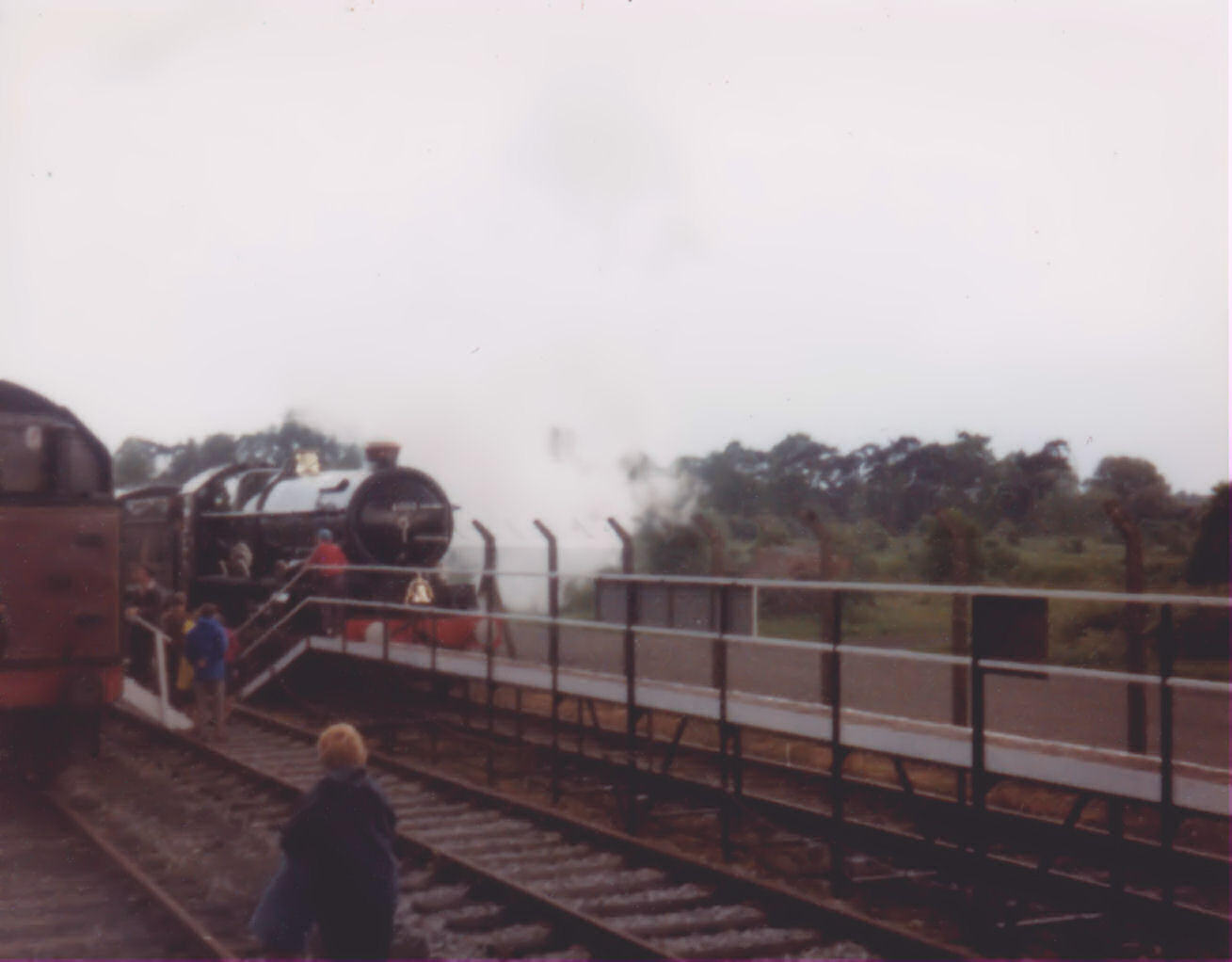
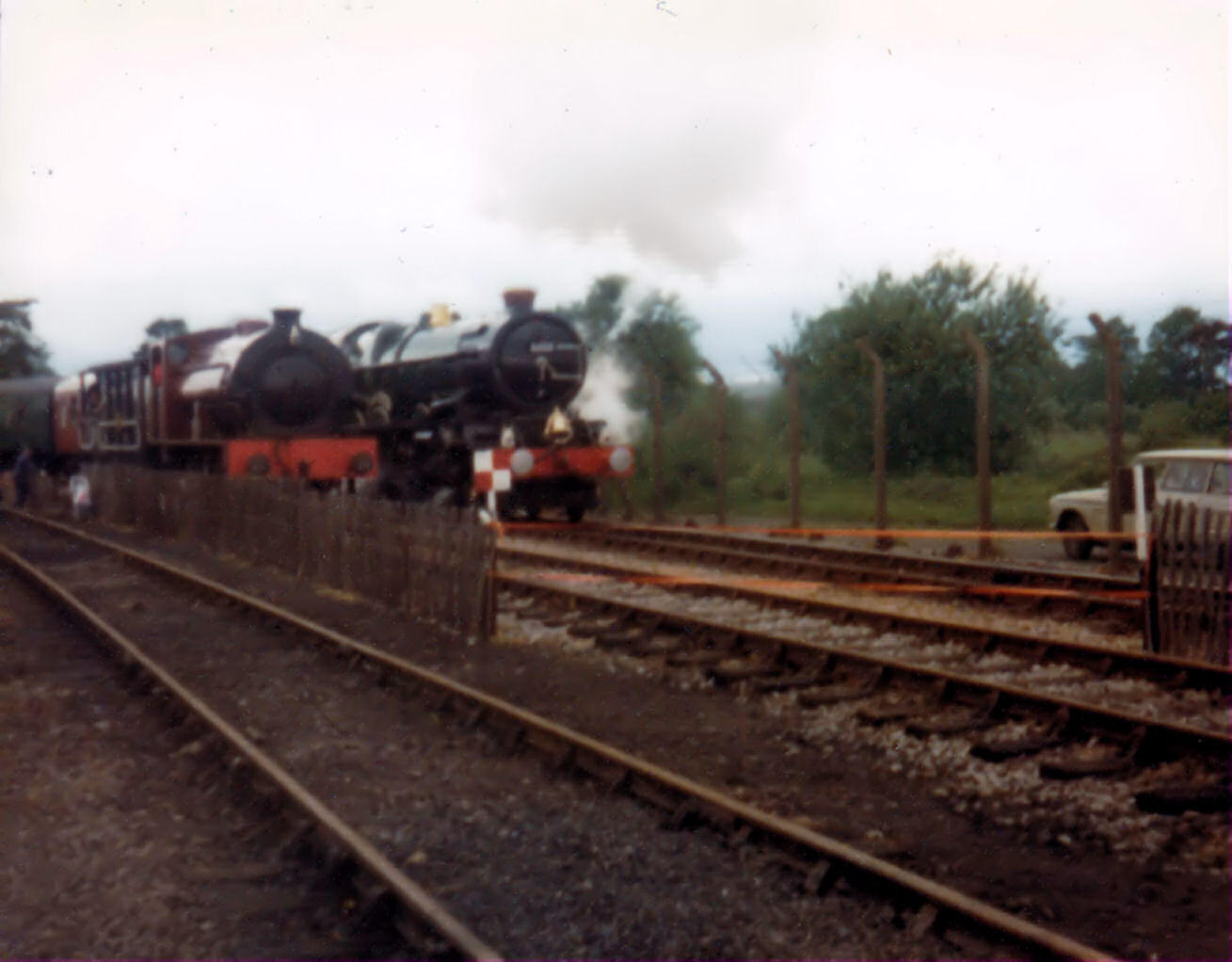
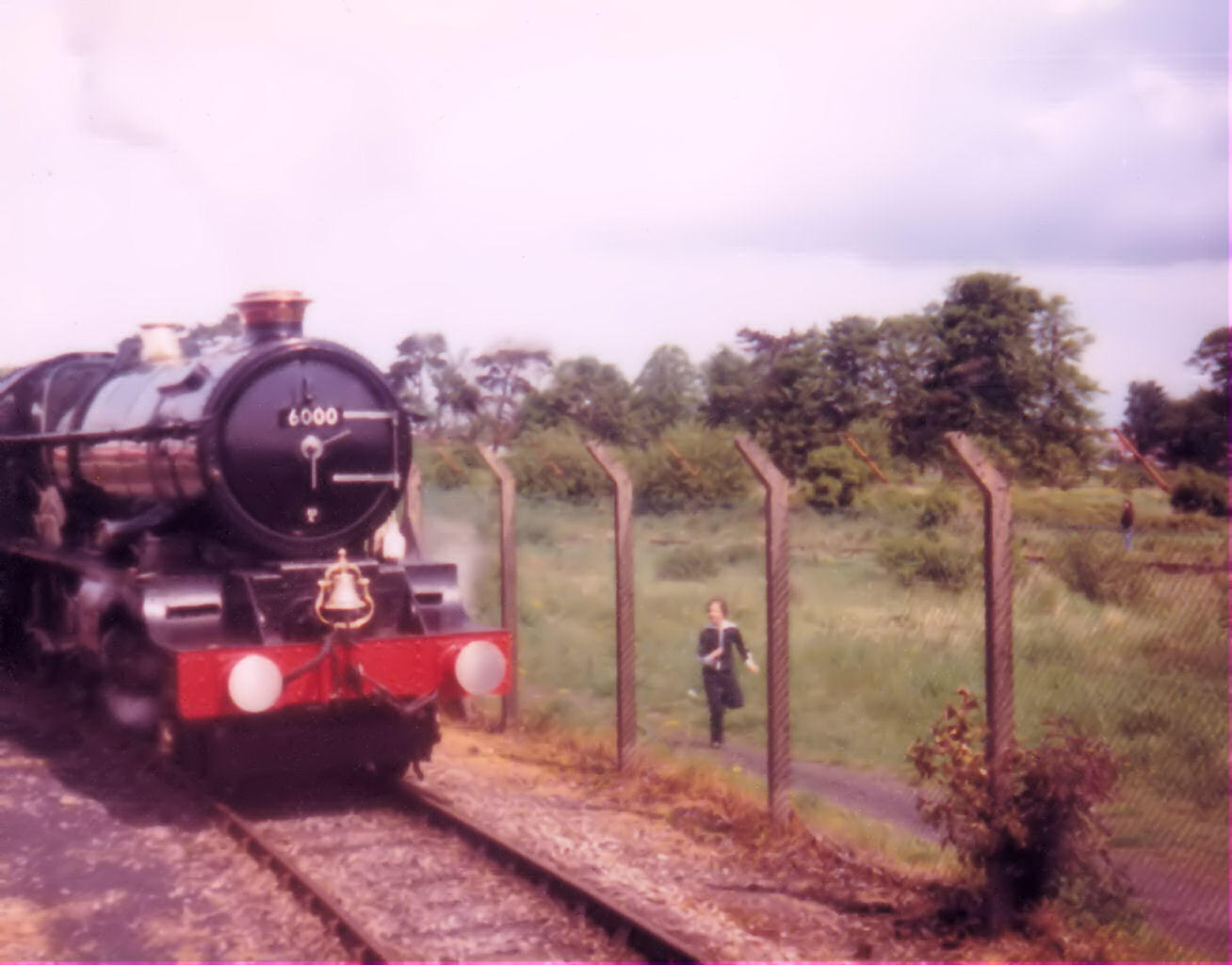
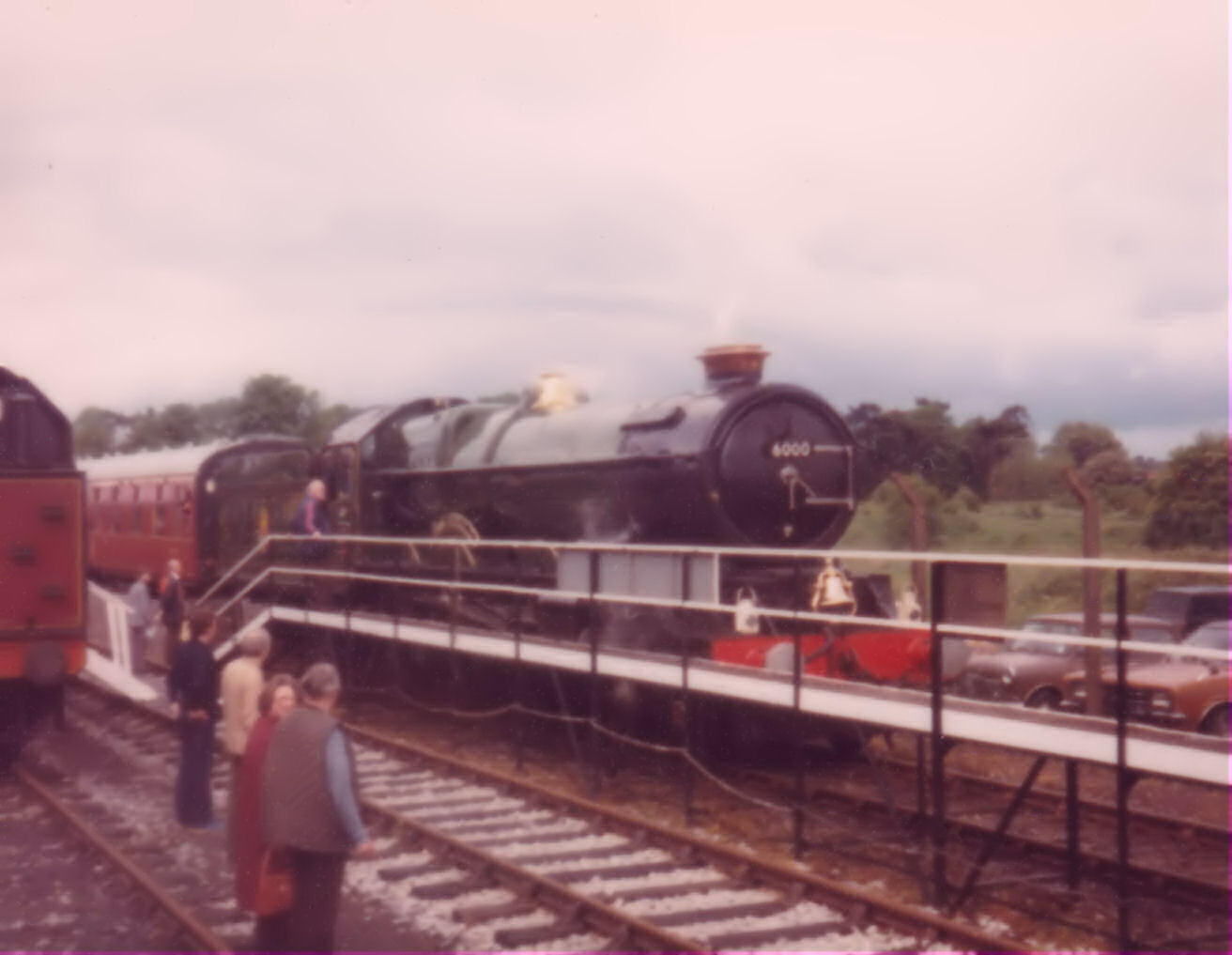
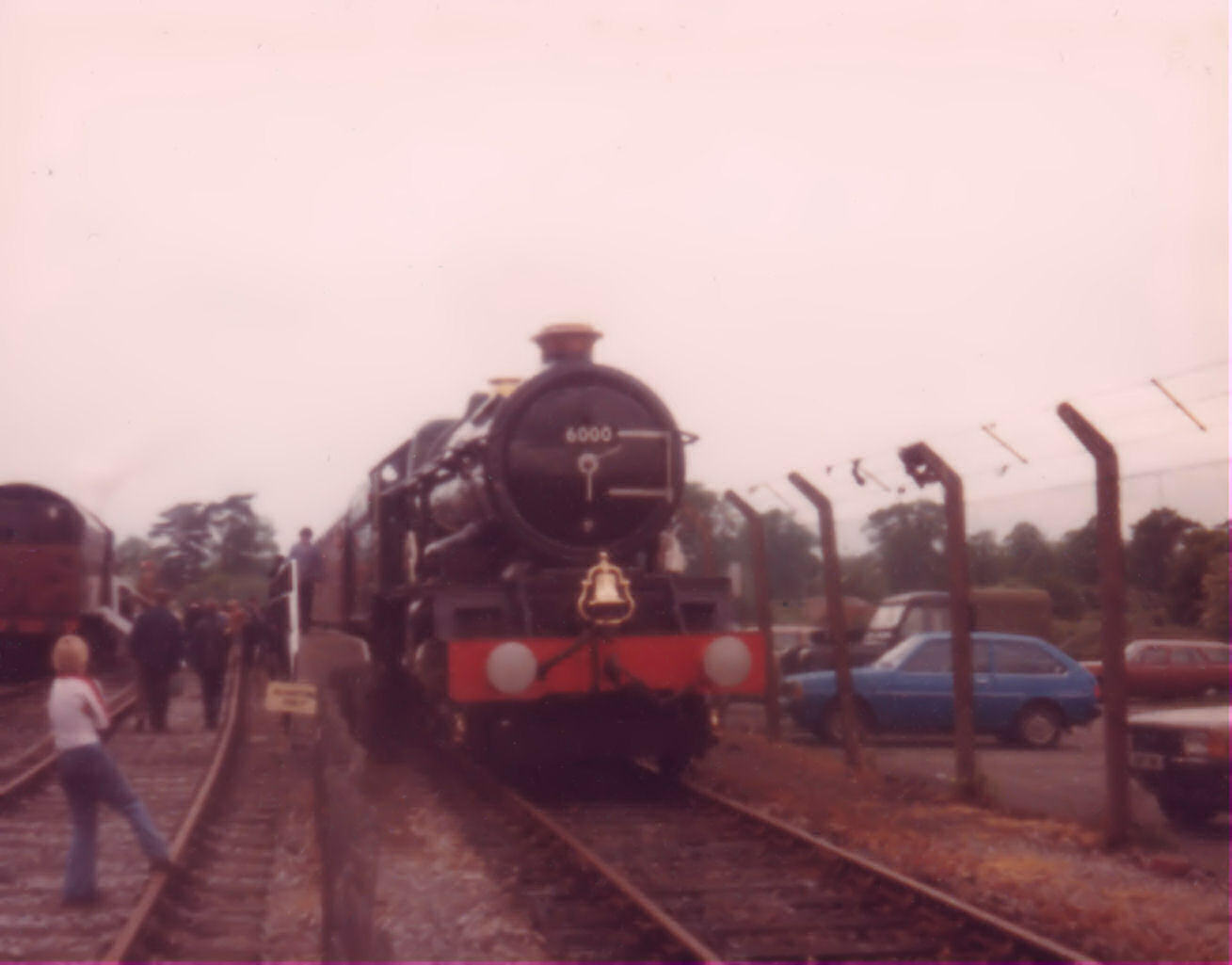
6000 King George V, the class prototype, completed at Swindon Works in June 1927. Famously visited the United States in 1927–1928, hauling specials on the Baltimore & Ohio Railroad including the B&O Centenary celebrations at Halethorpe, Maryland. The engine carried a special bell at the front fitted by the B&O, the bell remained as a permanent feature of the engine for the rest of its career. Withdrawn from BR December 1962 and preserved by the National Collection. Currently a static exhibit at the Steam Museum of the Great Western Railway at Swindon, with the B&O bell on display.
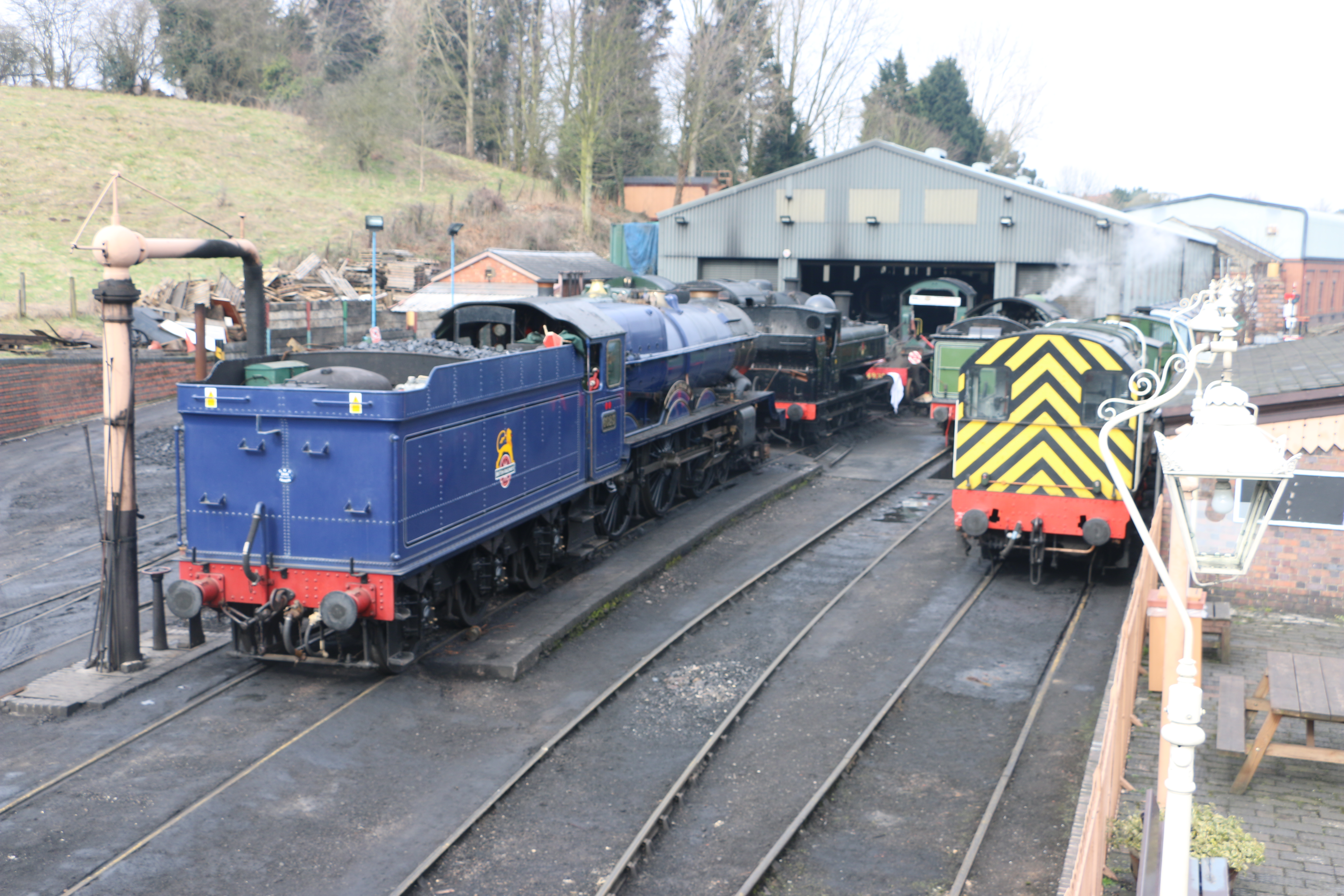
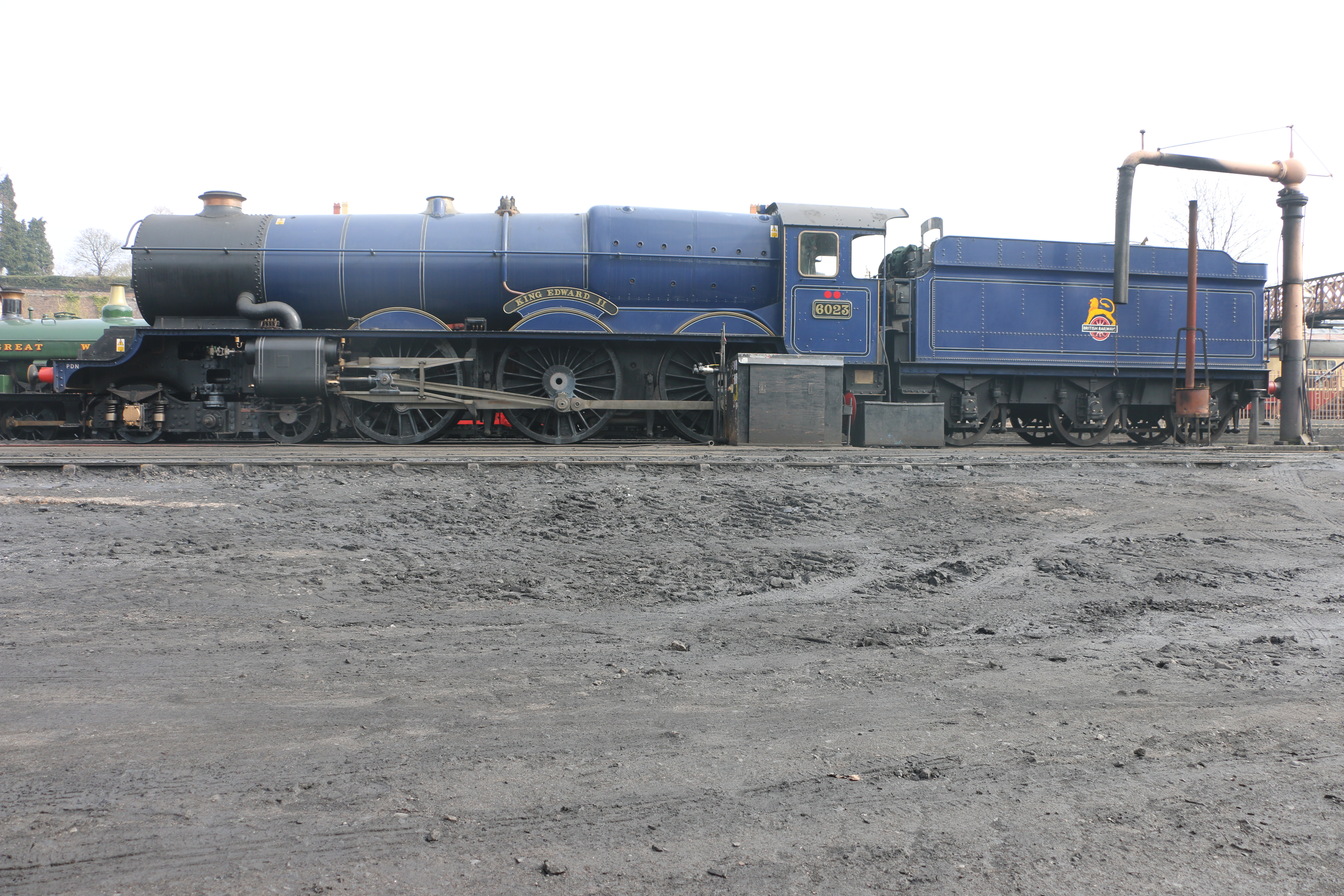
6023 King Edward II, completed at Swindon in June 1930. Withdrawn from BR April 1962 and privately preserved. Currently main-line registered with the Great Western Society at Didcot, the only main-line-registered King in preservation. Has been a regular main-line performer in preservation, including the famous Cornish Riviera return runs of the 2010s.
6024 King Edward I, completed at Swindon in June 1930. Withdrawn from BR April 1962 and privately preserved. Currently a static exhibit at the Birmingham Railway Museum, Tyseley.
6018 King Henry VI, completed at Swindon in June 1928. The very last King in BR service, withdrawn from Old Oak Common in December 1962, the end of front-line GWR-design steam at Paddington.
Allocations and regions
GWR era (1927–1947): the class was concentrated at the GWR's heaviest top-link sheds. Old Oak Common (London Paddington) held the largest King allocation, 12–15 engines through the late 1920s and 1930s, for the Cornish Riviera, the heaviest Birmingham expresses, and the South Wales services. Wolverhampton Stafford Road also held a substantial King allocation for the Birmingham–Wolverhampton main line. Plymouth Laira held some Kings for the West of England turn-rounds.
British Railways Western Region (1948–1962): continued at Old Oak Common and Wolverhampton. The class continued in front-line WR service through the 1950s alongside the Castles (which had broader route availability) and BR Standard Class 7 Britannias (from 1951). The "modified" Kings from the late 1950s, fitted with double chimneys and four-row superheaters, were the most powerful Kings ever and worked the heaviest WR expresses to the end of the GWR-design steam era.
Final years (1958–1962): the introduction of BR Type 4 diesels (Class 47 and Class 52 Western) and the rationalisation of WR steam allocations from the late 1950s saw the class progressively withdrawn through the early 1960s. The last King in BR service was 6018 "King Henry VI", withdrawn from Old Oak Common in December 1962. The class's 35-year service life was substantially shorter than that of the Castles, reflecting the Kings' route restrictions and the early arrival of replacement diesel power on the principal WR routes.
Livery history
GWR Middle Chrome Green (1927–1947): the class was outshopped in GWR Middle Chrome Green with black lining and serif "Great Western" lettering on the tender, the GWR standard express livery. Brass safety-valve cover, copper-capped chimney, and copper trimmings completed the characteristic GWR appearance. The Kings carried this livery exclusively throughout the GWR era.
British Railways experimental blue (1948–1949): a small number of Kings briefly carried BR experimental dark blue with black-and-white lining, the BR locomotive trials livery before standardisation on Brunswick green for express engines.
British Railways Brunswick green (1949–1962): from 1949 the class wore BR-standard lined Brunswick green with the early lion-and-wheel emblem (later the late BR crest from 1956). The GWR convention of carrying the running number on the cab side was retained. This was the dominant BR livery to the end.
Preservation: preserved Kings have appeared in GWR Middle Chrome Green with the special B&O bell on 6000 King George V, and BR Brunswick green at different periods.
Preservation status
Three Kings are preserved, a 10% survival rate, good for an early-1960s-withdrawn class:
- 6000 King George V, the class prototype, the visitor to the United States in 1927–1928, and the recipient of the B&O bell. Preserved by the National Collection on withdrawal in December 1962. Currently a static exhibit at the STEAM Museum of the Great Western Railway, Swindon, with the B&O bell on display. The most-historically-significant preserved King.
- 6023 King Edward II, the only main-line-registered King in preservation. Privately preserved on withdrawal in April 1962. Restored to working order at the Great Western Society at Didcot Railway Centre. Has been a regular main-line performer in preservation, including the famous Cornish Riviera return runs of the 2010s.
- 6024 King Edward I, privately preserved on withdrawal in April 1962. Currently a static exhibit at the Birmingham Railway Museum, Tyseley.
The preserved population includes the historic prototype (6000), the only working-condition example (6023), and a static example (6024), between them giving the class good preservation coverage.
Photographs