SR West Country / Battle of Britain
The Southern Railway's West Country and Battle of Britain classes, universally known as the Bulleid Light Pacifics and irreverently as spam cans, comprised 110 three-cylinder 4-6-2 mixed-traffic steam locomotives designed by Oliver V. S. Bulleid and built at Brighton and Eastleigh works between 1945 and 1951. Mechanically the two classes are identical: the only distinction is naming. Seventy of the engines (eventually) carried West Country names, Cornish and Devon resorts, ports, and rural districts, while the rest formed a roving memorial to RAF Fighter Command, with names drawn from squadrons, airfields, and key Battle of Britain personalities. Bulleid worked closely with the Southern's publicity department on the Battle of Britain naming, and the engines were unveiled with formal ceremonies attended by surviving RAF officers.
The design brief was 'Merchant Navy at lower weight'. Bulleid's larger Pacifics, introduced from 1941, were too heavy for the Southern's secondary main lines, the West of England route via Salisbury, the routes through Devon and Cornwall, the Kent coast lines, and the South Coast through Sussex. The Light Pacifics were not a wholly new design but a careful weight reduction of the Merchant Navy formula, with smaller cylinders (16⅜ in × 24 in instead of 18 in × 24 in), a slightly smaller boiler, and lighter frames. Maximum axle load came down to 18 tons 15 cwt, comfortably within the Southern's lighter route classifications and clearing the engines for almost everywhere on the system.
The Bulleid signature features were all retained. Three cylinders worked through chain-driven valve gear enclosed in an oil bath under the locomotive, Bulleid's most controversial innovation, intended to reduce maintenance by sealing the motion away from grit and weather, but in practice a source of oil leaks, fires, and chronic upkeep cost. The boiler used welded steel construction with a steel firebox, a wartime measure that proved enduring, and was pressurised to 280 psi, a high figure for the period. A multiple-jet blastpipe drew the fire effectively but produced soft, dense exhaust that hung around the air-smoothed casing and obscured the driver's view, a problem that was experimented with for years and never fully solved. Bulleid-Firth-Brown 'BFB' lightweight wheels were used throughout, and the air-smoothed casing, cheaper and quicker to apply than full streamlining, gave the class its instantly recognisable rectangular outline.
21C101 Exeter, the first member of the class, was outshopped from Brighton in May 1945 and named at a Southern publicity event in June. Production continued under the Southern Railway through to nationalisation, by which time seventy engines had been built (numbered 21C101–21C170 in Bulleid's distinctive notation, where 2 indicated leading-axle count, 1 trailing-axle count, C the six coupled wheels, and the running number followed). British Railways completed the order with a further forty engines (renumbered 34071–34110), the final example being 34110 66 Squadron, outshopped at Brighton in January 1951.
The class was technically remarkable and operationally troublesome in equal measure. Free steaming, willing on grades, and capable of rapid acceleration, the Light Pacifics nonetheless burned coal heavily, a 1948 Locomotive Exchange test at Exmouth Junction recorded 47.9 lb per mile against the elderly T9 4-4-0s' 32 lb. The chain-driven valve gear required constant attention, oil bath leaks contaminated the boiler lagging (which then caught fire from brake-block sparks, requiring fire brigades to attend with cold water that thermally shocked the boiler), and the multiple-jet blastpipe created the visibility problems already noted. By 1954 BR's Chief Technical Assistant at Brighton, Ronald G. Jarvis, was tasked with developing a remedy, and from 1957 a programme of rebuilding was begun at Eastleigh.
The Jarvis rebuild was extensive. The chain-driven valve gear was replaced with three sets of conventional Walschaerts (two outside and one inside). The oil bath was deleted. The air-smoothed casing came off and was replaced with conventional boiler cladding. Boiler pressure was reduced from 280 to 250 psi, and a number of features were borrowed from the BR Standard classes. Sixty Light Pacifics were rebuilt between 1957 and May 1961, the first being 34005 Barnstaple, the last 34101 Hartland, at which point the 1955 Modernisation Plan halted further conversions. The remaining fifty continued in original Bulleid form until withdrawal. Rebuilt engines weighed approximately four tons more than their unrebuilt sisters and were therefore barred from the lightest-graded West Devon and Cornwall lines.
The class was the last steam power on the former Southern, and survived to the end of Southern Region steam in July 1967. Withdrawals had begun in 1963 and accelerated rapidly through the mid-1960s, with even some recently rebuilt engines being scrapped barely six years after their conversion. Twenty members were saved, ten in each form, making the Light Pacifics by some distance the best-preserved British Pacific design. Two, 34023 Blackmoor Vale and 34051 Winston Churchill (the latter as part of the national collection, having hauled Sir Winston's funeral train in 1965), were bought directly from BR. The remaining eighteen all came from Woodham Brothers' scrapyard at Barry, where the class formed one of the largest single contingents.
Design and development
Oliver Bulleid had been Chief Mechanical Engineer of the Southern Railway since 1937, recruited from the LNER where he had been Gresley's principal assistant. The Merchant Navy Class of 1941 had been his first Pacific design for the Southern, and from 1941 the company also wanted a lighter version for routes that could not take the larger engine, most pressingly, the West of England line via Salisbury, the North Devon and North Cornwall ('Withered Arm') system, the Kent coast routes, and the South Coast through Sussex. These were classic Southern secondary main lines: lightly laid, twisting, heavily graded, lightly used in winter and overwhelmed with summer holiday traffic.
An order for twenty Light Pacifics was placed in April 1941, but wartime conditions and continued evolution of the design delayed the first locomotive until 1945. Boilers were built under contract by the North British Locomotive Company because Brighton Works was committed to wartime contracts.
The Light Pacifics retained almost every Bulleid signature feature of the larger Merchant Navy: three cylinders in simple expansion, chain-driven valve gear in an oil bath, all-welded steel boiler with steel firebox, multiple-jet blastpipe, Bulleid-Firth-Brown lightweight wheels, electric lighting, and the air-smoothed casing in place of conventional cladding. The principal difference was scale: cylinder bore reduced from 18 in to 16⅜ in (stroke unchanged at 24 in), boiler reduced in diameter but retaining the 280 psi working pressure, and frames built lighter overall. Maximum axle load came down to 18 tons 15 cwt, the design target.
21C101 Exeter, the prototype, emerged from Brighton in May 1945 and was unveiled at a Southern publicity event in June. The naming themes, West Country places for the early engines, Battle of Britain RAF tributes from 21C149 onwards, were chosen for their public appeal and unveiled with elaborate ceremonies. Production continued through 1945–47 under the Southern, with 70 engines completed (21C101–21C170) before nationalisation. British Railways completed the order, building a further 40 (numbered 34071–34110 from new) at Brighton and Eastleigh. The last, 34110 66 Squadron, emerged in January 1951.
The Bulleid features that had impressed in concept proved demanding in service. The chain-driven valve gear leaked oil onto the wheels and from there onto the boiler lagging, where coal dust and ash made it combustible; sparks from heavy braking lit fires underneath the casing, and water from the resulting fire-brigade responses thermally shocked the boiler plating. The multiple-jet blastpipe produced a soft, dense exhaust that hung around the casing and obscured the driver's view, particularly at low speeds; extensive experimentation with smoke deflectors and casing profile modifications helped but never solved the problem. Coal consumption ran high, the 1948 Locomotive Exchanges and depot records both showed the class burning more fuel than the elderly engines they had replaced.
R. G. Jarvis, BR's Chief Technical Assistant at Brighton (and former head of the abandoned 'Leader' project after Bulleid's departure for Ireland in 1949), was given the task in 1954 of developing a remedy. His Merchant Navy rebuild appeared in 1956 and was widely judged a success. From 1957 BR ordered the same treatment for the Light Pacifics: removal of the chain-driven valve gear, oil bath, and air-smoothed casing, replacement with three sets of conventional Walschaerts valve gear and traditional boiler cladding, and a reduction of boiler pressure to 250 psi. The boiler barrel, BFB wheels, and many other Bulleid features were retained. The first rebuilt Light Pacific, 34005 Barnstaple, appeared in June 1957.
Sixty Light Pacifics were rebuilt between 1957 and May 1961, the last being 34101 Hartland. The 1955 Modernisation Plan and the rapid acceleration of dieselisation and electrification then brought the rebuilding programme to a halt. The remaining fifty engines continued in original Bulleid form until withdrawal.
Service and withdrawals
The Light Pacifics quickly became the standard motive power on the Southern's secondary main lines and substantial parts of the principal routes. They worked the Atlantic Coast Express from Waterloo to the West Country in its full glory, the Bournemouth Belle, the Devon Belle, the Royal Wessex, the Pines Express via the Somerset and Dorset, the Continental boat trains via Dover and Folkestone, and innumerable ordinary expresses, semi-fasts, and summer holiday workings.
Their reputation in service was mixed. Crews praised the free steaming, the willing acceleration, and, once mastered, the rapid turn of speed at the regulator. The lightweight BFB wheels made the engines wheelslip-prone on starting heavy trains, requiring careful regulator control, but once underway they ran beautifully. The maintenance burden was heavy: chain-driven valve gear required constant attention, oil bath fires were a recurring nuisance, and the multiple-jet blastpipe's smoke-trapping behaviour under the casing produced significant footplate visibility issues that were never satisfactorily resolved.
The 4 December 1957 Lewisham disaster, in which 34066 Spitfire ran into the back of a stationary local train at St John's station in dense fog killing 90 people and injuring 173, was the worst accident involving a member of the class, though the cause was a missed signal in conditions of poor visibility rather than a mechanical failure of the locomotive itself.
The Jarvis rebuilding programme transformed sixty members of the class between 1957 and 1961. Rebuilt engines were significantly more reliable, with maintenance costs broadly comparable to a BR Standard Class 7. The downside was a four-ton weight increase that barred them from the lightest West Country lines, and a well-documented 'hammer blow' on the track from the rebalanced wheels.
The 1955 Modernisation Plan and the Kent Coast Electrification Scheme of 1959 onwards displaced steam from the Southern's eastern sections relatively quickly. Withdrawals of the Light Pacifics began in 1963 and accelerated rapidly through the mid-1960s, remarkably, some recently rebuilt engines were withdrawn within a few years of conversion. 34028 Eddystone was the first rebuild withdrawn, in 1964, having run only 287,000 miles since rebuilding; 34109 Sir Trafford Leigh-Mallory managed only 162,000 miles in three and a half years between rebuilding and withdrawal.
The class's last stronghold was the Bournemouth line, where Light Pacifics worked virtually all main-line steam services until the route's electrification in July 1967. The final withdrawals took place in that month, simultaneously ending the class on BR and steam traction on the former Southern Railway.
Identification features
Unrebuilt (50 of the class until withdrawal; 60 of the class until 1957–61): the unmistakable air-smoothed casing with its rectangular profile and angled front (hence "spam can" or "flat top"). Three cylinders with the inside cylinder hidden behind the casing; chain-driven valve gear concealed in an oil bath beneath the cylinders. Bulleid-Firth-Brown 'BFB' lightweight wheels, a distinctive disc shape rather than spoked. Tender with streamlining 'raves' giving a carriage-profile outline. Wedge-shaped cab front from 21C164 (34064) onwards (earlier engines retrofitted as they were shopped). The original three safety valves grouped ahead of the dome were later relocated to the firebox top after incidents of water priming through them under heavy braking.
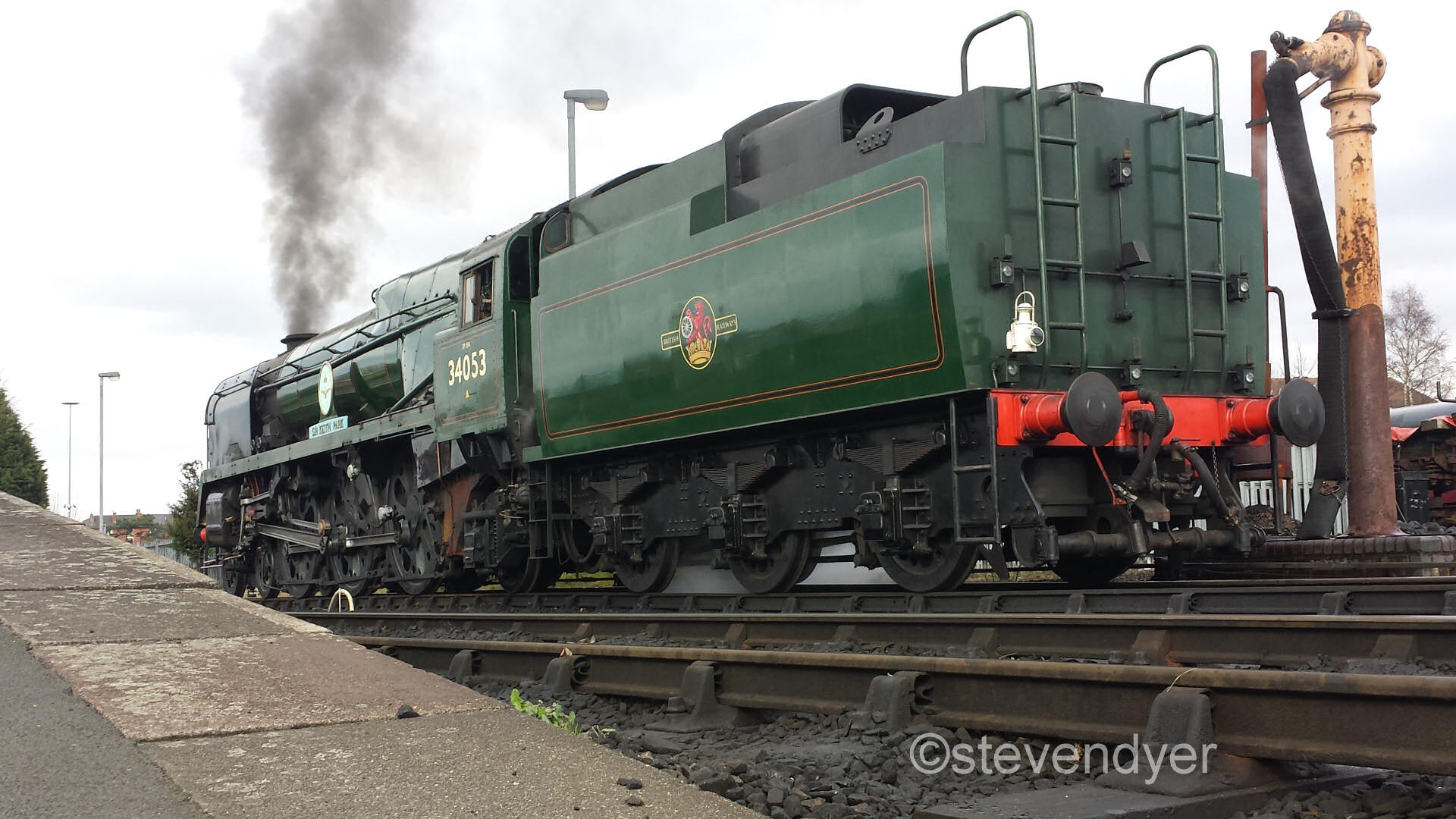
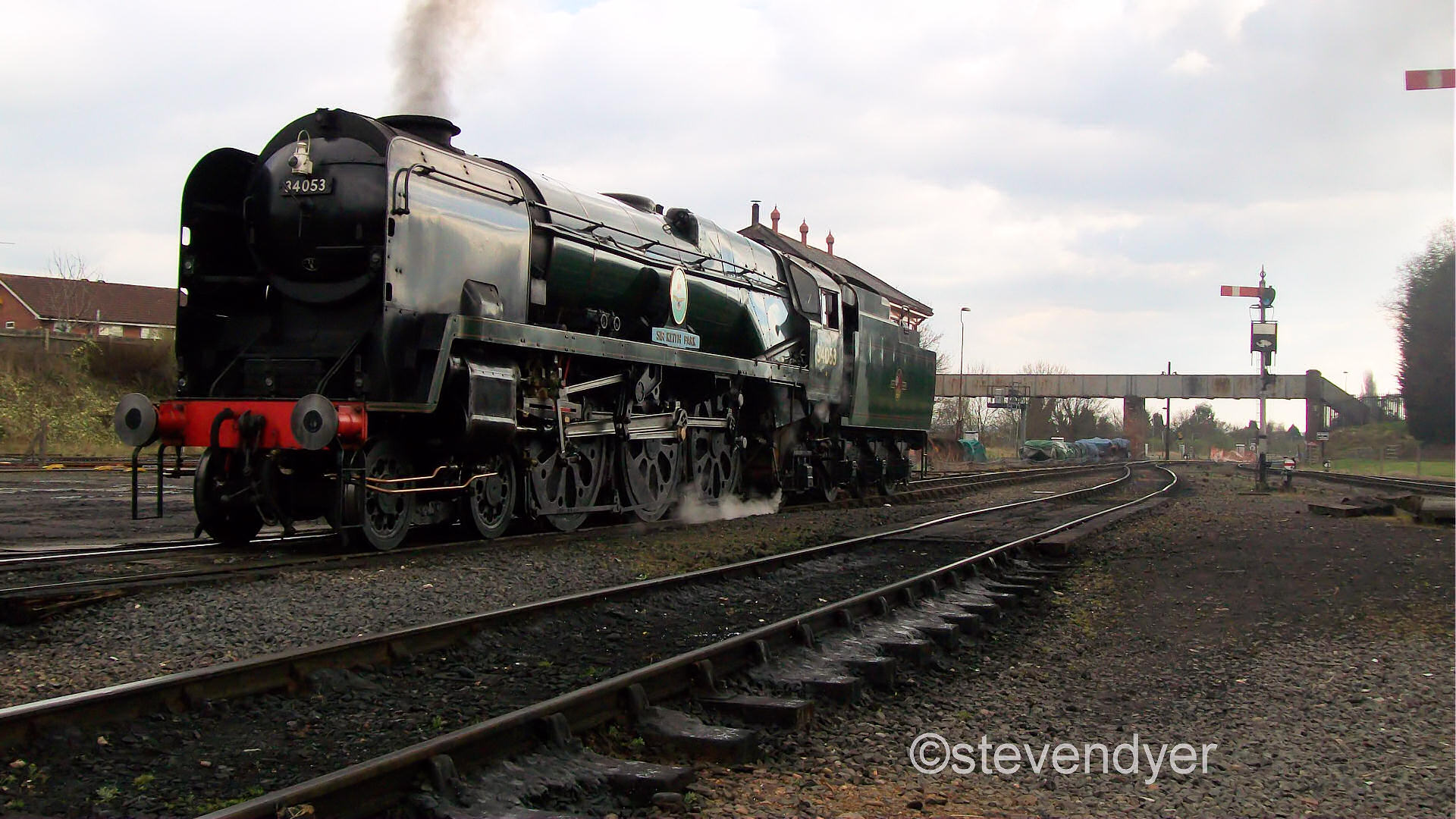
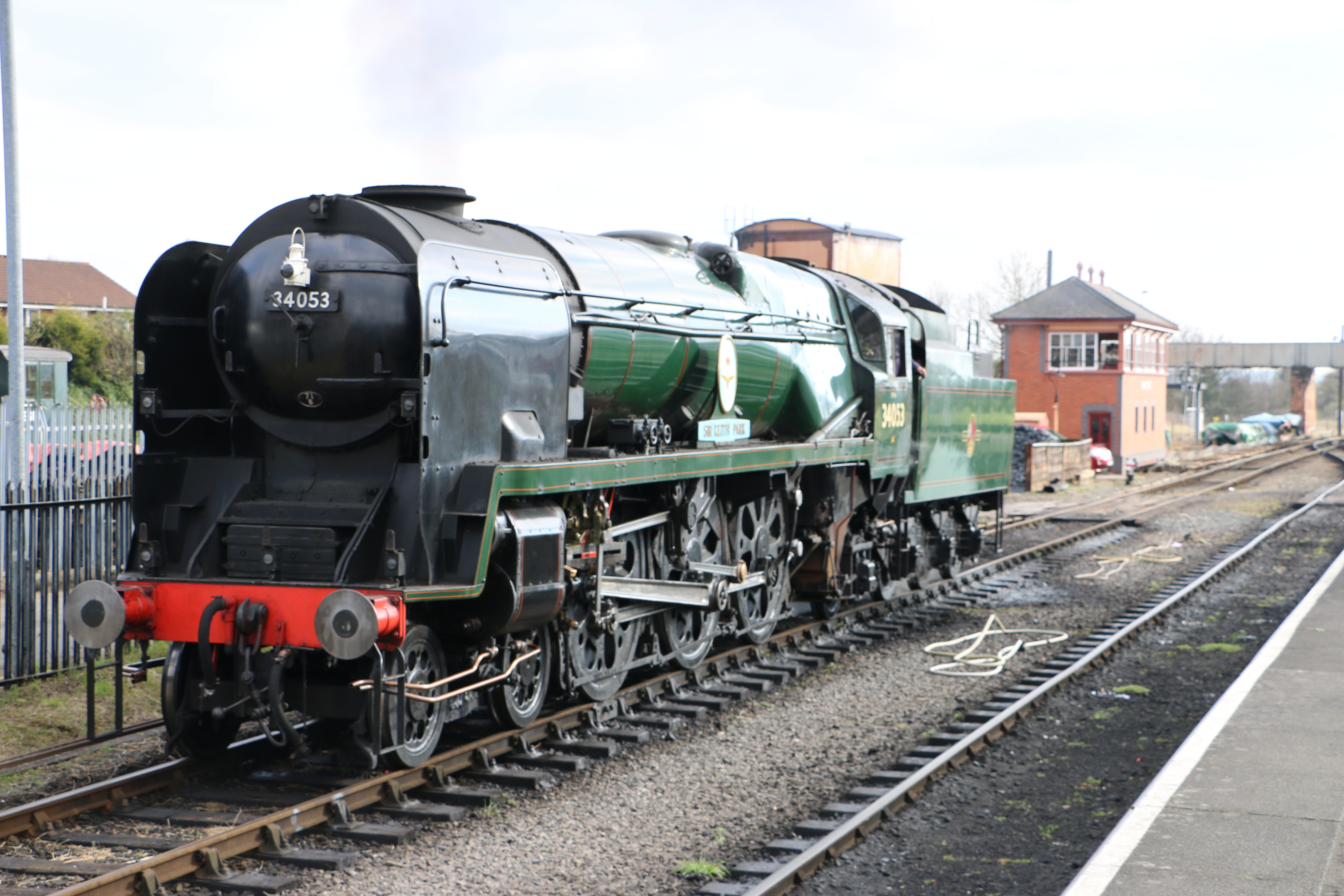
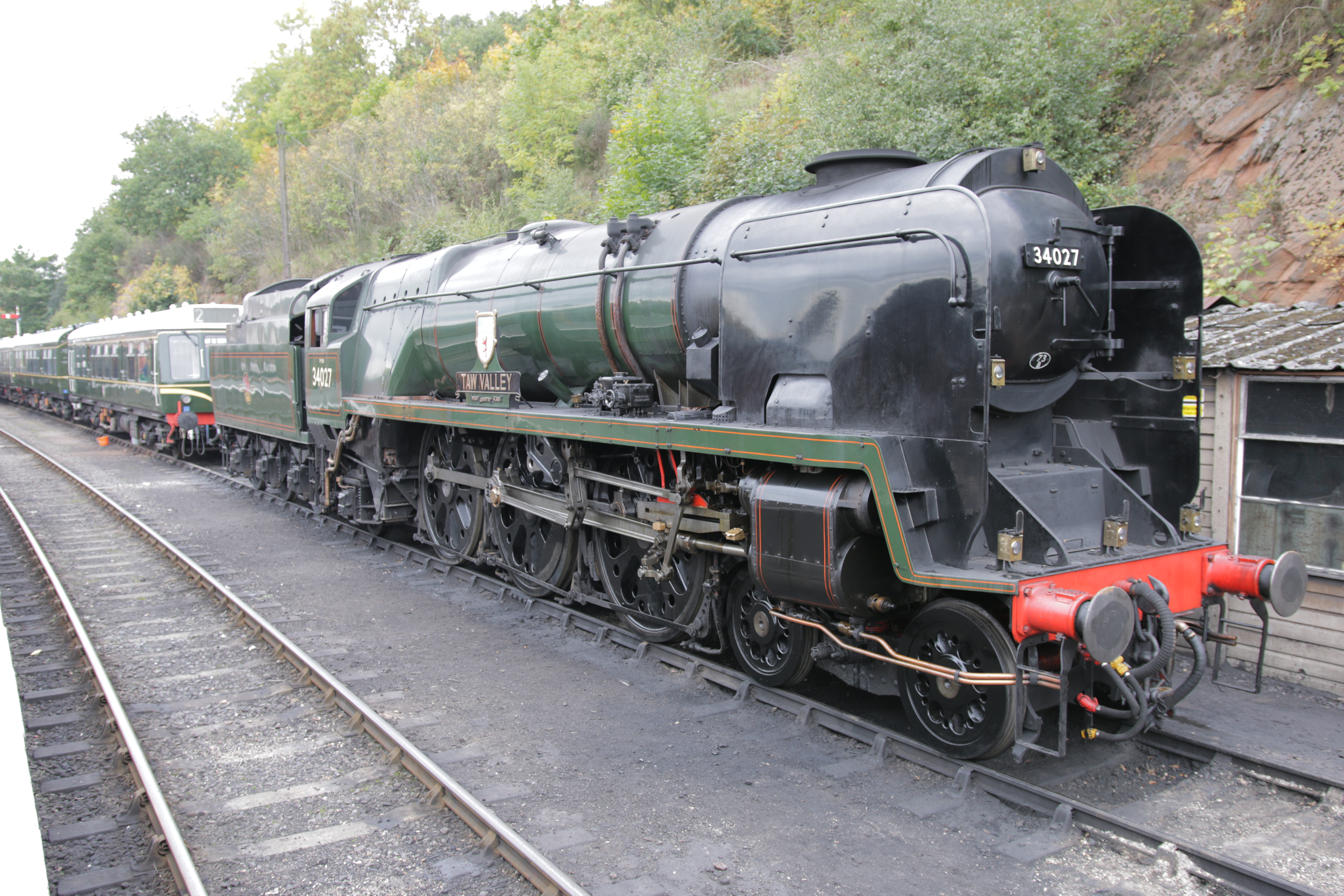
Rebuilt (60 of the class from 1957–61): conventional outline with traditional boiler cladding, a single chimney, and three sets of Walschaerts valve gear visible (two outside, one inside). The Bulleid-Firth-Brown wheels and welded steel boiler/firebox were retained. The rebuilt outline broadly resembles a BR Standard Pacific, with which the rebuild programme shared many detail features.
Naming and lining: West Country engines carried scroll-patterned nameplates with the place name; Battle of Britain engines carried RAF squadron crests, airfield emblems, or oval personality nameplates. The two themes are mechanically identical and the names were not strictly tied to the running number.
Numbers and names
34001–34110 renumbered
- 34001
- 34002
- 34003
- 34004
- 34005
- 34006
- 34007
- 34008
- 34009
- 34010
- 34011
- 34012
- 34013
- 34014
- 34015
- 34016
- 34017
- 34018
- 34019
- 34020
- 34021
- 34022
- 34023
- 34024
- 34025
- 34026
- 34027
- 34028
- 34029
- 34030
- 34031
- 34032
- 34033
- 34034
- 34035
- 34036
- 34037
- 34038
- 34039
- 34040
- 34041
- 34042
- 34043
- 34044
- 34045
- 34046
- 34047
- 34048
- 34049
- 34050
- 34051
- 34052
- 34053
- 34054
- 34055
- 34056
- 34057
- 34058
- 34059
- 34060
- 34061
- 34062
- 34063
- 34064
- 34065
- 34066
- 34067
- 34068
- 34069
- 34070
- 34071
- 34072
- 34073
- 34074
- 34075
- 34076
- 34077
- 34078
- 34079
- 34080
- 34081
- 34082
- 34083
- 34084
- 34085
- 34086
- 34087
- 34088
- 34089
- 34090
- 34091
- 34092
- 34093
- 34094
- 34095
- 34096
- 34097
- 34098
- 34099
- 34100
- 34101
- 34102
- 34103
- 34104
- 34105
- 34106
- 34107
- 34108
- 34109
- 34110
34071–34110
- 34071
- 34072
- 34073
- 34074
- 34075
- 34076
- 34077
- 34078
- 34079
- 34080
- 34081
- 34082
- 34083
- 34084
- 34085
- 34086
- 34087
- 34088
- 34089
- 34090
- 34091
- 34092
- 34093
- 34094
- 34095
- 34096
- 34097
- 34098
- 34099
- 34100
- 34101
- 34102
- 34103
- 34104
- 34105
- 34106
- 34107
- 34108
- 34109
- 34110
Southern Railway (1945–1947, 70 engines): 21C101–21C170 in Bulleid's unique notation. The first 48 carried West Country names; engines from 21C149 onwards were given Battle of Britain names, though some West Country names were applied to BR-built engines later. British Railways (1948 transition and onwards): renumbered 34001–34110 in the Southern Region's BR series. The final 40 (34071–34110, BR-built) carried BR numbers from new. Some earlier engines briefly carried 's21C…' transitional numbering with the BR prefix in 1948.
Notable locomotives
21C101 / 34001 Exeter, first of the class, outshopped from Brighton in May 1945 under Southern Railway ownership. Withdrawn 1967, not preserved.
34005 Barnstaple, the first Light Pacific to be rebuilt by R. G. Jarvis, emerging from Eastleigh in rebuilt condition in June 1957. Withdrawn 1966, not preserved.
34023 Blackmoor Vale (originally 21C123), preserved in unrebuilt form on the Bluebell Railway. Bought directly from BR by the Bulleid Society on withdrawal in 1971; one of only two members of the class never to enter Barry Scrapyard.
34051 Winston Churchill, preserved as part of the national collection. Hauled Sir Winston Churchill's funeral train from London Waterloo to Handborough in January 1965, and was bought directly from BR for the National Railway Museum on withdrawal. Has not been steamed in preservation; static display.
34066 Spitfire, the locomotive involved in the Lewisham rail disaster of 4 December 1957, when it ran into a stationary local train at St John's, Lewisham, in dense fog. Ninety people were killed and 173 injured, one of the worst post-war railway accidents in Britain. The locomotive was repaired, returned to service, and was at one stage a candidate for preservation, but 34023 was preferred. Scrapped after withdrawal.
34070 Manston, preserved unrebuilt at the Swanage Railway. Named for the Battle of Britain RAF airfield at Manston, Kent.
34072 257 Squadron, preserved unrebuilt at the Swanage Railway. One of the most active preserved members in recent years.
34092 City of Wells, preserved unrebuilt at the East Lancashire Railway. Notable for main-line operation in preservation.
34101 Hartland, the last Light Pacific rebuilt, emerging from Eastleigh in May 1961. The only preserved member built at Eastleigh (rather than Brighton). Now preserved on the North Yorkshire Moors Railway.
34110 66 Squadron, last member of the class built, completed at Brighton in January 1951. Withdrawn 1963, not preserved.
Allocations and regions
Pre-grouping inheritance (none): a wholly post-war Bulleid design.
Southern Railway / BR Southern Region (1945–1967): the class served almost every major Southern Region depot during its working life. Key allocations included:
- Western Section (Waterloo–Salisbury–Exeter and the West Country): Nine Elms, Salisbury, Exmouth Junction, Plymouth Friary, Wadebridge, and the smaller Devon and Cornwall sheds. The Light Pacifics were the standard motive power on the Atlantic Coast Express and most West of England trains throughout the 1950s and into the early 1960s.
- Central Section (Victoria–Brighton and South Coast): less commonly seen as the route was largely electrified by the time the class entered service, but Stewarts Lane held a small allocation.
- Eastern Section (Victoria/Charing Cross to the Kent coast): Stewarts Lane, Bricklayers Arms, Ramsgate, Dover, and Folkestone Junction. Used heavily on Continental boat trains and Kent coast expresses until the Kent Coast Electrification Scheme from 1959 onwards displaced steam.
- Bournemouth line: Bournemouth, Branksome, Eastleigh, and Nine Elms held large allocations for Waterloo–Bournemouth–Weymouth services. The Bournemouth line was the last stronghold of Light Pacific work, with a substantial allocation remaining at Nine Elms, Salisbury, and Bournemouth until the route's full electrification in July 1967.
Livery history
Southern Railway Malachite Green (1945–1948): applied to all SR-built members. Light Bulleid 'Sunshine Yellow' lining and lettering, with the locomotive number on the cab and on the tender. The first seventy engines all entered service in this livery.
BR transitional (1948–1950): some early BR-renumbered engines retained Malachite Green with the new BR numbering applied. Brief experimental liveries appeared on a few members.
BR express passenger blue (1949–c.1952): a small number of Light Pacifics carried the experimental BR Caledonian-blue express passenger livery during the early 1950s.
BR Brunswick green (c.1951–withdrawal): the standard BR express passenger livery, with the early lion-and-wheel emblem replaced by the later BR crest from c.1957. The most common livery worn during the 1950s and 1960s, in both unrebuilt and rebuilt forms.
Preservation: the surviving twenty engines have carried various combinations of SR Malachite Green and BR Brunswick green over their preservation careers. 34023 Blackmoor Vale is notably presented in SR Malachite Green with the original 21C123 number.
Preservation status
Twenty Light Pacifics survive, by some distance the most-preserved British Pacific class. The split between forms is balanced: ten preserved unrebuilt, ten preserved rebuilt. Two (34023 Blackmoor Vale and 34051 Winston Churchill) were bought directly from BR; the remaining eighteen all came from Woodham Brothers' scrapyard at Barry, where the Bulleid Pacifics formed one of the largest single class contingents in the scrapyard's preservation-era history. All twenty surviving engines were built at Brighton, with the single exception of 34101 Hartland, which was built at Eastleigh.
Preserved unrebuilt (10): 34007 Wadebridge (Bodmin & Wenford), 34010 Sidmouth (Southern Locomotives Ltd, awaiting overhaul), 34023 Blackmoor Vale (Bluebell Railway), 34051 Winston Churchill (national collection, static), 34058 Sir Frederick Pile (under restoration), 34070 Manston (Swanage Railway), 34072 257 Squadron (Swanage Railway), 34073 249 Squadron (Carnforth, used as donor for 34067), 34081 92 Squadron (Nene Valley Railway), 34092 City of Wells (East Lancashire Railway).
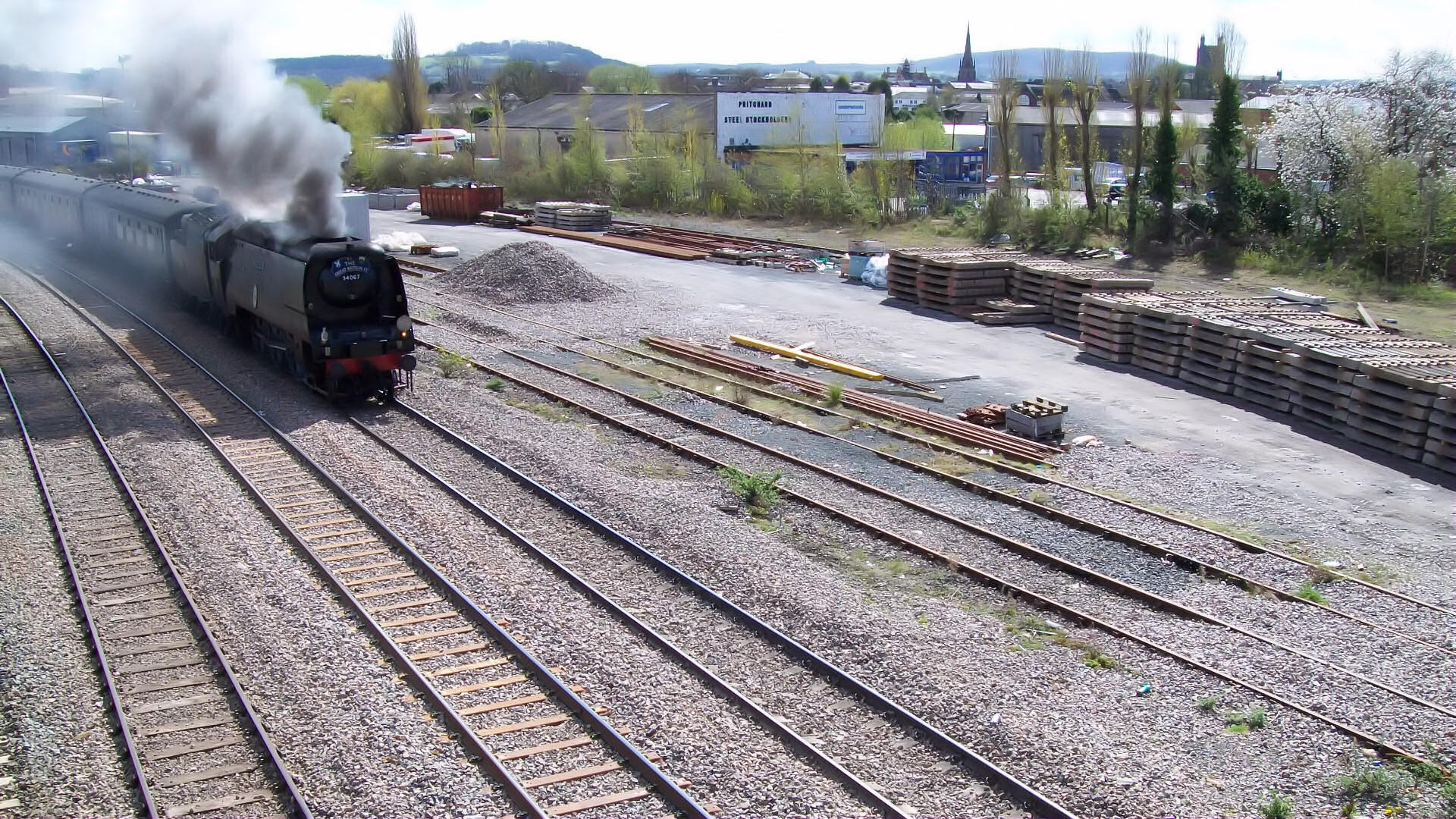
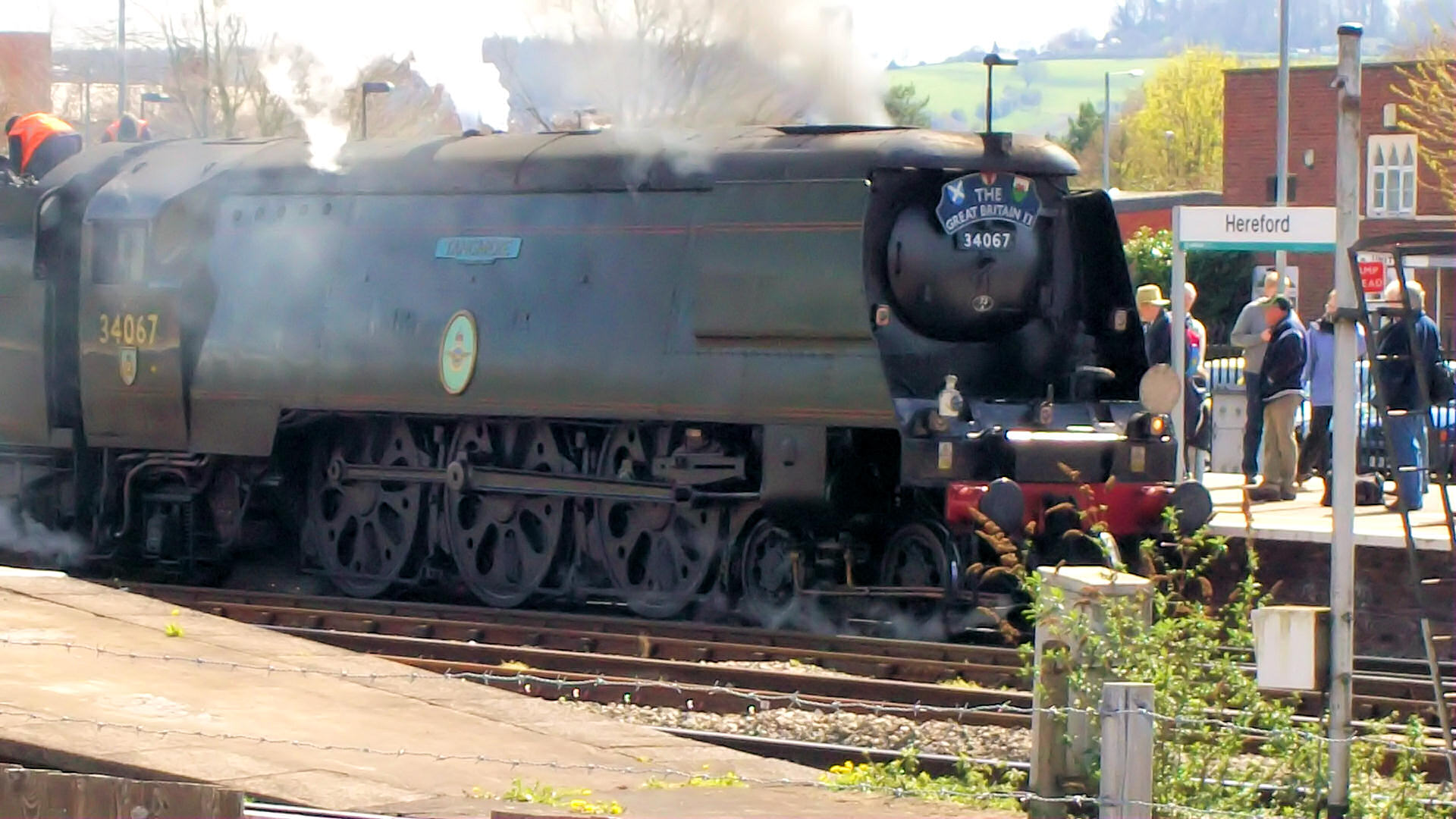
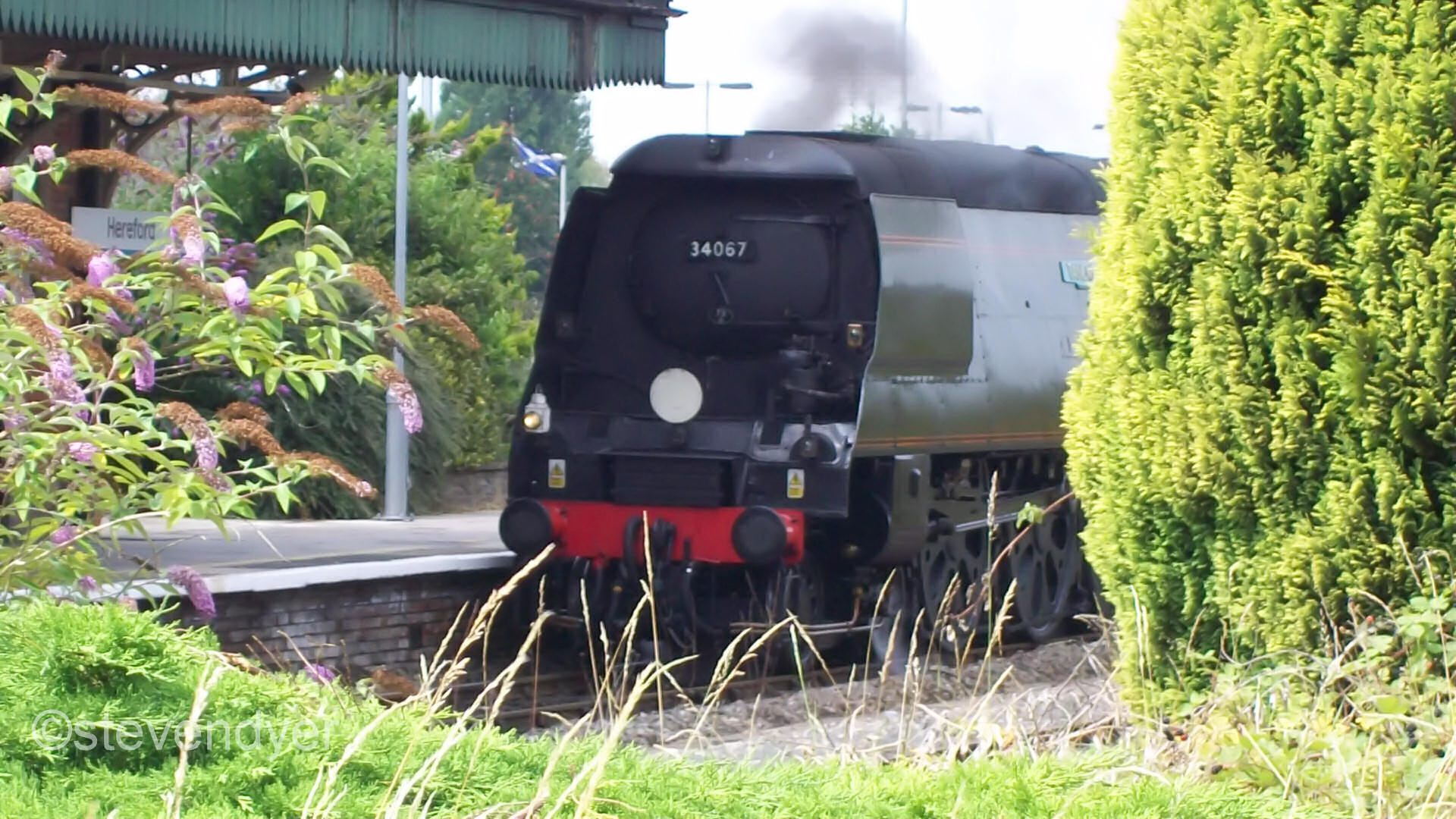
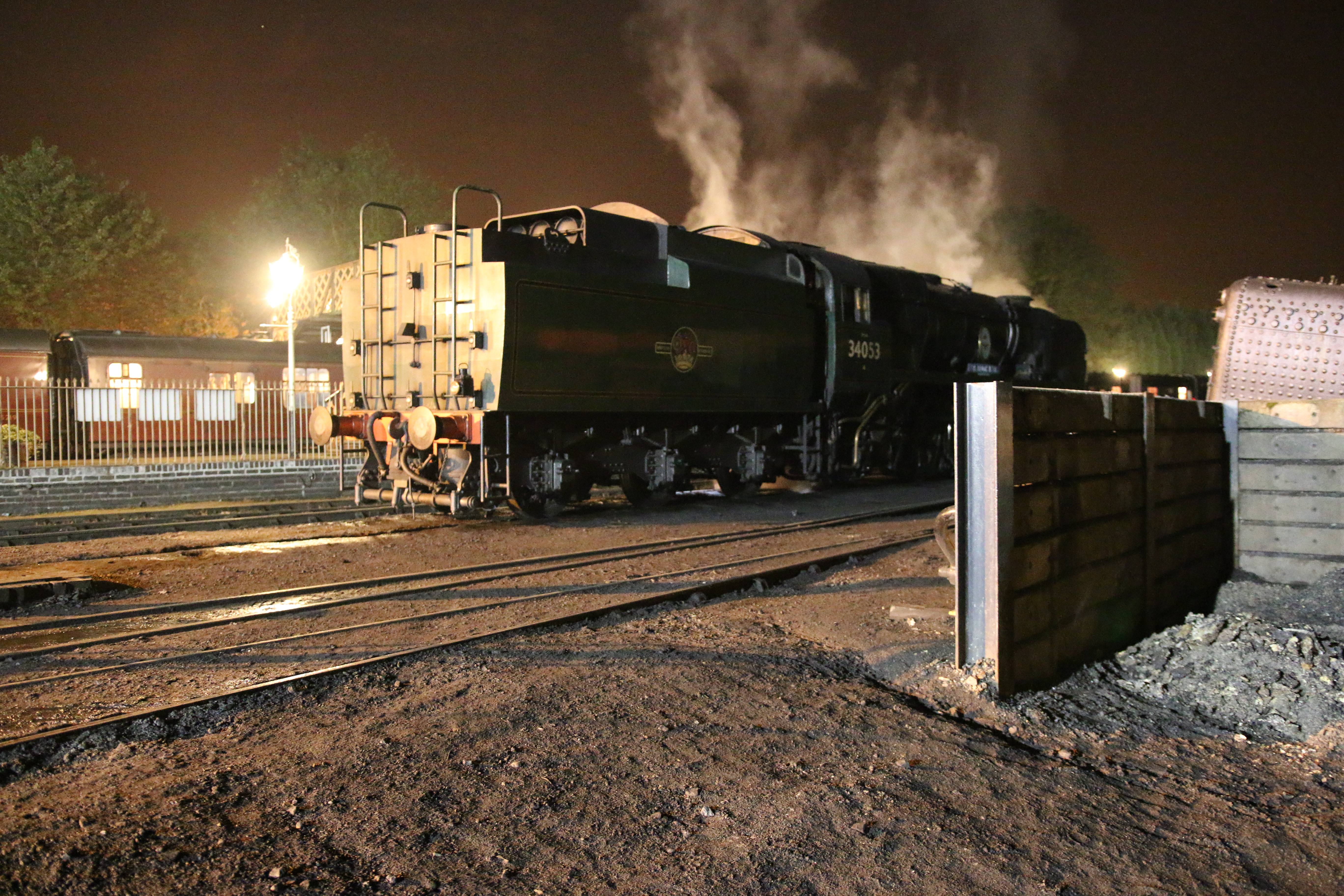
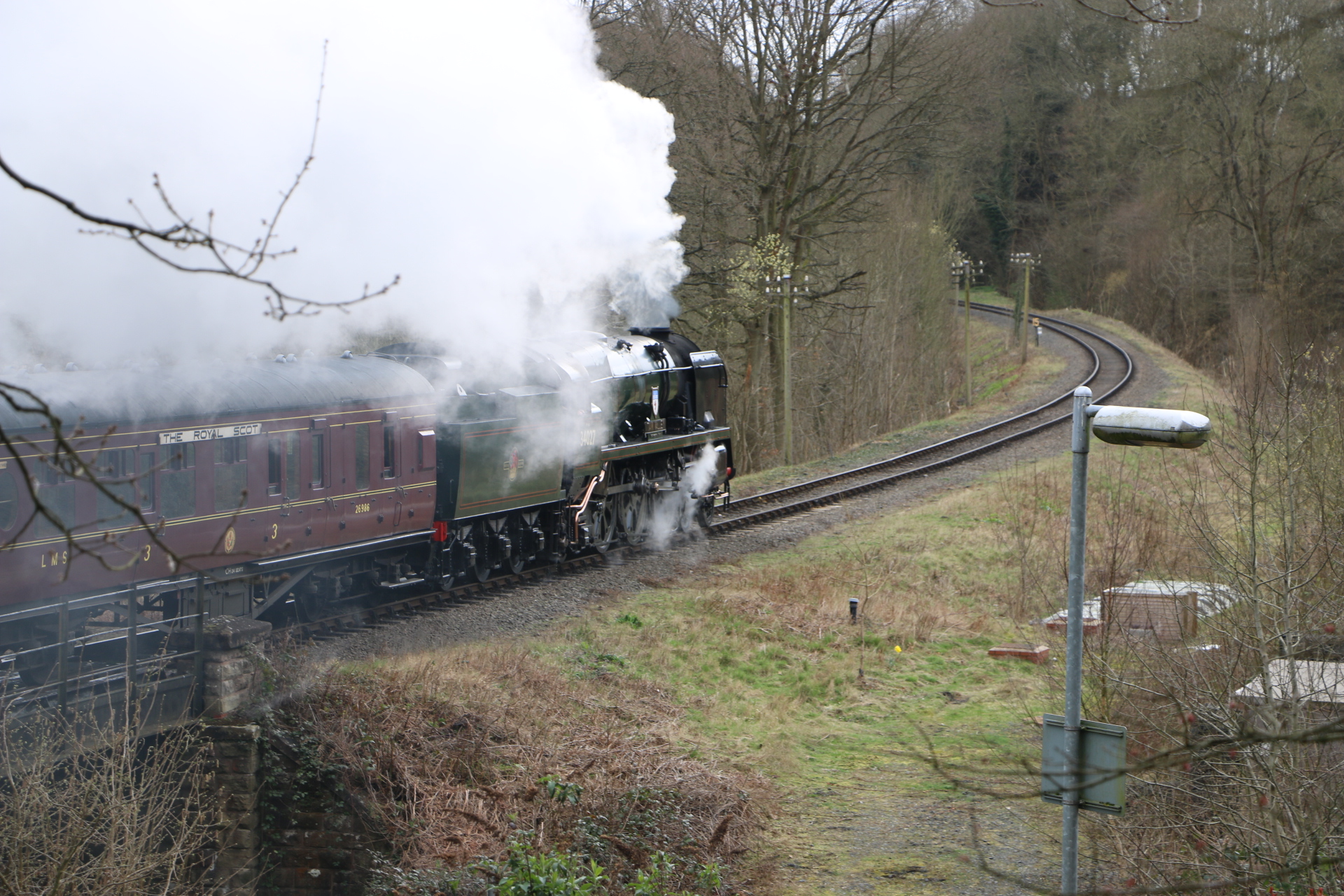
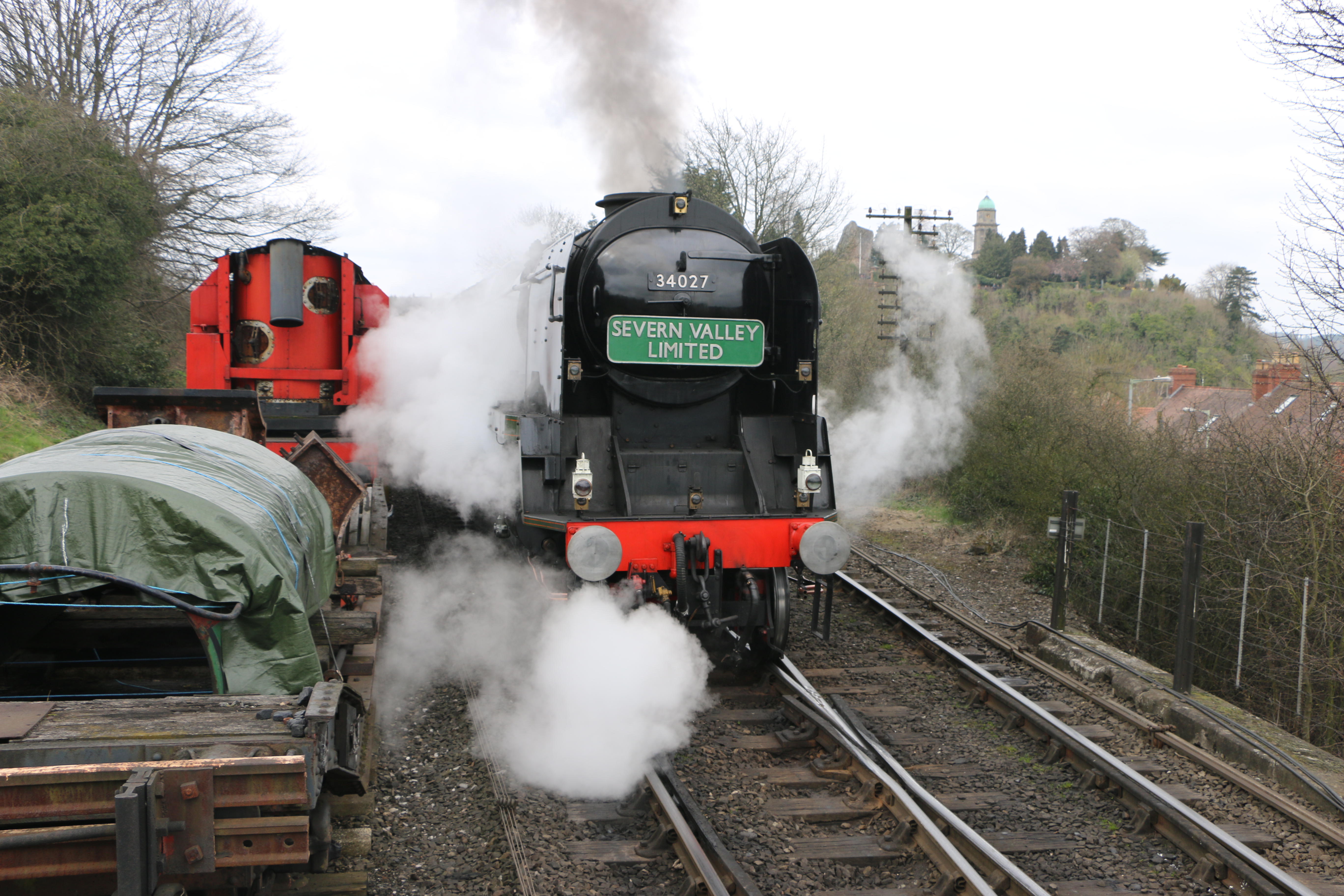
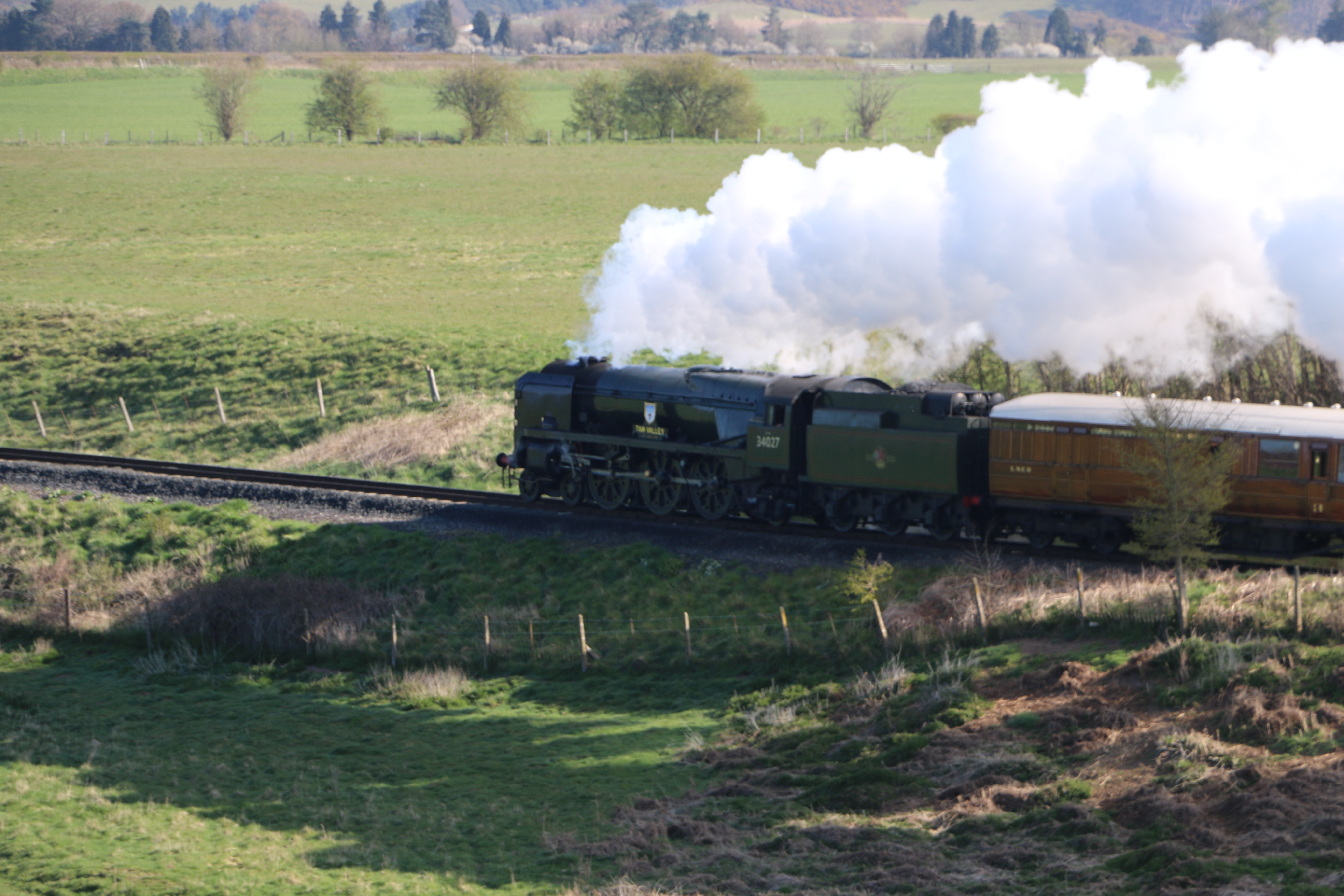
Preserved rebuilt (10): 34016 Bodmin, 34027 Taw Valley, 34028 Eddystone, 34039 Boscastle, 34046 Braunton, 34053 Sir Keith Park, 34059 Sir Archibald Sinclair, 34067 Tangmere, 34101 Hartland, 34105 Swanage. Distribution across the major Bulleid-friendly heritage railways including the Mid Hants Railway, Bluebell Railway, Swanage Railway, Severn Valley Railway, and Spa Valley Railway.
Main-line operation: several preserved Light Pacifics have been certified for main-line running over the years, including 34027 Taw Valley, 34046 Braunton, 34067 Tangmere, and 34092 City of Wells, the last of these notably in unrebuilt form.
The exact operational status of individual locomotives changes frequently as overhaul cycles progress; verify current condition with the owning organisation (Southern Locomotives Ltd, the Bulleid Society, the Battle of Britain Locomotive Society, or the Mid-Hants Locomotive Group as appropriate) before publishing.
Photographs