GWR 4900 Hall Class
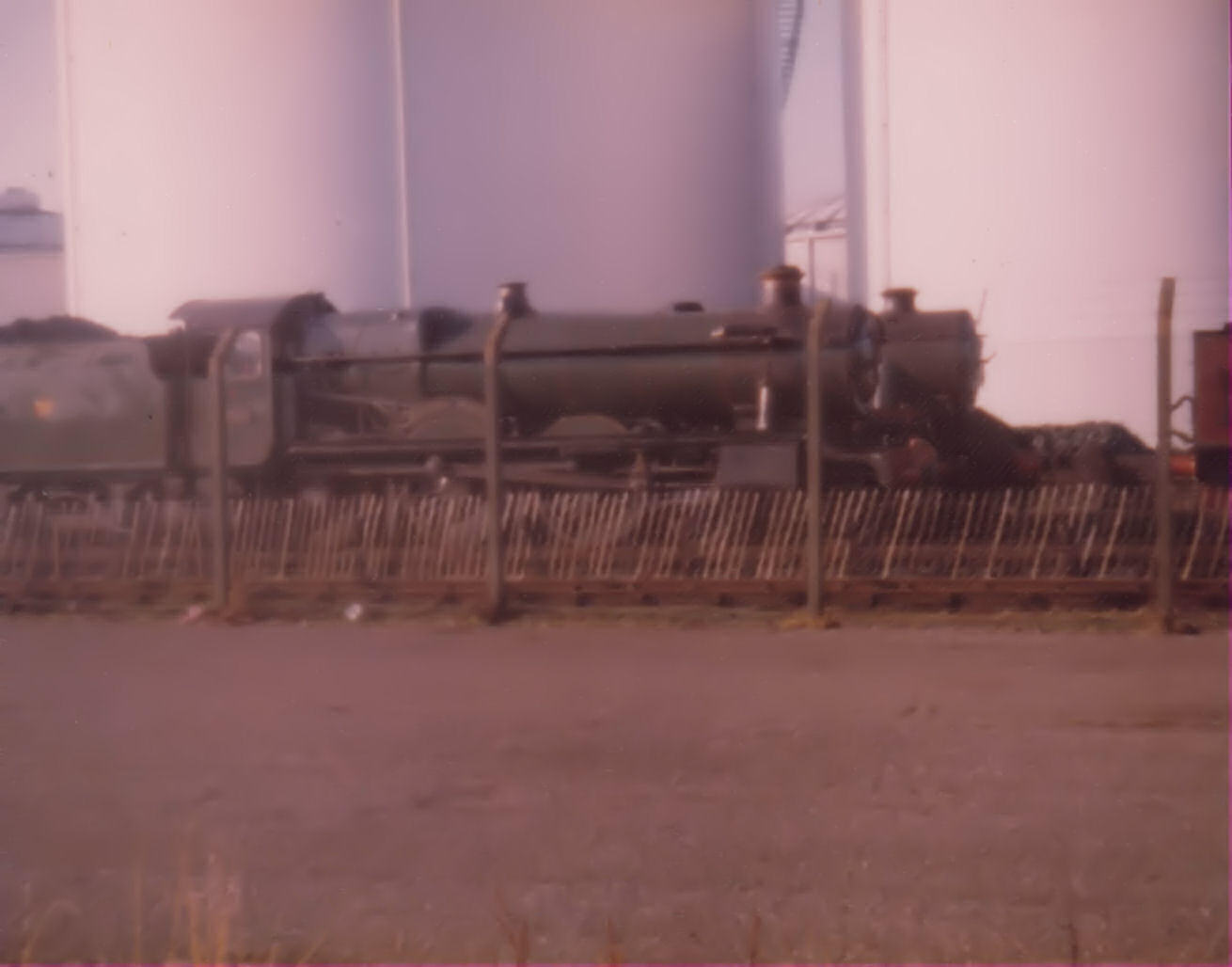
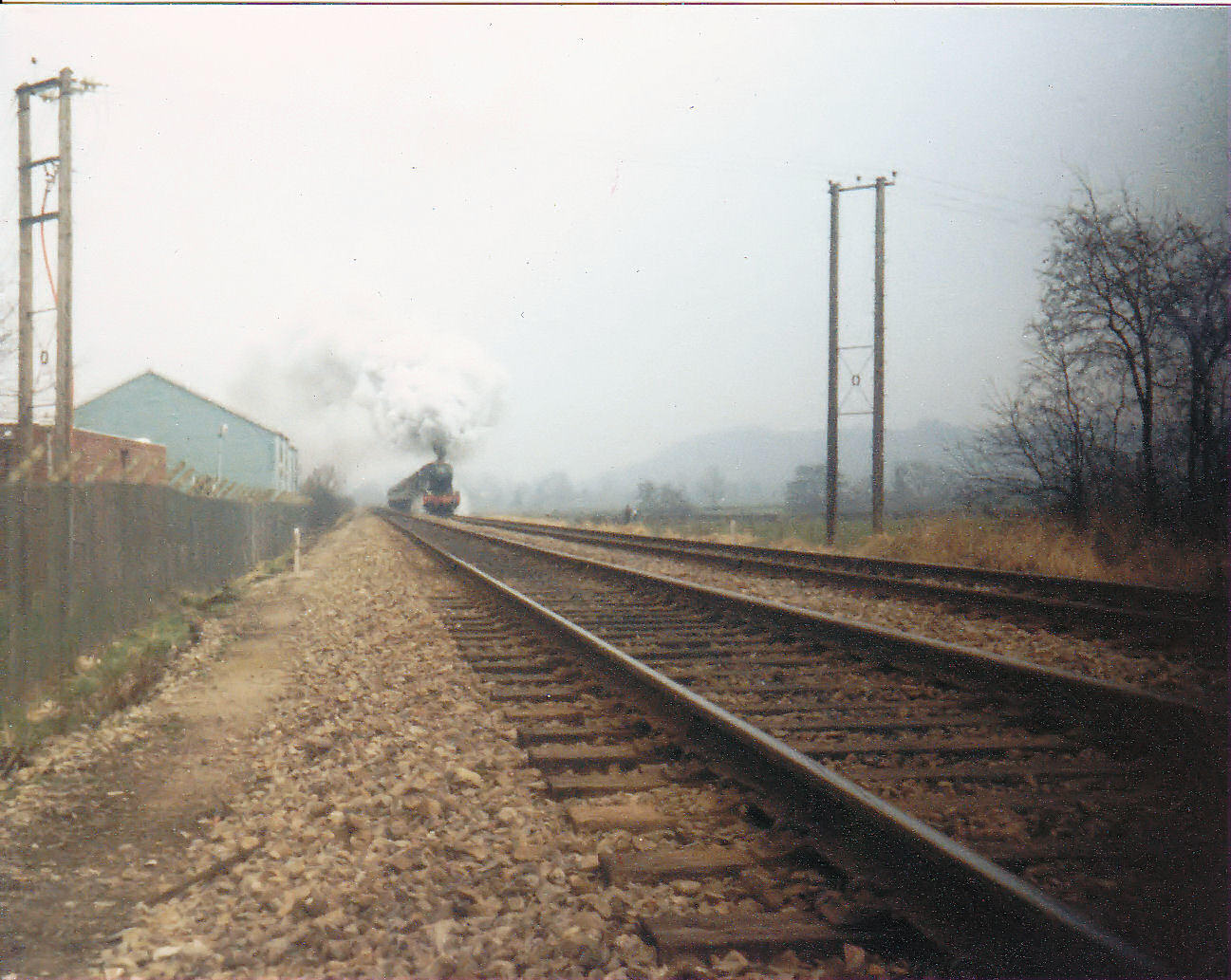
The GWR 4900 Class, almost universally known as the Hall Class, was a fleet of two-cylinder 4-6-0 mixed-traffic steam locomotives designed by Charles Collett for the Great Western Railway. Two hundred and fifty-nine were built at Swindon Works between 1928 and 1943, and they became the GWR's standard general-purpose engine, a single class that could be turned out to express passenger work in the morning, fitted freight in the afternoon, and a stopping train at night.
The design grew directly out of the Saint Class. By the early 1920s the GWR was running short of suitable mixed-traffic power: the Churchward 4300 Class 2-6-0s were being asked to handle loads beyond their comfortable capacity, while the Saints themselves, with their 6 ft 8½ in driving wheels, were really express passenger machines. Collett's answer was to take Saint Class No. 2925 Saint Martin, fit it with smaller 6 ft driving wheels, realign the cylinders to suit the new wheel centre, and add a Castle-pattern cab. The rebuilt locomotive emerged from Swindon in 1924, was tested for three years, and showed that a Saint with shorter legs made an outstandingly versatile mixed-traffic engine.
An order for the first production batch of eighty was placed under Lot 254 in 1928. The prototype was renumbered 4900 in December of that year, and No. 4901 Adderley Hall emerged from Swindon the same month as the first true production Hall. Production continued at intervals throughout the 1930s and into the war years, the last of the original Halls, No. 6958 Oxburgh Hall, being delivered in 1943. Subsequent deliveries from 6959 onwards were of Hawksworth's modified design and form a separate class.
In service the Halls did almost everything the Western Region asked of them. The first fourteen were sent to the Cornish main line as a proving exercise; they handled it without complaint, and from there spread across the system. Old Oak Common, Laira, Penzance, Truro, Cardiff Canton, Bristol Bath Road, Wolverhampton Stafford Road, and dozens of smaller depots all had Halls on their books. Their red route availability kept them off the lighter cross-country and branch routes, which is why the GWR went on to develop the lighter 6800 Grange and 7800 Manor classes for those duties, but anywhere a main-line track went the Halls could go.
The class made its mark on British locomotive history out of all proportion to its quiet competence. The LMS Stanier Class 5 and the LNER Thompson B1 both borrowed heavily from Collett's mixed-traffic formula, and the BR Standard Class 5 4-6-0 of 1951 stands in the same tradition. Eleven Halls were converted to oil-firing in 1946–50 in response to the post-war coal crisis, being temporarily renumbered into the 3900 series before reverting to coal and their original numbers.
Withdrawals began in 1959 with the prototype Saint Martin, by then credited with over two million miles of running between its Saint and Hall identities. The class was extinct on British Railways by the end of 1965. None of the original Halls was reserved for the National Collection, but eleven were rescued from Woodham Brothers' scrapyard at Barry, and several have run on the main line in preservation. One, 5972 Olton Hall, found a second career as the Hogwarts Express in the Harry Potter films, taking the Hall name to an audience the GWR could never have imagined.
Design and development
By the end of 1923 the GWR's express passenger fleet was strong, Saints, Stars, and the new Castles, but its mixed-traffic capacity was thinning. The 4300 Class 2-6-0s, capable engines in their day, were being asked to take loads beyond what their power and adhesion could comfortably manage, particularly on fitted freights to tight schedules. Churchward had recognised the gap and answered it with the 4700 Class 2-8-0, but only nine of those large freight machines were built and they were really heavy goods engines rather than all-rounders.
Charles Collett took a different route. Rather than design a new engine from scratch, he asked what would happen if a Saint was given smaller driving wheels, keeping the leading bogie that gave the Saints their good riding, while gaining the tractive effort and adhesion that smaller wheels provide. In 1924 Saint Class No. 2925 Saint Martin was withdrawn and rebuilt at Swindon with 6 ft driving wheels in place of the standard 6 ft 8½ in. The cylinders were lowered and realigned to suit the new wheel centre, and a more modern double side-window cab of the Castle pattern replaced the original Saint cab.
The rebuilt locomotive was tested for three years, undergoing minor changes including modifications to the taper boiler pitch and the fitting of outside steam pipes. By 1928 Collett was satisfied, and an order for eighty production engines was placed at Swindon under Lot 254. The production locomotives differed from the prototype only in detail: the bogie wheels were reduced from 3 ft 2 in to 3 ft 0 in, and the valve travel was lengthened from 6 in to 7½ in, both improvements arrived at during the trial period. Overall weight rose by about 2½ tons over the prototype, to 75 long tons, but tractive effort climbed from the Saint's 24,935 lbf to 27,275 lbf.
Production followed a steady cadence: Lot 254 (4901–4980) emerged between December 1928 and February 1930; Lot 268 (4981–4999 and 5900) from late 1930. The original 3,500 imperial gallon Churchward tenders were replaced from No. 4958 onwards by the larger Collett 4,000-gallon tender, which became the standard pairing for the class. Further lots ran through the 1930s and into the war years, the last (6951–6958) delivered during 1942–43. Total production of the original Hall design stood at 259 locomotives. From No. 6959 onwards Hawksworth's Modified Hall, with plate frames, individual bogie springing, and a higher-superheat boiler, replaced the Collett design, a significant departure rather than a simple update, and treated as a separate class.
Service and withdrawals
The first fourteen production Halls were sent to the Cornish main line in 1928–29 as a deliberate proving exercise. The Cornish road, with its sharp gradients and tight curves, was unforgiving of any design weakness, but the new engines coped without difficulty. By the time the first eighty had been delivered in early 1930, a further 178 were on order. By 1935, 150 Halls were at work; by the outbreak of war in 1939, the class was approaching its final size and was the GWR's standard mixed-traffic engine across the entire system.
Operationally the Halls handled almost every kind of train the GWR ran. They were equally at home on a fast Paddington–Birmingham, a Plymouth–Penzance stopper, a fitted freight from South Wales to London, or a summer Saturday holiday extra to the West Country. Their nominal axle load of 18 tons 19 cwt placed them on the GWR red route availability, which kept them off the lighter cross-country and branch routes; this gap was the reason the GWR went on to build the lighter 6800 Grange (1936) and 7800 Manor (1938) classes.
The 1946 coal crisis prompted the conversion of eleven Halls (4907, 4948, 4968, 4971, 4972, 5955, 5976, 5986, 6949, 6953, 6957) to oil firing in 1946–47. While oil-fired they were renumbered into the 3900 series (3900–04 and 3950–55). All had reverted to coal firing by 1950 and resumed their original numbers.
Apart from 4911 Bowden Hall, destroyed in a Plymouth air raid in 1941, every original Hall passed to British Railways at nationalisation in 1948. BR classified them 5MT, fitted them with smokebox numberplates and the BR power class on the cabside, and worked them hard through the 1950s. Withdrawals began in March 1959 with the prototype Saint Martin, then credited with over two million miles of running across both Saint and Hall identities. The pace of withdrawal accelerated through the early 1960s as diesel hydraulics arrived on the Western Region, and the last Hall, 4920 Dumbleton Hall, was withdrawn in December 1965, marking the end of the class on BR.
Identification features
Numbers and names
4901–4999
- 4901
- 4902
- 4903
- 4904
- 4905
- 4906
- 4907
- 4908
- 4909
- 4910
- 4911
- 4912
- 4913
- 4914
- 4915
- 4916
- 4917
- 4918
- 4919
- 4920
- 4921
- 4922
- 4923
- 4924
- 4925
- 4926
- 4927
- 4928
- 4929
- 4930
- 4931
- 4932
- 4933
- 4934
- 4935
- 4936
- 4937
- 4938
- 4939
- 4940
- 4941
- 4942
- 4943
- 4944
- 4945
- 4946
- 4947
- 4948
- 4949
- 4950
- 4951
- 4952
- 4953
- 4954
- 4955
- 4956
- 4957
- 4958
- 4959
- 4960
- 4961
- 4962
- 4963
- 4964
- 4965
- 4966
- 4967
- 4968
- 4969
- 4970
- 4971
- 4972
- 4973
- 4974
- 4975
- 4976
- 4977
- 4978
- 4979
- 4980
- 4981
- 4982
- 4983
- 4984
- 4985
- 4986
- 4987
- 4988
- 4989
- 4990
- 4991
- 4992
- 4993
- 4994
- 4995
- 4996
- 4997
- 4998
- 4999
5900–5999
- 5900
- 5901
- 5902
- 5903
- 5904
- 5905
- 5906
- 5907
- 5908
- 5909
- 5910
- 5911
- 5912
- 5913
- 5914
- 5915
- 5916
- 5917
- 5918
- 5919
- 5920
- 5921
- 5922
- 5923
- 5924
- 5925
- 5926
- 5927
- 5928
- 5929
- 5930
- 5931
- 5932
- 5933
- 5934
- 5935
- 5936
- 5937
- 5938
- 5939
- 5940
- 5941
- 5942
- 5943
- 5944
- 5945
- 5946
- 5947
- 5948
- 5949
- 5950
- 5951
- 5952
- 5953
- 5954
- 5955
- 5956
- 5957
- 5958
- 5959
- 5960
- 5961
- 5962
- 5963
- 5964
- 5965
- 5966
- 5967
- 5968
- 5969
- 5970
- 5971
- 5972
- 5973
- 5974
- 5975
- 5976
- 5977
- 5978
- 5979
- 5980
- 5981
- 5982
- 5983
- 5984
- 5985
- 5986
- 5987
- 5988
- 5989
- 5990
- 5991
- 5992
- 5993
- 5994
- 5995
- 5996
- 5997
- 5998
- 5999
6900–6958
- 6900
- 6901
- 6902
- 6903
- 6904
- 6905
- 6906
- 6907
- 6908
- 6909
- 6910
- 6911
- 6912
- 6913
- 6914
- 6915
- 6916
- 6917
- 6918
- 6919
- 6920
- 6921
- 6922
- 6923
- 6924
- 6925
- 6926
- 6927
- 6928
- 6929
- 6930
- 6931
- 6932
- 6933
- 6934
- 6935
- 6936
- 6937
- 6938
- 6939
- 6940
- 6941
- 6942
- 6943
- 6944
- 6945
- 6946
- 6947
- 6948
- 6949
- 6950
- 6951
- 6952
- 6953
- 6954
- 6955
- 6956
- 6957
- 6958
3900–3904 renumbered
- 3900
- 3901
- 3902
- 3903
- 3904
3950–3955 renumbered
- 3950
- 3951
- 3952
- 3953
- 3954
- 3955
GWR: 4900 (prototype, rebuilt from Saint Class 2925 Saint Martin); 4901–4999; 5900–5999; 6900–6958. Eleven members were renumbered into the 3900 series (3900–3904, 3950–3955) while temporarily oil-fired between 1946 and 1950, then reverted to their original numbers. BR retained the GWR numbers without alteration.
Notable locomotives
4900 Saint Martin, the prototype, rebuilt from Saint Class No. 2925 in 1924 and renumbered 4900 in December 1928. Withdrawn in 1959 with a combined mileage of 2,092,500 in its Saint and Hall identities. Not preserved.
4901 Adderley Hall, first production Hall, out of Swindon in December 1928 under Lot 254.
4911 Bowden Hall, the only original Hall lost during the Second World War. On 30 April 1941 the locomotive took a direct hit during a bombing raid at Keyham, Plymouth, while stopped at a signal box, and was subsequently broken up. The crew sheltered under the signal box steps and survived.
4920 Dumbleton Hall, the last original Hall withdrawn from BR service, in December 1965; later preserved.
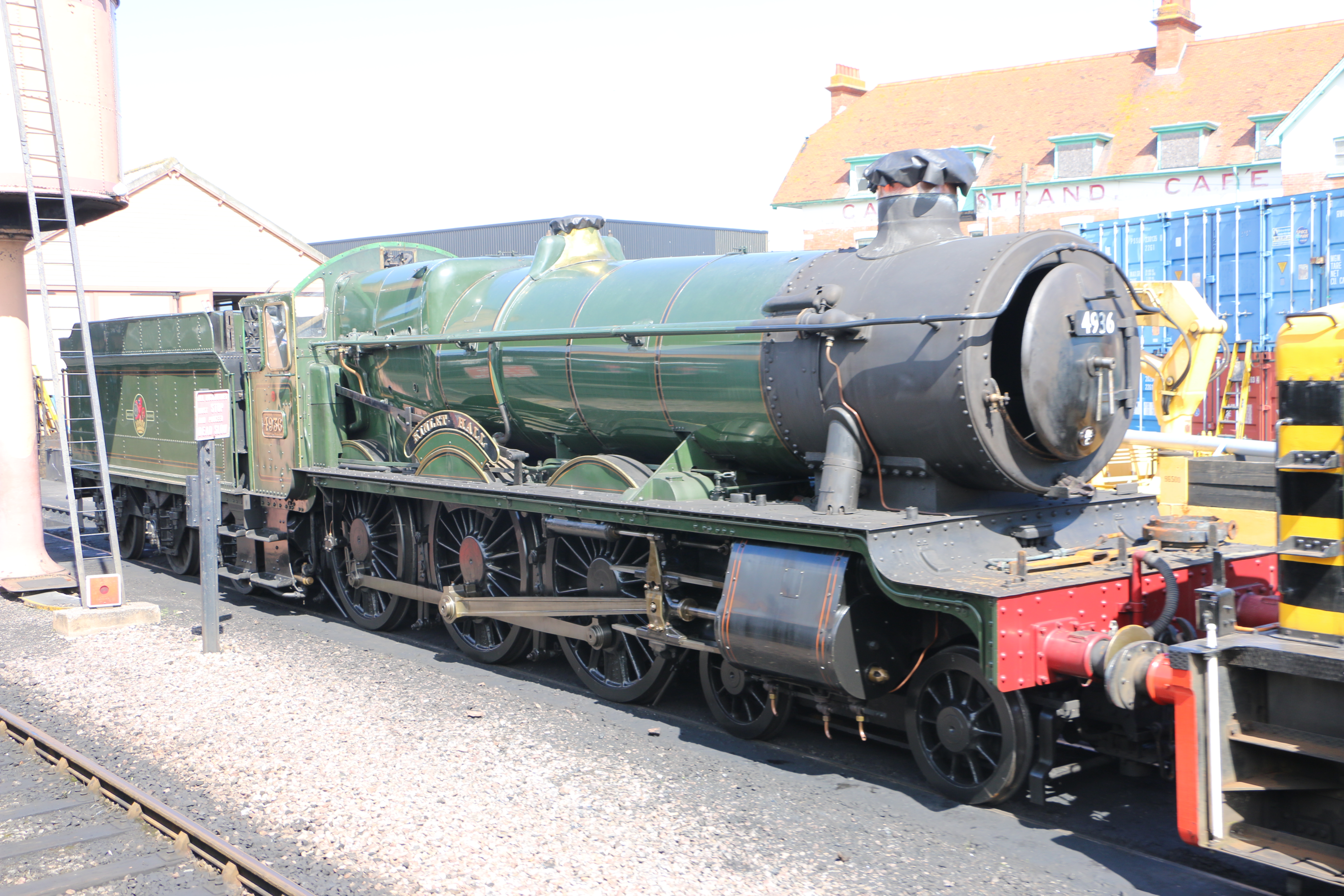
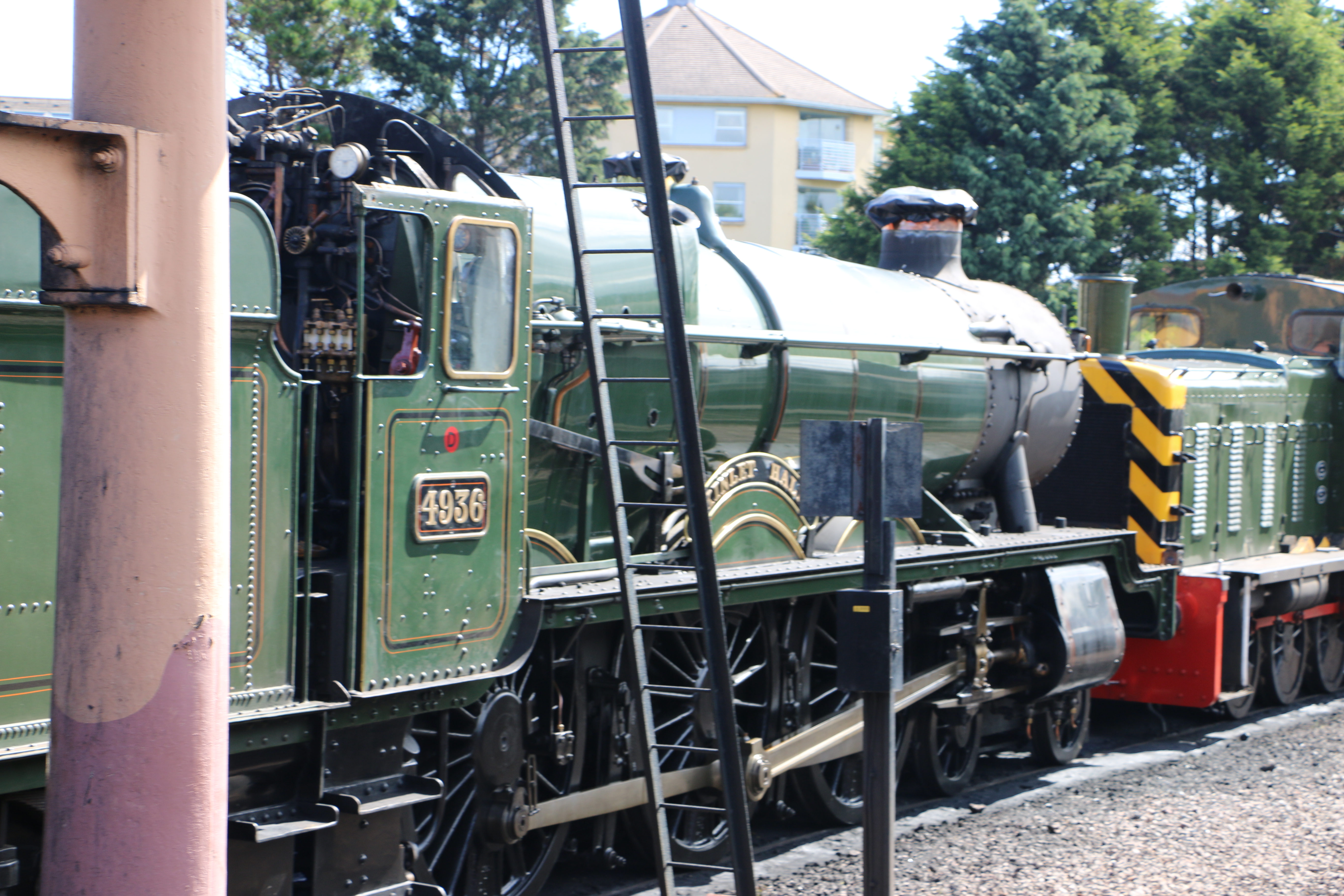
4936 Kinlet Hall, ran into a bomb crater near Plymouth in 1941 and was severely damaged but repaired. Built June 1929; preserved at Tyseley Locomotive Works.
4942 Maindy Hall, being 'regressed' at Didcot Railway Centre into a new-build Saint Class locomotive (2999 Lady of Legend), reversing Collett's original 1924 conversion.
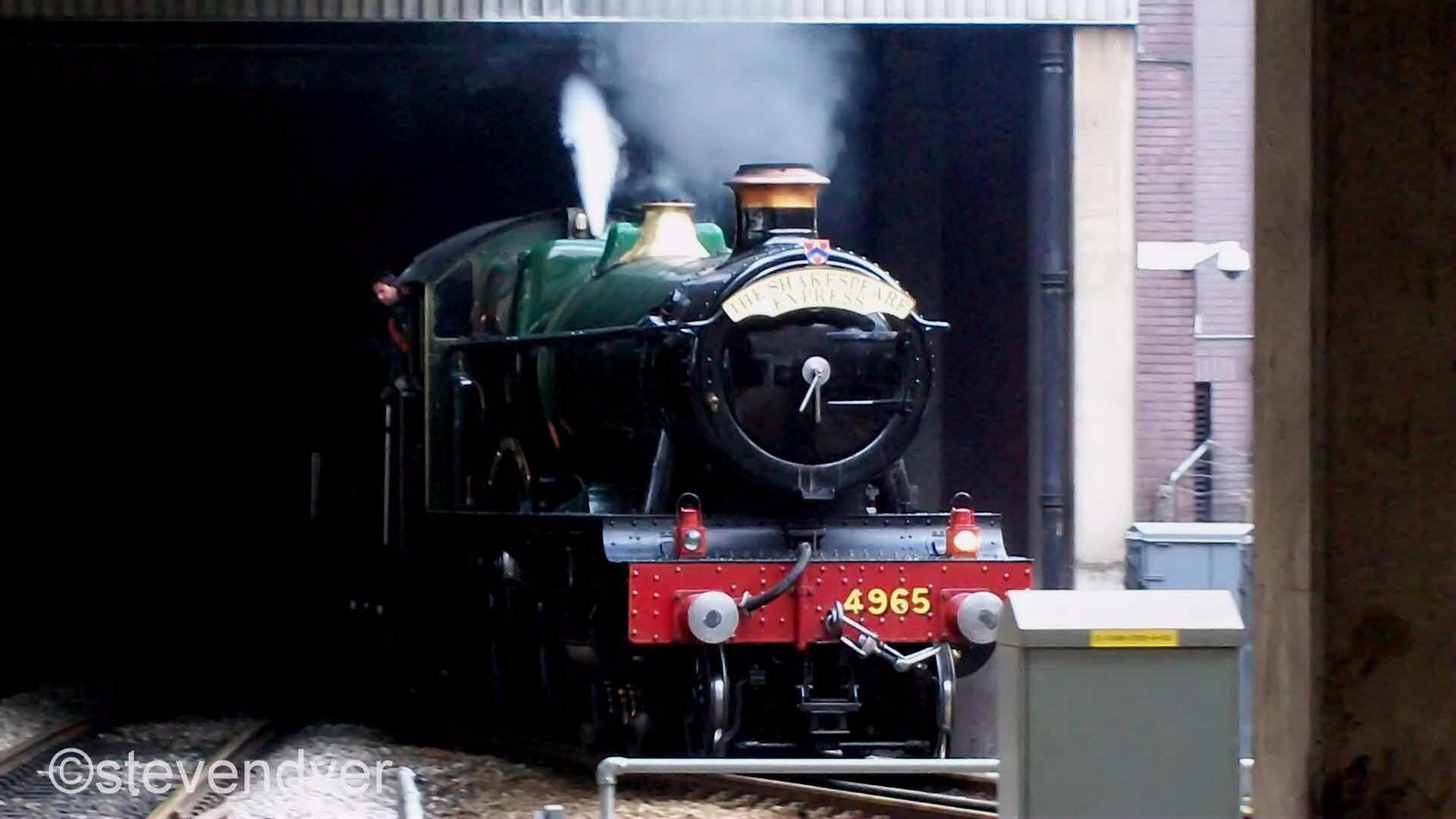
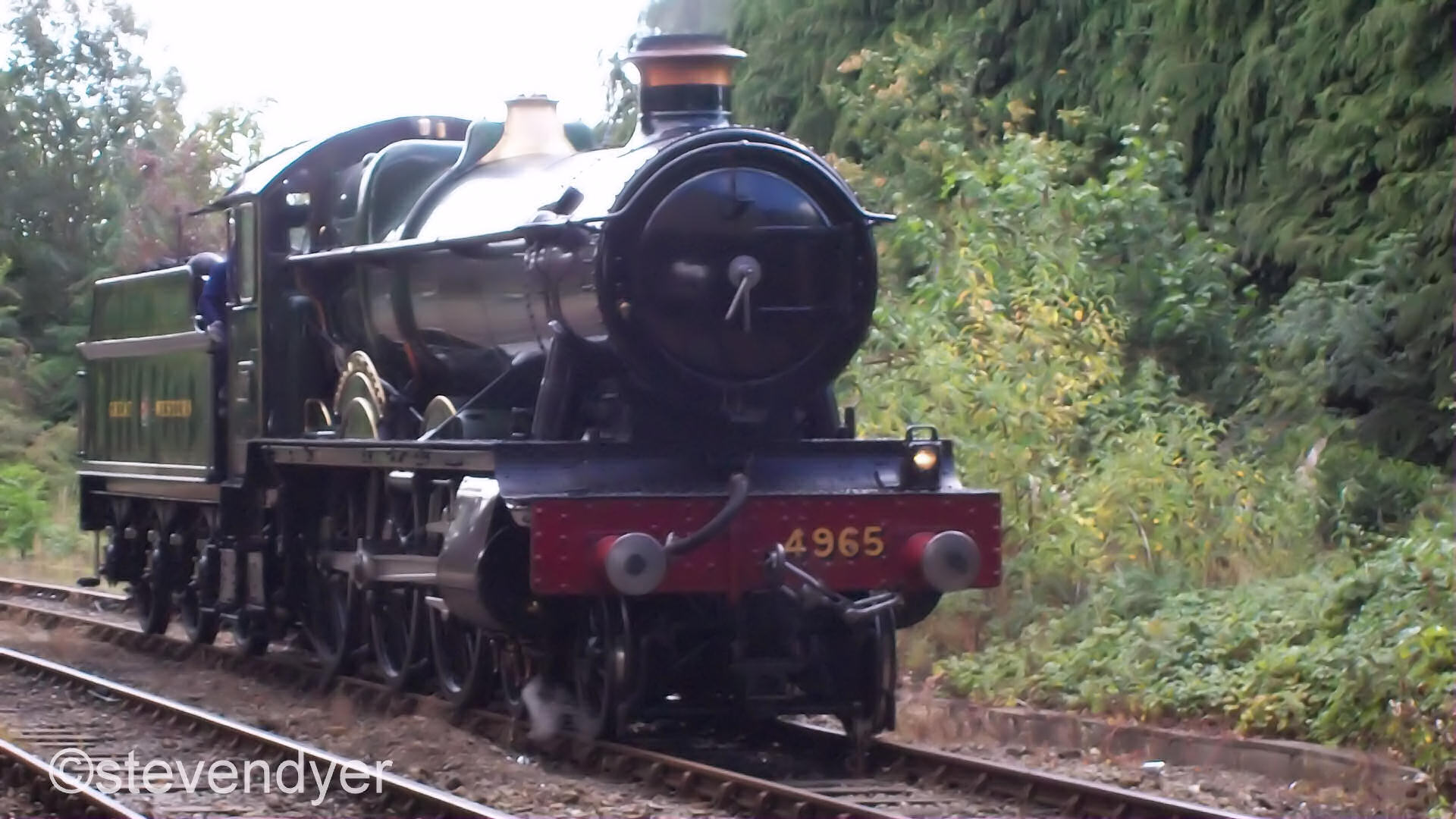
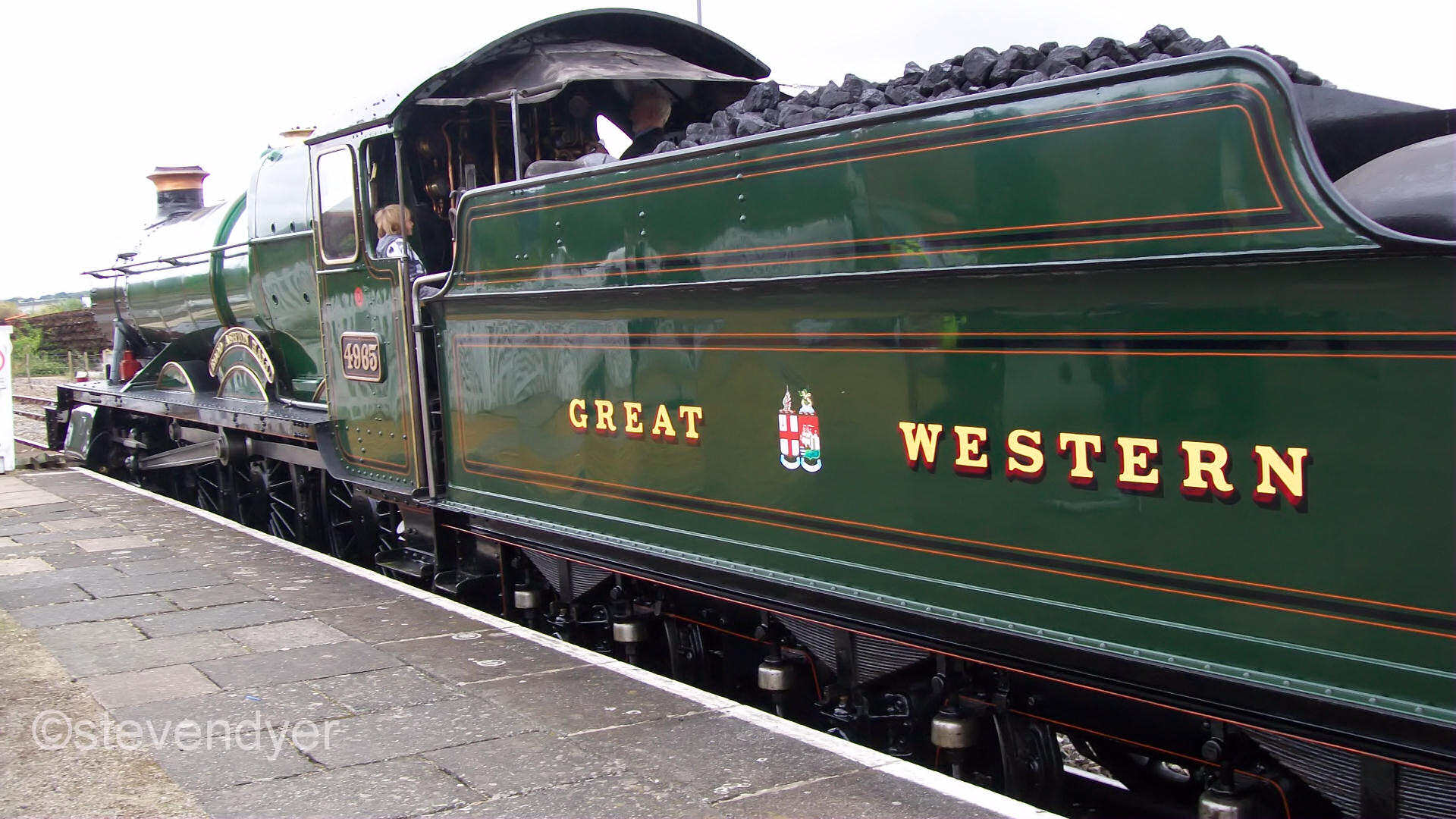
4965 Rood Ashton Hall, confirmed in March 2024 to be undergoing conversion to oil firing during overhaul, becoming the first oil-fired Hall in preservation. Rescued from Barry as the presumed identity of 4983 Albert Hall; its true identity was discovered in 1998.
5972 Olton Hall, built April 1937. Selected by Warner Bros. in 2000 to portray the Hogwarts Express in the Harry Potter film series; carried lined red livery with a 'Hogwarts Railways' crest for filming. Now preserved as part of the Warner Bros. Studio Tour London exhibit.
6958 Oxburgh Hall, the 259th and final original Hall, delivered from Swindon in 1943. After this, deliveries switched to Hawksworth's Modified Hall design.
Allocations and regions
Pre-grouping inheritance (none): the class was a wholly post-grouping GWR design, with no antecedent fleet outside the parent Saint Class.
GWR era (1928–1947): the first batch was sent to the Cornish main line for proving, Penzance, Truro, and Plymouth Laira, and performed so well that further orders were placed before the first lot was even completed. From the early 1930s the class was distributed across almost every main-line GWR depot. Old Oak Common in London, Bristol Bath Road, Cardiff Canton, Newton Abbot, Wolverhampton Stafford Road, Worcester, Tyseley, Shrewsbury, Chester, and Carmarthen all held significant Hall allocations during the GWR period.
British Railways Western Region (1948–1965): the class remained the backbone of mixed-traffic working across the former GWR system. By the late 1950s and early 1960s the surviving members were concentrated at the larger Western Region depots, with Cardiff East Dock, Old Oak Common, Oxley, and Severn Tunnel Junction holding many of the last examples in service before the wholesale withdrawals of 1963–65.
Livery history
GWR (1928–1947): Middle Chrome Green with black and orange lining, polished brass safety valve bonnet, copper-capped chimney, and the GWR roundel or 'Great Western' lettering on the tender. Wartime deliveries from 1942 onwards appeared in unlined plain green and, briefly, in plain black to save resources.
British Railways early period (1948–1956): BR mixed-traffic black with red, cream, and grey lining; early BR lion-and-wheel emblem on the tender. Some examples retained GWR green into the early BR period.
BR later period (1956–1965): BR lined Brunswick green, with the later BR crest. This was the most common livery worn by the class in its final years.
Oil-fired members (1946–1950): retained their running livery but carried 3900-series numbers while in oil-burning condition.
Preservation: most surviving Halls have appeared in GWR Middle Chrome Green or BR lined green at various times. 5972 Olton Hall is unique in carrying the non-prototypical lined red 'Hogwarts Railways' livery applied for filming.
Preservation status
Eleven of the 259 original Halls were saved, all from Woodham Brothers' scrapyard at Barry in South Wales. None was reserved for the National Collection. Ten of the eleven remain as Halls. The eleventh, 4942 Maindy Hall, no longer exists as a Hall: its frames and boiler were rebuilt into the Saint Class 2999 Lady of Legend, completed in 2019, so this site counts it once, under the Saints. The eleven are:
- 4920 Dumbleton Hall, South Devon Railway. Last original Hall in BR service; withdrawn December 1965.
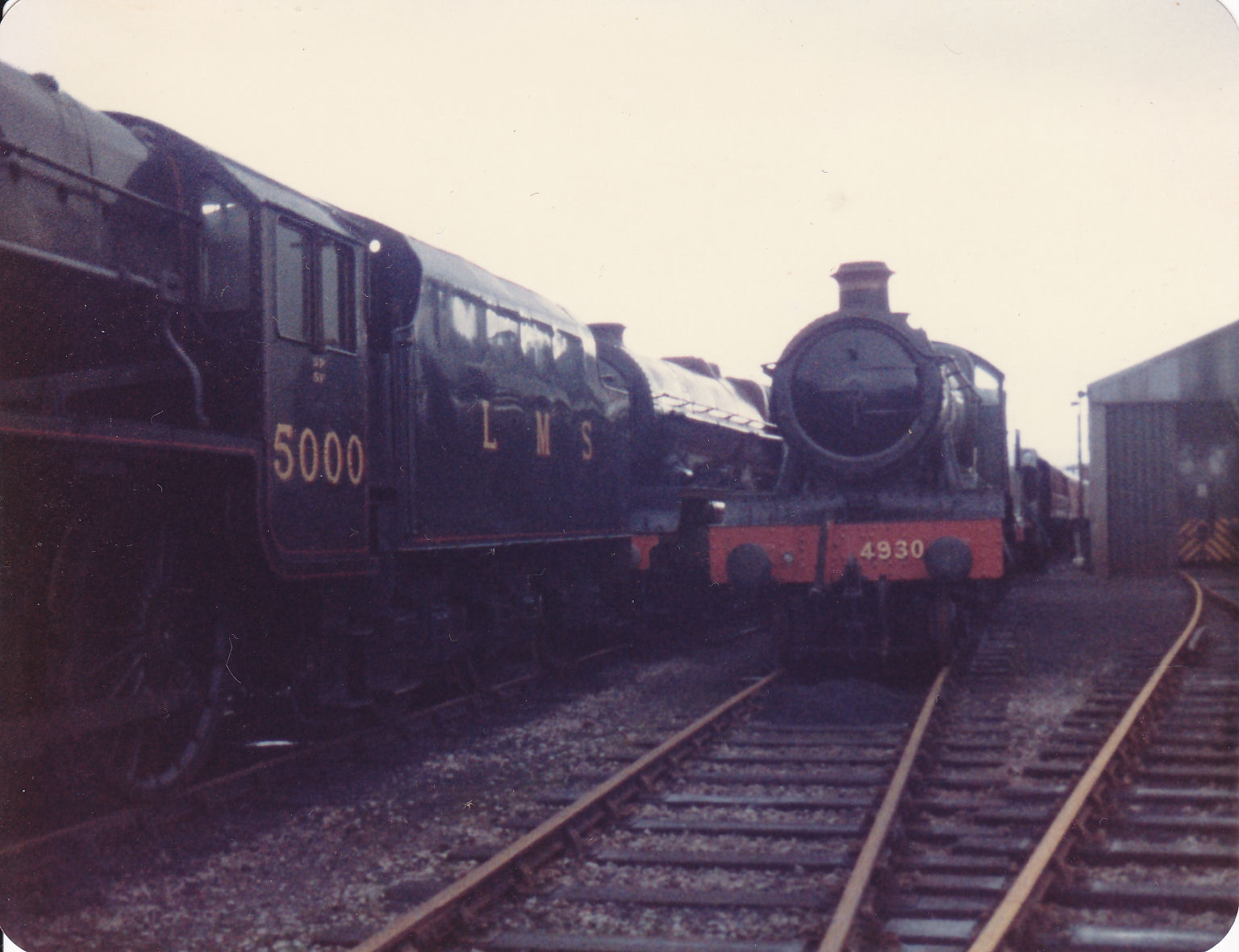
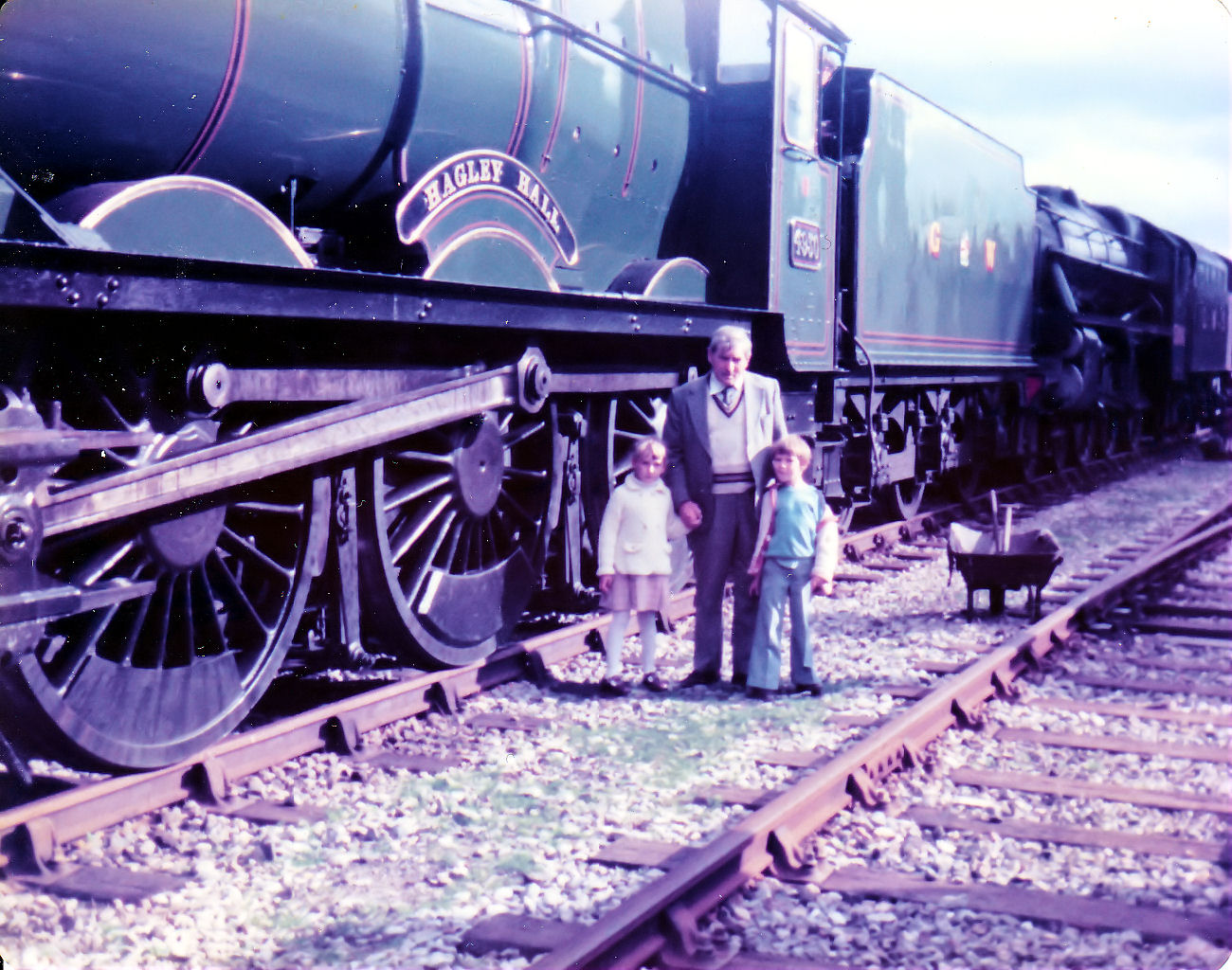
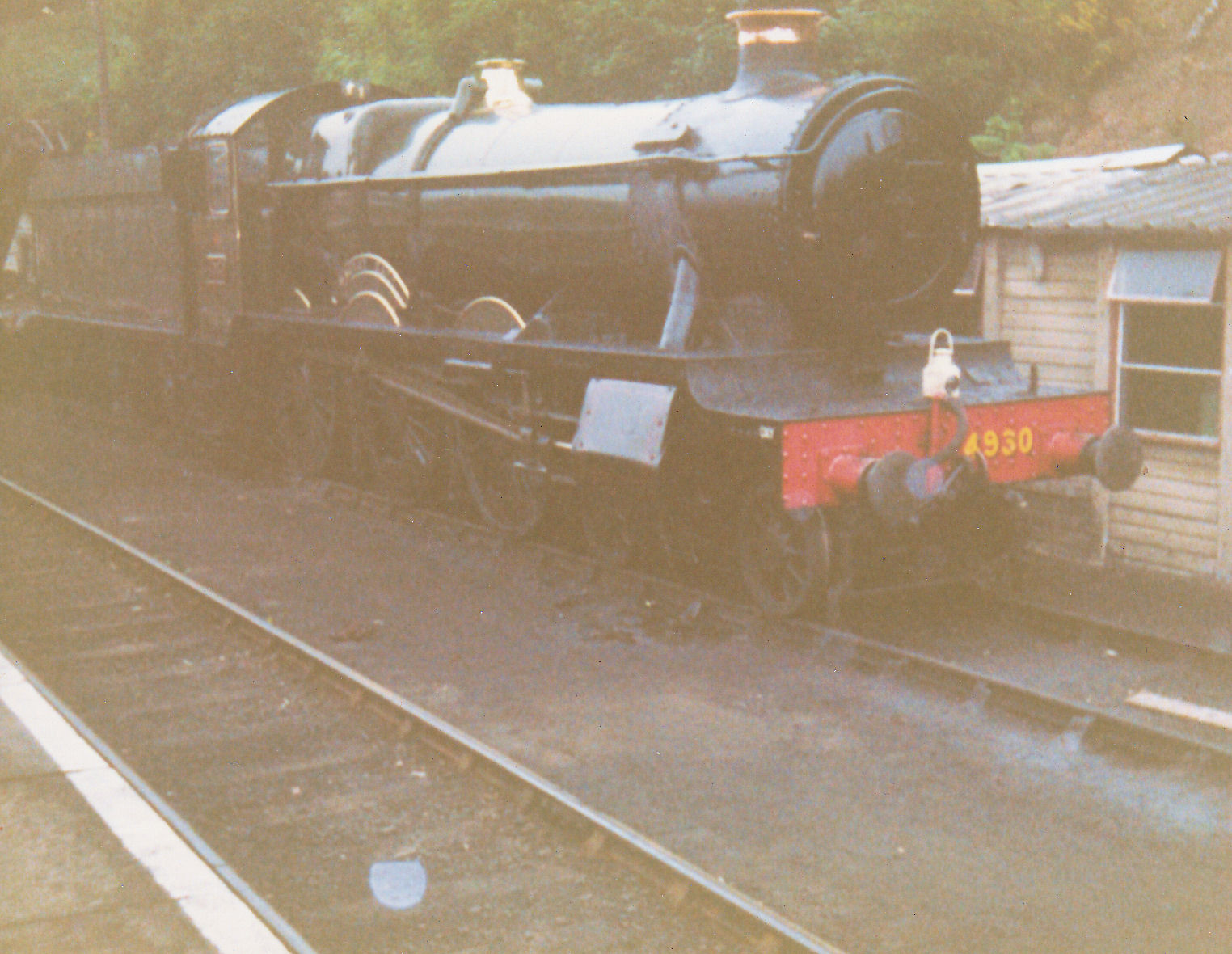
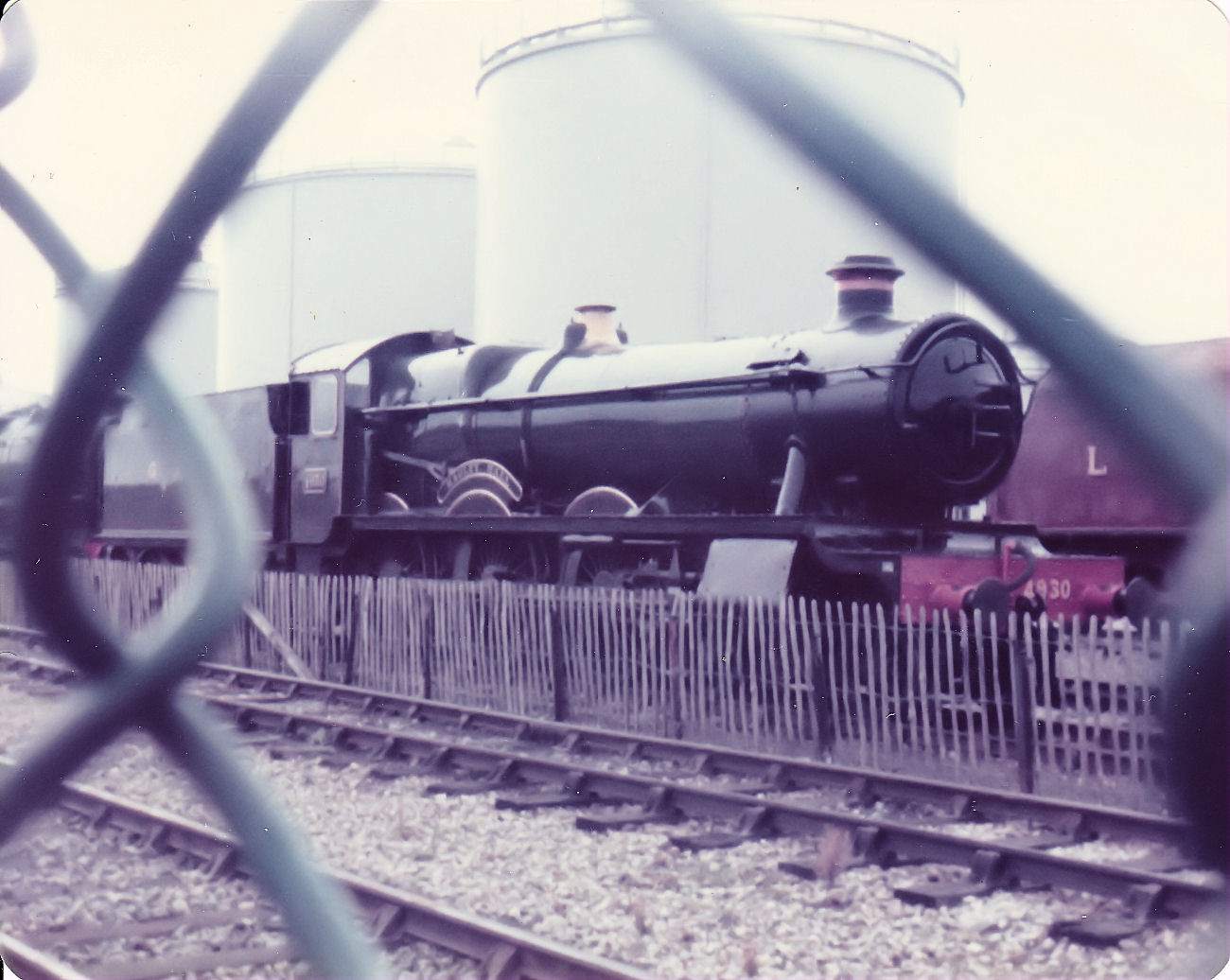
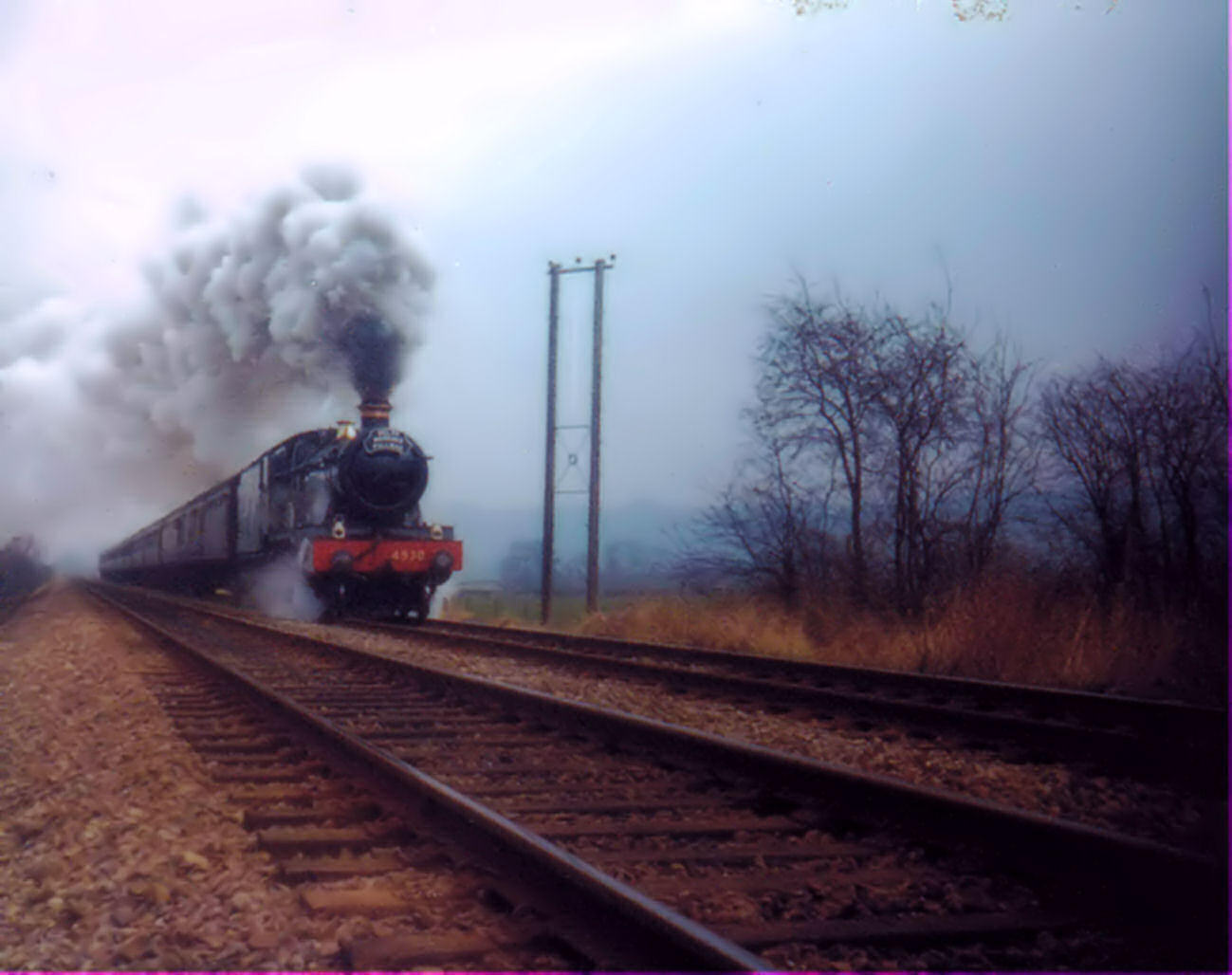
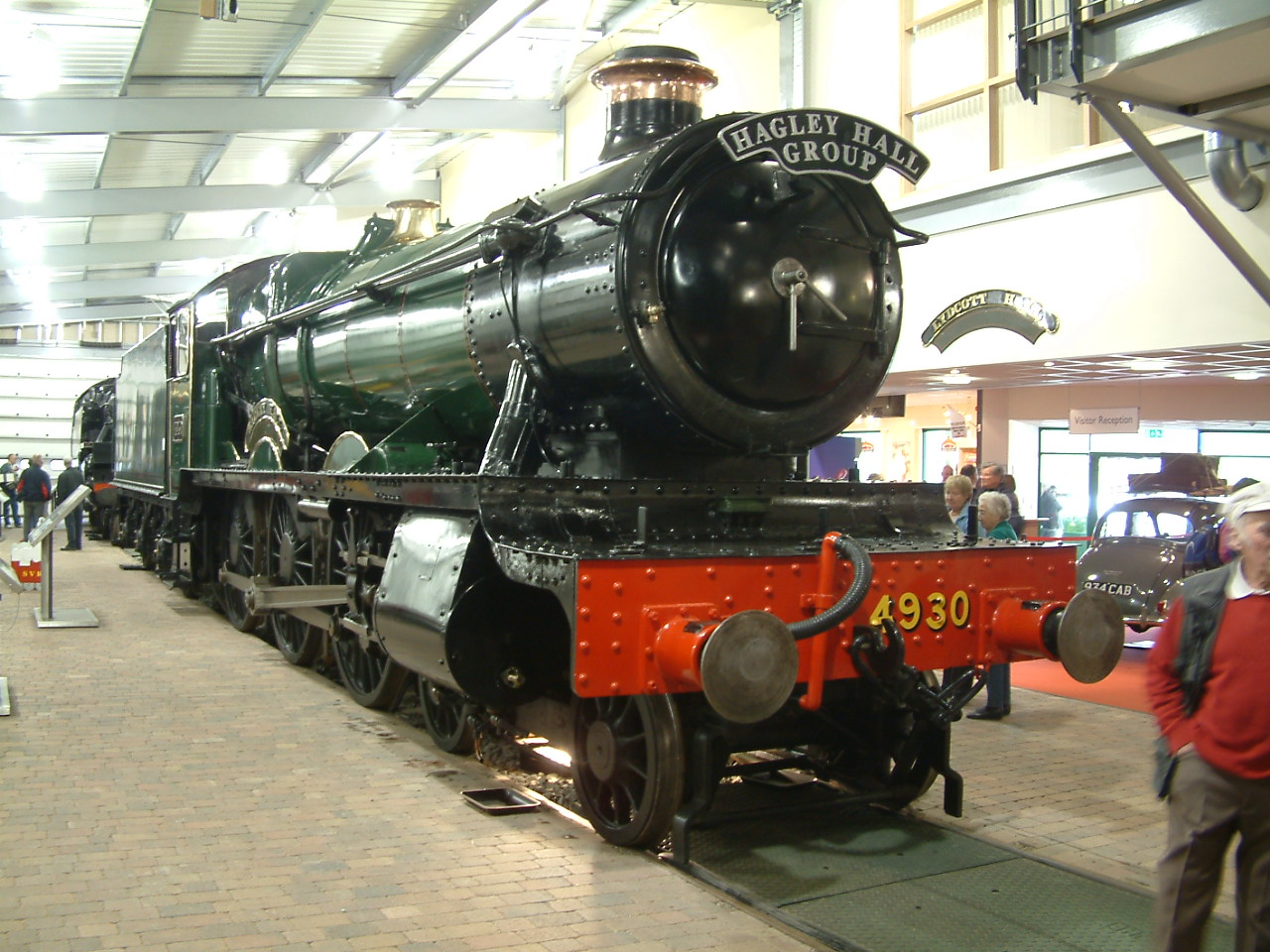
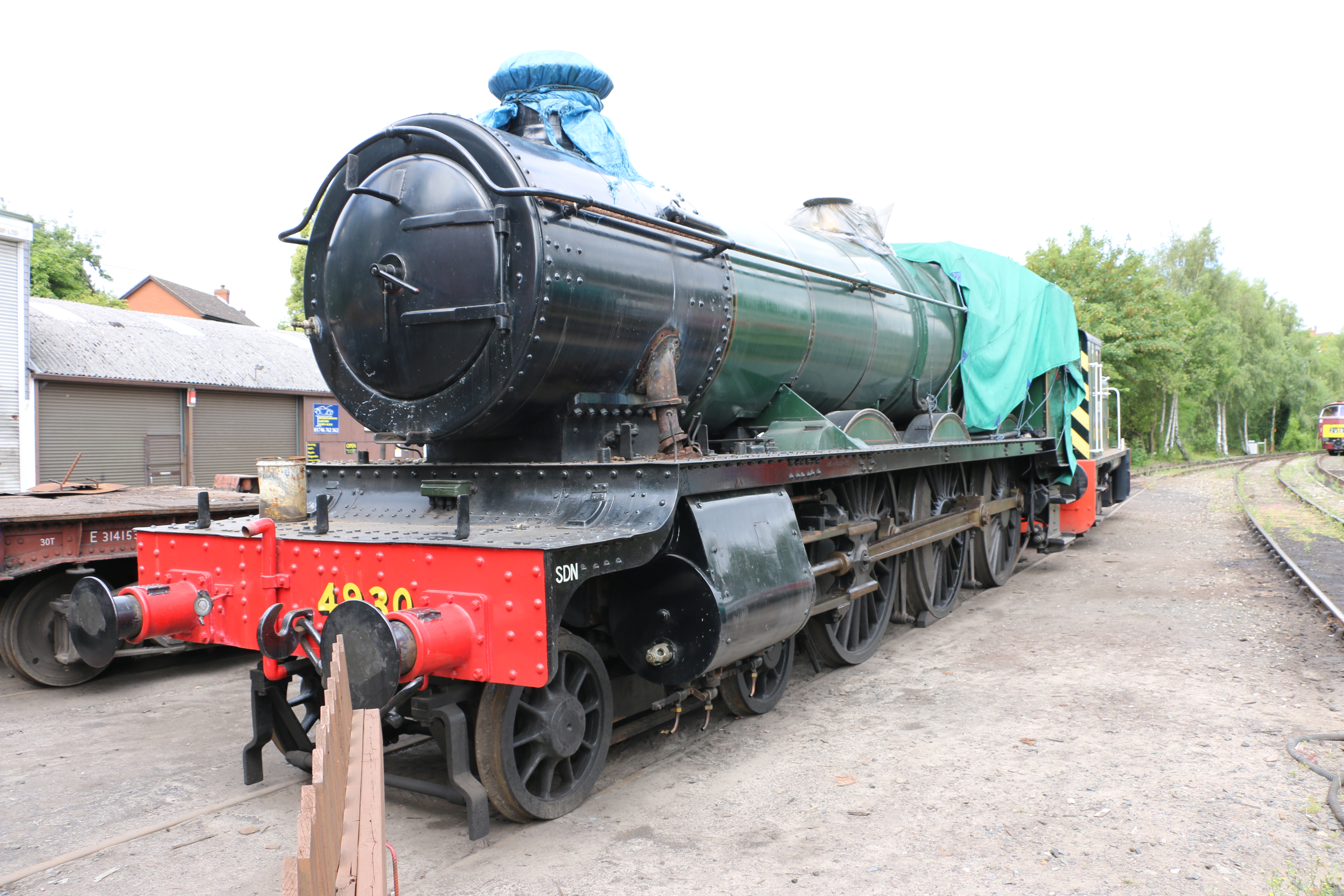
- 4930 Hagley Hall, Severn Valley Railway. Currently undergoing overhaul to mainline standard, funded by the Friends of Locomotive 4930.
- 4936 Kinlet Hall, Tyseley Locomotive Works. Under overhaul to mainline standard.
- 4942 Maindy Hall, Didcot Railway Centre. Rebuilt into the Saint Class 2999 Lady of Legend, completed in 2019, using this locomotive’s frames and boiler — in effect reversing Collett’s 1924 conversion of Saint 2925 Saint Martin into 4900 Saint Martin, the first Hall. It is counted on this site under the Saint Class, not here.
- 4953 Pitchford Hall, Epping Ongar Railway. Boiler ticket expired; awaiting overhaul.
- 4965 Rood Ashton Hall, Tyseley Locomotive Works. Under overhaul, with conversion to oil firing confirmed in March 2024, the first oil-fired Hall in preservation.
- 4979 Wootton Hall, Ribble Steam Railway. Long-term restoration in progress.
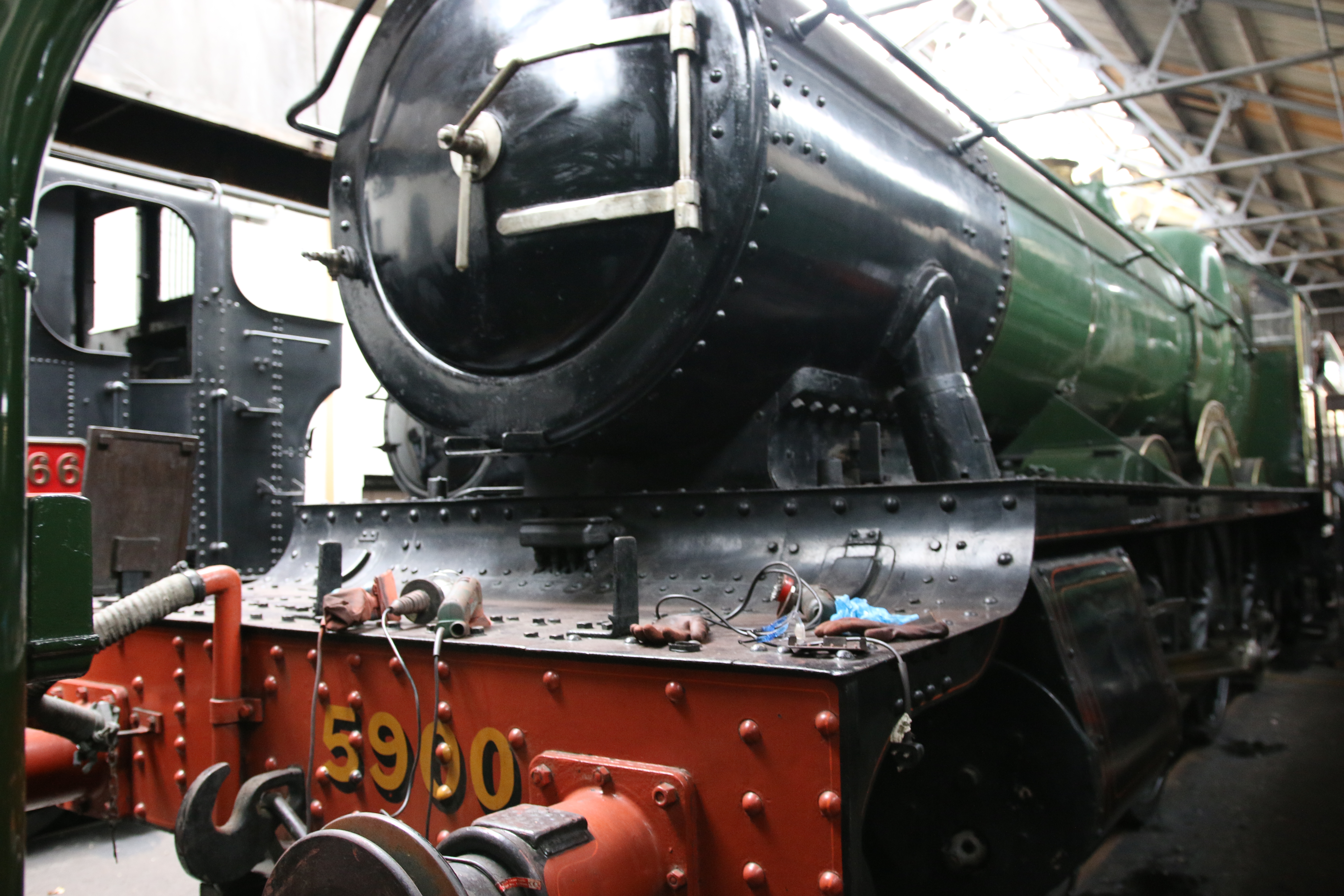
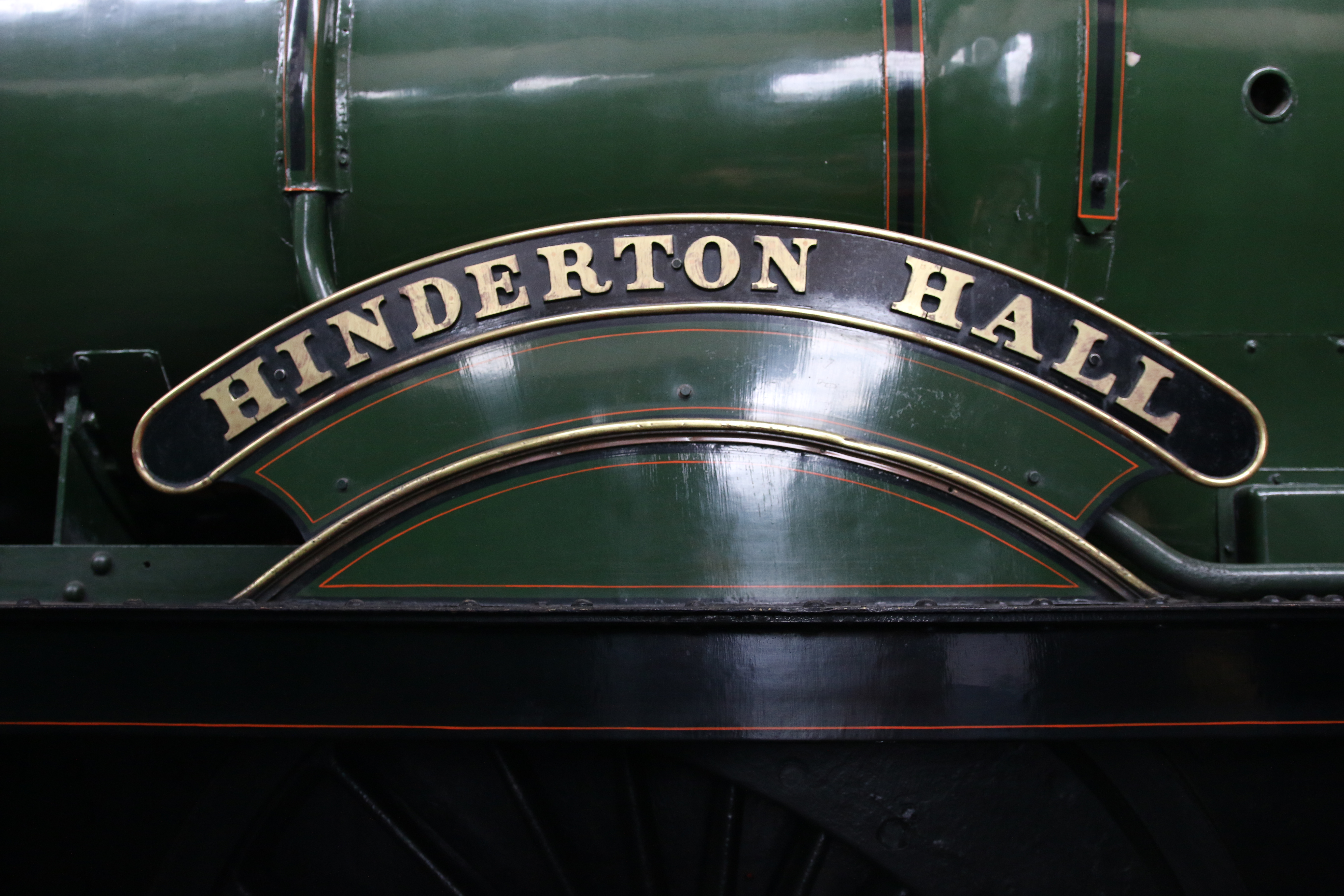
- 5900 Hinderton Hall, Didcot Railway Centre. Static display; took part in the GWR 150 celebrations in 1985.
- 5952 Cogan Hall, Tyseley Locomotive Works. Cosmetic restoration; some parts being used in the construction of new-build 6880 Betton Grange.
- 5967 Bickmarsh Hall, Northampton & Lamport Railway. Under restoration.
- 5972 Olton Hall, Warner Bros. Studio Tour London. Famous as the Hogwarts Express in the Harry Potter films.
Several preserved Halls have run on the national network in recent decades, hauling charter trains in mainline-certified condition. The preservation movement has therefore kept the class working in something close to its original mixed-traffic role.
Photographs