BR Standard Class 5MT
The BR Standard Class 5MT was British Railways' standard mixed-traffic 4-6-0, the BR-era successor to the LMS Black Five and GWR Hall families. R. A. Riddles' BR design team produced the two-cylinder 4-6-0 in 1950–1951 as part of the BR Standard programme. One hundred and seventy-two engines were built at Derby and Doncaster between 1951 and 1957.
The design used the standard BR Standard engineering principles, two outside cylinders with Walschaerts valve gear, accessible high-set running plate, BR-pattern cab. The 5 ft 9 in maximum diameter Type 5 boiler at 225 psi, 18½ × 28 in cylinders, and 6 ft 2 in driving wheels gave the class similar performance to the Black Five but with substantially better cab ergonomics, accessibility, and standardised parts. The class was deliberately the BR Standard's answer to the universal mixed-traffic role that the Black Five and Hall had filled.
The first engine, No. 73000, was completed at Derby Works in April 1951, only three months after the first Britannia. Production continued at Derby and Doncaster through to 1957. From 1955 a sub-series of 30 engines (Nos 73125–73154) was built with Caprotti rotary valve gear as an experimental alternative to the standard Walschaerts. The Caprotti engines proved technically successful, they gave better steam economy than the Walschaerts engines, but the more complex maintenance balance favoured the Walschaerts standard for the rest of production.
The Southern Region took ten engines (73080–73089) named after withdrawn King Arthur engines, Merlin, Joyous Gard, Camelot, Excalibur, and others. The naming was a Southern tradition continued into BR Standard practice and gave these engines distinctive identity. The rest of the class was unnamed.
The 5MTs became the universal BR mixed-traffic engine of the late 1950s and 1960s. The class worked semi-fast and stopping passenger trains, suburban services, holiday excursions, fast freights, parcels, mail, and almost every other kind of mixed-traffic work across all BR regions. The Modernisation Plan of 1955 had already announced the withdrawal of British steam in the medium term, and the BR Standard 5MTs, among the youngest BR Standards, were paradoxically among the first to be displaced. By 1965 many 5MTs had been withdrawn after only 8–14 years in service. The class continued in service in Lancashire and Scotland through to August 1968.
Six BR Standard 5MTs are preserved: 73050 City of Peterborough (Nene Valley Railway, main-line registered), 73082 Camelot (Bluebell Railway, working order), 73096 (Mid-Hants Railway, working order), 73129 (the only preserved Caprotti example, Midland Railway Centre at Butterley), 73156 (Great Central Railway), plus others. The 3.5% preservation rate is modest but the preserved population includes one Caprotti example important for documenting that experimental sub-series.
Design and development
By 1948 the new British Railways had inherited a substantial fleet of mixed-traffic 4-6-0s from the four pre-Grouping railways, particularly the LMS Black Five (the largest single mixed-traffic class) and the GWR Hall family. R. A. Riddles' BR Standard programme aimed to provide a coordinated successor design, drawing on Black Five and Hall experience and incorporating the BR Standard accessibility principles.
The BR Standard 5MT design was the result. The 5 ft 9 in maximum diameter Type 5 boiler at 225 psi, 18½ × 28 in cylinders, and 6 ft 2 in driving wheels gave the class similar performance to the Black Five but with substantially better cab ergonomics, accessibility, and standardised parts. The two-cylinder layout was deliberate, chosen for ease of maintenance over the more complex layouts of pre-war designs.
The first engine, No. 73000, was completed at Derby Works in April 1951, only three months after the first Britannia. Production continued at Derby and Doncaster through to 1957, with 172 engines completed. From 1955 a sub-series of 30 engines (Nos 73125–73154) was built with Caprotti rotary valve gear as an experimental alternative to the standard Walschaerts gear. The Caprotti engines proved technically successful, they gave better steam economy than the Walschaerts engines, but the more complex maintenance balance favoured the Walschaerts standard for the rest of the production run.
The Southern Region took ten engines (73080–73089) named after withdrawn King Arthur engines, Merlin, Joyous Gard, Camelot, Excalibur, and others. The naming was a Southern tradition continued into BR Standard practice and gave these engines distinctive identity.
Service and withdrawals
The BR Standard 5MTs were the universal BR mixed-traffic engine of the late 1950s and 1960s. The class worked semi-fast and stopping passenger trains, suburban services, holiday excursions, fast freights, parcels, mail, and almost every other kind of mixed-traffic work across all BR regions.
The Modernisation Plan of 1955 had already announced the withdrawal of British steam in the medium term. The BR Standard 5MTs, among the youngest BR Standards, were paradoxically among the first to be displaced. By 1965 many 5MTs had been withdrawn after only 8–14 years in service. The class continued in service in Lancashire and Scotland through to August 1968, the very last weeks of BR main-line steam.
Identification features
The cleanest BR Standard mixed-traffic outline. The high-set running plate (a BR Standard signature), exposed boiler bands, single chimney (most engines) or double chimney (some engines from the late 1950s), and outside Walschaerts valve gear with all moving parts visible. The 30 Caprotti-fitted engines (Nos 73125–73154) had Caprotti rotary valve gear instead of Walschaerts, visually distinguishable by the absence of the conventional Walschaerts external linkage and the Caprotti-pattern rotating valve covers on the cylinder ends. The class was unnamed in BR service except for some Southern Region engines (73080–73089) which were given Arthurian names from withdrawn King Arthur Class engines, for example 73080 was named "Merlin", 73088 "Joyous Gard". The naming was a Southern tradition continued into BR Standard practice.
Numbers and names
73000–73171
- 73000
- 73001
- 73002
- 73003
- 73004
- 73005
- 73006
- 73007
- 73008
- 73009
- 73010
- 73011
- 73012
- 73013
- 73014
- 73015
- 73016
- 73017
- 73018
- 73019
- 73020
- 73021
- 73022
- 73023
- 73024
- 73025
- 73026
- 73027
- 73028
- 73029
- 73030
- 73031
- 73032
- 73033
- 73034
- 73035
- 73036
- 73037
- 73038
- 73039
- 73040
- 73041
- 73042
- 73043
- 73044
- 73045
- 73046
- 73047
- 73048
- 73049
- 73050
- 73051
- 73052
- 73053
- 73054
- 73055
- 73056
- 73057
- 73058
- 73059
- 73060
- 73061
- 73062
- 73063
- 73064
- 73065
- 73066
- 73067
- 73068
- 73069
- 73070
- 73071
- 73072
- 73073
- 73074
- 73075
- 73076
- 73077
- 73078
- 73079
- 73080
- 73081
- 73082
- 73083
- 73084
- 73085
- 73086
- 73087
- 73088
- 73089
- 73090
- 73091
- 73092
- 73093
- 73094
- 73095
- 73096
- 73097
- 73098
- 73099
- 73100
- 73101
- 73102
- 73103
- 73104
- 73105
- 73106
- 73107
- 73108
- 73109
- 73110
- 73111
- 73112
- 73113
- 73114
- 73115
- 73116
- 73117
- 73118
- 73119
- 73120
- 73121
- 73122
- 73123
- 73124
- 73125
- 73126
- 73127
- 73128
- 73129
- 73130
- 73131
- 73132
- 73133
- 73134
- 73135
- 73136
- 73137
- 73138
- 73139
- 73140
- 73141
- 73142
- 73143
- 73144
- 73145
- 73146
- 73147
- 73148
- 73149
- 73150
- 73151
- 73152
- 73153
- 73154
- 73155
- 73156
- 73157
- 73158
- 73159
- 73160
- 73161
- 73162
- 73163
- 73164
- 73165
- 73166
- 73167
- 73168
- 73169
- 73170
- 73171
BR Nos 73000–73171. Built at Derby Works (the principal contributor) and Doncaster Works.
Notable locomotives
73000, the class prototype, completed at Derby Works in April 1951. Withdrawn from BR April 1968, the same month that the last BR Standard 4MTs were withdrawn. Broken up.
73050 City of Peterborough, completed at Derby in January 1955. Withdrawn 1968 and privately preserved. Currently main-line registered with the Nene Valley Railway, which honoured the engine's original name despite the original 73050 being unnamed in BR service.
73080 Merlin, completed at Derby in October 1955 as one of the ten Southern Region engines named after withdrawn King Arthurs. Withdrawn 1965 and broken up.
73082 Camelot, preserved at the Bluebell Railway, currently working order.
73096, preserved at the Mid-Hants Railway in working order.
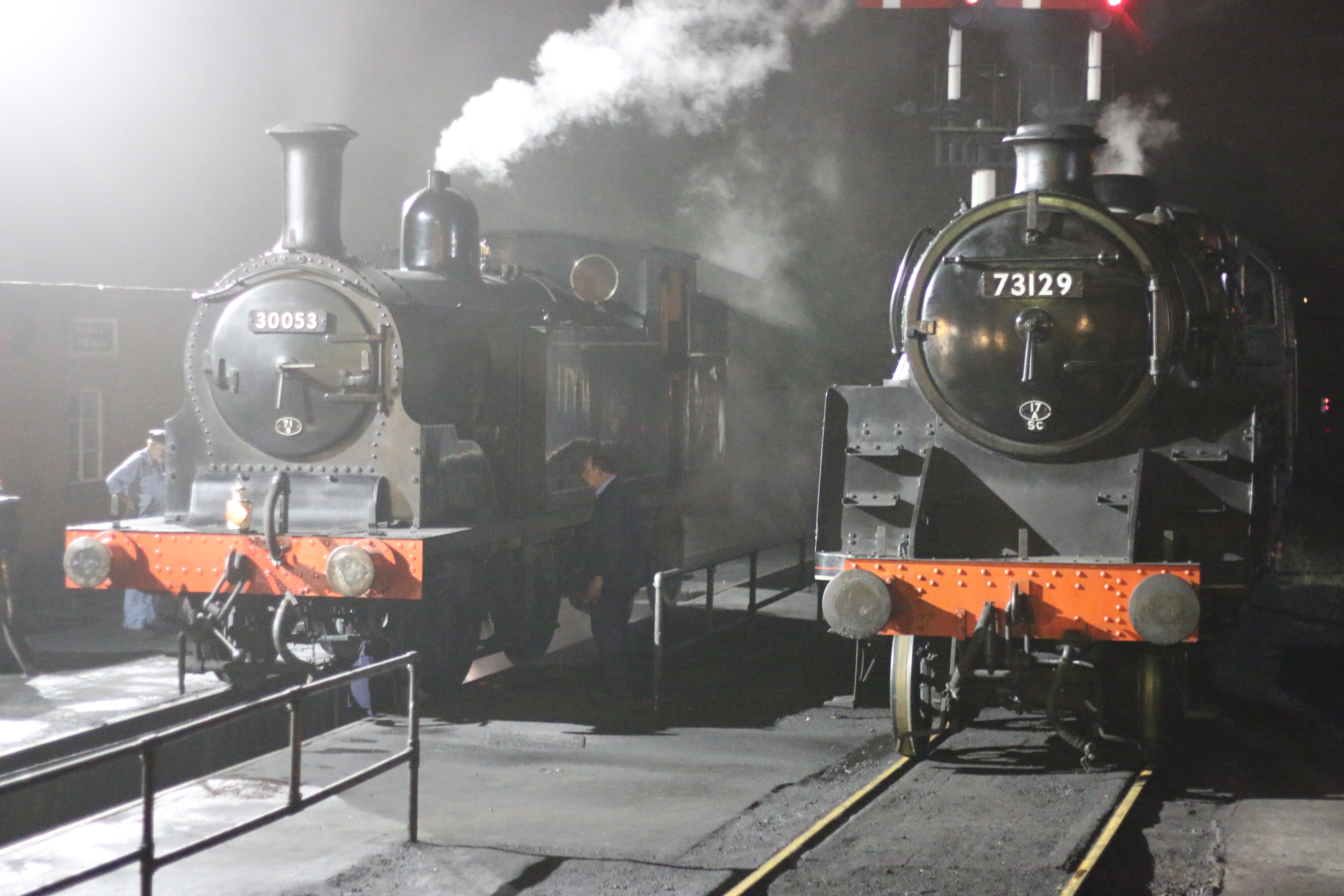
73129, one of the 30 Caprotti-fitted engines, the only Caprotti example preserved. Currently at the Midland Railway Centre, Butterley. The only preserved Caprotti example of the class.
73156, preserved at the Great Central Railway.
Allocations and regions
BR introduction (1951–1957): the class was distributed across all BR regions. Major allocations included the LMR (Camden, Crewe North, Edge Hill, Carlisle Kingmoor, Polmadie); the Eastern Region (Stratford, March, Doncaster); the Western Region (Newton Abbot, Tyseley); the Southern Region (Stewarts Lane, Salisbury, Bricklayers Arms); and the Scottish Region (Polmadie, Perth, Inverness).
Southern Region (1955–1965): the Southern Region used 73080–73089 named after withdrawn King Arthur engines for the Atlantic Coast Express feeder services and the Bournemouth secondary expresses. These engines were the BR Standard direct successors to the King Arthurs.
Final years (1964–1968): from the mid-1960s the class progressively concentrated at Carlisle Kingmoor, Stockport Edgeley, and Carnforth as steam was withdrawn from other regions. The last BR Standard 5MT in BR service, 73069, was withdrawn from Carnforth in May 1968, among the very last BR steam classes in service.
Livery history
British Railways Brunswick green (1951–1968): the class was outshopped in BR-standard lined Brunswick green from new, the standard BR mixed-traffic livery from 1949. Initial engines carried the early lion-and-wheel emblem; from 1956 the late BR crest progressively replaced the lion-and-wheel. This was the only livery the class wore in BR service.
Preservation: preserved BR Standard 5MTs have appeared in BR Brunswick green with both the early lion-and-wheel emblem and the late BR crest. 73082 Camelot has appeared in BR-original livery; 73050 City of Peterborough has appeared in similar form. The Caprotti example 73129 has been preserved with its distinctive valve-gear arrangement on display.
Preservation status
Five BR Standard Class 5MTs survive: 73050 City of Peterborough on the Nene Valley Railway, 73082 Camelot at the Bluebell Railway, 73096 on the Mid-Hants Railway, 73129 at the Midland Railway Centre and 73156 at the Great Central Railway. 73050 was bought directly from British Railways; the other four came out of Woodham Brothers at Barry.
Photographs