GWR 2900 Saint Class
The GWR 2900 Saint Class is the foundational British two-cylinder express 4-6-0, the engineering ancestor of an entire family of GWR designs and a major influence on subsequent British steam development. George Jackson Churchward designed the class in 1902 and 77 engines were built at Swindon Works between 1902 and 1913.
Churchward's 1902 design drew heavily on contemporary American practice. The Belpaire firebox, the taper boiler (the GWR Standard No. 1, the foundation of an entire generation of GWR boilers), the long-stroke cylinder (30 in, a Churchward signature), and the relatively conservative two-cylinder 4-6-0 layout were all American-influenced choices, though refined by Swindon engineering. The 225 psi boiler pressure and 6 ft 8½ in driving wheels gave the class express performance.
The class's engineering legacy is enormous. The Belpaire firebox became the GWR standard and influenced subsequent practice across all four major railways. The Standard No. 1 taper boiler family served, with modifications, into the 1960s on classes from the Castle and King through to the Modified Hall. The two-cylinder express 4-6-0 layout became the British standard general-traffic configuration that subsequently dominated the LMS Black Five, the BR Standard Class 5MT, and many other classes.
The first engine, No. 100 (later named "William Dean"), was completed at Swindon in February 1902. Various early prototypes followed in different configurations, including the unusual No. 171 "Albion" originally built as a 4-4-2 and later converted to 4-6-0. Production proper began in 1905 and continued in batches through 1913. The Saints were the GWR's heaviest express engines from 1902 to 1907, when the Star Class four-cylinder development took over the heaviest duties. Saints continued as the principal GWR express engine on lighter expresses through the 1920s and 1930s.
The class is named after Christian saints, the brief was English saints initially, with later names extending to continental and Welsh saints. The "Saint" name and brass nameplates carrying the saint's name on the boiler band gave the class lasting public visibility. From 1928 onwards Charles Collett's Hall Class, a direct two-cylinder 4-6-0 development of the Saint with 6 ft driving wheels for mixed traffic, progressively took over GWR general service. Withdrawals of the Saint Class began in earnest from the late 1930s. The last Saint in BR service, 2920 "Saint David", was withdrawn from Old Oak Common in October 1953.
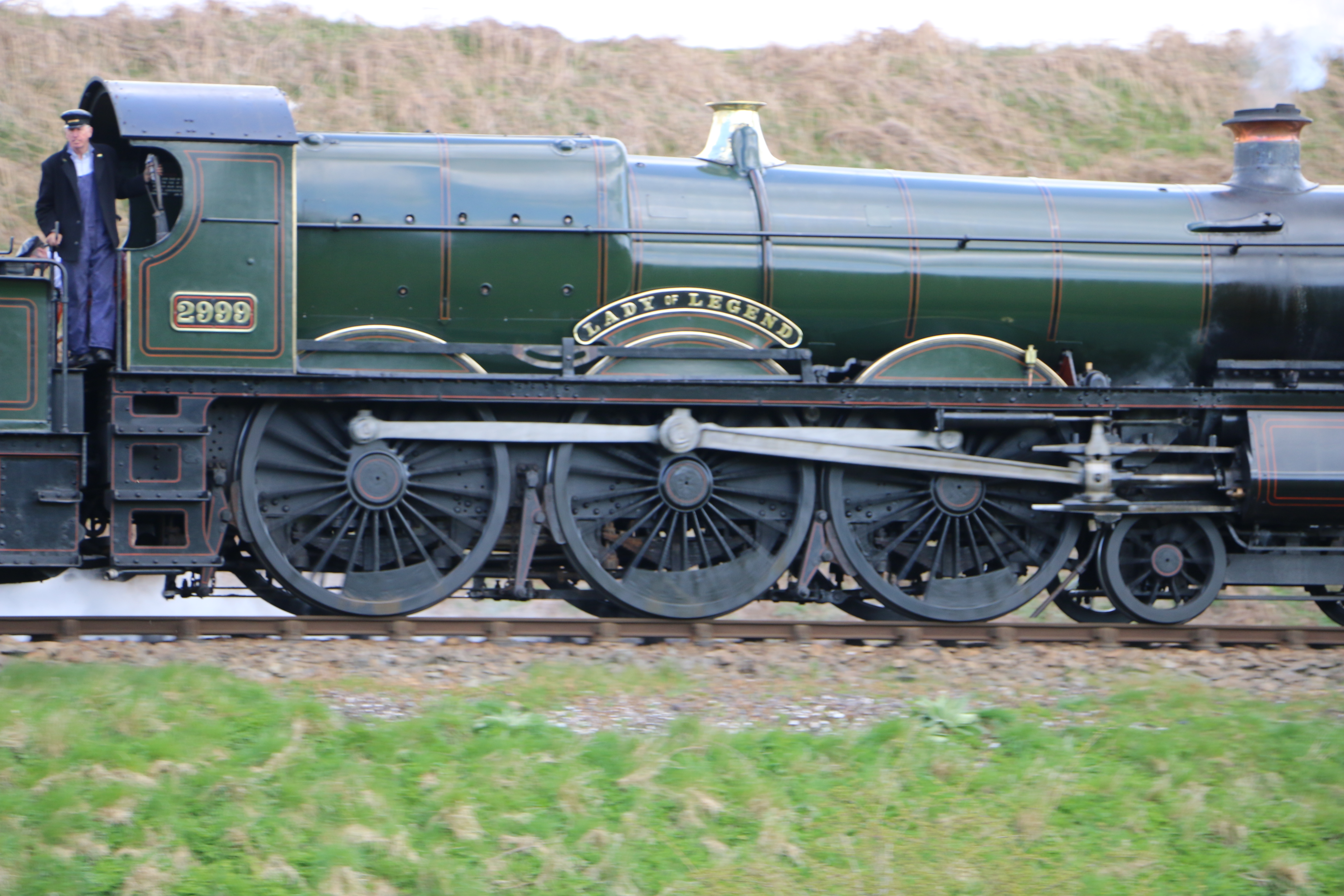
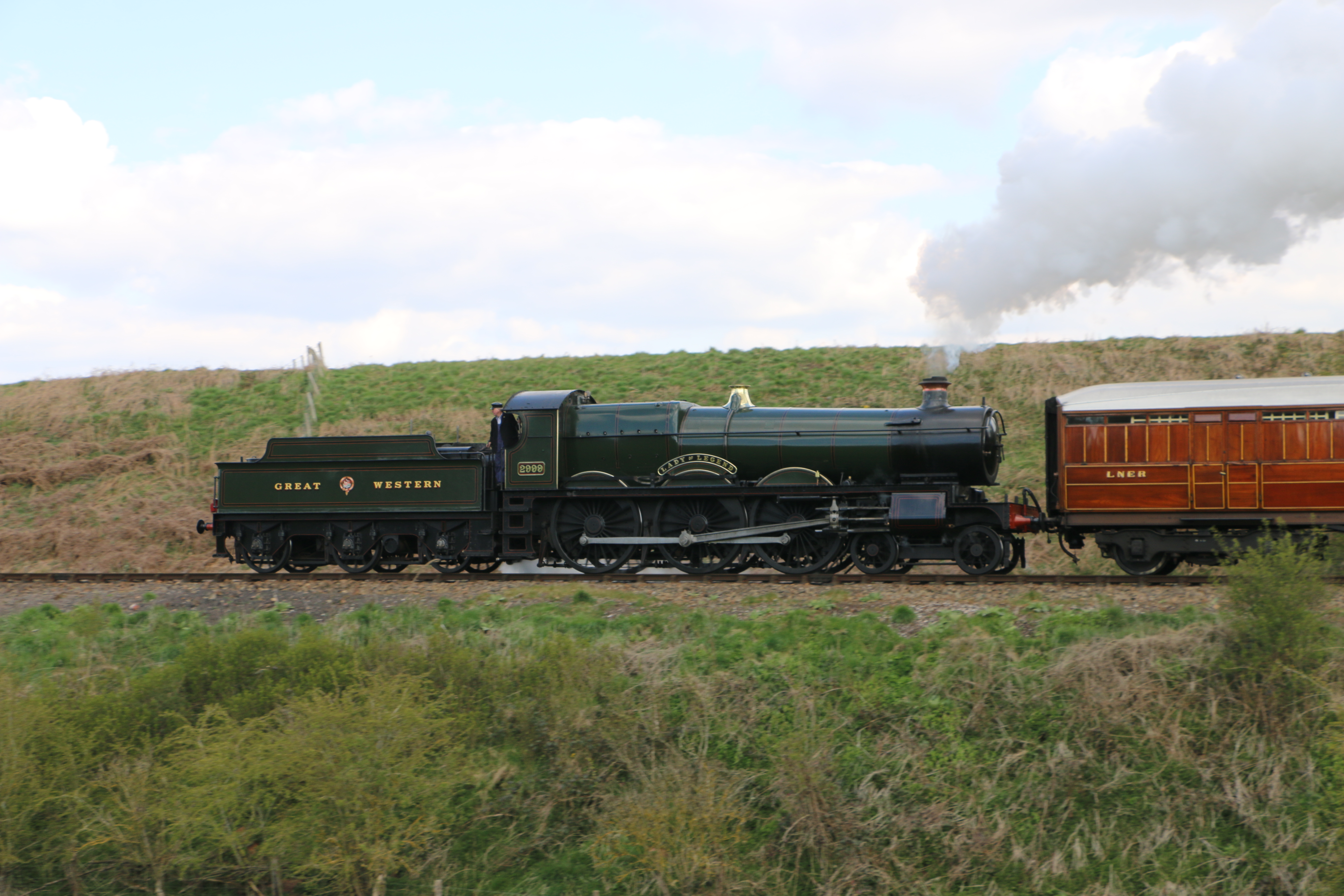
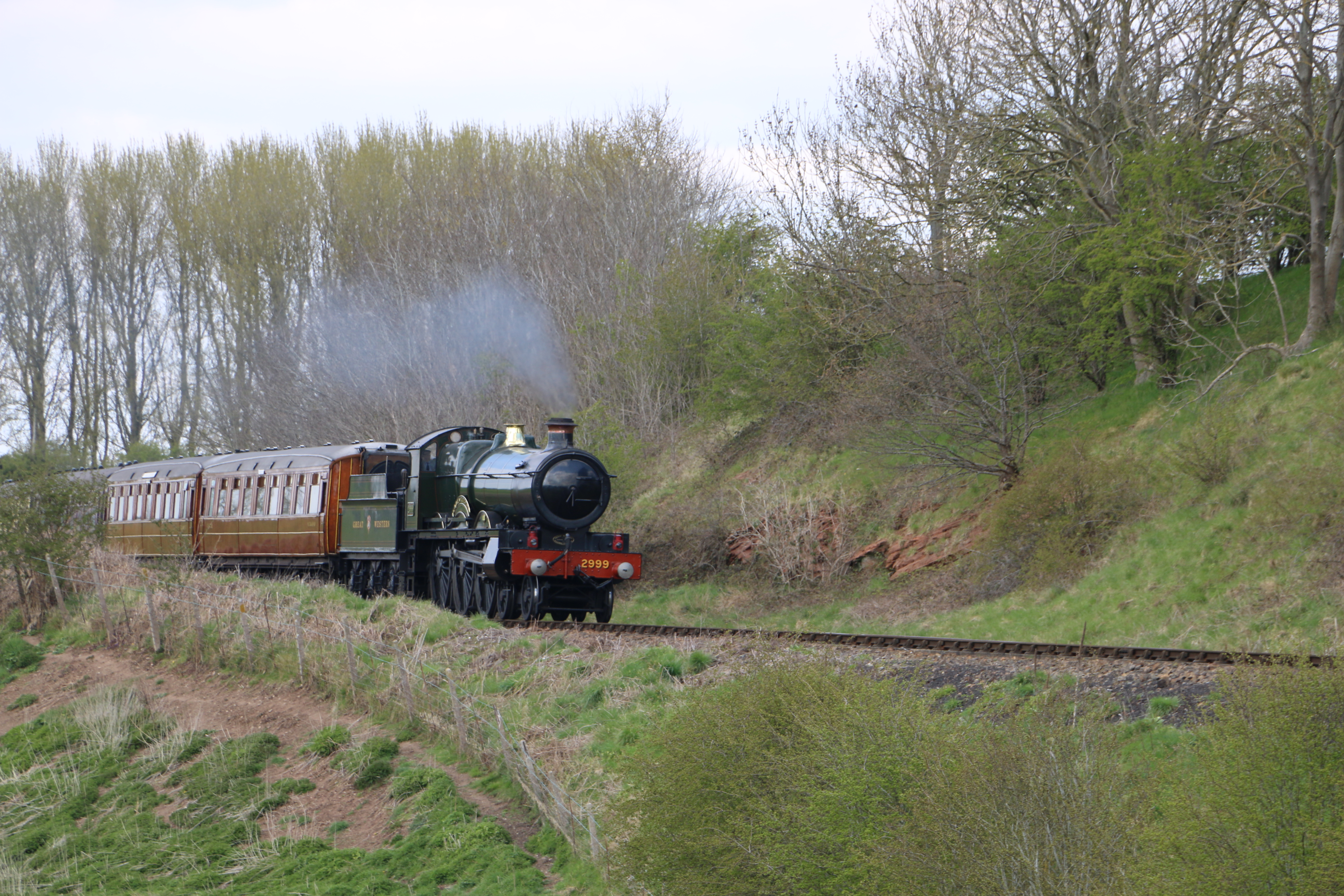
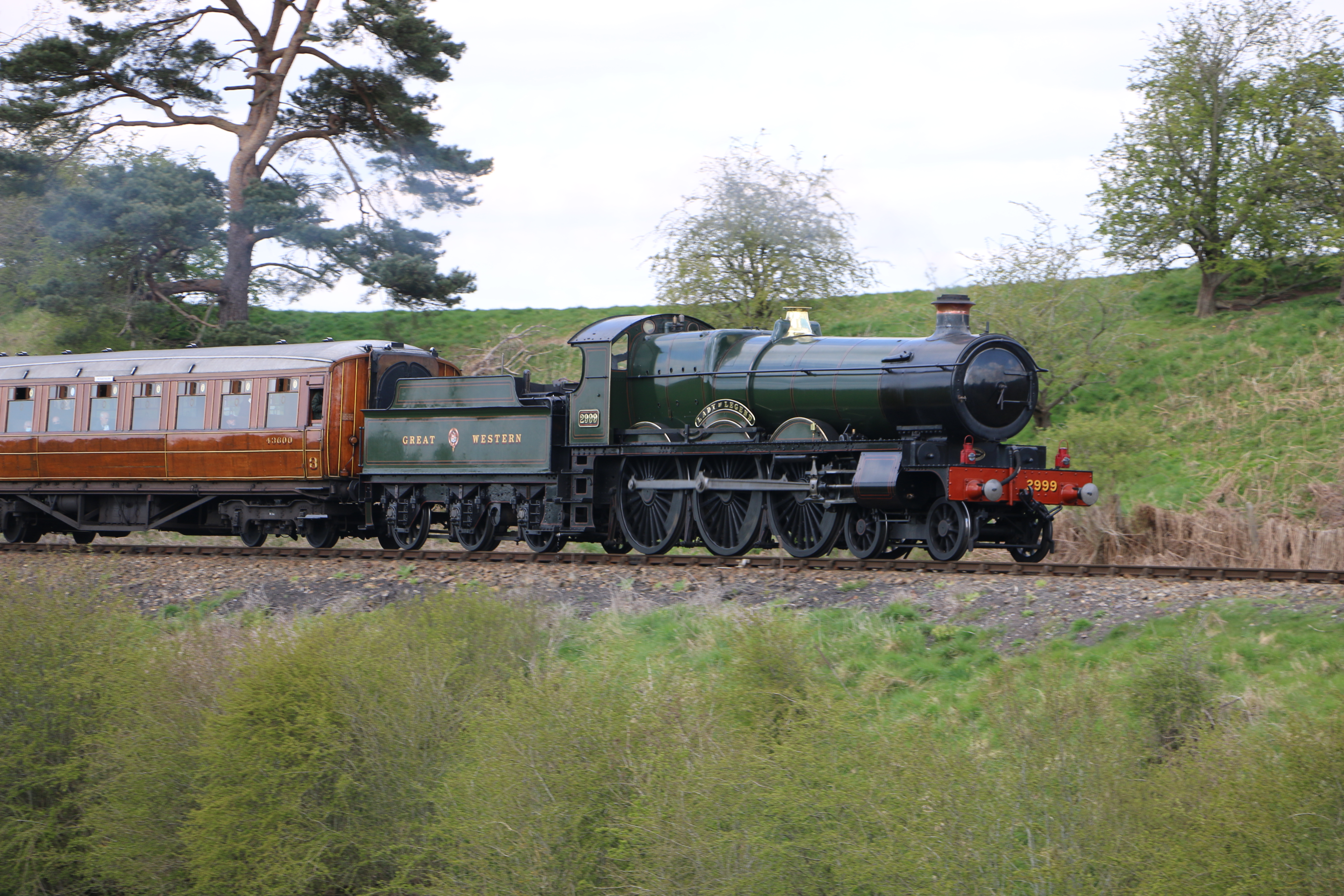
No original Saint survived to preservation, the era of widespread scrapping in the early 1950s claimed all 77 engines. However, in 2019 the Great Western Society at Didcot completed a new-build replica: 2999 "Lady of Legend", built to original Churchward drawings with significant period engineering and a Modified Hall boiler. The engine is the first new-build British steam Saint Class in 66 years and is currently main-line registered for charter and special-event work, operating from Didcot Railway Centre, a working tribute to Churchward's foundational 1902 design.
Design and development
By 1900 George Jackson Churchward had been GWR Locomotive Carriage and Wagon Superintendent since 1902 (formally; Chief Mechanical Engineer from 1903). The pre-Churchward GWR fleet was elderly, Dean 4-2-2 "Spinners" and similar Victorian designs, and the company needed a modern express engine to compete with rivals on the West of England, Bristol, and Birmingham lines.
Churchward's response drew heavily on contemporary American practice. He had absorbed the Belpaire firebox, the taper boiler, the long-stroke cylinder, and the relatively conservative two-cylinder layout from American engineering. The Saint Class was the result, a two-cylinder express 4-6-0 with Standard No. 1 taper boiler at 225 psi, 30 in stroke, 6 ft 8½ in driving wheels, and Belpaire firebox.
The class introduced several innovations to British practice. The Belpaire firebox became the GWR standard (and influenced subsequent practice across all four major railways). The Standard No. 1 taper boiler became the foundation of an entire family of GWR boilers, modified for the Castle (1923) and King (1927) classes, and serving with modifications into the 1960s. The two-cylinder express 4-6-0 layout became the British standard general-traffic configuration that subsequently dominated the LMS Black Five, the BR Standard Class 5MT, and many other classes.
The first engine, No. 100 (later named "William Dean" after Churchward's predecessor), was completed at Swindon Works in February 1902. Various early prototypes followed in different configurations, including the unusual No. 171 "Albion" originally built as a 4-4-2 and converted to 4-6-0. Production proper began in 1905 and continued in batches through 1913. By 1913 some 77 engines had been built.
Service and withdrawals
The Saints were the GWR's heaviest express engines from 1902 to 1907 (when the Star Class arrived for the heaviest duties). They worked the Cornish Riviera Express, the Cheltenham Spa Express, the Bristol expresses, and the principal Birmingham and Birkenhead services. Their performance set the standard for British express running in the early 20th century, Saints regularly worked at sustained 60–70 mph with the heaviest GWR expresses, demonstrating that the British two-cylinder 4-6-0 could meet the most demanding express requirements.
From 1907 the Star Class progressively took over the heaviest duties; the Saints settled into the lighter express role through the 1910s and 1920s. The introduction of the Castle Class (1923) further reduced demand. In December 1924 Collett rebuilt Saint No. 2925 Saint Martin with 6 ft driving wheels in place of the class’s 6 ft 8½ in, together with a new cab. The rebuild was a success and became the prototype for an entire new class; it was renumbered 4900 in December 1928 and kept its name. The Saint design was thus not merely an ancestor of the Hall Class on paper — one actual Saint became the first Hall. From 1928 onwards the Hall Class, Charles Collett's direct two-cylinder 4-6-0 development of the Saint, with smaller 6 ft driving wheels for mixed traffic, proved that the Saint design principles remained sound but that the smaller-wheel mixed-traffic configuration was more useful for general service.
Withdrawals began in earnest from the late 1930s. By 1947 only about 30 Saints remained. British Railways inherited the Western Region survivors in 1948 and continued withdrawals through the late 1940s and early 1950s. The last Saint in BR service, 2920 "Saint David", was withdrawn from Old Oak Common in October 1953.
Identification features
The clean, classical Churchward 4-6-0 outline, an outline that came to define British express engine practice for the next half-century. Standard No. 1 taper boiler, Belpaire firebox, two outside cylinders with Walschaerts valve gear, single chimney, and the distinctive copper-capped chimney and brass safety-valve cover that distinguished GWR engines from those of other British railways. The class is named after Christian saints (the original brief was English saints; later names extended to include continental and Welsh saints). The "Saint" name and brass nameplates carrying the saint's name on the boiler band gave the class lasting public visibility on the GWR system.
Numbers and names
2900–2999
- 2900
- 2901
- 2902
- 2903
- 2904
- 2905
- 2906
- 2907
- 2908
- 2909
- 2910
- 2911
- 2912
- 2913
- 2914
- 2915
- 2916
- 2917
- 2918
- 2919
- 2920Saint David
- 2921
- 2922
- 2923
- 2924
- 2925
- 2926
- 2927
- 2928
- 2929
- 2930
- 2931
- 2932
- 2933
- 2934
- 2935
- 2936
- 2937
- 2938
- 2939
- 2940
- 2941
- 2942
- 2943
- 2944
- 2945
- 2946
- 2947
- 2948
- 2949
- 2950
- 2951
- 2952
- 2953
- 2954
- 2955
- 2956
- 2957
- 2958
- 2959
- 2960
- 2961
- 2962
- 2963
- 2964
- 2965
- 2966
- 2967
- 2968
- 2969
- 2970
- 2971
- 2972
- 2973
- 2974
- 2975
- 2976
- 2977
- 2978
- 2979
- 2980
- 2981
- 2982
- 2983
- 2984
- 2985
- 2986
- 2987
- 2988
- 2989
- 2990
- 2991
- 2992
- 2993
- 2994
- 2995
- 2996
- 2997
- 2998
- 2999
GWR Nos 100 (the prototype, originally a 4-6-0 then a 4-4-2, then back to 4-6-0); 98 (the first true Saint, originally 4-4-2); 171 (the third prototype). Production batch began as 2900–2999 and continued through several construction series; the class was renumbered into the 2900 series in 1912. Final numbering: 2900–2999 covered most production. None reached British Railways with the addition of 2999's replacement number, the original Saints were all withdrawn before nationalisation, the last 2920 "Saint David" in 1953.
Notable locomotives
100 William Dean (named after Churchward's predecessor William Dean), the absolute prototype, completed at Swindon Works in February 1902 as a 4-6-0. Initially without a Belpaire firebox; rebuilt with one shortly afterwards. Withdrawn 1932, the last Saint Class Type 1 in service.
171 Albion (later named in honour of the 1907 GWR royal train haulage), completed September 1903. Originally a 4-4-2 prototype, rebuilt as a 4-6-0. Withdrawn 1949.
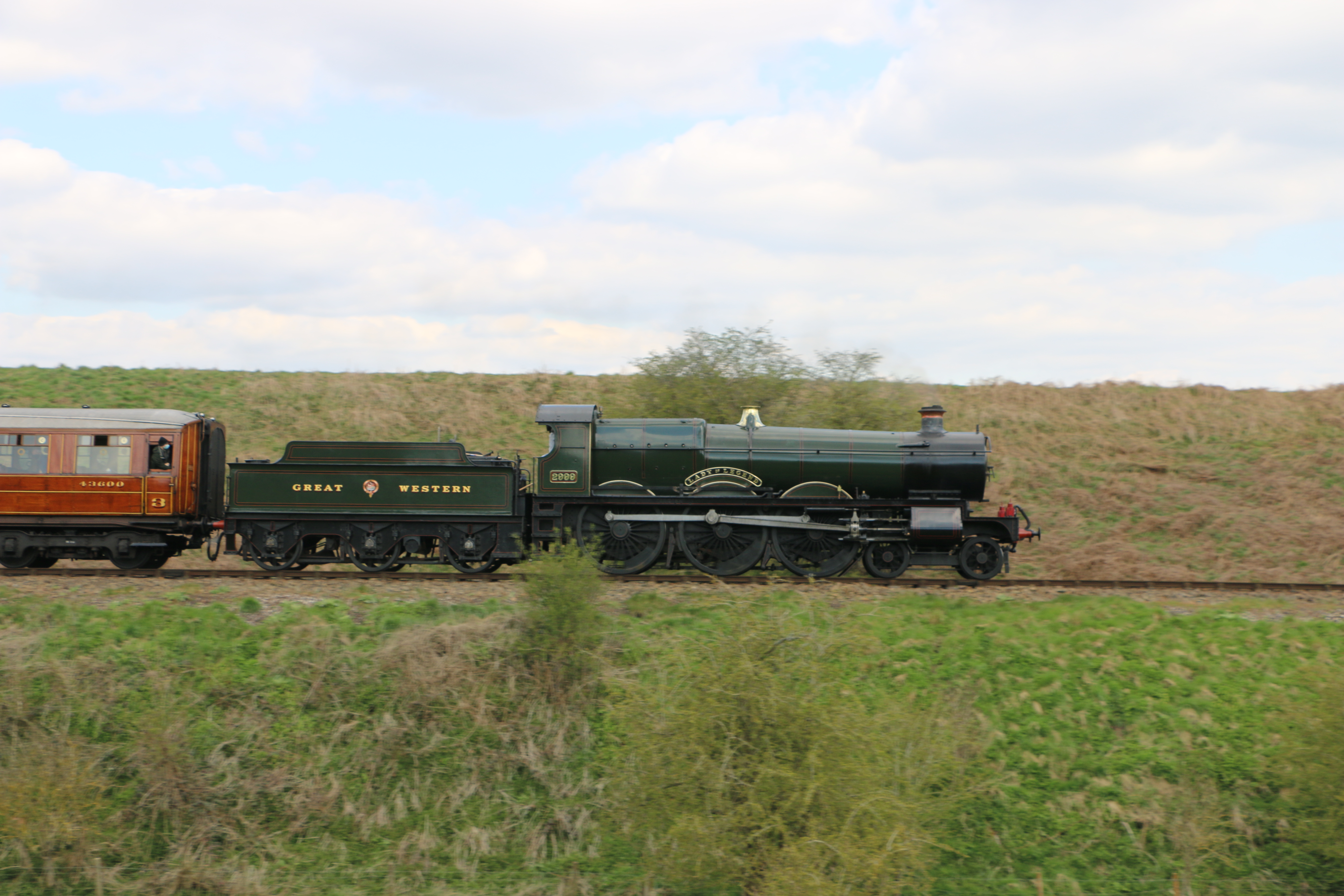
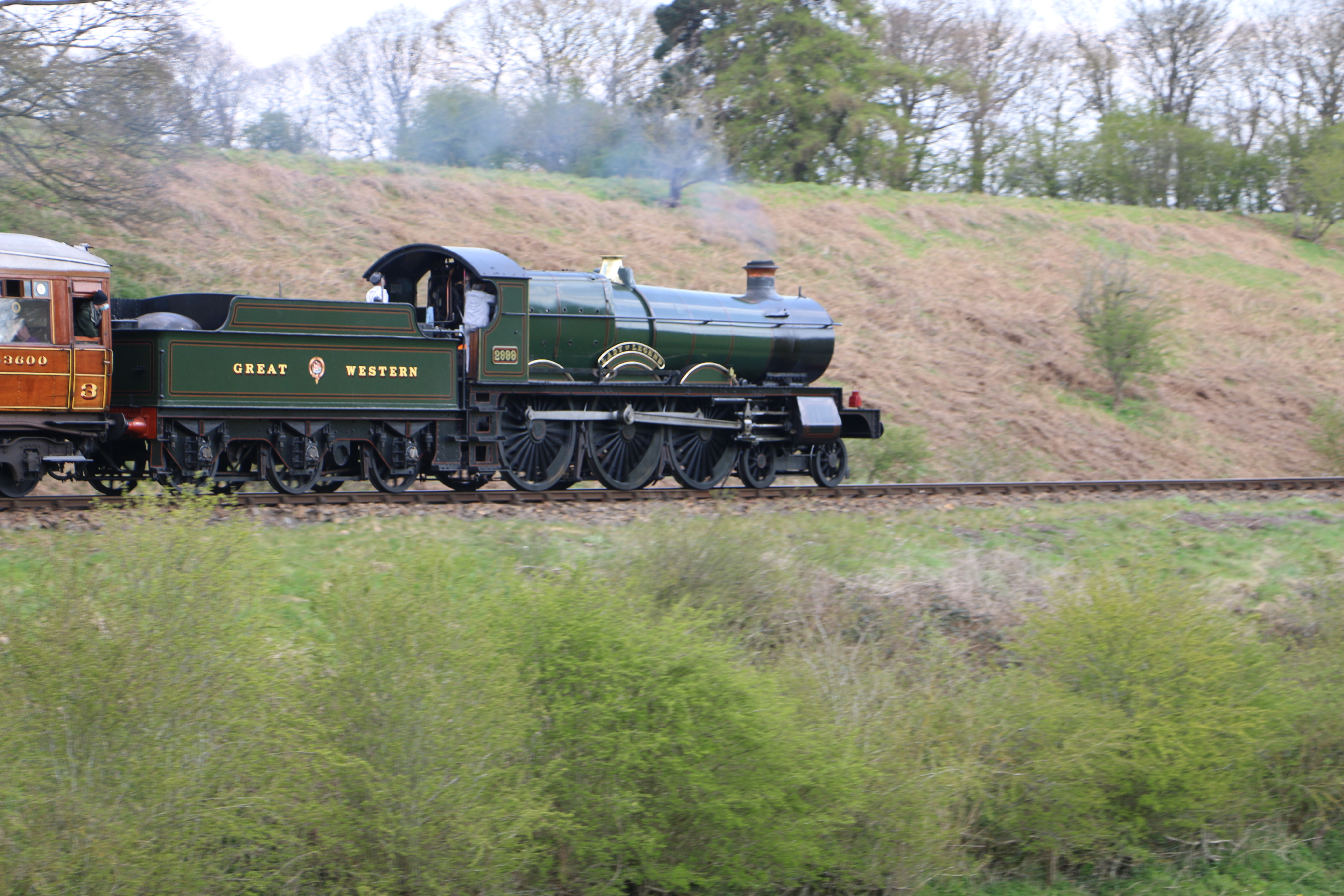
2999 Lady of Legend, completed by the Great Western Society at Didcot in 2019, and not a replica: it was rebuilt from the frames and boiler of Hall Class 4942 Maindy Hall, bought out of Barry in 1974, reversing Collett’s 1924 conversion of Saint 2925 Saint Martin into the prototype Hall. The first new-build British steam Saint Class in 66 years (since the last original 2920 Saint David was withdrawn in 1953). Main-line registered for charter and special-event work, and based at Didcot Railway Centre. Last confirmed on loan to the Bluebell Railway for the whole of the 2026 season.
2900 William Dean, confusingly, the second engine of the class to bear that name (the original 100 having been long-withdrawn by the time the second 2900 William Dean appeared in the 1912 renumbering). Withdrawn 1932.
2920 Saint David, the very last original Saint in BR service, withdrawn from Old Oak Common in October 1953.
Allocations and regions
GWR era (1902–1947): the class was the GWR's heaviest express engine from 1902 to 1907 (when the Star Class arrived), then the principal GWR express engine on the lighter expresses through to the 1930s. Allocations were concentrated at the principal GWR express sheds, Old Oak Common (London Paddington), Bristol Bath Road, Cardiff Canton, Wolverhampton Stafford Road, Worcester, and Plymouth Laira. Old Oak Common's top-link engines worked the Cornish Riviera, Cheltenham Spa, and the heaviest Birmingham expresses.
Late GWR / early BR (1937–1953): by the late 1930s the introduction of the Hall Class (1928) and Grange Class (1936) was progressively reducing the demand for Saints on lighter expresses. Withdrawals began in earnest from the late 1930s.
British Railways Western Region (1948–1953): only a handful of Saints survived into BR service. The last Saint in BR service, 2920 "Saint David", was withdrawn from Old Oak Common in October 1953.
Livery history
GWR Middle Chrome Green (1902–1947): the class was outshopped in GWR Middle Chrome Green with black lining and serif "Great Western" lettering, the GWR standard express livery from 1902 onwards. This was the dominant Saint livery throughout the class's GWR career.
British Railways Brunswick green (1948–1953): from 1948 the few surviving engines wore BR-standard lined Brunswick green with the early lion-and-wheel emblem. Most retained their original GWR brass nameplates. The very last Saint in BR service, 2920 "Saint David", carried this livery.
Preservation: the new-build 2999 "Lady of Legend" has appeared in GWR Middle Chrome Green and post-Grouping liveries at different times, both authentic for the class.
Preservation status
No original Saint Class engine survived to preservation. The last engine in BR service, 2920 "Saint David", was withdrawn from Old Oak Common in October 1953, the era of widespread scrapping with no preservation infrastructure to save it.
However, in 2019 the Great Western Society at Didcot completed a new-build replica:
- 2999 Lady of Legend, not a replica built from scratch but a real locomotive converted back into a Saint. The Great Western Society bought Hall Class 4942 Maindy Hall out of Woodham Brothers’ scrapyard at Barry in 1974 and rebuilt it using its frames and boiler, with new driving wheelsets because a Saint’s are 6 ft 8½ in against a Hall’s 6 ft, and a larger bogie to match. Genuine Saint components went in where they could be found, among them a connecting rod from 2906 Lady of Lynn and a whistle from 2910 Lady of Shalott. The work deliberately reversed Collett’s 1924 conversion of Saint Martin. Completed at Didcot Railway Centre on 18 May 2019, the engine is the first new-build British steam Saint Class in 66 years (since the last original was withdrawn in 1953). Main-line registered for charter and special-event work, and based at Didcot Railway Centre. Last confirmed on loan to the Bluebell Railway for the whole of the 2026 season.
The 2999 Lady of Legend new-build is one of the most significant British steam new-build projects of the 21st century, restoring the Saint Class type to working order more than 65 years after the last original was withdrawn, and providing a working tribute to Churchward's foundational 1902 design.
Photographs