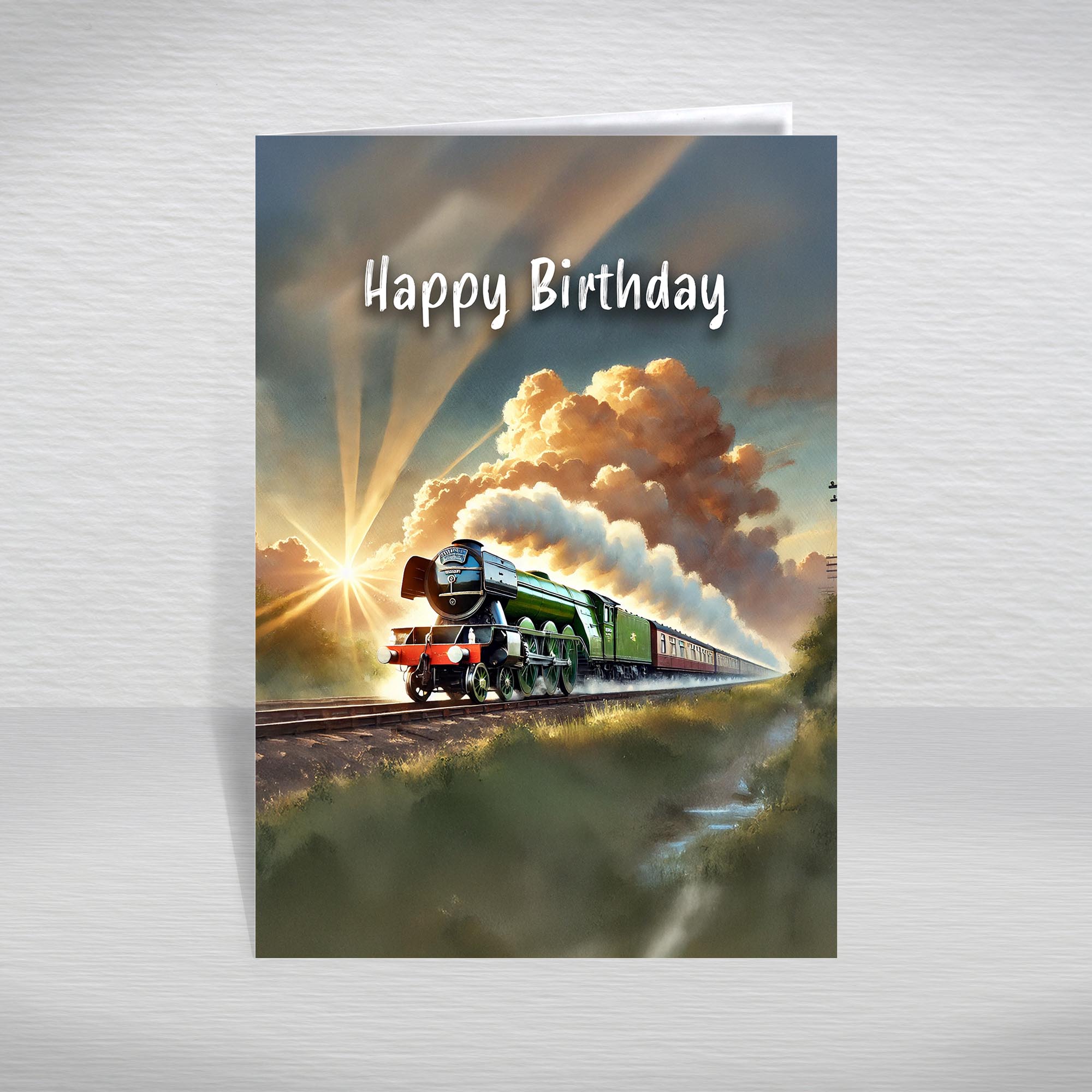
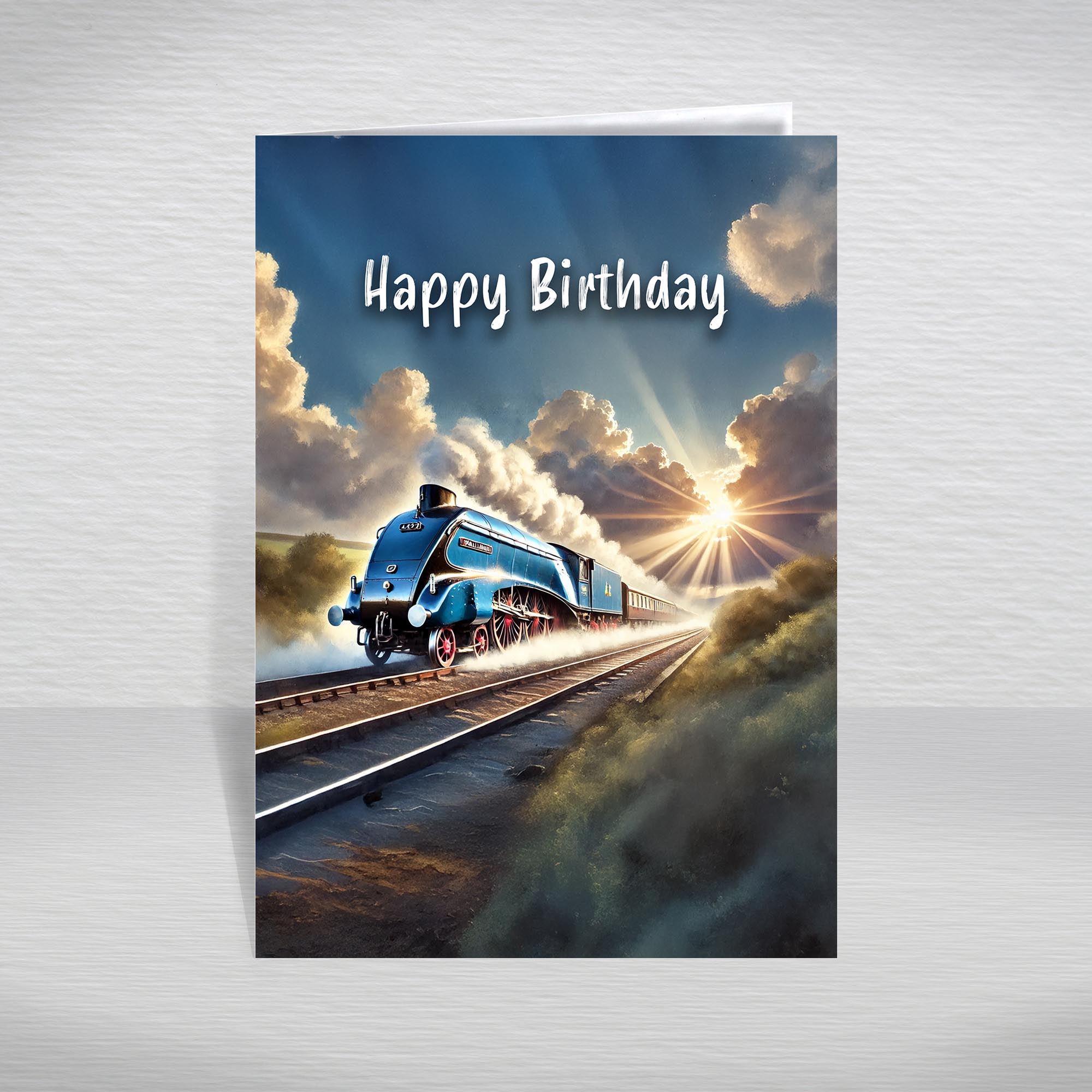
Caledonian 179 Dunalastair III Class
The Caledonian Railway 179 Class, the third of the Dunalastair series, was an inside-cylinder express 4-4-0 designed by J. F. McIntosh at St Rollox Works, Glasgow, for the Caledonian Railway. Seventeen were built between November 1899 and June 1900 in two batches.
The Dunalastair sequence was McIntosh's defining contribution to British locomotive engineering. The original Dunalastair (the 721 Class of 1896) was the largest 4-4-0 in Britain at the date of its construction; the Dunalastair II of 1897 increased boiler size further; and the Dunalastair III of 1899 went further still, with a noticeably larger-diameter boiler and enlarged firebox to handle the heaviest Anglo-Scottish boat trains via the West Coast Main Line.
The class wore the Caledonian Blue livery, a deep ultramarine with red side rods, buff lining edged with black, polished brass safety-valve casings and copper-capped chimneys, that was widely admired as the most handsome painting scheme of any British pre-grouping railway. The McIntosh house style of large-diameter boilers, broad cabs and outside-frame "bow-spring" splashers gave the Dunalastair sequence a particularly elegant family resemblance.
The Dunalastair IIIs worked the Caledonian's premier Anglo-Scottish expresses through the 1900s and 1910s, the Carlisle expresses from Glasgow Central, the Glasgow–Edinburgh services, and the Glasgow–Aberdeen route. From 1914 a small number received Schmidt 18-element superheaters and higher boiler pressure of 180 psi. The four-cylinder 903 "Cardean" Class of 1906 took over the very heaviest expresses, but the Dunalastair IIIs remained in front-line service into the LMS era.
From 1923 the class formed part of the LMS Scottish Area. As the LMS introduced Stanier's new express classes from 1928 onwards, the Dunalastair IIIs were progressively transferred to secondary express duties. The first withdrawals came in 1932 and the last in service, No. 14439, originally CR 888, was withdrawn from Polmadie in February 1948, just before nationalisation. None survived into British Railways ownership and none was preserved.
The earlier CR No. 123 (the 1886 Neilson exhibition single, preserved at the Riverside Museum, Glasgow) is the only Caledonian express engine to survive. None of the McIntosh Dunalastair sequence, I, II, III or IV, exists today.
Design and development
By the late 1890s J. F. McIntosh's Caledonian Railway was running some of the heaviest Anglo-Scottish expresses in Britain. The West Coast trains from Carlisle to Glasgow Central were regularly composed of twelve or thirteen six-wheeled carriages and Pullman cars, and the original Dunalastair Class (the 721 Class of 1896, the largest 4-4-0s in Britain at that date) was being asked to keep up with progressively faster timings.
McIntosh's response was a sequence of Dunalastair developments through the late 1890s and 1900s. The Dunalastair II (766 Class, 1897) had a slightly larger boiler than the original; the Dunalastair III (1899–1900), the class described here, went further, with a noticeably larger-diameter boiler, an enlarged firebox, and revised cab and tender pairing. Seventeen were built at St Rollox Works between November 1899 and June 1900 in two batches.
The class shared the inside-cylinder layout of the rest of the Dunalastair sequence, McIntosh preferred inside cylinders for express running, but with cylinders enlarged to 19 in × 26 in. Slide valves were retained, although by 1899 piston valves were beginning to appear on contemporary English designs. The McIntosh house style, the large-diameter boiler, the broad cab, the outside-frame "bow-spring" splashers, gave the engines a particularly handsome outline. The Dunalastair III, like its sister classes, was finished in Caledonian Blue.
Service and withdrawals
The Dunalastair IIIs worked the Caledonian's premier Anglo-Scottish expresses through the 1900s and 1910s, the Carlisle expresses from Glasgow Central, the Glasgow–Edinburgh services, and the Glasgow–Aberdeen route. They were noted as fast and economical engines on the Caledonian's well-laid permanent way, particularly between Carlisle and Glasgow where the easy Beattock summit gradient suited them.
From 1914 a small number received Schmidt 18-element superheaters and a higher boiler pressure of 180 psi, which improved their timekeeping on the longer non-stop runs. The four-cylinder 903 "Cardean" Class of 1906 had taken over the very heaviest expresses, but the Dunalastair IIIs remained in front-line service into the LMS era.
From 1923 the class formed part of the LMS Scottish Area. As the LMS introduced Stanier's new express classes, the Royal Scot Pacifics from 1928, the Stanier Class 5 4-6-0s from 1934, the Dunalastair IIIs were progressively transferred to secondary express duties in the central Scottish belt. The first withdrawals came in 1932 and accelerated through the 1930s.
The last in service was 14439 (originally CR 888), withdrawn from Polmadie in February 1948, just before the nationalisation of British Railways on 1 January 1948. None of the class survived into BR ownership and none was preserved. The earlier and more celebrated CR No. 123 4-2-2 single (built by Neilson for the 1886 Edinburgh Exhibition) is the only Caledonian express engine to survive in preservation.
Identification features
An inside-cylinder 4-4-0 of strikingly elegant Caledonian Railway proportions, the broad cab, large-diameter boiler, and characteristic Caledonian "bow-spring" outside-frame splashers gave the class an instantly recognisable outline. The class was distinguished from the earlier Dunalastair II (766 Class, 1897) by a noticeably larger boiler and from the later Dunalastair IV (140 Class, 1904) by the smaller cab and absence of side windows. All wore the famous Caledonian Blue livery (a deep ultramarine with red side rods, lined buff and black) with brass nameplate carrying the locomotive's name on the leading splasher.
Numbers and names
—887–893
- 887
- 888
- 889
- 890
- 891
- 892
- 893
—894–903
- 894
- 895
- 896
- 897
- 898
- 899
- 900
- 901
- 902
- 903
LMS14438–14454 renumbered
- 14438
- 14439
- 14440
- 14441
- 14442
- 14443
- 14444
- 14445
- 14446
- 14447
- 14448
- 14449
- 14450
- 14451
- 14452
- 14453
- 14454
Caledonian Railway Nos 887–893 (1899) and 894–903 (1900), note the class number 179 derives from the lead engine of the original 1894 Dunalastair I sub-series rather than from the 1899 build numbers. LMS renumbered the class 14438–14454 from 1923. None of the class survived to BR ownership in 1948.
Notable locomotives
887, first of class, completed at St Rollox in November 1899. Worked the Carlisle expresses out of Glasgow Central from new. Withdrawn 1934.
900 The Last of the Mohicans, for many years the unofficial mascot of Polmadie shed, named for its long survival in front-line service through the LMS era. Withdrawn 1939.
14439 (LMS number, originally CR 888), the last Dunalastair III in service, withdrawn from Polmadie in February 1948 just before nationalisation. Not preserved.
Allocations and regions
Caledonian era (1899–1922): entire class concentrated on Anglo-Scottish work. Polmadie shed in Glasgow held the largest contingent for the Carlisle expresses; Carlisle Kingmoor had a permanent allocation for the Anglo-Scottish through-running. Selected examples were allocated to St Rollox itself (Glasgow), Aberdeen and Perth for the Glasgow–Aberdeen main line.
LMS era (1923–1948): the class became part of the LMS Scottish Area on Grouping. Allocations remained largely Caledonian-derived, Polmadie, St Rollox, Carlisle Kingmoor, Perth, Aberdeen, Edinburgh Princes Street. From the late 1920s the Stanier Class 5 4-6-0s and the Royal Scot Pacifics began to displace them from the principal expresses, and the surviving Dunalastair IIIs were progressively transferred to secondary services in the central Scottish belt. Withdrawals began in 1932 and were complete by 1948.
Livery history
Caledonian Railway (1899–1922): Caledonian Blue (a rich ultramarine, sometimes described as "Prussian blue") with red side rods and frames, buff lining edged with black, polished brass safety-valve casing and copper-capped chimney. The brass nameplate was carried on the leading splasher. The Caledonian was widely admired for the quality of its livery work, and the Dunalastair series in their pomp on the Anglo-Scottish boat trains were celebrated photographic subjects.
LMS (1923–1948): initially retained Caledonian Blue with LMS lettering on the tender; from 1928 progressively repainted into LMS standard mixed-traffic black with red, cream and grey lining. From the late 1930s most appeared in plain unlined LMS black for wartime austerity.
Preservation status
None of the seventeen Dunalastair IIIs was preserved. All were scrapped at the LMS Scottish Area scrap roads or sold to private contractors during the 1932–1948 withdrawal period. The last in service, No. 14439, was withdrawn just before nationalisation and broken up at Polmadie soon afterwards.
The earlier and more celebrated CR No. 123 (the 1886 Neilson exhibition engine) is the only Caledonian Railway passenger 4-coupled express engine to survive, it is preserved at the Riverside Museum, Glasgow. None of the McIntosh Dunalastair sequence (I, II, III or IV) survived. The class is documented through extensive contemporary photography, the surviving St Rollox design drawings at the National Archives of Scotland, and the official Caledonian Railway working papers.