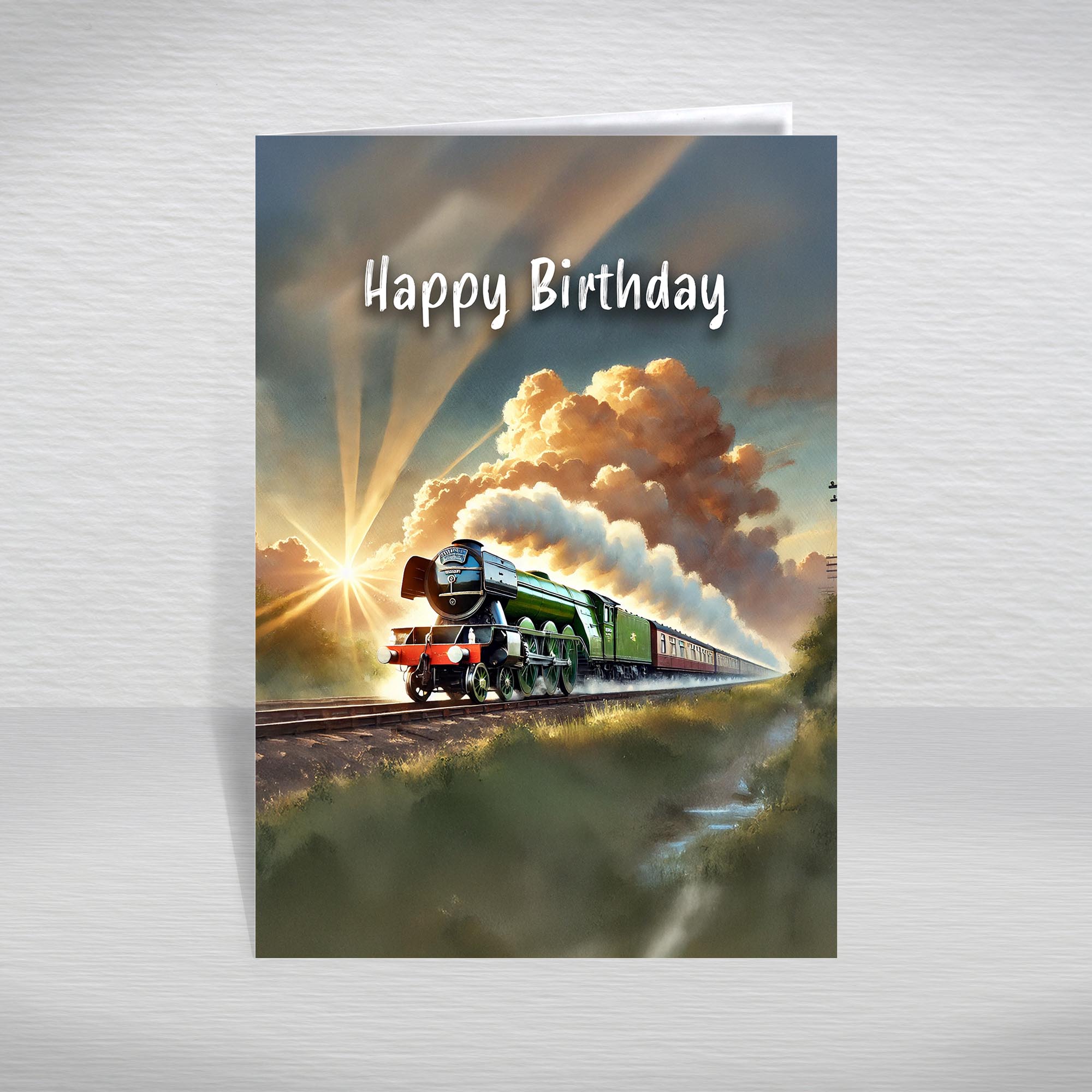
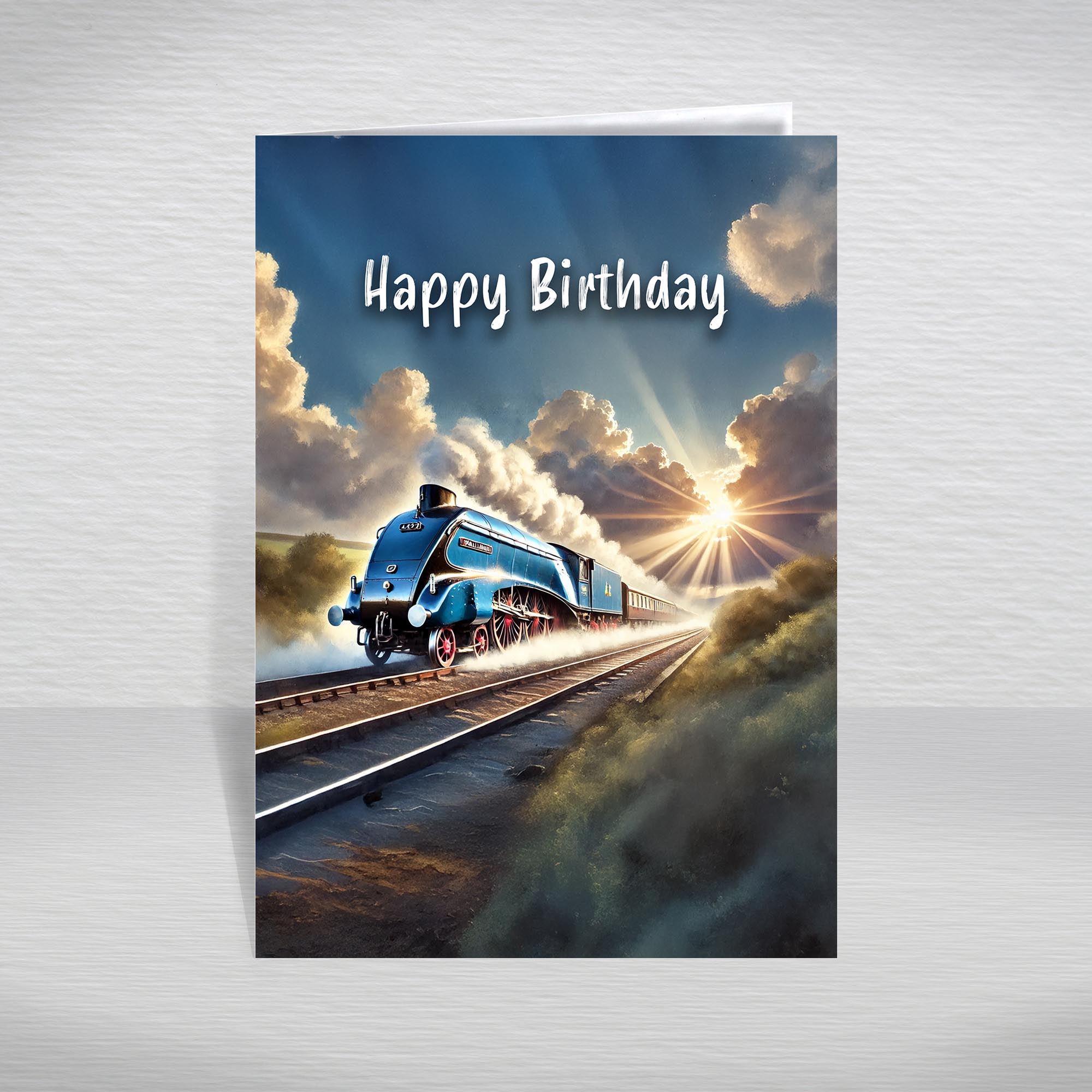
GWR Iron Duke Class
The GWR Iron Duke Class was Daniel Gooch's definitive broad-gauge express 4-2-2 single-driver class, introduced in 1846 with the prototype Great Western. Twenty-nine engines were built at Swindon Works and by Rothwell of Bolton between 1846 and 1855 with 8-foot single driving wheels, among the largest ever fitted to a British locomotive, and worked the principal Great Western Railway expresses out of Paddington for over forty years.
Gooch became the GWR's first Locomotive Superintendent in 1837 at the age of 21, and the Iron Duke was the centrepiece of his broad-gauge express programme. Brunel's 7 ft 0¼ in broad gauge gave engineers exceptional freedom, wider engines, larger boilers, larger driving wheels than the standard gauge allowed, and Gooch made full use of these possibilities. The 8-foot single driving wheel, the modest 110 psi boiler pressure offset by generous broad-gauge boiler dimensions, and the inside-cylinder layout gave the class a clean, ordered appearance that became a Gooch signature.
The prototype Great Western was completed at Swindon in April 1846, the first locomotive built at Swindon and one of the founding engines of that works' subsequent reputation. The class is named after Iron Duke, built in 1847 and named after the recently-deceased Duke of Wellington (the "Iron Duke" of the Battle of Waterloo); the engine's name was so well-known that the entire class came to be known colloquially as the Iron Dukes.
The Flying Dutchman service from Paddington to Bristol of the 1850s, averaging 53 mph including stops, was among the fastest scheduled trains anywhere in the world at that date and was usually worked by an Iron Duke. The class also worked through services to Plymouth and the South Wales boat trains. Test running on the Paddington–Bristol main line recorded speeds of 78 mph (Tornado, 1848), exceptional for the period.
From 1871 a closely-related successor, the Rover Class, began production at Swindon. The Rovers shared the basic Iron Duke layout and 8-foot driving wheels but had marginal design improvements reflecting three decades of operational experience. 24 Rovers were built between 1871 and 1888.
The challenge for the class was the broad gauge's gradual obsolescence. From 1872 onwards the broad gauge was being incrementally abandoned. The final broad-gauge timetable ended on 20 May 1892, when the entire remaining broad-gauge mileage was converted to standard gauge over a single weekend. All surviving Iron Duke and Rover Class engines were withdrawn at that point. None was preserved, a remarkable failure of preservation that was widely lamented at the time. The class survives only in photographs, design drawings, and a 1985 working replica at the Didcot Railway Centre.
Design and development
Daniel Gooch became the Great Western Railway's first Locomotive Superintendent in 1837 at the age of 21. By the mid-1840s the GWR's broad-gauge expresses were established and the company needed a new generation of express engines to handle the developing Paddington–Bristol service. Brunel's 7 ft 0¼ in broad gauge gave engineers exceptional freedom, wider engines, larger boilers, larger driving wheels than the standard gauge allowed, and Gooch made full use of these possibilities.
The Iron Duke Class was Gooch's definitive broad-gauge express design. The 8-foot single driving wheel was the largest then in widespread use; the modest 110 psi boiler pressure was offset by the generous boiler dimensions the broad gauge permitted; and the inside-cylinder layout gave the engines a clean, ordered appearance that became a Gooch signature.
The first engine, Great Western, was completed at Swindon Works in April 1846, the first locomotive built at Swindon and one of the founding engines of that works' subsequent reputation. Production followed over nine years across both Swindon and Rothwell of Bolton (a contractor who supplied a substantial proportion of the early class). By 1855 the original Iron Duke Class numbered 29 engines.
From 1871 a closely-related successor, the Rover Class, began production at Swindon. The Rover Class shared the basic Iron Duke layout and 8-foot driving wheels but had marginal design improvements (slightly larger boilers, modified valve gear, detail refinements) that reflected three decades of operational experience. 24 Rovers were built between 1871 and 1888. The Iron Duke and Rover Classes are sometimes grouped together as 53 broad-gauge 8-foot Singles, although the strict classification keeps them separate.
Service and withdrawals
The Iron Duke Class worked the principal GWR broad-gauge expresses for over forty years. The Flying Dutchman service from Paddington to Bristol of the 1850s, averaging 53 mph including stops, was among the fastest scheduled trains anywhere in the world at that date and was usually worked by an Iron Duke. The class also worked through services to Plymouth, the South Wales boat trains, and (less famously) the Wolverhampton and Banbury services.
The challenge of the class was not technical performance, which was exemplary for its era, but the broad gauge's gradual obsolescence. From 1854 the GWR began acquiring standard-gauge mileage through amalgamation with the West Midland and Shrewsbury railways; from 1869 the broad-gauge through workings to Birmingham were progressively converted; and from 1872 onwards the broad gauge was being incrementally abandoned. The Iron Duke Class, entirely incompatible with the standard gauge, was thus tied to the dwindling broad-gauge mileage.
Most of the original Iron Dukes had been withdrawn by 1880 as their boilers wore out and the broad-gauge mileage they could work continued to shrink. The Rover Class, built from 1871 onwards as a successor, replaced them on the surviving broad-gauge expresses. The final broad-gauge timetable ended on 20 May 1892, when the entire remaining broad-gauge mileage was converted to standard gauge over a single weekend. All surviving Iron Duke and Rover Class engines were withdrawn at that point, the entire class made obsolete in a single day.
Identification features
Broad-gauge 7 ft 0¼ in single-driver express engines with 8-foot driving wheels, among the most distinctive British locomotive outlines of all time. The exposed exterior of the broad gauge with no obscuring side rods, the brass safety-valve casing on the simple boiler, the open-spoked driving wheels, and the polished brass fittings combined to give the class a characteristically Brunelian appearance, clean, ordered, and visually statement of the broad gauge's engineering ambition. The class wore GWR Holly Green livery throughout, lined out in the GWR's traditional yellow-and-black panels with brass nameplates carrying the engines' individual names (Iron Duke, Tornado, Lightning etc.) on the leading splasher.
Numbers and names
Broad-gauge GWR engines, never numbered into a sequential series; named individually. Notable Iron Duke Class names: Great Western (the prototype), Iron Duke (named after the Duke of Wellington), Tornado, Lightning, Rover, Sun, Star, Sultan, Caesar, Lord of the Isles, Dragon, Pegasus, Proserpine. The Rover sub-class names included Rover (the second of that name), Sun, Lord of the Isles, Iron Duke and other Iron Duke names re-used.
Notable locomotives
Great Western, the prototype, completed at Swindon Works in April 1846 (just five years after the works opened). The first locomotive to be built at Swindon and one of the founding engines of the works' subsequent reputation. Worked the Paddington–Bristol expresses from 1846 until withdrawal in the 1870s.
Iron Duke, namesake of the class, built 1847 and named after the recently-deceased Duke of Wellington (1769–1852), the so-called "Iron Duke" of the Battle of Waterloo. The engine's name was so well-known that the entire class came to be referred to colloquially as the Iron Dukes.
Lord of the Isles, built 1851 for the broad-gauge service between Paddington and Plymouth. Withdrawn 1880; preserved at the GWR's Swindon Works museum until the 1906 closure of that museum, when it was scrapped.
Tornado, built 1847; achieved 78 mph in test running on the Paddington–Bristol main line in 1848. Withdrawn 1875.
Rover sub-class: built 1871 onwards as a closely-related successor with marginal design improvements (slightly larger boilers, modified valve gear). 24 Rovers were built and the surviving Rover-class engines lasted until the broad-gauge abolition in May 1892.
Allocations and regions
GWR broad-gauge era (1846–1892): the class was concentrated on the principal broad-gauge expresses out of Great Western Paddington. Major Iron Duke allocations were at Westbourne Park (the original GWR running shed in West London), Swindon (works and main shed), Bristol Bath Road, and Newton Abbot for the Plymouth services. As the broad-gauge mileage was progressively converted to standard gauge from 1872 onwards, the surviving Iron Duke and Rover Class engines were concentrated on the Paddington–Bristol main line and the Cornish broad-gauge services, the last broad-gauge mileage to convert.
Livery history
GWR broad-gauge (1846–1892): GWR Holly Green with elaborate yellow-and-black panel lining, polished brass safety-valve casing and fittings, copper-capped chimney, polished brass nameplate on the leading splasher, and the early GWR coat of arms. The painting standard at Swindon throughout the broad-gauge era was exceptional, broad-gauge engines were photographed and painted as objects of national engineering pride. No other livery scheme was applied to the class throughout its 46-year career.
Preservation status
None of the original Iron Duke or Rover Class engines was preserved. The GWR's Swindon Works museum did preserve Lord of the Isles from withdrawal in 1880 until the museum's closure in 1906, when the engine was scrapped, a remarkable failure of preservation that was widely lamented at the time and since. The 1892 broad-gauge abolition was so abrupt that there was no organised preservation programme; the surviving engines were withdrawn over a single May 1892 weekend and rapidly scrapped.
A working replica, "Iron Duke" (re-built 1985), was constructed by the Great Western Society at Didcot Railway Centre using parts from the contemporary Hunslet 0-4-0ST and a new boiler to match the broad gauge. The replica was completed in 1985 and operated on a length of broad-gauge demonstration track at Didcot through the 1980s and 1990s. It is currently a static exhibit at Didcot. The replica is built to the original Iron Duke pattern but is not strictly a survivor of the class.
The class survives extensively in photographs (the broad-gauge era was the early Victorian heyday of British locomotive photography), in the Gooch design drawings preserved at the National Railway Museum, and in the surviving Brunel engineering records of the broad-gauge era. The Iron Duke remains one of the most thoroughly-documented British locomotive classes of the 19th century.