SR Schools Class
The SR Schools Class is the most powerful 4-4-0 ever built in Britain, and one of the last new express 4-4-0 designs in any country. Richard Maunsell designed the three-cylinder 4-4-0 in 1929–1930 for the Southern Railway's Hastings line, where the restricted loading gauge prevented the use of the King Arthur and Lord Nelson 4-6-0s. Forty engines were built at Eastleigh Works between 1930 and 1935.
The class's defining design constraint was the Hastings line tunnels, particularly Mountfield Tunnel, too narrow for standard SR 4-6-0s. Maunsell chose a 4-4-0 wheel arrangement (a 4-4-2 would have been too long for the curvature) with three cylinders to give high tractive effort within the narrow profile. The cylinders were on 8 ft 3 in centres against the 9 ft 0 in standard, giving a maximum body width of 8 ft 3 in. Despite the constraint, the engines developed 25,453 lbf tractive effort, the highest of any British 4-4-0.
The boiler was a scaled version of the King Arthur taper boiler, 5 ft 5 in maximum diameter, 220 psi, with Belpaire firebox and 28.3 sq ft grate. Three independent sets of Walschaerts valve gear drove the cylinders, with the inside cylinder taking its own dedicated valve gear with eccentric drive. The combination gave smooth running and high power within a profile narrower than any other British express engine.
The first engine, No. 900 "Eton", was completed at Eastleigh in March 1930. Production continued at Eastleigh in batches through 1930–1935. The class names, Eton, Winchester, Westminster, Cheltenham, Lancing, Repton, Stowe, Tonbridge, Bradfield, Charterhouse, Marlborough, and others, gave the class a distinctive identity. They worked the Hastings line expresses, the Eastbourne line, the Brighton secondary services, and as required the Bournemouth and Continental boat trains. Their unique combination of high tractive effort and narrow gauge made them irreplaceable on the restricted-gauge routes.
British Railways inherited all 40 engines in 1948. The class continued in BR service through the 1950s on the same routes. The progressive electrification and dieselisation of the Eastern and Central Sections through the late 1950s and early 1960s eventually displaced the Schools from their core territory. The last Schools in BR service, 30939 "Leatherhead", was withdrawn from Salisbury in December 1962.
Three Schools are preserved: 30925 Cheltenham (the National Collection example, a static exhibit at the National Railway Museum); 30926 Repton (privately preserved, sold to Canada's Cape Breton Steam Railway in 1969 and returned to the UK in 1989; currently at the North Yorkshire Moors Railway); and 30928 Stowe (privately preserved by Stowe School and currently in the care of the Maunsell Locomotive Preservation Society at the Bluebell Railway).
Design and development
By 1929 the Southern Railway's South Eastern division, particularly the Hastings line from London Charing Cross via Tunbridge Wells, needed heavier express motive power than the existing 4-4-0s could provide. The principal limitation was the Hastings line's restricted loading gauge: the original South Eastern Railway tunnels (particularly Mountfield Tunnel between Wadhurst and Battle) were too narrow for standard SR 4-6-0s. Richard Maunsell was tasked with producing a new express engine that combined high power with the narrow profile required.
The Schools Class was the result. Maunsell chose a 4-4-0 wheel arrangement (as 4-4-2 would have been too long for the route's curvature) and used three cylinders to give high tractive effort within the narrow profile. The boiler was scaled from the King Arthur taper boiler. The cylinders were positioned at 8 ft 3 in centres against the 9 ft 0 in centres of standard SR practice, the narrow profile that made the class capable of working through the Hastings tunnels.
The first engine, No. 900 "Eton", was completed at Eastleigh Works in March 1930. Initial trials over the Hastings line confirmed the class would handle the heaviest expresses through the restricted-gauge tunnels at speeds previously impossible. Production continued at Eastleigh in batches through 1930–1935, by 1935 forty engines had been built. The class names, Eton, Winchester, Westminster, Cheltenham, Lancing, Repton, Stowe, Tonbridge, Bradfield, Charterhouse, Marlborough, and others, gave the class a distinctive identity and considerable Southern publicity value.
Service and withdrawals
The Schools Class were the SR's principal Hastings line express engines from 1930 to the line's electrification. They worked the Hastings line expresses (London Charing Cross to Hastings via Tunbridge Wells), the Eastbourne line, the Brighton secondary services, and as required the Bournemouth and Continental boat trains. The class's combination of high tractive effort and narrow gauge made them uniquely useful on the restricted-gauge routes, they were the only Southern engines that combined adequate power and the necessary narrow profile.
British Railways inherited all 40 engines in 1948. The class continued in BR Southern Region service through the 1950s on the same routes. The progressive electrification of the Eastern and Central Sections through the late 1950s, Brighton 1933, Eastbourne 1935, Hastings 1986 (electrified late, with diesel-electric multiple-units from 1957), eventually displaced the Schools from their core territory. By 1961 only a handful remained, mostly on the Bournemouth services and the Salisbury–Exeter route. The last Schools in BR service, 30939 "Leatherhead", was withdrawn from Salisbury in December 1962.
Identification features
A clean three-cylinder 4-4-0 outline, unmistakable from the rear of the cab forward, the narrow 8 ft 3 in body, the three-cylinder cylinder arrangement (visible from the side as two cylinder cleaning ports against the standard one), the Belpaire firebox, and the SR maunsell olive or BR Locomotive Green livery. The brass nameplate carried the school name on the boiler band. The class is named after British public schools, boys' schools predominantly in southern England, with the names selected to give the class a distinctive identity. The narrow width is the most diagnostic identifying feature: a Schools is unmistakable as the only Maunsell engine narrow enough for the Hastings tunnels.
Numbers and names
SR900–939
- 900
- 901
- 902
- 903
- 904
- 905
- 906
- 907
- 908
- 909
- 910
- 911
- 912
- 913
- 914
- 915
- 916
- 917
- 918
- 919
- 920
- 921
- 922
- 923
- 924
- 925
- 926
- 927
- 928
- 929
- 930
- 931
- 932
- 933
- 934
- 935
- 936
- 937
- 938
- 939
BR30900–30939
- 30900
- 30901
- 30902
- 30903
- 30904
- 30905
- 30906
- 30907
- 30908
- 30909
- 30910
- 30911
- 30912
- 30913
- 30914
- 30915
- 30916
- 30917
- 30918
- 30919
- 30920
- 30921
- 30922
- 30923
- 30924
- 30925
- 30926
- 30927
- 30928
- 30929
- 30930
- 30931
- 30932
- 30933
- 30934
- 30935
- 30936
- 30937
- 30938
- 30939
SR Nos 900–939, named after public schools (Eton, Winchester, Westminster, Lancing, Cheltenham, Repton, Stowe, Tonbridge, Marlborough, etc.). British Railways added 30000 to give 30900–30939.
Notable locomotives
900 Eton (later 30900), the class prototype, completed at Eastleigh Works in March 1930. The first three-cylinder 4-4-0 in Britain. Withdrawn from BR December 1961 and broken up.
925 Cheltenham (later 30925), completed at Eastleigh in October 1934. Withdrawn from BR December 1962 and preserved by the National Collection. Currently a static exhibit at the National Railway Museum, York.
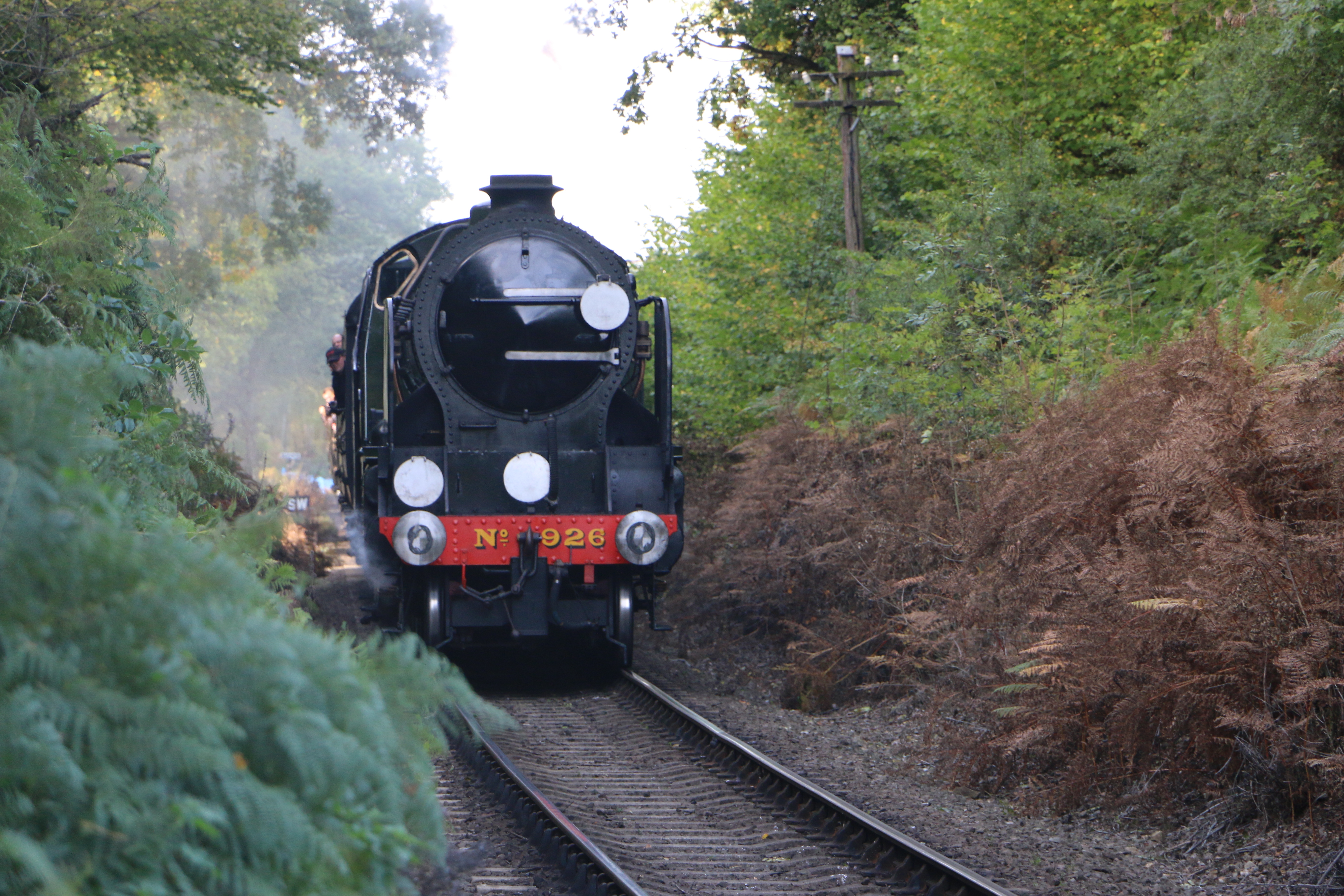
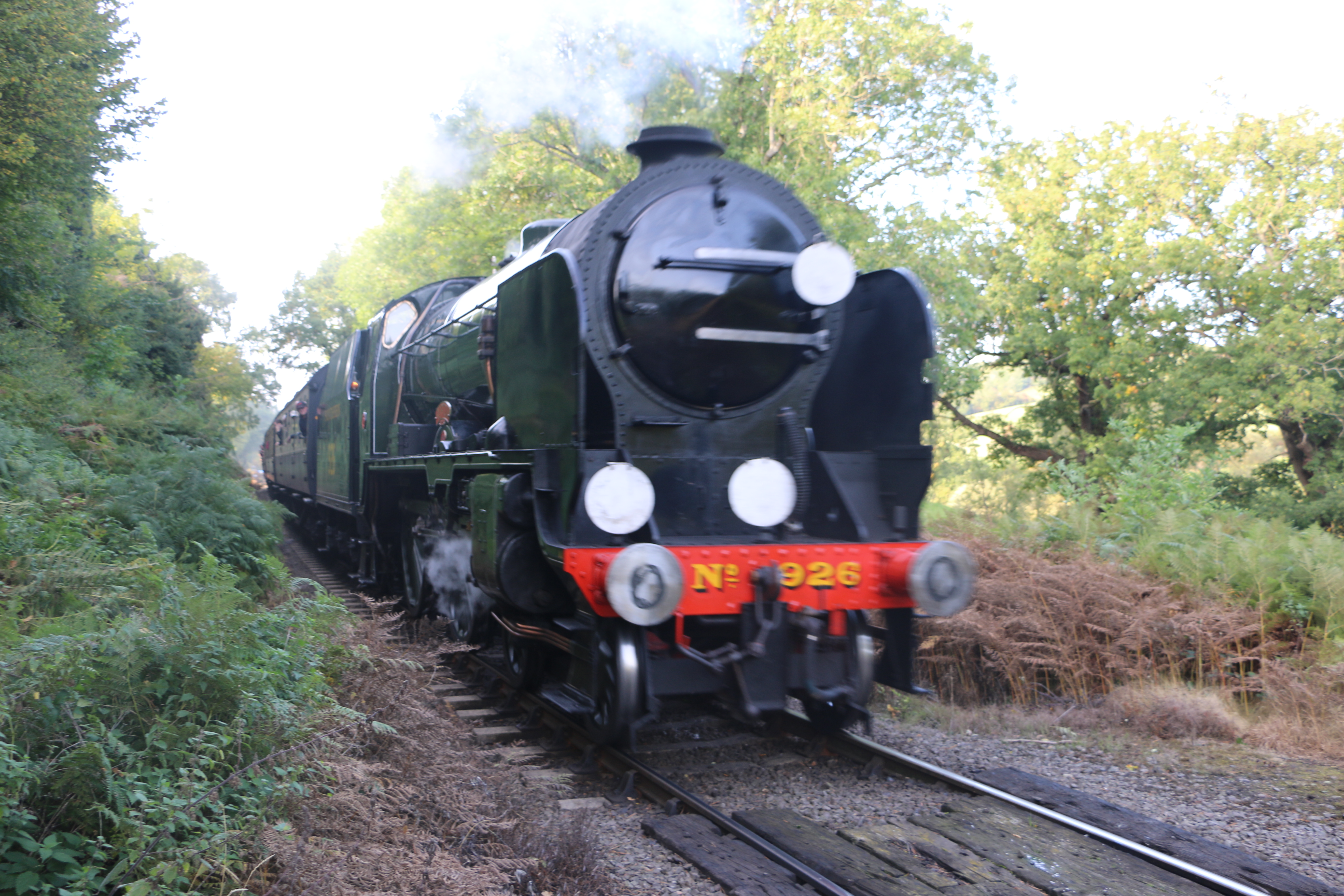
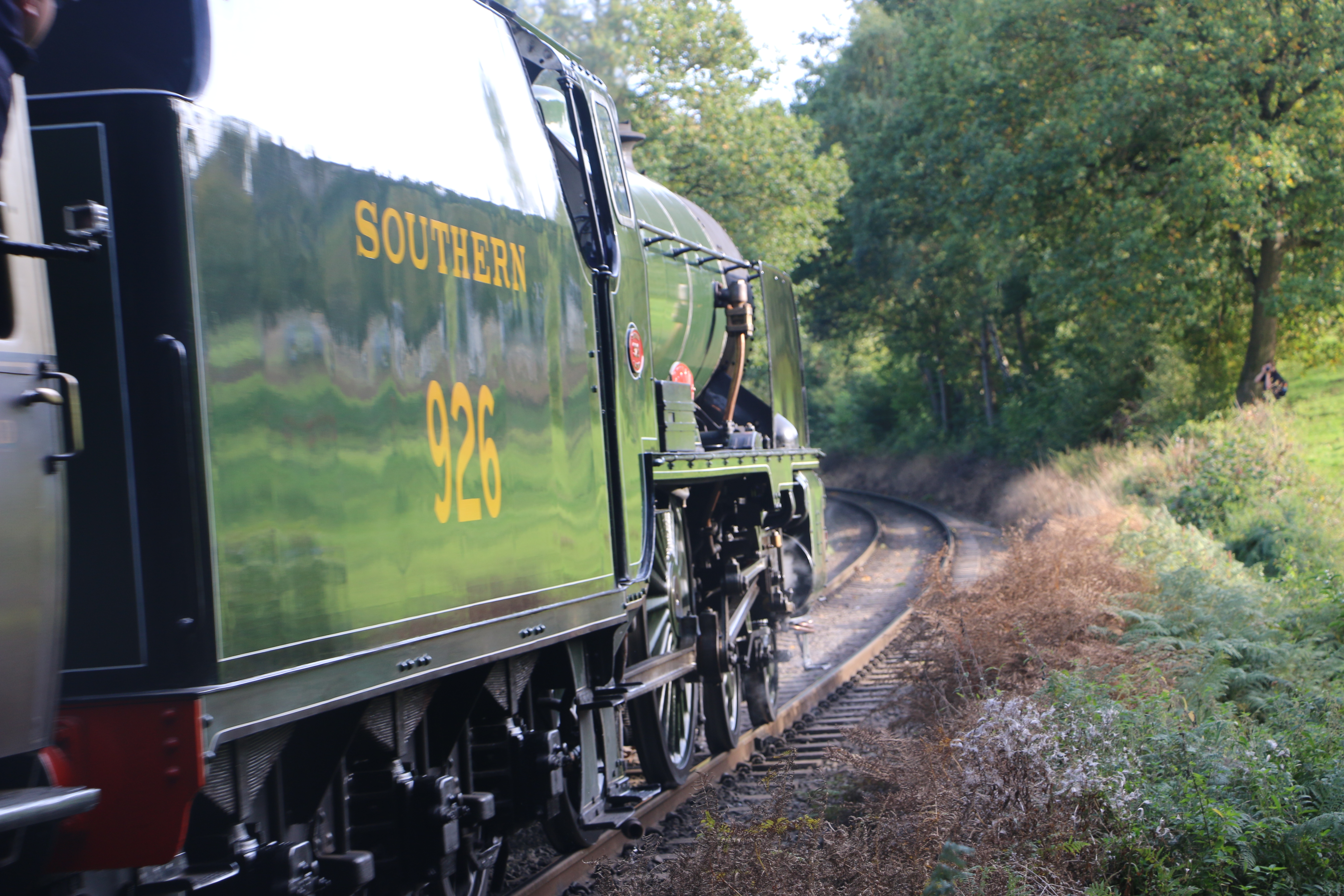
926 Repton (later 30926), completed at Eastleigh in November 1934. Withdrawn from BR December 1962 and privately preserved. Sold to the Cape Breton Steam Railway in Canada and the engine spent twenty years operating in North America. Returned to the United Kingdom in 1989. Currently at the North Yorkshire Moors Railway.
928 Stowe (later 30928), completed at Eastleigh in December 1934. Withdrawn from BR November 1962 and privately preserved by the Stowe School. Currently in the care of the Maunsell Locomotive Preservation Society at the Bluebell Railway, Sussex.
30939 Leatherhead, the very last Schools in BR service, withdrawn from Salisbury in December 1962.
Allocations and regions
Southern Railway era (1930–1947): the class was allocated principally to Stewarts Lane (Victoria), Bricklayers Arms (London), Tonbridge, Bournemouth, Salisbury, and Dover Marine. The Hastings line allocation was concentrated at Bricklayers Arms and Tonbridge. The Bournemouth allocation worked the Bournemouth and West of England feeder services; Stewarts Lane and Dover handled the Continental boat trains.
British Railways Southern Region (1948–1962): continued at the same sheds. The class also worked the Eastbourne expresses (Victoria–Eastbourne via Bricklayers Arms) and the Brighton "Brighton Belle" feeder services. Some engines transferred to Salisbury and the Western Section in the late 1950s.
Final years (1959–1962): the displacement of steam from the Eastern and Central Sections by 1959 electrification (Brighton, Hastings, and Eastbourne lines progressively electrified through the late 1950s and early 1960s) reduced the Schools fleet rapidly. By 1961 only a handful remained, mostly on the Bournemouth services. The last Schools in BR service was 30939 "Leatherhead", withdrawn from Salisbury in December 1962.
Livery history
Southern Railway maunsell olive green (1930–1939): the class was outshopped in SR maunsell olive green with yellow lining and "Southern" in serif lettering, the SR standard express livery from 1923. This was the dominant SR Schools livery.
SR malachite green (1939–1947): from 1939 some engines were repainted into the brighter Bulleid-introduced malachite green with yellow speed-stripes. A handful of engines wore this livery before wartime conditions enforced a return to plain black.
Wartime unlined black (1939–1947): wartime conditions saw most engines temporarily painted in plain black with shaded lettering.
British Railways Brunswick green (1948–1962): from 1948 the class wore BR-standard lined Brunswick green with the early lion-and-wheel emblem (later the late BR crest from 1956). This was the dominant BR livery to the end. Preserved 30925 Cheltenham is in BR Brunswick green; 926 Repton has appeared in SR malachite green; 928 Stowe has been in SR maunsell olive green.
Preservation status
Three Schools Class are preserved:
- 30925 Cheltenham, preserved by the National Collection on withdrawal in December 1962. Currently a static exhibit at the National Railway Museum, York. The class's most-photographed survivor.
- 30926 Repton, privately preserved on withdrawal in December 1962. Sold to the Cape Breton Steam Railway in Canada (1969) and the engine spent twenty years operating in North America. Returned to the United Kingdom in 1989. Currently based at the North Yorkshire Moors Railway, where the engine has given extensive heritage operating service.
- 30928 Stowe, privately preserved by Stowe School on withdrawal in November 1962. Currently in the care of the Maunsell Locomotive Preservation Society at the Bluebell Railway, Sussex. Has appeared in SR maunsell olive green at various periods.
The class's 7.5% preservation rate (3 from 40) is good for a 1960s-withdrawn class. All three preserved Schools are in good condition and have given extensive heritage railway service. Cheltenham and Stowe are static or on heritage railways; Repton has been the most-operated preserved Schools.
Photographs