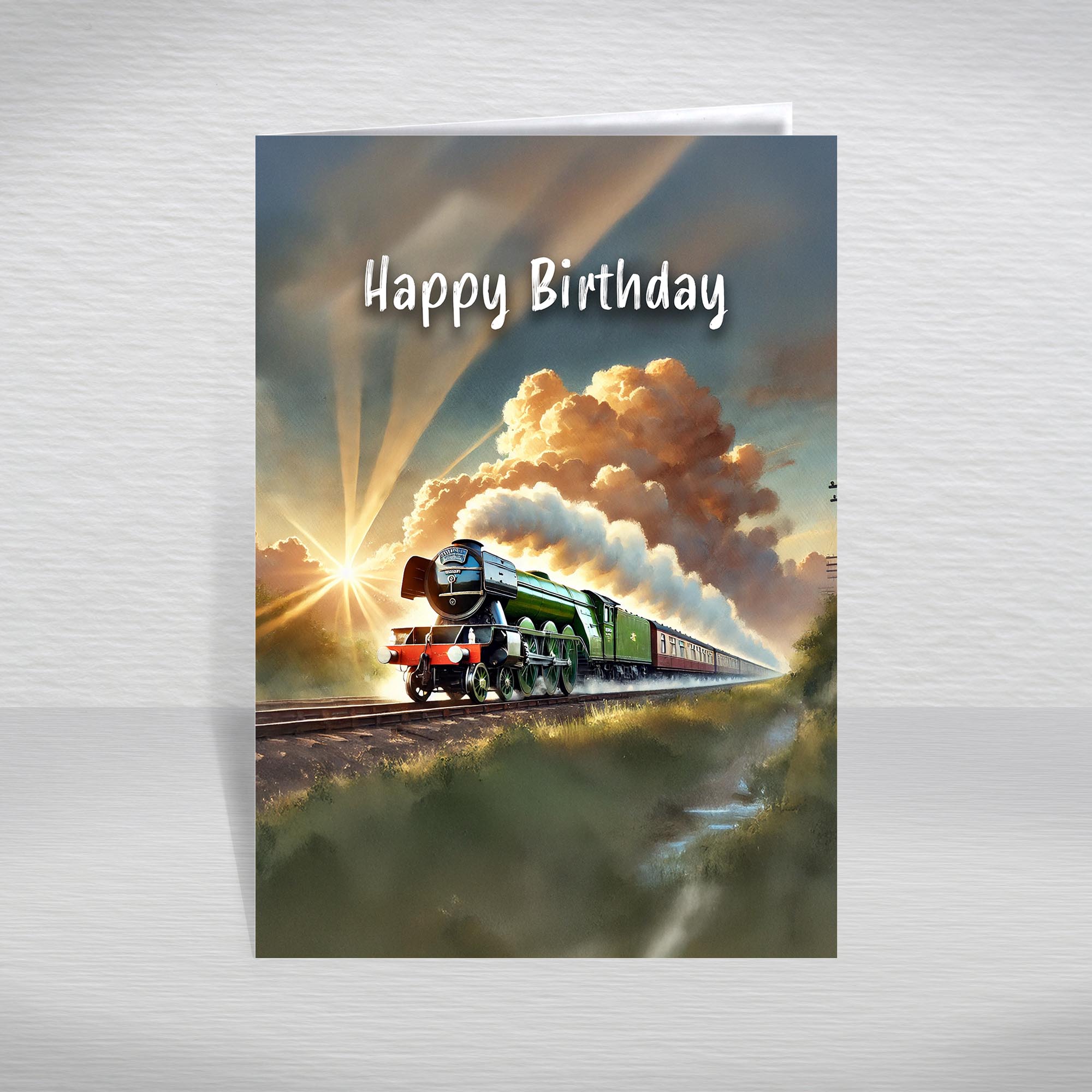
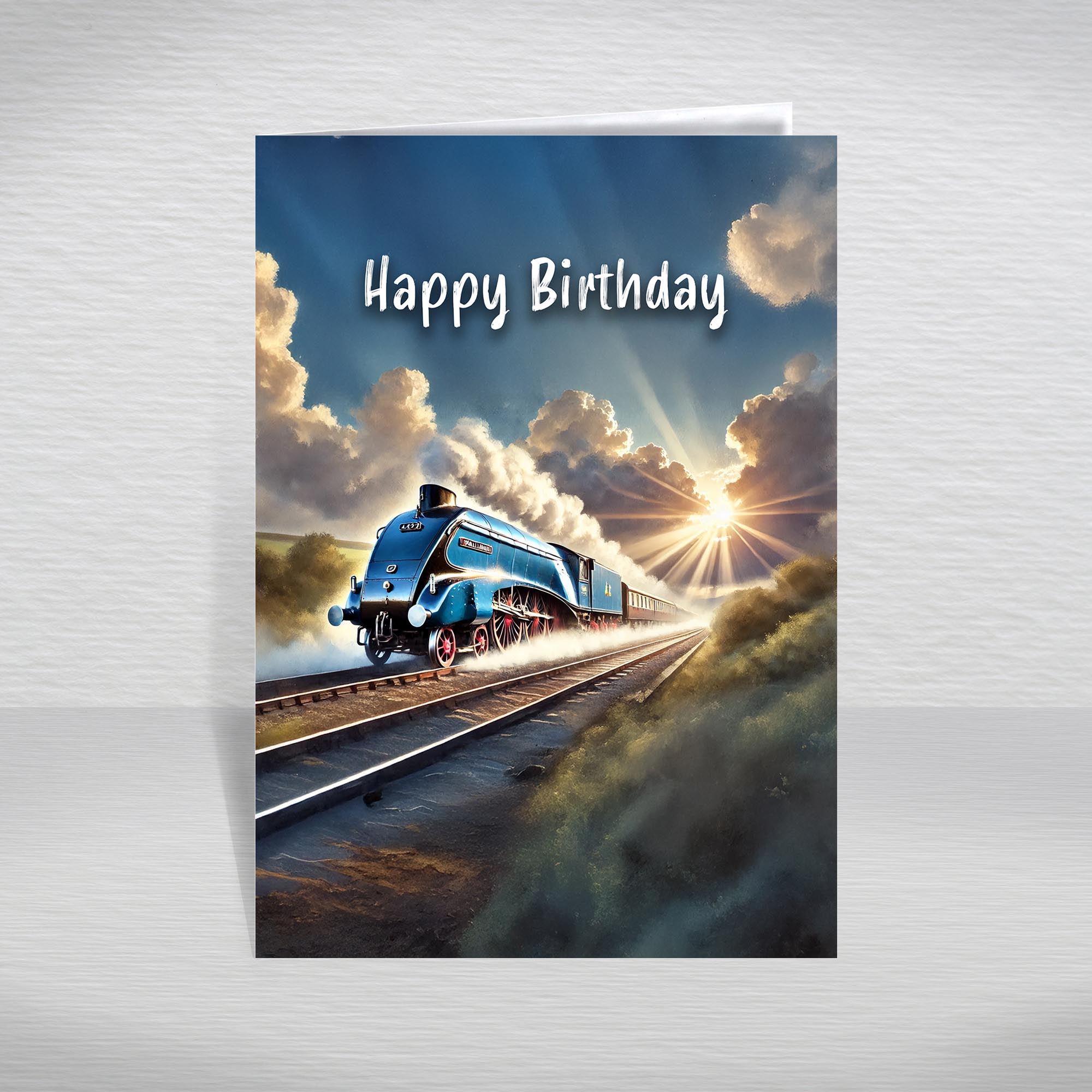
SR Lord Nelson Class
The SR Lord Nelson Class was a four-cylinder express 4-6-0 designed by Richard Maunsell for the Southern Railway to handle the heaviest Continental boat trains between London and the Channel ports. Sixteen were built at Eastleigh Works between 1926 and 1929. On introduction the prototype No. 850 Lord Nelson had a tractive effort of 33,510 lbf, the highest of any express locomotive in Britain, a record briefly held until Collett's GWR King Class of 1927 took the title.
The class was technically distinctive for its four cylinders set at 135° rather than the conventional 180°. Maunsell's Chief Draughtsman James Clayton had championed the arrangement as a way of producing eight evenly-spaced exhaust beats per revolution rather than the four of conventional four-cylinder engines, smoothing both driving torque and exhaust draught. The four cylinders were arranged in a divided drive, two inside cylinders to the leading coupled axle, two outside to the second.
In service the original blastpipe arrangement steamed inconsistently and the class developed a reputation for being temperamental. The problem was solved from 1938 by Oliver Bulleid, who had succeeded Maunsell as Southern CME in 1937. Bulleid fitted the entire class with five-nozzle Lemaître multiple-jet blastpipes and large-diameter chimneys, transforming their steaming and giving them a distinctive squared-off rectangular smokebox profile.
The class is named after British naval heroes, Lord Nelson, Sir Francis Drake, Sir Walter Raleigh, Lord Howe, Sir Martin Frobisher and so on, chosen by the Southern Railway's publicity department in 1926 to give the new flagship class a recognisable identity. The Lord Nelsons worked the celebrated all-Pullman Golden Arrow boat train from Victoria, the Bournemouth Belle from Waterloo, and the Plymouth and West of England expresses through the 1930s and 1940s.
British Railways inherited all sixteen at nationalisation in 1948. They continued in front-line service into the early 1950s but were increasingly displaced by the rebuilt Bulleid Pacifics from 1956 onwards. Withdrawal began in August 1961 and was complete by October 1962, with No. 30861 Lord Anson the last in service.
One Lord Nelson is preserved: No. 850 Lord Nelson itself, the prototype, in BR Locomotive Green and main-line registered at the Mid-Hants Railway. None of the other fifteen members of the class survived the scrapyards.
Design and development
By the mid-1920s the Southern Railway's Continental boat trains from London Victoria to Folkestone, Dover and Newhaven were among the heaviest expresses on the British network. The trains regularly loaded to twelve or thirteen vehicles including Pullman cars, restaurant cars and the through carriages of the Night Ferry service to Paris. Richard Maunsell's rebuilt Urie King Arthur 4-6-0s could just about manage them on schedule but were close to their limits, and the loads were rising.
Maunsell wanted an express engine substantially larger than anything previously built for the Southern but constrained to the company's loading gauge and bridge ratings. The result was a four-cylinder 4-6-0 with the unusual feature of cylinders set at 135° rather than the conventional 180° relative to each other, an arrangement that James Clayton, Maunsell's Chief Draughtsman, had championed as giving smoother running and better steaming through eight evenly-spaced exhaust beats per revolution. The four cylinders were arranged with two inside (driving the leading coupled axle) and two outside (driving the second coupled axle), each pair driving its own crank pin in the divided-drive arrangement.
The prototype, No. 850 Lord Nelson, was completed at Eastleigh Works in August 1926. Its tractive effort of 33,510 lbf was the highest in Britain, a distinction it held for less than a year before Collett's GWR King Class of 1927 took the title at 40,300 lbf. The first nine production engines (851–859) followed between 1928 and 1929 under Lot 263, and a further six (860–865) under Lot 287. All sixteen Lord Nelsons were built at Eastleigh.
In service the class was found to be a temperamental performer. Although capable of remarkable feats on a good day, the original blastpipe arrangement struggled to produce a consistent draught at high cut-offs and the firing pattern required to keep them steaming was unusually demanding. From 1938 Bulleid, who had become CME of the Southern in 1937, modified the class with five-nozzle Lemaître multiple-jet blastpipes, large-diameter chimneys and rectangular smokebox doors. The Bulleid modifications transformed the class's reputation, the modified Lord Nelsons became free-steaming and consistent performers of the kind Maunsell had originally intended.
Service and withdrawals
The Lord Nelsons were initially concentrated on the Eastern Section for the Continental boat trains. From the mid-1930s the celebrated all-Pullman Golden Arrow service from Victoria to Dover was a Lord Nelson roster, with the boat-train sets routinely loading to Pullman cars and special Wagon-Lits Night Ferry sleeping coaches in matching umber-and-cream livery. The class also worked the Bournemouth Belle (introduced 1931 as an all-Pullman service Waterloo to Bournemouth) and selected Plymouth–Brighton holiday expresses.
From 1939 the outbreak of war saw the class re-allocated to handle heavy wartime military traffic, and the streamlined high-speed services were either suspended or reduced. By the time the Bulleid Lemaître modifications were complete in 1939 the class was performing more reliably than it had ever done. After 1945 the Continental boat trains resumed, but the new Merchant Navy Pacifics introduced from 1941 had begun to take over the heaviest expresses, and the Lord Nelsons were progressively transferred to second-tier work.
British Railways inherited all sixteen at nationalisation in January 1948. The class continued in front-line service into the early 1950s on the Bournemouth, Plymouth and West of England expresses, but the rebuilt Merchant Navys (from 1956) and the West Country and Battle of Britain rebuilds (from 1957) increasingly displaced them. By 1959 most were on relief, parcels and fast goods work.
Withdrawal began in August 1961 with No. 30865 Sir John Hawkins; the last in service was No. 30861 Lord Anson, withdrawn in October 1962. Of the sixteen, only No. 850 Lord Nelson was retained for the National Collection, the rest were scrapped at the South Wales scrapyards.
Identification features
Standard Maunsell pattern Southern Railway 4-6-0, distinguishable from the King Arthur class by the larger boiler and the four-cylinder layout (visible from the four exhaust beats per revolution rather than the King Arthur's two). The most reliable visual difference at rest is the unusually deep splasher over the centre coupled wheels, which carried the polished brass nameplate of the naval hero whose name the locomotive bore. From 1938 onwards the class is distinguished by the large-diameter Lemaître chimney and rectangular smokebox door fitted under Bulleid's modifications. Originally painted in Southern Railway maroon (briefly) and then malachite green; in BR ownership the class wore lined Locomotive Green from 1949.
Numbers and names
—850–865
- 850
- 851
- 852
- 853
- 854
- 855
- 856
- 857
- 858
- 859
- 860
- 861
- 862
- 863
- 864
- 865
—850–859Lot 263
- 850
- 851
- 852
- 853
- 854
- 855
- 856
- 857
- 858
- 859
—860–865Lot 287
- 860
- 861
- 862
- 863
- 864
- 865
BR30850–30865
- 30850
- 30851
- 30852
- 30853
- 30854
- 30855
- 30856
- 30857
- 30858
- 30859
- 30860
- 30861
- 30862
- 30863
- 30864
- 30865
Southern Railway Nos 850–865. First batch 850–859 built 1926–1928 (Lot 263); second batch 860–865 built 1928–1929 (Lot 287). British Railways added 30000 to all numbers from 1948, becoming Nos 30850–30865. Each engine carried a polished brass nameplate over the centre splasher, all named after British naval heroes.
Notable locomotives
850 Lord Nelson, the prototype, completed at Eastleigh on 12 August 1926. On introduction the most powerful express in Britain. Withdrawn from BR service in October 1962 and selected for the National Collection. Returned to working order at Steamtown Carnforth in 1980 and ran main-line specials throughout the 1980s. Currently main-line registered at the Mid-Hants Railway.
851 Sir Francis Drake, second of class. The first to receive the Bulleid Lemaître multiple-jet blastpipe modification in 1938, which transformed the class's steaming behaviour.
857 Lord Howe, built 1929 with experimental "Maunsell modifications": double exhaust and 5 ft 9 in driving wheels (later restored to 6 ft 7 in standard), an unsuccessful trial that was reversed before the engine entered traffic.
859 Lord Hood, last of the first batch, built 1928. Worked the Bournemouth Belle for many years between 1937 and 1955.
865 Sir John Hawkins, last of class, completed November 1929. Allocated to Stewarts Lane for the Golden Arrow Continental boat train through the 1930s.
Allocations and regions
Southern Railway era (1926–1947): the entire class was concentrated on the Eastern Section in its early years, allocated to Stewarts Lane (Battersea) and Dover for the Continental boat trains, and to Bricklayers Arms for the Hastings line. From 1937 several were transferred to the Western Section at Nine Elms and Eastleigh for Bournemouth and Plymouth duties as the Bulleid Pacifics took over the Continental work. During the Second World War the class was widely re-allocated to take heavy military traffic on the Eastern and Central Sections.
British Railways Southern Region (1948–1962): the class was distributed across Nine Elms (with the largest concentration), Bournemouth, Eastleigh, and Stewarts Lane. By the late 1950s the rebuilt Bulleid Pacifics had displaced them from the principal expresses and the Lord Nelsons worked secondary expresses, semi-fasts, and parcels. By 1961 they were largely concentrated at Eastleigh shed for fast freight and relief duties before final withdrawal in 1962.
Livery history
Southern Railway (1926–1937): Southern maroon at first (briefly, on the prototype and first production engines) then a deep "Maunsell olive" green with black-and-white lining, polished brass safety-valve casing, and brass nameplates on the centre splasher.
Southern Railway malachite (1937–1947): from 1937 the class adopted the new Bulleid malachite green livery with yellow lining, Sunshine-style "Southern" lettering on the tender and a hint of black on the running plate. Wartime austerity saw some examples in unlined plain black with "British Railways" tender lettering after January 1948.
British Railways early (1948–1949): initial BR livery was apple green with black-and-white lining, some examples briefly in plain black with British Railways tender script.
British Railways Brunswick (1949–1962): the class settled into BR lined Brunswick green from 1949, with the early lion-and-wheel emblem and later the late-style BR crest from 1956. This was the dominant final livery.
Preservation status
One Lord Nelson is preserved: No. 850 Lord Nelson itself, the prototype of August 1926. Withdrawn from BR service in October 1962, the engine was retained for the National Collection and stored at Stratford depot before transfer to the Clapham Museum and afterwards to the National Railway Museum at York. Returned to working order at Steamtown Carnforth in 1980, it ran main-line specials throughout that decade in BR Locomotive Green. After overhaul it returned to working order in 2007 and is now main-line registered at the Mid-Hants Railway, where it continues to operate occasional charter services. None of the other fifteen members of the class survived scrapping.