LMS Jubilee Class
The LMS Jubilee Class was Sir William Stanier's three-cylinder express 4-6-0, the LMS's principal express engine on routes that could not accept the heavier Princess Royal or Princess Coronation Pacifics. One hundred and ninety-one engines were built between 1934 and 1936 across Crewe, Derby, and the North British Locomotive Company at Glasgow.
The design was a three-cylinder express 4-6-0 with 6 ft 9 in driving wheels, 17 × 26 in cylinders, and the Stanier domeless taper boiler at 225 psi. The three-cylinder arrangement gave smooth running and good adhesion, and the modest 20 t 5 cwt axle load gave broad route availability. The boiler shared its general design with the Black Five and 8F (sharing tooling and parts) but operated at higher pressure and with three rather than two cylinders driving.
The first engine, No. 5552 "Silver Jubilee", was completed at Crewe in December 1934 and named to mark the 1935 Silver Jubilee of King George V, which gave the class its name. Production was distributed across three works to meet the rapid LMS programme; the North British Locomotive Company at Glasgow contributed 100 of the 191 engines, by far the largest single contribution to any LMS programme. All 191 engines were completed by 1936. The class is named after British colonies and dominions, Royal Navy ships, places, and dignitaries, Jamaica, Bahamas, Kolhapur, Leander, Galatea, Renown, Howe, Rodney, Hood, Cornwall, Connaught, Lord Strathcona, and many more.
The Jubilees were the principal LMS cross-country and lighter-route express engine. The Midland Main Line top-link services from London St Pancras to Glasgow via Leeds, particularly the Holbeck link to Glasgow over the Settle-Carlisle, were heavily Jubilee-worked. The Glasgow & South Western route from Carlisle to Glasgow was almost entirely Jubilee-worked. Bristol-Glasgow cross-country expresses, the Pines Express, and many cross-country expresses similarly relied on the class. Two engines (5735 Comet and 5736 Phoenix) were rebuilt in 1942–1943 with type 2A taper boilers at 250 psi, a successful experimental development that influenced the post-war Royal Scot rebuilds.
British Railways inherited the class in 1948 and continued it in front-line LMR service through the 1950s. Displacement by BR Type 4 diesels (Class 45 Peak and Class 47) from 1961 onwards progressively withdrew the class. The last Jubilee in BR service was 45562 Alberta, withdrawn from Holbeck (Leeds) in November 1967.
Four Jubilees are preserved: 5593 Kolhapur (Birmingham Railway Museum, Tyseley), 5596 Bahamas (Bahamas Locomotive Society at the Keighley & Worth Valley Railway, notable for its double-chimney modification), 5690 Leander (East Lancashire Railway, main-line registered), and 5699 Galatea (East Lancashire Railway, main-line registered). Three of the four are regular main-line performers for charter operators, particularly across the Settle-Carlisle line and the Trans-Pennine route.
Design and development
By 1933 Sir William Stanier had completed his initial set of LMS standard locomotive designs, the Princess Royal Pacific (1933), the Black Five mixed-traffic 4-6-0 (1934), and the 8F heavy freight 2-8-0 (1935). What the LMS still lacked was a modern express engine for the routes that could not accept the heavy Princess Royal Pacifics, particularly the Midland Main Line, the Glasgow & South Western, and the cross-country services where the Pacifics' 21+ tonne axle loads were prohibitive.
The Jubilee Class was Stanier's answer. The design was a three-cylinder express 4-6-0 with 6 ft 9 in driving wheels, 17 × 26 in cylinders, and the Stanier domeless taper boiler at 225 psi. The three-cylinder arrangement gave smooth running and good adhesion, and the modest 20 t 5 cwt axle load gave broad route availability. The boiler was the same general design as the Black Five and 8F (sharing tooling and parts) but operated at higher pressure and with three rather than two cylinders driving.
The first engine, No. 5552, was completed at Crewe in December 1934 and named "Silver Jubilee" to mark the 1935 Silver Jubilee of King George V (which gave the class its name). Production was distributed across three works to meet the rapid LMS programme: Crewe (50 engines), Derby (41), and the North British Locomotive Company at Glasgow (100, by far the largest contributor). All 191 engines were completed by 1936.
Initial running revealed that the class's steaming was below expectations, a chronic problem that affected Jubilee performance through the LMS era. From 1936 onwards Stanier modified the boilers and draughting; the modifications gave significant but not transformative improvement. The class's reputation was for strong reliable service on its assigned duties rather than high-speed brilliance.
Service and withdrawals
The Jubilees were the LMS's principal cross-country and lighter-route express engine from 1934 onwards. The Midland Main Line top-link services from London St Pancras to Glasgow via Leeds were heavily Jubilee-worked, particularly the Holbeck (Leeds) link to Glasgow over the Settle-Carlisle and through the Beattock summit. The Glasgow & South Western route from Carlisle to Glasgow was almost entirely Jubilee-worked. Bristol-Glasgow cross-country expresses, the Pines Express (Bournemouth-Manchester), and many cross-country expresses similarly relied on the Jubilees.
British Railways inherited 191 Jubilees in 1948. The class continued in front-line LMR service through the 1950s on the same routes. Two engines (5735 Comet and 5736 Phoenix) were rebuilt in 1942 and 1943 with type 2A taper boilers at 250 psi as an experimental development; the rebuilt engines were extremely successful and influenced the post-war Royal Scot Class rebuilds. The remaining Jubilees stayed in their original Stanier form.
Displacement by BR Type 4 diesels (Class 45 Peak and Class 47) from 1961 onwards progressively withdrew the class. The last Jubilee in BR service was 45562 Alberta, withdrawn from Holbeck (Leeds) in November 1967.
Identification features
A clean Stanier express 4-6-0 outline, recognisably similar to the Black Five but with three cylinders (the inside cylinder visible only from underneath) and the higher 6 ft 9 in driving wheels of an express engine. Standard Stanier domeless taper boiler, Belpaire firebox, and characteristic LMS proportions. The class is named after British colonies and dominions, ships of the Royal Navy, places, and dignitaries, names like Jamaica, Bahamas, Kolhapur, Leander, Galatea, Renown, Howe, Rodney, Hood, Cornwall, Connaught, Lord Strathcona, and many more, with brass nameplates carried on the splasher (rear of the leading driving wheel) on each side. The class was named to mark the 1935 Silver Jubilee of King George V.
Numbers and names
LMS5552–5742
- 5552
- 5553
- 5554
- 5555
- 5556
- 5557
- 5558
- 5559
- 5560
- 5561
- 5562
- 5563
- 5564
- 5565
- 5566
- 5567
- 5568
- 5569
- 5570
- 5571
- 5572
- 5573
- 5574
- 5575
- 5576
- 5577
- 5578
- 5579
- 5580
- 5581
- 5582
- 5583
- 5584
- 5585
- 5586
- 5587
- 5588
- 5589
- 5590
- 5591
- 5592
- 5593
- 5594
- 5595
- 5596
- 5597
- 5598
- 5599
- 5600
- 5601
- 5602
- 5603
- 5604
- 5605
- 5606
- 5607
- 5608
- 5609
- 5610
- 5611
- 5612
- 5613
- 5614
- 5615
- 5616
- 5617
- 5618
- 5619
- 5620
- 5621
- 5622
- 5623
- 5624
- 5625
- 5626
- 5627
- 5628
- 5629
- 5630
- 5631
- 5632
- 5633
- 5634
- 5635
- 5636
- 5637
- 5638
- 5639
- 5640
- 5641
- 5642
- 5643
- 5644
- 5645
- 5646
- 5647
- 5648
- 5649
- 5650
- 5651
- 5652
- 5653
- 5654
- 5655
- 5656
- 5657
- 5658
- 5659
- 5660
- 5661
- 5662
- 5663
- 5664
- 5665
- 5666
- 5667
- 5668
- 5669
- 5670
- 5671
- 5672
- 5673
- 5674
- 5675
- 5676
- 5677
- 5678
- 5679
- 5680
- 5681
- 5682
- 5683
- 5684
- 5685
- 5686
- 5687
- 5688
- 5689
- 5690
- 5691
- 5692
- 5693
- 5694
- 5695
- 5696
- 5697
- 5698
- 5699
- 5700
- 5701
- 5702
- 5703
- 5704
- 5705
- 5706
- 5707
- 5708
- 5709
- 5710
- 5711
- 5712
- 5713
- 5714
- 5715
- 5716
- 5717
- 5718
- 5719
- 5720
- 5721
- 5722
- 5723
- 5724
- 5725
- 5726
- 5727
- 5728
- 5729
- 5730
- 5731
- 5732
- 5733
- 5734
- 5735
- 5736
- 5737
- 5738
- 5739
- 5740
- 5741
- 5742
BR45552–45742
- 45552
- 45553
- 45554
- 45555
- 45556
- 45557
- 45558
- 45559
- 45560
- 45561
- 45562
- 45563
- 45564
- 45565
- 45566
- 45567
- 45568
- 45569
- 45570
- 45571
- 45572
- 45573
- 45574
- 45575
- 45576
- 45577
- 45578
- 45579
- 45580
- 45581
- 45582
- 45583
- 45584
- 45585
- 45586
- 45587
- 45588
- 45589
- 45590
- 45591
- 45592
- 45593
- 45594
- 45595
- 45596
- 45597
- 45598
- 45599
- 45600
- 45601
- 45602
- 45603
- 45604
- 45605
- 45606
- 45607
- 45608
- 45609
- 45610
- 45611
- 45612
- 45613
- 45614
- 45615
- 45616
- 45617
- 45618
- 45619
- 45620
- 45621
- 45622
- 45623
- 45624
- 45625
- 45626
- 45627
- 45628
- 45629
- 45630
- 45631
- 45632
- 45633
- 45634
- 45635
- 45636
- 45637
- 45638
- 45639
- 45640
- 45641
- 45642
- 45643
- 45644
- 45645
- 45646
- 45647
- 45648
- 45649
- 45650
- 45651
- 45652
- 45653
- 45654
- 45655
- 45656
- 45657
- 45658
- 45659
- 45660
- 45661
- 45662
- 45663
- 45664
- 45665
- 45666
- 45667
- 45668
- 45669
- 45670
- 45671
- 45672
- 45673
- 45674
- 45675
- 45676
- 45677
- 45678
- 45679
- 45680
- 45681
- 45682
- 45683
- 45684
- 45685
- 45686
- 45687
- 45688
- 45689
- 45690
- 45691
- 45692
- 45693
- 45694
- 45695
- 45696
- 45697
- 45698
- 45699
- 45700
- 45701
- 45702
- 45703
- 45704
- 45705
- 45706
- 45707
- 45708
- 45709
- 45710
- 45711
- 45712
- 45713
- 45714
- 45715
- 45716
- 45717
- 45718
- 45719
- 45720
- 45721
- 45722
- 45723
- 45724
- 45725
- 45726
- 45727
- 45728
- 45729
- 45730
- 45731
- 45732
- 45733
- 45734
- 45735
- 45736
- 45737
- 45738
- 45739
- 45740
- 45741
- 45742
LMS Nos 5552–5742 (built 1934–1936). British Railways added 40000 to give 45552–45742 from 1948. Distributed across three works: 50 from Crewe, 41 from Derby, and 100 from the North British Locomotive Company at Glasgow.
Notable locomotives
5552 Silver Jubilee (later 45552), the class prototype, completed at Crewe in December 1934 and named to mark the 1935 Silver Jubilee of King George V. Withdrawn 1964.
5593 Kolhapur (later 45593), completed at the North British Locomotive Company in May 1934. Named after the Indian princely state. Withdrawn from BR October 1967 and privately preserved at the Birmingham Railway Museum (Tyseley). Currently main-line registered (varies by overhaul cycle).
5596 Bahamas (later 45596), completed at the North British Locomotive Company in January 1935. Notable for its post-rebuild double chimney and modified draughting (one of two Jubilees to receive this modification). Privately preserved by the Bahamas Locomotive Society at the Keighley & Worth Valley Railway. Currently main-line registered.
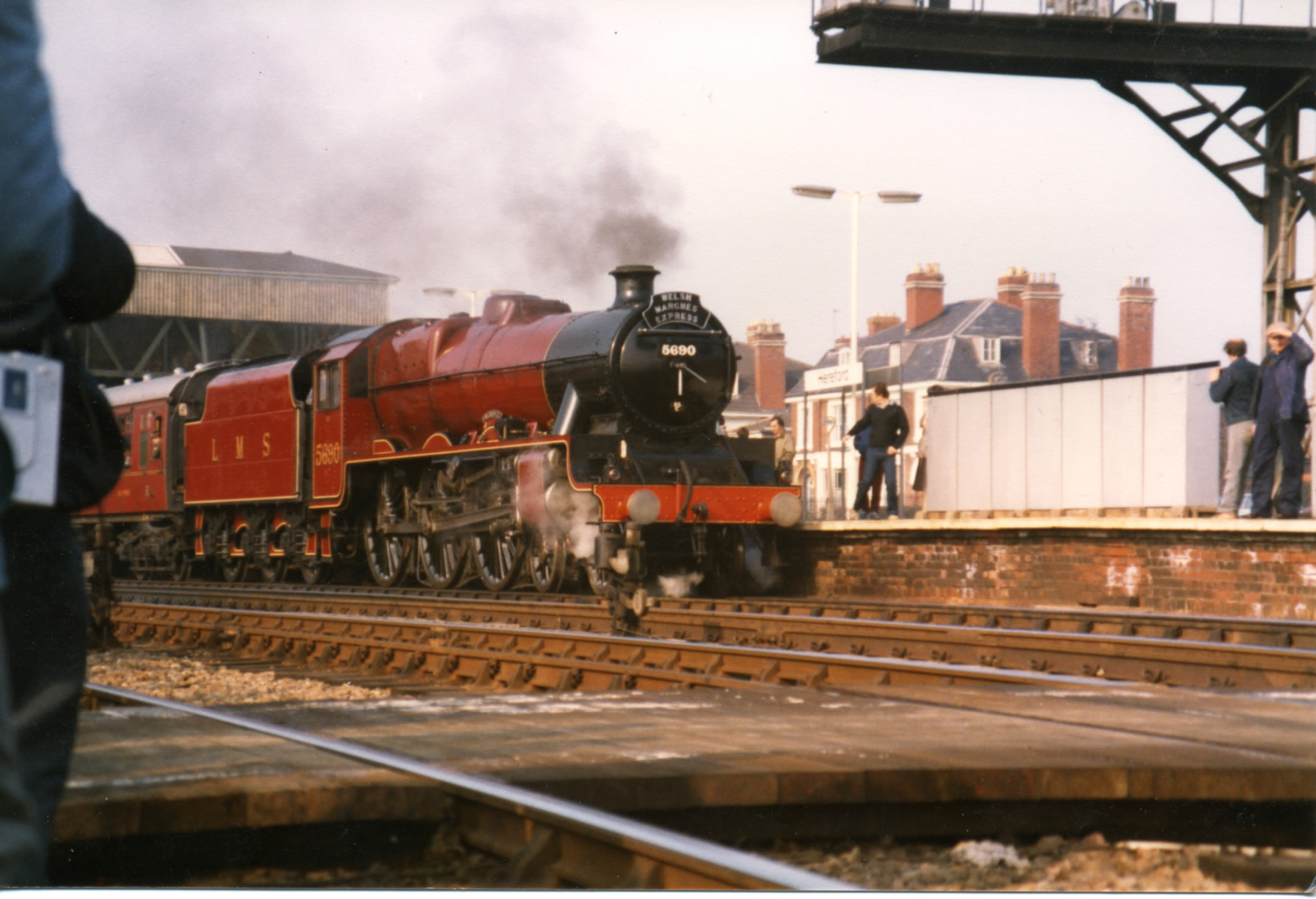
5690 Leander (later 45690), completed at Crewe in March 1936. Withdrawn from BR March 1964. Privately preserved at the East Lancashire Railway. Currently main-line registered.
5699 Galatea (later 45699), completed at Crewe in April 1936. Withdrawn from BR November 1964 and privately preserved. Currently based at the East Lancashire Railway. Main-line registered.
5562 Alberta (later 45562), the very last Jubilee in BR service, withdrawn from Holbeck (Leeds) in November 1967.
Allocations and regions
LMS era (1934–1947): the class was concentrated on the Midland Main Line top-link sheds, Holbeck (Leeds), Bristol Barrow Road, Saltley (Birmingham), Kentish Town (London), for the Midland and Trans-Pennine express services. Substantial allocations also at the Glasgow & South Western sheds, Corkerhill (Glasgow) and Carlisle Kingmoor, for the Anglo-Scottish G&SWR services.
British Railways London Midland Region (1948–1965): continued at the same sheds. The class worked the principal LMR cross-country expresses through the 1950s, particularly the Bristol-Glasgow services, the Trans-Pennine routes, and the Midland Main Line semi-fasts.
Final years (1962–1967): displacement by BR Type 4 diesels (Class 45 Peak and Class 47) progressively withdrew the class through the early-to-mid 1960s. The last Jubilee in BR service was 45562 Alberta, withdrawn from Holbeck in November 1967.
Livery history
LMS lined crimson lake (1934–1947): the class was outshopped in LMS lined crimson lake with gold lining and serif "LMS" lettering, the LMS standard express livery. Most Jubilees wore this livery throughout the LMS era.
LMS unlined black (1942–1947): wartime conditions saw most engines temporarily painted in plain black with shaded lettering, returning progressively to crimson lake post-war.
British Railways Brunswick green (1949–1967): from 1949 the class wore BR-standard lined Brunswick green with the early lion-and-wheel emblem (later the late BR crest from 1956). Some examples briefly carried experimental BR blue (1948–1949) before standardisation on Brunswick green. This was the dominant BR livery to the end.
Preservation: preserved Jubilees have appeared in LMS lined crimson lake, BR Brunswick green with each emblem variant, and (in occasional special-event cases) the apple green of the Caledonian or G&SWR liveries the class never actually wore.
Preservation status
Four Jubilees are preserved, a 2.1% survival rate, modest but reflecting the bulk of the class being scrapped before the heritage movement was active. All four preserved engines are main-line registered (or have been at various times):
- 5593 Kolhapur, Birmingham Railway Museum (Tyseley). Currently in working order with periodic main-line registration.
- 5596 Bahamas, Bahamas Locomotive Society at the Keighley & Worth Valley Railway (Ingrow West site). Notable as one of the two Jubilees to receive a double chimney modification. Currently main-line registered.
- 5690 Leander, East Lancashire Railway. Currently main-line registered with the West Coast Railway Company.
- 5699 Galatea, East Lancashire Railway. Currently main-line registered with the West Coast Railway Company.
Three of the four preserved Jubilees have been regular main-line performers for charter operators, particularly across the Settle-Carlisle line and the Trans-Pennine route, historically appropriate routes for the class.
Photographs