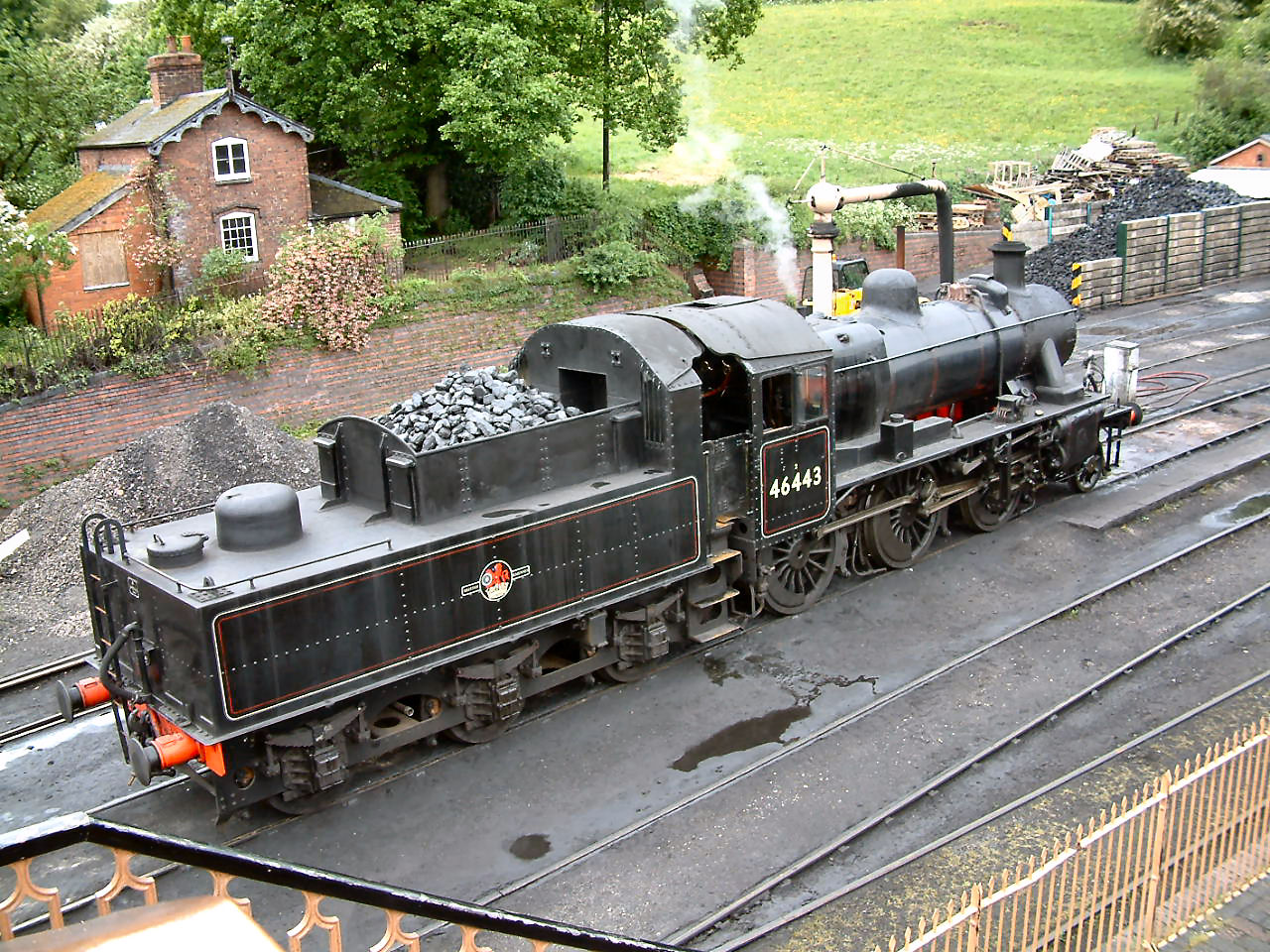
LMS Ivatt 2MT (Class 2 Mogul)
The LMS Ivatt 2MT was a fleet of 128 light mixed-traffic 2-6-0 mogul steam locomotives designed by Henry George Ivatt for the London, Midland and Scottish Railway. Built between 1946 and 1953 at Crewe and Darlington Works, they were intended for branch and secondary services and went on to be the basis for the very similar BR Standard Class 2 mogul of 1952 to 1956. Together the two classes provided around 193 small moguls for branch-line work across the British Railways system, and seven Ivatt 2MTs (plus four BR Standard derivatives) have survived into preservation.
Ivatt was the son of Henry Alfred Ivatt, the Great Northern Railway's locomotive engineer, and was appointed CME of the LMS in 1946 on the death of Charles Fairburn. He inherited a fleet of pre-Grouping engines on the LMS's rural lines and a postwar labour shortage that was forcing British railways to think hard about the cost of servicing steam. His response was a generation of locomotives designed for ease of maintenance: outside cylinders so motion could be inspected without dropping into the pit, self-cleaning smokeboxes, rocking grates, and self-emptying ashpans, all of which materially reduced the labour required at end-of-shift servicing.
The 2MT mogul of 1946 was the first of these. The first 20 engines were built at Crewe with double chimneys for evaluation, and the rest of the class with single chimneys at Crewe and Darlington. The design proved popular with crews for being free-running, easy to fire, and unfussy in service. They worked branch passenger trains, summer Saturday seaside relief turns, parcels, milk, and pick-up freight across the rural Welsh cross-country lines, the Stratford and Midland Junction, the Lincolnshire and Yorkshire branches, the Highland Region's lighter routes, and the Border Counties services in Scotland.
The success of the class led directly to the BR Standard Class 2 mogul (78000 to 78064) of 1952 to 1956, which was almost identical apart from minor BR-style fittings. The Ivatt and the Standard worked happily side-by-side on branch and secondary services for the rest of the steam era, and the casual visitor to a heritage gala today can sometimes see both classes in steam together. Withdrawals of the Ivatt 2MT began in the early 1960s as the Beeching closures took effect, and the last Ivatt mogul was retired from BR service in 1967.
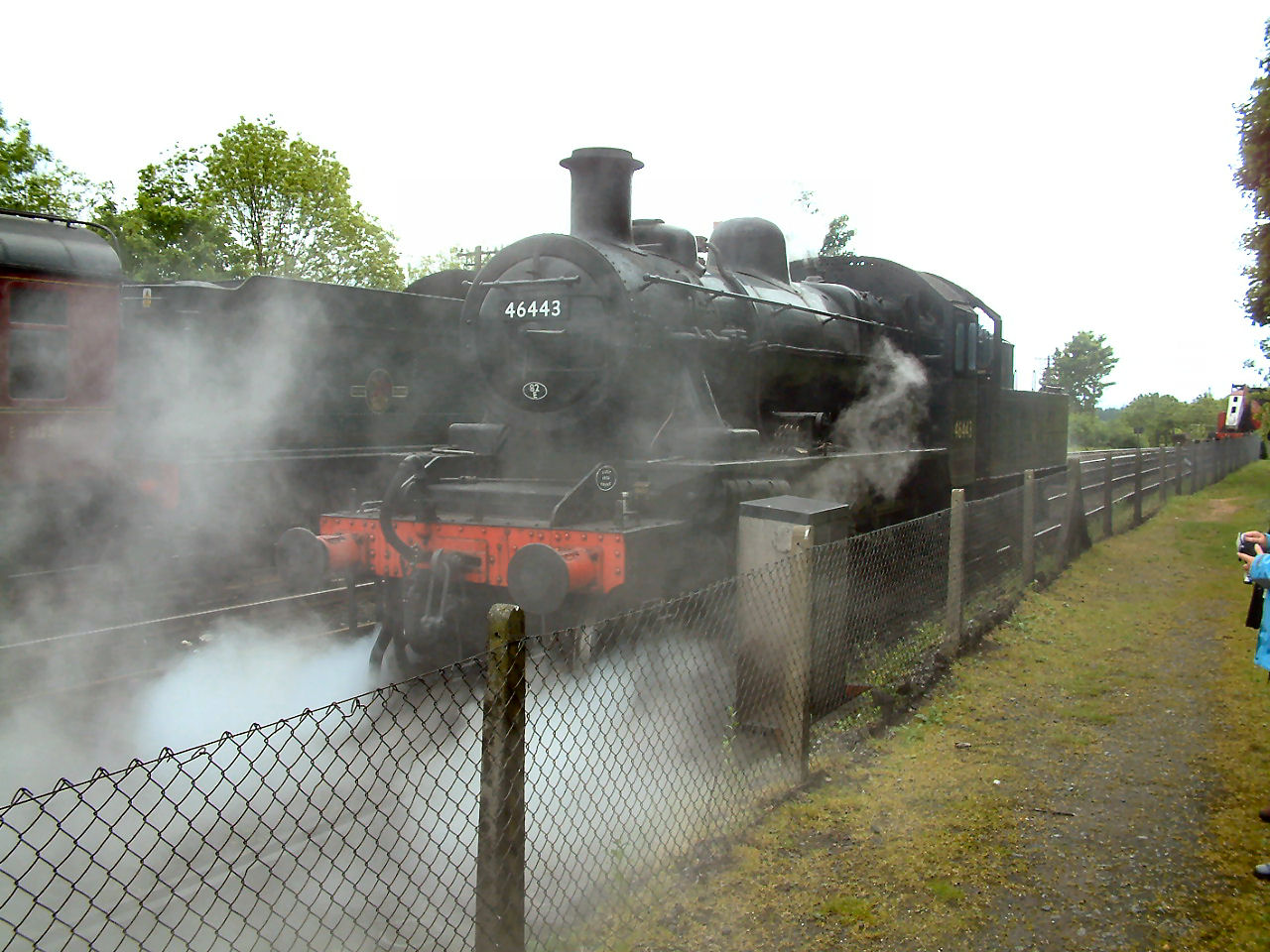
Seven Ivatt 2MT moguls survive in preservation, including 46443 (Severn Valley Railway), 46428 (East Lancashire Railway), 46447 (Strathspey Railway), 46464 (Strathspey Railway), 46512 (Strathspey Railway), 46521 (Great Central Railway), and 46443. Several have been outshopped in the original LMS lined black livery as a tribute to the early production, and the class's small size, light axle load, and free-steaming nature have made it a popular working preserved engine on the smaller heritage railways where its capacity for three or four coaches is well matched to the line.
Design and development
Henry George Ivatt was the son of Henry Alfred Ivatt, the Great Northern Railway's locomotive engineer, and was appointed chief mechanical engineer of the LMS in 1946 on the death of Charles Fairburn. Ivatt found himself with a brief to design a new generation of light branch-line tank and tender engines that would replace the great mass of pre-Grouping engines still in service on the LMS's rural lines. He had a particular interest in shed-friendly design: locomotives that could be cleaned, fired, and serviced with the minimum of labour, at a time when post-war labour shortages were forcing British railways to think hard about the cost of running steam.
The 2MT mogul, introduced in 1946, embodied that thinking. It was a small mixed-traffic 2-6-0 with outside cylinders (so motion was easy to inspect at sheds), a self-cleaning smokebox, a rocking grate, and a self-emptying ashpan. The overall design was deliberately simple, with two cylinders, Walschaerts valve gear, and a tapered Type 3B boiler that was carried over from the related Ivatt 4MT mogul (which itself was a development of an earlier Stanier project). The first batch of 20 engines was built at Crewe Works in 1946 and 1947 with double chimneys for evaluation; subsequent production reverted to single chimneys, and the double chimneys were eventually removed from the early engines.
128 were built between 1946 and 1953 at Crewe (most) and Darlington Works. The class was so successful that it was effectively re-issued as the BR Standard Class 2 mogul (78000 to 78064) of 1952 to 1956, which was almost identical apart from minor BR-style fittings. The Ivatt 2MT and the BR Standard Class 2 between them produced a fleet of around 193 engines that was the standard light mixed-traffic mogul of the British Railways era.
Service and withdrawals
The Ivatt 2MTs spent their working lives on branch and secondary services across the British Railways system. They were a familiar sight on the rural Welsh cross-country lines, the Stratford and Midland Junction Railway, the Great Central's Nottingham-to-Sheffield section, the Yorkshire and Lincolnshire branches, the Highland Region's lighter routes, and the Border Counties services in Scotland. They handled stopping passenger trains of three or four coaches, summer Saturday relief turns to seaside termini, parcels, milk, and pick-up freight.
The class was popular with crews for being free-running, easy to fire, and unfussy in service. Maintenance staff appreciated the ease of the outside cylinders, the self-cleaning smokebox, and the rocking grate, all of which materially reduced the labour required at end-of-shift servicing.
Withdrawals began in the early 1960s as branch lines closed under the Beeching Plan and as diesel multiple units replaced steam-hauled stopping trains. The class was decimated between 1963 and 1967, by which time the surviving Ivatt 2MTs had been concentrated on a small number of secondary lines (including the Cambrian Coast, the East Suffolk, and the Highland Region's Aberdeen-to-Inverness route). The last Ivatt 2MT moguls were withdrawn from BR service in 1967.
Identification features
Numbers and names
LMS6400–6527originally allocated 6400 to 6428 for the first batch
- 6400
- 6401
- 6402
- 6403
- 6404
- 6405
- 6406
- 6407
- 6408
- 6409
- 6410
- 6411
- 6412
- 6413
- 6414
- 6415
- 6416
- 6417
- 6418
- 6419
- 6420
- 6421
- 6422
- 6423
- 6424
- 6425
- 6426
- 6427
- 6428
- 6429
- 6430
- 6431
- 6432
- 6433
- 6434
- 6435
- 6436
- 6437
- 6438
- 6439
- 6440
- 6441
- 6442
- 6443
- 6444
- 6445
- 6446
- 6447
- 6448
- 6449
- 6450
- 6451
- 6452
- 6453
- 6454
- 6455
- 6456
- 6457
- 6458
- 6459
- 6460
- 6461
- 6462
- 6463
- 6464
- 6465
- 6466
- 6467
- 6468
- 6469
- 6470
- 6471
- 6472
- 6473
- 6474
- 6475
- 6476
- 6477
- 6478
- 6479
- 6480
- 6481
- 6482
- 6483
- 6484
- 6485
- 6486
- 6487
- 6488
- 6489
- 6490
- 6491
- 6492
- 6493
- 6494
- 6495
- 6496
- 6497
- 6498
- 6499
- 6500
- 6501
- 6502
- 6503
- 6504
- 6505
- 6506
- 6507
- 6508
- 6509
- 6510
- 6511
- 6512
- 6513
- 6514
- 6515
- 6516
- 6517
- 6518
- 6519
- 6520
- 6521
- 6522
- 6523
- 6524
- 6525
- 6526
- 6527
LMS6400–6428
- 6400
- 6401
- 6402
- 6403
- 6404
- 6405
- 6406
- 6407
- 6408
- 6409
- 6410
- 6411
- 6412
- 6413
- 6414
- 6415
- 6416
- 6417
- 6418
- 6419
- 6420
- 6421
- 6422
- 6423
- 6424
- 6425
- 6426
- 6427
- 6428
BR46400–46527 renumbered
- 46400
- 46401
- 46402
- 46403
- 46404
- 46405
- 46406
- 46407
- 46408
- 46409
- 46410
- 46411
- 46412
- 46413
- 46414
- 46415
- 46416
- 46417
- 46418
- 46419
- 46420
- 46421
- 46422
- 46423
- 46424
- 46425
- 46426
- 46427
- 46428
- 46429
- 46430
- 46431
- 46432
- 46433
- 46434
- 46435
- 46436
- 46437
- 46438
- 46439
- 46440
- 46441
- 46442
- 46443
- 46444
- 46445
- 46446
- 46447
- 46448
- 46449
- 46450
- 46451
- 46452
- 46453
- 46454
- 46455
- 46456
- 46457
- 46458
- 46459
- 46460
- 46461
- 46462
- 46463
- 46464
- 46465
- 46466
- 46467
- 46468
- 46469
- 46470
- 46471
- 46472
- 46473
- 46474
- 46475
- 46476
- 46477
- 46478
- 46479
- 46480
- 46481
- 46482
- 46483
- 46484
- 46485
- 46486
- 46487
- 46488
- 46489
- 46490
- 46491
- 46492
- 46493
- 46494
- 46495
- 46496
- 46497
- 46498
- 46499
- 46500
- 46501
- 46502
- 46503
- 46504
- 46505
- 46506
- 46507
- 46508
- 46509
- 46510
- 46511
- 46512
- 46513
- 46514
- 46515
- 46516
- 46517
- 46518
- 46519
- 46520
- 46521
- 46522
- 46523
- 46524
- 46525
- 46526
- 46527
BR6400–6419
- 6400
- 6401
- 6402
- 6403
- 6404
- 6405
- 6406
- 6407
- 6408
- 6409
- 6410
- 6411
- 6412
- 6413
- 6414
- 6415
- 6416
- 6417
- 6418
- 6419
BR78000–78064
- 78000
- 78001
- 78002
- 78003
- 78004
- 78005
- 78006
- 78007
- 78008
- 78009
- 78010
- 78011
- 78012
- 78013
- 78014
- 78015
- 78016
- 78017
- 78018
- 78019
- 78020
- 78021
- 78022
- 78023
- 78024
- 78025
- 78026
- 78027
- 78028
- 78029
- 78030
- 78031
- 78032
- 78033
- 78034
- 78035
- 78036
- 78037
- 78038
- 78039
- 78040
- 78041
- 78042
- 78043
- 78044
- 78045
- 78046
- 78047
- 78048
- 78049
- 78050
- 78051
- 78052
- 78053
- 78054
- 78055
- 78056
- 78057
- 78058
- 78059
- 78060
- 78061
- 78062
- 78063
- 78064
LMS 6400 to 6527 (originally allocated 6400 to 6428 for the first batch). Renumbered 46400 to 46527 by British Railways from 1948. The first 20 engines (6400 to 6419) were built at Crewe Works in 1946 and 1947 with double chimneys; the remainder were built with single chimneys at both Crewe and Darlington. The class was the basis for the very similar BR Standard Class 2 mogul (78000 to 78064), which was almost identical apart from minor BR-style fittings.
Notable locomotives
46428 entered traffic in 1953 and worked the Stoke and Crewe areas before being withdrawn in 1966. Saved from Barry in 1976, it has worked at the East Lancashire Railway and several other heritage railways and is currently in working order.
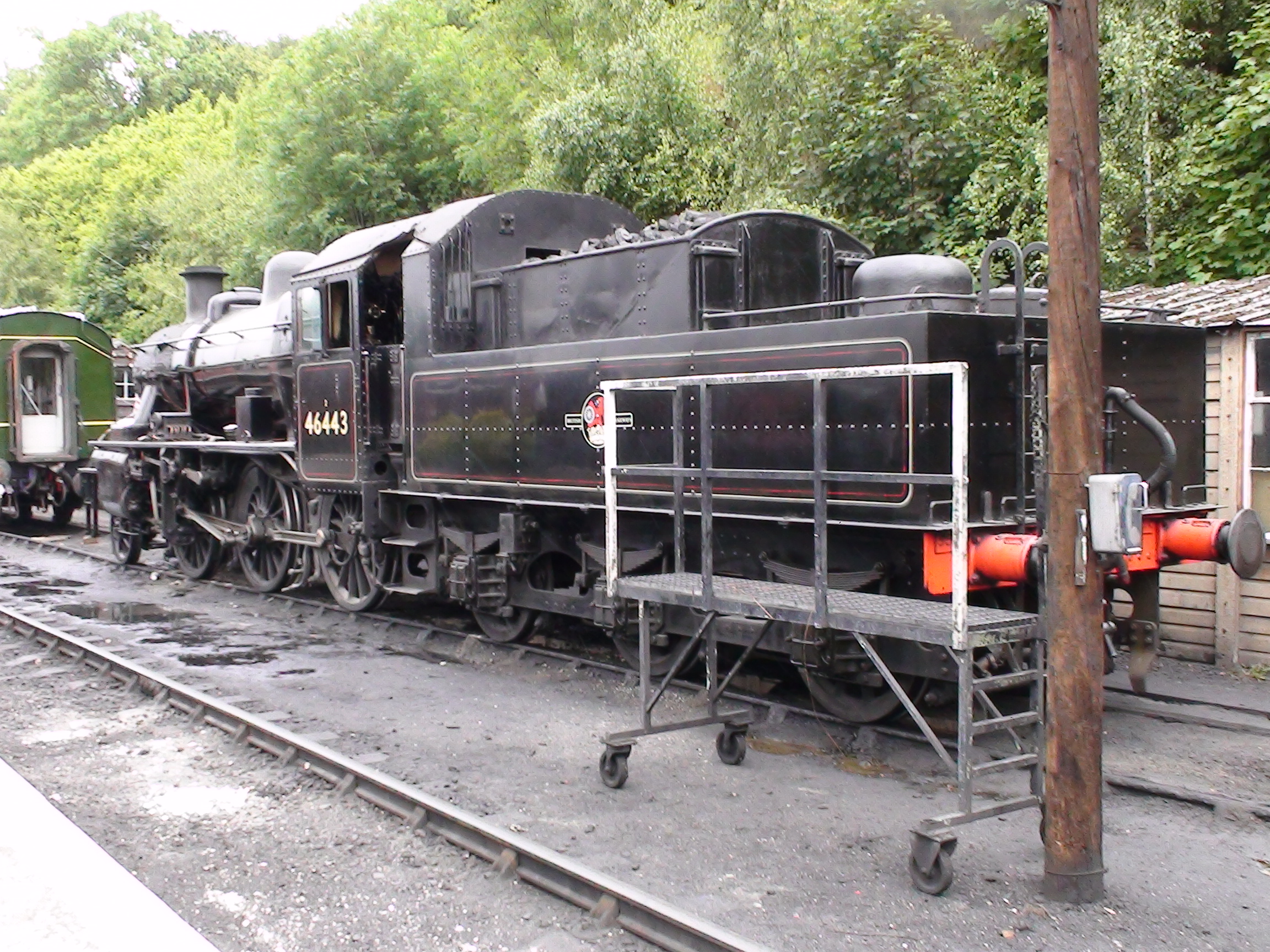
46443 was completed in 1950 and spent its working life on the Western and LM regions. Withdrawn in 1967, it was preserved by the Severn Valley Railway directly from BR service and is one of the most reliably-maintained Ivatt 2MTs in preservation, having been a regular performer on the SVR for over fifty years.
46447 entered traffic in 1950 and worked rural Welsh and Border services. Saved from Barry in 1976 and now operating at the Strathspey Railway in Scotland.
46512 entered traffic in 1952 and is currently based at the Strathspey Railway, where it has been in regular service.
46521 entered service in 1953 and worked from Bedford and Bletchley. Now preserved at the Great Central Railway.
46464 entered traffic in 1950 and is currently based at the Strathspey Railway in Aviemore.
Six other Ivatt 2MT moguls (and the very similar BR Standard Class 2 78xxx 2-6-0 derivatives) survived in various preservation locations.
Allocations and regions
Livery history
The first 12 engines (1946 to 1947) were turned out in plain LMS black with smokebox-side number plates. The post-1948 production was painted in BR mixed-traffic lined black with the early lion-and-wheel emblem; from 1956 the late ferret-and-dartboard crest was applied at general overhauls. A small number of preserved examples have been turned out in LMS lined black with the LMS crest as a tribute to the original 1946 prototype, and several have appeared in BR mixed-traffic lined black with both early and late crests during their preservation careers.
Preservation status
Seven Ivatt 2MT moguls survive in preservation, a remarkable proportion of the original class of 128. The survivors are spread across heritage railways from southern England to the Scottish Highlands, and most are in working condition or undergoing overhaul.
Five of the seven survivors came from Woodham Brothers' scrapyard at Barry in the 1970s and 1980s; the rest were preserved directly from BR service. Several have been outshopped in the original LMS lined black livery as a tribute to the early production, while others have appeared in BR mixed-traffic lined black with either the early lion-and-wheel or late ferret-and-dartboard crest. The class's small size, light axle load, and free-steaming nature have made it a popular working preserved engine, particularly suited to the smaller heritage railways where its capacity for three or four coaches is well matched to the line.
Several Ivatt 2MTs have at various times worked alongside the very similar BR Standard Class 2 (the 78xxx series), and the casual visitor to a heritage gala can sometimes see both classes in steam together, demonstrating the close family relationship between the two.
Photographs