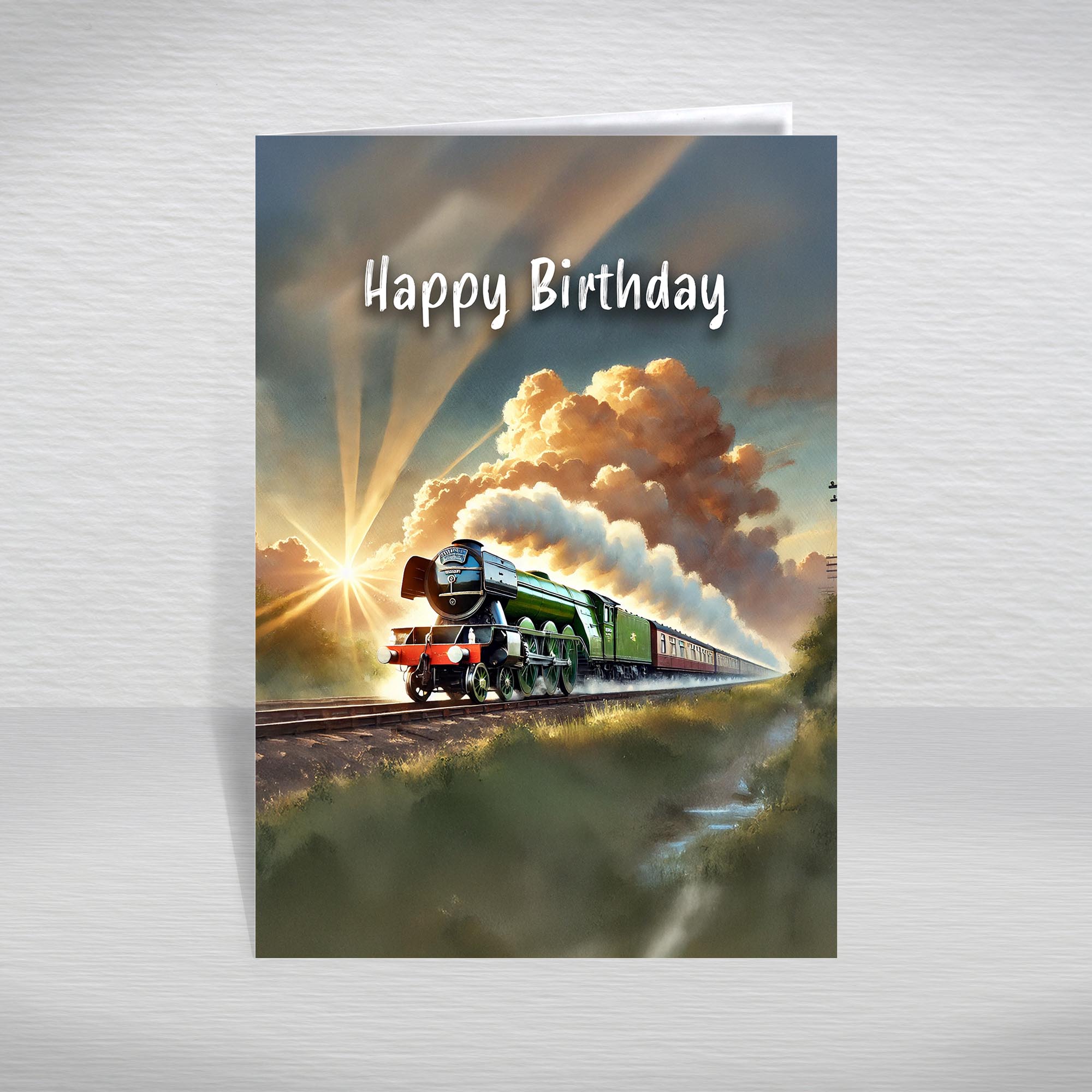
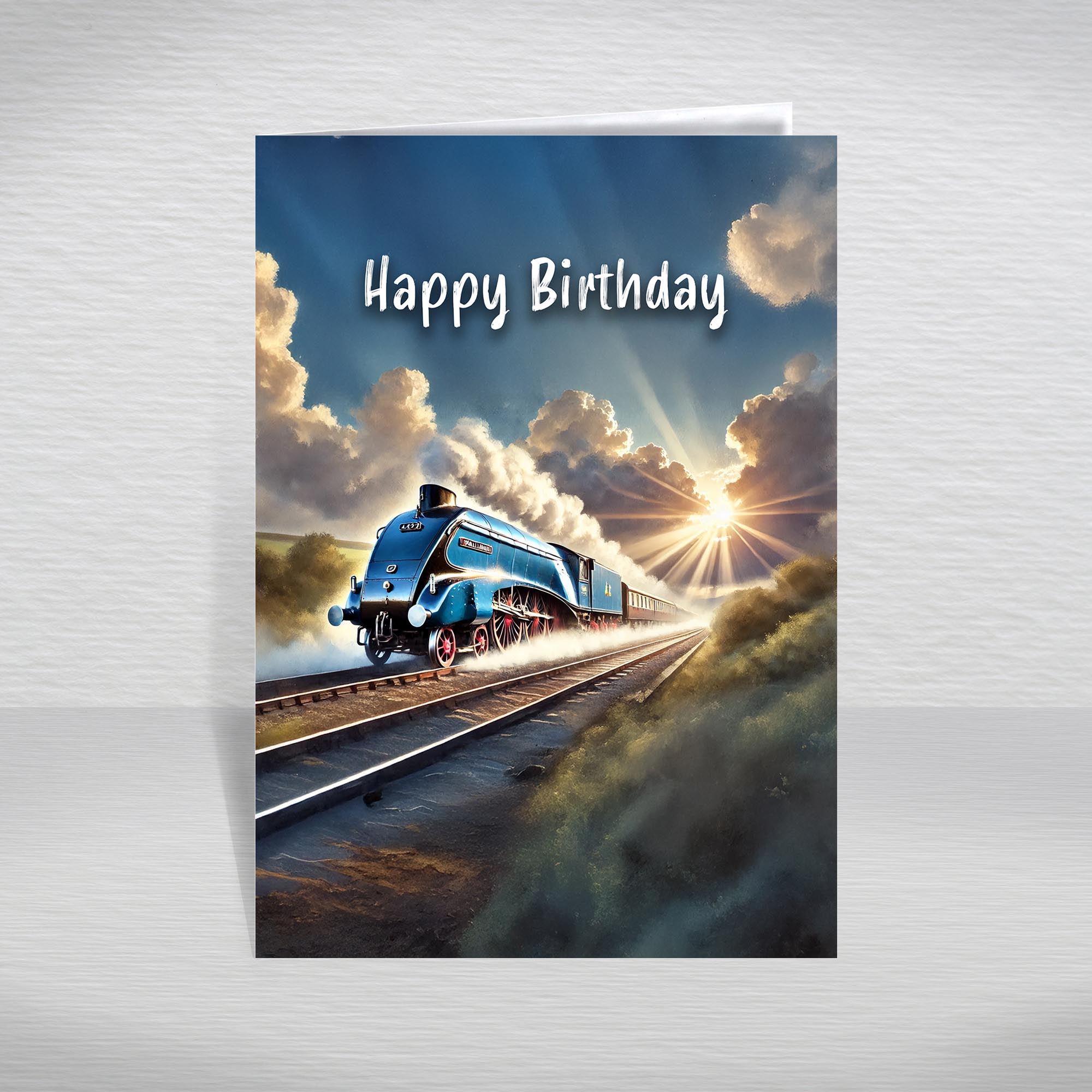
GWR Firefly Class
The GWR Firefly Class was the first successful broad-gauge express locomotive class designed for the Great Western Railway, introduced in 1840 to a 2-2-2 wheel arrangement by Daniel Gooch, who had been appointed as the GWR's first Locomotive Superintendent in 1837 at just twenty-one years of age. The Firefly Class transformed GWR express performance, replacing the unreliable mixed collection of locomotives the railway had struggled with since its opening and establishing the pattern of high-speed broad-gauge express running that would characterise the GWR until gauge conversion in 1892.
Gooch designed the Firefly Class in 1839–40, specifying a 2-2-2 single-driver layout with 7 ft driving wheels suited to the GWR's 7 ft 0¼ in broad gauge, inside cylinders, and a straightforward parallel boiler of generous Swindon proportions. The first locomotive of the class, Firefly itself, entered service in March 1840 and immediately demonstrated a performance far superior to anything the GWR had previously operated: on 17 March 1840, Firefly hauled a 60-ton train from Paddington to Reading — 36 miles — in 40 minutes, an average of 54 mph, at a time when 30 mph was considered fast. Gooch built 62 Firefly Class locomotives between 1840 and 1842, establishing the broad-gauge single-driver as the GWR's standard express type.
The Firefly Class set standards for speed and reliability that made the GWR's broad-gauge expresses the fastest trains in the world in the early 1840s, and Gooch's design directly informed the more powerful Iron Duke class of 1847 that succeeded it. None of the original Firefly Class locomotives survived into preservation, but a working replica of Firefly was built by the Firefly Trust and is displayed at the STEAM Museum in Swindon, where it represents the founding achievement of GWR broad-gauge express locomotion.
Design and development
When Daniel Gooch was appointed GWR Locomotive Superintendent at the age of 21 in August 1837, he inherited a chaotic locomotive fleet of varying types from different builders, of which only the Star class proved fully reliable. Gooch's response was to draw up a complete set of standard drawings for a new express locomotive — every dimension, every component fully specified — and to place orders with seven different builders to produce engines exactly to those drawings. This was the first time any railway had specified locomotives this precisely; until then, builders had typically been given a general specification and left to design the details.
The Firefly was a conventional Patentee-type 2-2-2 enlarged for the broad gauge, with 7 ft 0 in driving wheels (later increased to 7 ft 6 in as the design developed). 62 were built between March 1840 and December 1842 by Jones Turner & Evans, Sharp Roberts & Co., Hick & Sons, Fenton Murray & Jackson, Mather Dixon & Co., Nasmyth Gaskell & Co., and Stothert & Slaughter — every major British locomotive builder of the period.
Service and withdrawals
The Fireflies entered service progressively from 1840 and rapidly became the GWR's standard express engine. Firefly itself hauled the legendary 1 May 1844 demonstration run from Paddington to Exeter — 194 miles non-stop in 4 hours 40 minutes including stops, an average of 41 mph and a record that stood for many years.
The class was progressively rebuilt by Gooch in the 1860s with new, larger boilers; a number lasted in this rebuilt form until withdrawal of the broad gauge in May 1892. None of the originals survived, but a working full-size replica of Firefly was completed by the Firefly Trust at the Didcot Railway Centre in 2005 and operates regularly there.
Identification features
Broad-gauge 2-2-2 with 7 ft 0 in (later 7 ft 6 in) driving wheels, inside cylinders, copper-capped chimney, and the distinctive Gooch features that became the GWR house style: domeless boiler, polished brass safety-valve cover, and dark green livery. The Didcot replica preserves all the original visual character.
Notable locomotives
- Firefly (1840, original — not preserved)
- Firefly replica (2005, Didcot Railway Centre — operational)
Allocations and regions
Paddington and Bristol for the GWR's broad-gauge main-line express services, including the celebrated London–Bristol route that was the world's fastest train service in the early 1840s.
Livery history
Preservation status
No original Firefly Class locomotives survive. A working replica of Firefly was built by the Firefly Trust and is displayed at the STEAM Museum, Swindon, representing the class's historic significance as the GWR's first successful express locomotive type.