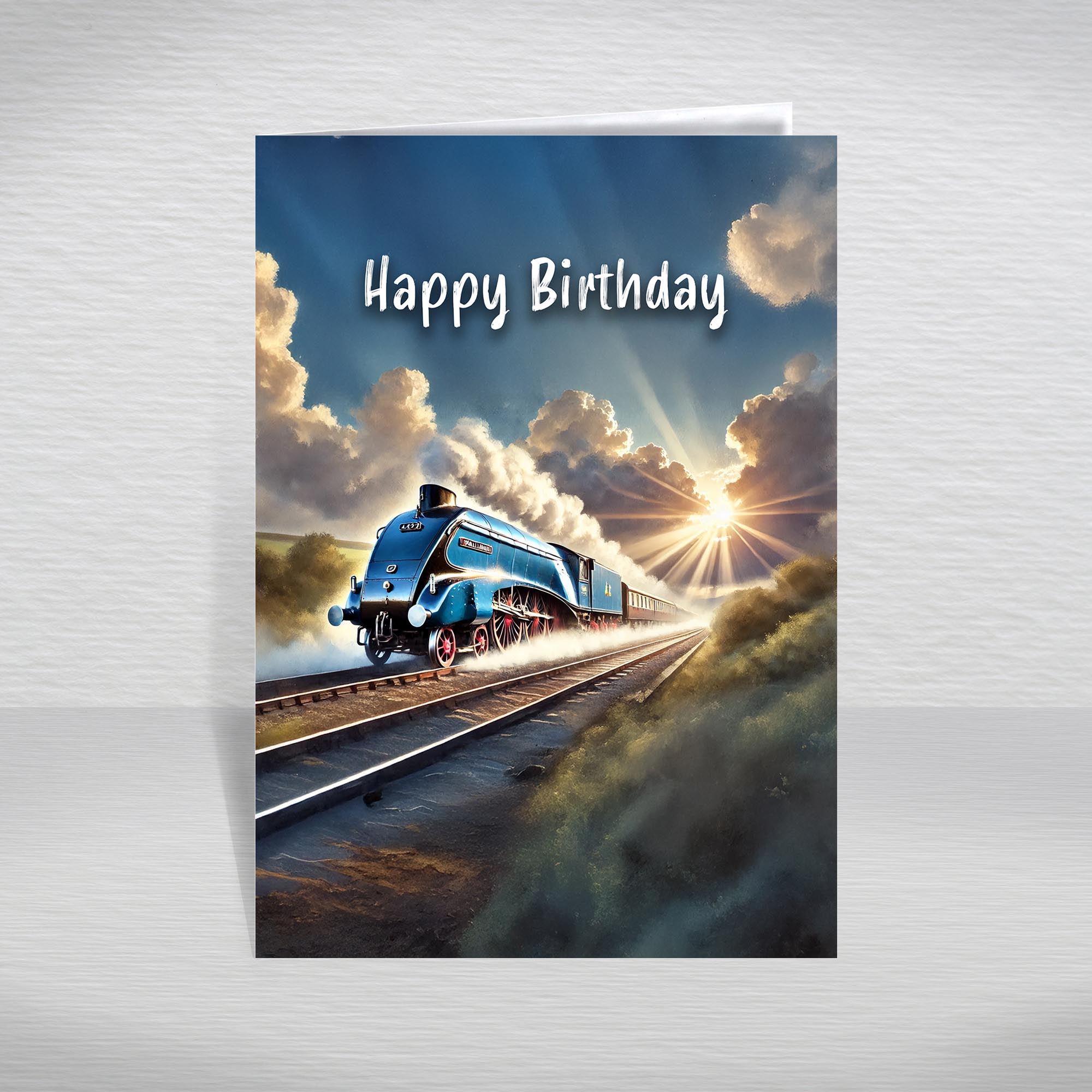
BR Standard Class 7 Britannia
The BR Standard Class 7 Britannia was British Railways' first Standard Pacific design, the lead express engine of the 1951 BR Standard programme under R. A. Riddles. Fifty-five engines were built at Crewe Works between 1951 and 1954, the first major British steam class designed entirely under nationalisation.
The Riddles brief was deliberate about engineering accessibility. The pre-war express classes had complex three- and four-cylinder layouts with enclosed valve gear that was costly to maintain. The BR Standard programme reverted to two outside cylinders with all valve gear exposed and accessible, taper boilers at 250 psi, and Belpaire fireboxes. The high-set running plate (a BR Standard signature) gave maintenance access to the boiler and running gear. The cabs were spacious with all-round visibility, a major improvement on pre-war cab ergonomics. The result was an engine that was simpler to maintain and more available than the pre-war Pacifics, even if not the most powerful in absolute terms.
The first engine, No. 70000 "Britannia", was completed at Crewe in January 1951. The unveiling at Marylebone station on 30 January 1951 was a significant public event, the first major British steam class designed entirely under nationalisation. The class names initially commemorated places and rivers and progressively included English literary, historical, and royal figures: Britannia, Cromwell, John of Gaunt, Solway Firth, Owen Glendower, Anzac, Geoffrey Chaucer. The Festival of Britain in 1951 displayed 70004 William Shakespeare on the South Bank, the BR Standard programme's public face.
The Britannias proved particularly successful on the Eastern Region. The Norwich–London expresses, which had been worked by elderly LNER B17s and B12s, were transformed by the new Pacifics. The East Anglian and Broadsman services regularly worked at sustained 75–85 mph average speeds. The Western Region used Britannias on the Cornish Riviera and West of England expresses; the Southern Region used them on Continental boat trains and Bournemouth services; the Scottish Region used them on Anglo-Scottish workings.
The Modernisation Plan of 1955 announced the withdrawal of British steam from front-line service in the medium term. The Britannias, the youngest BR Standard expresses, were paradoxically among the first to be displaced. The class concentrated at Carlisle Kingmoor in the mid-1960s for working the West Coast main line. The very last Britannia in regular BR service was 70013 "Oliver Cromwell", which worked the inward leg of the "Fifteen Guinea Special" of 11 August 1968, the official end of BR main-line steam. The class's involvement in this celebrated final working has secured its place in British steam history.
Two Britannias are preserved: 70000 Britannia (the class prototype, privately preserved on withdrawal in 1966 and currently main-line registered with the 70000 Britannia Locomotive Society) and 70013 Oliver Cromwell (the Fifteen Guinea Special engine, privately preserved and currently a static exhibit at Bressingham Steam Museum, Norfolk). The class's low preservation rate (2 from 55) reflects the early-to-late 1960s era of withdrawal when scrapping was rapid and the class's relative youth at withdrawal, but the two preserved engines preserve the BR Standard prototype and the Fifteen Guinea Special engine, both of major historical importance.
Design and development
By 1948 the new British Railways needed a coordinated programme of standard locomotive designs to replace the diverse pre-Grouping classes inherited from the four major railways. R. A. Riddles, BR's Chief Mechanical Engineer, led a small design team based at Derby that produced twelve standard classes covering the full range of duties. The Britannia Class was the lead express engine of the programme, a top-link Pacific to compete with the LMS Princess Coronations, the LNER A4s, the GWR Kings, and the Bulleid Pacifics on the principal British main-line expresses.
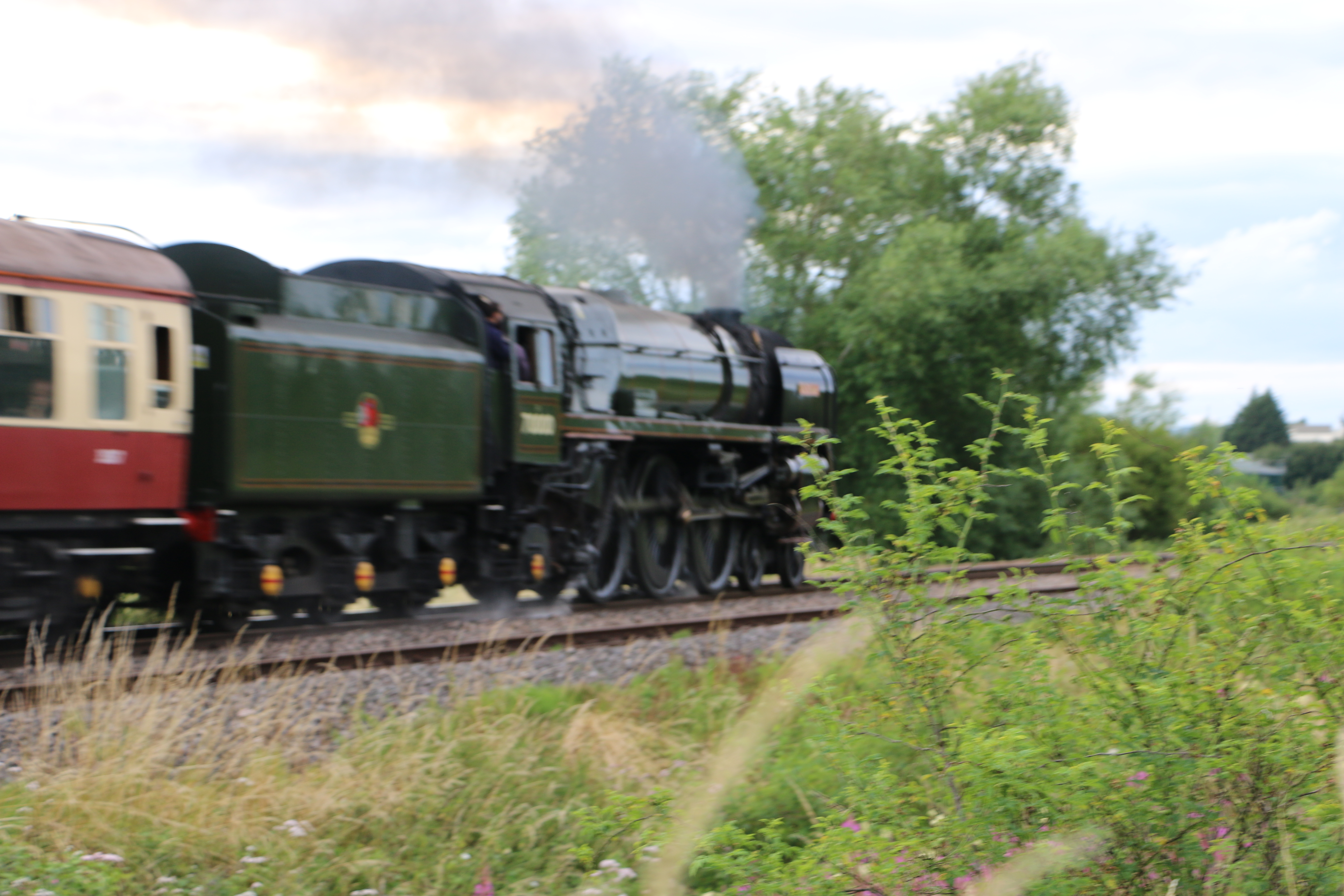
The Riddles brief was deliberate about engineering accessibility. The pre-war express classes had complex three- and four-cylinder layouts with enclosed valve gear that was costly to maintain. The BR Standard programme reverted to two outside cylinders with all valve gear exposed and accessible, taper boilers at 250 psi, and Belpaire fireboxes. The high-set running plate (a BR Standard signature) gave maintenance access to the boiler and running gear. The cabs were spacious with all-round visibility, a major improvement on pre-war cab ergonomics.
The first engine, No. 70000 "Britannia", was completed at Crewe Works in January 1951. The unveiling at Marylebone station on 30 January 1951 was a significant public event, the first major British steam class designed entirely under nationalisation. The engine was named "Britannia" in deliberate symbolism. The second engine 70001 "Lord Hurcomb" was named after BR's first Chairman.
Production continued at Crewe through 1954, with 55 engines built in batches. The class names initially commemorated places and rivers (the Eastern Region engines were named after East Anglian locations) and progressively included English literary, historical, and royal figures. By August 1954 the class was complete.
The Britannias proved particularly successful on the Eastern Region. The Norwich–London expresses, which had been worked by elderly LNER B17s and B12s, were transformed by the new Pacifics. The East Anglian and Broadsman services regularly worked at sustained 75–85 mph average speeds, significantly faster than pre-Britannia practice.
Service and withdrawals
The Britannias were the BR Standard programme's flagship engines. They worked the principal Eastern Region expresses from 1951 onwards (transforming the Norwich–London services), the Western Region West of England and South Wales expresses, the Southern Region Continental boat trains, and the Scottish Region Anglo-Scottish workings. The class's deliberately simple engineering gave high availability, the Britannias generally ran 5,000–7,000 miles between heavy maintenance, an outstanding figure for British steam.
The Modernisation Plan of 1955 announced the withdrawal of British steam from front-line service in the medium term. The Britannias, the youngest of the BR Standard expresses, were paradoxically among the first to be displaced, the introduction of BR Type 4 diesels (Class 40 and Class 47) from 1961 onwards rapidly reduced their workings. The class concentrated at Carlisle Kingmoor and Stockport Edgeley in the mid-1960s for working the West Coast main line, where they continued in front-line service alongside Black Fives and 8Fs.
The very last Britannia in regular BR service was 70013 "Oliver Cromwell", which worked the inward leg of the "Fifteen Guinea Special" of 11 August 1968, the official end of BR main-line steam. The class's involvement in this celebrated final working has secured its place in British steam history.
Identification features
The cleanest, most accessible, and most rationally-engineered British Pacific outline. The high-set running plate (a deliberate BR Standard feature for accessibility), exposed boiler bands, single chimney (later double chimney from 1957 on some engines), and outside Walschaerts valve gear with all moving parts visible. The class is named after famous British rivers, mountains, places, and people, Britannia, Cromwell, John of Gaunt, Solway Firth, Owen Glendower, Anzac, Geoffrey Chaucer, and the names became part of the class's identity. The brass nameplates carried the name in serif lettering on the smokebox sides.
Numbers and names
70000–70054
- 70000Britannia
- 70001
- 70002
- 70003
- 70004
- 70005
- 70006
- 70007
- 70008
- 70009
- 70010
- 70011
- 70012
- 70013
- 70014
- 70015
- 70016
- 70017
- 70018
- 70019
- 70020
- 70021
- 70022
- 70023
- 70024
- 70025
- 70026
- 70027
- 70028
- 70029
- 70030
- 70031
- 70032
- 70033
- 70034
- 70035
- 70036
- 70037
- 70038
- 70039
- 70040
- 70041
- 70042
- 70043
- 70044
- 70045
- 70046
- 70047
- 70048
- 70049
- 70050
- 70051
- 70052
- 70053
- 70054Dornoch Firth
BR Nos 70000–70054. The first engine (70000 "Britannia") was completed at Crewe Works in January 1951 and was the public unveiling of the BR Standard programme. Subsequent engines followed in batches through to the last (70054 "Dornoch Firth") in August 1954.
Notable locomotives
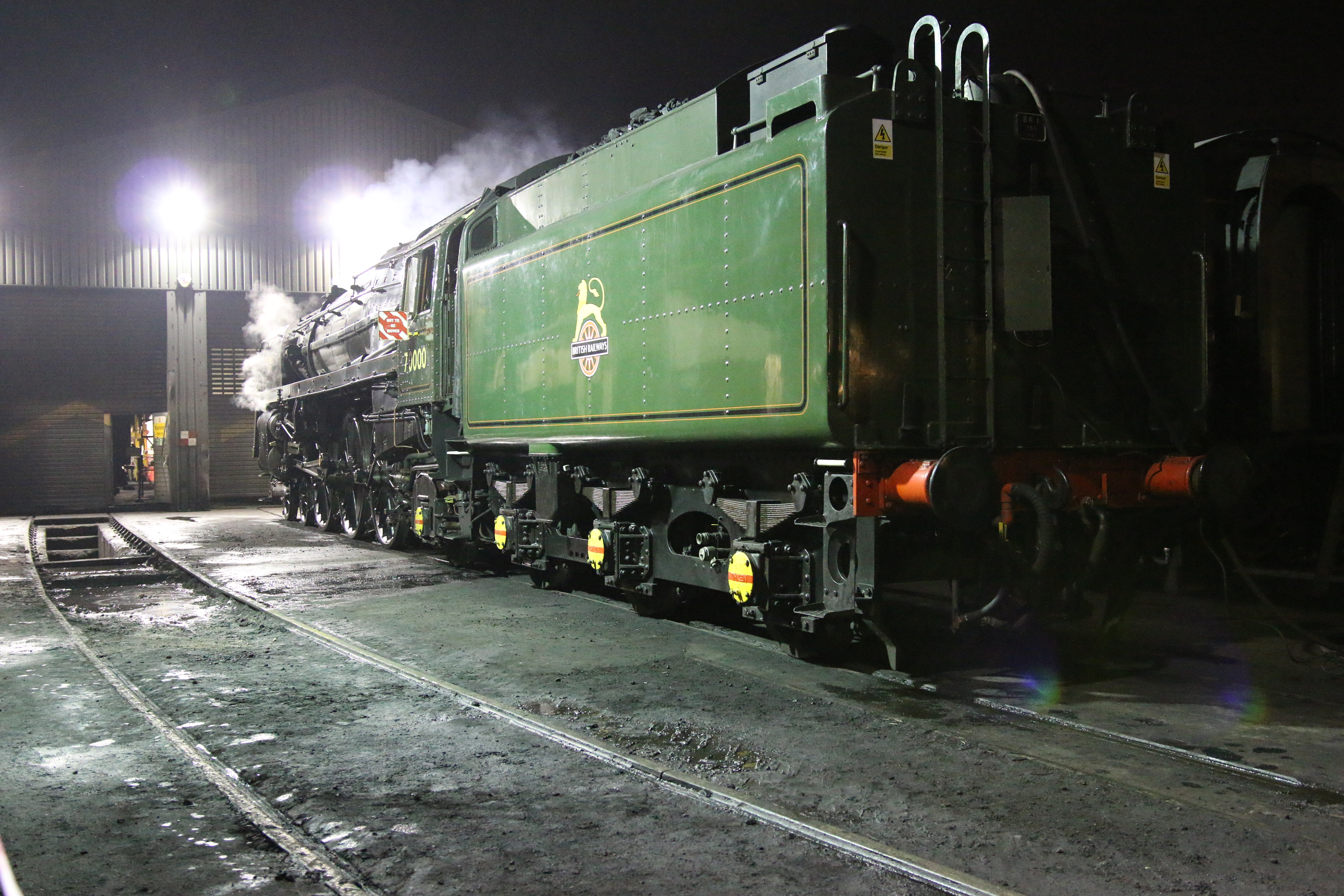
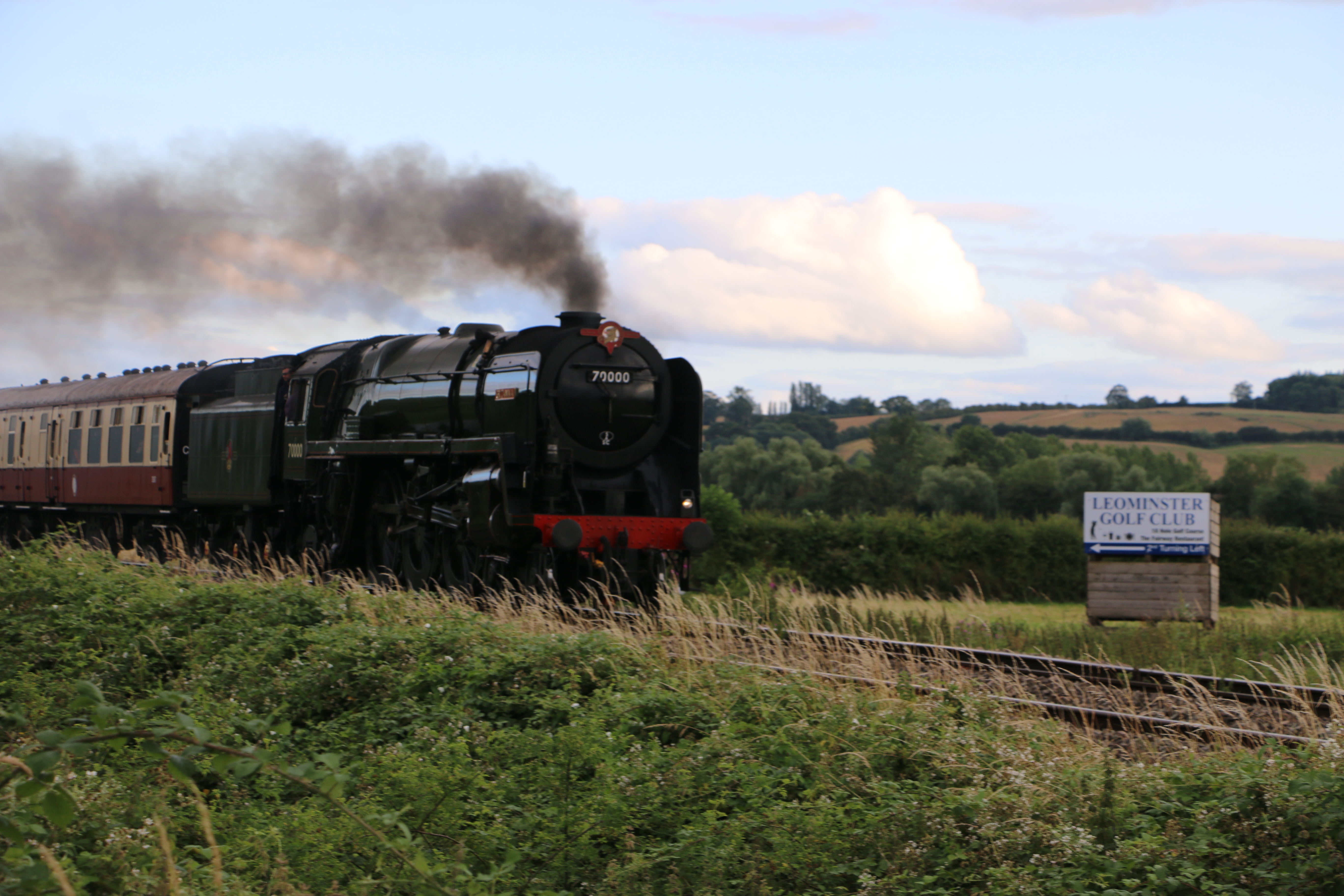
70000 Britannia, the class prototype, completed at Crewe Works in January 1951 and the public unveiling of the BR Standard programme. Originally allocated to Stratford for the East Anglian expresses. Withdrawn from BR May 1966. Privately preserved and currently main-line registered with the 70000 Britannia Locomotive Society, periodically operating from various preservation bases.
70013 Oliver Cromwell, completed at Crewe in May 1951. The very last Britannia in regular BR service, withdrawn from Carlisle Kingmoor August 1968, and the engine that worked the inward leg of the "Fifteen Guinea Special" of 11 August 1968, the official end of BR main-line steam. Privately preserved and currently a static exhibit at Bressingham Steam Museum, Norfolk. The most-historically-significant preserved Britannia.
70004 William Shakespeare, completed at Crewe in March 1951. Notable for displaying at the Festival of Britain on the South Bank in 1951, the BR Standard programme's public face. Withdrawn 1967 and broken up.
70034 Thomas Hardy, completed at Crewe in October 1952. Wrote the highest BR Standard mileage during the 1950s. Withdrawn 1967.
Allocations and regions
Eastern Region (1951–1968): Norwich Thorpe was the principal Britannia shed, particularly for the Norwich–London expresses (the Broadsman, the Norfolkman, the East Anglian) which the class transformed in the early 1950s. Stratford (London) and Lincoln also held substantial allocations.
Western Region (1951–1968): Plymouth Laira, Old Oak Common (London), and Cardiff Canton held substantial Britannia allocations through the 1950s for the West of England expresses, the Cornish Riviera, and the South Wales services.
Southern Region (1951–1968): Stewarts Lane (Victoria) and Salisbury for the Continental boat trains and the West of England feeders. The Britannias supplemented the Bulleid Pacifics on the heaviest Southern services through the 1950s.
Scottish Region: Polmadie (Glasgow), Carlisle Kingmoor (latterly), and Aberdeen Ferryhill held Britannia allocations for the heaviest Anglo-Scottish workings and the Scottish Region express duties.
Final years (1965–1968): from the mid-1960s the class progressively concentrated at Carlisle Kingmoor and Stockport Edgeley as steam was withdrawn from other regions. The final Britannia in regular BR service was 70013 "Oliver Cromwell", which worked the very last main-line BR steam train, the "Fifteen Guinea Special" of 11 August 1968, inward leg.
Livery history
British Railways Brunswick green (1951–1968): the class was outshopped in BR-standard lined Brunswick green from new, the established BR express livery from 1949. Initial engines carried the early lion-and-wheel emblem; from 1956 the late BR crest replaced the lion-and-wheel. This was the only livery the class ever wore in BR service.
Preservation: the two preserved Britannias have appeared in BR Brunswick green with both the early lion-and-wheel emblem and the late BR crest. 70000 Britannia has carried the Britannia name in serif lettering as for the BR original; 70013 Oliver Cromwell is preserved as the Fifteen Guinea Special engine.
Preservation status
Two Britannias are preserved:
- 70000 Britannia, the class prototype. Privately preserved on withdrawal in May 1966. Currently main-line registered with the 70000 Britannia Locomotive Society, has periodically operated on the main line for charter work over the decades. The most historically significant preserved Britannia (the prototype that publicly unveiled the BR Standard programme).
- 70013 Oliver Cromwell, the very last Britannia in regular BR service, which worked the inward leg of the "Fifteen Guinea Special" of 11 August 1968. Privately preserved and currently a static exhibit at Bressingham Steam Museum, Norfolk.
The class's low preservation rate (2 from 55) reflects the early-1960s-to-late-1960s era of withdrawal when scrapping was rapid, and the relative youth of the class at withdrawal (only 11–14 years in service when withdrawn, compared with 30+ years for many older preserved classes). The two preserved engines nevertheless preserve the BR Standard prototype and the Fifteen Guinea Special engine, both of major historical importance.
Photographs