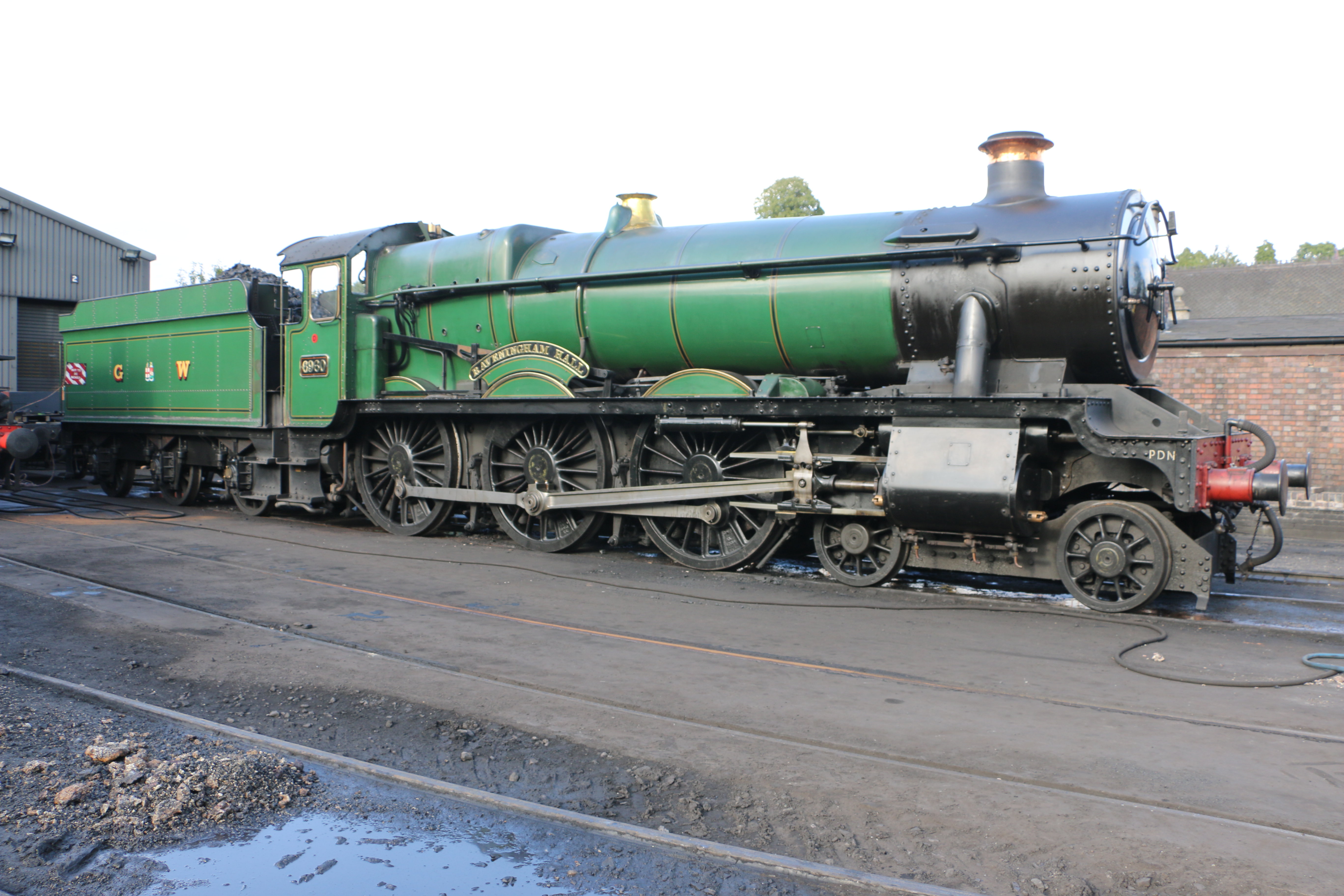
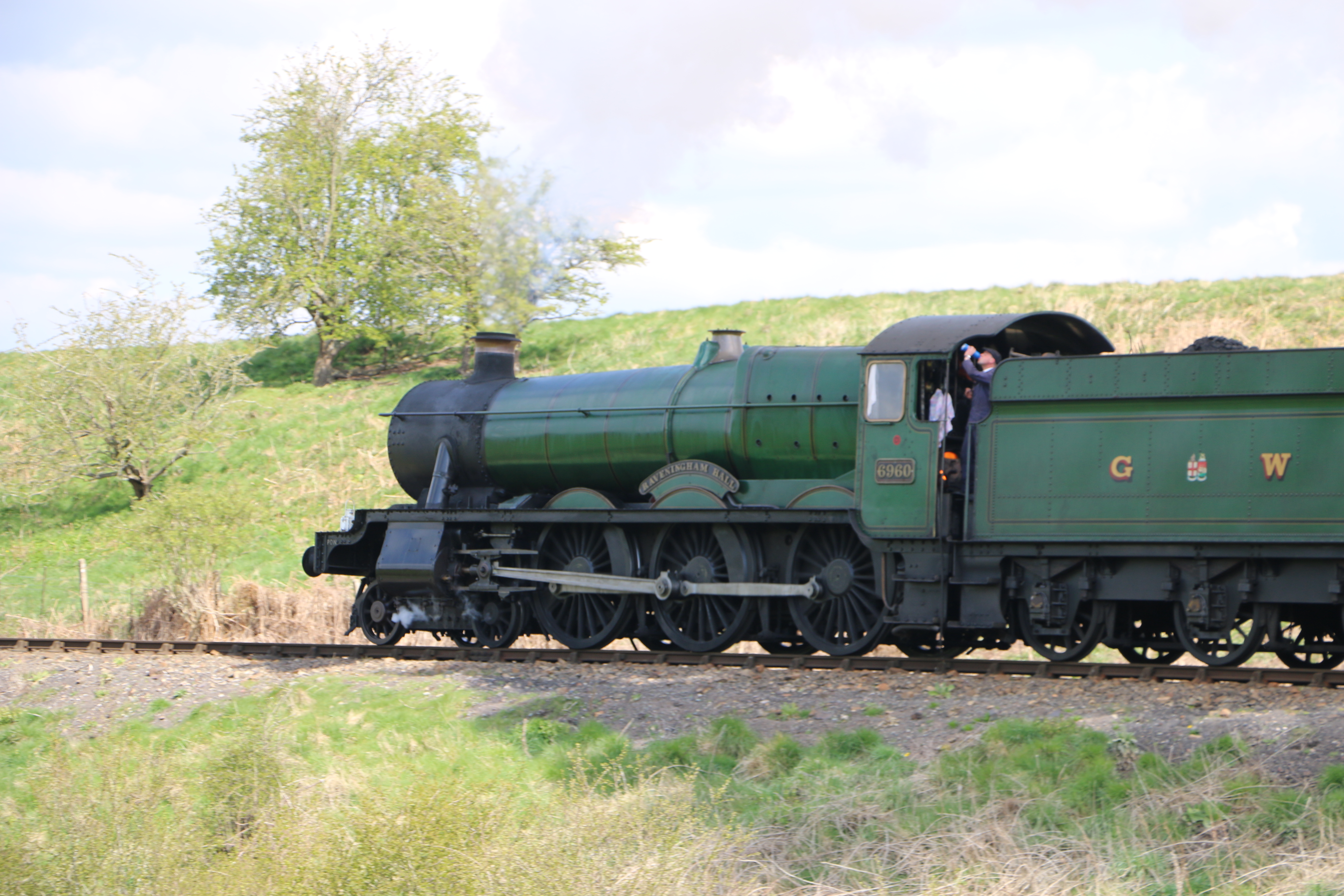
GWR 6959 Modified Hall Class
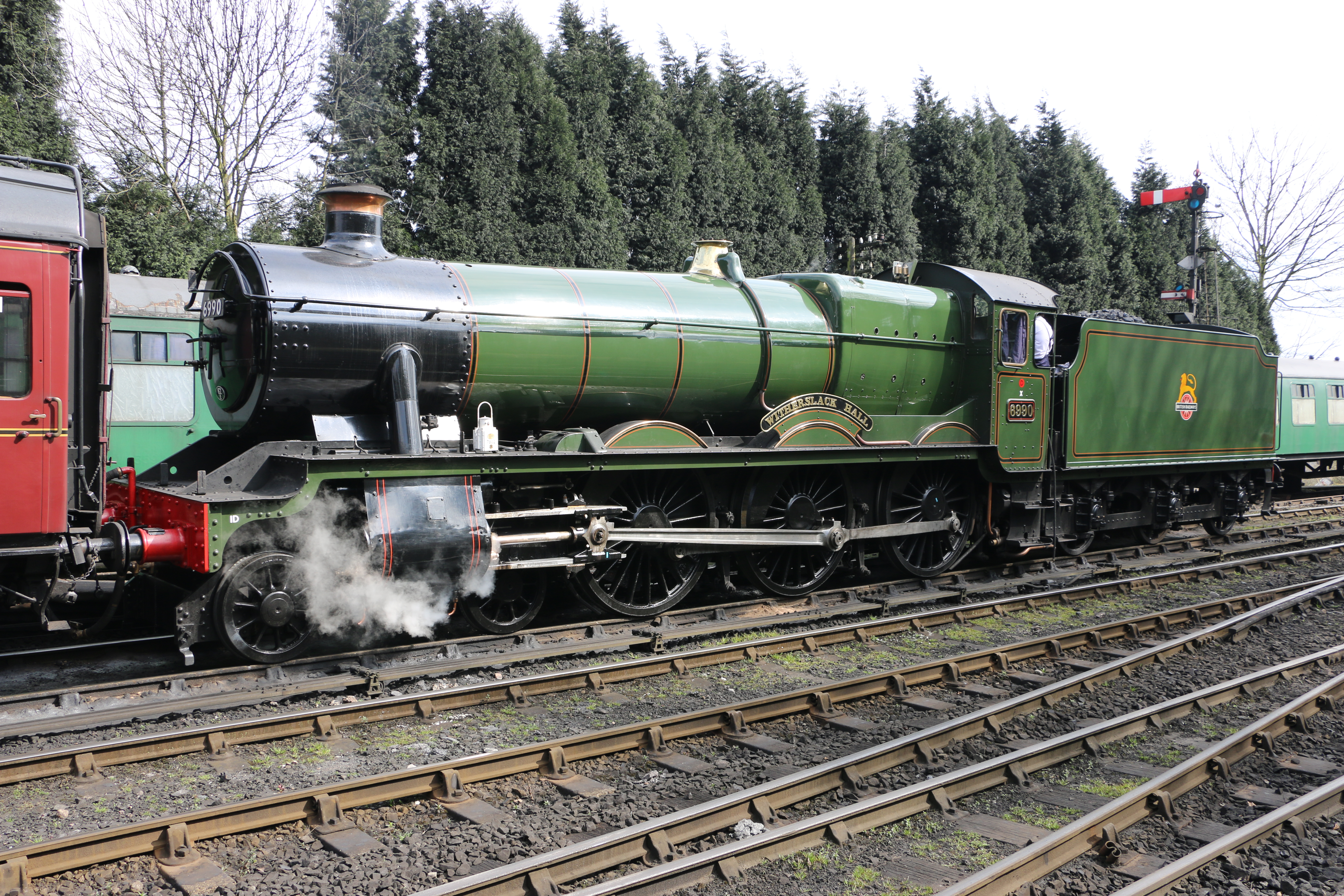
The GWR 6959 Class, almost universally known as the Modified Hall (and sometimes the Hawksworth Hall), was a two-cylinder 4-6-0 mixed-traffic steam locomotive designed by Frederick Hawksworth for the Great Western Railway. It was Hawksworth's revision of Charles Collett's earlier Hall Class, a class so successful that, when Hawksworth succeeded Collett as Chief Mechanical Engineer in 1941, the question was less whether to continue building Halls than whether to build them exactly as before. Hawksworth's answer was to retain the Hall's wheels, cylinders, and tractive effort, and to redesign almost everything else around them.
The principal changes lay in the front end and the boiler. Where the Collett Halls had used a bar-frame extension from the cylinders to the smokebox saddle, the Modified Halls carried the main plate frames forward as a single continuous structure, eliminating a long-standing source of cracking and giving the smokebox a markedly heavier, squarer appearance. The taper boiler was retained but fitted with a three-row superheater of 21 elements (against the Collett Hall's two-row 14-element arrangement), giving higher steam temperatures and freer running at speed. The bogie was redesigned with individual axle-box springing in place of the equalising beam, improving riding on indifferent track. A mechanical lubricator on the running plate, raised main steam-pipe casings either side of the smokebox, and a slightly higher-pitched footplate completed the visual differences. Tractive effort, boiler pressure, cylinder dimensions, and driving wheel size were all unchanged from the Collett Hall, and the Modified Halls retained the same BR 5MT power classification.
Construction at Swindon Works ran from March 1944, when the prototype No. 6959 emerged unnamed (wartime restrictions having suspended naming for the duration), through to November 1950 when the last of the class, No. 7929 Wyke Hall, was completed. Seventy-one were built in total: 6959–6999 (41 locomotives) and 7900–7929 (30 locomotives). The class straddled nationalisation in January 1948: 32 had been delivered under the GWR by then, and the remaining 39 were completed under British Railways' Western Region — although they were GWR-designed, GWR-numbered, and GWR-pattern engines, lined out in GWR Middle Chrome Green until BR liveries took over in 1949–1950. Names followed Collett's pattern: English and Welsh country houses ending in "Hall". Wartime-built engines such as 6959 received their nameplates retrospectively after the war.
In service the Modified Halls were indistinguishable from the original Halls in their duties, working alongside Collett's 4900-series engines on the same mixed-traffic, express, semi-fast, and fitted-freight rosters across the entire former GWR system. Allocations followed those of the parent class, with substantial fleets at Old Oak Common, Cardiff Canton, Bristol Bath Road, Wolverhampton Stafford Road, Newton Abbot, Plymouth Laira, and Worcester. Crews generally considered the Modified Halls slightly freer-steaming and easier on coal than the original Halls; the higher-superheat boiler made a measurable difference on long climbs.
Withdrawals began in 1962 as Western Region diesel-hydraulic Type 4s (Class 42 Warships and later Westerns) progressively took over front-line work. The class was extinct on BR by the end of 1965, alongside the original Halls. None was reserved for the National Collection, but seven Modified Halls were rescued from Woodham Brothers' scrapyard at Barry, including the famous 6960 Raveningham Hall, 6989 Wightwick Hall, 6990 Witherslack Hall, 6998 Burton Agnes Hall, and 7903 Foremarke Hall, all of which have since steamed in preservation. The Modified Halls form the second of the two Hall fleets and, with their parent class, the most successful British two-cylinder mixed-traffic 4-6-0 design ever built.
Design and development
When Frederick Hawksworth succeeded Charles Collett as Chief Mechanical Engineer of the Great Western Railway in 1941, the GWR was already running over 200 Hall Class 4-6-0s of Collett's 1928 design and was building more under wartime conditions. Hawksworth's starting position was that the Hall was an outstandingly successful design that did not need to be replaced; what it did need was modernising in the light of nearly twenty years of operating experience.
The first focus was the front end. Collett's Halls used a bar-frame extension carried forward from the cylinders to the smokebox saddle, an arrangement inherited from Churchward's practice and prone to fatigue cracking after many years of heavy service. Hawksworth redesigned the front end with the main plate frames carried forward as a single continuous structure all the way to the smokebox saddle, producing a stronger, more rigid front end and eliminating the troublesome bar-frame joints. The change was visually obvious: Hawksworth's smokebox sits on a much heavier, squarer plate-frame structure than Collett's.
The second major change was the boiler. The taper boiler dimensions were retained, but Hawksworth replaced the two-row 14-element superheater with a three-row 21-element arrangement giving significantly higher steam temperatures. Crews who worked both classes in service generally reported the Modified Halls as freer-steaming and noticeably easier on coal on sustained climbs and at high speed, although in normal mixed-traffic running the differences were modest.
Several other detail improvements were incorporated: individual bogie springing in place of the equalising-beam arrangement (improving riding on indifferent track); a mechanical lubricator on the running plate (replacing the engine-mounted oil cup arrangement and giving more reliable cylinder lubrication); and raised main steam-pipe casings either side of the smokebox, improving access for inspection and maintenance.
The cylinder dimensions, driving wheel size, boiler pressure, and tractive effort were all unchanged from the Collett Hall. The Modified Hall was therefore an evolution rather than a revolution: the same locomotive in performance terms, but easier to maintain and marginally more efficient. Construction at Swindon began with the prototype 6959 in March 1944 and continued through 1944–1950 in successive lots, with the last engine completed in November 1950 — the last new-built GWR-design 4-6-0 of any kind, and one of the last GWR-design steam locomotives constructed.
Service and withdrawals
Operationally the Modified Halls were treated as interchangeable with the Collett Halls and worked the same rosters across the entire former GWR system: mixed traffic, secondary expresses, semi-fasts, stopping passenger trains, fitted freights, summer Saturday holiday extras, and parcels work. Their characteristics were sufficiently close to the Collett Halls that allocations were not differentiated by sub-class — depots simply held "Halls" without much distinction between Collett and Hawksworth examples. Crews tended to find the Modified Halls slightly freer-steaming on the road and slightly easier on coal, but the differences were a matter of degree rather than kind.
The class was the youngest mixed-traffic 4-6-0 fleet on the BR Western Region by some margin: the last Modified Hall, 7929 Wyke Hall, was only fifteen years old when withdrawn in December 1965. This relative youth was no protection against the rapid dieselisation of the Western Region in the early 1960s. The introduction of Class 42 Warship and Class 52 Western diesel-hydraulic Type 4s, and the reorganisation of GWR-area workings, swept away mixed-traffic steam in a few short years. Withdrawals began in 1962, accelerated through 1963 and 1964, and the class was extinct on BR by the end of 1965, alongside the Collett Halls.
The Modified Halls have therefore the distinction of being among the youngest wholesale-withdrawn British steam classes: 71 engines built between 1944 and 1950, all scrapped or stored within fifteen to twenty years of construction. Several were sold to Woodham Brothers' scrapyard at Barry in South Wales, where seven survived long enough to enter the preservation movement.
Identification features
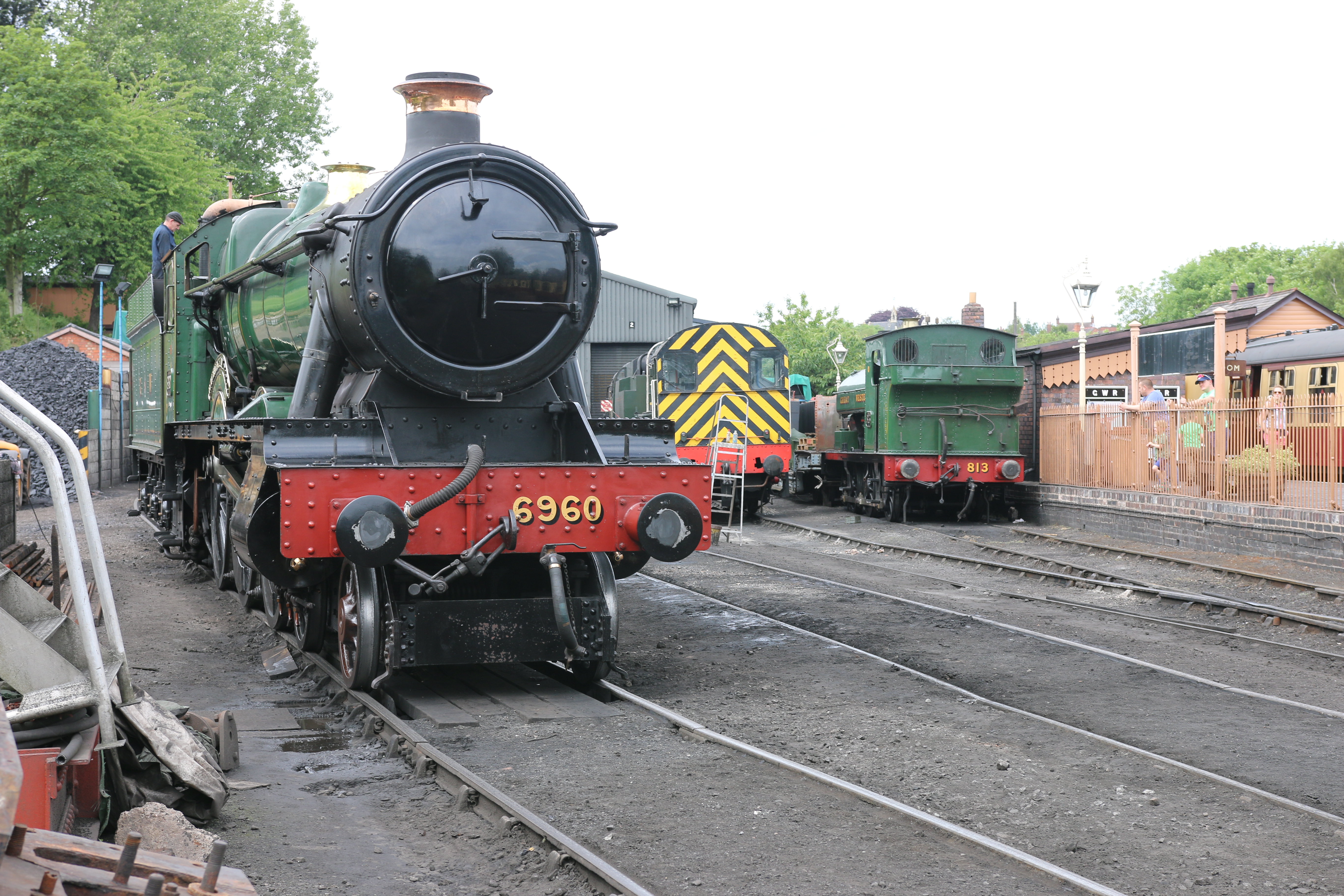
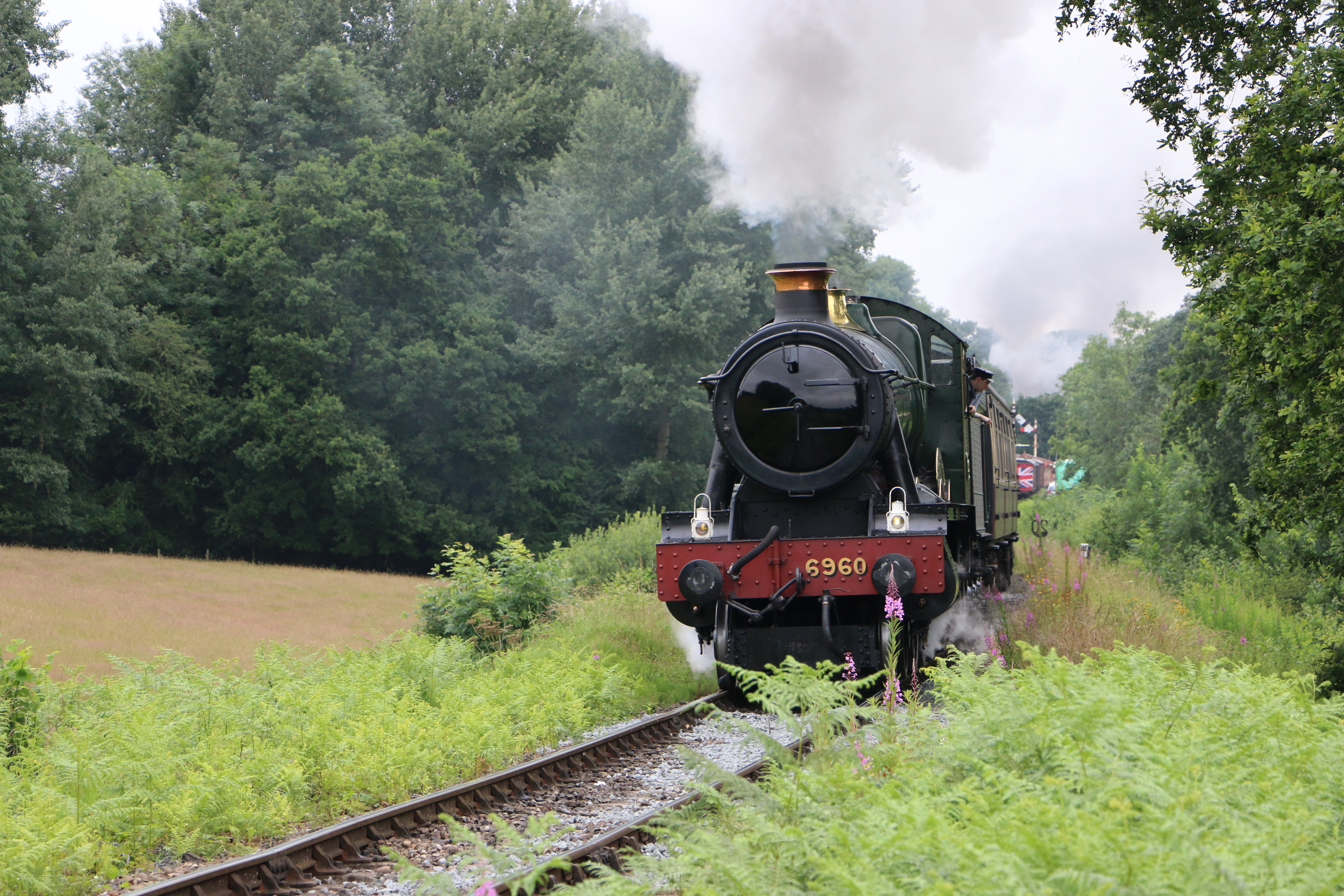
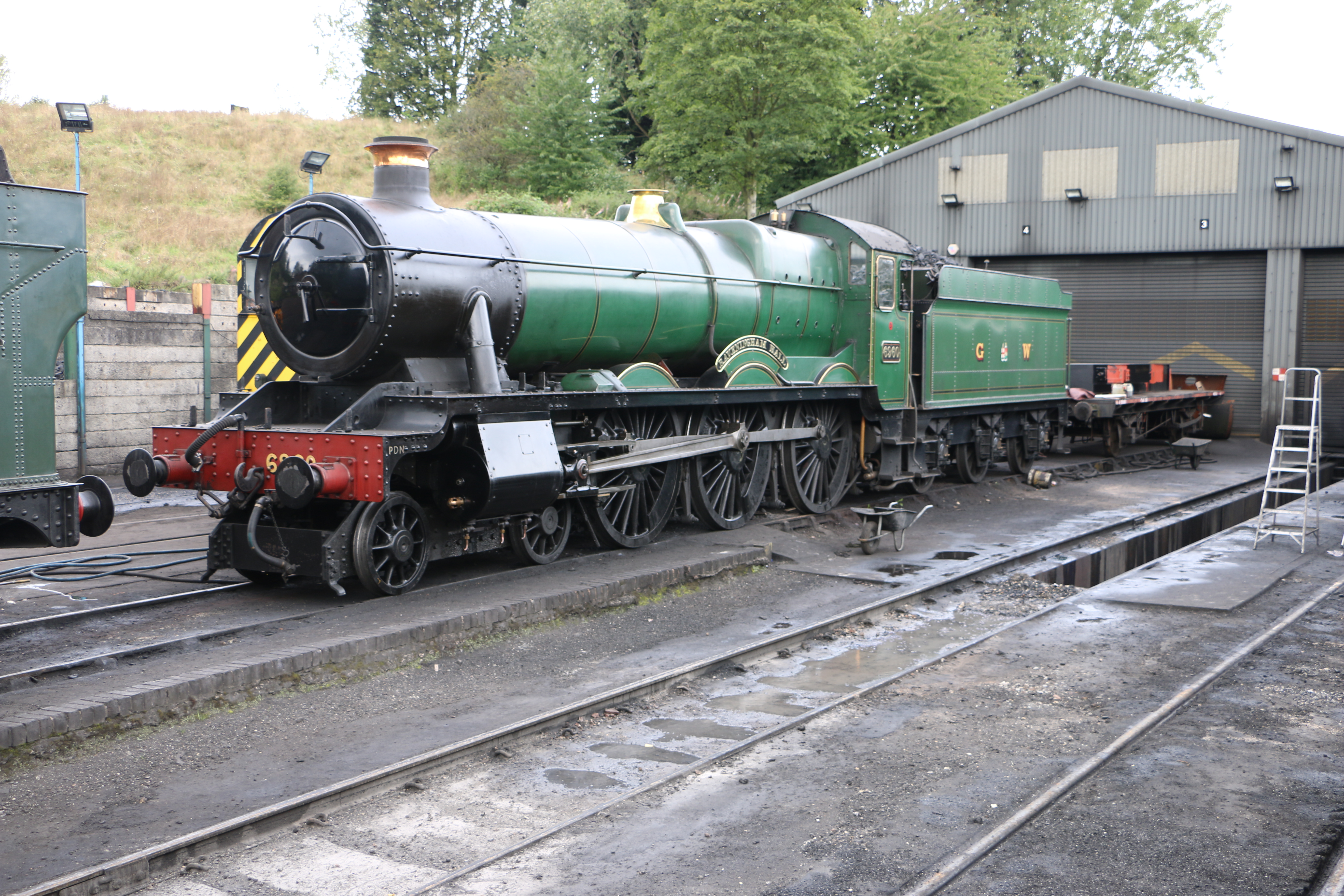
Two-cylinder 4-6-0 with 6 ft coupled wheels and the GWR Standard No. 1 taper boiler, externally similar to the Collett Hall but distinguishable by several Hawksworth features. The principal Modified Hall identification points are: plate frames carried forward as a single continuous structure to the smokebox saddle (the Collett Hall has a separate bar-frame extension from the cylinders, giving the Collett Hall's smokebox a more open appearance underneath; the Modified Hall's smokebox sits on a heavier, squarer plate-frame structure); raised main steam pipe casings on the smokebox sides, giving prominent angular humps either side; a mechanical lubricator on the running plate, behind the smokebox on the left-hand side; individual bogie springing rather than the Collett Hall's equalising-beam bogie (visible from underneath only); and a slightly higher-pitched footplate. The Castle-pattern double side-window cab is retained from the Collett Hall. Names follow the same pattern, English and Welsh country houses ending in "Hall", and brass nameplates are carried on the splashers in identical position to the Collett Halls. Many were paired with the new Hawksworth flat-sided 4,000-gallon tender (introduced with the class), distinguishable from the earlier Collett 4,000-gallon tender by its straight, flat-sided water tank profile.
Numbers and names
6959–6999first batch, 41 locomotives, built 1944–1949 (some completed under BR after January 1948)
- 6959
- 6960Raveningham Hall
- 6961
- 6962
- 6963
- 6964
- 6965
- 6966
- 6967
- 6968
- 6969
- 6970
- 6971
- 6972
- 6973
- 6974
- 6975
- 6976
- 6977
- 6978
- 6979
- 6980
- 6981
- 6982
- 6983
- 6984
- 6985
- 6986
- 6987
- 6988
- 6989Wightwick Hall
- 6990Witherslack Hall
- 6991
- 6992
- 6993
- 6994
- 6995
- 6996
- 6997
- 6998Burton Agnes Hall
- 6999
7900–7929second batch, 30 locomotives, built 1949–1950, all completed under BR but to GWR design and GWR-allocated numbers
- 7900
- 7901
- 7902
- 7903Foremarke Hall
- 7904
- 7905
- 7906
- 7907
- 7908
- 7909
- 7910
- 7911
- 7912
- 7913
- 7914
- 7915
- 7916
- 7917
- 7918
- 7919
- 7920
- 7921
- 7922
- 7923
- 7924
- 7925
- 7926
- 7927
- 7928
- 7929Wyke Hall
GWR Nos 6959–6999 (41 locomotives) and 7900–7929 (30 locomotives), totalling 71. BR retained the GWR numbers without alteration. The class straddled nationalisation in January 1948: 32 were completed under the GWR and the remaining 39 under BR's Western Region, although they were GWR-designed, GWR-numbered, and out-shopped in GWR Middle Chrome Green until BR liveries took over in 1949–1950. All members were named after English and Welsh country houses ending in "Hall", following the pattern of the parent Collett Hall class. The prototype 6959 was built unnamed in March 1944 (wartime naming restrictions), and received its nameplate "Patshull Hall" after the war. The last of the class, 7929 Wyke Hall, was completed at Swindon in November 1950, the last new-built GWR-design 4-6-0 of any kind.
Notable locomotives
6959 Patshull Hall, the prototype, completed at Swindon in March 1944 and originally unnamed under wartime naming restrictions. Received its nameplate "Patshull Hall" after the war. Withdrawn from BR service in 1963; not preserved.
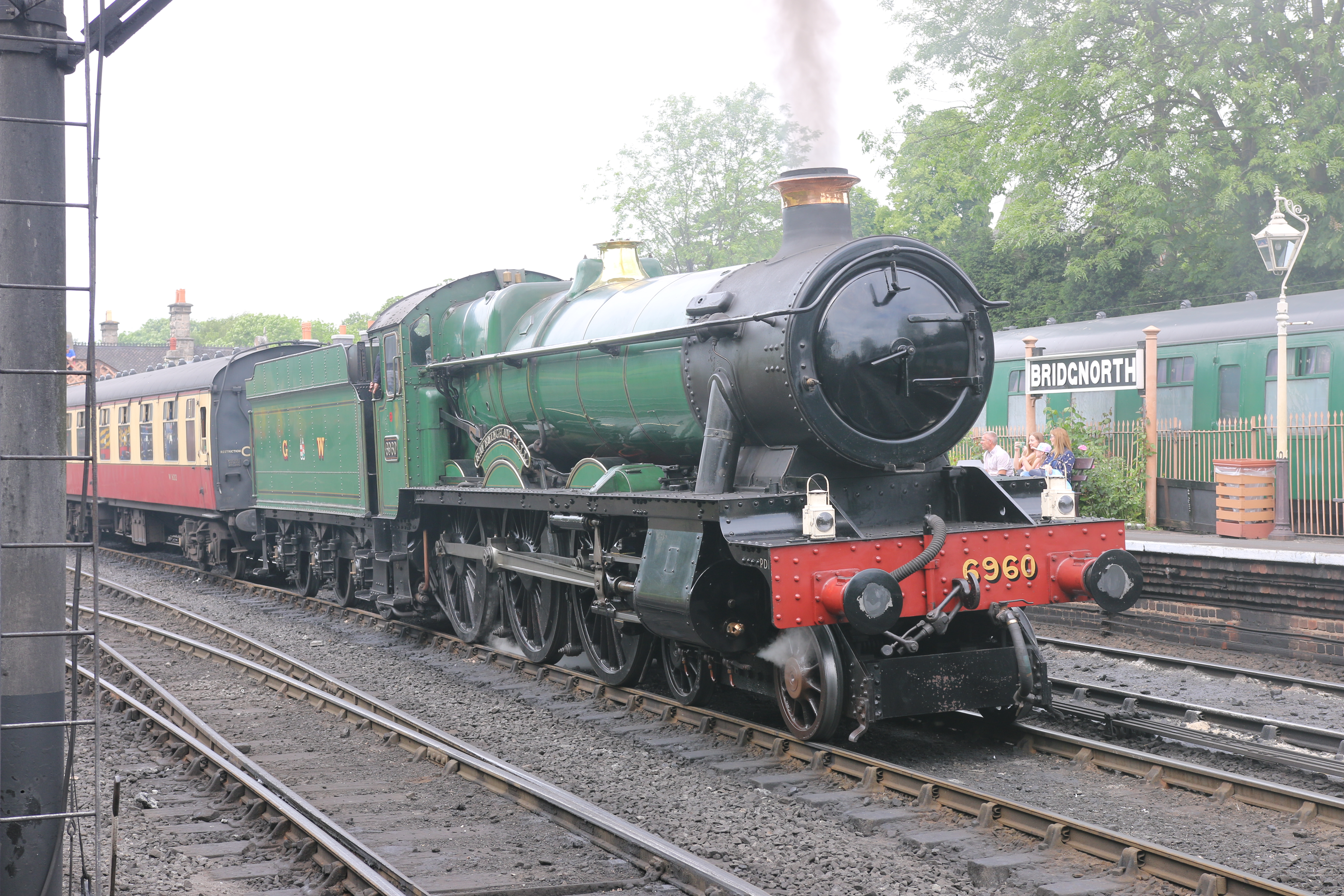
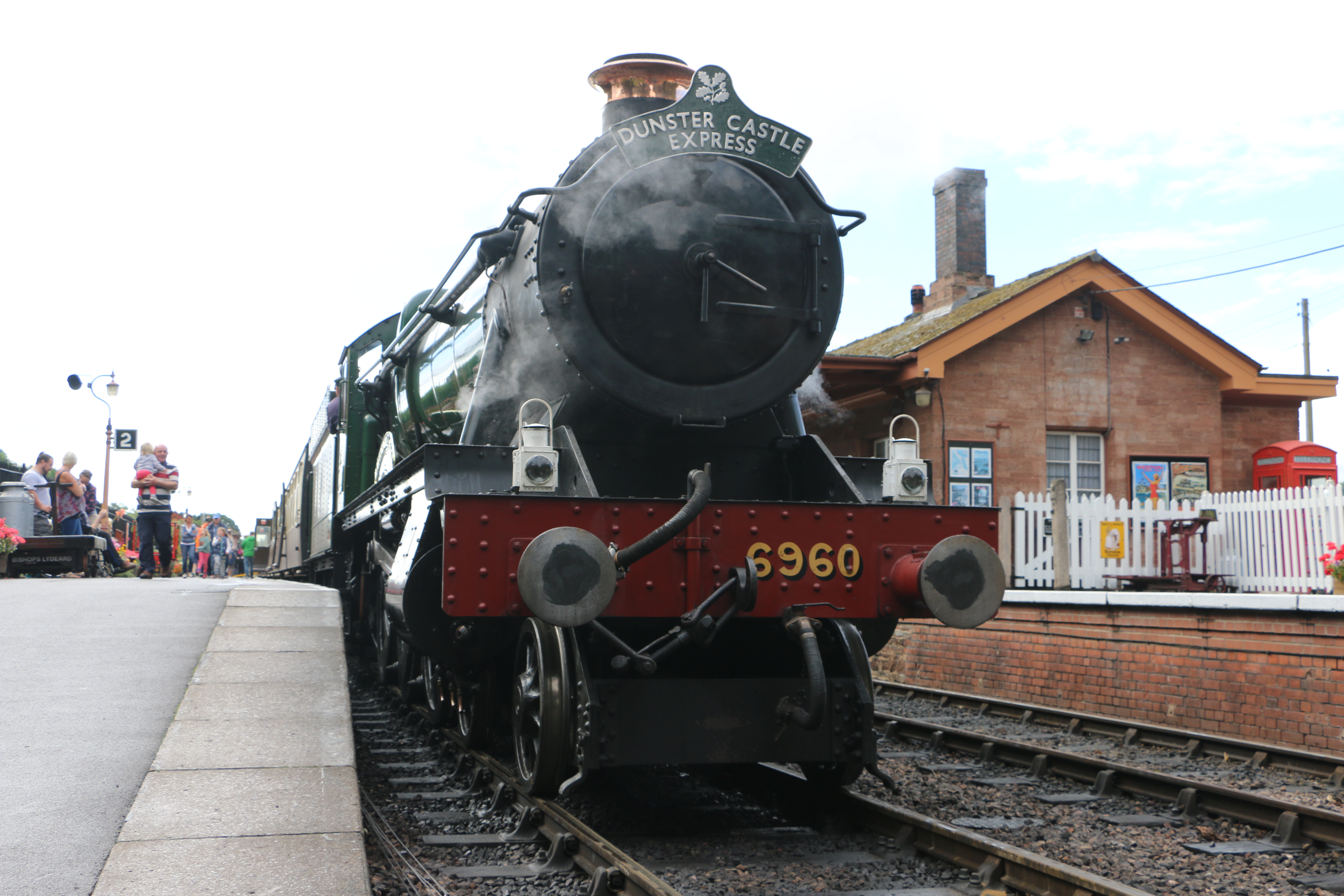
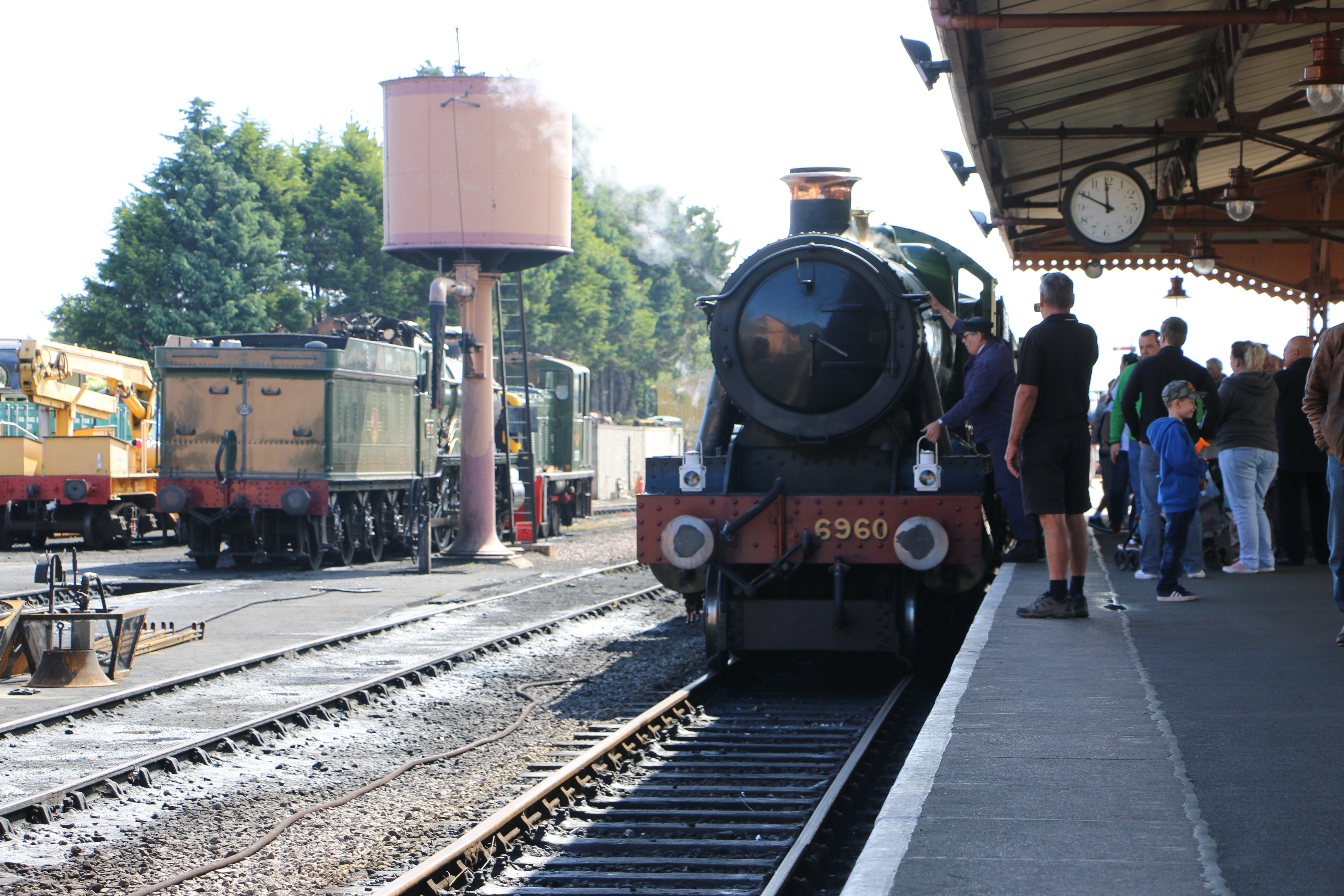
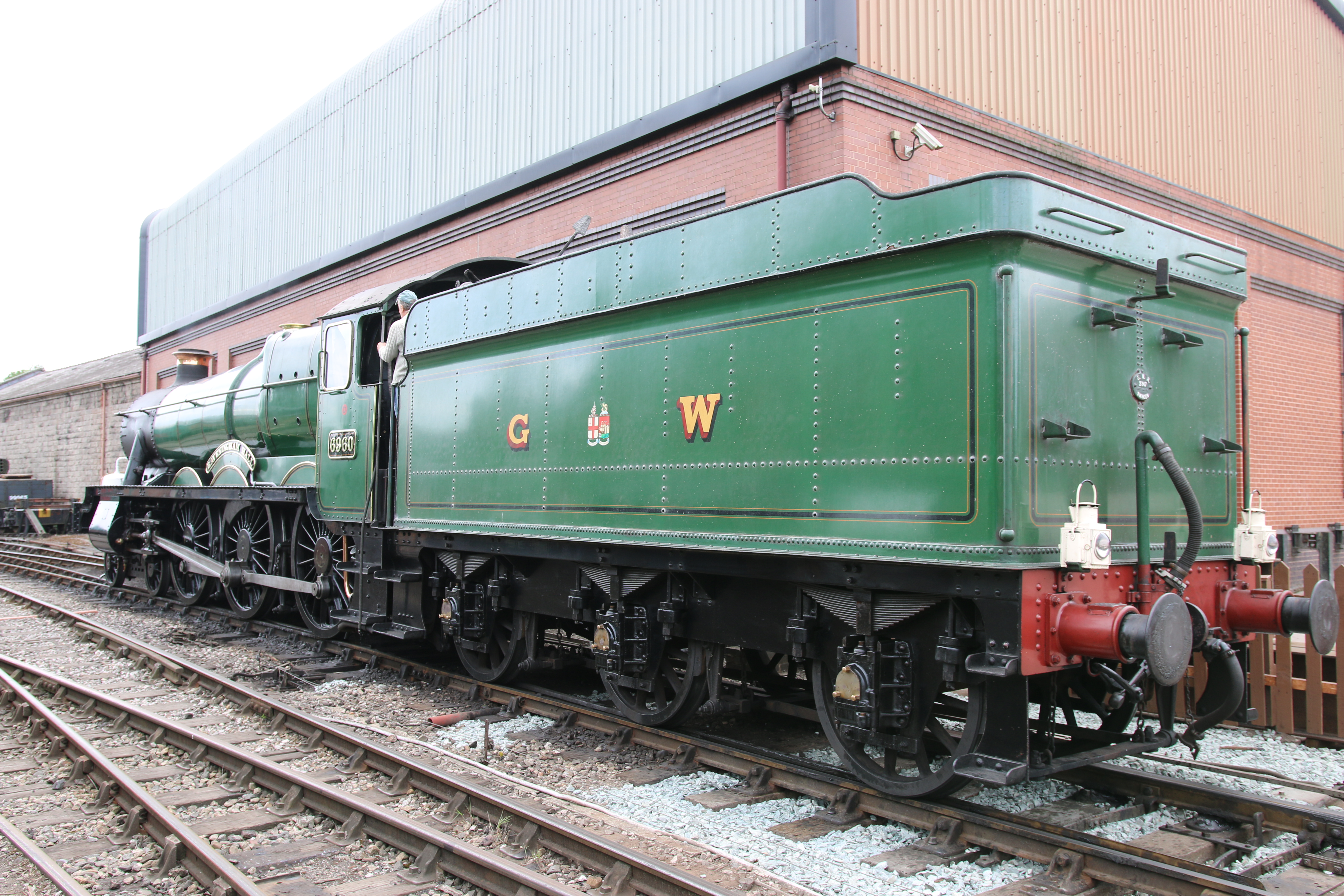
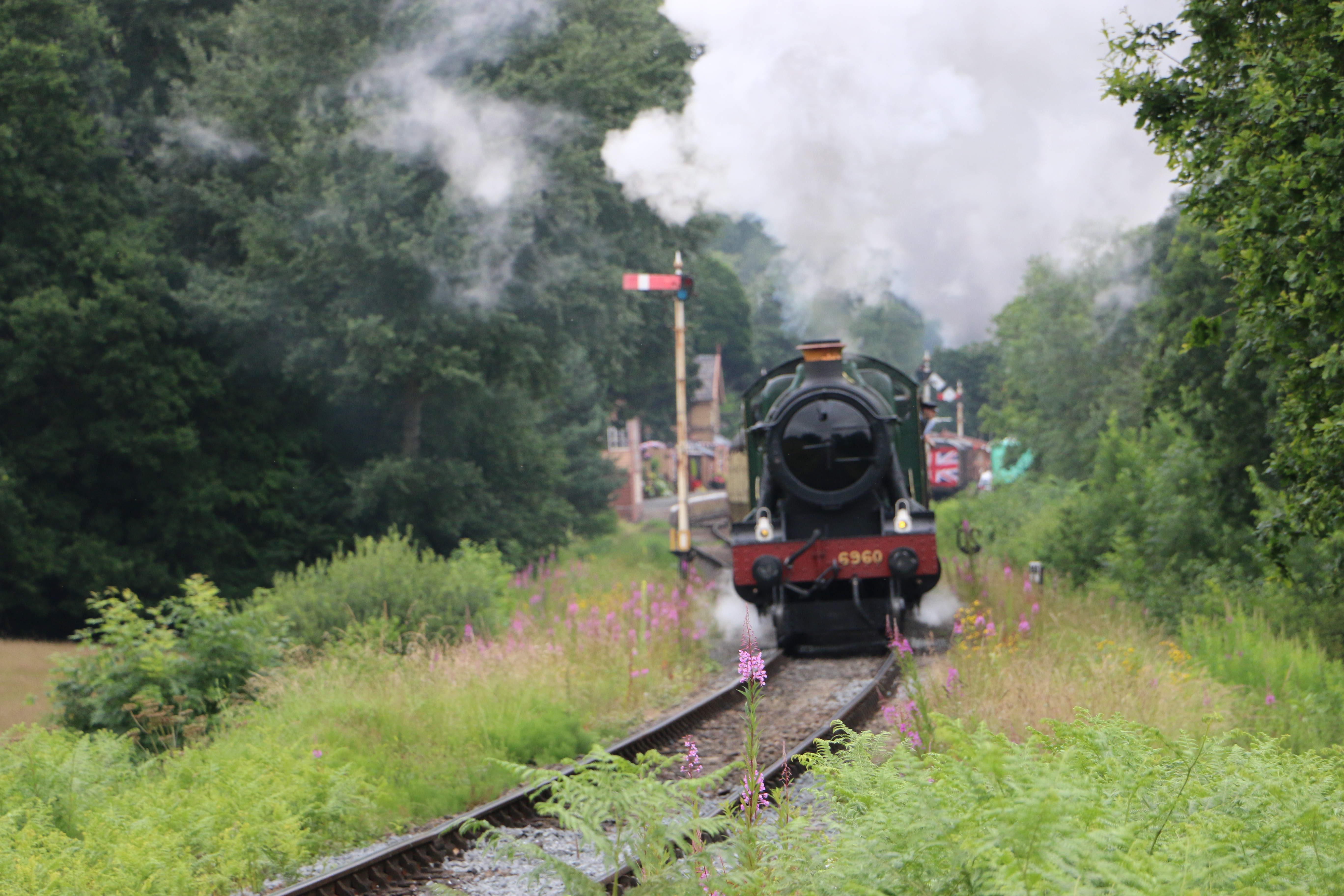
6960 Raveningham Hall, completed at Swindon in March 1944 and the second of the class. Withdrawn from BR service in June 1964 and rescued from Barry scrapyard in 1972. Currently main-line registered and based at the Severn Valley Railway. One of the better-known preserved Modified Halls and a regular performer on heritage and main-line specials.
6989 Wightwick Hall, completed at Swindon in 1948 (early BR-era construction). Withdrawn from BR service in June 1964 and rescued from Barry. Currently preserved at the Buckinghamshire Railway Centre, Quainton Road.
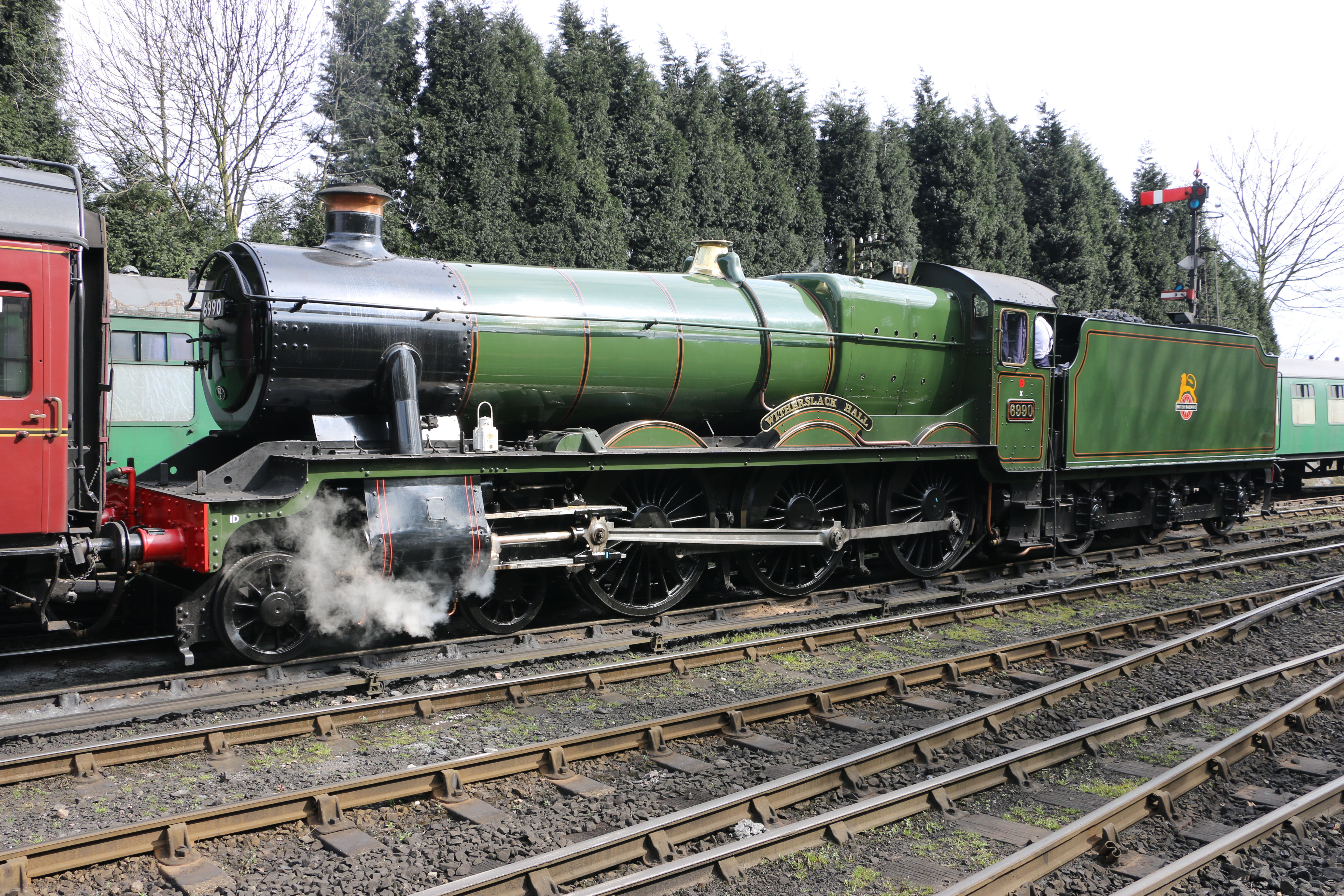
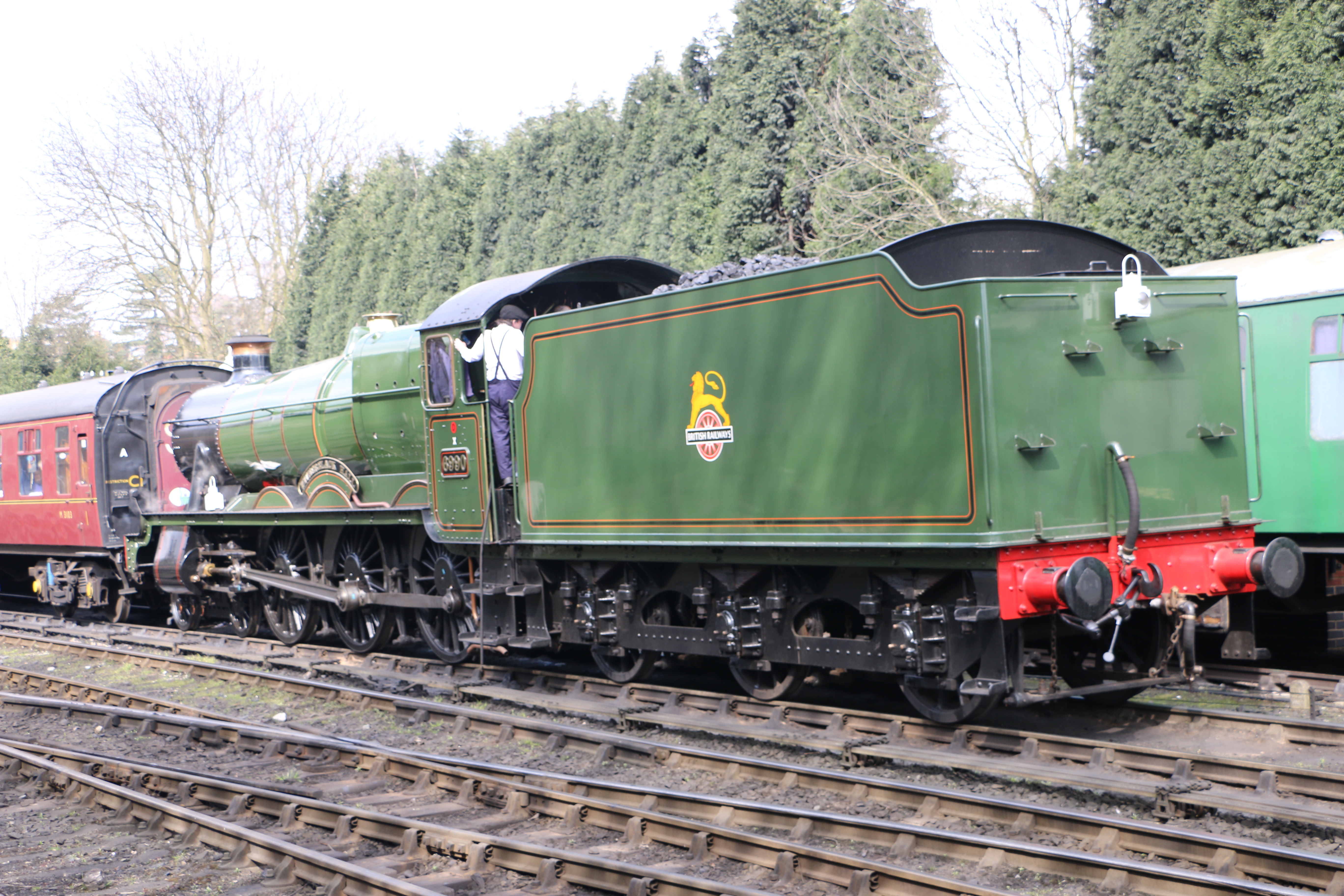
6990 Witherslack Hall, completed at Swindon in 1948. Withdrawn from BR service in December 1964 and rescued from Barry. Currently preserved at the Great Central Railway, Loughborough, where it has steamed in preservation.
6998 Burton Agnes Hall, completed at Swindon in 1949 and a regular performer through the BR period. Withdrawn in December 1964 and rescued from Barry. Currently preserved at Didcot Railway Centre as part of the Great Western Society's operating fleet.
7903 Foremarke Hall, completed at Swindon in April 1949. Withdrawn from BR service in June 1964 and rescued from Barry. Currently main-line registered and based at the Gloucestershire Warwickshire Steam Railway, Toddington, where it has been a regular operating example.
7929 Wyke Hall, the 71st and last Modified Hall, completed at Swindon in November 1950 — the last new-built GWR-design 4-6-0 of any kind. Withdrawn December 1965, not preserved.
Allocations and regions
GWR era (1944–1947): the wartime and immediate postwar Modified Halls (6959–6990, completed by the end of 1947) were distributed to the principal GWR mixed-traffic depots, mixed in with the existing Collett Hall fleet. Old Oak Common (London Paddington), Bristol Bath Road, Cardiff Canton, Newton Abbot, Plymouth Laira, Wolverhampton Stafford Road, and Worcester were among the early principal allocations.
British Railways Western Region (1948–1965): from January 1948 the remaining build (6991–6999 and 7900–7929) was completed under BR but to the GWR design and with GWR-allocated numbers, joining the existing Modified Hall fleet across the Western Region. Allocations through the BR period followed the Collett Halls almost exactly: large fleets at Cardiff East Dock, Old Oak Common, Oxley, Severn Tunnel Junction, Newton Abbot, and Worcester. By the late 1950s and early 1960s the surviving members were concentrated at the larger Western Region depots before the wholesale withdrawals of 1963–1965.
Livery history
GWR (1944–1947): the wartime engines (6959 onwards) emerged in unlined plain green, painted to wartime expedient standards. From 1946 onwards the GWR returned to its proper Middle Chrome Green with black and orange lining, polished brass safety valve bonnet, copper-capped chimney, and the GWR roundel or 'Great Western' lettering on the tender. Early Modified Halls received nameplates retrospectively as wartime restrictions lifted.
British Railways early period (1948–1956): BR mixed-traffic black with red, cream, and grey lining; early BR lion-and-wheel emblem on the tender. Several early Modified Halls were outshopped from Swindon in GWR Middle Chrome Green even after nationalisation, only receiving BR liveries at their first BR overhaul.
BR later period (1956–1965): BR lined Brunswick green, with the later BR crest. This was the most common livery worn by the class in its final years, identical to the late-period Collett Halls.
Preservation: most preserved Modified Halls have appeared in GWR Middle Chrome Green or BR lined green at various times. 6960 Raveningham Hall, 6998 Burton Agnes Hall, and 7903 Foremarke Hall have all spent time in both liveries.
Preservation status
Six Modified Halls survive: 6960 Raveningham Hall, 6984 Owsden Hall, 6989 Wightwick Hall, 6990 Witherslack Hall, 6998 Burton Agnes Hall and 7903 Foremarke Hall. A seventh, 7927 Willington Hall, also survives but is being consumed as a donor for the new-build Grange and County projects, so it is listed but not counted.
Photographs