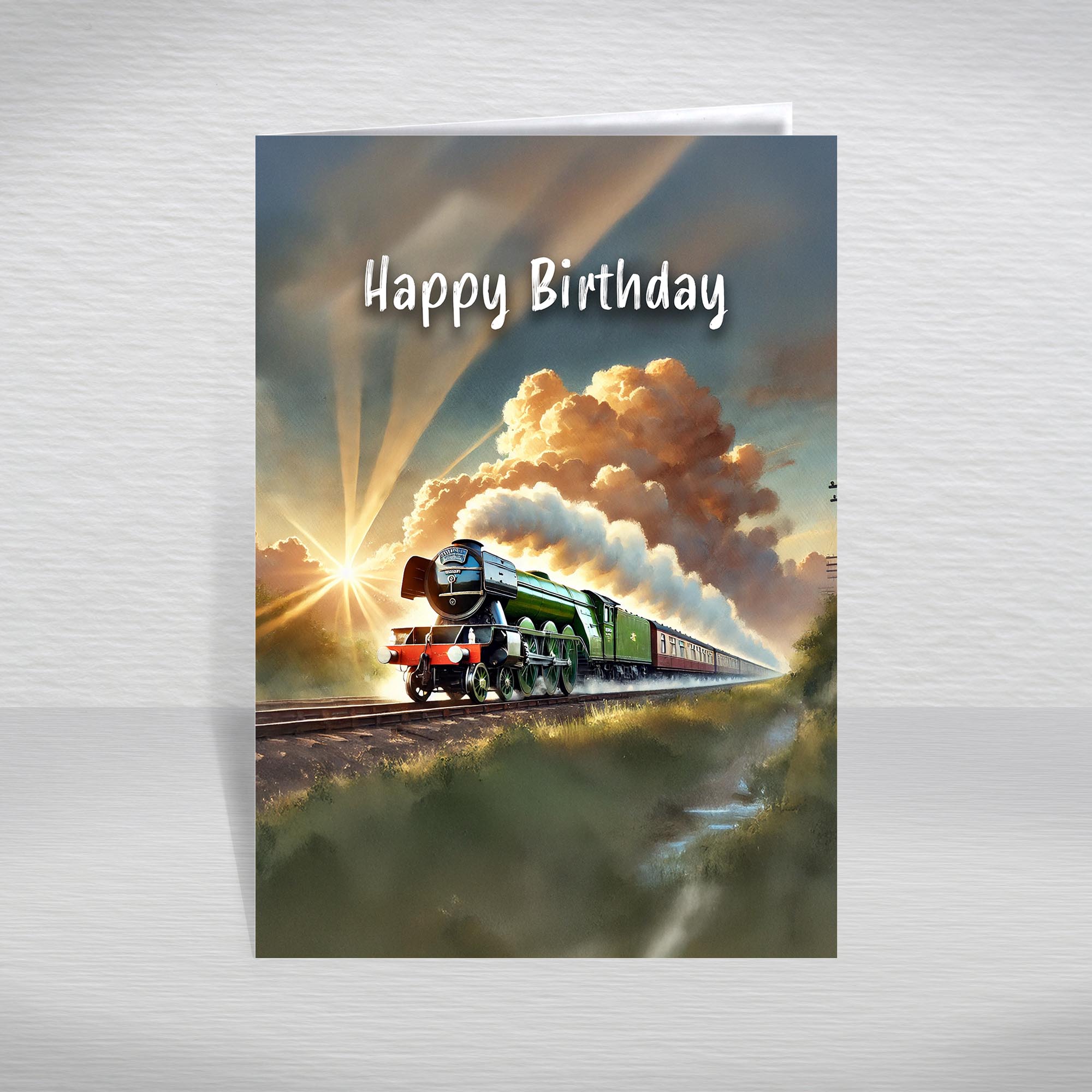
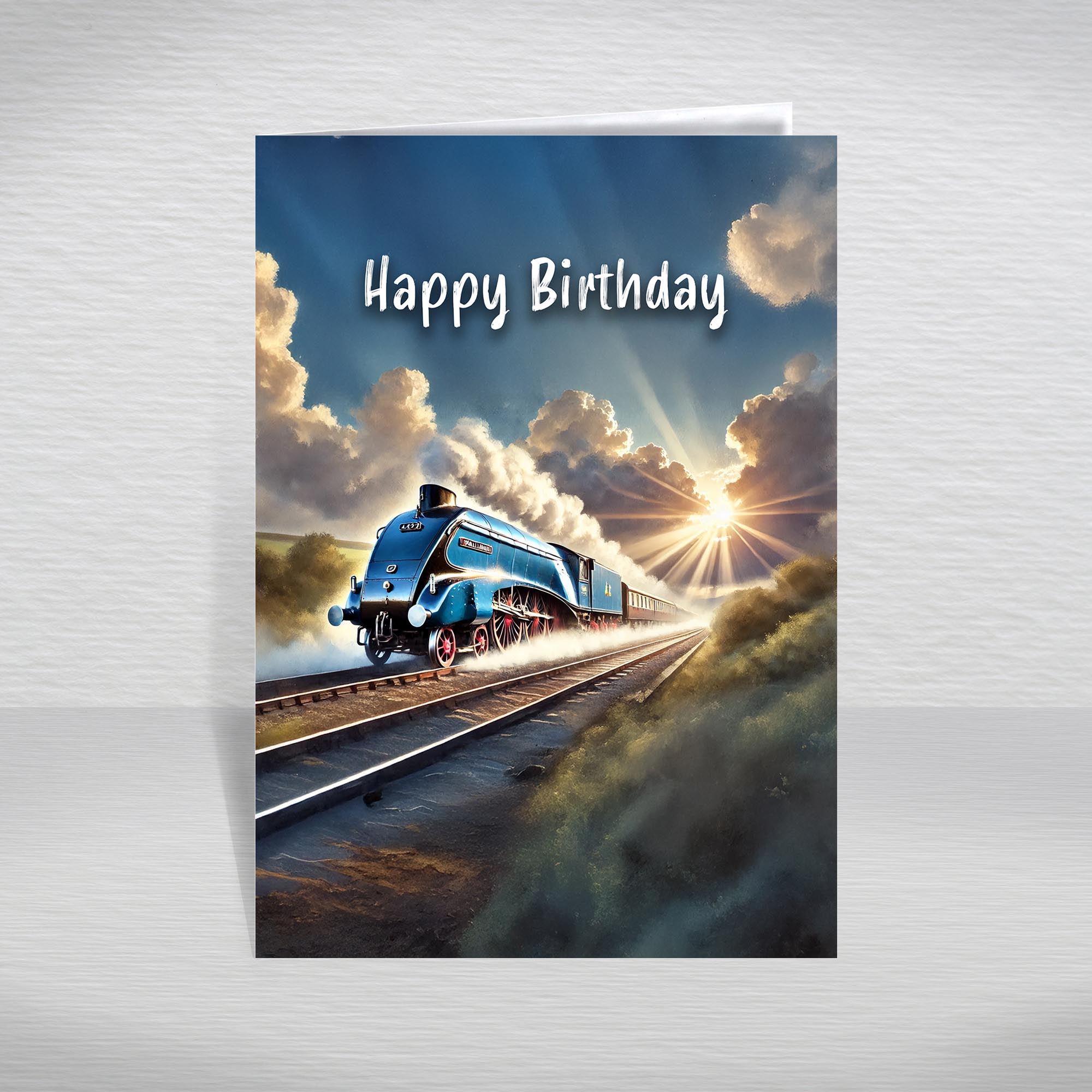
LNER B17 Sandringham Class
The LNER B17 Sandringham Class was Sir Nigel Gresley's three-cylinder 4-6-0 designed for the LNER's Great Eastern Section, introduced in November 1928 to handle the heavier Liverpool Street–Norwich and Norfolk coast expresses. Seventy-three were built at Darlington Works and the North British Locomotive Company between 1928 and 1937, with detail variations across six sub-classes (B17/1 through B17/6).
The class is most famous for its naming convention: the first 25 engines carried the names of famous English country houses associated with East Anglia (Sandringham, Holkham, Houghton Hall, Burnham Thorpe); the next 25 carried the names of English football clubs (Tottenham Hotspur, Manchester United, Arsenal, Aston Villa, Sheffield Wednesday, Norwich City and many more), a deliberate LNER publicity choice that gave the class unusually broad public profile. The remaining engines were named after smaller country houses and minor royalties.
The Great Eastern Section's lighter loading gauge and bridge ratings had previously prevented the LNER from working its larger Pacifics into East Anglia. The B17 was deliberately scaled to fit the route limits, three-cylinder layout and conjugated valve gear like Gresley's other express designs, but with a smaller boiler than the contemporary K3 and a kept-low 17.5 t axle load to clear the GE Section's bridge ratings.
From 1937 the class participated in the LNER's pre-war high-speed service experiments. Two engines (2859 East Anglian and 2870 Tottenham Hotspur) were fitted with streamlined casings matching the A4 Class for the new East Anglian high-speed service between Liverpool Street and Norwich. The streamlined services ran from 1937 to 1939; wartime fouling forced the reversal of the streamlining in 1942.
British Railways inherited the class in 1948 and continued operations through the 1950s. The introduction of the Britannia Class Pacifics from 1951, particularly to Stratford and Norwich, began to displace the B17s from front-line work. Withdrawal began in 1958 and was complete by September 1960.
None of the 73 B17 Sandringhams was preserved. The class was withdrawn relatively quickly and no preservation case crystallised around it; the LNER preservation movement of the late 1950s was preoccupied with saving more famous classes. Several were sold to Woodham Brothers' scrapyard at Barry in the late 1950s but none was rescued. The class survives only in photographs, in the LNER design records at the National Railway Museum, and through the indirect inheritance of the B1 Class that progressively replaced it on Great Eastern services.
Design and development
The Great Eastern Railway system, inherited by the LNER at the 1923 Grouping, had a particular operational characteristic that complicated locomotive supply: its loading gauge and bridge ratings were lighter than the standard LNER, restricting the use of Gresley's larger Pacific designs. By the late 1920s the GE Section's principal expresses (the Norfolk Coast Express, the East Anglian, the Continental boat trains via Harwich) were being worked by ageing GER 4-6-0s and were increasingly inadequate for the heavier post-war loadings.
Gresley's answer was the B17, a three-cylinder 4-6-0 deliberately scaled to fit the Great Eastern Section's loading gauge. The class shared the three-cylinder layout and conjugated valve gear of his other express designs but used a smaller boiler than the contemporary K3 mixed-traffic class, and was built with a kept-low axle load (17.5 t) to clear the GE Section's bridge ratings.
The first engine, No. 2800 Sandringham, emerged from Darlington Works in November 1928, named after the royal residence at Sandringham, Norfolk, which was on the Great Eastern Section's territory. The name gave the entire class its most common collective designation. The first 25 engines (2800–2824) were the "Sandringham" sub-class proper, named after famous English country houses. The next 25 (2825–2849) were the "Footballer" sub-class, named after English football clubs, a deliberate LNER publicity choice that gave the class unusually broad public profile.
The class was built across Darlington Works (the bulk of production) and the North British Locomotive Company at Glasgow (a substantial 1936 contractor batch). Construction extended over nine years across six sub-classes (B17/1 through B17/6) with progressive detail modifications.
Service and withdrawals
The B17s were the standard LNER express engine on the Great Eastern Section throughout the 1930s and into BR ownership. The class worked the Norfolk Coast Express, the East Anglian, the Norfolkman, the Hook Continental and the through services to the Norfolk coast. Performance was widely admired, particularly on the Cambridge–Liverpool Street services where the engines' lighter weight and good acceleration suited the close-spaced station stops.
From 1937 the class participated in the LNER's pre-war high-speed service experiments. Two engines (2859 and 2870) were fitted with streamlined casings matching the A4 Class for the new East Anglian high-speed service between Liverpool Street and Norwich. The streamlined services ran from 1937 to 1939; wartime fouling forced the reversal of the streamlining in 1942.
The Second World War saw the class on heavy military traffic, the Continental boat trains via Harwich became principal supply lines for the European front, and the class was worked hard. Post-war, several were rebuilt with detail improvements but the class was not modernised in the way that the contemporary A1 Pacifics were progressively rebuilt to A3 standard.
The introduction of the Britannia Class Pacifics from 1951, particularly to Stratford and Norwich, began to displace the B17s from front-line work. Withdrawal began in 1958 and was complete by September 1960. None of the 73 B17s was preserved.
Identification features
A three-cylinder 4-6-0 of LNER Group Standard appearance, slightly smaller and lighter than Gresley's K3 and similar designs to suit the Great Eastern Section's lighter loading gauge. The class is most famous for its naming convention: the first 25 engines (the "Sandringham" sub-class proper) carried names of famous English country houses associated with East Anglia (Sandringham, Holkham, Burnham Thorpe, Houghton Hall, Rougham Hall and so on); the next 25 (the "Footballer" sub-class) carried names of English football clubs (Tottenham Hotspur, Manchester United, Arsenal, Aston Villa, Sheffield Wednesday, Sheffield United, Norwich City etc.), a deliberate publicity choice that gave the class an unusually broad public profile. The remaining engines were named after country houses and minor royalties. Two engines (2859 East Anglian and 2870 Tottenham Hotspur) were briefly streamlined in 1937 for the new East Anglian high-speed service, although the streamlining was reversed during the war.
Numbers and names
LNER2800–2872
- 2800
- 2801
- 2802
- 2803
- 2804
- 2805
- 2806
- 2807
- 2808
- 2809
- 2810
- 2811
- 2812
- 2813
- 2814
- 2815
- 2816
- 2817
- 2818
- 2819
- 2820
- 2821
- 2822
- 2823
- 2824
- 2825
- 2826
- 2827
- 2828
- 2829
- 2830
- 2831
- 2832
- 2833
- 2834
- 2835
- 2836
- 2837
- 2838
- 2839
- 2840
- 2841
- 2842
- 2843
- 2844
- 2845
- 2846
- 2847
- 2848
- 2849
- 2850
- 2851
- 2852
- 2853
- 2854
- 2855
- 2856
- 2857
- 2858
- 2859East Anglian
- 2860
- 2861
- 2862
- 2863
- 2864
- 2865
- 2866
- 2867
- 2868
- 2869
- 2870Tottenham Hotspur
- 2871
- 2872
BR61600–61672
- 61600
- 61601
- 61602
- 61603
- 61604
- 61605
- 61606
- 61607
- 61608
- 61609
- 61610
- 61611
- 61612
- 61613
- 61614
- 61615
- 61616
- 61617
- 61618
- 61619
- 61620
- 61621
- 61622
- 61623
- 61624
- 61625
- 61626
- 61627
- 61628
- 61629
- 61630
- 61631
- 61632
- 61633
- 61634
- 61635
- 61636
- 61637
- 61638
- 61639
- 61640
- 61641
- 61642
- 61643
- 61644
- 61645
- 61646
- 61647
- 61648
- 61649
- 61650
- 61651
- 61652
- 61653
- 61654
- 61655
- 61656
- 61657
- 61658
- 61659
- 61660
- 61661
- 61662
- 61663
- 61664
- 61665
- 61666
- 61667
- 61668
- 61669
- 61670
- 61671
- 61672
LNER Nos 2800–2872 originally. The class was divided into sub-classes B17/1, /2, /3, /4, /5 and /6 according to detail variations: smaller and larger tenders, modified valve gear, side window cabs, and (briefly) streamlined casings on Nos 2859 East Anglian and 2870 Tottenham Hotspur for the East Anglian high-speed service of 1937. Renumbered into the 1600 series in the 1946 LNER scheme; British Railways added 60000 from 1948 to give 61600–61672.
Notable locomotives
2800 Sandringham, first of class, completed at Darlington in November 1928 and named after the royal residence at Sandringham, Norfolk. The name gave the entire class its most common collective designation. Withdrawn 1959.
2859 East Anglian, fitted with experimental streamlined casing (similar to the A4 Class) in 1937 for the new East Anglian high-speed service between Liverpool Street and Norwich. The streamlining was reversed in 1942 because of wartime fouling. Withdrawn 1958.
2870 Tottenham Hotspur, also fitted with streamlined casing 1937; reverted 1942. The first of the "Footballer" sub-class. Withdrawn 1959.
61652 Darlington, built by the North British Locomotive Company in 1936 as one of the contractor-built batch. Worked the Cambridge–Liverpool Street expresses through the 1930s and 1940s. Withdrawn 1959.
Allocations and regions
LNER era (1928–1947): the entire class was concentrated on the Great Eastern Section. Major B17 allocations were at Stratford (London Liverpool Street depot, the largest contingent), Norwich Thorpe, Cambridge, March, and Lincoln. The class worked the principal Liverpool Street–Norwich expresses (the Norfolk Coast Express, the East Anglian, the Norfolkman) and the through services to Cromer, Yarmouth and the Norfolk coast.
British Railways Eastern Region (1948–1960): the class continued at the same depots through the 1950s. By the late 1950s the introduction of the Britannia Class Pacifics (1951), particularly to Stratford and Norwich for the Norwich expresses, had begun to displace the B17s from front-line work. Withdrawal began in 1958 and was complete by 1960.
Livery history
LNER (1928–1947): LNER apple green with black-and-white lining, polished brass nameplates carrying the country-house or football-club names, and the LNER coat of arms or "L.N.E.R." lettering on the tender. Wartime examples (1939–1947) sometimes appeared in plain unlined LNER black.
British Railways (1948–1960): initially apple green with the early lion-and-wheel emblem; from 1949 BR Brunswick green with the early then late BR crest. Most B17s spent their final years in BR Brunswick green.
Streamlined examples (1937–1942): 2859 and 2870 received garter-blue streamlining matching the contemporary A4 Class for the East Anglian high-speed service. Reverted to standard appearance during the war.
Preservation status
None of the 73 B17 Sandringhams was preserved. The class was withdrawn relatively quickly between 1958 and 1960 as the Britannia Class Pacifics took over the principal Great Eastern expresses; the LNER preservation movement of the late 1950s was preoccupied with saving more famous classes (the Pacifics, the V2 mixed-traffic, individual celebrity engines) and no preservation case crystallised around the B17.
Several were sold to Woodham Brothers' scrapyard at Barry in the late 1950s but none was rescued for preservation in the 1970s. All 73 B17s were therefore scrapped at British Railways scrapyards or at Barry between 1958 and 1968. The class is preserved indirectly through the B1 Class (Edward Thompson's 1942 two-cylinder mixed-traffic 4-6-0 that gradually replaced the B17 on Great Eastern services), of which two examples are preserved.
A new-build B17 has been proposed but not yet started; the project would face the substantial challenge of recreating Gresley's three-cylinder conjugated valve gear, which has limited preservation expertise compared with the more common Walschaerts arrangement.