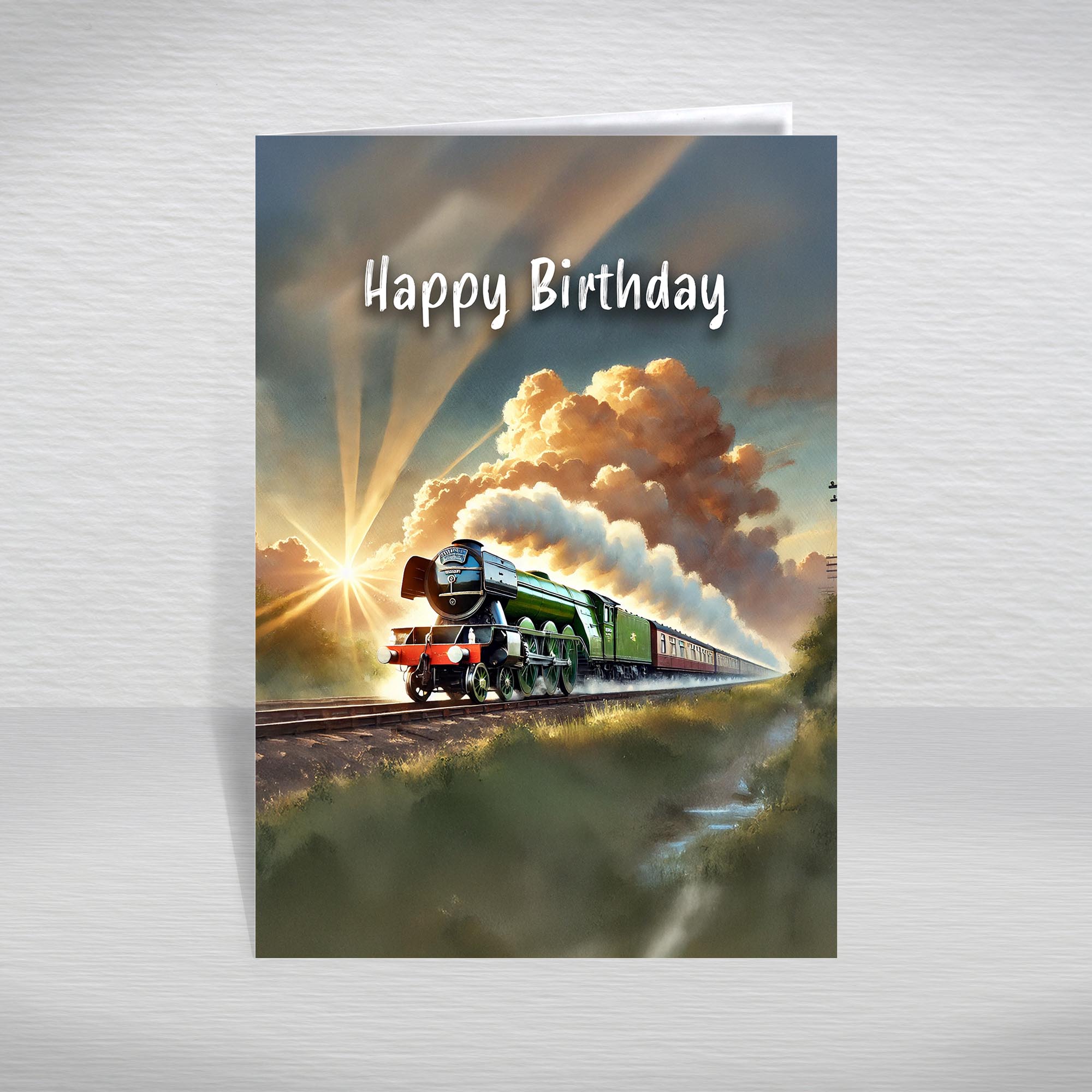
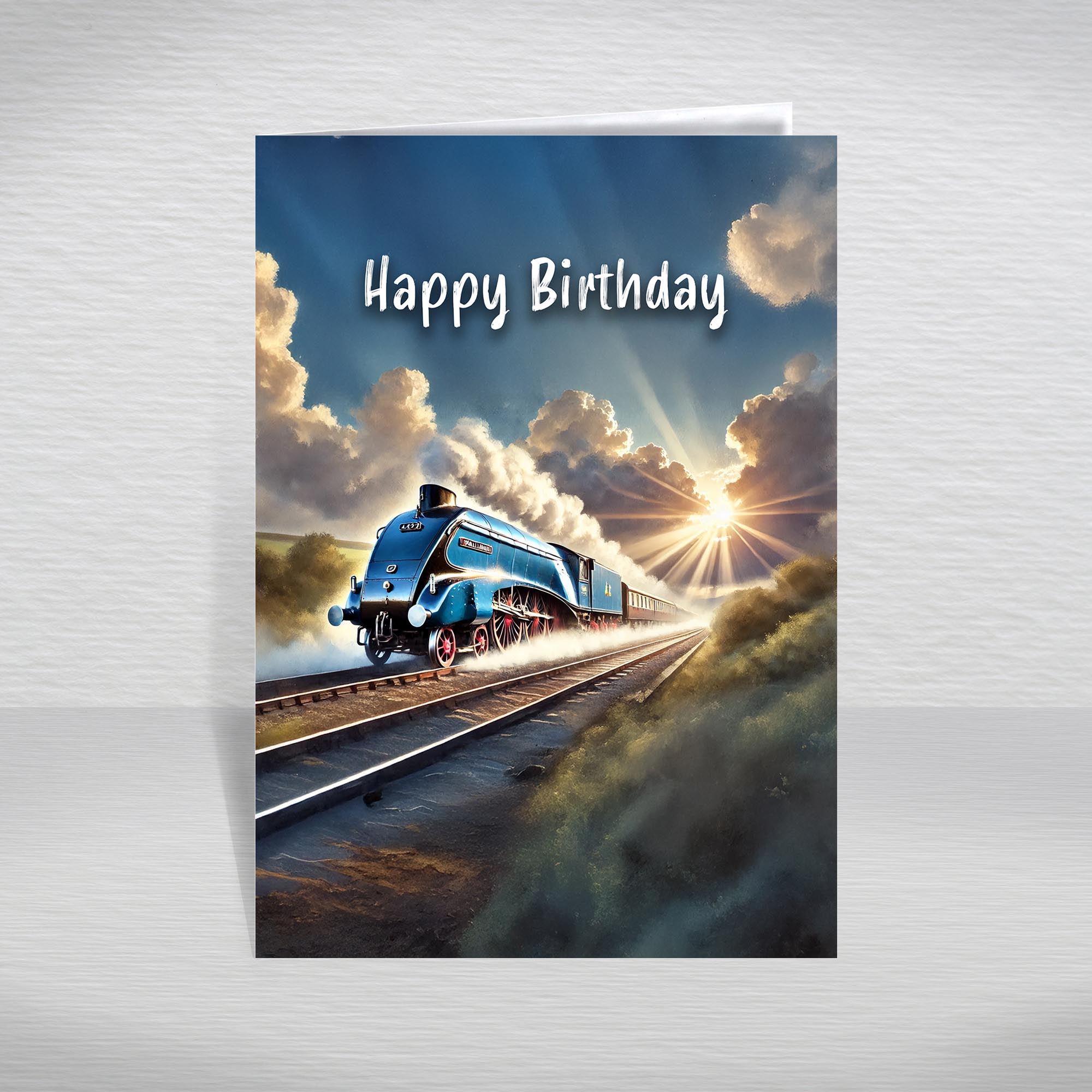
BR Standard Class 4MT
The BR Standard Class 4MT 4-6-0 was British Railways' standard medium mixed-traffic 4-6-0, a smaller-axle-load BR Standard design intended to provide modern motive power for routes inaccessible to the heavier Class 5MT. Eighty engines (Nos 75000–75079) were built at Swindon and Doncaster between 1951 and 1957.
R. A. Riddles' BR Standard programme included three medium-power mixed-traffic designs sharing the BR Standard 4MT classification, the 4-6-0 75000 series (this entry), the 2-6-0 76000 series, and the 2-6-4T 80000 series. Each used different wheel arrangements but shared similar boiler, cylinder, and chassis principles to provide comprehensive medium-power coverage. The 4MT 4-6-0 was the lightest BR Standard 4-6-0, a scaled-down version of the Class 5MT for routes with restricted availability.
The 5 ft 8 in driving wheels (against the 6 ft 2 in of the Class 5MT) gave better adhesion at lower speeds; the smaller Type 4 boiler gave reduced weight; the modest 17 t 2 cwt axle load gave broader route availability. The design borrowed from contemporary GWR Manor Class practice in scaling down the standard BR Standard mixed-traffic concept. The two outside cylinders with Walschaerts valve gear, the high-set running plate, the BR-pattern cab, all the BR Standard signatures were retained on the smaller chassis.
The first engine, No. 75000, was completed at Swindon Works in May 1951. Production continued at Swindon and Doncaster through to 1957. The class proved successful in the role for which it was designed, replacing ageing pre-Grouping 4-4-0s and 4-6-0s on secondary main-line and cross-country services. The Salisbury–Exeter route, the Reading–Basingstoke services, the cross-country and seasonal services, and many similar routes were 4MT-worked through the late 1950s and into the 1960s.
The Modernisation Plan of 1955 had already announced the withdrawal of British steam in the medium term, and the BR Standard 4MTs, among the youngest BR Standards, were paradoxically among the first to be displaced. By 1965 many 4MTs had been withdrawn after only 8–14 years in service. The very last BR Standard 4MT in BR service, 75019, was withdrawn from Carnforth in May 1968.
Six BR Standard 4MT 4-6-0s are preserved: 75014 (Bodmin & Wenford Railway, working order), 75027 (Bluebell Railway, working order), 75029 "The Green Knight" (North Yorkshire Moors Railway; the name was applied in preservation, as the engine was unnamed in BR service), 75069 (Severn Valley Railway), 75078 (Keighley & Worth Valley Railway), and 75079 (Mid-Hants Railway, the very last BR Standard 4MT 4-6-0 ever built, Doncaster, May 1957). The 7.5% preservation rate is good for a 1960s-withdrawn class.
Design and development
R. A. Riddles' BR Standard programme included three medium-power mixed-traffic designs sharing the BR Standard 4MT classification, the 4-6-0 75000 series (this entry), the 2-6-0 76000 series, and the 2-6-4T 80000 series. Each used different wheel arrangements but shared similar boiler, cylinder, and chassis principles to provide comprehensive medium-power coverage.
The 4MT 4-6-0 was the lightest BR Standard 4-6-0, a scaled-down version of the Class 5MT for routes with restricted route availability. The 5 ft 8 in driving wheels (against the 6 ft 2 in of the Class 5MT) gave better adhesion at lower speeds; the smaller boiler (Type 4 against Type 5) gave reduced weight; the modest 17 t 2 cwt axle load gave broader route availability. The design borrowed from contemporary GWR Manor Class practice in scaling down the standard BR Standard mixed-traffic concept.
The first engine, No. 75000, was completed at Swindon Works in May 1951. Production continued at Swindon and Doncaster through to 1957, with 80 engines built. The class proved successful in the role for which it was designed, replacing ageing pre-Grouping 4-4-0s and 4-6-0s on secondary main-line and cross-country services.
Service and withdrawals
The BR Standard 4MTs (4-6-0) were the BR's lighter mixed-traffic 4-6-0 from 1951 onwards. The class worked secondary expresses, cross-country services, and lighter mixed-traffic duties across all BR regions. The Salisbury–Exeter route, the Reading–Basingstoke services, the cross-country and seasonal services, and many similar routes were 4MT-worked through the late 1950s and into the 1960s.
The Modernisation Plan of 1955 had already announced the withdrawal of British steam in the medium term, and the BR Standard 4MTs, among the youngest BR Standards, were paradoxically among the first to be displaced. By 1965 many 4MTs had been withdrawn after only 8–14 years in service. The very last BR Standard 4MT in BR service, 75019, was withdrawn from Carnforth in May 1968.
Identification features
A scaled-down version of the BR Standard mixed-traffic outline. The high-set running plate, exposed boiler bands, single chimney (most engines), exposed Walschaerts valve gear, and BR-pattern cab, all the BR Standard signatures, on a smaller-scale chassis. The 5 ft 8 in driving wheels are smaller than the Class 5MT (6 ft 2 in) and reflect the lighter mixed-traffic role. The class was unnamed in BR service.
Numbers and names
75000–75079
- 75000
- 75001
- 75002
- 75003
- 75004
- 75005
- 75006
- 75007
- 75008
- 75009
- 75010
- 75011
- 75012
- 75013
- 75014
- 75015
- 75016
- 75017
- 75018
- 75019
- 75020
- 75021
- 75022
- 75023
- 75024
- 75025
- 75026
- 75027
- 75028
- 75029
- 75030
- 75031
- 75032
- 75033
- 75034
- 75035
- 75036
- 75037
- 75038
- 75039
- 75040
- 75041
- 75042
- 75043
- 75044
- 75045
- 75046
- 75047
- 75048
- 75049
- 75050
- 75051
- 75052
- 75053
- 75054
- 75055
- 75056
- 75057
- 75058
- 75059
- 75060
- 75061
- 75062
- 75063
- 75064
- 75065
- 75066
- 75067
- 75068
- 75069
- 75070
- 75071
- 75072
- 75073
- 75074
- 75075
- 75076
- 75077
- 75078
- 75079
BR Nos 75000–75079. Built at Swindon Works (the principal contributor) and Doncaster Works between 1951 and 1957. Note that the BR Standard 4MT designation was also applied to the 2-6-4T 80000 series and 2-6-0 76000 series, three different designs sharing the same power classification but different wheel arrangements.
Notable locomotives
75000, the class prototype, completed at Swindon Works in May 1951. Withdrawn from BR April 1968 and broken up.
75014, preserved at the Bodmin & Wenford Railway, working order.
75027, preserved at the Bluebell Railway, working order.
75029 The Green Knight, preserved at the North Yorkshire Moors Railway. The "Green Knight" name was applied in preservation by enthusiast Robert Cantrell, the engine was unnamed in BR service.
75069, preserved, currently at the Severn Valley Railway.
75078, preserved at the Keighley & Worth Valley Railway.
75079, preserved at the Mid-Hants Railway. Notable as the very last BR Standard 4MT 4-6-0 ever built (Doncaster, May 1957).
Allocations and regions
BR introduction (1951–1957): the class was distributed across BR regions for medium-power mixed-traffic work. Major allocations included the Western Region (Swindon, Cardiff, Plymouth Laira), the Southern Region (Salisbury, Bournemouth, Bricklayers Arms), the LMR (Liverpool Bank Hall, Carnforth), the Eastern Region (Stratford, March), and the Scottish Region.
Southern Region (1955–1965): the SR was a particular user of the class, the 4MTs replaced ageing SR Maunsell 4-4-0s and 4-6-0s on lighter expresses and cross-country services, particularly the Salisbury–Exeter route, the Reading–Basingstoke services, and the cross-country traffic.
Final years (1965–1968): displacement by BR diesels through the early-to-mid 1960s saw the class progressively withdrawn. The last BR Standard 4MTs in service were at Carnforth and the Scottish sheds. The very last BR Standard 4MT in BR service was 75019, withdrawn from Carnforth in May 1968.
Livery history
British Railways Brunswick green (1951–1968): the class was outshopped in BR-standard lined Brunswick green from new, the standard BR mixed-traffic livery. Initial engines carried the early lion-and-wheel emblem; from 1956 the late BR crest progressively replaced the lion-and-wheel.
Preservation: preserved BR Standard 4MTs have appeared in BR Brunswick green with both the early lion-and-wheel emblem and the late BR crest. 75029 has carried the preservation-applied "The Green Knight" name on the smokebox.
Preservation status
Six BR Standard 4MT 4-6-0s are preserved:
- 75014, Bodmin & Wenford Railway, working order.
- 75027, Bluebell Railway, working order.
- 75029 "The Green Knight", North Yorkshire Moors Railway. The "Green Knight" name applied in preservation; the engine was unnamed in BR service.
- 75069, Severn Valley Railway.
- 75078, Keighley & Worth Valley Railway.
- 75079, Mid-Hants Railway. The very last BR Standard 4MT 4-6-0 ever built (Doncaster, May 1957).
The class's 7.5% preservation rate (6 from 80) is good for a 1960s-withdrawn class. All preserved 4MTs are in good condition and several have given extensive heritage railway service.