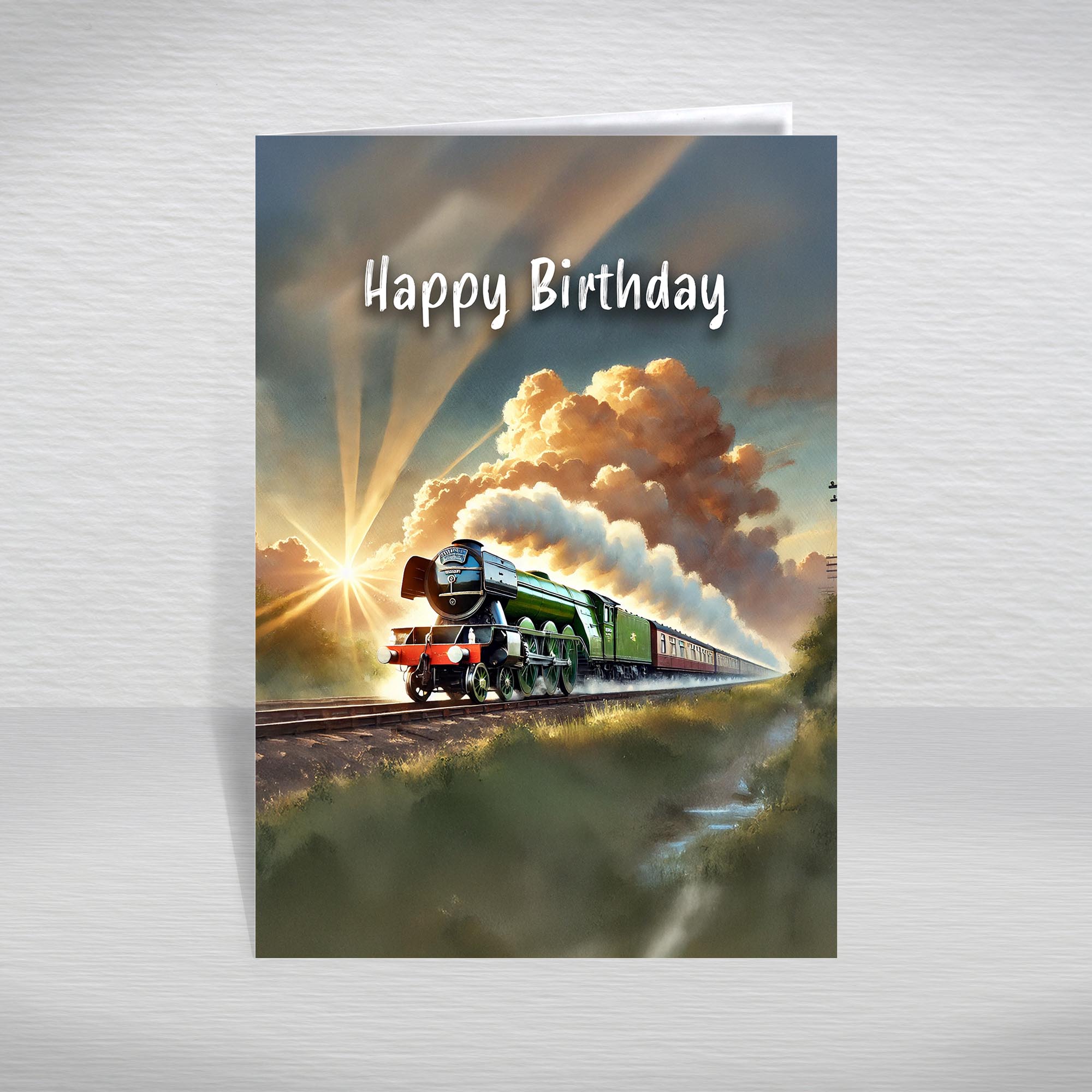
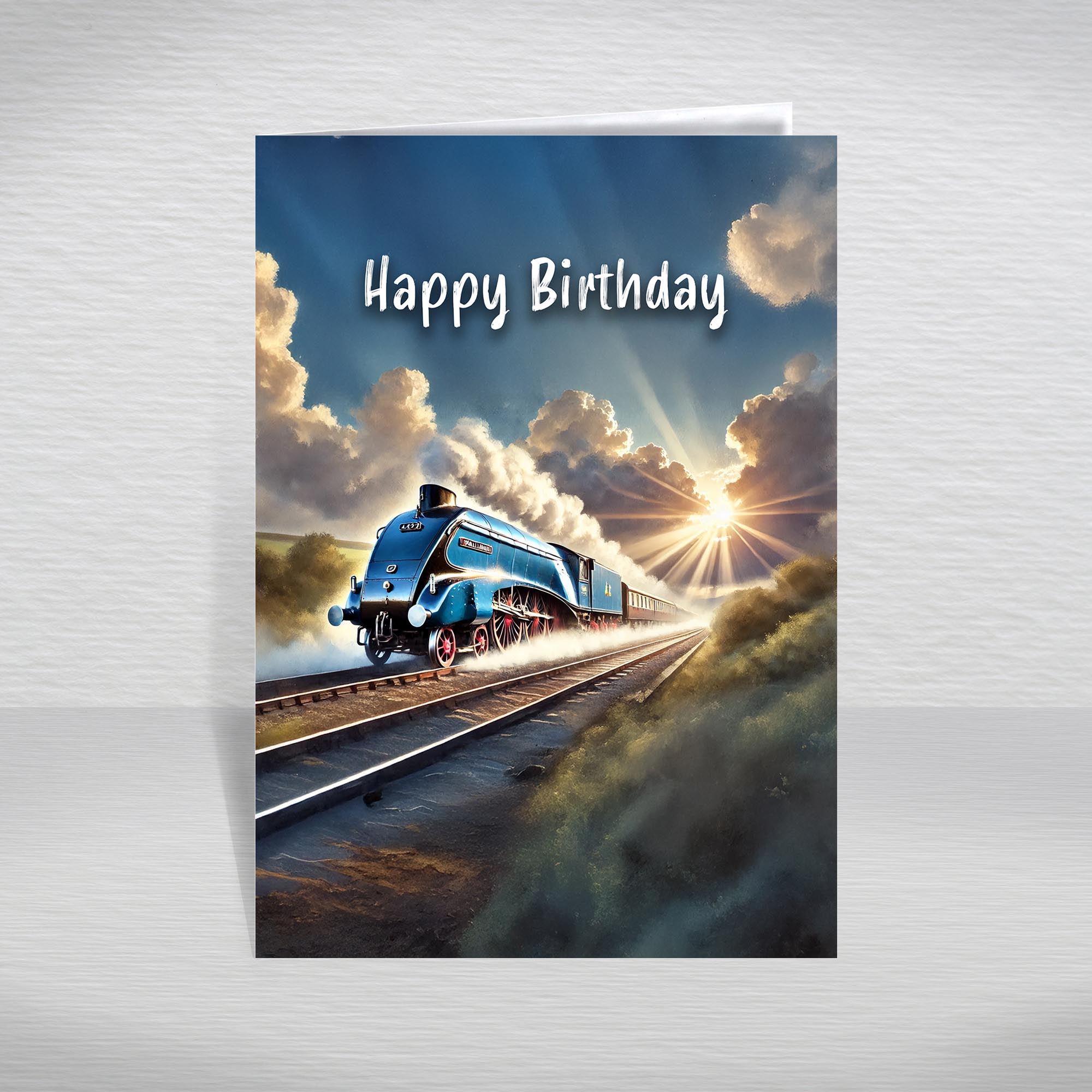
LNER K4 Class
The LNER K4 Class was Sir Nigel Gresley's three-cylinder 2-6-0 designed specifically for the North British Railway's West Highland Line between Glasgow Queen Street and Fort William. Six engines were built at Darlington Works between January 1937 and January 1939 to handle the heavy passenger and goods traffic on a route whose tight curves, steep 1-in-50 gradients and restricted loading gauge made it one of the most operationally challenging main lines in Britain.
The K4 was a smaller, more restricted-gauge version of Gresley's standard K3 Class mixed-traffic 2-6-0, three cylinders with conjugated valve gear, a Belpaire firebox, and the same wheel arrangement, but with a smaller boiler, shorter chimney, and cab profile cut down to clear the tight West Highland tunnels and overbridges. The three-cylinder layout gave six exhaust beats per revolution, smoothing both driving torque and exhaust draught, particularly beneficial on the West Highland's tight curves where smooth power application was essential.
All six engines were named after Highland clan and geographic references, Loch Long, The Great Marquess, Cameron of Lochiel, Lord of the Isles, MacCailein Mor, and originally The Banffshire, a deliberate departure from the LNER's usual practice of leaving most mixed-traffic engines unnamed. The whole class was allocated to Eastfield shed in Glasgow throughout its working life and rarely worked off the West Highland Line.
In December 1945 Edward Thompson (Gresley's successor) rebuilt No. 3445 MacCailein Mor to a two-cylinder layout, creating the prototype K1/1. The successful trial led to the production Peppercorn K1 Class of 1949, 70 two-cylinder engines that were essentially K4s without the three-cylinder complication.
Withdrawal of the K4 class began in 1959 with No. 61993 Loch Long; further withdrawals followed in 1960 and 1961. The last K4 in BR service was No. 61994 The Great Marquess, withdrawn from Eastfield in December 1961.
One K4 is preserved: 61994 The Great Marquess itself, bought from BR by Viscount Garnock for preservation, among the very first British steam locomotives to be saved by individual rather than railway-society purchase. Restored to LNER apple-green livery and main-line registered, it has been a regular performer on charter and heritage-railway services for over 60 years. Currently based at the Severn Valley Railway. The other five K4s and the unique K1/1 rebuild were all scrapped between 1959 and 1961.
Design and development
The North British Railway's West Highland Line, opened to Fort William in 1894 and extended to Mallaig in 1901, was one of the most operationally challenging main lines in Britain. Tight curves, steep gradients (a maximum of 1 in 50 between Crianlarich and Tyndrum), heavy summer holiday loadings, and substantial fish traffic from the West Coast required engines of exceptional ability. The pre-grouping NBR had used K2 2-6-0s for the route from 1924 onwards but these were progressively becoming inadequate for the rising loadings.
Sir Nigel Gresley designed the K4 specifically for West Highland conditions. The class was a smaller, more restricted-gauge version of his standard K3 mixed-traffic 2-6-0, three cylinders, conjugated valve gear, and a Belpaire firebox, but with a smaller boiler, shorter chimney, and cab profile cut down to clear the tight West Highland tunnels and overbridges.
The first engine, No. 3441 Loch Long, was completed at Darlington Works in January 1937. Test running on the West Highland Line was promising, and a further five engines followed: 3442 in February 1938, 3443–3445 in 1938, and 3446 in 1939. All were built at Darlington and all were named after Highland clan and geographic references, a deliberate departure from LNER practice of leaving most mixed-traffic engines unnamed.
In service the class was a notable success on the West Highland but their three-cylinder design was complex relative to the LNER's broader 1940s preference for two-cylinder simplicity. In December 1945 Edward Thompson (Gresley's successor) rebuilt 3445 MacCailein Mor to a two-cylinder layout, creating the prototype K1/1. The successful trial led to the production Peppercorn K1 Class of 1949, 70 two-cylinder engines that were essentially K4s without the three-cylinder complication.
Service and withdrawals
The K4s worked the West Highland Line's heaviest passenger trains, including the principal Glasgow Queen Street–Fort William service (the "West Highlander"), the through Mallaig services, summer holiday extras to Oban, and the heavy fish traffic from the Mallaig fishermen back to the Glasgow markets. Their high tractive effort, three-cylinder smoothness, and West Highland-specific loading gauge made them ideally suited to the route's demands.
From the early 1950s the BR Standard 4MT 2-6-0 (Class 76xxx) began to be allocated to West Highland duties as a successor to the K4s, and the early Class 27 BRCW Bo-Bo diesels arrived from 1962. Withdrawal of the K4 class began in 1959 with the prototype 61993 Loch Long; further withdrawals followed in 1960 and 1961. The two-cylinder rebuild K1/1 (61995) was withdrawn in October 1961.
The last K4 in BR service was No. 61994 The Great Marquess, withdrawn from Eastfield in December 1961, by which point Viscount Garnock had already arranged its purchase for preservation. Of the original six K4s plus the K1/1 rebuild, only 61994 survived the cutter's torch.
Identification features
The K4 is recognisable as a Gresley three-cylinder 2-6-0 with a notably restricted loading gauge, the cab and chimney profile are cut down to suit the West Highland Line's tight clearances. The class was always immediately distinguishable from the related K3 Class (Gresley's general-purpose 2-6-0) by its smaller boiler, shorter chimney and characteristic Scottish appearance. All six engines were named, in deliberate contrast to the standard LNER practice of leaving most mixed-traffic engines unnamed; the names were Highland clan and geographic references chosen for symbolic appeal on the West Highland route. The class wore LNER apple green from new (later black during the war) and BR Locomotive Green from 1949.
Numbers and names
LNER3441–3446
- 3441Loch Long
- 3442The Great Marquess
- 3443Cameron of Lochiel
- 3444Lord of the Isles
- 3445MacCailein Mor
- 3446The Banffshire
BR61993–61998
- 61993
- 61994
- 61995
- 61996
- 61997
- 61998
LNER Nos 3441–3446 originally, named: 3441 Loch Long, 3442 The Great Marquess, 3443 Cameron of Lochiel, 3444 Lord of the Isles, 3445 MacCailein Mor, 3446 The Banffshire (later renamed). Renumbered 1993–1998 in the 1946 LNER scheme; British Railways added 60000 from 1948 to give 61993–61998. Number 3445 (61995) was rebuilt by Edward Thompson in 1945 to a two-cylinder K1/1 layout, leaving five engines as built K4 form.
Notable locomotives
3441 Loch Long (later 1993, 61993), the prototype, completed at Darlington in January 1937. The first K4 to demonstrate the class's capability on West Highland trials. Withdrawn September 1959.
3442 The Great Marquess (later 1994, 61994), preserved as the unique surviving K4. Built at Darlington in February 1938. Withdrawn from Eastfield in December 1961, sold to Viscount Garnock for preservation, and restored to working order at Severn Valley Railway. Currently main-line registered and a regular performer on charter trains.
3445 MacCailein Mor (later 1995, 61995), the unique example rebuilt by Edward Thompson in December 1945 to a two-cylinder layout, becoming the prototype K1/1. The successful K1/1 trial led to the Peppercorn K1 Class of 1949 (70 engines built). The rebuilt 3445 was renumbered 1995 (61995) and lasted in BR service until 1961.
3446 The Great Marquess, note: the original LNER name The Great Marquess was carried by 3442 not 3446. 3446 was originally The Banffshire, renamed MacCailein Mor, then renamed again to clear naming for 3445.
Allocations and regions
LNER era (1937–1947): the entire class was allocated to Eastfield shed, Glasgow, for the West Highland Line. All six engines were concentrated on the route from new and rarely worked elsewhere except for occasional excursion or test running.
British Railways Scottish Region (1948–1961): continued at Eastfield for the West Highland through the early BR years. Withdrawal of the K4s began in 1959 as the BR Standard 4MT 2-6-0 and the early Class 27 BRCW Bo-Bo diesels began to take over West Highland duties. The last K4 in BR service was 61994 The Great Marquess, withdrawn from Eastfield in December 1961.
Livery history
LNER (1937–1947): LNER apple green with black-and-white lining, polished brass nameplate, and the LNER coat of arms or "L.N.E.R." lettering on the tender. Wartime examples briefly in unlined plain black.
British Railways early (1948–1956): LNER apple green retained for some time, then BR mixed-traffic black with red, cream and grey lining, early lion-and-wheel emblem.
British Railways Brunswick (1956–1961): BR lined Brunswick green with the late BR crest. This was the dominant final livery; the preserved 61994 has been restored to LNER apple green at various times in preservation.
Preservation status
One K4 is preserved: No. 61994 The Great Marquess (originally LNER 3442). Built at Darlington in February 1938 and withdrawn from Eastfield in December 1961, the engine was bought from BR by Viscount Garnock for preservation, among the very first British steam locomotives to be saved by individual rather than railway-society purchase.
The engine was restored to LNER apple-green livery and main-line registered, becoming a regular performer on charter trains through the 1960s, 1970s and 1980s. After successive overhauls, most recently completed in 2008, it has continued in main-line and heritage-railway operation. Currently based at the Severn Valley Railway and main-line registered, the engine remains the unique surviving member of the West Highland Line K4 family.
The other five members of the K4 class, and the unique K1/1 rebuild 61995, were scrapped at British Railways scrapyards between 1959 and 1961. The 70 production Peppercorn K1 engines (the two-cylinder development of the K1/1 rebuild) included one preserved example, No. 62005, also at the National Railway Museum.