GWR 1400 Class
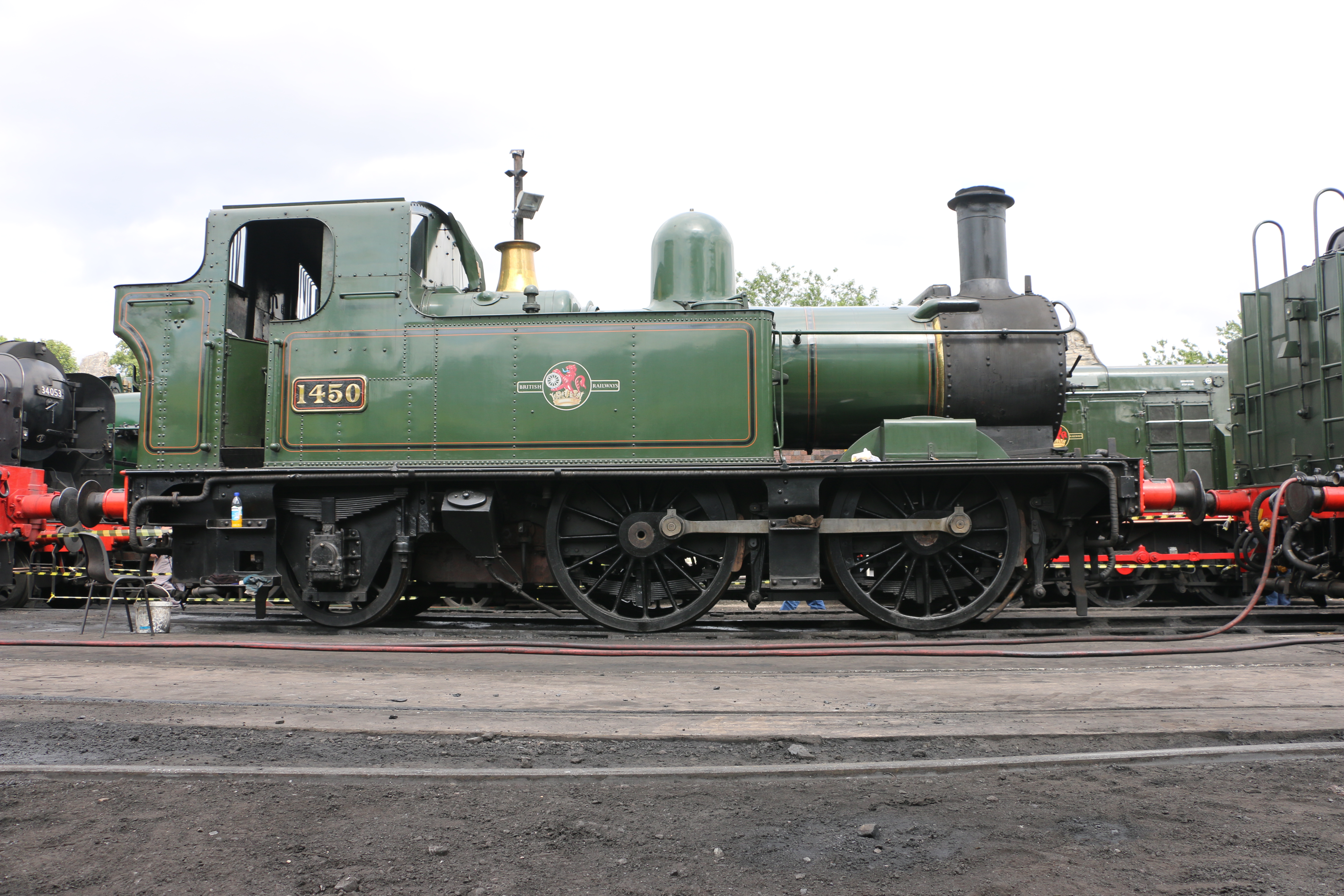
The GWR 1400 Class was Charles Collett's small auto-fitted 0-4-2T tank engine for short-haul branch and auto-train work, designed specifically to work GWR auto-coaches with through-control of the locomotive's regulator from the driving end of the auto-coach. Seventy-five engines were built at Swindon Works between 1932 and 1936.
The 0-4-2T wheel arrangement (rare on the GWR, most other GWR small tanks were 0-6-0PT or 2-6-2T) was chosen for the auto-train role: short, light, and capable of running effectively in either direction with the auto-coach. The 5 ft 2 in driving wheels gave reasonable speed for branch passenger work, the 170 psi boiler provided adequate steaming, and the auto-controls allowed the locomotive to be driven from the rear coach, eliminating the need to release the locomotive at terminals.
The 1400 was the GWR's standard auto-train engine from 1932 onwards. The class worked branch passenger services across the GWR system using auto-coaches, including the Cornish branches, the Welsh branches, the West Midlands suburban network, and the various rural and suburban GWR routes that had auto-train working.
British Railways inherited 75 engines in 1948. The class continued in BR Western Region service through the 1950s. The arrival of BR diesel multiple units from 1955 onwards progressively replaced the auto-train concept entirely; the last 1400 in BR service was withdrawn in 1964.
Four 1400 Class engines are preserved: 1420 (South Devon Railway), 1442 (Tiverton Museum, static), 1450 (Dean Forest Railway, working order), and 1466 (Didcot Railway Centre, working order, the class's most-photographed preserved example). The 5.3% preservation rate is good for a 1960s-withdrawn class, and three of the four are accessible to visiting public.
Design and development
By 1931 the Great Western Railway needed a modern small auto-train tank engine to replace the older 517 Class 0-4-2Ts and similar engines that had been doing GWR auto-train work for decades. Charles Collett designed the 1400 Class as the modern GWR auto-tank, using the auto-train control system that allowed the locomotive to be driven from the rear coach, eliminating the need to release the locomotive at terminals.
Production began at Swindon Works in 1932 and continued through 1936. By 1936 the class totalled 75 engines and was the GWR's standard auto-train engine, found on virtually every GWR branch with auto-train working.
Service and withdrawals
The 1400 was the GWR's standard auto-train tank engine from 1932 onwards. The class worked branch passenger services across the GWR system using auto-coaches, including the Cornish branches, the Welsh branches, the West Midlands suburban network, and the various rural and suburban GWR routes.
British Railways inherited 75 engines in 1948. The class continued in BR Western Region service through the 1950s. The arrival of BR diesel multiple units from 1955 onwards progressively replaced the auto-train concept entirely. The last 1400 in BR service was withdrawn in 1964.
Identification features
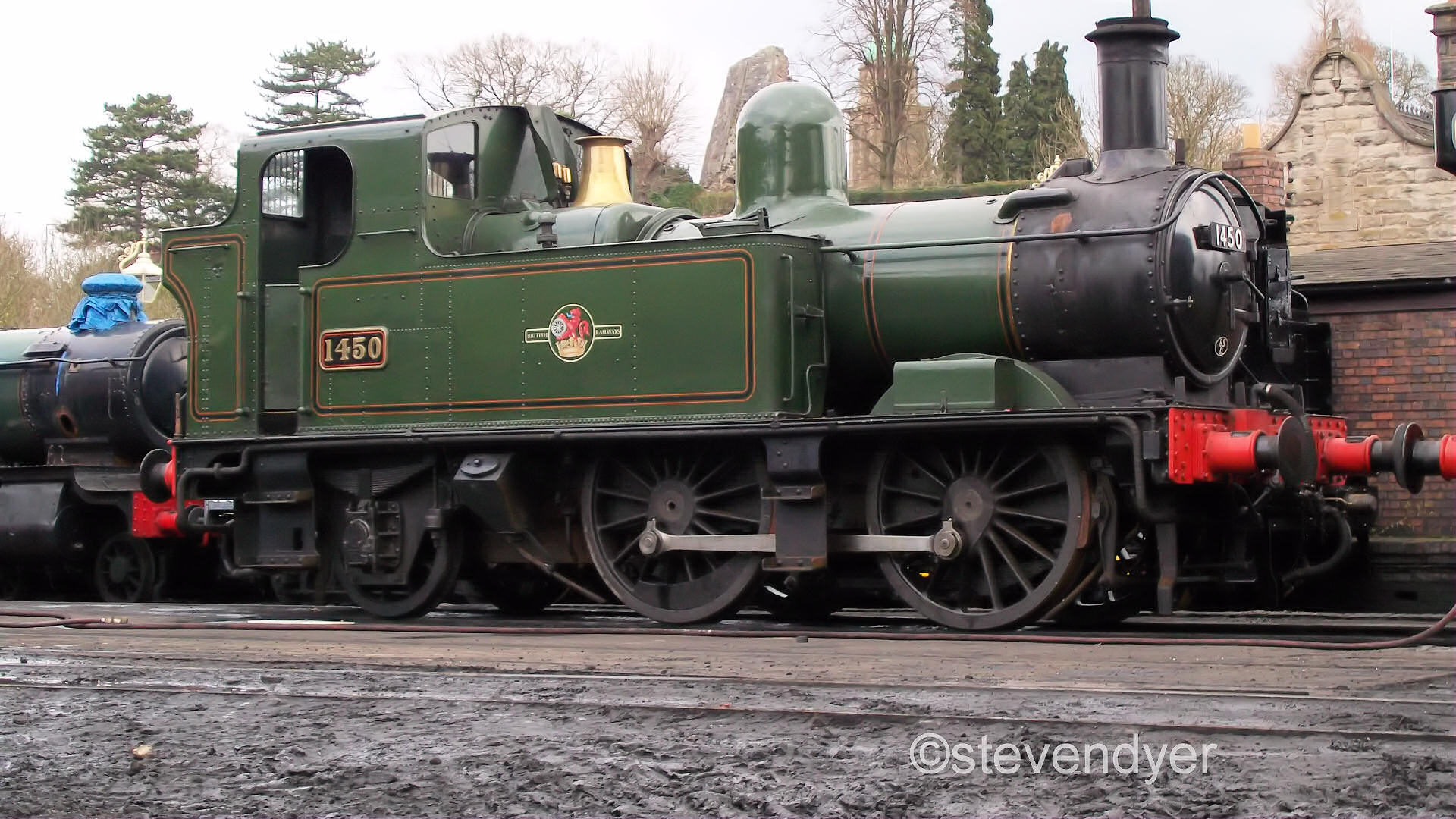
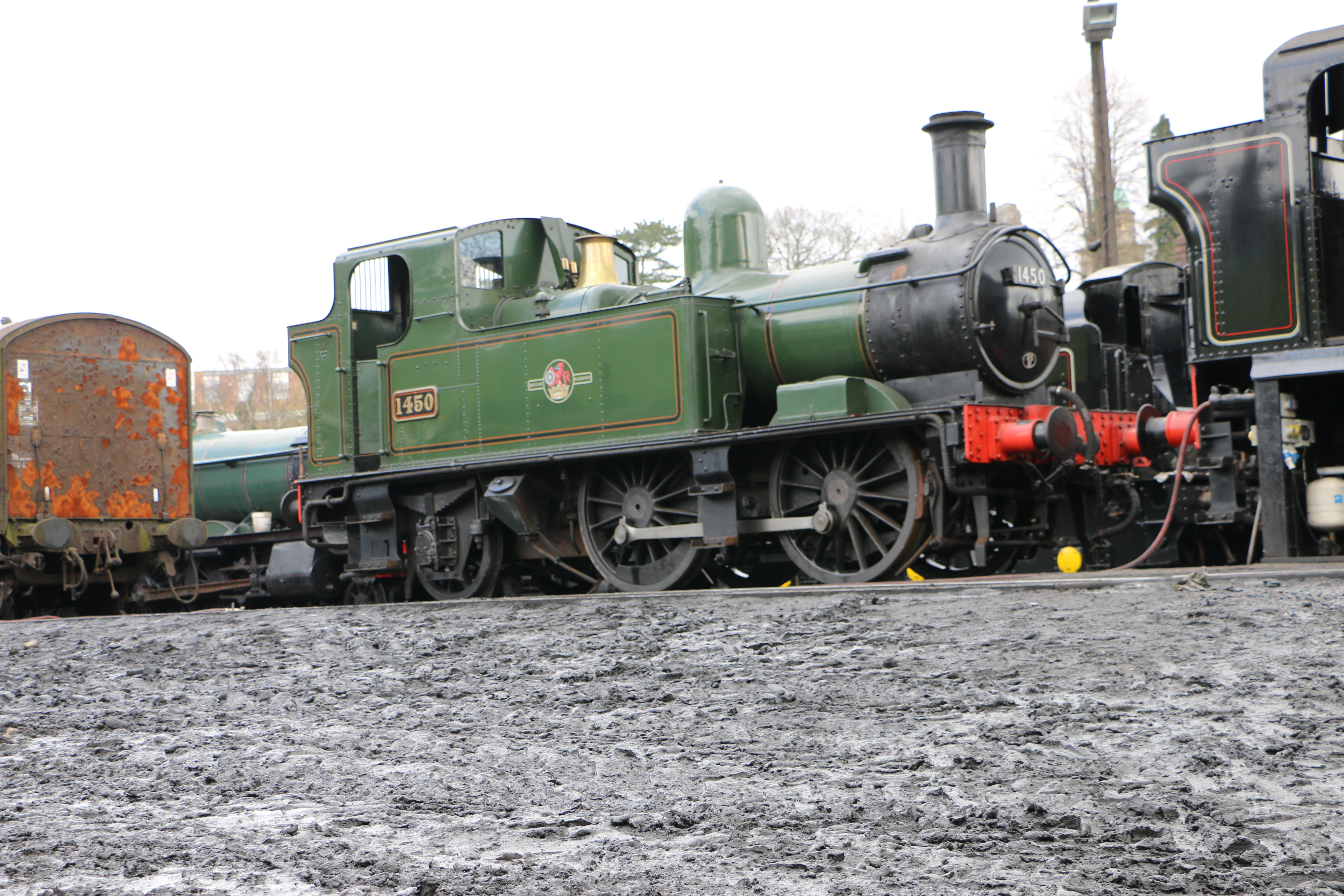
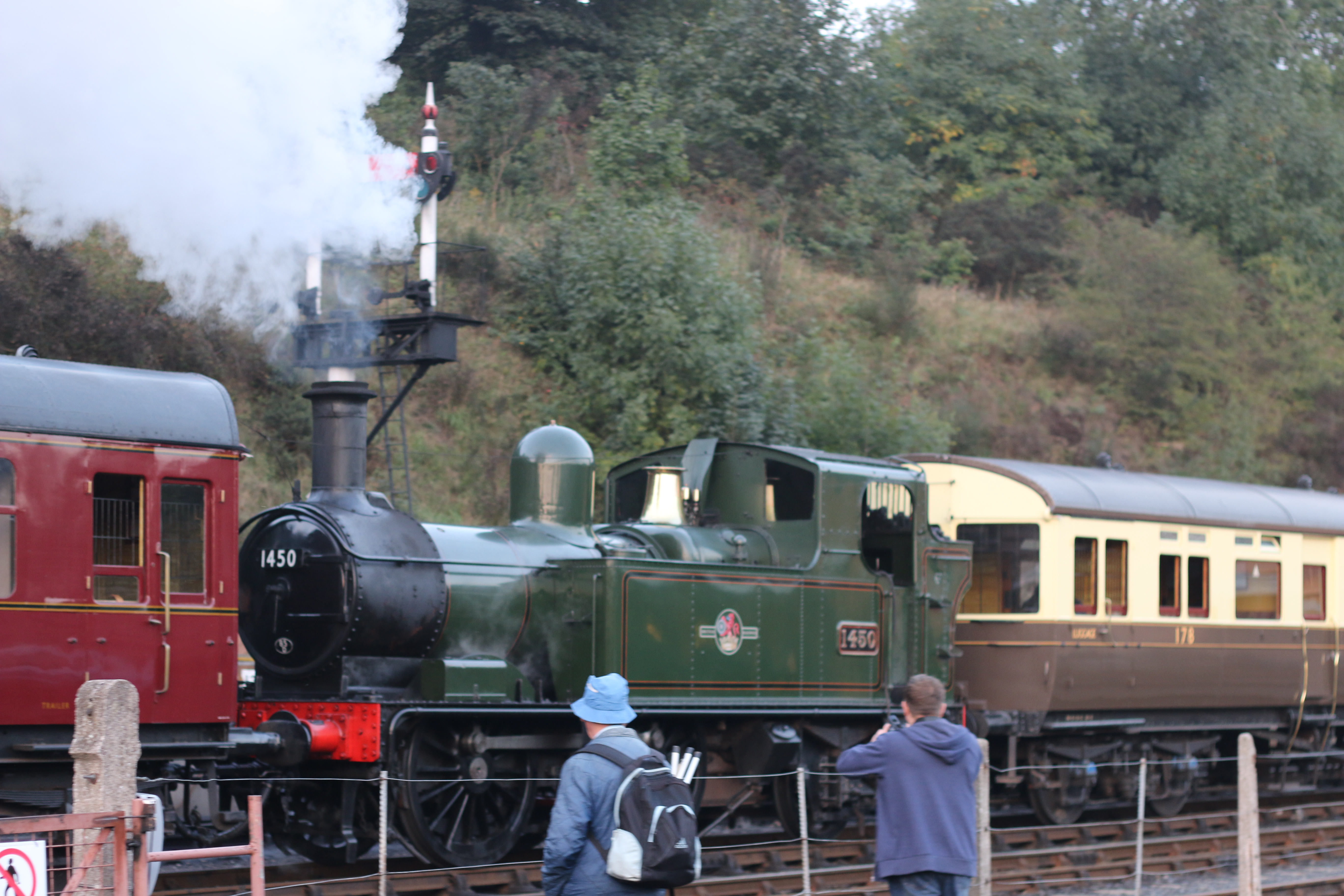
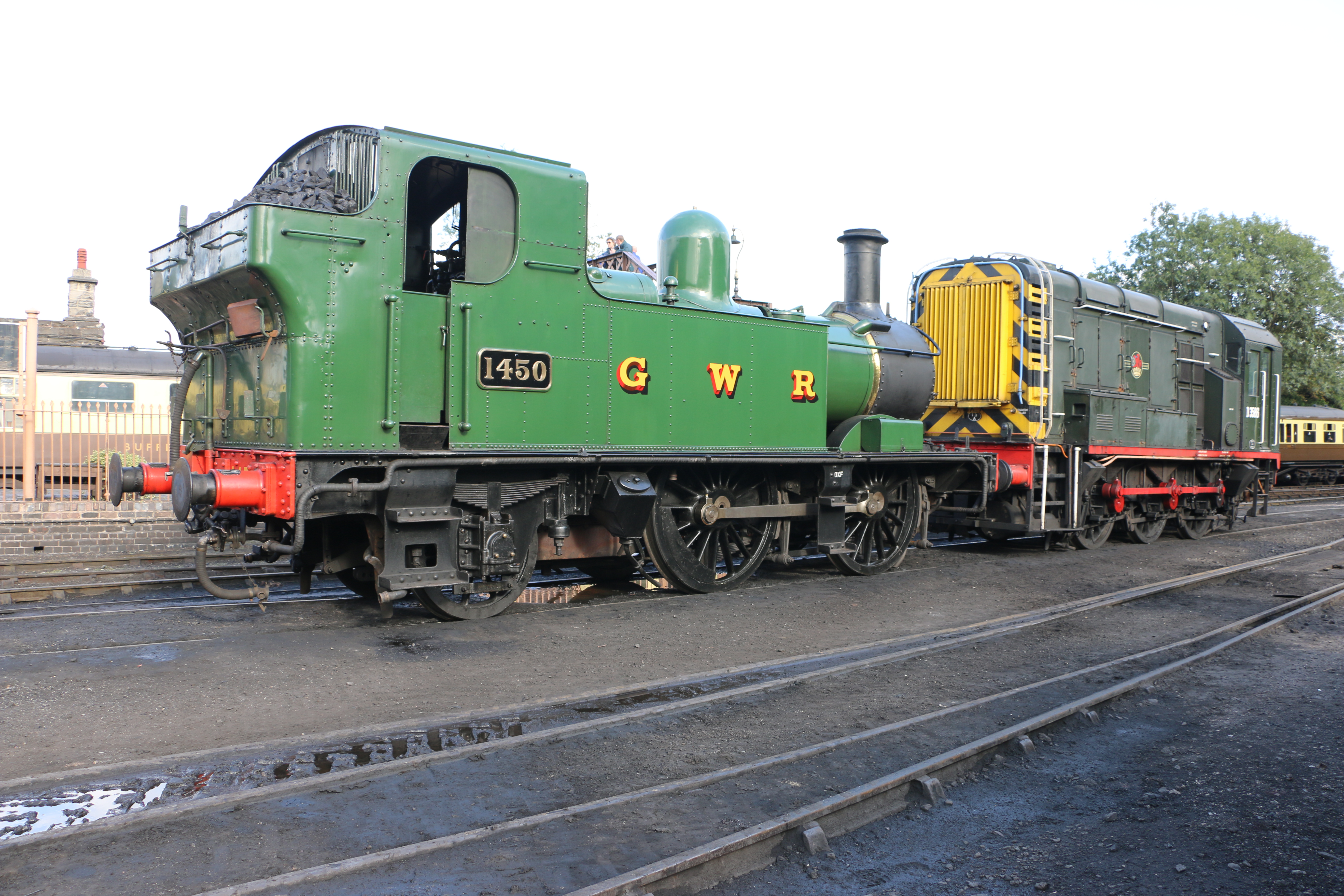
A small, neat 0-4-2T outline with the distinctive trailing axle behind the driving wheels. Side tanks alongside the boiler, modest cab with side windows, copper-capped chimney (a GWR signature), brass safety-valve cover. The auto-fittings include a duplicate set of regulator and brake controls in the cab roof for use when the engine is being driven from the rear-coach control.
Numbers and names
1400–1474
- 1400
- 1401
- 1402
- 1403
- 1404
- 1405
- 1406
- 1407
- 1408
- 1409
- 1410
- 1411
- 1412
- 1413
- 1414
- 1415
- 1416
- 1417
- 1418
- 1419
- 1420
- 1421
- 1422
- 1423
- 1424
- 1425
- 1426
- 1427
- 1428
- 1429
- 1430
- 1431
- 1432
- 1433
- 1434
- 1435
- 1436
- 1437
- 1438
- 1439
- 1440
- 1441
- 1442
- 1443
- 1444
- 1445
- 1446
- 1447
- 1448
- 1449
- 1450
- 1451
- 1452
- 1453
- 1454
- 1455
- 1456
- 1457
- 1458
- 1459
- 1460
- 1461
- 1462
- 1463
- 1464
- 1465
- 1466
- 1467
- 1468
- 1469
- 1470
- 1471
- 1472
- 1473
- 1474
GWR Nos 1400–1474. British Railways added BR Western Region prefix.
Notable locomotives
1420, preserved at the South Devon Railway.
1442, preserved at the Tiverton Museum.
1450, preserved at the Dean Forest Railway, working order.
1466, preserved at Didcot Railway Centre, working order. The class's most-photographed preserved example.
Allocations and regions
GWR era (1932–1947): the class was distributed across the GWR's extensive branch network for auto-train working. Major allocations included the West Midlands branches, the Welsh branches, the West Country branches, and the various GWR rural and suburban services that had auto-train working.
British Railways Western Region (1948–1964): continued at the same sheds. The arrival of BR diesel multiple units (DMUs) from 1955 onwards progressively reduced demand for auto-trains.
Livery history
GWR Middle Chrome Green (1932–1947): the class was outshopped in plain GWR Middle Chrome Green with shaded "Great Western" lettering, the GWR standard tank-engine livery. Brass safety-valve cover and copper-capped chimney completed the characteristic GWR appearance.
British Railways unlined black or Brunswick green (1948–1964): from 1948 the class wore BR-standard liveries. Most engines wore unlined black, though some passenger-allocated examples carried Brunswick green.
Preservation: preserved 1400s have appeared in GWR Middle Chrome Green and BR unlined black at different periods.
Preservation status
Four 1400 Class engines are preserved:
- 1420, South Devon Railway.
- 1442, Tiverton Museum (static display).
- 1450, Dean Forest Railway, working order.
- 1466, Didcot Railway Centre, working order. The class's most-photographed preserved example.
The 5.3% preservation rate (4 of 75) is good for a 1960s-withdrawn class.
Photographs