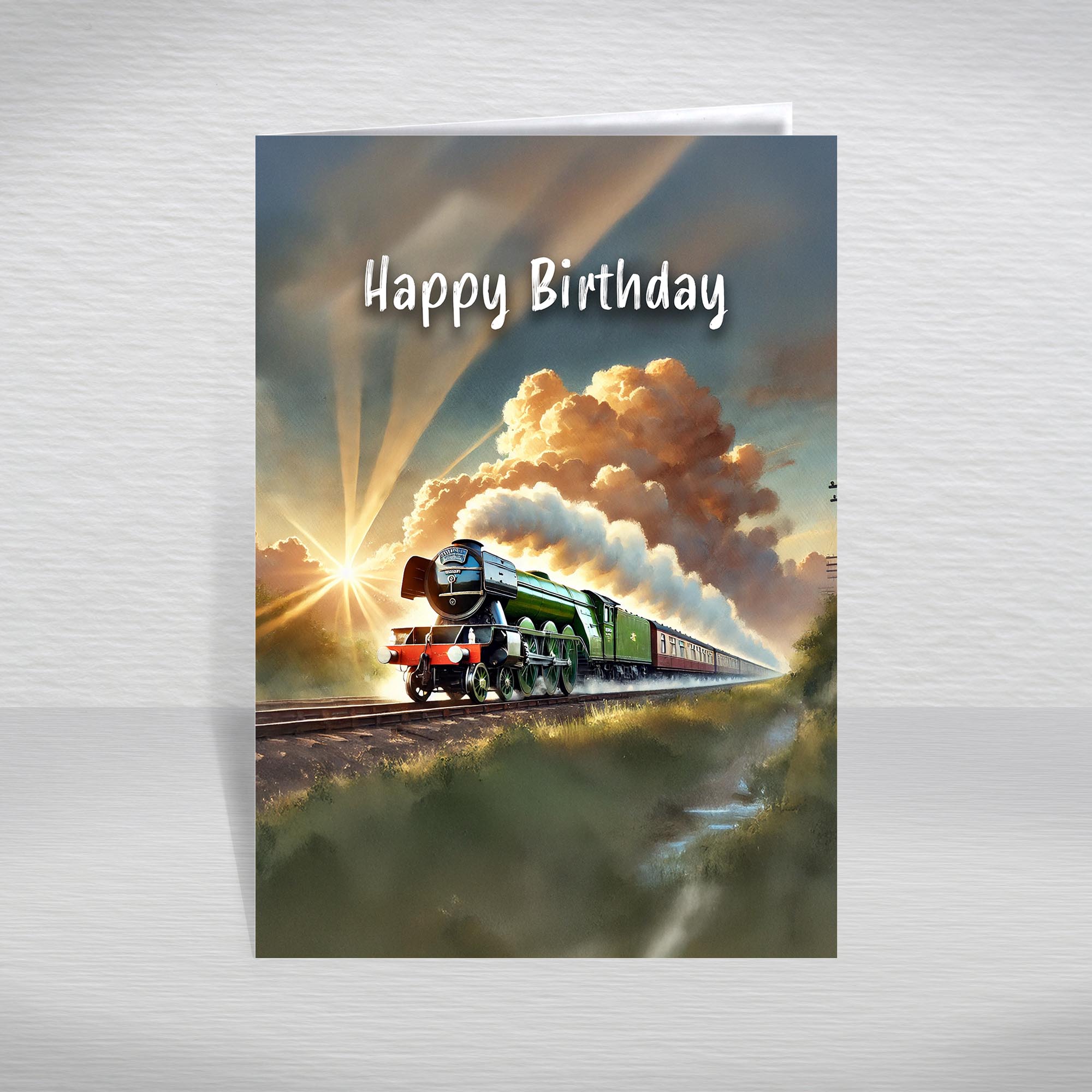
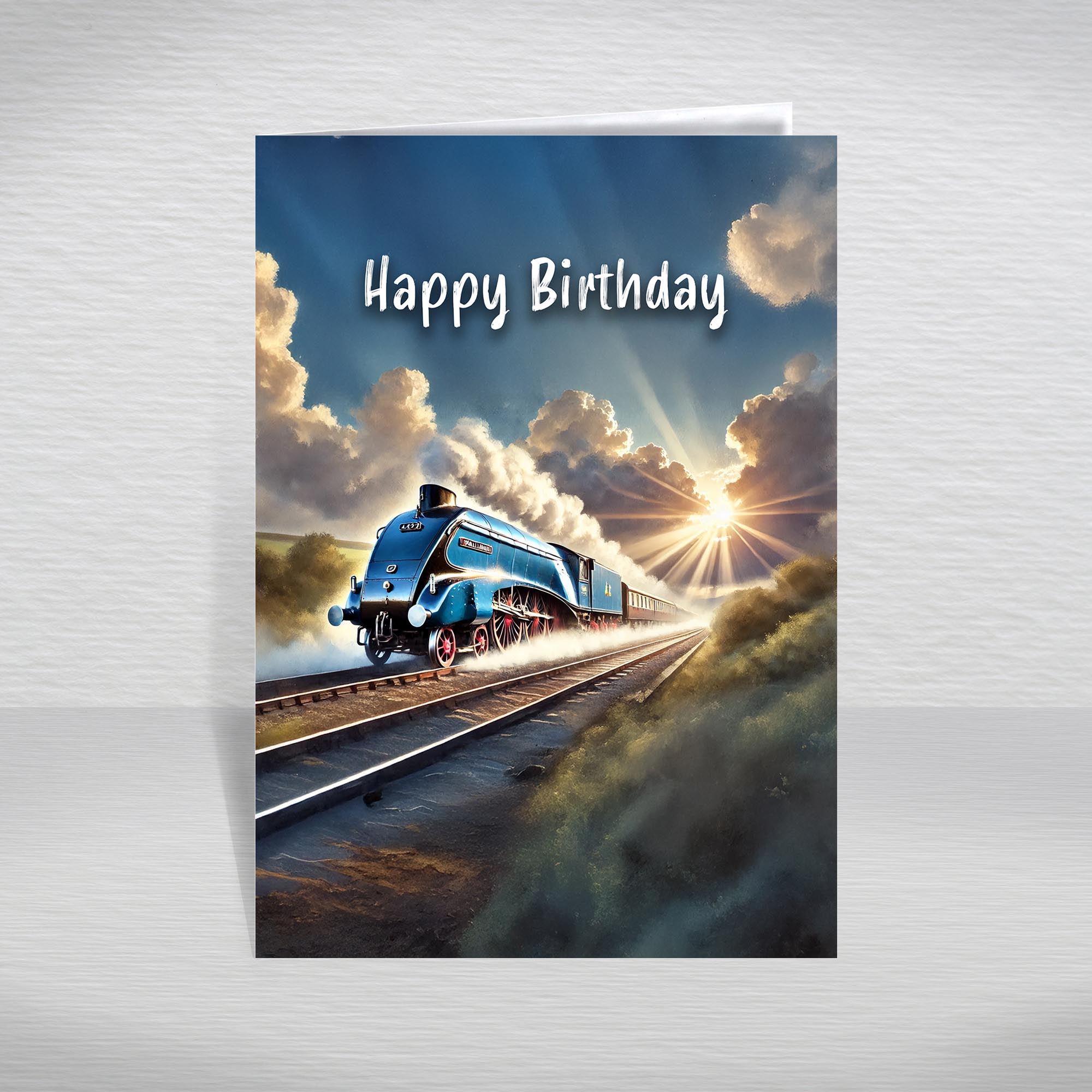
LNER Peppercorn A2 Class
The LNER Peppercorn Class A2 was the last new Pacific design produced for the London and North Eastern Railway, and the most powerful. Fifteen were built at Doncaster Works between December 1947 and August 1948, but only one, 60525 A.H. Peppercorn, named for its designer, was completed in time to wear the LNER badge before nationalisation on 1 January 1948. The remaining fourteen emerged under British Railways through the spring and summer of 1948, with the early members initially carrying their LNER 1946-scheme numbers (E527–E531) before the 60xxx prefix took over.
The design's lineage is more tangled than its appearance suggests. Arthur Peppercorn became Chief Mechanical Engineer of the LNER in 1946, succeeding Edward Thompson, and inherited an order book that included thirty Pacifics intended to be built to Thompson's controversial A2/3 design, itself derived from his earlier rebuilds of Gresley's P2 2-8-2s. Peppercorn redesigned the engines extensively while keeping Thompson's cylinder dimensions and valve arrangement. The most visible change was the bogie position: Thompson had placed the leading bogie ahead of the outside cylinders, producing an unusually long and visually awkward locomotive; Peppercorn returned to the conventional layout with the bogie behind the cylinders, shortening the rigid wheelbase and tightening up the proportions. He also discarded Thompson's Kylchap double exhaust in favour of a single chimney with self-cleaning smokebox apparatus, dropped the rocking grate, and adopted a number of innovations that distinguished the new engines from anything Doncaster had built since the war.
The mechanical specification was bold. Three cylinders of 19 in by 26 in fed from a 250 psi boiler, a higher pressure than the Gresley A3's 220 psi, produced a tractive effort of 40,430 lbf, more than the Peppercorn A1's 37,397 lbf despite the A1's superior 6 ft 8 in driving wheels. The 6 ft 2 in driving wheels of the A2 marked the class as a mixed-traffic Pacific rather than a pure express engine, capable of fast freight and heavy passenger work alike. Heating surface stood at 3,141 sq ft, with a 50 sq ft grate, and the boiler used a small quantity of nickel plate in the barrel to save weight without compromising structural integrity.
An expansion of the order from fifteen to thirty-five engines was planned but abandoned: on 4 May 1948, following the BR Locomotive Exchanges, the additional twenty Peppercorn A2s were cancelled, and the class was capped at the original fifteen. The very last to be built, 60539 Bronzino, August 1948, emerged with a Kylchap double blastpipe and chimney instead of the self-cleaning apparatus, an experimental fitting that proved successful and was retrofitted to five more class members in 1949 (including 60529 Pearl Diver and 60532 Blue Peter).
In service the A2s were promising rather than spectacular at first. The same boiler tube arrangement was used regardless of boiler length, and combined with an ample firegrate this produced healthy steaming but heavy coal consumption, a consistent criticism of the class. They were, however, extremely powerful: 60526 Sugar Palm recorded 101 mph on Stoke Bank in 1961, in the same Lincolnshire location where Mallard had set the world steam speed record in 1938. Their reputation rose dramatically when they reached Scotland. From 1949 five members of the class were based at Edinburgh's Haymarket and Aberdeen's Ferryhill sheds for the demanding Edinburgh–Dundee–Aberdeen road, where their power, fast acceleration, and forgiving curve behaviour made them the ideal engine for a route that had defeated several earlier Pacific designs. Aberdeen Ferryhill in particular was said to have welcomed them with relief.
Withdrawals began in 1962. The English-based engines were gone by the end of 1963; in that same year three members (60525, 60530, and 60535) made the surprising move from East Coast metals to Polmadie in Glasgow, taking over from withdrawn LMS Coronation Class Pacifics on the ex-Caledonian route to Carlisle. The remaining Scottish-based A2s soldiered on until June 1966, when the last three, 60528 Tudor Minstrel, 60530 Sayajirao, and 60532 Blue Peter, were withdrawn together. Only 60532 was saved, bought directly from BR by Geoff Drury at the moment of withdrawal. After a complicated and at times difficult preservation career, including a celebrated restoration funded with help from the BBC's Blue Peter television programme in 1971 and a high-profile boiler-priming incident on the main line, 60532 remains the sole surviving Peppercorn A2, the only physical link to the last LNER Pacific design.
Design and development
Arthur Peppercorn became Chief Mechanical Engineer of the LNER in 1946, taking over from Edward Thompson at a moment when the company's locomotive fleet was tired, the design office was unsettled by Thompson's controversial wartime work, and orders for new Pacifics were already on the books. Thompson had authorised thirty Pacifics of his A2/2 type in 1944, his rebuilds of Gresley's P2 2-8-2s, and a further thirteen in 1945. By the time Peppercorn took over, fifteen had been built as the Thompson A2/3 (60500–60524), the rest of the order remaining to be designed.
Peppercorn took the opportunity to redesign the remaining engines extensively. The most fundamental change was the bogie position. Thompson, idiosyncratically, had placed the leading bogie ahead of the outside cylinders, producing a long rigid wheelbase and a visually stretched outline that drew widespread criticism among LNER engineers and enthusiasts alike. Peppercorn restored the conventional layout, with the bogie behind the cylinders, shortening the wheelbase by several feet and producing a more balanced and compact engine. He kept Thompson's three-cylinder layout (with divided drive, outside cylinders to the centre coupled axle, inside cylinder to the leading coupled axle) and the 19 in × 26 in cylinder dimensions, but reworked the exhaust ducts and other details.
Other changes followed. Peppercorn discarded Thompson's Kylchap double exhaust in favour of a single chimney with self-cleaning smokebox apparatus, partly because the shorter A2 smokebox could not accommodate both, partly perhaps to distance the new design from Thompson's practice (Peppercorn was sympathetic to Gresley methods). He dropped the rocking grate, retained the steam brake, hopper ashpan, and electric lighting that Thompson had introduced, and specified a 250 psi boiler, higher than the 220 psi of the Gresley A3 and matching the Thompson designs. The result was a tractive effort of 40,430 lbf, the highest of any LNER Pacific class.
The order was originally for fifteen Peppercorn A2s, expanded to thirty during design and then to thirty-five, but the post-1948 BR Locomotive Exchanges and policy review led to the cancellation of the additional twenty engines on 4 May 1948. The class was therefore capped at the original fifteen. The first locomotive, 60525 A.H. Peppercorn, named after the designer, was outshopped from Doncaster in December 1947, three weeks before nationalisation. The remaining fourteen emerged through 1948, the last being 60539 Bronzino in August. 60539 was the experimental engine for the Kylchap double chimney, and its success led to a 1949 retrofit programme that gave five further class members the same exhaust treatment.
The Peppercorn A2 was followed by the larger-wheeled Peppercorn A1 (49 built, 60114–60162), which used the same boiler and three-cylinder layout but with 6 ft 8 in driving wheels for express passenger work. The A2 was therefore the mixed-traffic counterpart of the A1, in much the same way that the LMS Black Five complemented the Stanier Pacifics, though produced in far smaller numbers and with a more limited operational career.
Service and withdrawals
The Peppercorn A2s entered service through the spring and summer of 1948 and proved quickly that they were powerful machines. Initial allocations spread them across the East Coast Main Line, from New England in the south to Edinburgh's Haymarket in the north, and they were used on a mixture of express passenger and fast freight duties. The boiler design, using the same tube arrangement as the A1 despite the shorter A2 boiler, produced strong steaming but encouraged heavy coal consumption, and the class's economy was consistently rated below the Peppercorn A1's in service.
The class found its true vocation in Scotland. From 1949 five members were allocated to Edinburgh Haymarket and Aberdeen Ferryhill specifically for the Edinburgh–Dundee–Aberdeen road, a route whose mixture of stiff gradients, sharp curves, and demanding schedules had previously embarrassed several other Pacific classes, most painfully the Thompson A2/2 rebuilds of the Gresley P2s, which had been built specifically for the route in their original form. The A2s handled it with ease, and crews and depots welcomed them in marked contrast to the engines they replaced. Other Scottish workings included Edinburgh–Glasgow expresses, Edinburgh–Perth, and the Waverley Route over the Border.
Performance highlights included 60526 Sugar Palm's recorded 101 mph on Stoke Bank in 1961, and 60527 Sun Chariot's particularly remembered runs over the Aberdeen road with heavy trains in the early 1960s.
Withdrawals began in 1962 as BR's diesel programme accelerated. The English-allocated members were retired through 1962 and 1963; the Scottish-based engines lasted longer. In 1963, in a particularly unusual move, 60525, 60530, and 60535 were transferred from Eastern Region depots to Polmadie in Glasgow, an ex-LMS shed, to take over from withdrawn LMS Coronation Class Pacifics on the ex-Caledonian Glasgow–Carlisle route. They thus operated over rails no LNER Pacific had ever covered, in the very last years of their lives.
The final three Peppercorn A2s in BR service, 60528 Tudor Minstrel, 60530 Sayajirao, and 60532 Blue Peter, were all withdrawn in June 1966, ending the class on British Railways. Of the fifteen, only 60532 Blue Peter was preserved, bought directly from BR by Geoff Drury rather than via the Barry Scrapyard route that saved so many other classes.
Identification features
Numbers and names
BR60525–60539
- 60525
- 60526
- 60527
- 60528
- 60529
- 60530
- 60531
- 60532
- 60533
- 60534
- 60535
- 60536
- 60537
- 60538
- 60539
BR60526–60539
- 60526
- 60527
- 60528
- 60529
- 60530
- 60531
- 60532
- 60533
- 60534
- 60535
- 60536
- 60537
- 60538
- 60539
LNER60525–60531 renumbered
- 60525
- 60526
- 60527
- 60528
- 60529
- 60530
- 60531
BR60532–60539
- 60532
- 60533
- 60534
- 60535
- 60536
- 60537
- 60538
- 60539
LNER (1948 numbering): 525, 526, then E527–E531 with the early-1948 BR-era prefix. BR: 60525–60539. The first locomotive (60525) was outshopped under LNER ownership in December 1947; the remaining fourteen (60526–60539) emerged under British Railways between January and August 1948. 60525–60531 initially carried LNER numbers and were renumbered with the BR 60xxx prefix shortly afterwards; 60532–60539 carried BR numbers from new. A planned extension of the order to 35 locomotives was cancelled on 4 May 1948.
Notable locomotives
60525 A.H. Peppercorn, first of the class, outshopped from Doncaster in December 1947 under LNER ownership, three weeks before nationalisation. Named after its designer Arthur Peppercorn, the only class member not given a racehorse name. Transferred to Polmadie in 1963 for ex-Caledonian Carlisle workings. Withdrawn in 1965 and not preserved.
60526 Sugar Palm, recorded 101 mph on Stoke Bank in 1961, a notable performance on the same length of Lincolnshire main line where Mallard had set the world steam speed record in 1938. Withdrawn in 1962 and not preserved.
60527 Sun Chariot, set a particularly remembered standard on the Aberdeen road, including a run from Aberdeen with a 400-ton train that reached Montrose, Arbroath, and Dundee ahead of the booked schedule.
60531 Bahram, fitted with the Kylchap exhaust during the 1949 retrofitting programme. Withdrawn 1965.
60532 Blue Peter, the sole survivor. Built March 1948, retrofitted with Kylchap exhaust in 1949, painted in the experimental BR express passenger blue livery during 1949–50, transferred to Edinburgh Haymarket in November 1949 for Scottish express work, and worked the Aberdeen road until withdrawal in June 1966, one of the last three Peppercorn A2s in service. Bought for preservation directly from BR by Geoff Drury.
60533 Happy Knight, 60534 Irish Elegance, 60535 Hornets Beauty, 60537 Bachelor's Button, all named after racehorses, all withdrawn between 1962 and 1965, none preserved.
60539 Bronzino, the last A2 built (August 1948) and the only one fitted with Kylchap exhaust from new. The success of the experiment led directly to the 1949 retrofitting programme on five further class members. Withdrawn 1963.
Allocations and regions
Pre-grouping inheritance (none): a wholly post-war LNER design.
LNER / BR Eastern & North Eastern Region (1948–1949): initial allocations spanned the East Coast Main Line, with members based at New England (Peterborough), Doncaster, York, Heaton (Newcastle), and Edinburgh's Haymarket. The class's strong performance was apparent very quickly.
Scottish Region (1949 onwards): in 1949 five members were transferred to Edinburgh Haymarket and Aberdeen Ferryhill specifically to handle the Edinburgh–Dundee–Aberdeen route, whose stiff gradients and tight curves had defeated several earlier classes (notably the Thompson A2/2s rebuilt from Gresley P2s). The A2s proved ideal, the depots were said to have particularly welcomed them. Other Scottish workings included Edinburgh–Glasgow services, Edinburgh–Carlisle on the Waverley Route, and Edinburgh–Perth.
Polmadie (1963–1966): in a notable cross-regional move, 60525, 60530, and 60535 were transferred to the ex-LMS depot at Polmadie in Glasgow in 1963. They replaced withdrawn Coronation Class Pacifics on the ex-Caledonian Glasgow Central–Carlisle route, operating over rails that no LNER Pacific had previously worked. The Scottish remainder of the class wound down through the early 1960s, with the last members concentrated on the Aberdeen road for their final summers.
Livery history
LNER apple green (December 1947, c.1949): the first two members of the class (60525 and 60526) were turned out at Doncaster in LNER apple green, and the next thirteen, though built after nationalisation, were also painted in apple green, the LNER livery being applied as the Doncaster default through most of 1948. Black and white lining throughout. Tender carried 'LNER' in apple green initially, replaced by 'British Railways' from early 1949 on those engines awaiting the new livery.
BR express passenger blue (1949–c.1952): a small number of class members, including 60532 Blue Peter, carried the experimental BR Caledonian-blue express passenger livery with red, white, and black lining during the early 1950s.
BR Brunswick green (c.1950, withdrawal): the standard BR express passenger livery applied to all members from the early 1950s, with the early lion-and-wheel emblem replaced by the later BR crest from c.1957. This was the most common livery worn during the class's working life.
Preservation (60532): Blue Peter has worn LNER apple green and BR Brunswick green at different points in its preserved career.
Preservation status
One member of the class survives:
- 60532 Blue Peter, built at Doncaster in March 1948, fitted with Kylchap exhaust during the 1949 retrofit programme, briefly painted in BR experimental express passenger blue, and based mostly at Edinburgh Haymarket and Aberdeen Ferryhill on Scottish duties. One of the last three A2s in BR service, withdrawn in June 1966 and bought directly from BR by Geoff Drury for preservation. First overhaul completed in 1971 with funds raised by the BBC's Blue Peter television programme; the engine was renamed at a Doncaster Works open day by the programme's presenters. Subsequently based at Dinting Railway Centre, then transferred to the North Yorkshire Moors Railway under the care of the North Eastern Locomotive Preservation Group from c.1987. Returned to main-line running in the late 1980s, but suffered serious mechanical damage in a boiler-priming incident on the main line in the early 1990s that required extensive repairs to the coupled wheels, axleboxes, valve gear, and motion. Has subsequently been displayed and worked at heritage venues including Locomotion at Shildon. Operational status varies depending on overhaul cycle; check the latest position with the National Railway Museum or the locomotive's owners before publishing.
Of the remaining fourteen Peppercorn A2s, none survives. Notable absences from preservation include 60525 A.H. Peppercorn (named after the designer) and 60526 Sugar Palm (the only class member to record three figures), both of which would have made obvious preservation candidates but were scrapped without rescue.