LMS Ivatt 4MT 2-6-0
The LMS Ivatt 4MT was a fleet of 162 mixed-traffic 2-6-0 mogul steam locomotives designed by Henry George Ivatt for the London, Midland and Scottish Railway. Built at Horwich, Doncaster, Darlington, and Derby Works between 1947 and 1952, the class was Ivatt's larger companion to the related Ivatt 2MT mogul, sharing the same maintenance-friendly philosophy of self-cleaning smokeboxes, rocking grates, and self-emptying ashpans. The class is best remembered for its affectionate nickname "The Flying Pig", earned from its short, stout, slightly ungainly profile compared to the more elegant Black Five.
Ivatt was appointed CME of the LMS in 1946 on the death of Charles Fairburn and inherited a brief to design a generation of locomotives for ease of maintenance, in response to the postwar labour shortage that was forcing British railways to think hard about the cost of running steam. The 4MT 2-6-0 was his medium-power mixed-traffic answer: more powerful than the 2MT, with 17½ in cylinders and 5 ft 3 in driving wheels, designed for secondary expresses, semi-fast trains, branch passenger, and fitted freight.
The first 12 engines were built at Horwich in 1947 in distinctive double-chimney form. The class went into full production after nationalisation in 1948, with the bulk of production at Horwich, Doncaster, Darlington, and Derby. The Ivatt 4MT was so successful that the BR Standard 4MT 2-6-0 (76000 series) of 1953 was effectively a slightly modified version of the same design, sharing many parts.
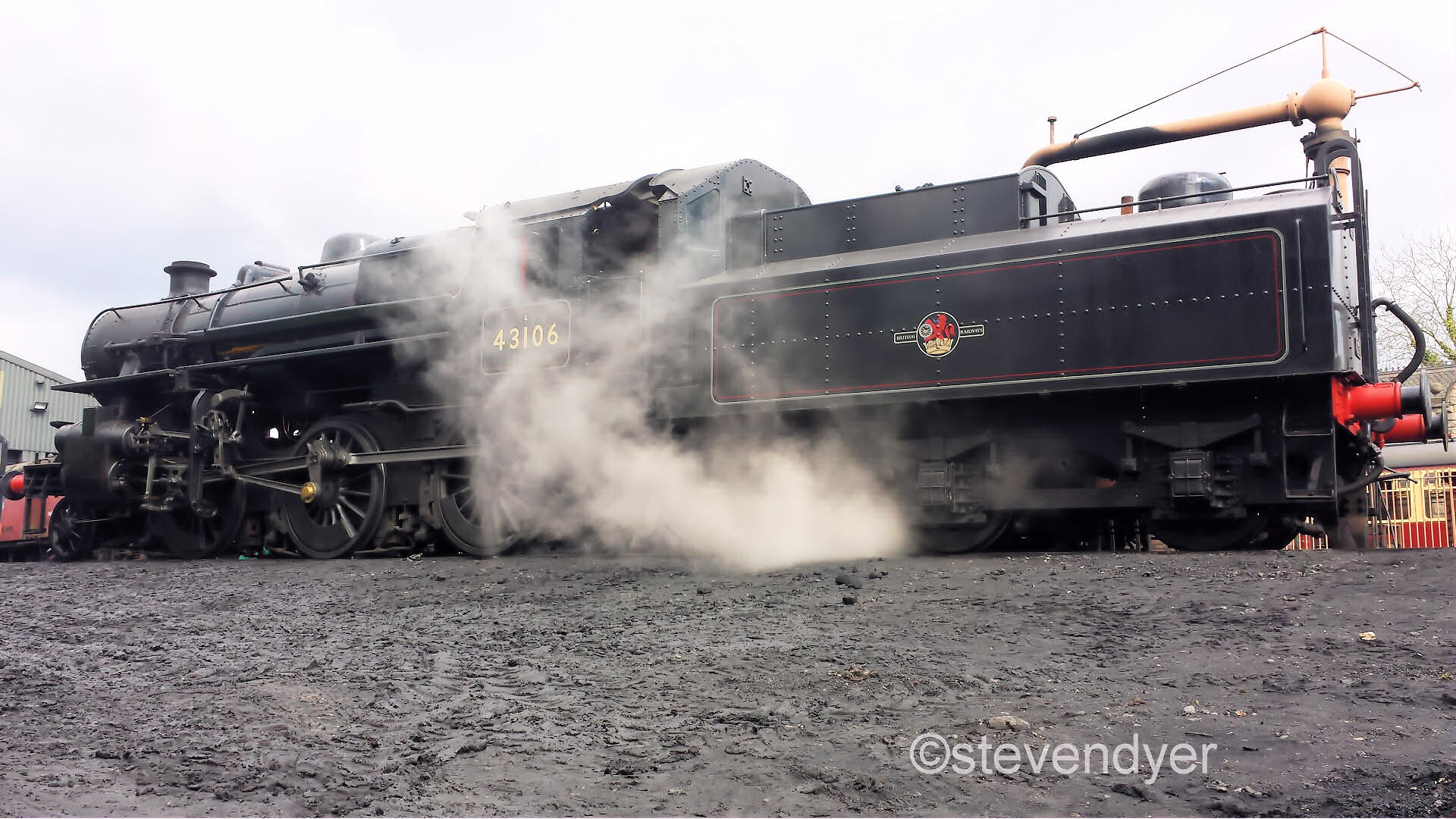
The class was allocated across all five regions of British Railways but concentrated on the LM, Eastern, and Scottish regions. Withdrawals began in the early 1960s as branch lines closed and diesel multiple units replaced steam-hauled stopping trains. The last Ivatt 4MTs were withdrawn from BR service in 1968. Four have survived in preservation, including 43106 The Flying Pig at the Severn Valley Railway, currently in working order. Three others (43129, 43137, 43145) are at various heritage railways at different stages of overhaul.
Design and development
Henry George Ivatt was appointed CME of the LMS in 1946 on the death of Charles Fairburn. The 4MT mogul was Ivatt's larger companion to the very similar 2MT mogul, both designed for ease of maintenance with self-cleaning smokeboxes, rocking grates, and self-emptying ashpans. The 4MT was substantially more powerful than the 2MT, with 17½ in cylinders and 5 ft 3 in driving wheels designed for medium-power mixed-traffic work.
The first 12 engines were built at Horwich in 1947, with the prototype 3000 turned out in distinctive double-chimney form. The class went into full production after nationalisation in 1948, with builds at Horwich, Doncaster, Darlington, and Derby. Total production was 162 engines.
The Ivatt 4MT was so successful that the BR Standard 4MT 2-6-0 (76000 series) of 1953 was effectively a slightly modified version of the same design, sharing many parts. Together the two classes formed a fleet of around 277 medium-power moguls that handled British secondary and branch services through the late steam era.
Service and withdrawals
The Ivatt 4MTs spent their working lives on secondary and branch passenger and freight services across the LMS and Eastern regions. They were popular with crews for free running and ease of maintenance, although the slightly stiff riding at speed earned them the affectionate "Flying Pig" nickname.
Withdrawals began in the early 1960s as branch lines closed and diesel multiple units replaced steam-hauled stopping trains. The class was decimated through the mid-1960s, and the last Ivatt 4MTs were withdrawn from BR service in 1968.
Identification features
Numbers and names
3000–3050later 43000 to 43161 by BR
- 3000
- 3001
- 3002
- 3003
- 3004
- 3005
- 3006
- 3007
- 3008
- 3009
- 3010
- 3011
- 3012
- 3013
- 3014
- 3015
- 3016
- 3017
- 3018
- 3019
- 3020
- 3021
- 3022
- 3023
- 3024
- 3025
- 3026
- 3027
- 3028
- 3029
- 3030
- 3031
- 3032
- 3033
- 3034
- 3035
- 3036
- 3037
- 3038
- 3039
- 3040
- 3041
- 3042
- 3043
- 3044
- 3045
- 3046
- 3047
- 3048
- 3049
- 3050
43000–43161
- 43000
- 43001
- 43002
- 43003
- 43004
- 43005
- 43006
- 43007
- 43008
- 43009
- 43010
- 43011
- 43012
- 43013
- 43014
- 43015
- 43016
- 43017
- 43018
- 43019
- 43020
- 43021
- 43022
- 43023
- 43024
- 43025
- 43026
- 43027
- 43028
- 43029
- 43030
- 43031
- 43032
- 43033
- 43034
- 43035
- 43036
- 43037
- 43038
- 43039
- 43040
- 43041
- 43042
- 43043
- 43044
- 43045
- 43046
- 43047
- 43048
- 43049
- 43050
- 43051
- 43052
- 43053
- 43054
- 43055
- 43056
- 43057
- 43058
- 43059
- 43060
- 43061
- 43062
- 43063
- 43064
- 43065
- 43066
- 43067
- 43068
- 43069
- 43070
- 43071
- 43072
- 43073
- 43074
- 43075
- 43076
- 43077
- 43078
- 43079
- 43080
- 43081
- 43082
- 43083
- 43084
- 43085
- 43086
- 43087
- 43088
- 43089
- 43090
- 43091
- 43092
- 43093
- 43094
- 43095
- 43096
- 43097
- 43098
- 43099
- 43100
- 43101
- 43102
- 43103
- 43104
- 43105
- 43106
- 43107
- 43108
- 43109
- 43110
- 43111
- 43112
- 43113
- 43114
- 43115
- 43116
- 43117
- 43118
- 43119
- 43120
- 43121
- 43122
- 43123
- 43124
- 43125
- 43126
- 43127
- 43128
- 43129
- 43130
- 43131
- 43132
- 43133
- 43134
- 43135
- 43136
- 43137
- 43138
- 43139
- 43140
- 43141
- 43142
- 43143
- 43144
- 43145
- 43146
- 43147
- 43148
- 43149
- 43150
- 43151
- 43152
- 43153
- 43154
- 43155
- 43156
- 43157
- 43158
- 43159
- 43160
- 43161
3000–3047
- 3000
- 3001
- 3002
- 3003
- 3004
- 3005
- 3006
- 3007
- 3008
- 3009
- 3010
- 3011
- 3012
- 3013
- 3014
- 3015
- 3016
- 3017
- 3018
- 3019
- 3020
- 3021
- 3022
- 3023
- 3024
- 3025
- 3026
- 3027
- 3028
- 3029
- 3030
- 3031
- 3032
- 3033
- 3034
- 3035
- 3036
- 3037
- 3038
- 3039
- 3040
- 3041
- 3042
- 3043
- 3044
- 3045
- 3046
- 3047
LMS 3000 to 3050 (later 43000 to 43161 by BR). The first batch (3000 to 3047) was built at Horwich, the rest at Doncaster, Darlington, and Derby. Several engines were built after nationalisation in 1948 with BR-period livery from new.
Notable locomotives
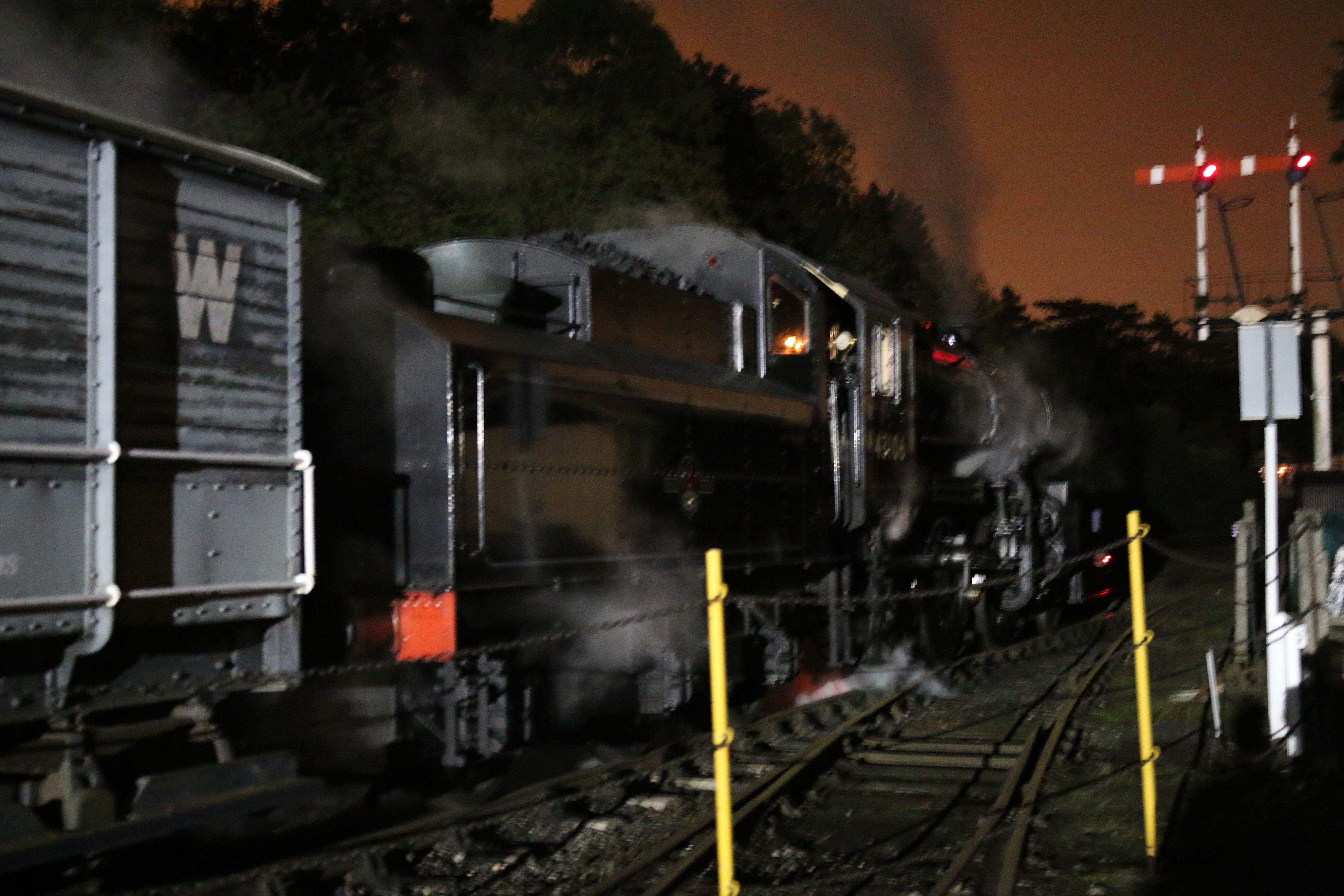
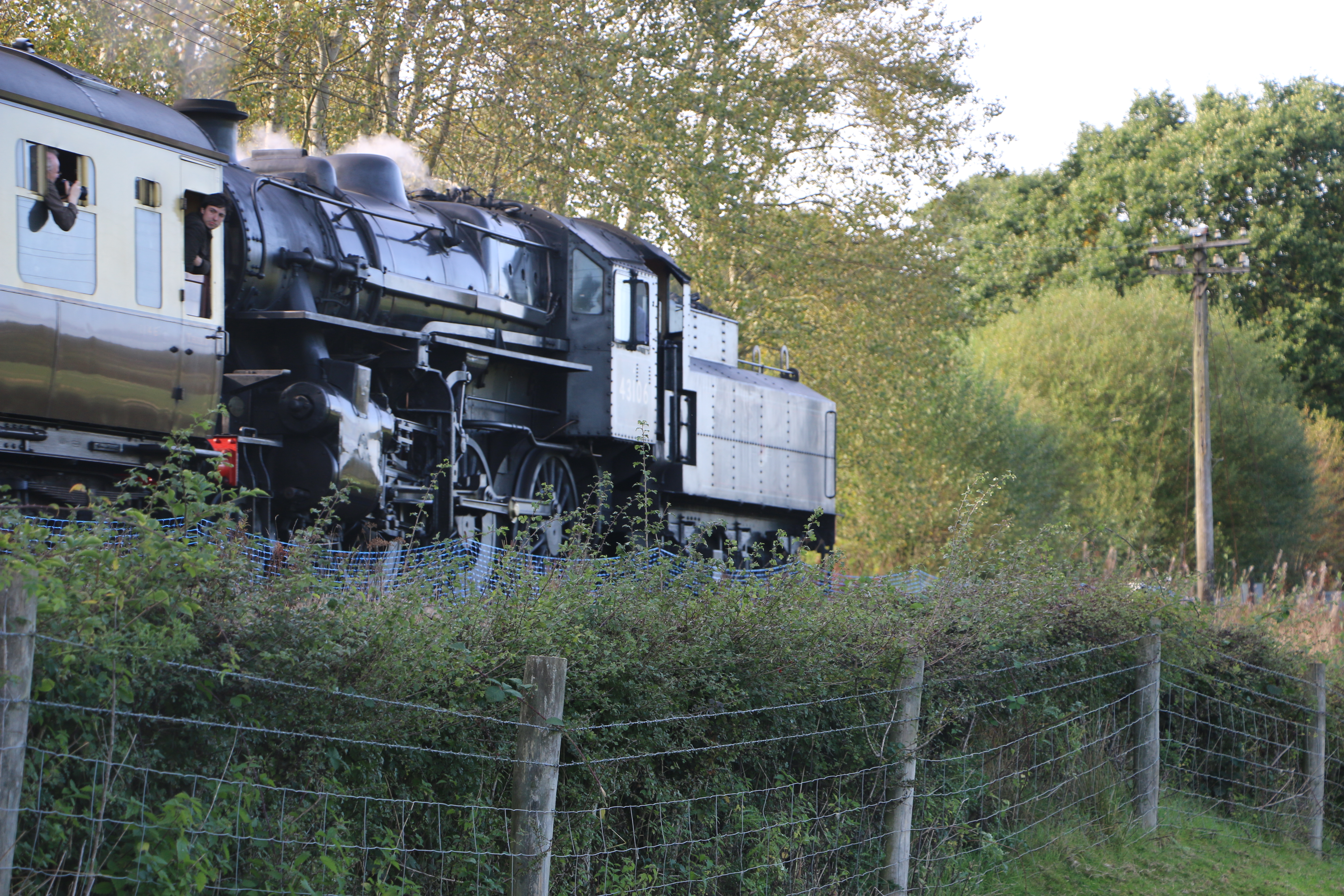
43106 "The Flying Pig" is the most famous preserved Ivatt 4MT, currently in working order at the Severn Valley Railway. It carries the affectionate nickname after the class's general reputation for ungainly appearance.
Three other Ivatt 4MTs survive: 43129, 43137, and 43145. All have been at various stages of overhaul and operation in preservation.
Allocations and regions
Livery history
The first 12 engines (1947) were turned out in plain LMS black with smokebox-side number plates. Post-1948 production was painted in BR mixed-traffic lined black with the early lion-and-wheel emblem; from 1956 the late ferret-and-dartboard crest. The preserved 43106 has been outshopped in BR mixed-traffic lined black for most of its preservation career.
Preservation status
Only one Ivatt Class 4 survives: 43106, the last of the class in BR service, on the Severn Valley Railway. All 161 others of the 162 built were scrapped.
Photographs