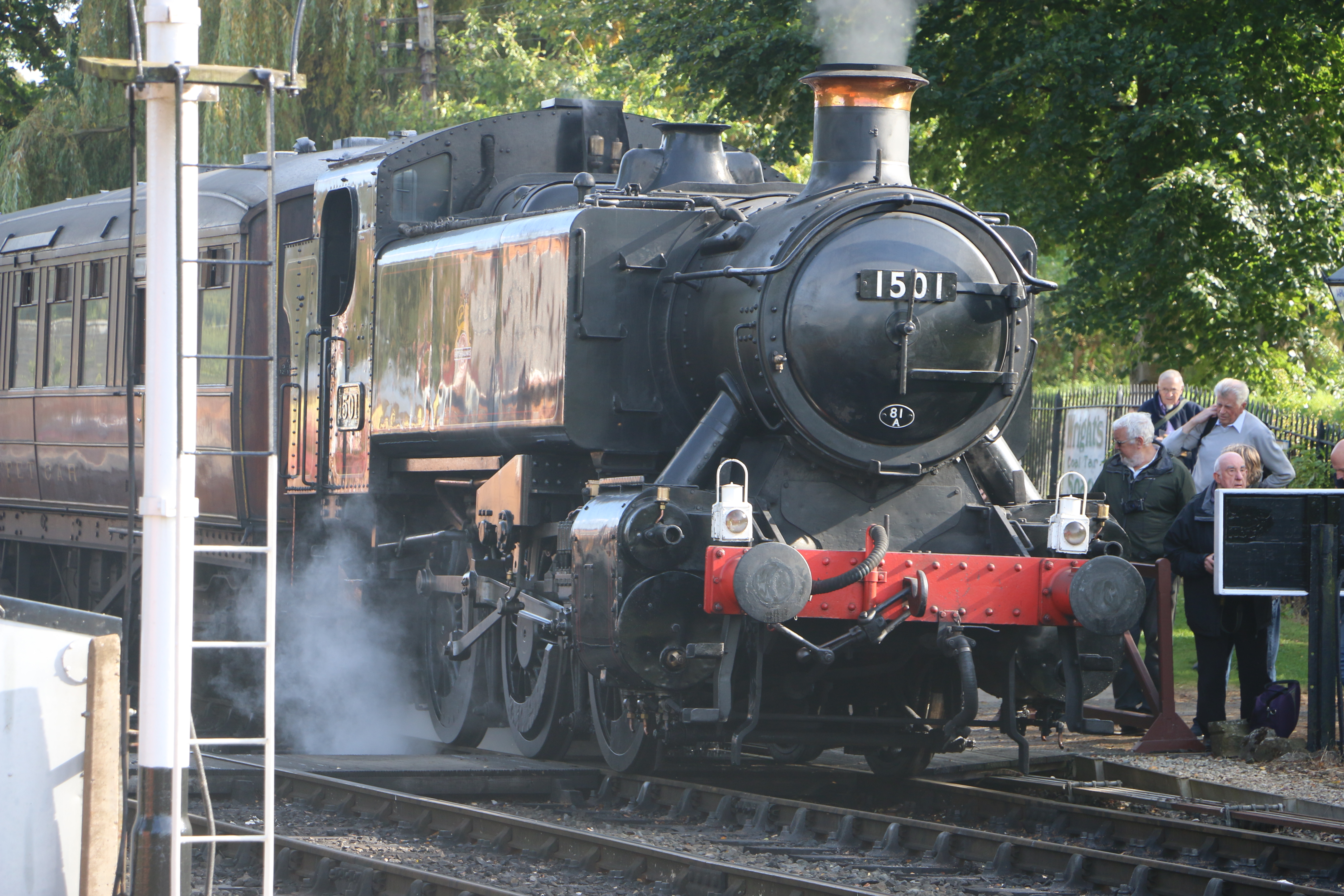
GWR 1500 Class
The GWR 1500 Class was Frederick Hawksworth's last pannier-tank design and one of the most unconventional locomotives ever to carry the GWR badge, though, in fact, none ever did. All ten members of the class (numbers 1500–1509) were drawn up at Swindon during the closing years of the Great Western Railway but completed under British Railways' Western Region in 1949, after nationalisation. The "GWR 1500 Class" is therefore a label of design, not of ownership: every one of the ten emerged from Swindon Works in BR black, lettered for their new operator.
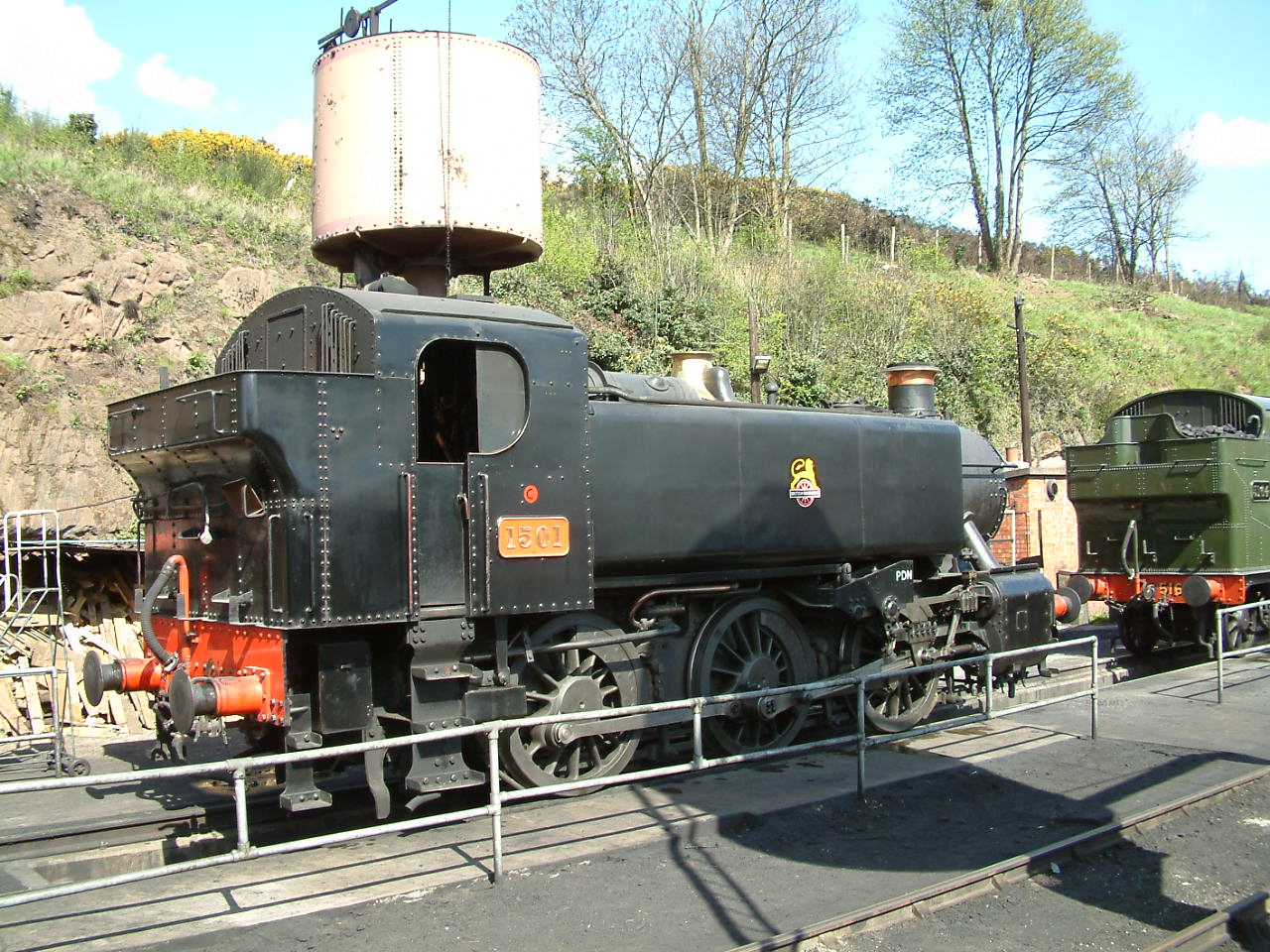
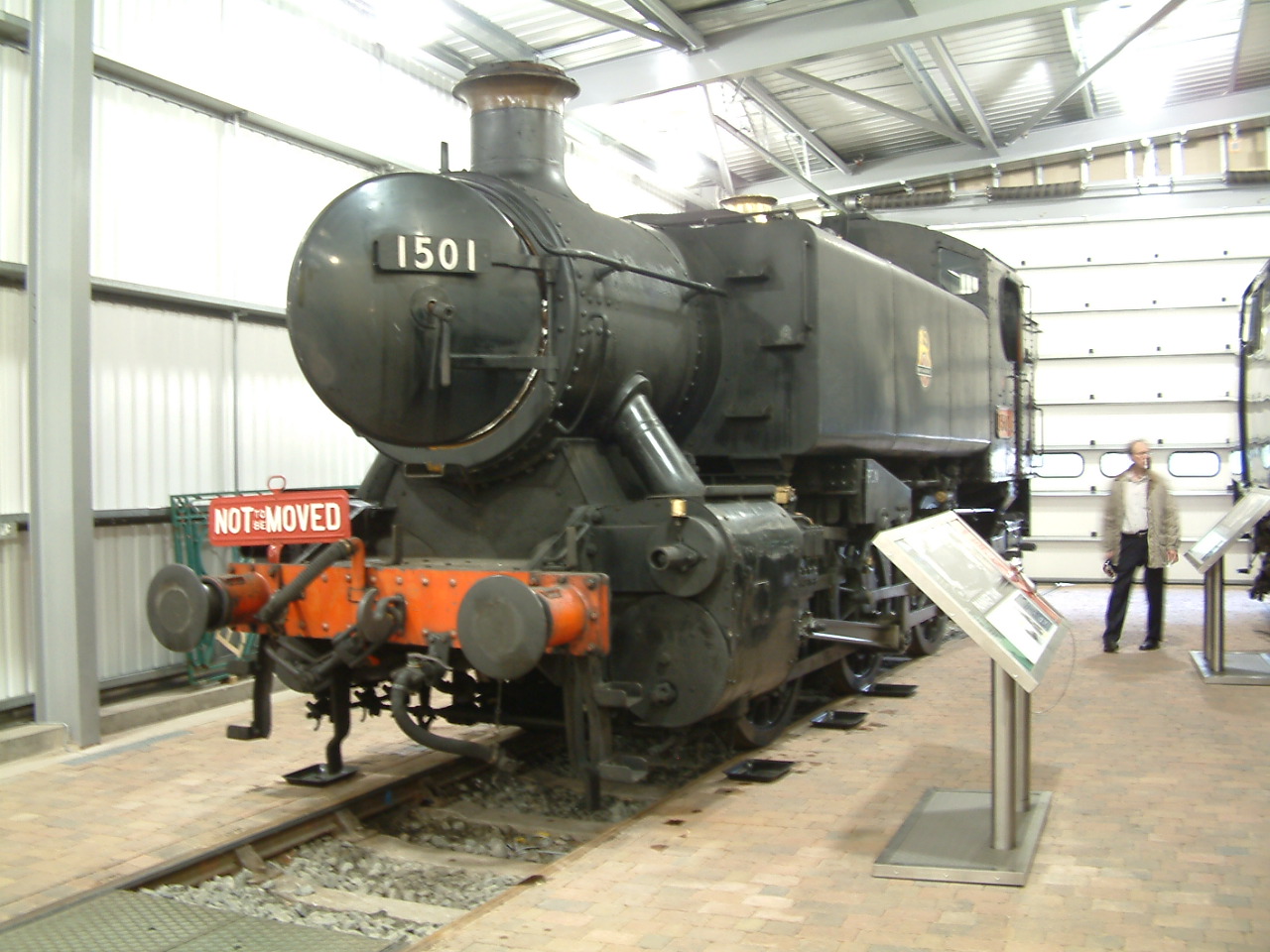
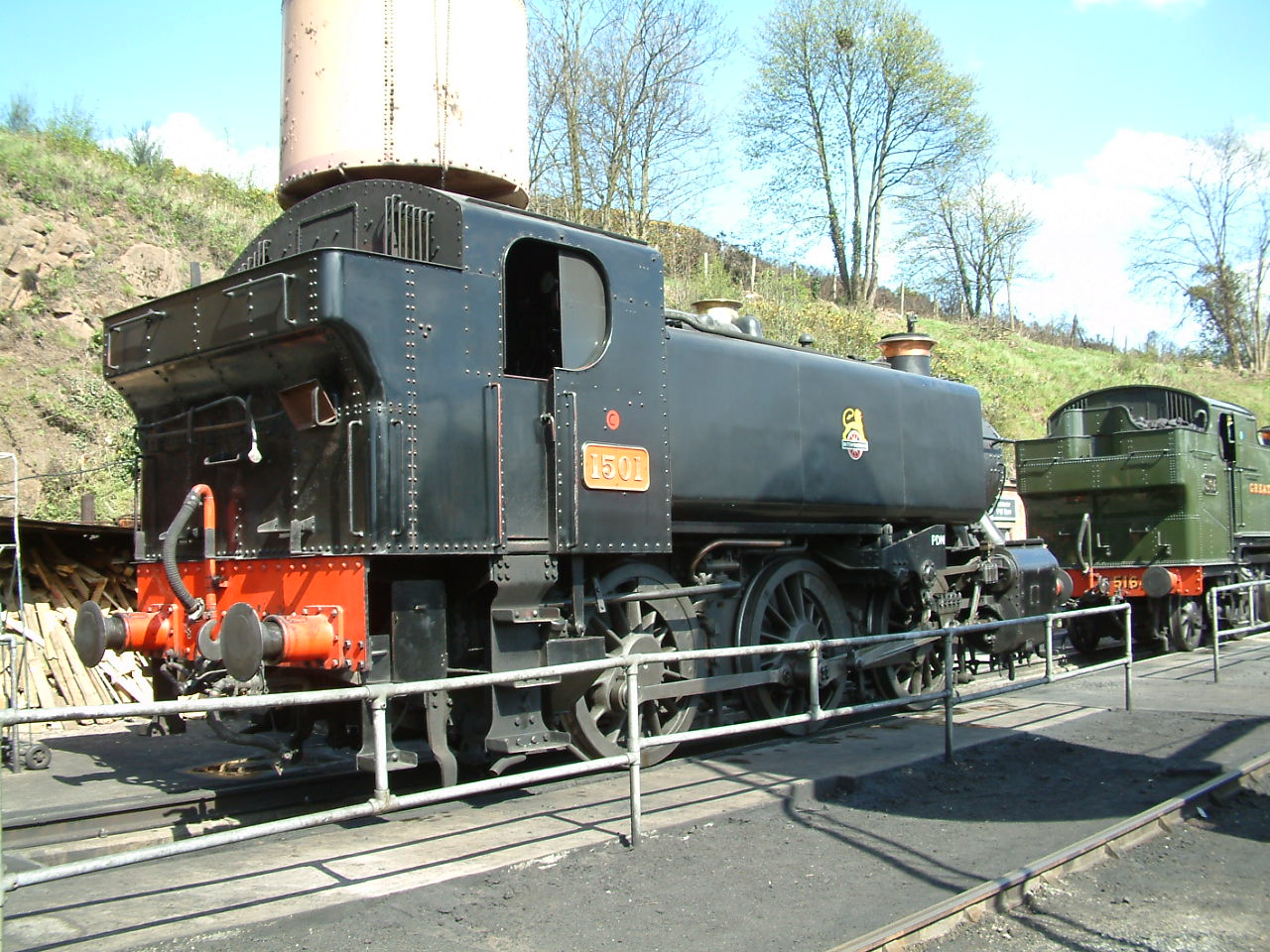
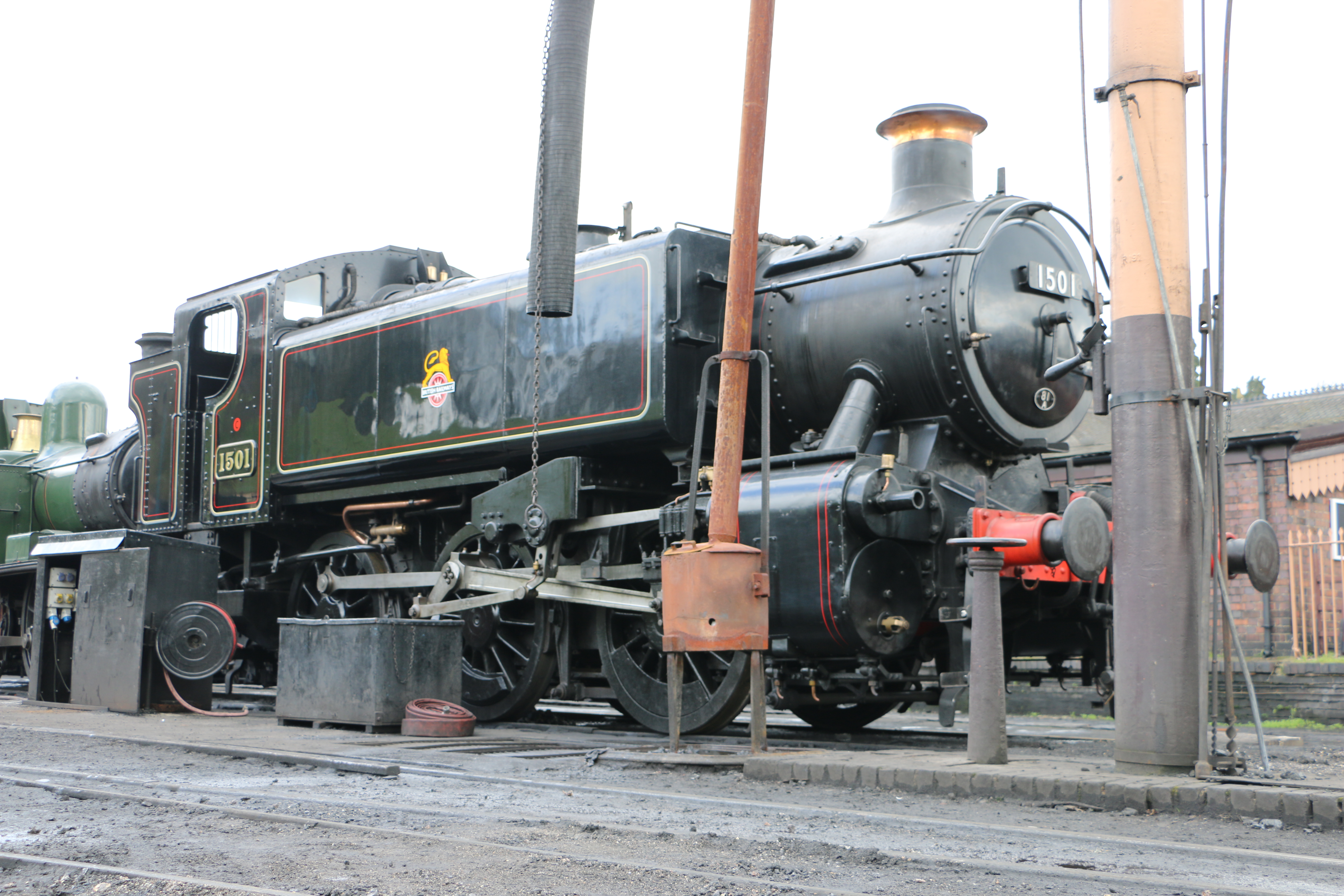
For an organisation famous for its commitment to standardisation, the 1500 was a startling break with established practice. Almost every previous GWR pannier tank had used inside cylinders, Stephenson valve gear, and a riveted running plate flanking the boiler. The 1500s had outside cylinders of 17½ in by 24 in, outside Walschaerts valve gear in plain sight on the running plate, and no running plate at all, the boiler and panniers sat directly above the wheels, with the cylinders and motion exposed below. Most of the structural parts were welded rather than riveted. Above the footplate they shared boiler and overall outline with Hawksworth's earlier 9400 Class, using the same GWR Standard No. 10 boiler at 200 psi; below it, the visual debt was to the USATC S100 0-6-0T (better known on British metals as the Southern's "USA Class") that the GWR had used during the Second World War.
The point of the unusual layout was tight curves. The 1500s had a wheelbase of just 12 ft 10 in, extraordinarily short for a locomotive of 58 tons, and could negotiate curves of 3½ chains (231 ft / 70 m). The intended duty was heavy shunting in confined yards, particularly the empty-coach workings between London Paddington and the Old Oak Common carriage sidings, where the combination of tight curves, short trips, and frequent reversal made the class's compact wheelbase an advantage and its lack of fast-running ability irrelevant.
The reality was more constrained than the design intent. The class was rated 4F (later 4MT) but its high weight earned it a red route classification, barring it from the lighter yards where its tight-curve ability would have been most valuable. The short wheelbase that suited yard work also precluded fast running between locations, limiting the engines to short workings within their home territory. Six members of the class, 1500–1505 and 1507, spent most of their lives at Old Oak Common on Paddington empty-stock duties; the remaining four (1506, 1508, and 1509, with 1506 the most peripatetic) worked from Welsh sheds at Newport Pill, Ebbw Junction, and Cardiff Canton, shunting in the South Wales coalfield.
The 1500s were a footnote even before they were finished. By the time the class was complete, dieselisation was well advanced; the small fleet was already being marginalised within a decade. Withdrawals began in 1959, and by the end of 1963 all ten had gone from British Railways. Three, 1501, 1502, and 1509, were sold for further service at the National Coal Board's Coventry Colliery in 1961 and worked there until 1969. Only one of the three made it to preservation: 1501, which arrived at the Severn Valley Railway in 1970 and remains the sole surviving member of the class. The other nine were scrapped, several with less than a decade of working life behind them.
Design and development
By the mid-1940s the GWR's pannier-tank fleet was very large and very mature. The 5700 Class alone numbered 863 examples, and the Hawksworth 9400 Class was about to add a further 210. What the running department lacked was a heavy shunter capable of working in confined yards on very tight curves, a niche occupied to some extent by the wartime USATC S100 0-6-0Ts the GWR had used during the Second World War, several of which had impressed crews with their combination of weight, power, and ability to handle 3½-chain curves.
Hawksworth's design team responded with a pannier tank that broke almost every Swindon convention. Outside cylinders of 17½ in by 24 in replaced the inside cylinders that had been universal on GWR panniers. Outside Walschaerts valve gear replaced the inside Stephenson gear. The traditional running plate was deleted entirely, leaving the cylinders and motion exposed and easy to access. Welded construction was used in preference to riveting wherever the design permitted. Above the footplate, however, the engines reused the standardised Hawksworth toolkit: the GWR Standard No. 10 boiler at 200 lb./sq.in. (also used on the 9400 Class), the standard Belpaire firebox, and a broadly similar cab and pannier outline.
The combination of unusually short wheelbase (12 ft 10 in), high weight (58 tons 4 cwt), and substantial tractive effort (22,515 lbf) produced a locomotive specifically tailored to one job: heavy shunting in confined sidings on curves down to 3½ chains. The bottom-end arrangement was widely noted at the time to resemble the USATC S100 0-6-0T, an influence Hawksworth's team did not deny.
An order for ten was placed at Swindon, but the GWR ceased to exist before any were completed. All ten emerged under British Railways' Western Region between June and November 1949, and were numbered 1500–1509 in the GWR/Western Region 0-6-0PT block. A second batch was discussed but never authorised; with dieselisation accelerating and the class's operational niche narrower than originally hoped, the 1500 was a one-off run, the last new pannier-tank class to enter service in Britain.
Service and withdrawals
In service the 1500s did the work for which they were designed, but on a smaller scale than originally hoped. The majority of the class, 1500–1505 and 1507, were allocated to Old Oak Common in London, where they handled the empty-coach workings between Paddington and the carriage sidings. The combination of tight curves in the carriage yards, very short transfer distances, and frequent reversal suited the class well, and crews appreciated the easy access to the motion that the running-plate-free design provided.
The remaining engines, 1506, 1508, and 1509, were sent to South Wales, working from Newport Pill, Ebbw Junction, and Cardiff Canton on dock and exchange shunting in the coalfield. 1506 in particular moved between depots more than its classmates.
The class's limitations were apparent within a few years. The high axle load excluded them from many of the lighter yards where their short wheelbase would have been most useful. Their inability to run quickly between depots restricted them to short turns. And with the dieselisation programme of the late 1950s and early 1960s well under way by the time the class was eight years old, the 1500s were among the first BR steam locomotives to be displaced.
Withdrawals began in 1959 and the class was extinct on British Railways by the end of 1963, with most members having served between ten and fourteen years, short lives by steam-locomotive standards. Three, 1501, 1502, and 1509, were sold to the National Coal Board in 1961 for use at Coventry Colliery, where they continued working until 1969. The remaining seven were scrapped at Swindon and elsewhere on withdrawal from BR service.
Identification features
Numbers and names
1500–1509
- 1500
- 1501
- 1502
- 1503
- 1504
- 1505
- 1506
- 1507
- 1508
- 1509
BR (W): 1500–1509. The class was numbered into the GWR/Western Region 0-6-0PT block but no GWR livery or lettering was ever applied, all ten emerged from Swindon in 1949 in BR black.
Notable locomotives
1500, the prototype and first of the class out of Swindon in August 1949. Withdrawn in 1963 and not preserved.
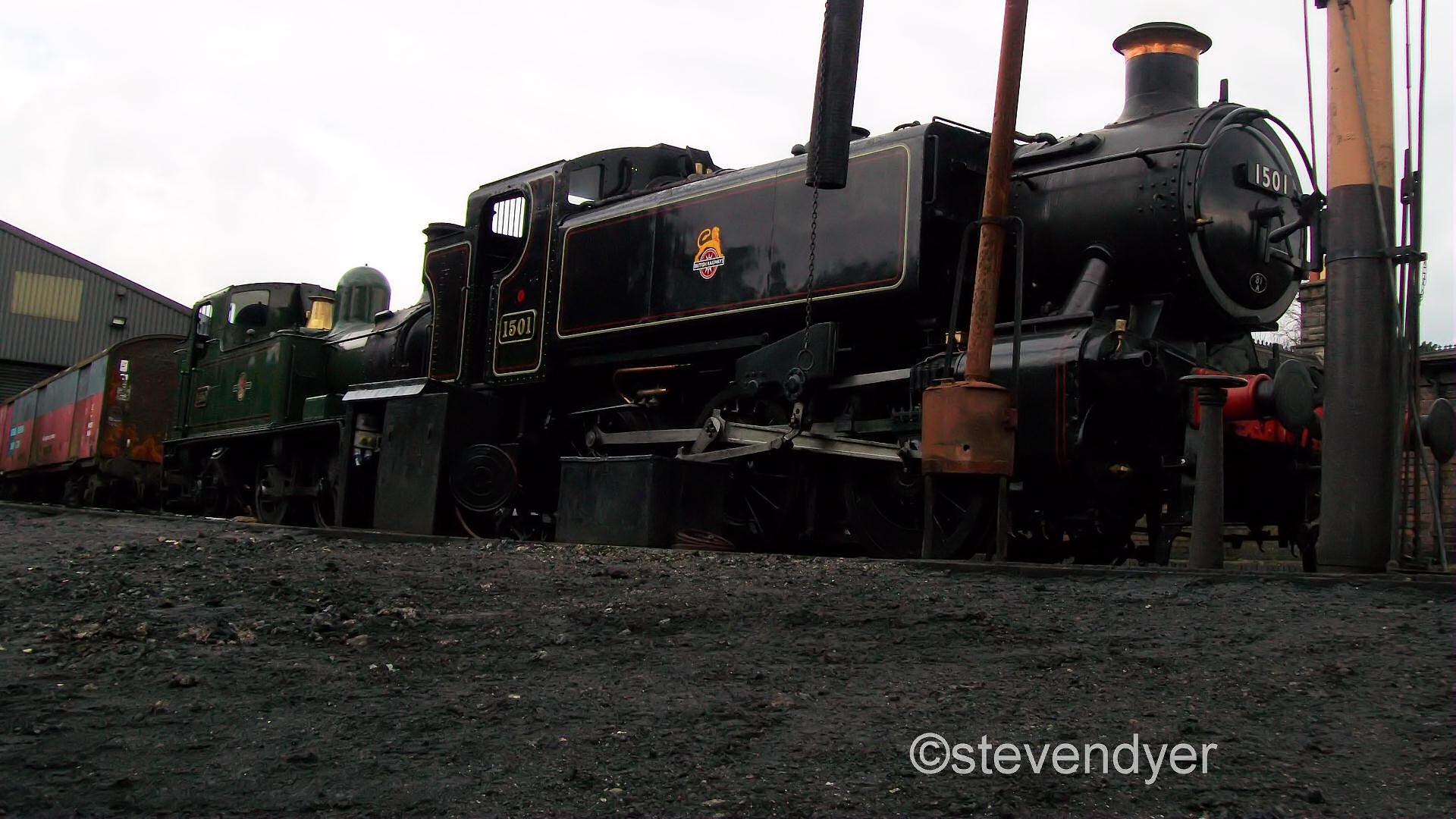
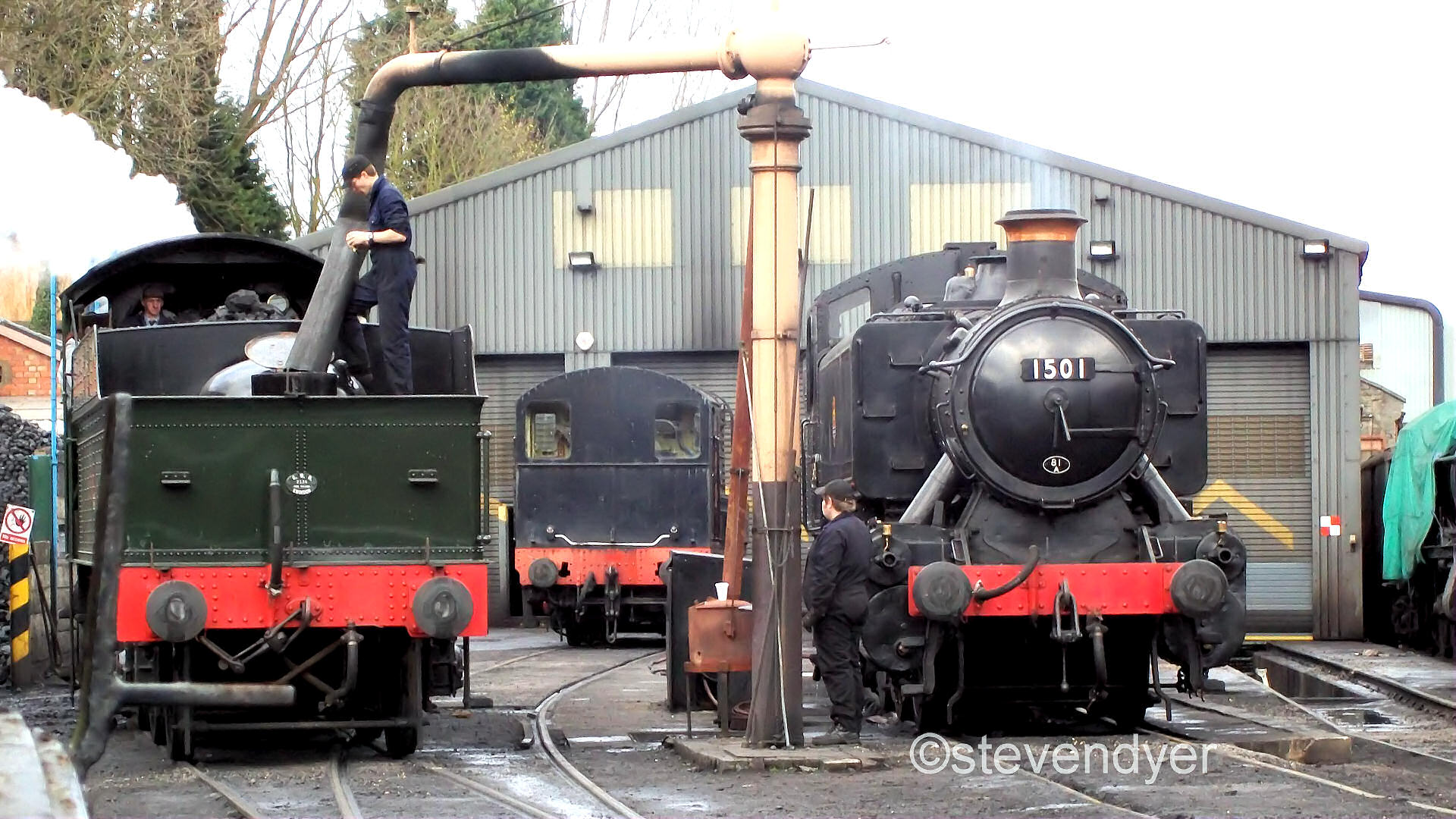
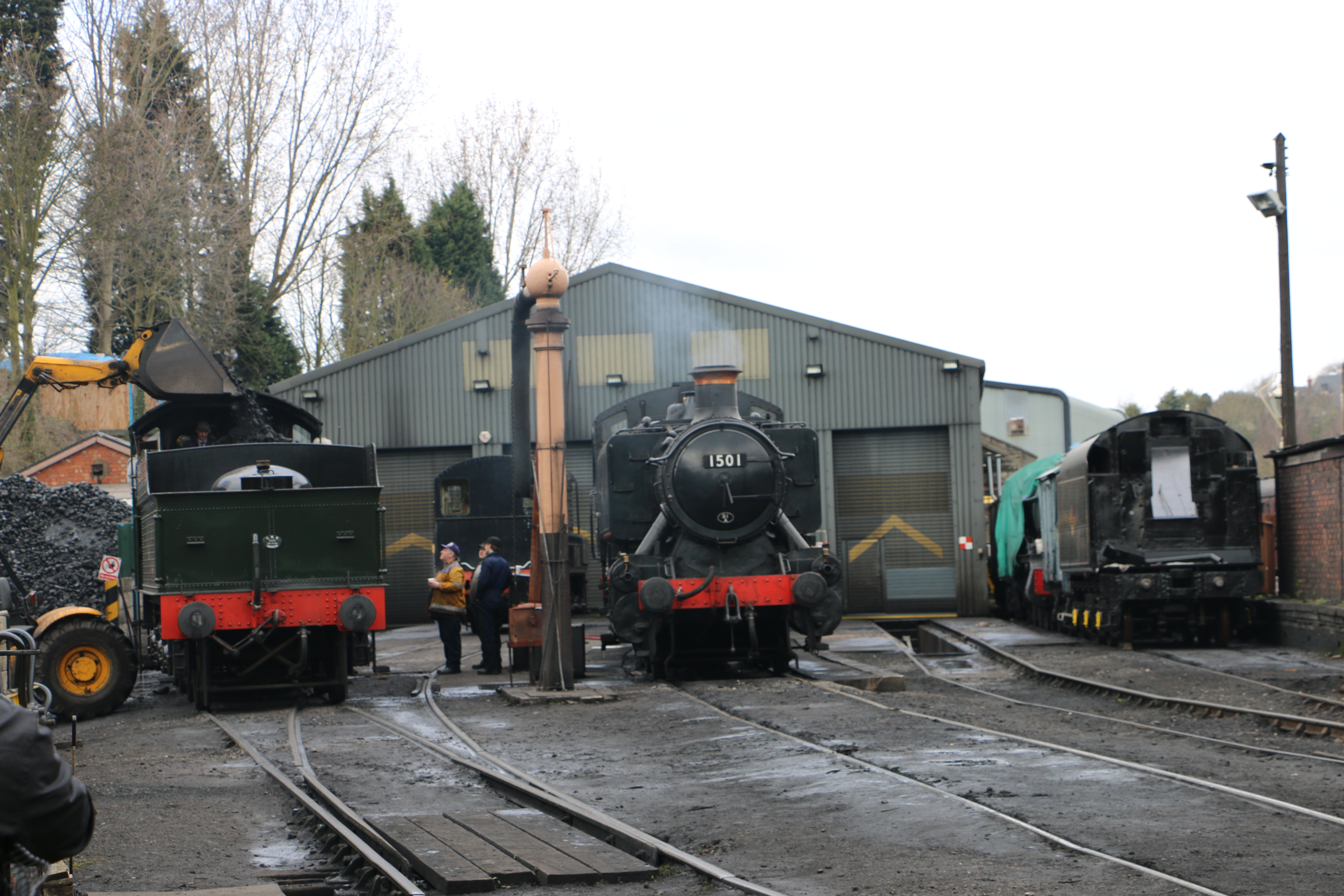
1501, the only surviving member of the class. Built at Swindon in 1949; spent its BR career on Old Oak Common empty stock workings; sold to the National Coal Board in 1961 for use at Coventry Colliery; rescued for preservation in 1970 and now based at the Severn Valley Railway under the care of the 1501 Pannier Tank Association. Has steamed in preservation in various BR liveries.
1502, sold with 1501 and 1509 to the National Coal Board in 1961 for service at Coventry Colliery; withdrawn in 1969 and scrapped.
1506–1509, the Welsh contingent, worked from Newport Pill, Ebbw Junction, and Cardiff Canton on South Wales coal-handling and exchange work. 1509, like 1501 and 1502, was sold to the National Coal Board in 1961.
Allocations and regions
Pre-grouping inheritance (none): a wholly post-war design with no antecedent fleet.
British Railways Western Region (1949–1963): primarily Old Oak Common (London), where the majority of the class spent most of their working lives on the empty coaching stock workings between Paddington and the carriage sidings. The Welsh allocation, 1506, 1508, and 1509 in particular, worked from Newport Pill, Ebbw Junction, and Cardiff Canton on the South Wales coalfield's exchange and dock workings. Some members rotated between Old Oak Common and the Welsh sheds during their working lives.
National Coal Board (1961–1969): 1501, 1502, and 1509 were sold by BR for further service at Coventry Colliery in 1961 and worked there until withdrawal in 1969, outlasting their classmates in BR service by several years.
Livery history
British Railways early period (1949–1956): all ten emerged from Swindon in BR mixed-traffic black with red, cream, and grey lining and the early lion-and-wheel emblem on the tank sides. No GWR livery or lettering was ever applied to any member of the class.
BR later period (1956–1963): BR plain or lined black with the later BR crest. This was the most common livery worn during the class's later working life.
National Coal Board (1961–1969): 1501, 1502, and 1509 carried plain industrial black with NCB ownership markings while in colliery service.
Preservation: 1501 has carried various BR liveries during its preserved career, including unlined black with the early lion-and-wheel emblem appropriate to its early-1950s appearance.
Preservation status
One member of the class survives:
- 1501, Severn Valley Railway. Built at Swindon in May 1949; spent its BR career on Old Oak Common empty coaching stock workings; sold to the National Coal Board in 1961 for service at Coventry Colliery in Warwickshire; preserved on the colliery's closure to steam in 1969 and arrived at the SVR the following year. Restored to working order under the care of the 1501 Pannier Tank Association, and has carried various BR liveries during its preserved career. The other two NCB engines (1502 and 1509) were not preserved and were scrapped on the same closure.
1501 is therefore unique, the only example anywhere of a GWR pannier tank with outside cylinders and Walschaerts valve gear, and the sole tangible representative of Hawksworth's most unconventional design.
Photographs